The Russian Revolution
1917 Petrograd (now St Petersburg), Russia
In short
In Russia the war had brought hunger and great suffering. In February 1917 protests forced Tsar Nicholas II to give up the throne. In October the Bolsheviks, led by Lenin, seized power in Petrograd by storming the Winter Palace. A bloody civil war followed, and in 1922 the Soviet Union was born, ruled by a single party, the Communist Party.
Why it matters The first communist state was born, and for seventy years it carried enormous weight in world politics.
Source: Treccani, entry “Rivoluzione russa”
Study card about 5 minutes of reading
The story
A tired empire
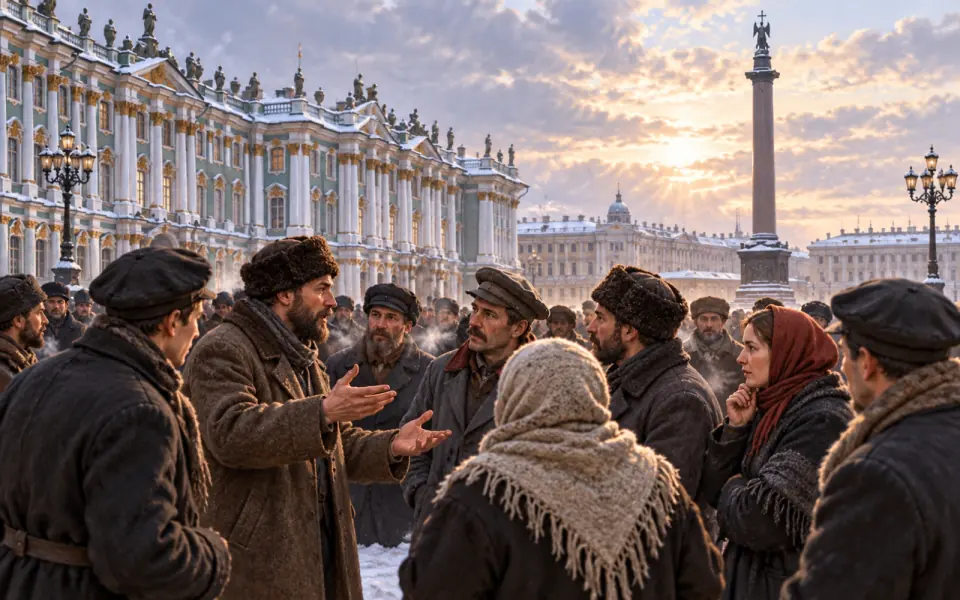
At the start of the 20th century Russia was the largest country in the world, ruled by Tsar Nicholas II, an absolute monarch: there was no parliament with real power, and he decided the laws himself. The great majority of Russians were poor peasants, often with no land; in the cities factories were growing, where workers laboured long hours for very low pay, in crowded neighbourhoods. In 1905, during the war with Japan, and after the army fired on a peaceful crowd asking for bread and rights outside the Winter Palace in Saint Petersburg, a revolt broke out. The tsar granted a Duma, a parliament without much power, but things changed little.
When Russia entered the First World War in 1914, things got worse. Millions of soldiers, badly equipped, were killed or wounded. In the cities bread and coal were scarce, prices rose and the queues outside the shops grew longer. The tsar had gone to the front to command the army in person, leaving the government in the hands of his wife Alexandra, who was very unpopular.
February 1917: the tsar falls
At the beginning of March 1917 (in February, according to the calendar then used in Russia), strikes broke out in Petrograd, as Saint Petersburg was now called. They began with women workers, on International Women's Day, protesting for bread. In the following days tens of thousands of people filled the streets. The soldiers sent to put down the revolt joined the demonstrators. On 15 March the tsar, now without support, abdicated: after three hundred years the Romanov dynasty no longer ruled.
A Provisional Government of liberal and moderate politicians was formed, which promised elections and freedom, but decided to carry on the war. Alongside it arose the “soviets”, councils of workers and soldiers, which had a great deal of real power in the cities and in the army. The country thus had two rival powers.
Lenin and the Bolsheviks
In April 1917 Vladimir Lenin returned to Russia from exile. He was the leader of the Bolsheviks, a Marxist group that wanted a revolution of workers and peasants. Germany, which was at war with Russia, helped him to get back from a long journey in a special train, hoping he would cause disorder. Lenin demanded immediate peace, land for the peasants, bread and power to the soviets: these were the slogans the weary people wanted to hear. Support for the Bolsheviks grew month by month, while the Provisional Government, led by Alexander Kerensky, lost support.
The night of the Winter Palace
On 6–7 November 1917 (24–25 October by the old calendar, which is why people speak of the “October Revolution”), the Bolsheviks, organised by Leon Trotsky, occupied the key points of Petrograd: stations, bridges, post offices and the telegraph. On the evening of 7 November the cruiser Aurora aimed its guns at the Winter Palace, where the ministers of the Provisional Government were, and fired a blank shot. In the night between 7 and 8 November (25–26 October) the palace was taken and the ministers were arrested with little resistance, with almost no fighting. Kerensky managed to escape.
The next day Lenin announced the new government, the Council of People's Commissars, and approved two decrees: one on peace and one on land, which took estates away from the big landowners to give them to the peasants. In March 1918 Russia signed the Treaty of Brest-Litovsk with Germany, losing very large territories just to get out of the war.
The civil war
The Bolsheviks were not safe: between 1918 and 1922 a terrible civil war set the Red Army against the “Whites”, a mixture of tsarist officers, nationalists and liberals backed by foreign powers. They were years of hunger, epidemics and violence, with millions of deaths. In July 1918 the tsar and his family were killed at Yekaterinburg. The Bolsheviks won, and in 1922 the Soviet Union, the USSR, was born.
Why it happened
The revolution came from a combination of poverty, inequality and the disasters of the war. The tsarist regime had not been able to reform itself, and the tsar had made several mistakes, refusing to listen to calls for change.
The First World War played a key role: hunger, enormous losses and distrust of the rulers. To this were added the ideas of Marx, according to whom workers could take power and build a society without masters, and the organising skill of Lenin and his party, who knew how to speak for the desire for peace and land.
What changed
The Russian Revolution created the world's first communist state, and inspired movements and parties in many countries. For Western governments it was also a threat: in Europe and America the fear of revolution spread, and this fear also fuelled movements such as Fascism in Italy.
After Lenin's death in 1924, power passed to Joseph Stalin, who turned the USSR into a rigid dictatorship, with the forced collectivisation of the countryside, labour camps and the Great Purges, causing millions of victims. The USSR became an industrial and military power, and after the Second World War one of the two superpowers of the Cold War.
The Soviet system ended in 1991. Today historians argue a great deal about the meaning of the revolution: for some it was a hope for social justice, for others the start of an authoritarian regime. Remembering the facts precisely, without oversimplifying, helps us to understand.
Key people and places
People
- Nicholas II
- The last tsar of Russia (1868–1918): he abdicated in 1917 and was killed with his family in 1918.
- Vladimir Lenin
- Leader of the Bolsheviks (1870–1924): he led the October Revolution and the first Soviet government.
- Leon Trotsky
- Russian revolutionary (1879–1940): he organised the seizure of power and created the Red Army.
- Alexander Kerensky
- Russian politician (1881–1970): head of the Provisional Government in the summer and autumn of 1917.
- Joseph Stalin
- Soviet politician (1878–1953): Lenin's successor, he led the USSR as a dictator.
Places
- Petrograd (Saint Petersburg), Russia
- The city where the events of 1917 took place.
- The Winter Palace
- The residence of the tsars, where the Provisional Government met in 1917.
Good to know
- The Russian calendar of 1917 was thirteen days behind: that is why the “October Revolution” fell in November.
- The February revolution began with a protest by women workers on International Women's Day.
- Lenin returned to Russia in 1917 on a special train that crossed Germany.
- The blank shot from the cruiser Aurora in 1917 has become a symbol of the revolution.
- The Soviet Union was founded in 1922 and dissolved in 1991.
Find out more
- Wikipedia, “Russian Revolution” en.wikipedia.org
- Wikipedia, “Russian Revolution” en.wikipedia.org
- Wikipedia, “October Revolution” en.wikipedia.org
Related events
- The First World War1914–1918 · Early 20th centuryIn 1917 the Russian Revolution took Russia out of the war.
- Totalitarian regimes in Europe1922 · Early 20th centuryAfter the war, totalitarian regimes arose in Europe.
- The fall of the Berlin Wall1989 · TodayIn 1989 the Soviet system entered crisis with the fall of the Wall.
- The French Revolution1789–1799 · Age of revolutionsIn 1789 the French Revolution had set off another great transformation.
Before and after, in the era “Early 20th century”
Event 7 of 25
 BeforeThe first powered flight1903
 BeforeSpecial relativity1905
 BeforeMaria Montessori's Children's House1907
 BeforeAbstract artabout 1910
 BeforeMarie Curie and her two Nobel Prizes1911
 BeforeThe First World War1914–1918
- You are hereThe Russian Revolution1917
 AfterRadio for everyoneabout 1920
 AfterJazz spreadsabout 1920
 AfterInsulin against diabetes1922
 AfterTotalitarian regimes in Europe1922
 AfterTalking pictures1927
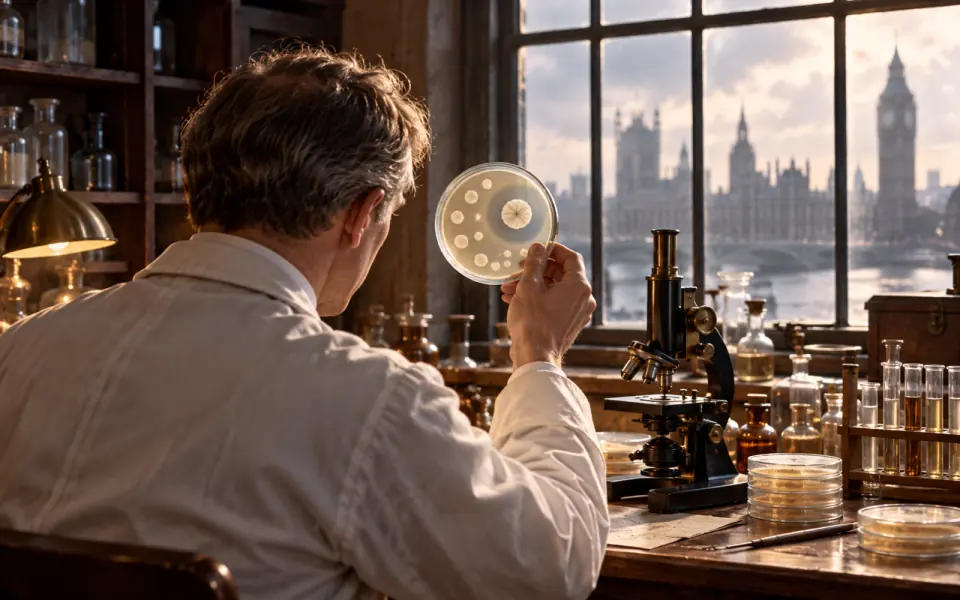 AfterThe discovery of penicillin1928
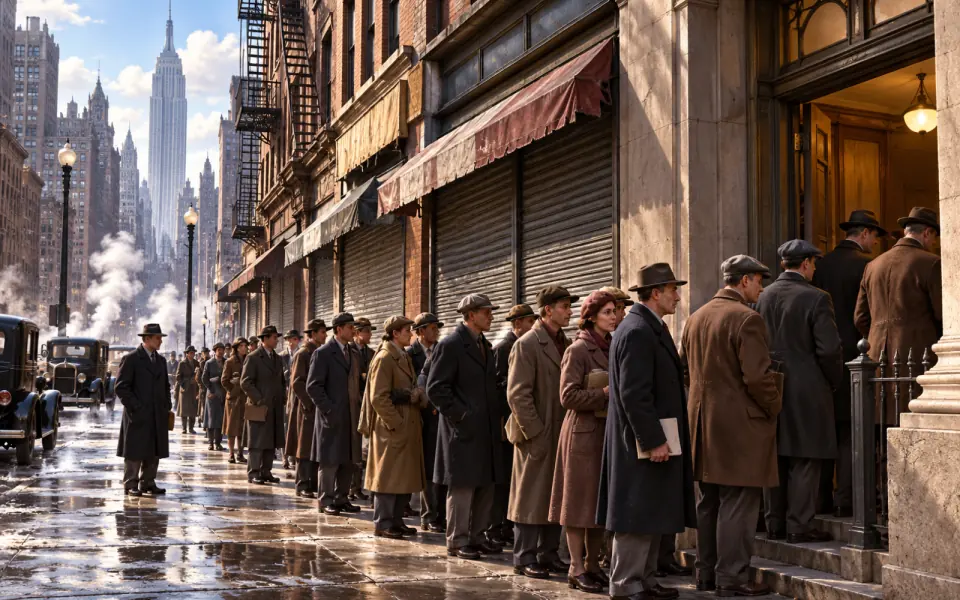 AfterThe Great Depression1929
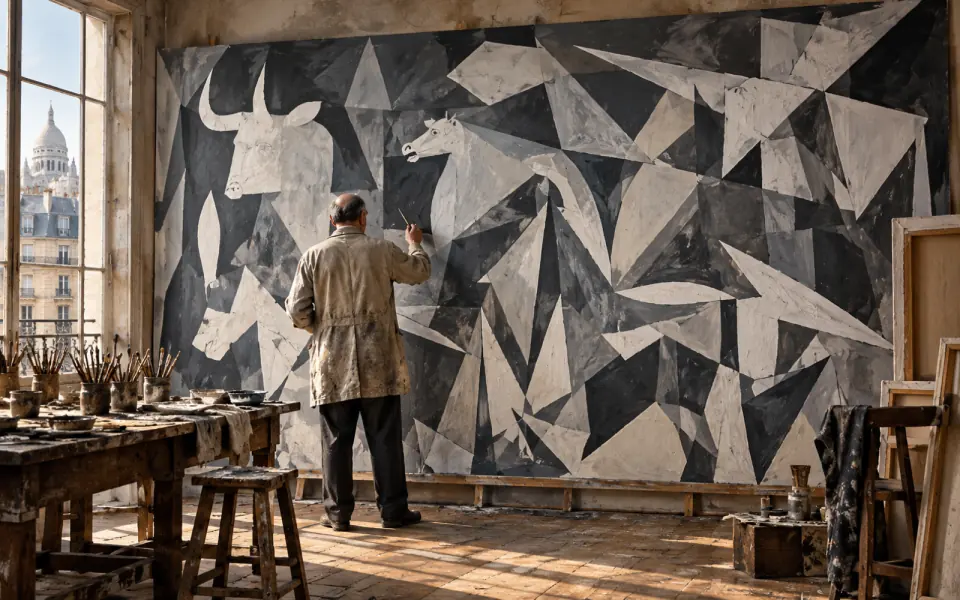 AfterPicasso's Guernica1937
 AfterThe Second World War1939–1945
 AfterThe Shoahabout 1941–1945
 AfterAnne Frank writes her diary1942
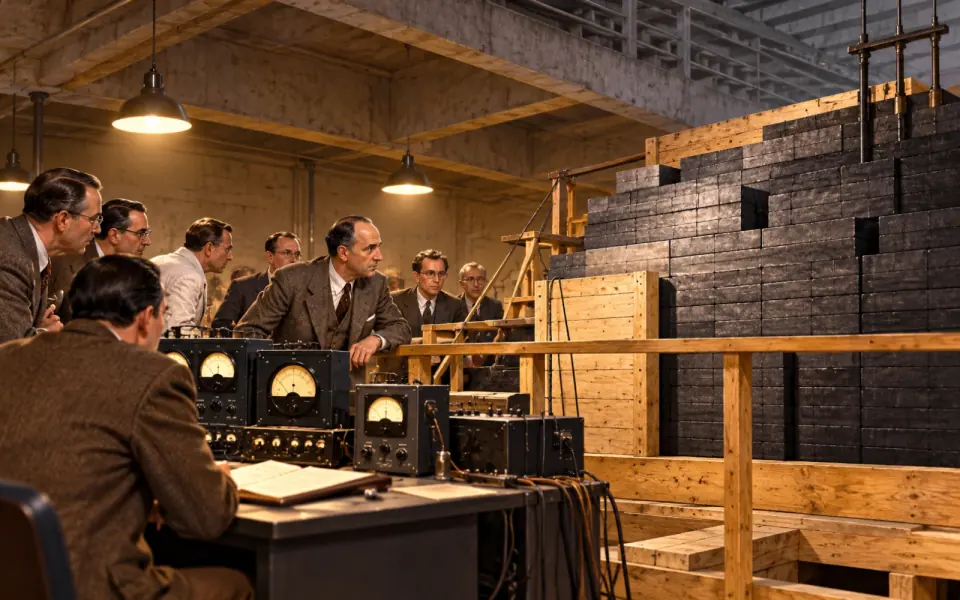 AfterFermi and the first atomic pile1942
 AfterThe Italian Resistance1943–1945
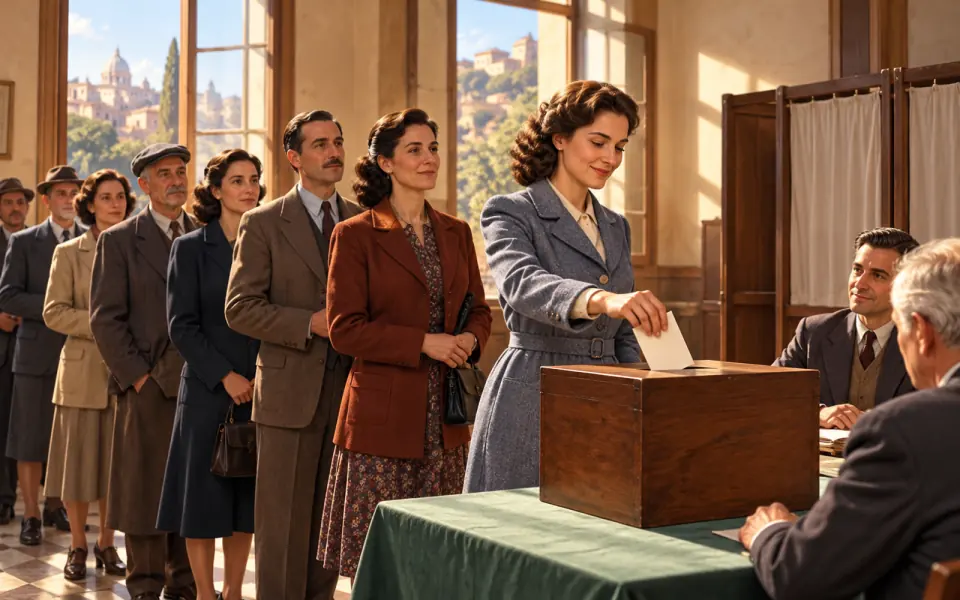 AfterThe Italian Republic and votes for women1946
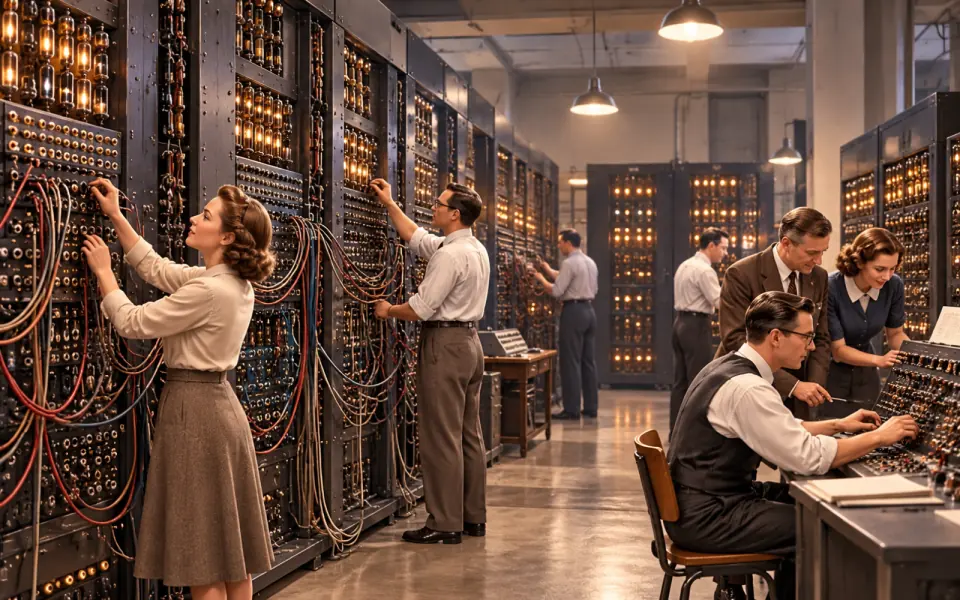 AfterThe first general-purpose electronic computer1946
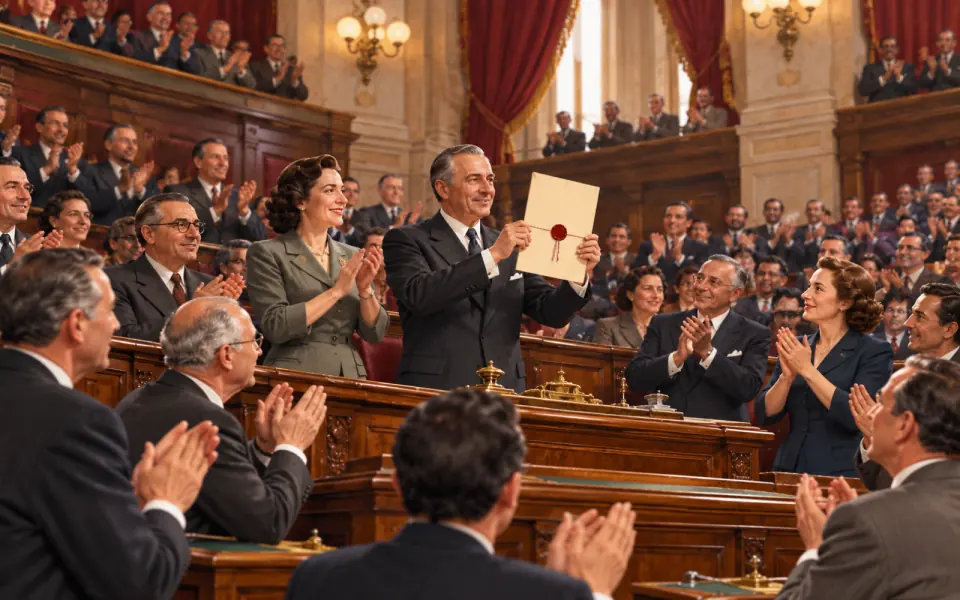 AfterThe Italian Constitution1948
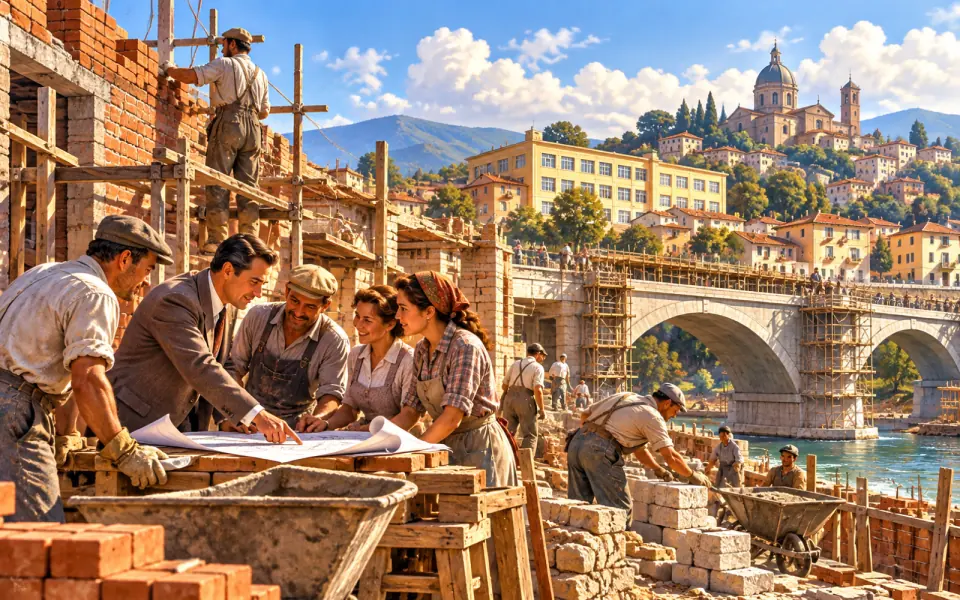 AfterPost-war rebuildingabout 1948
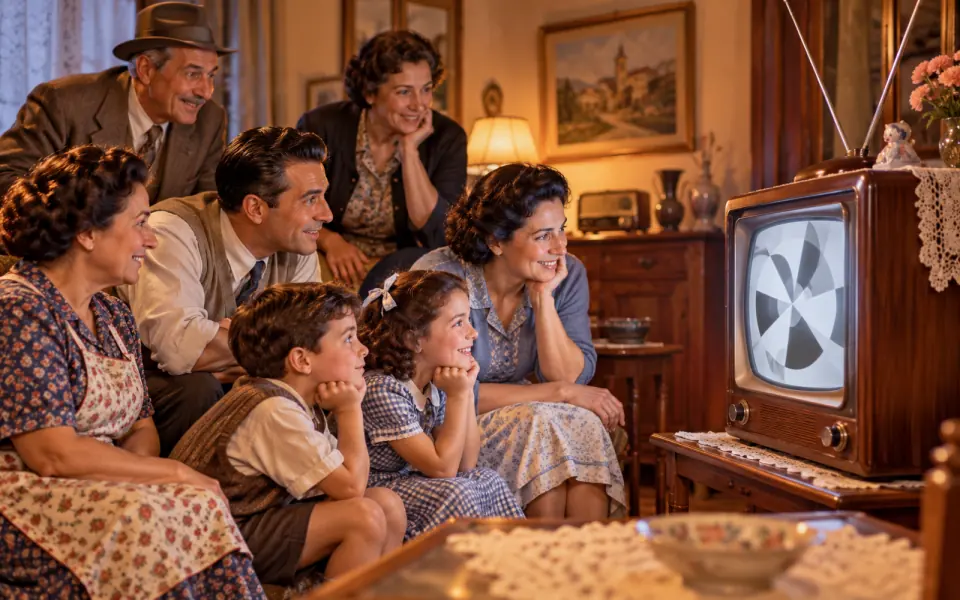 AfterTelevision spreadsabout 1950
Listen / Read next
- Music to read by: Cinematic JourneyEpic film-style music, no lyrics, by Ciro Simone IrmiciSpotifyYouTube Music
Meanwhile, elsewhere in the world
Other events of the era “Early 20th century”
- The first powered flight
- Special relativity
- Maria Montessori's Children's House
- Abstract art
- Marie Curie and her two Nobel Prizes
- The First World War
- Radio for everyone
- Jazz spreads
- Insulin against diabetes
- Totalitarian regimes in Europe
- Talking pictures
- The discovery of penicillin
- The Great Depression
- Picasso's Guernica
- The Second World War
- The Shoah
- Anne Frank writes her diary
- Fermi and the first atomic pile
- The Italian Resistance
- The Italian Republic and votes for women
- The first general-purpose electronic computer
- The Italian Constitution
- Post-war rebuilding
- Television spreads
