Maria Montessori's Children's House
1907 San Lorenzo district, Rome, Italy
In short
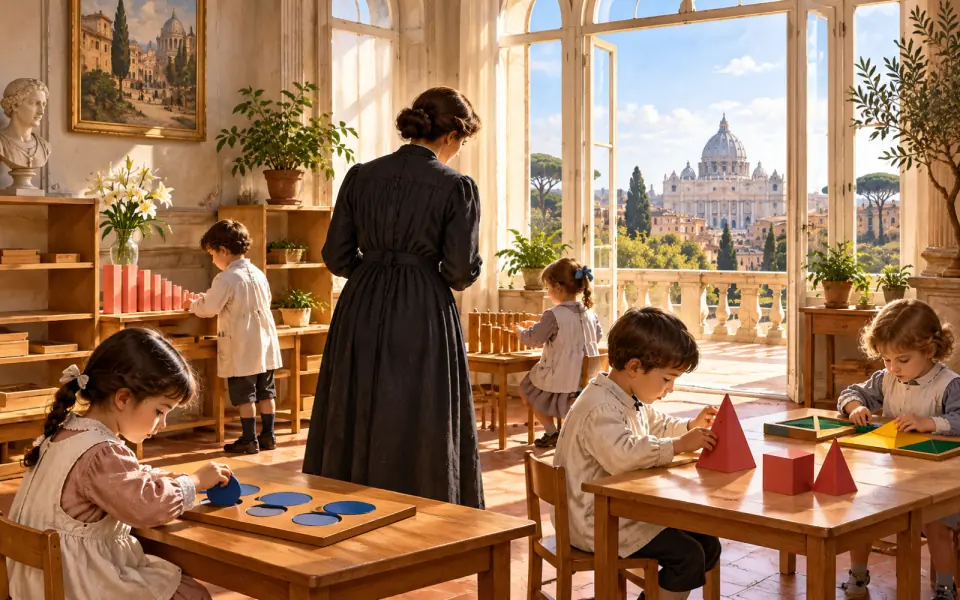
Maria Montessori was one of the first women in Italy to graduate in medicine. On 6 January 1907, in the working-class district of San Lorenzo in Rome, she opened the first Children's House for the young children of factory workers' families. Instead of fixed desks there was light, child-sized furniture and materials to touch and use by themselves. Her method started from a simple idea: watch children and let them learn by doing.
Why it matters Montessori schools are found all over the world today, and many of her ideas have become part of ordinary schools.
Source: Treccani, Dizionario Biografico, entry “Montessori, Maria”
Study card about 5 minutes of reading
The story
A girl who wanted to be a doctor
Maria Montessori was born in 1870 in Chiaravalle, in the Marche region of Italy. At that time it was not easy for a girl to study: her parents wanted her to become a teacher, and medical faculties were open almost only to men. Maria, however, wanted to be a doctor. With great determination, and with her mother's support, she managed to enrol at the University of Rome and graduated in 1896: she was one of the first women in Italy to graduate in medicine.
She first worked in a clinic for mental illnesses, where she met children who were considered “backward”, left in bare rooms with no toys. She noticed that they were hungry for things to touch and use with their hands. She studied the methods of two French doctors, Jean Itard and Édouard Séguin, and began to teach those children with hands-on materials. She made such progress that some of them passed exams alongside children from ordinary schools. Montessori asked herself: if it works with these children, what could it do for all the others?
San Lorenzo, 6 January 1907
The chance came in Rome, in the working-class district of San Lorenzo. Homes had been built there for workers' families, but while their parents were at work the little children were left alone in the courtyards, and they damaged the walls and stairs. The engineer Edoardo Talamo, who was in charge of the buildings, asked Maria Montessori to organise a place where the children could be looked after during the day. On 6 January 1907, in Via dei Marsi, in San Lorenzo, the first “Casa dei Bambini” (Children's House) opened, with about fifty little ones between three and six years old.
Maria Montessori did not bring a teacher's desk and rows of benches. She had small, light furniture made to fit children: tables, chairs, low cupboards from which the children could take things by themselves. She created special materials: wooden blocks with sockets of different sizes, letters cut out of sandpaper to trace with the fingers, coloured beads for learning to count. The children could choose what to do and work for as long as they wanted.
A new way of learning
Montessori watched the children patiently and noticed things she had not expected. A three-year-old girl spent long minutes putting little cylinders into the holes of a wooden block, one after another, repeating the game dozens of times, and at the end she seemed rested and happy. The children loved washing cups, laying the table and pouring water without spilling it: the more independent they were, the happier they were. One of the sayings attributed to her is: “Help me to do it by myself.”
In her method the teacher is not a boss who talks from above, but a guide who prepares a tidy and beautiful environment, watches the children and helps them when needed. Children learn with their hands, by moving and by experience, not just by listening. In 1909 Montessori wrote a book to describe her method, which was translated into many languages.
From a neighbourhood to the world
The news spread quickly. Journalists and teachers from all over the world came to visit the Children's Houses, and within a few years Montessori schools appeared in Europe and America. Maria travelled a great deal to give courses and lectures. Under Fascism, after a period of government support, Montessori did not want to submit her method to the regime's rules and in 1934, after clashes with Fascism, she left Italy; in 1936 the regime closed the Montessori schools. She lived in Spain, the Netherlands and India, where, confined as an Italian citizen, she stayed throughout the Second World War and trained many teachers. She died in the Netherlands in 1952.
Why it happened
Montessori was born in a time when school was often strict and based on discipline: children sat still at desks, listened and repeated. Few people asked how children really learn. She, a doctor and scientist, wanted to observe children as one observes a natural phenomenon, without preconceived ideas.
Her choice was also made possible by the situation in the San Lorenzo district, where there was an urgent need for a place for the children of poor families, and where she could experiment without restrictions. It was the meeting of a social need and a new idea.
What changed
The Montessori method is now used in thousands of schools around the world, from nursery to secondary school. Many of the ideas she introduced have become part of ordinary schools: child-sized furniture, attention to independence, hands-on materials for learning maths and language, work in small groups.
Her message is still relevant: every child has different rhythms and interests, and deserves respect. Montessori was nominated three times for the Nobel Peace Prize, in 1949, 1950 and 1951, for her commitment to peace through education. For her, children were the hope for a better world.
Her face appeared on the Italian thousand-lire banknote from 1990 until the arrival of the euro, as a tribute to one of the best-known Italian women in the world.
Key people and places
People
- Maria Montessori
- Italian doctor and educator (1870–1952): she created the Montessori method.
- Edoardo Talamo
- Roman engineer: in charge of the buildings in San Lorenzo, he asked Montessori to organise a place for the neighbourhood's children.
- Jean Itard
- French doctor (1774–1838): he studied the education of children with difficulties, an example for Montessori.
- Édouard Séguin
- French doctor (1812–1880): he developed methods for children with disabilities, which Montessori used.
- Mario Montessori
- Maria's son (1898–1982): he worked with her and carried on her work.
Places
- Via dei Marsi, San Lorenzo district, Rome
- Where the first Casa dei Bambini opened on 6 January 1907.
- Chiaravalle, Marche
- Maria Montessori's home town.
Good to know
- The first Casa dei Bambini opened on 6 January 1907 in San Lorenzo, in Rome.
- Montessori was one of the first women in Italy to graduate in medicine, in 1896.
- One of the sayings most closely linked to her method is “Help me to do it by myself.”
- She was nominated three times for the Nobel Peace Prize.
- Her face appears on the Italian thousand-lire banknote.
Find out more
- Wikipedia, “Maria Montessori” en.wikipedia.org
- Association Montessori Internationale montessori-ami.org
- Wikipedia, “Montessori education” en.wikipedia.org
Related events
- Compulsory primary school (Coppino law)1877 · Age of revolutionsIn 1877 the Coppino law made primary school compulsory in Italy.
- Malala wins the Nobel Peace Prize2014 · TodayLike Montessori, Malala has defended the right to education.
- The Italian Republic and votes for women1946 · Early 20th centuryIn 1946 Italian women voted for the first time.
- Anne Frank writes her diary1942 · Early 20th centuryAnne Frank's diary tells of the life of a girl during the war.
Before and after, in the era “Early 20th century”
Event 3 of 25
 BeforeThe first powered flight1903
 BeforeSpecial relativity1905
- You are hereMaria Montessori's Children's House1907
 AfterAbstract artabout 1910
 AfterMarie Curie and her two Nobel Prizes1911
 AfterThe First World War1914–1918
 AfterThe Russian Revolution1917
 AfterRadio for everyoneabout 1920
 AfterJazz spreadsabout 1920
 AfterInsulin against diabetes1922
 AfterTotalitarian regimes in Europe1922
 AfterTalking pictures1927
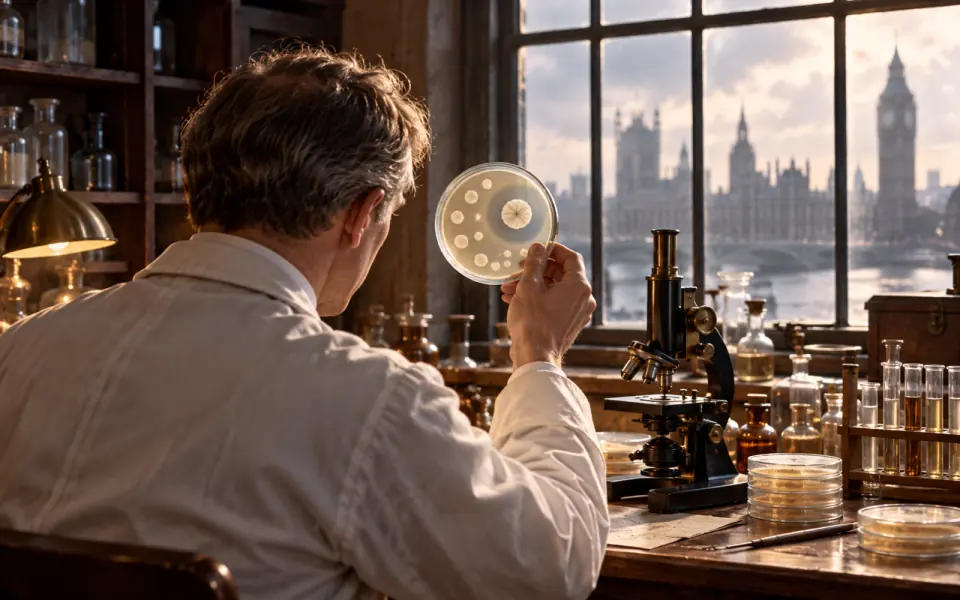 AfterThe discovery of penicillin1928
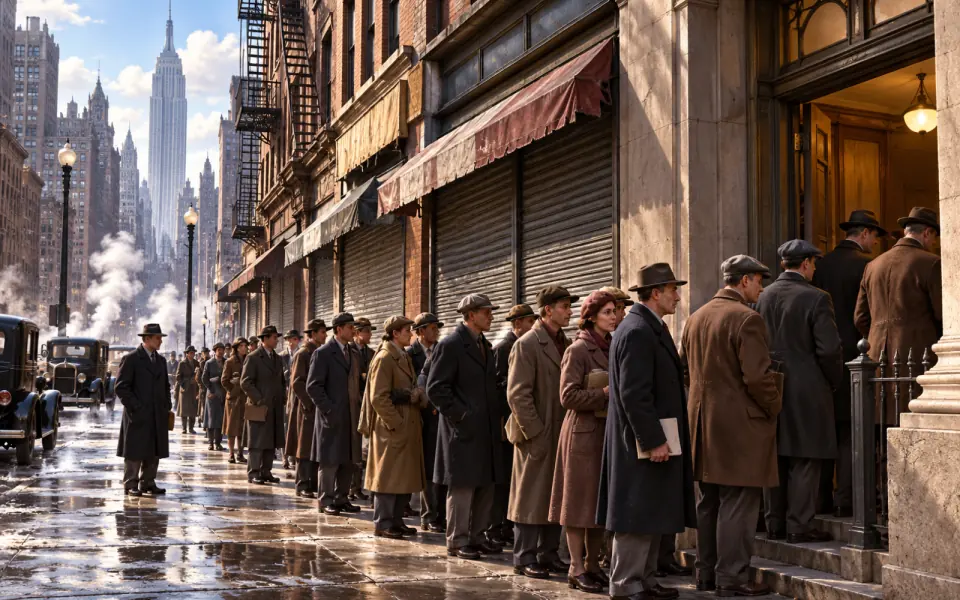 AfterThe Great Depression1929
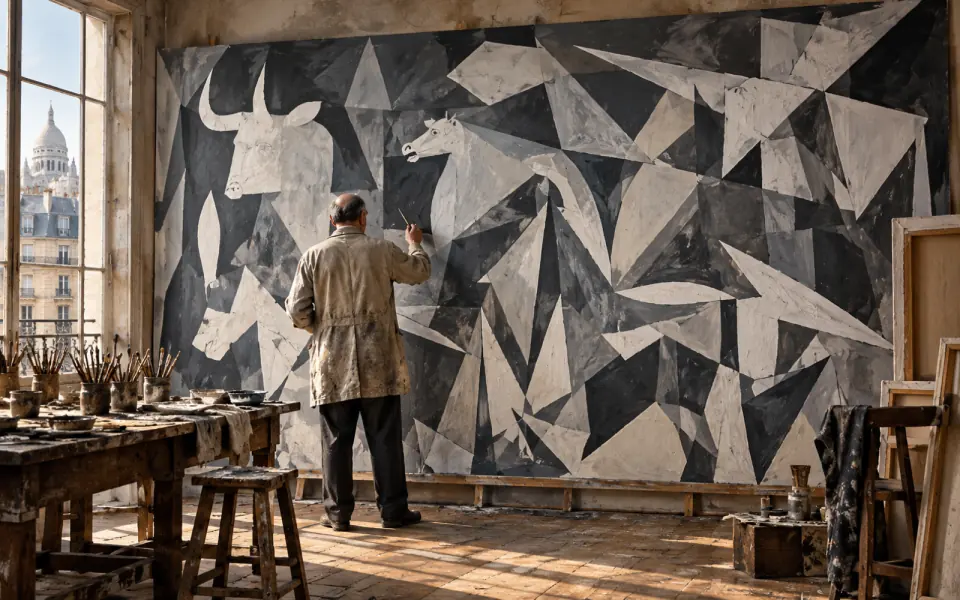 AfterPicasso's Guernica1937
 AfterThe Second World War1939–1945
 AfterThe Shoahabout 1941–1945
 AfterAnne Frank writes her diary1942
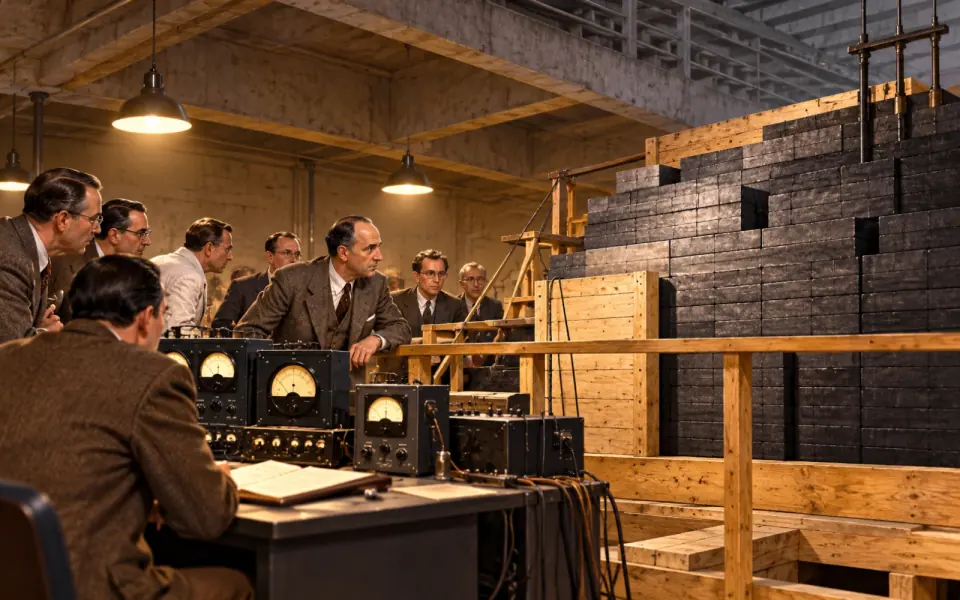 AfterFermi and the first atomic pile1942
 AfterThe Italian Resistance1943–1945
 AfterThe Italian Republic and votes for women1946
 AfterThe first general-purpose electronic computer1946
 AfterThe Italian Constitution1948
 AfterPost-war rebuildingabout 1948
 AfterTelevision spreadsabout 1950
Listen / Read next
- Music to read by: Cinematic JourneyEpic film-style music, no lyrics, by Ciro Simone IrmiciSpotifyYouTube Music
Meanwhile, elsewhere in the world
Other events of the era “Early 20th century”
- The first powered flight
- Special relativity
- Abstract art
- Marie Curie and her two Nobel Prizes
- The First World War
- The Russian Revolution
- Radio for everyone
- Jazz spreads
- Insulin against diabetes
- Totalitarian regimes in Europe
- Talking pictures
- The discovery of penicillin
- The Great Depression
- Picasso's Guernica
- The Second World War
- The Shoah
- Anne Frank writes her diary
- Fermi and the first atomic pile
- The Italian Resistance
- The Italian Republic and votes for women
- The first general-purpose electronic computer
- The Italian Constitution
- Post-war rebuilding
- Television spreads
