Special relativity
1905 Bern, Switzerland
In short
In 1905 Albert Einstein was 26 and worked at the patent office in Bern, in Switzerland. That year he published several papers that revolutionised physics, including the one on special relativity. He explained that the speed of light is the same for everyone, while time and space change for people moving at different speeds. From these ideas came the formula E=mc², which links mass and energy.
Why it matters It changed the way we think about space and time, and today it even helps GPS satellites to work accurately.
Source: Encyclopaedia Britannica, “relativity”
Study card about 5 minutes of reading
The story
The patent office clerk
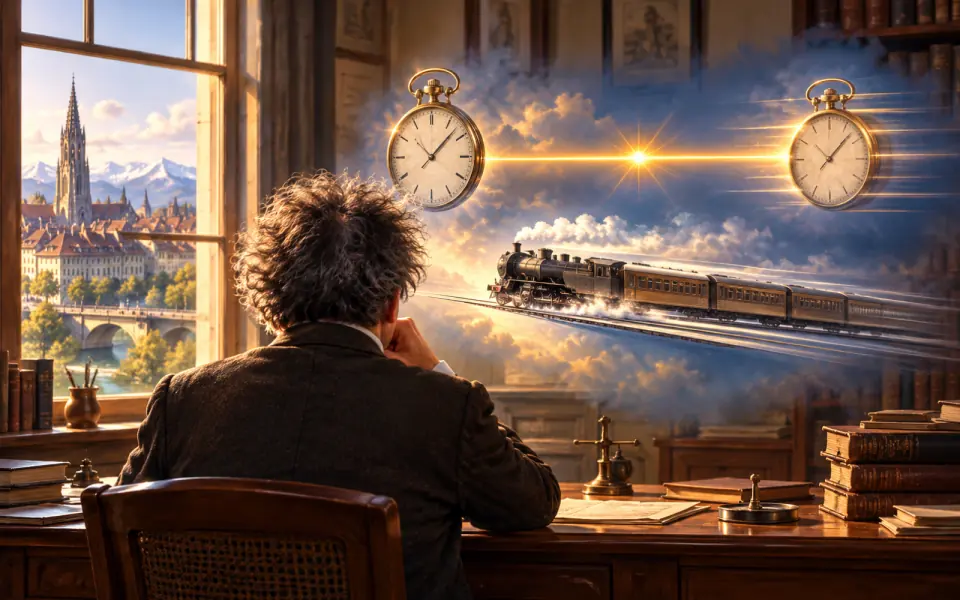
In 1905 a young man of 26 was working in Bern, Switzerland, as a clerk at the patent office, where people's inventions were checked. His name was Albert Einstein, he had been born in Ulm, Germany, in 1879, and he had not found a job at a university. The work, however, left him time: he wrote down his thoughts and thought about them on trains, at home, and on walks with his friend Michele Besso, talking about physics. That year, which historians call “the miracle year”, he published four papers that changed science.
The first explained that light is made of tiny packets of energy, “quanta”, and for this idea he received the 1921 Nobel Prize in Physics (awarded in 1922). The second explained the zigzag movement of grains of pollen in water by the presence of atoms and molecules, and it helped to convince those who still doubted that atoms existed. The other two papers were about “special relativity”.
One light, two observers
The problem came from a strange fact. If I jump onto a train travelling at a hundred kilometres an hour and throw a ball forwards at twenty kilometres an hour, then for someone standing still on the platform the ball is moving at a hundred and twenty. With light, though, it does not work like that. Experiments at the end of the 19th century showed that light always has the same speed, about three hundred thousand kilometres a second, for anyone who measures it, even if they are moving in the same direction.
Einstein started from two simple ideas: the laws of physics are the same for all observers moving at a steady speed, and the speed of light is the same for everyone. To make the sums work, he had to accept something surprising: space and time are not the same for everybody. Someone moving at very high speed sees time pass more slowly, and distances shrink in the direction of travel. It is as if everyone had their own clock and their own ruler.
These ideas seem absurd because in everyday life we travel at tiny speeds compared with light, and the effects are barely noticeable. But they do exist, and they have been measured: for example, with atomic clocks carried on aeroplanes, and in particles created in the upper atmosphere, which live long enough to reach the ground precisely because they move at almost the speed of light.
E = mc²
At the end of 1905 Einstein wrote a very short paper, just three pages long, with another consequence: mass and energy are two faces of the same thing. The formula has become the most famous in the world: E = mc², where E is energy, m is mass and c is the speed of light. Because c is an enormous number, and it is multiplied by itself, even a tiny amount of mass contains a huge amount of energy: one gram is equivalent to about twenty-one thousand tonnes of TNT. This explains how the Sun shines, turning millions of tonnes of its mass into light and heat every second, and how a nuclear power station works.
Gravity and fame
For ten years Einstein went on thinking, and in 1915 he completed “general relativity”: gravity is not a mysterious force, but a curving of space and time caused by matter, like a heavy ball on a stretched sheet. In 1919, during an eclipse of the Sun, the English astronomer Arthur Eddington measured that the light of some stars bent as it passed close to the Sun, exactly as predicted. The news reached newspapers all over the world, and Einstein became famous. In 1933, faced with the rise of Nazism, he left Germany for the United States, where he stayed until his death in 1955.
Why it happened
Relativity arose from a clash between two great theories of the 19th century: Newton's mechanics, which describes how bodies move, and Maxwell's laws of electromagnetism, which describe light. The two systems did not agree, and many physicists were looking for a way to fix things. Einstein had the courage to change the very idea of space and time.
His way of thinking also prepared him, made up of experiments in the mind: he asked himself, for example, what he would see if he could run alongside a ray of light. His independence mattered too: working outside the university, he was not afraid of questioning everyone's ideas.
What changed
Relativity changed physics for ever. It explained phenomena that had not been understood before and made it possible to build modern physics: nuclear energy, particle accelerators, cosmology, which is the study of the universe, black holes and gravitational waves. The equations of general relativity (1915) later made it possible to understand that the universe is not still but can expand.
It is useful in everyday life too: GPS satellites travel at great speed and are farther from the Earth, so their clocks run slightly faster than those on the ground (about 38 microseconds a day). Without the corrections from relativity, the satnav on your phone would be wrong by several kilometres a day.
The theory also showed something important: the achievements of science can have enormous and even dangerous consequences, as the atomic bomb showed. Einstein, a pacifist, in 1939 signed a letter to the American President Roosevelt warning him that Germany might build one, and then spent his last years calling for peace and disarmament.
Key people and places
People
- Albert Einstein
- German physicist (1879–1955): he created the theory of special relativity (1905) and general relativity (1915); 1921 Nobel Prize in Physics (awarded in 1922).
- Michele Besso
- Italian-Swiss engineer (1873–1955): Einstein's friend, with whom he talked over his ideas.
- Hermann Minkowski
- German mathematician (1864–1909): in 1908 he joined space and time into a single “space-time”.
- Arthur Eddington
- English astronomer (1882–1944): in 1919 he measured the bending of light during an eclipse.
- Mileva Marić
- Serbian student of physics (1875–1948): Einstein's first wife, who attended the same course as him at the Polytechnic in Zurich.
Places
- Bern, Switzerland
- The city where Einstein worked at the patent office in 1905; his home is now a museum.
- Ulm, Germany
- The city where Einstein was born on 14 March 1879.
Good to know
- In 1905 Einstein was 26 years old and worked in a patent office.
- One gram of matter contains energy equal to about twenty-one thousand tonnes of TNT.
- Without the corrections from relativity, GPS would be wrong by several kilometres a day.
- Einstein received the 1921 Nobel Prize in Physics (awarded in 1922) for his work on light, not for relativity.
- His most famous formula, E = mc², was written in a paper only three pages long.
Find out more
- The Nobel Prize, “Albert Einstein – Facts” nobelprize.org
- Wikipedia, “Albert Einstein” en.wikipedia.org
- Wikipedia, “Special relativity” en.wikipedia.org
- Wikipedia, “Albert Einstein” en.wikipedia.org
Related events
- The Lumière brothers' cinema1895 · Age of revolutionsA few years earlier the Lumière brothers had invented the cinema.
- The first image of a black hole2019 · TodayGeneral relativity predicted black holes, photographed in 2019.
- Fermi and the first atomic pile1942 · Early 20th centuryFrom the formula E = mc² came Fermi's first atomic pile.
- Newton publishes the Principia1687 · Early modern ageNewton had described gravity two centuries earlier.
Before and after, in the era “Early 20th century”
Event 2 of 25
 BeforeThe first powered flight1903
- You are hereSpecial relativity1905
 AfterMaria Montessori's Children's House1907
 AfterAbstract artabout 1910
 AfterMarie Curie and her two Nobel Prizes1911
 AfterThe First World War1914–1918
 AfterThe Russian Revolution1917
 AfterRadio for everyoneabout 1920
 AfterJazz spreadsabout 1920
 AfterInsulin against diabetes1922
 AfterTotalitarian regimes in Europe1922
 AfterTalking pictures1927
 AfterThe discovery of penicillin1928
 AfterThe Great Depression1929
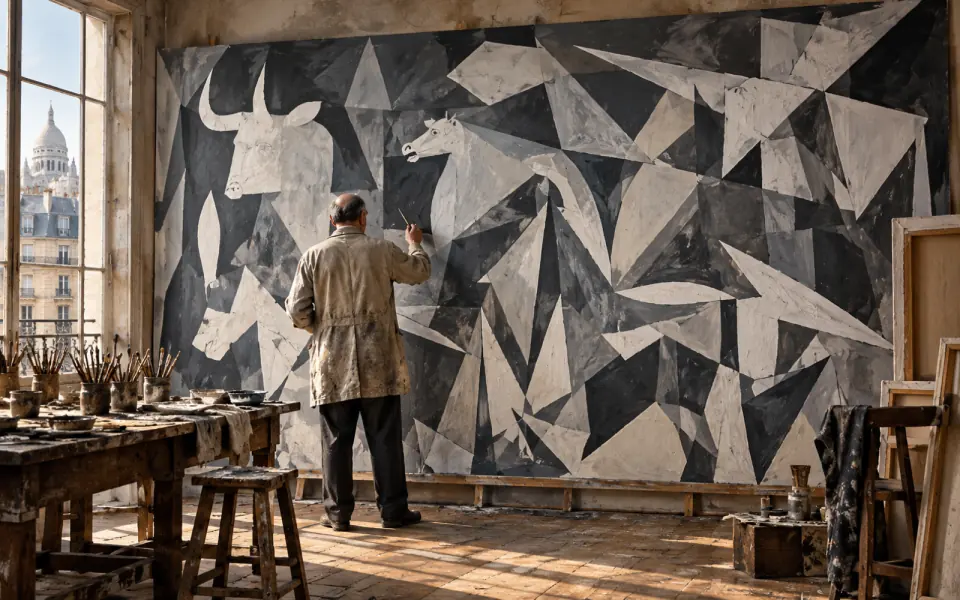 AfterPicasso's Guernica1937
 AfterThe Second World War1939–1945
 AfterThe Shoahabout 1941–1945
 AfterAnne Frank writes her diary1942
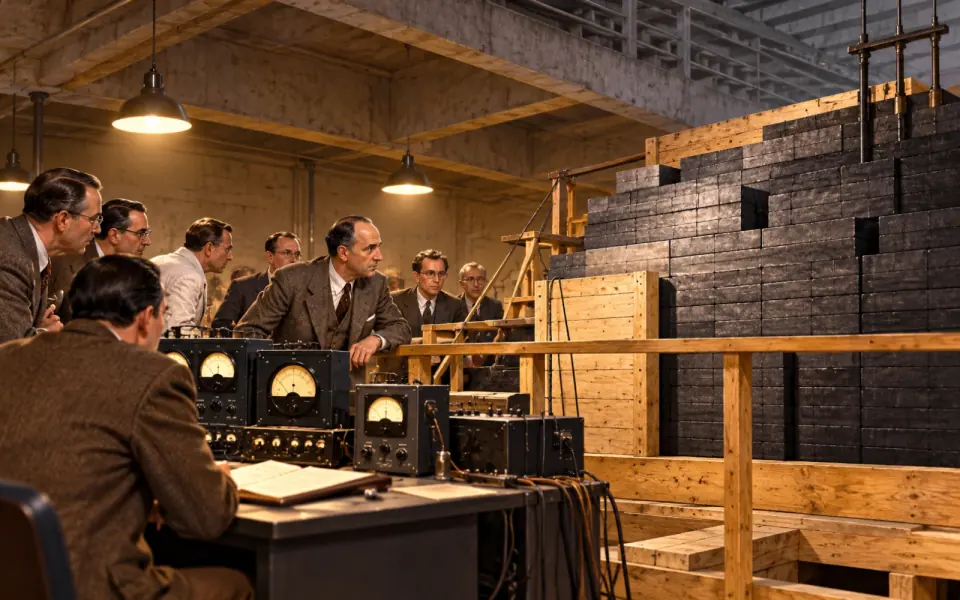 AfterFermi and the first atomic pile1942
 AfterThe Italian Resistance1943–1945
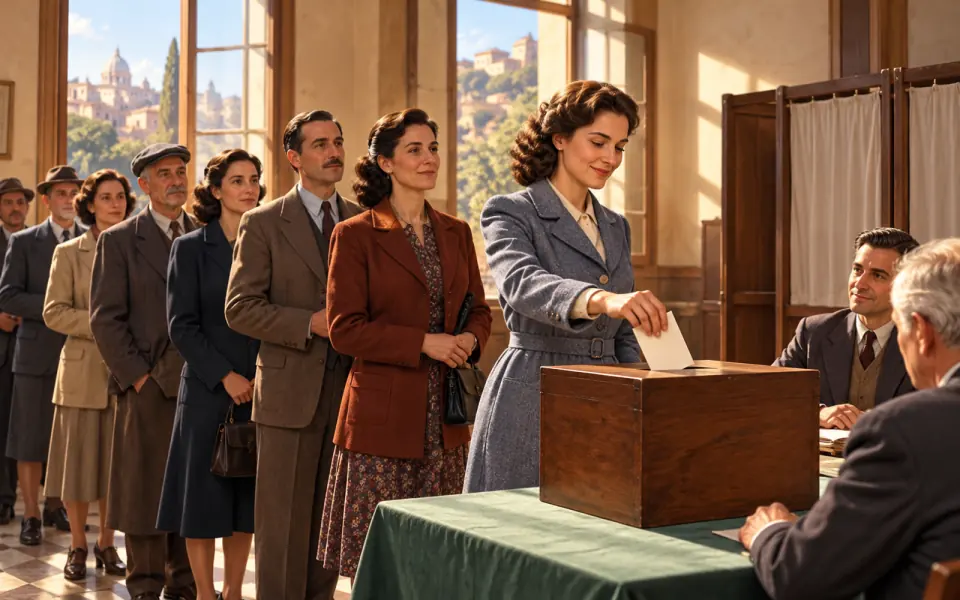 AfterThe Italian Republic and votes for women1946
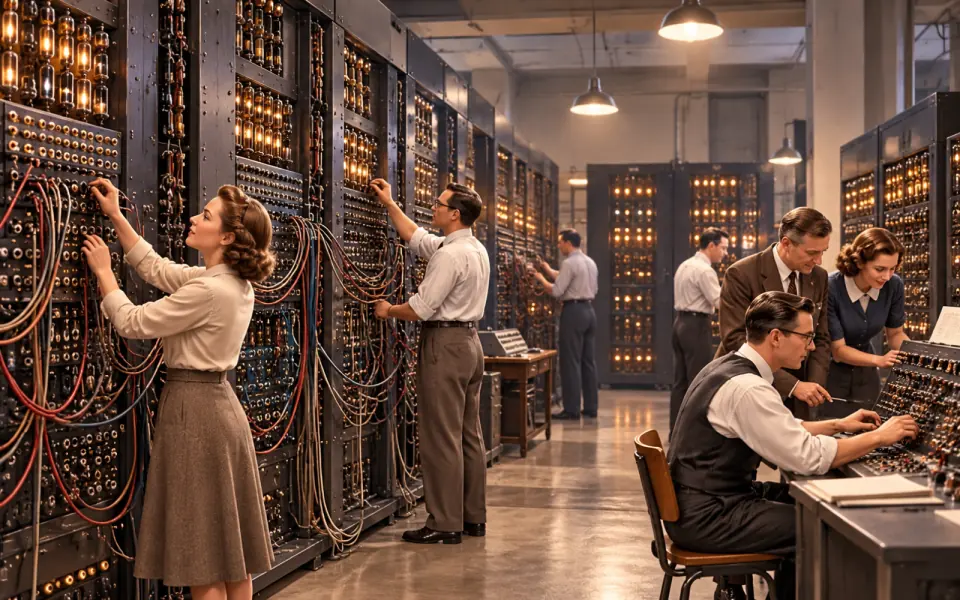 AfterThe first general-purpose electronic computer1946
 AfterThe Italian Constitution1948
 AfterPost-war rebuildingabout 1948
 AfterTelevision spreadsabout 1950
Listen / Read next
- Music to read by: Cinematic JourneyEpic film-style music, no lyrics, by Ciro Simone IrmiciSpotifyYouTube Music
Meanwhile, elsewhere in the world
Other events of the era “Early 20th century”
- The first powered flight
- Maria Montessori's Children's House
- Abstract art
- Marie Curie and her two Nobel Prizes
- The First World War
- The Russian Revolution
- Radio for everyone
- Jazz spreads
- Insulin against diabetes
- Totalitarian regimes in Europe
- Talking pictures
- The discovery of penicillin
- The Great Depression
- Picasso's Guernica
- The Second World War
- The Shoah
- Anne Frank writes her diary
- Fermi and the first atomic pile
- The Italian Resistance
- The Italian Republic and votes for women
- The first general-purpose electronic computer
- The Italian Constitution
- Post-war rebuilding
- Television spreads
