Abstract art
about 1910 Munich, Germany
In short
For centuries painters had shown people, landscapes and objects. At the start of the 20th century some artists tried painting only colours, lines and shapes, without showing anything recognisable. The Russian Wassily Kandinsky, who lived in Munich, believed that colours could stir emotions just as music does. The Swedish artist Hilma af Klint had also already painted abstract pictures, but for many decades they were not shown to the public.
Why it matters Abstract art showed that a painting can express feelings and ideas even without copying reality.
Source: Treccani, entry “Astrattismo”
Study card about 5 minutes of reading
The story
Painting without painting something
For centuries, when people said “a painting”, they thought of a picture of something: a portrait, a landscape, a scene from the Bible or from history, a still life with fruit and flowers. A painter had to know how to depict things well, so that they looked like reality. Then, at the start of the 20th century, some artists asked themselves: what if a painting could exist without showing anything at all? Just colours, lines and shapes, in the same way that music is made of sounds and not of words.
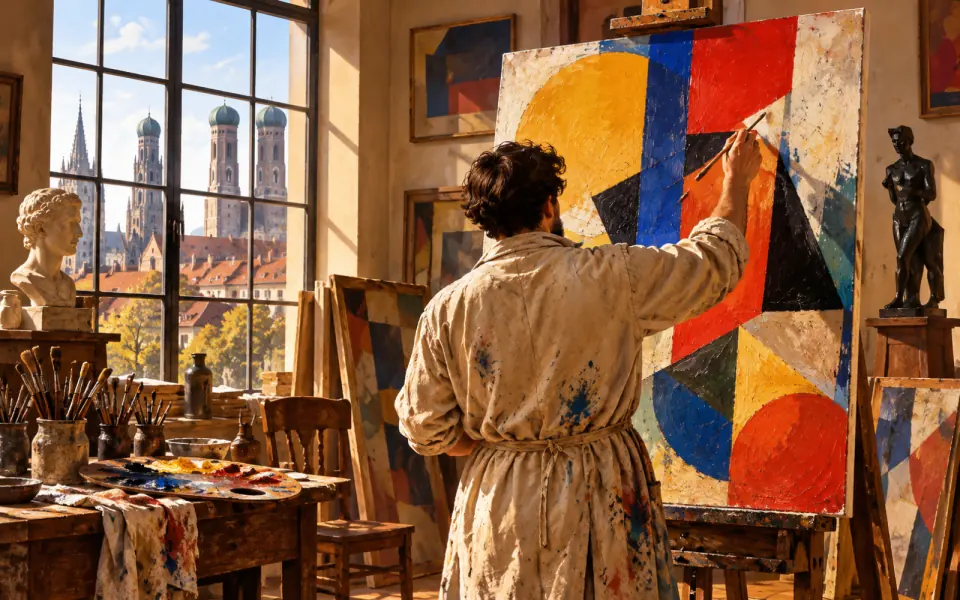
The artist who took this step more than anyone else was the Russian Wassily Kandinsky. He was born in Moscow in 1866, had studied law and economics, and at thirty, when he already had a secure career, he gave everything up to become a painter. He moved to Munich, in Germany, then one of the centres of art. He had a special gift: he felt colours as sounds. Yellow seemed to him like a shrill trumpet, deep blue like a cello, black like silence.
A painting upside down
Kandinsky told how the idea came to him one evening when he came back into his studio and saw a painting leaning on its side that he did not recognise: it was made only of shapes and colours, and was extraordinarily beautiful. He understood that what made a painting beautiful was not necessarily the object it showed. In 1910 he painted a watercolour with no recognisable subject, which for years was considered the first abstract painting, although historians argue about the exact date. In 1911 he published a book, “Concerning the Spiritual in Art”, in which he explained that colours and shapes can touch the soul just as music does. The same year, with his friend Franz Marc, he founded the group called “The Blue Rider” (Der Blaue Reiter).
His paintings, with big patches of bright colours, black lines like lightning bolts, and circles and triangles that seem to dance, were called “Impressions”, “Improvisations” or “Compositions”, like pieces of music. Many visitors to the exhibitions were bewildered: where was the landscape? What did it mean? Kandinsky replied that there was nothing to “understand”: you had to let yourself be moved.
A forgotten pioneer
In the same years, in Sweden, another artist was painting abstract pictures without anyone knowing: Hilma af Klint. Born in 1862 in Solna, near Stockholm, she had studied at the Academy and painted landscapes, but she was interested in spiritual and scientific ideas. Between 1906 and 1915 she created a large series of almost two hundred works, the “Paintings for the Temple”, with curving shapes, spirals and brilliant colours, often enormous. When she died, in 1944, she left instructions that the paintings should not be shown until twenty years after her death, because she felt the world was not ready. They were first shown only in 1986, and in 2018 a major exhibition at the Guggenheim Museum in New York was a huge success. Today many historians consider her one of the first abstract painters.
Other paths of abstract art
Abstract art soon took many directions. In 1915 the Russian Kazimir Malevich painted a black square on a white background, a very simple work, almost a provocation, which became a symbol: art can be reduced to a pure shape. The Dutchman Piet Mondrian, who started with landscapes with trees, simplified his images more and more until he reduced them to straight black lines and rectangles of primary colours, red, blue and yellow, in a search for balance and harmony. The Czech František Kupka and the Italian Giacomo Balla also explored movement and colour.
In the 1920s Kandinsky taught at the Bauhaus, a German school of art and design, where abstract ideas mixed with architecture, furniture and graphic design. In 1937 the Nazi regime put many of these artists on trial in the “Degenerate Art” exhibition: in reality it saw them as dangerous because of their freedom.
Why it happened
Abstract art was born in a climate of great change. At the end of the 19th century photography had taken away from painters the job of copying reality faithfully, and the Impressionists, and then Cézanne and Picasso, had already begun to transform shapes. Abstraction was the most radical step.
Music also mattered, since it expresses feelings without showing anything, and so did the new discoveries of science, which revealed an invisible world of atoms and waves. Many artists thought that painting should express an inner world rather than copy the outer one.
What changed
Abstract art opened up enormous freedom: from then on a painting could be made of colours, lines, patches and materials, and everyone could see different things in it. After the Second World War, abstraction dominated the international scene, with artists such as Jackson Pollock, who dripped paint onto the canvas, or Lucio Fontana, who cut slashes in the canvas to open up space.
Its language has entered everyday life: in posters, logos, fabrics, furniture and architecture. Mondrian's clean lines are found on clothes and objects; Kandinsky's strong colours in graphic design books.
Many people are puzzled in front of an abstract painting, and say: “I could do that myself.” But history shows that behind it there is often very long study, and that the starting idea, that a painting does not have to show something, was one of the boldest of modern art.
Key people and places
People
- Wassily Kandinsky
- Russian painter (1866–1944): considered one of the founders of abstract art.
- Hilma af Klint
- Swedish painter (1862–1944): she made abstract paintings from 1906, which were shown only many years after her death.
- Piet Mondrian
- Dutch painter (1872–1944): he simplified painting into black lines and primary colours.
- Kazimir Malevich
- Russian painter (1879–1935): in 1915 he painted the “Black Square”.
- Franz Marc
- German painter (1880–1916): co-founder, with Kandinsky, of the group “The Blue Rider”.
Places
- Munich, Germany
- The city where Kandinsky lived and worked and where the Blue Rider group was born.
- Stockholm, Sweden
- The city of Hilma af Klint.
Good to know
- Kandinsky felt colours as sounds: for him yellow was like a trumpet and blue like a cello.
- Hilma af Klint asked that her paintings not be shown until twenty years after her death.
- Malevich's “Black Square”, from 1915, is a black square painted on a white background.
- Mondrian used only black lines and the colours red, blue and yellow, as well as white.
- In 1937 the Nazis attacked many abstract artists in the “Degenerate Art” exhibition.
Find out more
- Wikipedia, “Wassily Kandinsky” en.wikipedia.org
- Wikipedia, “Hilma af Klint” en.wikipedia.org
- Tate, “Abstract art” tate.org.uk
Related events
- Picasso's Guernica1937 · Early 20th centuryPicasso's Guernica, another great work of modern art.
- Pop artabout 1962 · TodayPop art reacted against abstract art, bringing everyday images back into paintings.
- Renaissance perspectiveabout 1420 · Early modern ageRenaissance perspective had set the rules of painting that abstraction abandoned.
- Jazz spreadsabout 1920 · Early 20th centuryLike jazz, abstract art looked for a free, new language.
Before and after, in the era “Early 20th century”
Event 4 of 25
 BeforeThe first powered flight1903
 BeforeSpecial relativity1905
 BeforeMaria Montessori's Children's House1907
- You are hereAbstract artabout 1910
 AfterMarie Curie and her two Nobel Prizes1911
 AfterThe First World War1914–1918
 AfterThe Russian Revolution1917
 AfterRadio for everyoneabout 1920
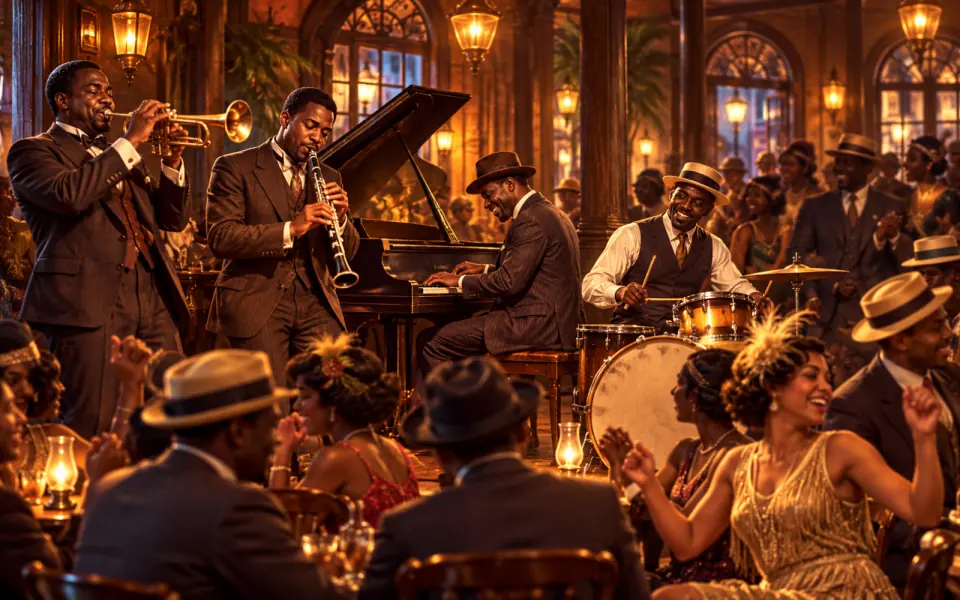 AfterJazz spreadsabout 1920
 AfterInsulin against diabetes1922
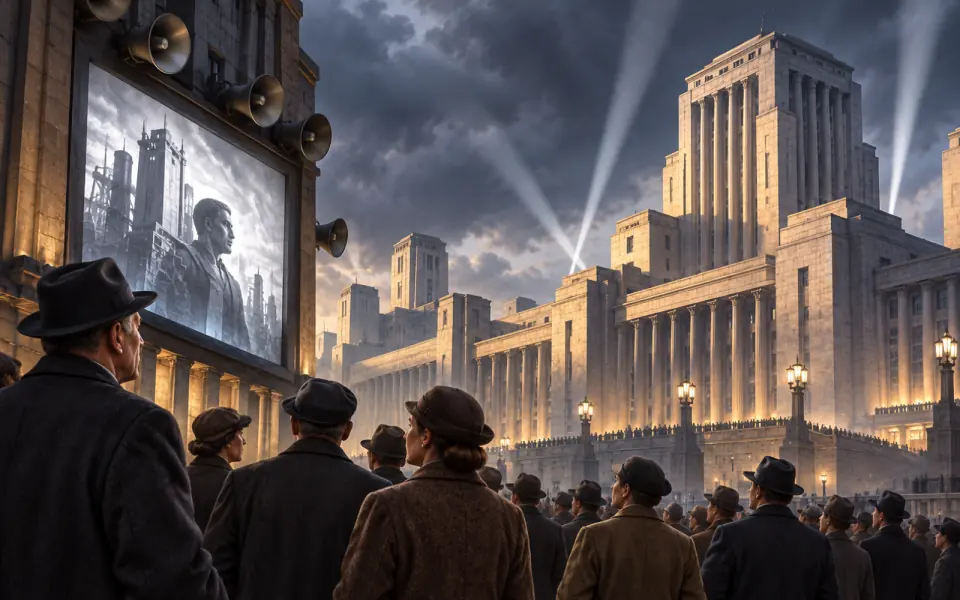 AfterTotalitarian regimes in Europe1922
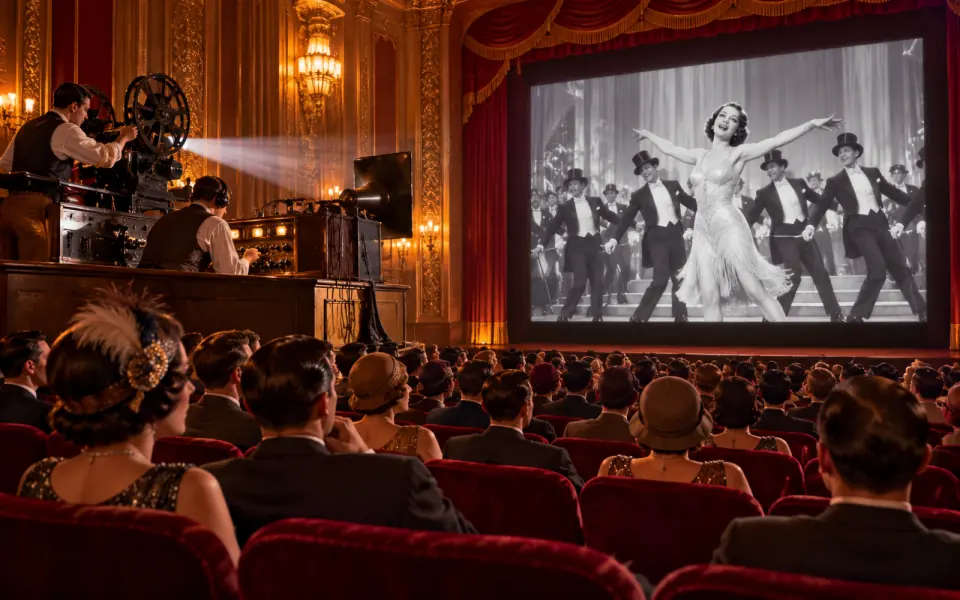 AfterTalking pictures1927
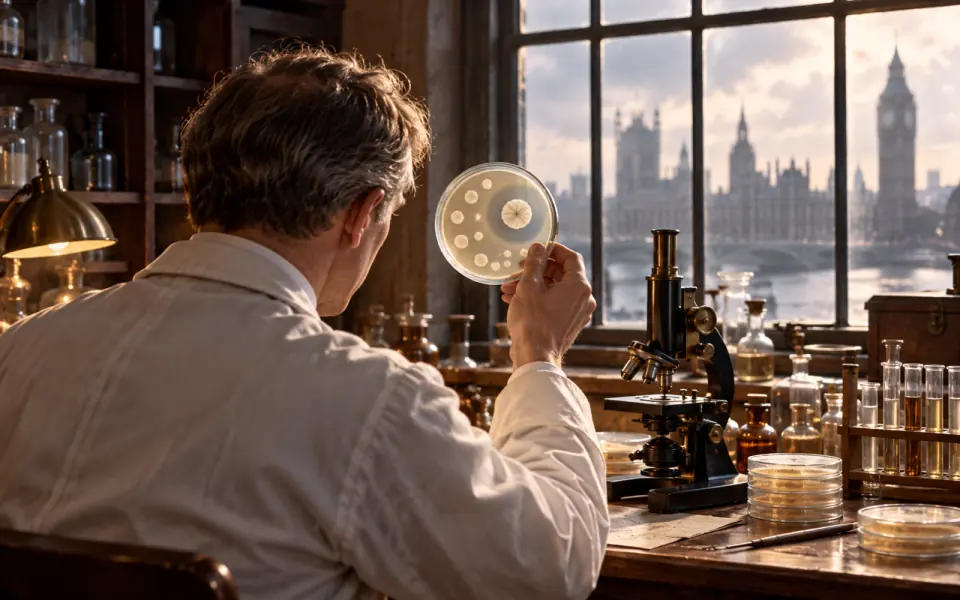 AfterThe discovery of penicillin1928
 AfterThe Great Depression1929
 AfterPicasso's Guernica1937
 AfterThe Second World War1939–1945
 AfterThe Shoahabout 1941–1945
 AfterAnne Frank writes her diary1942
 AfterFermi and the first atomic pile1942
 AfterThe Italian Resistance1943–1945
 AfterThe Italian Republic and votes for women1946
 AfterThe first general-purpose electronic computer1946
 AfterThe Italian Constitution1948
 AfterPost-war rebuildingabout 1948
 AfterTelevision spreadsabout 1950
Listen / Read next
- Music to read by: Cinematic JourneyEpic film-style music, no lyrics, by Ciro Simone IrmiciSpotifyYouTube Music
Meanwhile, elsewhere in the world
Other events of the era “Early 20th century”
- The first powered flight
- Special relativity
- Maria Montessori's Children's House
- Marie Curie and her two Nobel Prizes
- The First World War
- The Russian Revolution
- Radio for everyone
- Jazz spreads
- Insulin against diabetes
- Totalitarian regimes in Europe
- Talking pictures
- The discovery of penicillin
- The Great Depression
- Picasso's Guernica
- The Second World War
- The Shoah
- Anne Frank writes her diary
- Fermi and the first atomic pile
- The Italian Resistance
- The Italian Republic and votes for women
- The first general-purpose electronic computer
- The Italian Constitution
- Post-war rebuilding
- Television spreads
