Totalitarian regimes in Europe
1922 Italy, Germany and the Soviet Union
In short
After the war, regimes that wanted to control every part of people's lives took power in some European countries. In Italy, after the March on Rome in October 1922, Benito Mussolini was asked to lead the government and within a few years set up the Fascist dictatorship. In Germany Adolf Hitler came to power in 1933 with Nazism, while Stalin ruled the Soviet Union. These regimes abolished freedom of speech and opposition parties, persecuted anyone who disagreed and used propaganda, in schools too.
Why it matters Knowing how these dictatorships came about helps us understand how precious freedom and democracy are.
Source: Treccani, entry “Totalitarismo”
Study card about 4 minutes of reading
The story
After the war, a Europe in crisis
The First World War left Europe full of wounds. Soldiers who came home could not find work, prices rose, and many felt that the sacrifices had been for nothing. In Italy, which had won the war, many spoke of a “mutilated victory”, because it had not gained all the territories it had been promised. In Germany the defeated country had to pay enormous reparations, and many felt humiliated. In 1917 revolution had broken out in Russia, and the fear that it might spread to the rest of Europe alarmed businessmen, landowners and many of the middle class.
The democracies, young and fragile, struggled to solve these problems. In this climate, leaders who promised order, jobs and national pride, and said they could fix everything by force, had success. This is how what historians call totalitarian regimes were born in several countries: states in which a single party and a single leader control every aspect of public and private life.
Italy: Fascism
The first of these regimes was born in Italy. Benito Mussolini, a former socialist and journalist, founded the Fasci di Combattimento in 1919, with armed squads, the “Blackshirts”, who attacked trade unionists, socialists and peasants. On 28 October 1922 thousands of Fascists marched on Rome, the “March on Rome”. The government could have stopped them with the army, but King Victor Emmanuel III refused to sign a state of siege, and on 30 October he asked Mussolini to form a government.
Mussolini, in government, gradually turned Italy into a dictatorship. In 1924 the socialist deputy Giacomo Matteotti denounced in Parliament the violence and the fraud in the elections, and eleven days later he was kidnapped and killed by Fascist squads. On 3 January 1925 Mussolini took responsibility in Parliament for what had happened and declared that he would use force. Over the next two years political parties, free trade unions and opposition newspapers were banned, a Special Tribunal was created, and the secret police watched opponents, many of whom were arrested, sent into internal exile or forced to leave the country.
Control of society
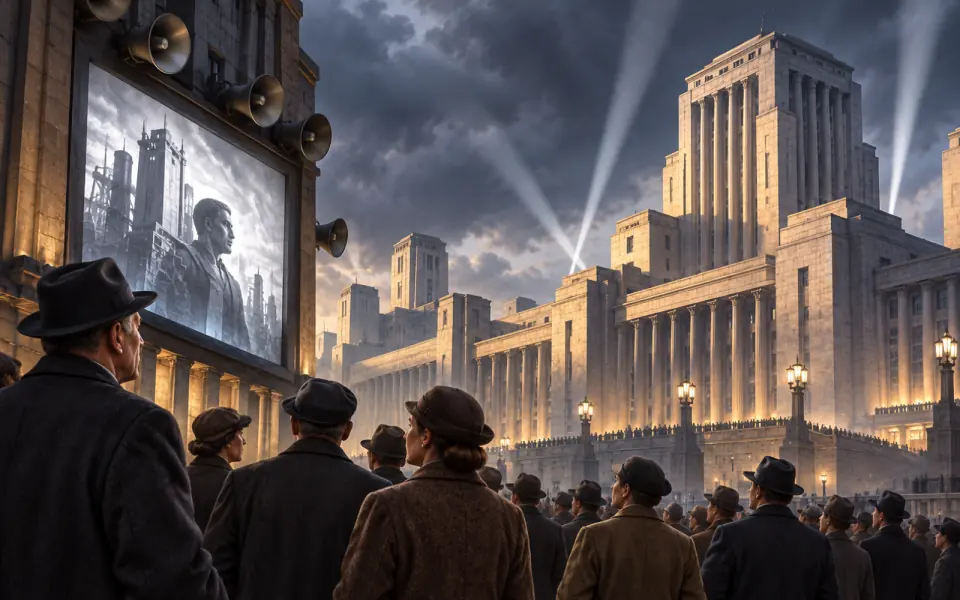
The regime tried to control everything: schools, with single textbooks and a duty to swear loyalty; free time, with organisations such as the Opera Nazionale Balilla for young people; the press and radio, with censorship and propaganda; culture, with the films of the Istituto Luce. The cult of the leader, the “Duce”, was everywhere: photos, writing on walls, slogans such as “Believe, obey, fight”. In 1935–36 Italy invaded Ethiopia, and in 1938 the racial laws were passed, which took away the rights of Italian Jews and removed them from schools and jobs.
Other regimes
In the Soviet Union, after Lenin's death in 1924, Joseph Stalin built a dictatorship in which the Communist Party controlled everything, with labour camps and mass repression. In Germany, after the economic crisis of 1929, Adolf Hitler's National Socialist party won many votes: Hitler was appointed chancellor on 30 January 1933 and in a few months got rid of the parties and freedoms. Nazism spread a violent racism, especially against Jews. In Spain, after a civil war (1936–1939), General Francisco Franco took power.
Those who said no
Not everyone gave in. Antonio Gramsci, founder of the Italian Communist Party, was arrested in 1926 and died in 1937, after years in prison, having written his famous “Notebooks”. The brothers Carlo and Nello Rosselli, anti-Fascists, were killed in France in 1937. Many Italians, in exile or in hiding, went on believing in freedom.
Why it happened
Totalitarian regimes arose from a sum of crises: the end of a devastating war, economic crisis, fear of communism, national humiliation and the weakness of young democracies. In these moments many citizens, frightened and disappointed, accepted authoritarian solutions, hoping to find order and security again.
The regimes used a combination of violence, propaganda and consent: fear of the police and of special tribunals on one hand, great ceremonies and the cult of the leader on the other. Many opponents, divided among themselves, did not manage to unite in time.
What changed
Totalitarian regimes led Europe to the Second World War, to persecution and to the extermination of millions of people. After the war the defeated countries abandoned them, and in 1945 Italy was liberated; the Fascist dictatorship had lasted more than twenty years.
That is why the Italian Constitution of 1948 affirms people's rights to freedom, and forbids the re-forming of the Fascist party. Every year, on 25 April, Italy celebrates Liberation Day, and on 27 January, Holocaust Remembrance Day, it remembers the victims of the extermination.
Understanding how those regimes arose is important today too: it shows how freedoms can be lost little by little if they are not defended, and why freedom of speech, a free press and the vote are precious.
Key people and places
People
- Benito Mussolini
- Leader of Fascism and of the Italian government from 1922 to 1943 (1883–1945).
- Adolf Hitler
- Leader of Nazism and of Germany from 1933 to 1945 (1889–1945).
- Joseph Stalin
- Leader of the Soviet Union from 1924 to 1953 (1878–1953).
- Giacomo Matteotti
- Socialist deputy (1885–1924): he denounced Fascist violence and was murdered.
- Antonio Gramsci
- Italian politician and philosopher (1891–1937): an opponent of Fascism, he wrote the “Notebooks” in prison.
Places
- Rome, Italy
- The city that the “March on Rome” reached on 28 October 1922.
- Berlin, Germany
- The capital where Hitler was appointed chancellor on 30 January 1933.
Good to know
- The March on Rome took place on 28 October 1922.
- The deputy Giacomo Matteotti was kidnapped and killed in June 1924.
- Antonio Gramsci wrote his “Prison Notebooks” while he was in prison.
- 25 April is the day that marks Italy's liberation from Nazi-Fascism.
- The Italian Constitution of 1948 forbids the re-forming of the Fascist party.
Find out more
- Wikipedia, “Fascism” en.wikipedia.org
- Wikipedia, “March on Rome” en.wikipedia.org
- Wikipedia, “Totalitarianism” en.wikipedia.org
- Wikipedia, “Giacomo Matteotti” en.wikipedia.org
Related events
- The First World War1914–1918 · Early 20th centuryThe First World War was the cause of the crisis.
- The Russian Revolution1917 · Early 20th centuryThe Russian Revolution created the first communist state.
- The Second World War1939–1945 · Early 20th centuryTotalitarian regimes led to the Second World War.
- The Italian Constitution1948 · Early 20th centuryThe Constitution of 1948 restored freedoms.
Before and after, in the era “Early 20th century”
Event 11 of 25
 BeforeThe first powered flight1903
 BeforeSpecial relativity1905
 BeforeMaria Montessori's Children's House1907
 BeforeAbstract artabout 1910
 BeforeMarie Curie and her two Nobel Prizes1911
 BeforeThe First World War1914–1918
 BeforeThe Russian Revolution1917
 BeforeRadio for everyoneabout 1920
 BeforeJazz spreadsabout 1920
 BeforeInsulin against diabetes1922
- You are hereTotalitarian regimes in Europe1922
 AfterTalking pictures1927
 AfterThe discovery of penicillin1928
 AfterThe Great Depression1929
 AfterPicasso's Guernica1937
 AfterThe Second World War1939–1945
 AfterThe Shoahabout 1941–1945
 AfterAnne Frank writes her diary1942
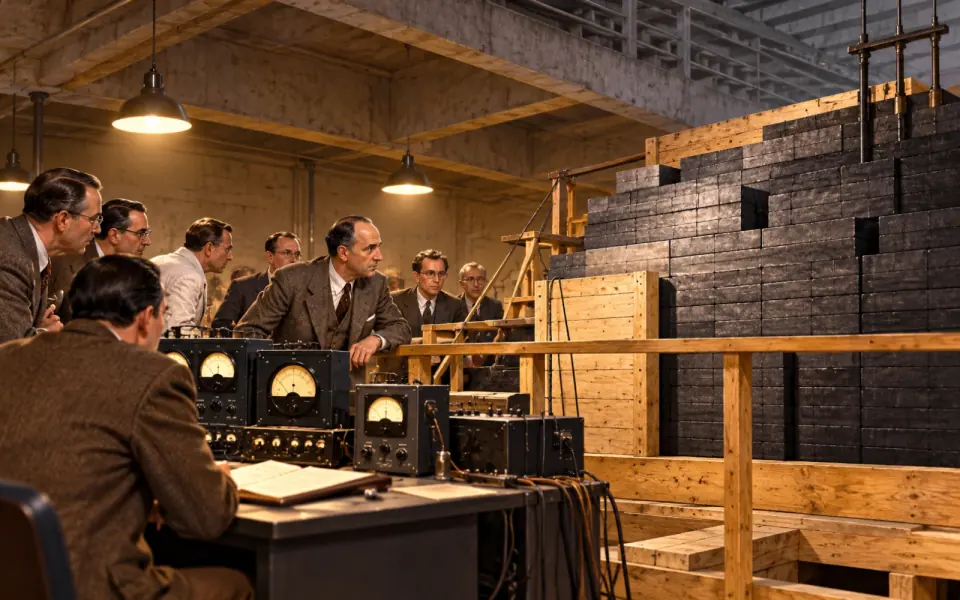 AfterFermi and the first atomic pile1942
 AfterThe Italian Resistance1943–1945
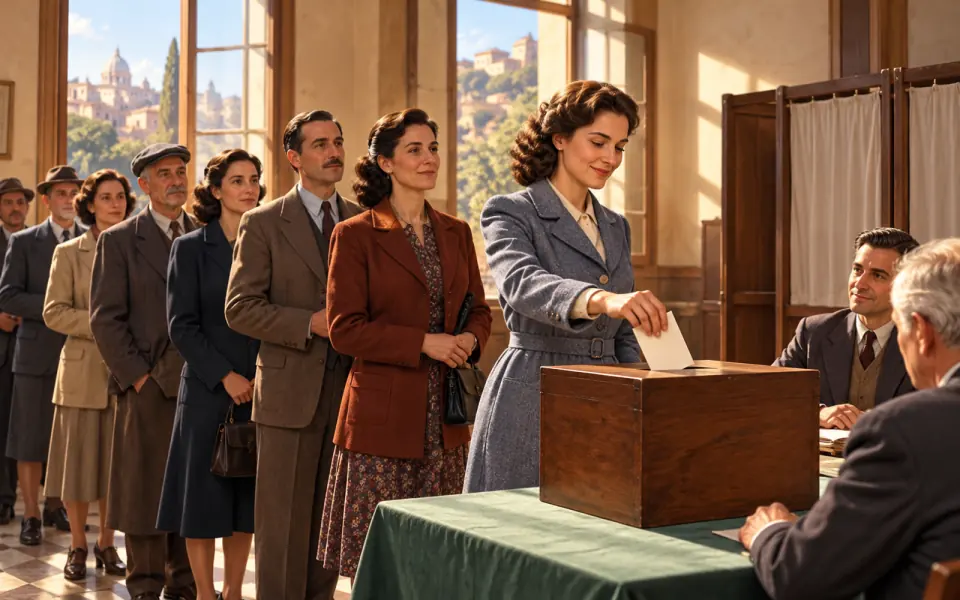 AfterThe Italian Republic and votes for women1946
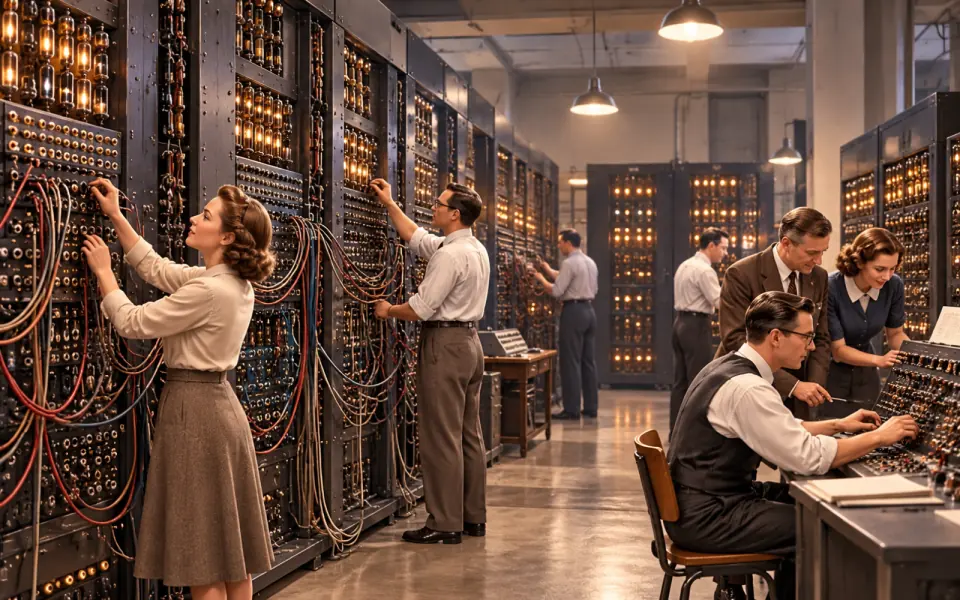 AfterThe first general-purpose electronic computer1946
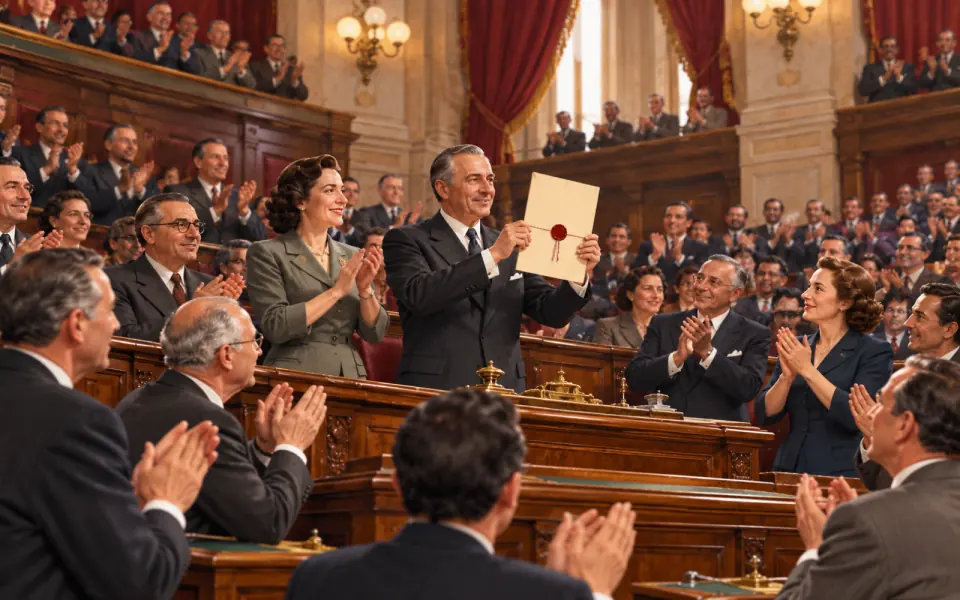 AfterThe Italian Constitution1948
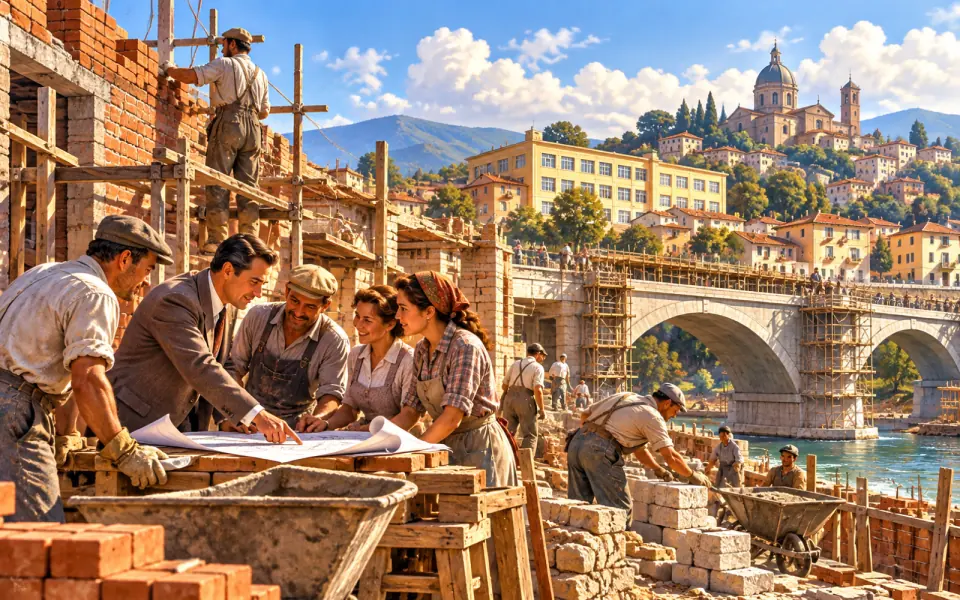 AfterPost-war rebuildingabout 1948
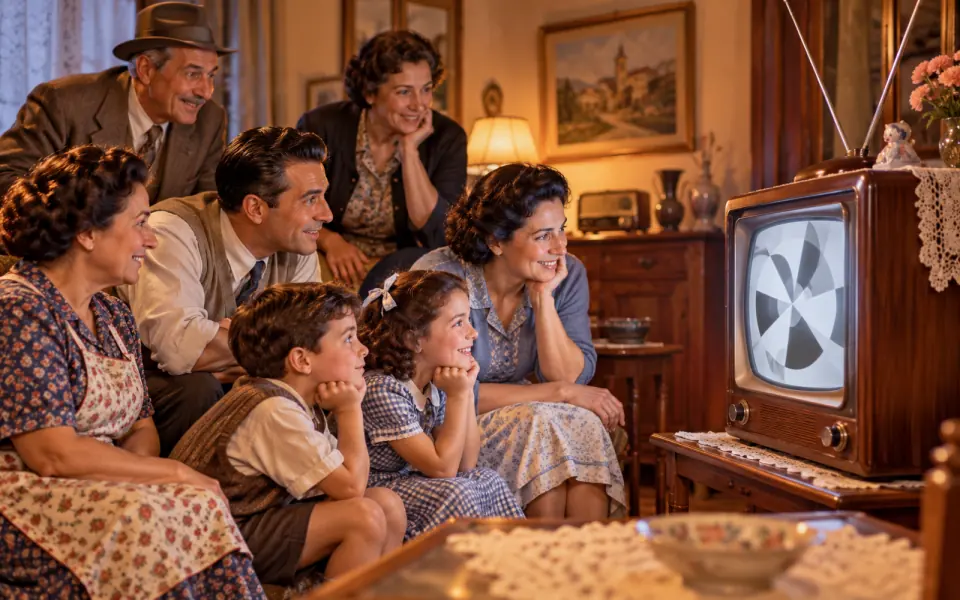 AfterTelevision spreadsabout 1950
Listen / Read next
- Music to read by: Cinematic JourneyEpic film-style music, no lyrics, by Ciro Simone IrmiciSpotifyYouTube Music
Meanwhile, elsewhere in the world
Other events of the era “Early 20th century”
- The first powered flight
- Special relativity
- Maria Montessori's Children's House
- Abstract art
- Marie Curie and her two Nobel Prizes
- The First World War
- The Russian Revolution
- Radio for everyone
- Jazz spreads
- Insulin against diabetes
- Talking pictures
- The discovery of penicillin
- The Great Depression
- Picasso's Guernica
- The Second World War
- The Shoah
- Anne Frank writes her diary
- Fermi and the first atomic pile
- The Italian Resistance
- The Italian Republic and votes for women
- The first general-purpose electronic computer
- The Italian Constitution
- Post-war rebuilding
- Television spreads
