The First World War
1914–1918 Europe and other continents (the spark in Sarajevo)
In short
On 28 June 1914, in Sarajevo, the heir to the throne of Austria-Hungary was assassinated, and within a few weeks the great European powers had declared war on each other. Most of the fighting took place in the trenches, long ditches where soldiers lived for months in the mud. Italy entered the war in May 1915 against Austria, and fought in the Alps and along the River Isonzo. The conflict, with new weapons such as machine guns, aeroplanes and tanks, caused millions of deaths and ended in November 1918.
Why it matters It changed the map of Europe, brought down four empires and left wounds that led to new wars.
Source: Treccani, entry “Guerra mondiale, Prima”
Study card about 5 minutes of reading
The story
A Europe full of alliances
At the start of the 20th century Europe was living through a time that many called the “Belle Époque”: factories, railways, big cities and inventions made the future look bright. Beneath the surface, though, there were tensions. The great powers competed for colonies and trade and spent heavily on armies and warships. In many countries nationalism was growing: the idea that your own nation was better than the others.
The states had joined together in two great blocs: on one side the Triple Alliance, made up of Germany, Austria-Hungary and Italy; on the other the Triple Entente, with France, Russia and Great Britain. The idea was to discourage war, but it had the opposite effect: all it took was a spark for a dispute between two countries to drag in all the others. The Austro-Hungarian Empire, what is more, included many different peoples, among them the Serbs and the South Slavs, who dreamed of being independent.
Sarajevo, 28 June 1914
On that day Archduke Franz Ferdinand, heir to the throne of Austria-Hungary, was visiting Sarajevo, the capital of Bosnia, a province the empire had annexed a few years earlier. With him was his wife, Sophie. A group of young Slav nationalist students, who wanted to free Bosnia from Austrian rule, were waiting for them along the route. A first bomb was thrown at the car, but missed its target. Later, because the driver took a wrong turn, the car stopped right in front of one of them, nineteen-year-old Gavrilo Princip, who fired and killed the archduke and his wife.
Austria-Hungary accused Serbia of having helped the plotters and, on 23 July, sent an ultimatum with very harsh demands. Serbia accepted almost everything, but it was not enough: on 28 July Austria declared war. Then Russia, which saw itself as the protector of the Serbs, mobilised its army; Germany, Austria's ally, declared war on Russia on 1 August and on France on 3 August. To attack France, the Germans passed through Belgium, a neutral country, and on 4 August Great Britain entered the war. Within a few weeks, the whole of Europe was at war.
The trenches
At first many soldiers left with enthusiasm, convinced the war would be over by Christmas. It was not. On the Western Front, between France and Belgium, the armies came to a halt and dug long trenches, from which they could not move. The new weapons, machine guns, long-range cannons and barbed wire, made it almost impossible to advance, and every attack cost thousands of lives. In 1916 the Battle of Verdun lasted almost ten months and the Battle of the Somme caused over a million dead and wounded.
Soldiers from every country lived for months in mud, with the cold, the rats and the fear. Aeroplanes, submarines, poison gas and tanks were used on a large scale for the first time. Civilians suffered too: hunger, bombing, and work in the arms factories, largely done by women while the men were at the front.
Italy enters the war
Italy, although part of the Triple Alliance, at first stayed neutral. The country was divided between those who wanted war and those who did not. On 26 April 1915 the government signed a secret agreement with the Triple Entente, the Treaty of London, and in May it declared war on Austria-Hungary, in order to win Trento and Trieste. The Italian front ran through the mountains, between the Alps and the Isonzo river, in a landscape of glaciers, rocks and tunnels dug into the stone. After eleven battles on the Isonzo, in October 1917 the Italian army suffered a heavy defeat at Caporetto and fell back to the Piave, where it held firm. In October and November 1918 Italy won at Vittorio Veneto, and on 3 November Austria signed the armistice, which came into force the next day.
The end
In 1917 the United States entered the war on the side of the Entente, and Russia, overwhelmed by revolution, left the conflict. On 11 November 1918, at about five in the morning, Germany signed the armistice, which came into force at eleven, and the war ended. The toll was terrible: about ten million soldiers dead, in Italy over six hundred thousand, and millions of civilians. It was called the “Great War”, and many hoped it would be the last.
Why it happened
The First World War arose from a combination of causes: rivalry between the great powers over colonies and markets, the arms race, nationalism and the system of alliances that turned a local crisis into a European war. The assassination in Sarajevo was only the spark.
The mistakes of governments weighed heavily too: nobody wanted such a long war, but the generals had rigid mobilisation plans, and once the armies began to move it was hard to stop. In many countries public opinion, stirred up by newspapers and propaganda, was in favour of war.
What changed
The war changed Europe. Four empires collapsed: the Austro-Hungarian, the German, the Russian and the Ottoman. New states were born, such as Poland, Czechoslovakia and Yugoslavia. With the Treaty of Versailles in 1919 people tried to build peace and the League of Nations was created, but the conditions imposed on Germany, seen as harsh and humiliating, and the unsolved problems prepared the way for further conflicts.
It was a “total” war: it involved whole societies and changed the work of women, who entered the factories and then, in many countries, won the right to vote. The Spanish flu epidemic also spread in 1918, killing millions of people.
The memory of that war is still alive: every year, on 11 November, many countries remember the fallen; in Italy, on 4 November. The poet Giuseppe Ungaretti, a soldier at the front, wrote very short verses full of truth: “We are as in autumn the leaves on the trees.”
Key people and places
People
- Franz Ferdinand
- Archduke of Austria (1863–1914): heir to the throne of Austria-Hungary, killed in Sarajevo on 28 June 1914.
- Gavrilo Princip
- Bosnian nationalist (1894–1918): at 19 he shot the archduke and his wife.
- Wilhelm II
- Emperor of Germany from 1888 to 1918 (1859–1941): Germany went to war during his reign.
- Armando Diaz
- Italian general (1861–1928): he led the army after Caporetto until the victory of 1918.
- Giuseppe Ungaretti
- Italian poet (1888–1970): a soldier in the Great War, he wrote verses about the front.
Places
- Sarajevo, Bosnia
- The city where Archduke Franz Ferdinand was killed on 28 June 1914.
- Isonzo and Piave, north-eastern Italy
- The rivers along which the Italian front was fought.
Good to know
- The Great War, between 1914 and 1918, caused about ten million deaths among soldiers.
- Italy entered the war in May 1915 and lost over six hundred thousand dead.
- Soldiers dug trenches hundreds of kilometres long between France and Belgium.
- For the first time on a massive scale, aeroplanes, submarines, tanks and gas were used in war.
- At 11 a.m. on 11 November 1918 the guns fell silent on the Western Front.
Find out more
- Wikipedia, “World War I” en.wikipedia.org
- Wikipedia, “World War I” en.wikipedia.org
- Wikipedia, “Italian front (World War I)” en.wikipedia.org
Related events
- The Russian Revolution1917 · Early 20th centuryIn 1917 the Russian Revolution took Russia out of the war.
- The Second World War1939–1945 · Early 20th centuryThe consequences of the war prepared the way for the Second World War.
- The Great Depression1929 · Early 20th centuryThe Great Depression was another consequence of the post-war period.
- Totalitarian regimes in Europe1922 · Early 20th centuryTotalitarian regimes were also born from the crisis after the war.
Before and after, in the era “Early 20th century”
Event 6 of 25
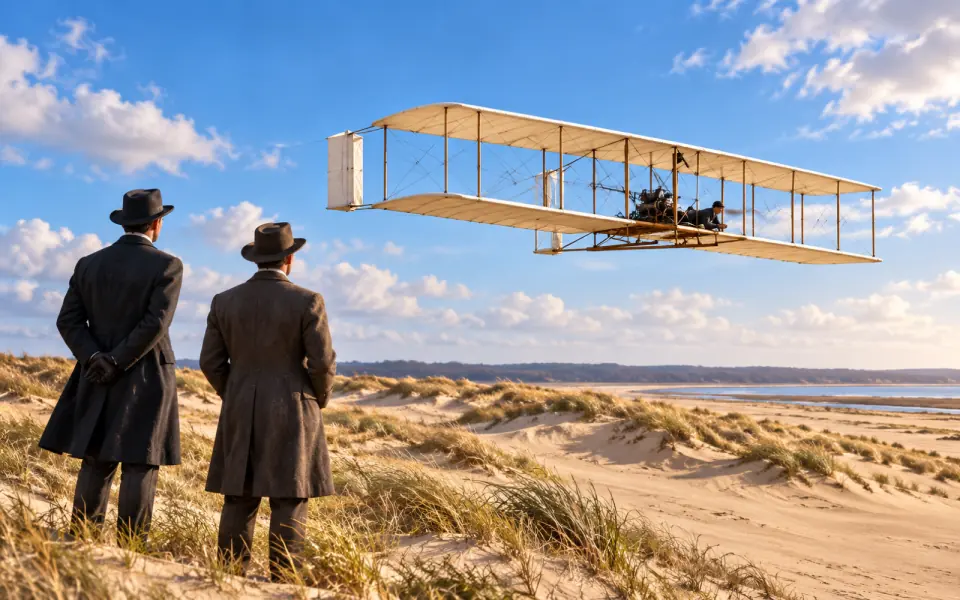 BeforeThe first powered flight1903
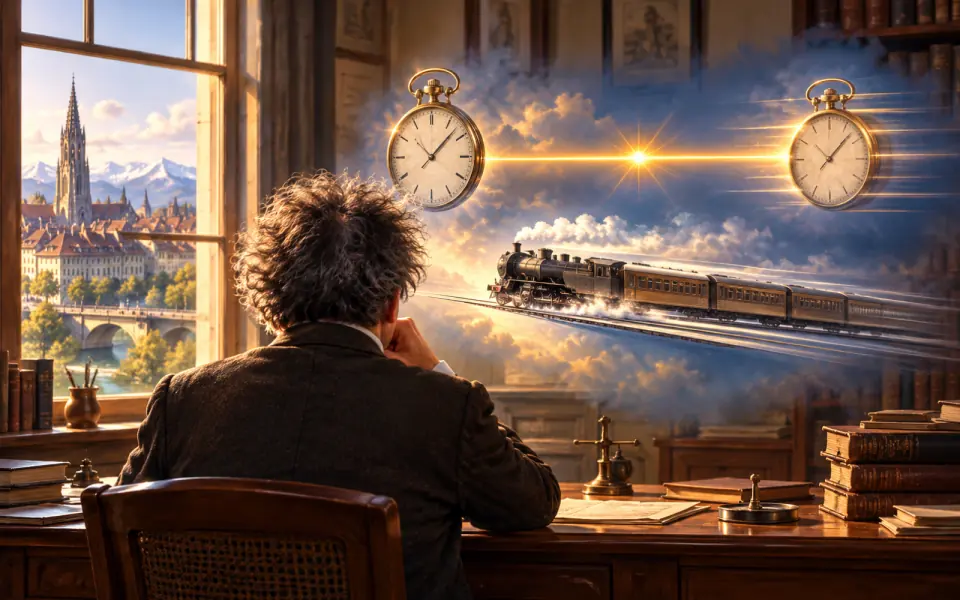 BeforeSpecial relativity1905
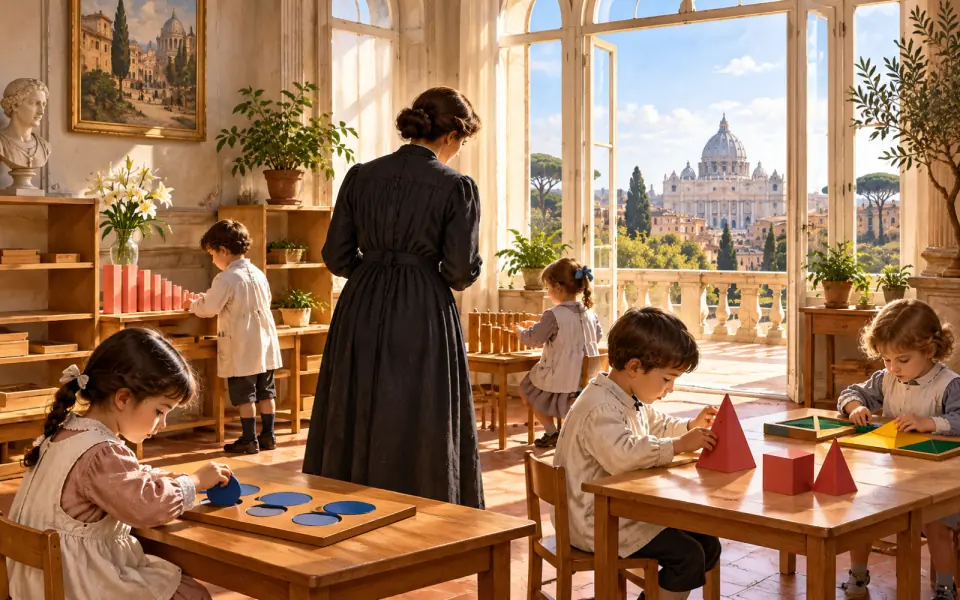 BeforeMaria Montessori's Children's House1907
 BeforeAbstract artabout 1910
 BeforeMarie Curie and her two Nobel Prizes1911
- You are hereThe First World War1914–1918
 AfterThe Russian Revolution1917
 AfterRadio for everyoneabout 1920
 AfterJazz spreadsabout 1920
 AfterInsulin against diabetes1922
 AfterTotalitarian regimes in Europe1922
 AfterTalking pictures1927
 AfterThe discovery of penicillin1928
 AfterThe Great Depression1929
 AfterPicasso's Guernica1937
 AfterThe Second World War1939–1945
 AfterThe Shoahabout 1941–1945
 AfterAnne Frank writes her diary1942
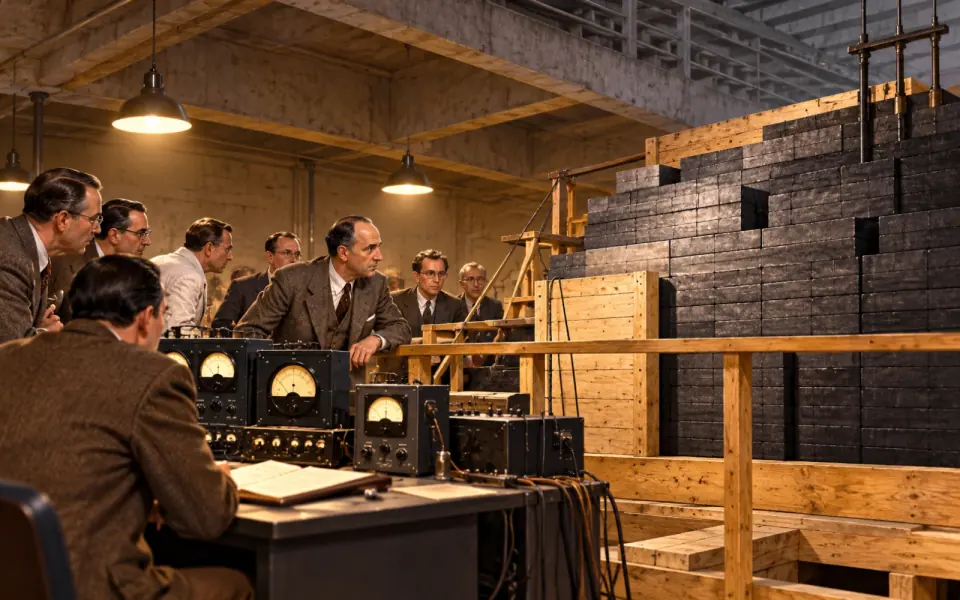 AfterFermi and the first atomic pile1942
 AfterThe Italian Resistance1943–1945
 AfterThe Italian Republic and votes for women1946
 AfterThe first general-purpose electronic computer1946
 AfterThe Italian Constitution1948
 AfterPost-war rebuildingabout 1948
 AfterTelevision spreadsabout 1950
Listen / Read next
- Music to read by: Cinematic JourneyEpic film-style music, no lyrics, by Ciro Simone IrmiciSpotifyYouTube Music
Meanwhile, elsewhere in the world
Other events of the era “Early 20th century”
- The first powered flight
- Special relativity
- Maria Montessori's Children's House
- Abstract art
- Marie Curie and her two Nobel Prizes
- The Russian Revolution
- Radio for everyone
- Jazz spreads
- Insulin against diabetes
- Totalitarian regimes in Europe
- Talking pictures
- The discovery of penicillin
- The Great Depression
- Picasso's Guernica
- The Second World War
- The Shoah
- Anne Frank writes her diary
- Fermi and the first atomic pile
- The Italian Resistance
- The Italian Republic and votes for women
- The first general-purpose electronic computer
- The Italian Constitution
- Post-war rebuilding
- Television spreads
