The Romano-Germanic kingdoms
about AD 480 Western Europe (Ravenna, Theodoric's capital)
In short
After the end of the Western Empire, many kingdoms led by Germanic peoples grew up on its lands. The Visigoths ruled Spain, the Franks Gaul, the Vandals North Africa and the Ostrogoths, under King Theodoric, Italy. The new kings were few compared with the Roman population and often kept Roman laws in force. Slowly the languages, customs and religions of the two peoples blended together.
Why it matters Many centuries later, countries such as France and Spain would grow out of these kingdoms.
Source: Treccani, entry “Romano-barbarici, regni”
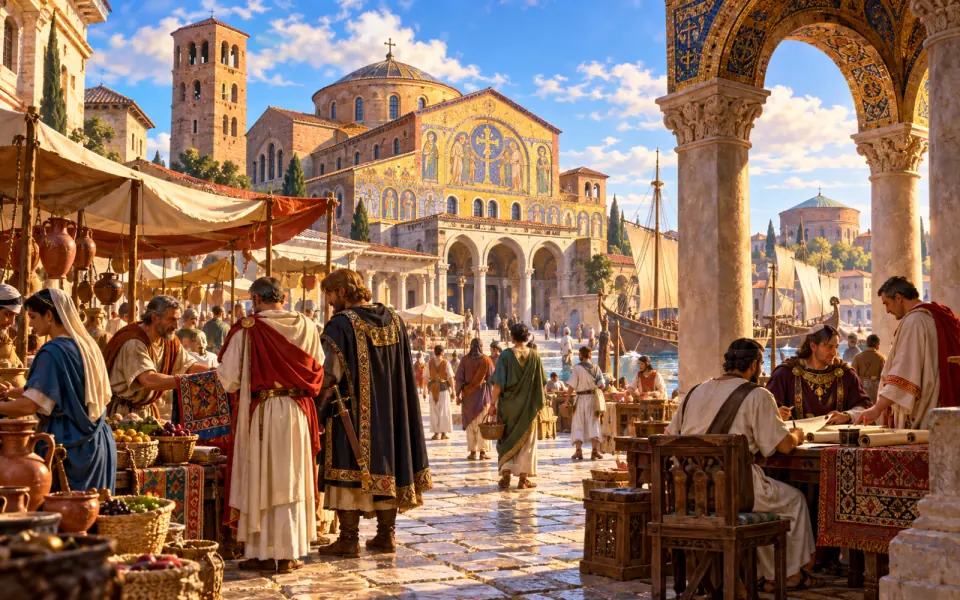
Study card about 6 minutes of reading
The story
After the last emperor
In AD 476 the last emperor of the West, Romulus Augustulus, was deposed by Odoacer. But the empire had not vanished overnight, and life in the towns and the countryside did not change all of a sudden. For a long time, groups of Germanic peoples (the Romans called them “barbarians”, meaning foreigners who did not speak Latin) had been living inside the empire's borders. Some had arrived in war, others as allies paid to defend the frontiers. When Rome's power in the West grew weak, their leaders began to rule alone the lands where they had settled. So, between the 5th and the 6th century, western Europe filled up with new kingdoms. Historians call them the “Romano-barbarian” or “Romano-Germanic” kingdoms, because in each of them two worlds lived side by side.
A map of Europe to redraw
The Visigoths had settled in AD 418 in Aquitaine, in southern Gaul, with their capital at Toulouse. Defeated by the Franks in 507 at Vouillé, near Poitiers, they withdrew to Spain, where the capital became Toledo. Their kingdom lasted until 711, when the Arabs arrived.
The Franks were a league of Germanic tribes. Their king Clovis, who came to power in 481, defeated the Roman general Syagrius at Soissons in 486 and then the Visigoths. He made Paris his capital. He was also the first great Germanic king to be baptised in the Catholic faith, that of the Romans: tradition says in 496, but recent studies put it somewhere between 496 and about 508. It was a clever choice, because it won him the support of the bishops and of the Roman population.
The Vandals, who crossed from Spain to Africa between 429 and 430, had their most famous king in Geiseric, who sacked Rome in 455. The Vandal kingdom lasted until 534, when it was reconquered by the Byzantines. In Italy Theodoric, king of the Ostrogoths, set out in 488 with the approval of the Eastern emperor Zeno, defeated Odoacer in 493 and set up his court at Ravenna. In the British Isles, after the Romans left at the beginning of the 5th century, the Angles, Saxons and Jutes gradually settled on the island and founded seven kingdoms, known as the Heptarchy.
There were other, smaller ones: the Burgundians between the Saône and the Rhône, in the region now called Burgundy, and the Suevi in Galicia, in the north-west of Spain, who even minted their own coins.
Two peoples in the same country
In almost all the kingdoms the newcomers were few compared with the Roman inhabitants, and the kings knew it. To govern, they needed officials, judges and bishops who knew Latin and the old rules. In the Ostrogothic kingdom, for example, the Goths took care of war and the Romans of civil administration: this was the division of tasks that Theodoric wanted. Of all the kingdoms, Theodoric's was the one most like the old empire: the ancient offices and the structure of the Roman state stayed in force.
The laws also show this living together. The Visigoths had a code of their own, the Code of Euric, written around 475. In 506 King Alaric II had a collection of simplified Roman laws made for his Roman subjects, the Lex Romana Visigothorum. The Burgundians did the same with the Lex Romana Burgundionum, written at the beginning of the 6th century (the exact date is debated). For a time, then, a Goth and a Roman could be judged by different rules. Only much later was there a single law for everyone, such as the code of the Visigothic king Recceswinth, around 654.
The problem of faith
Another obstacle was religion. Many Germanic peoples were Christians, but they followed Arianism, a teaching different from that of the Catholics: the Arians thought that Jesus was lower than God the Father. The Vandals, Ostrogoths, Visigoths and Burgundians were Arians, while their Roman subjects were Catholics. So in the same city there could be two bishops and two churches, and at Ravenna Theodoric had separate places of worship built. Some Arian kings treated Catholics well, others persecuted them: the Vandals were harsh with the Catholic clergy. In time the difference disappeared. The Burgundian king Sigismund, who came to the throne in 516, was already Catholic, and the Visigothic king Reccared became so in 589.
A slow blending
For a few generations the two peoples lived side by side without mixing completely. Then they began to have the same neighbours, the same markets and mixed marriages. Latin words changed under the influence of the newcomers, and little by little French, Spanish and the other Romance languages were born from spoken Latin. Not everything lasted: the Vandals were defeated by the Byzantines in 534 and the Ostrogoths disappeared after the Gothic War, which ended in 553. Other kingdoms, such as that of the Franks, survived instead and became the base of the Middle Ages.
Why it happened
The main reason was the crisis of imperial power in the West. Already from the 4th century the empire found it hard to defend its borders, thousands of kilometres long, and for this reason it used Germanic soldiers, to whom it gave land and pay. As the state grew weaker, those commanders became stronger than the officials who were supposed to control them.
The great migrations of peoples also mattered. Whole groups, pushed by wars, famines or other neighbouring peoples, looked for new land inside the empire, where the soil was rich and the cities were full of wealth. When Rome could no longer stop them or pay them, the Germanic chiefs took over the government of the territories directly. For this reason a kingdom often arose from an agreement, or from something that had already happened and that the emperor ended up recognising: Theodoric, for example, acted with Zeno's permission, and Clovis received the title of consul from the emperor Anastasius.
What changed
Western Europe was no longer a single state, but a series of different kingdoms, each with its own kings and laws. This division was never wiped out again, not even when there were emperors such as Charlemagne: the borders moved, but Europe remained a collection of states.
The kingdoms mixed Roman and Germanic customs. From the Romans came the Latin language, the Church, the cities and many laws; from the Germanic peoples came new ways of fighting, of dividing an inheritance and of choosing the king. The Catholic Church, with its bishops and monasteries, became the institution that joined the two peoples, and its role grew a great deal.
Countries that still exist today later grew out of these kingdoms. France takes its name from the Franks, England from the Angles (the land of the Angles), Burgundy from the Burgundians. Even today's Spain has its roots in the Visigothic kingdom of Toledo, which lasted until 711. This is also why, to understand the map of Europe today, we have to start from the 5th and 6th centuries.
Key people and places
People
- Theodoric
- King of the Ostrogoths, he ruled Italy from Ravenna from 493 to 526, governing together with Roman and Gothic officials.
- Clovis
- King of the Franks from 481: he defeated Syagrius in 486 and the Visigoths in 507, and converted to Catholic Christianity.
- Geiseric
- King of the Vandals: he led them to Africa between 429 and 430 and sacked Rome in 455.
- Alaric II
- King of the Visigoths: in 506 he had the Roman laws collected for his Roman subjects; he died in 507 at Vouillé.
- Reccared I
- Visigothic king who in 589 gave up Arianism and became a Catholic, together with his whole kingdom.
Places
- Ravenna
- Town in north-eastern Italy, first the capital of the last Western empire and then of Theodoric's kingdom.
- Toledo
- City in central Spain: the Visigothic kings chose it as their capital after losing Gaul.
- Paris
- City on the Seine, chosen by Clovis as the capital of the kingdom of the Franks.
- Soissons
- Town in northern France, where in 486 Clovis defeated the last Roman general in Gaul.
Good to know
- The name “France” comes from the Franks, “Burgundy” from the Burgundians and “England” from the Angles: three countries today carry the names of the peoples of those kingdoms.
- The Suevi, in the north-west of Spain, were the first kingdom to break away from the empire and to mint their own coins, according to Wikipedia.
- At Ravenna you can still see the Arian Baptistery and other buildings of that time, built for the Goths, who followed a Christian faith different from that of the Romans.
- For the Romans the word “barbarians” meant only “foreigners” who did not speak Latin, not “savages”.
- Toledo, chosen by the Visigothic kings as their capital, remained for centuries one of the most important cities in Spain.
Find out more
- Wikipedia, “Barbarian kingdoms” en.wikipedia.org
- Wikipedia, “Theodoric the Great” en.wikipedia.org
- Wikipedia, “Clovis I” en.wikipedia.org
- Wikipedia, “Arianism” en.wikipedia.org
Related events
- The Lombards in ItalyAD 568 · Early Middle AgesIn 568 another Germanic people, the Lombards, entered Italy.
- Emperor JustinianAD 527 · Early Middle AgesJustinian reconquered part of those lands for the Eastern Empire.
- Charlemagne, King of the FranksAD 768 · Early Middle AgesCharlemagne united most of the kingdoms of the Franks and the Lombards.
- The mosaics of San Vitale in RavennaAD 547 · Early Middle AgesAt Ravenna, Theodoric's capital, the Byzantines later made the mosaics of San Vitale.
Before and after, in the era “Early Middle Ages”
Event 1 of 25
- You are hereThe Romano-Germanic kingdomsabout AD 480
 AfterEmperor JustinianAD 527
 AfterJustinian's CodeAD 529
 AfterBenedictine monksabout AD 529
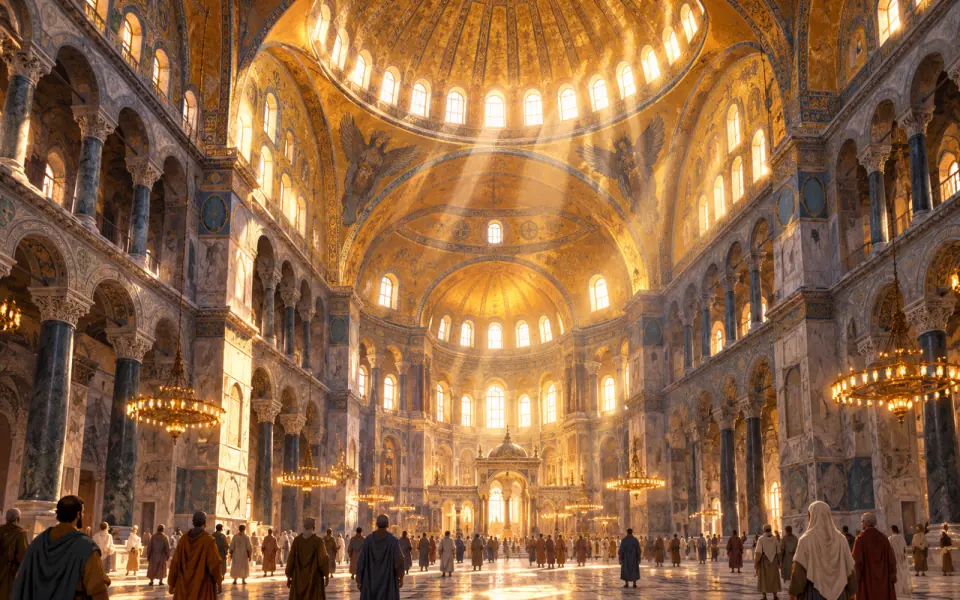 AfterHagia Sophia in ConstantinopleAD 537
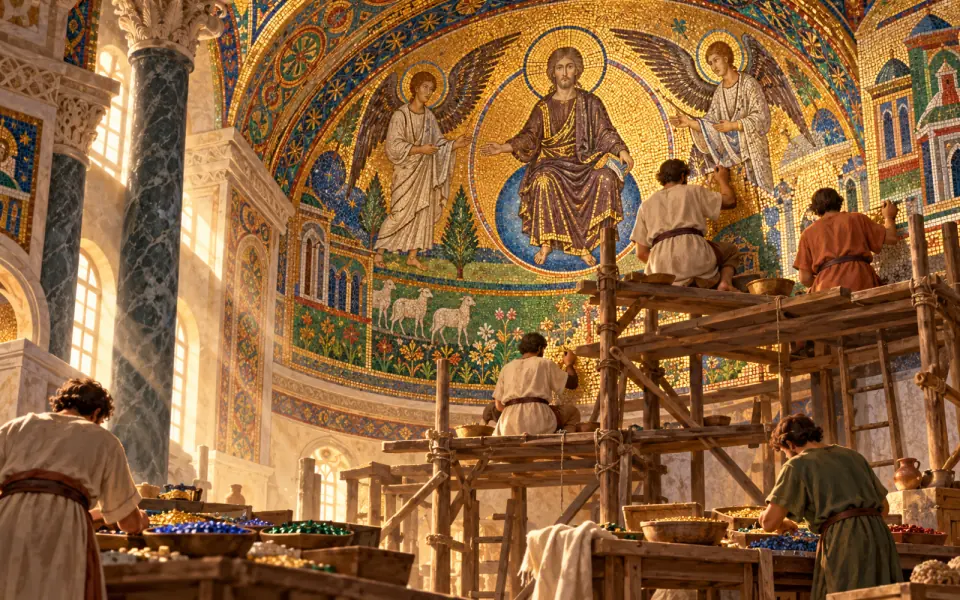 AfterThe mosaics of San Vitale in RavennaAD 547
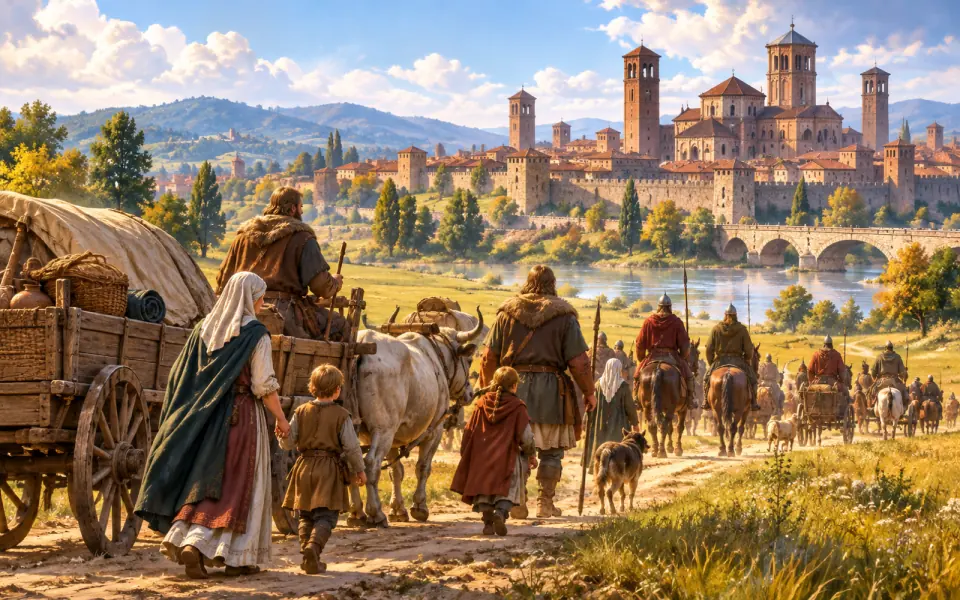 AfterThe Lombards in ItalyAD 568
 AfterMuhammad's HijraAD 622
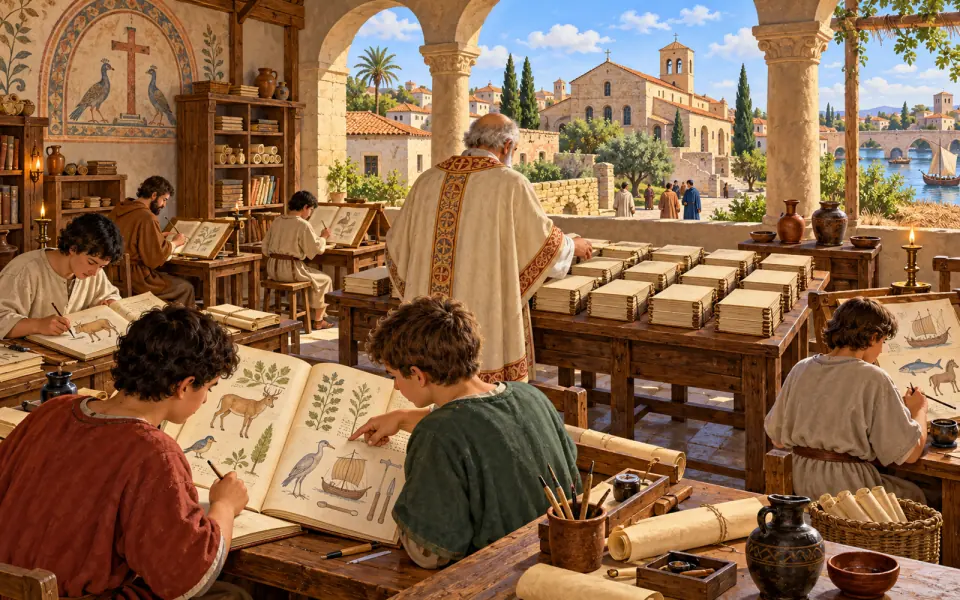 AfterIsidore writes the Etymologiesabout AD 625
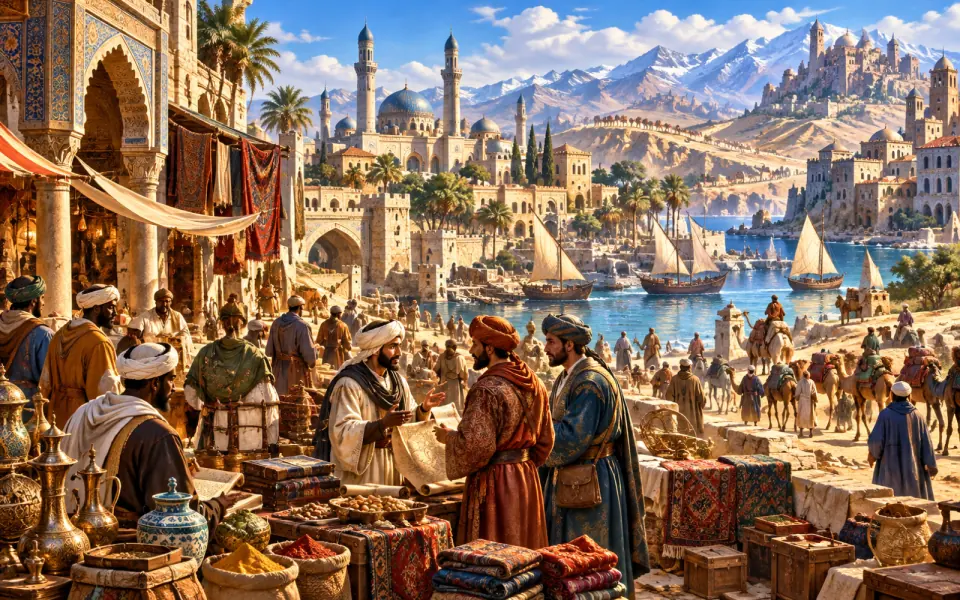 AfterThe spread of IslamAD 632–750
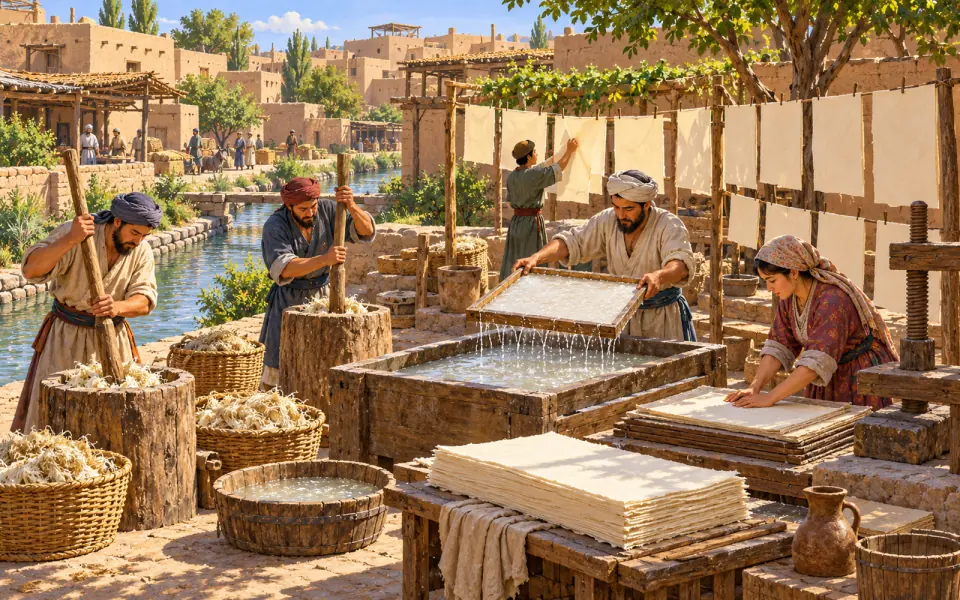 AfterPaper reaches Samarkandabout AD 751
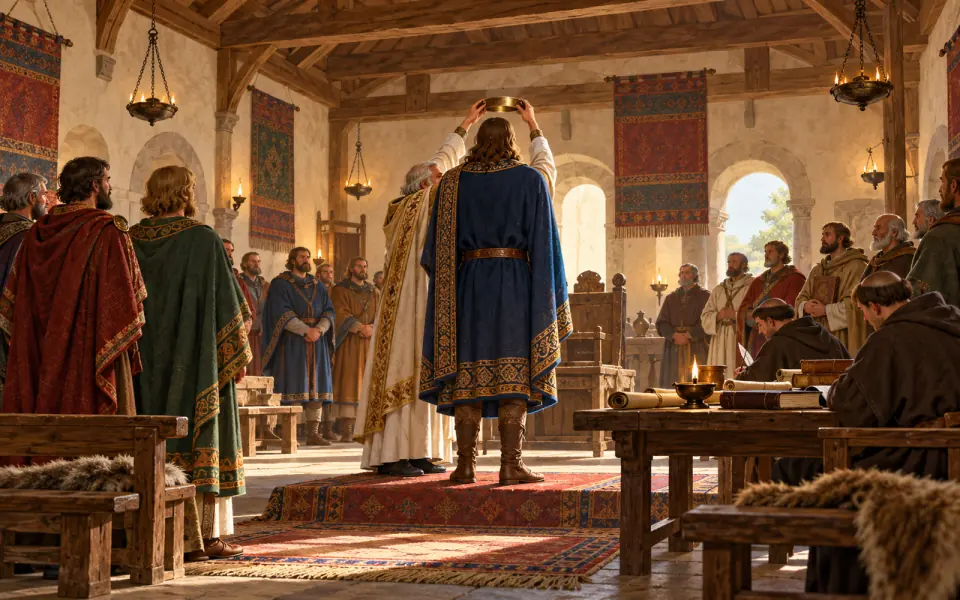 AfterCharlemagne, King of the FranksAD 768
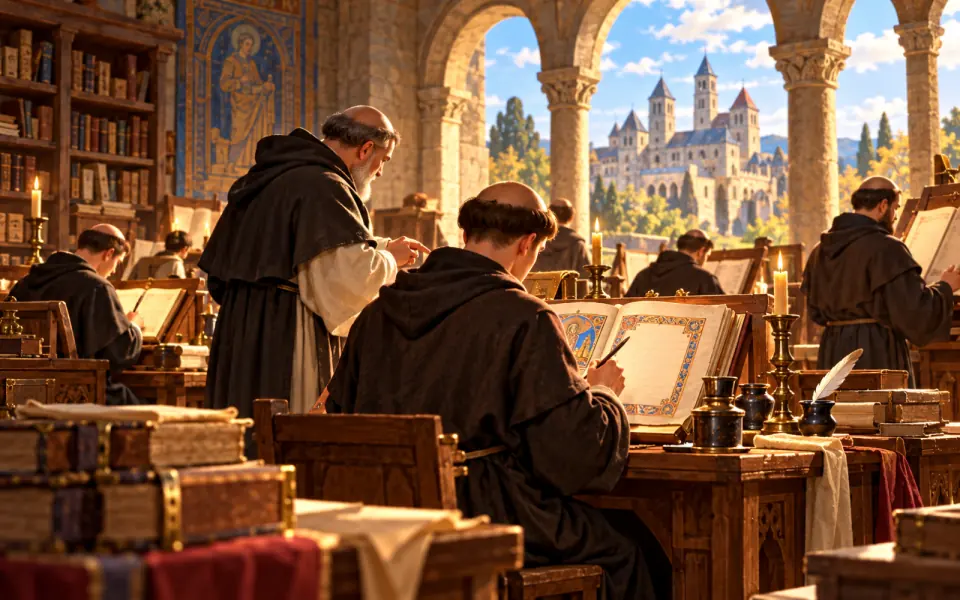 AfterThe Carolingian Renaissanceabout AD 790
 AfterThe Book of Kellsabout AD 800
 AfterCharlemagne crowned emperorAD 800
 AfterHindu-Arabic numerals head westabout AD 825
 AfterWriting music down with neumesabout AD 850
 AfterThe Diamond Sutra, oldest dated printed bookAD 868
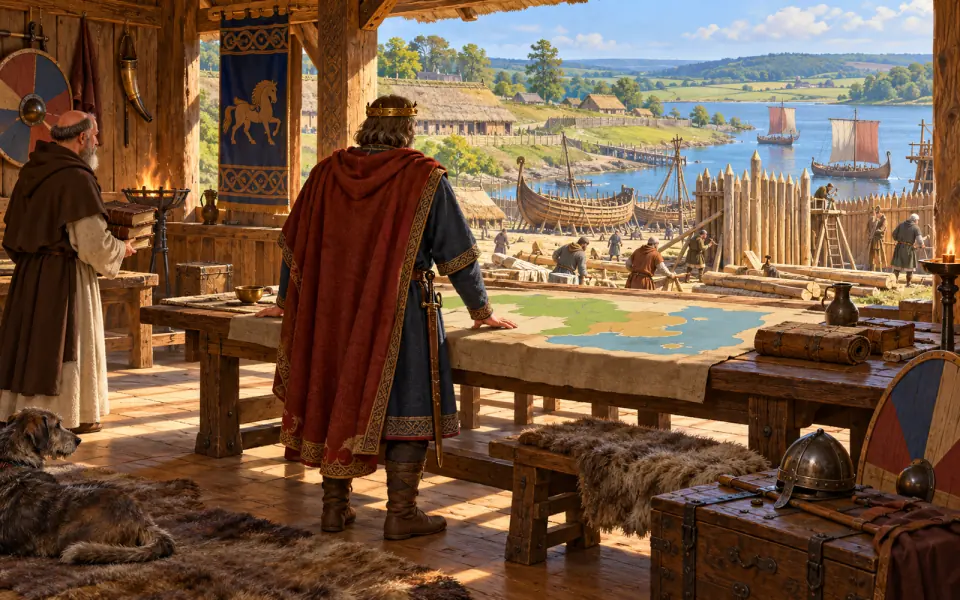 AfterAlfred the GreatAD 871
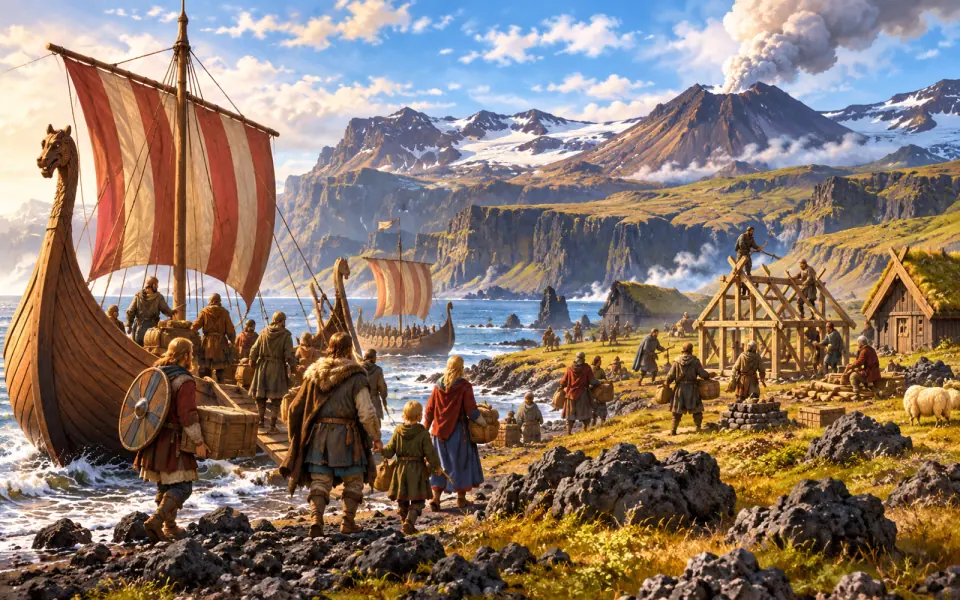 AfterThe Vikings reach Icelandabout AD 874
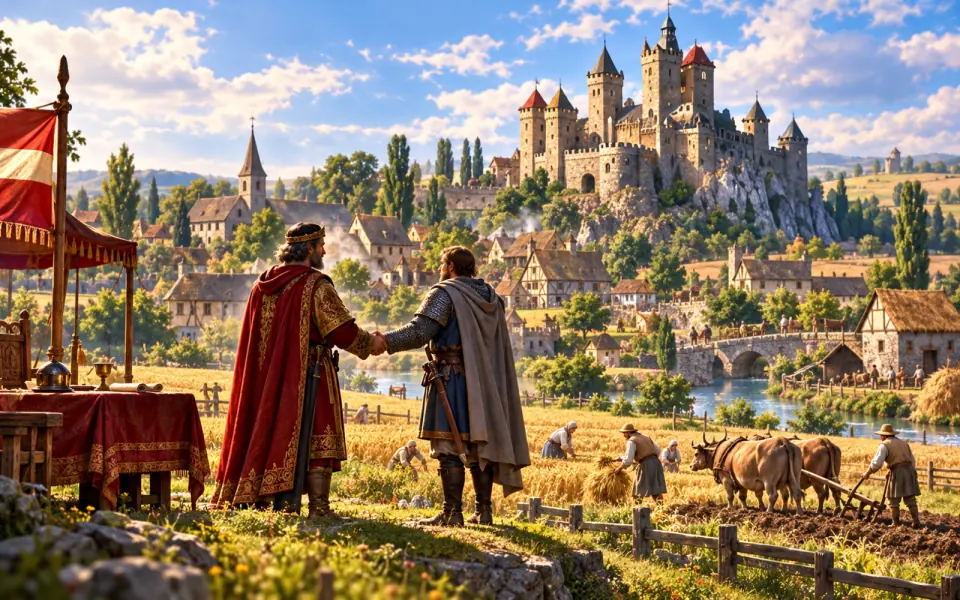 AfterThe feudal system spreadsabout AD 900
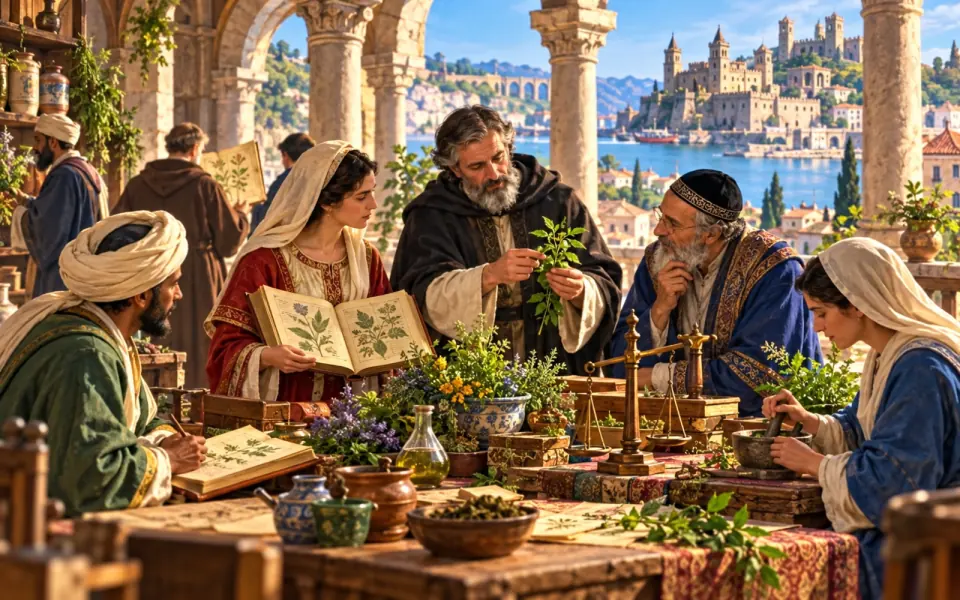 AfterThe Medical School of Salernoabout AD 950
 AfterThe Vikings in Greenlandabout AD 985
 AfterLeif Erikson in North Americaabout 1000
 AfterThe heavy plough spreadsabout 1000
Listen / Read next
- Music to read by: Cinematic JourneyEpic film-style music, no lyrics, by Ciro Simone IrmiciSpotifyYouTube Music
Meanwhile, elsewhere in the world
Other events of the era “Early Middle Ages”
- Emperor Justinian
- Justinian's Code
- Benedictine monks
- Hagia Sophia in Constantinople
- The mosaics of San Vitale in Ravenna
- The Lombards in Italy
- Muhammad's Hijra
- Isidore writes the Etymologies
- The spread of Islam
- Paper reaches Samarkand
- Charlemagne, King of the Franks
- The Carolingian Renaissance
- The Book of Kells
- Charlemagne crowned emperor
- Hindu-Arabic numerals head west
- Writing music down with neumes
- The Diamond Sutra, oldest dated printed book
- Alfred the Great
- The Vikings reach Iceland
- The feudal system spreads
- The Medical School of Salerno
- The Vikings in Greenland
- Leif Erikson in North America
- The heavy plough spreads
