Hagia Sophia in Constantinople
AD 537 Constantinople (now Istanbul, Turkey)
In short
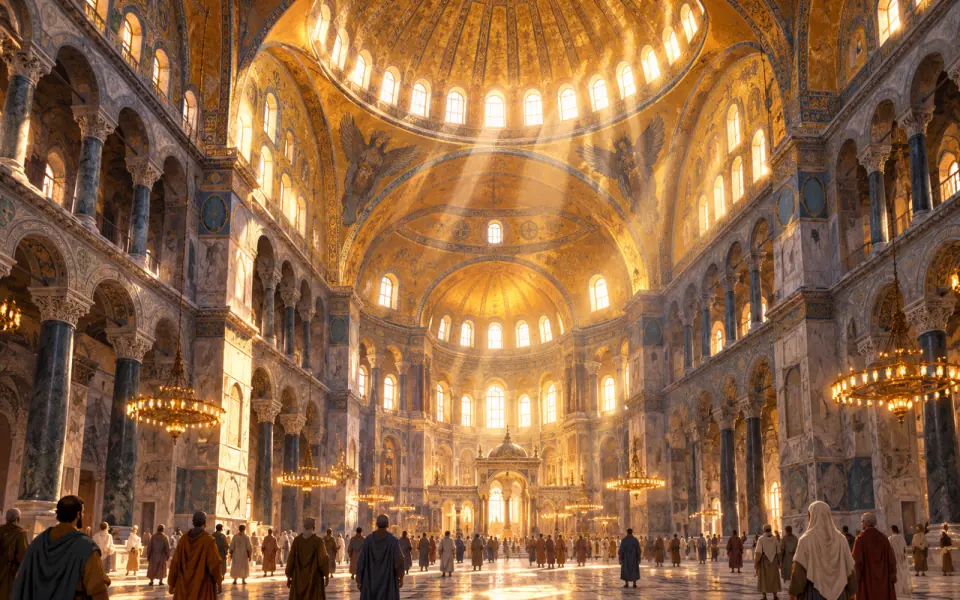
In about five years Justinian had an enormous church built, dedicated to Holy Wisdom, Hagia Sophia in Greek. Its designers were two experts in mathematics and geometry, Anthemius of Tralles and Isidore of Miletus. The great dome seems to float in the air thanks to a row of windows around its base. In 1453 the building became a mosque, then a museum, and since 2020 it has been a mosque again.
Why it matters For almost a thousand years it was the largest church in the world, and it served as a model for many later churches and mosques.
Source: UNESCO, “Historic Areas of Istanbul”
Study card about 5 minutes of reading
The story
A church that burns twice
Hagia Sophia was not the first church of that name at Constantinople. According to the story told in the most recent sources, the first was inaugurated on 15 February 360, under the emperor Constantius II, and was largely destroyed by a fire around 404. A second church was opened on 10 October 415 by the emperor Theodosius II. This one burned down too, in January 532, during the Nika riot, when the factions of the hippodrome set fire to half the city.
The name “Hagia Sophia” is not that of a saint. In Greek, Hagia Sophia means “Holy Wisdom”, that is, the wisdom of God. For this reason people also speak of the “church of Divine Wisdom”.
Justinian's building site
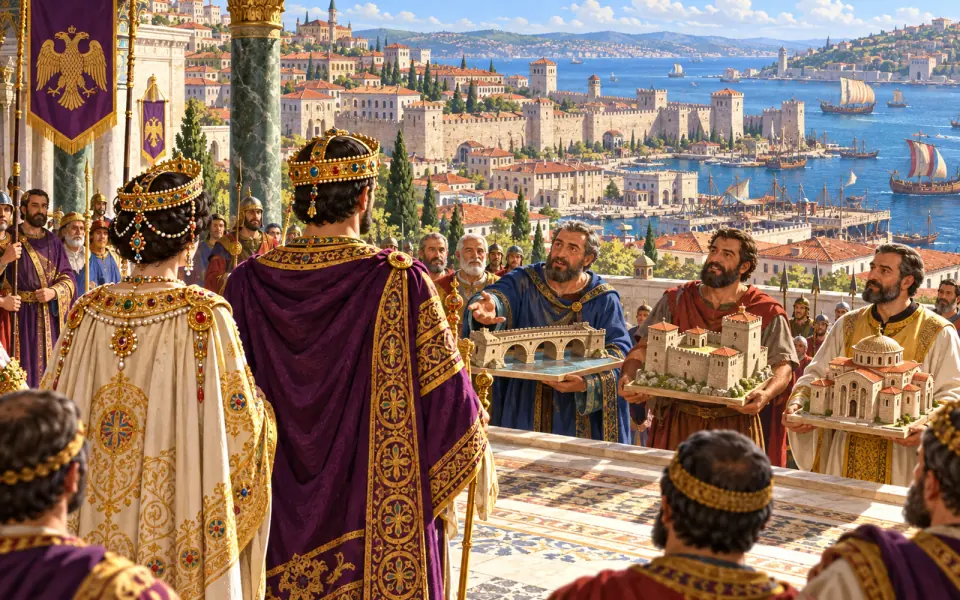
As soon as the revolt was put down, the emperor Justinian decided to build a church much larger and more beautiful than the earlier ones. The building site was opened on 23 February 532 and the new church was inaugurated on 27 December 537: a little more than five years. For a building of that size this was an incredible speed. It is said that more than ten thousand people worked on it.
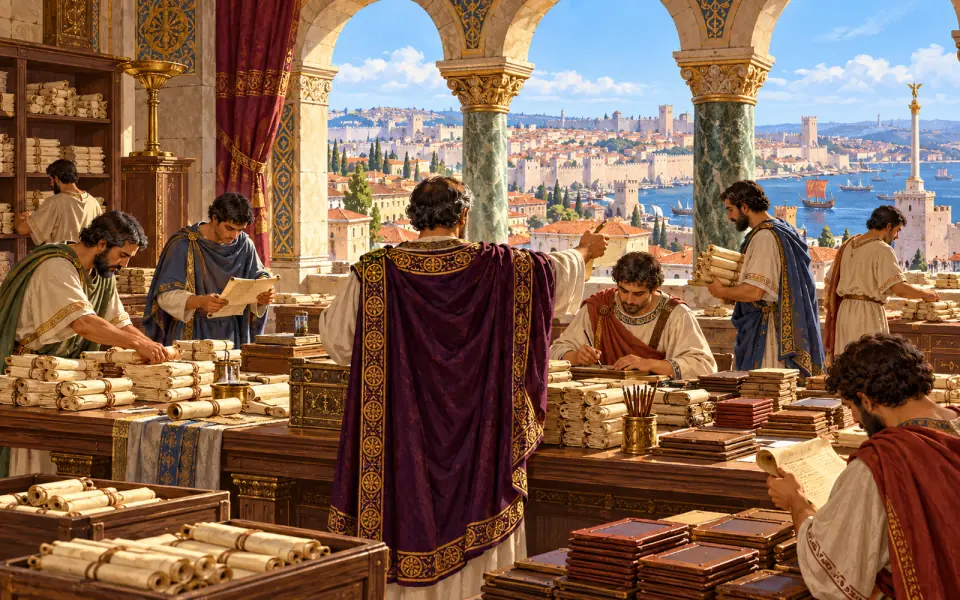
Justinian entrusted the design to two scholars of mathematics and geometry: Anthemius of Tralles and Isidore of Miletus. Anthemius died a few years after the work began; the building went on under Isidore's direction. They had to solve a very difficult problem: how to hold up an enormous dome above a square space.
The dome that seems to hang
The great dome has a diameter of about 31 metres (the present dome). It does not rest on a continuous wall, but on a ring of forty windows. Anyone who enters the church sees light coming in all around the base of the dome, which therefore seems very light, almost hanging in the air. The weight, in reality, comes down onto great piers and onto arches and half-domes, which carry the thrust to the ground.
The materials too had to be precious: the largest columns are of granite, about 19 or 20 metres high and a metre and a half across; the heaviest weighs more than 70 tonnes. Eight columns with Corinthian capitals were brought from Baalbek, in present-day Lebanon.
When the church was finished, according to a story handed down, Justinian exclaimed: “Solomon, I have surpassed you!”. Solomon was the biblical king who had built the great temple at Jerusalem. It is probably a legendary phrase, but it shows well the emperor's pride.
The dome that falls
The dome, however, was too daring. On 7 May 558 an earthquake brought it down. It was rebuilt by a nephew of Isidore, called Isidore the Younger, who made it about six metres higher: today inside the church is 55.6 metres high. The work finished in 562 and the church was consecrated again at the end of December of that year.
Almost a thousand years of history, then another religion
For centuries Hagia Sophia was the main church of the Byzantine Empire. In 726, with the edicts of the emperor Leo III, the period of iconoclasm began, that is, the struggle against religious images, which were removed from churches. After the Fourth Crusade, in 1204, the crusaders occupied Constantinople and made Hagia Sophia a Catholic cathedral, until in 1261 it returned to the Byzantines.
On 29 May 1453 Constantinople was conquered by the Ottoman sultan Mehmed II and the church became a mosque. Minarets were added later. Between 1847 and 1849 it was restored by the Swiss architect Gaspare Fossati, with about eight hundred workmen. In 1931 it stopped being a place of worship and on 1 February 1935 it opened as a museum. On 10 July 2020 a presidential decree reopened it to Muslim prayer, and the first public Friday prayer was held on 24 July. Since 1985 it has been part of the Historic Areas of Istanbul, a UNESCO World Heritage Site, together with other monuments.
Why it is so important
Hagia Sophia remains one of the greatest feats of engineering of antiquity: an enormous dome, built in less than six years, rebuilt after an earthquake and still standing almost fifteen hundred years later.
Why it happened
The direct cause was the fire of the Nika riot: the earlier church had burned down and Justinian had the chance to rebuild on a grand scale. After a revolt that had almost been fatal, the emperor needed to show everyone his strength and to remind them that his power was willed by God.
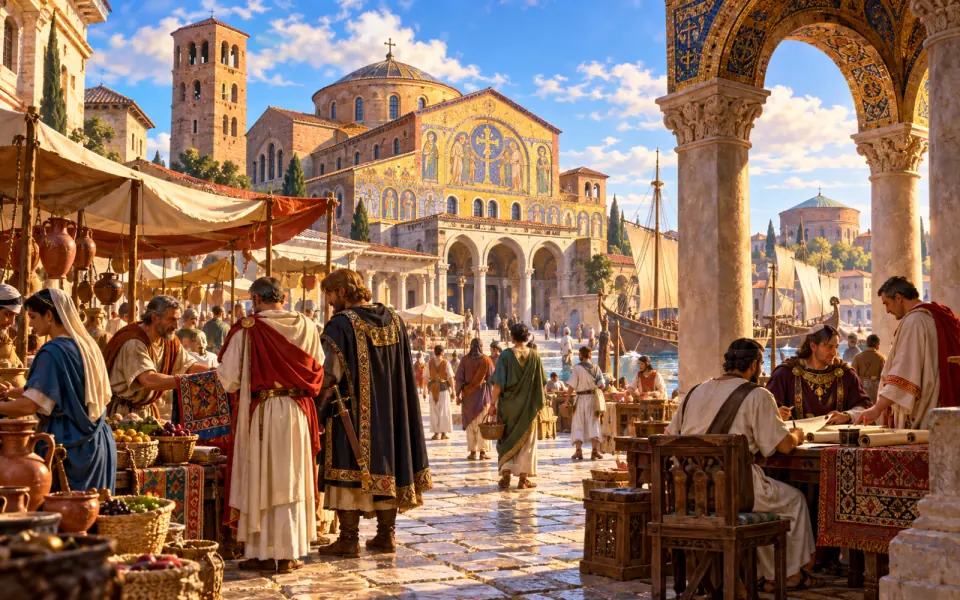
But there was also a deeper reason. Constantinople was the capital of the empire and the building site showed how many men and how much wealth the emperor could mobilise: more than ten thousand people at work for a little more than five years.
What changed
For almost a thousand years Hagia Sophia was the religious and ceremonial centre of the Byzantine Empire. For all that time the church was the place of the most important ceremonies, including the coronation of emperors.
After 1453 the Ottoman architects looked at Hagia Sophia very closely. Sinan, the most famous of them, studied its structure carefully while designing the mosque of Suleiman, the Süleymaniye, meant to stand comparison with the great church.
Today the building continues to be a symbol of meeting and debate between cultures: it has been an Orthodox church, a Catholic cathedral, a mosque, a museum and a mosque again. To visit it means reading, on its walls, the history of many different peoples.
Key people and places
People
- Justinian I
- Emperor of the East from 527 to 565: he had the church built after the Nika riot.
- Anthemius of Tralles
- Mathematician and architect: he designed Hagia Sophia with Isidore and died a few years after the work began.
- Isidore of Miletus
- Mathematician and architect: he led the building site after Anthemius's death.
- Isidore the Younger
- Isidore's nephew: after the collapse of 558 he rebuilt the dome, about six metres higher.
- Mehmed II
- Ottoman sultan: he conquered Constantinople on 29 May 1453 and turned Hagia Sophia into a mosque.
Places
- Constantinople
- Capital of the Eastern Empire, now Istanbul: Hagia Sophia stands in the old city.
- Baalbek
- Ancient city in present-day Lebanon, from which eight Corinthian columns used in the church came.
- The hippodrome
- Great stadium of Constantinople for chariot races, next to the church: the Nika riot began there.
Good to know
- Hagia Sophia is not the name of a saint: it means “Holy Wisdom” in Greek.
- It took only a little more than five years to build, from 23 February 532 to 27 December 537.
- The dome has 40 windows at its base: the light that comes in makes it seem to hang.
- In 558 the dome collapsed in an earthquake and was rebuilt about 6 metres higher.
- In its history Hagia Sophia has been an Orthodox church, a Catholic cathedral, a mosque, a museum and a mosque again.
Find out more
- Wikipedia, “Hagia Sophia” en.wikipedia.org
- Wikipedia, “Anthemius of Tralles” en.wikipedia.org
- Wikipedia, “Nika riots” en.wikipedia.org
- Wikipedia, “Mehmed II” en.wikipedia.org
Related events
- Emperor JustinianAD 527 · Early Middle AgesThe church was built after the Nika riot, in Justinian's reign.
- The mosaics of San Vitale in RavennaAD 547 · Early Middle AgesAt Ravenna, in the same years, the mosaics of San Vitale show the imperial court.
- Justinian's CodeAD 529 · Early Middle AgesIn the same period Justinian had the Roman laws collected.
- The fall of Constantinople1453 · Early modern ageIn 1453 the fall of Constantinople turned Hagia Sophia into a mosque.
Before and after, in the era “Early Middle Ages”
Event 5 of 25
 BeforeThe Romano-Germanic kingdomsabout AD 480
 BeforeEmperor JustinianAD 527
 BeforeJustinian's CodeAD 529
 BeforeBenedictine monksabout AD 529
- You are hereHagia Sophia in ConstantinopleAD 537
 AfterThe mosaics of San Vitale in RavennaAD 547
 AfterThe Lombards in ItalyAD 568
 AfterMuhammad's HijraAD 622
 AfterIsidore writes the Etymologiesabout AD 625
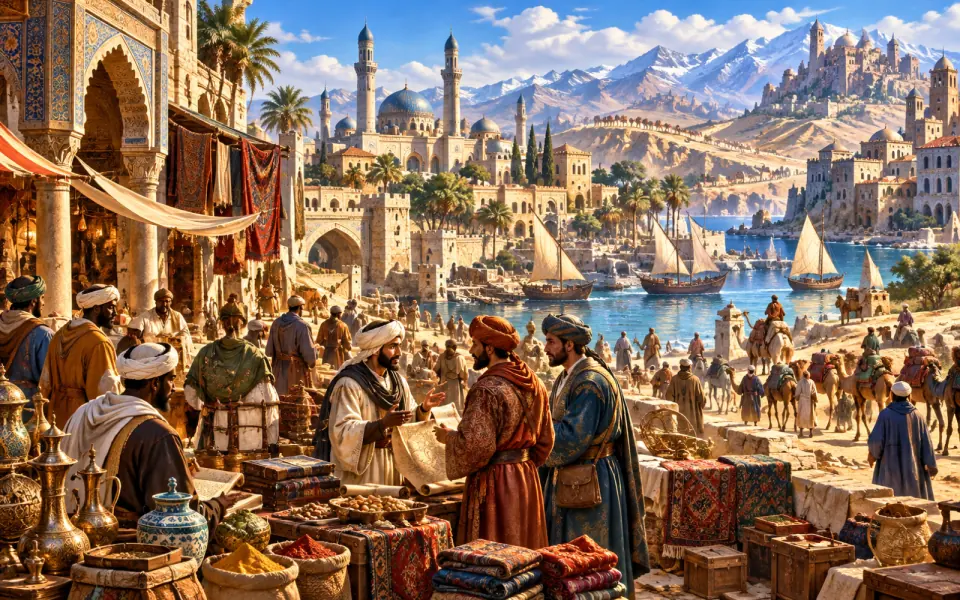 AfterThe spread of IslamAD 632–750
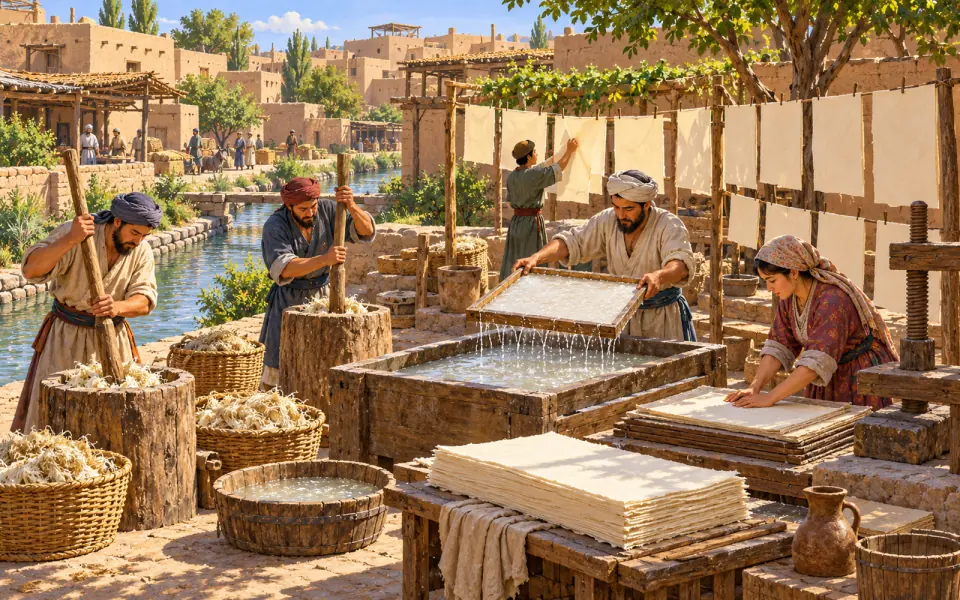 AfterPaper reaches Samarkandabout AD 751
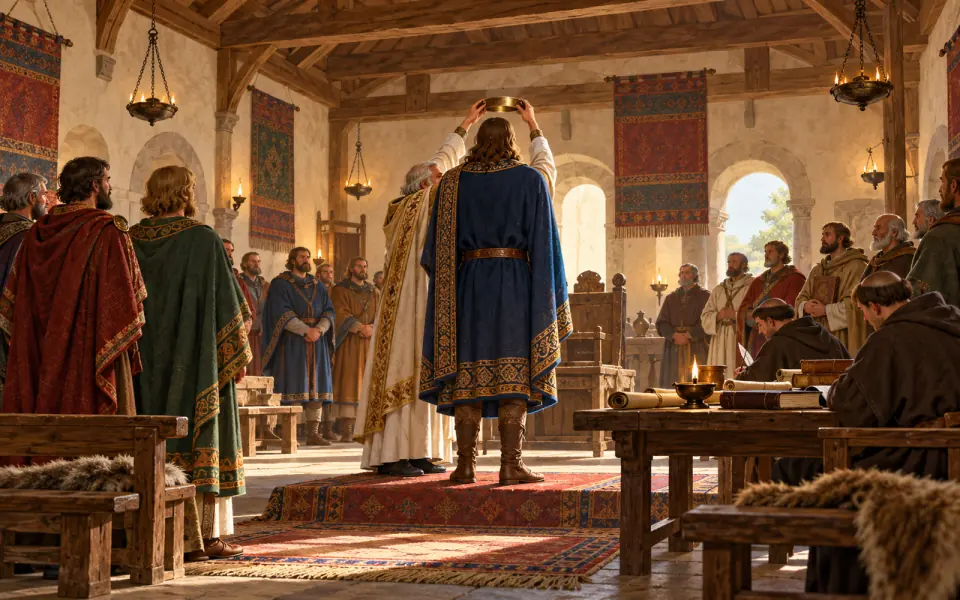 AfterCharlemagne, King of the FranksAD 768
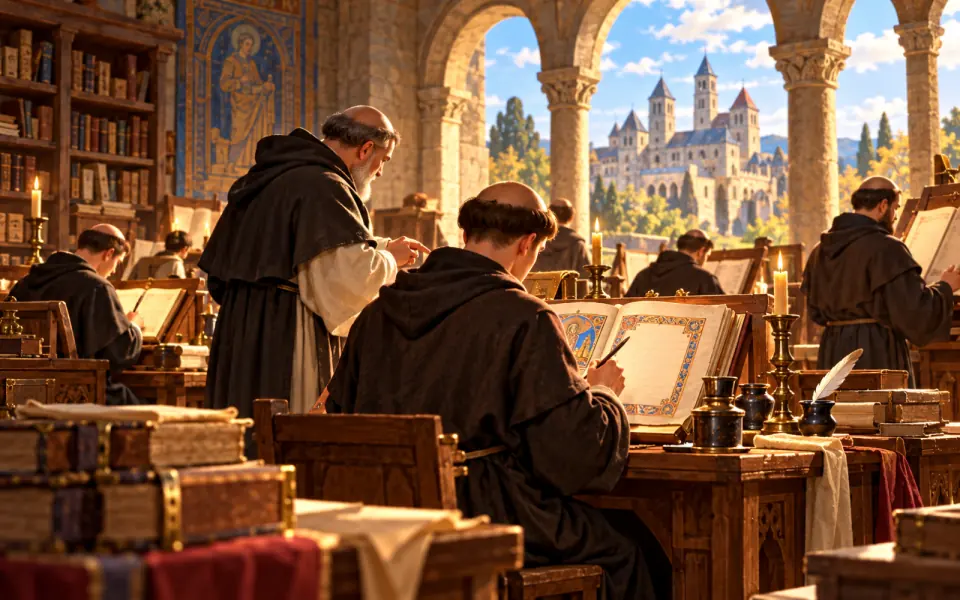 AfterThe Carolingian Renaissanceabout AD 790
 AfterThe Book of Kellsabout AD 800
 AfterCharlemagne crowned emperorAD 800
 AfterHindu-Arabic numerals head westabout AD 825
 AfterWriting music down with neumesabout AD 850
 AfterThe Diamond Sutra, oldest dated printed bookAD 868
 AfterAlfred the GreatAD 871
 AfterThe Vikings reach Icelandabout AD 874
 AfterThe feudal system spreadsabout AD 900
 AfterThe Medical School of Salernoabout AD 950
 AfterThe Vikings in Greenlandabout AD 985
 AfterLeif Erikson in North Americaabout 1000
 AfterThe heavy plough spreadsabout 1000
Listen / Read next
- Music to read by: Cinematic JourneyEpic film-style music, no lyrics, by Ciro Simone IrmiciSpotifyYouTube Music
Meanwhile, elsewhere in the world
Other events of the era “Early Middle Ages”
- The Romano-Germanic kingdoms
- Emperor Justinian
- Justinian's Code
- Benedictine monks
- The mosaics of San Vitale in Ravenna
- The Lombards in Italy
- Muhammad's Hijra
- Isidore writes the Etymologies
- The spread of Islam
- Paper reaches Samarkand
- Charlemagne, King of the Franks
- The Carolingian Renaissance
- The Book of Kells
- Charlemagne crowned emperor
- Hindu-Arabic numerals head west
- Writing music down with neumes
- The Diamond Sutra, oldest dated printed book
- Alfred the Great
- The Vikings reach Iceland
- The feudal system spreads
- The Medical School of Salerno
- The Vikings in Greenland
- Leif Erikson in North America
- The heavy plough spreads
