The Vikings in Greenland
about AD 985 Brattahlíð, southern Greenland
In short
Erik the Red, a Viking banished from Iceland, spent three years exploring a large land to the west. To persuade other settlers to follow him he called it Greenland, even though it is almost entirely covered in ice. He set out with a fleet of about twenty-five ships, but only some of them arrived. The settlers kept sheep and cows along the southern fjords, and their villages lasted for about four centuries.
Why it matters From Greenland the Vikings were able to push even further west, all the way to America.
Source: Encyclopaedia Britannica, “Erik the Red”
Study card about 4 minutes of reading
The story
A green land, but not too green
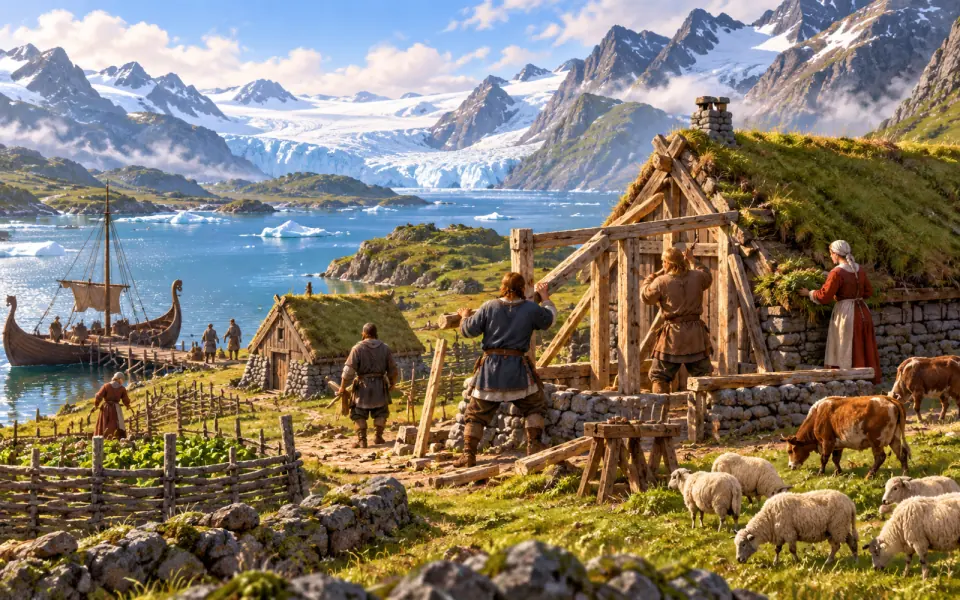
When Erik the Red arrived in the south of Greenland, around 985, he found a coast very different from the rest of the island, which is covered almost entirely by an immense ice cap. In the deep bays, sheltered from the winds, there were however green meadows, birch and willow bushes, and the climate, a little warmer than usual in that period, made it possible to raise animals. To attract settlers from Iceland, which was filling up, Erik called that land “Greenland”, that is, “green land”.
In 986 a fleet of about twenty-five ships set out from Iceland with men, women and livestock. Fourteen arrived; the others turned back or sank. Two settlements were founded: the Eastern Settlement, the larger, in the area now called Qaqortoq and Narsaq, and the Western Settlement, farther north, near present-day Nuuk. Erik took the best place for himself, a large farm which he called Brattahlíð, “the steep slope”, at the head of a fjord.
Life on the farm
The Norse families lived in long houses of stone and turf, with grass roofs, warmed by a fire and shared with the animals during the winter. They raised sheep, goats, cows and pigs, and gathered hay for the winter. But the land was scarce, and in summer the young men set off by boat to the north, to the hunting grounds, to catch seals, walruses and polar bears. Their most valuable products were walrus tusks, an ivory in great demand in Europe, hides, and gyrfalcons, northern birds of prey much sought after, which were sold to nobles.
In exchange the Norse bought iron, timber, grain and luxury goods from ships that came from Norway. There were few of them: historians estimate that in the best periods a few thousand people lived in the two settlements, with hundreds of farms and at least fifteen or so churches.
The ships that kept contact with Europe were the “knarrs”, broad, sturdy cargo vessels under sail, with far more room than the long warships. The voyage from Norway to Greenland took weeks and went by way of Iceland, and so every ship that arrived was an event: it brought news, tools and sometimes new settlers.
A church at Brattahlíð and a cathedral
After the year 1000 the Greenlanders converted to Christianity. Erik's wife, Thjodhild, according to the sagas had a small church built at Brattahlíð; archaeologists have found its remains, small, surrounded by a graveyard, and in the 20th century a copy was rebuilt. In 1124 a bishop was appointed, with his seat at Garðar, where a cathedral of red stone was built. Some churches, such as the one at Hvalsey, can still be seen as ruins.
The silence
From the 14th century news becomes rare. The climate grew colder, in what historians call the “Little Ice Age”: hay harvests dwindled, the seas filled with ice and Norwegian ships arrived less and less. The market for walrus ivory collapsed when elephant ivory reached Europe. Meanwhile the Inuit, the hunters of the Arctic, arrived from the north with their culture suited to the cold. The Western Settlement was abandoned around 1350.
The last written record is the account of a wedding, held in the church at Hvalsey in 1408. After that, nothing. When, in 1721, the Dano-Norwegian missionary Hans Egede arrived in Greenland, hoping to find descendants of the Norse, he found only ruins. Historians still argue about the causes: the cold, the loss of contact with Europe, the overuse of pastures, the difficulty of changing their way of life as the Inuit did. There is no single answer.
Why it happened
The Norse were looking for new land to farm after Iceland had been settled and the best land was already taken. Southern Greenland had pastures and a climate milder than usual, in the period called the “Medieval Warm Period”.
Erik the Red, exiled from Iceland for murder, had good reasons to look for a new land and to attract other settlers, who would give him power and prestige.
What changed
The Norse settlement lasted about five centuries: a long time, but in a difficult place. It served as a base for voyages to North America, including that of Leif Erikson.
Its disappearance is an example of how a society can fail when the climate and trade change. The scholars who study it ask whether the Norse could have survived by imitating the Inuit more.
Today Greenland is an autonomous territory of Denmark, with a population that is largely Inuit. The Norse ruins are a UNESCO site, “Kujataa”.
Key people and places
People
- Erik the Red
- Founder of the colony (about 950–1003): he lived at Brattahlíð.
- Thjodhild
- Erik's wife: according to the saga she had the first church built.
- Leif Erikson
- Erik's son: he set out from here for Vinland.
- The Inuit
- Arctic people who arrived from the north in the 13th century and survived in the cold climate.
Places
- Brattahlíð (Qassiarsuk)
- Erik the Red's farm, in the south of Greenland.
- Garðar (Igaliku)
- Seat of the bishop and of the Norse cathedral.
- Hvalsey
- Stone church with the best-preserved ruins.
Good to know
- Erik the Red chose the name “Greenland” to attract settlers.
- The Norse settlements lasted about five centuries.
- The last document is a wedding held in 1408 at Hvalsey.
- Some Norse ruins are a UNESCO heritage site (Kujataa).
- The Norse sold mostly walrus ivory.
Find out more
- Wikipedia, “Greenland” en.wikipedia.org
- Wikipedia, “Norse settlements in Greenland” en.wikipedia.org
- Wikipedia, “Brattahlíð” en.wikipedia.org
- Wikipedia, “Vikings” en.wikipedia.org
Related events
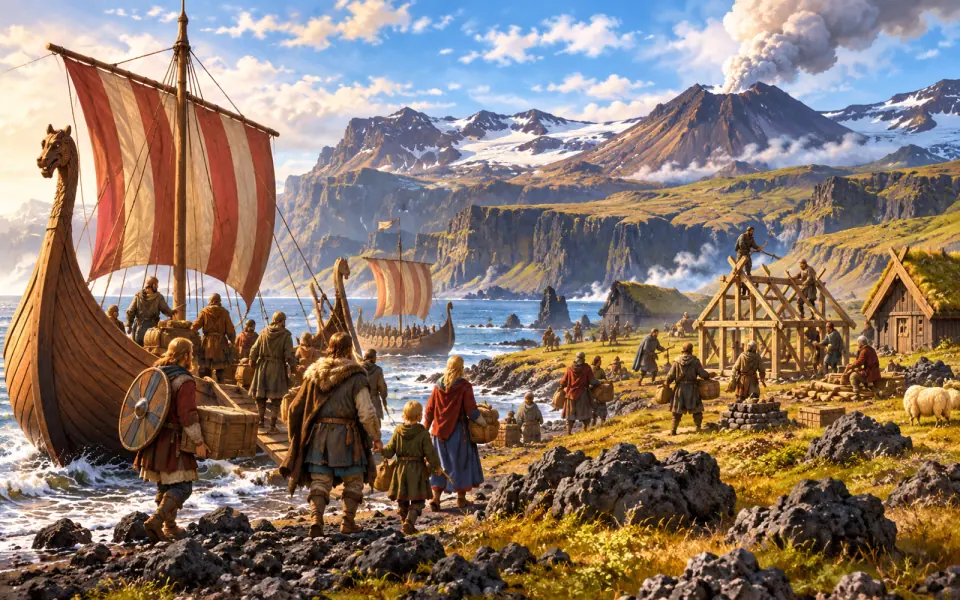
- The Vikings reach Icelandabout AD 874 · Early Middle AgesThe Vikings reached Iceland before setting out for Greenland.
- Leif Erikson in North Americaabout 1000 · Early Middle AgesFrom here Leif Erikson set out for North America.
- Alfred the GreatAD 871 · Early Middle AgesOther Vikings were attacking England.
- The heavy plough spreadsabout 1000 · Early Middle AgesWhile in the south peasants used the heavy plough, in the north people struggled with the cold.
Before and after, in the era “Early Middle Ages”
Event 23 of 25
 BeforeThe Romano-Germanic kingdomsabout AD 480
 BeforeEmperor JustinianAD 527
 BeforeJustinian's CodeAD 529
 BeforeBenedictine monksabout AD 529
 BeforeHagia Sophia in ConstantinopleAD 537
 BeforeThe mosaics of San Vitale in RavennaAD 547
 BeforeThe Lombards in ItalyAD 568
 BeforeMuhammad's HijraAD 622
 BeforeIsidore writes the Etymologiesabout AD 625
 BeforeThe spread of IslamAD 632–750
 BeforePaper reaches Samarkandabout AD 751
 BeforeCharlemagne, King of the FranksAD 768
 BeforeThe Carolingian Renaissanceabout AD 790
 BeforeThe Book of Kellsabout AD 800
 BeforeCharlemagne crowned emperorAD 800
 BeforeHindu-Arabic numerals head westabout AD 825
 BeforeWriting music down with neumesabout AD 850
 BeforeThe Diamond Sutra, oldest dated printed bookAD 868
 BeforeAlfred the GreatAD 871
 BeforeThe Vikings reach Icelandabout AD 874
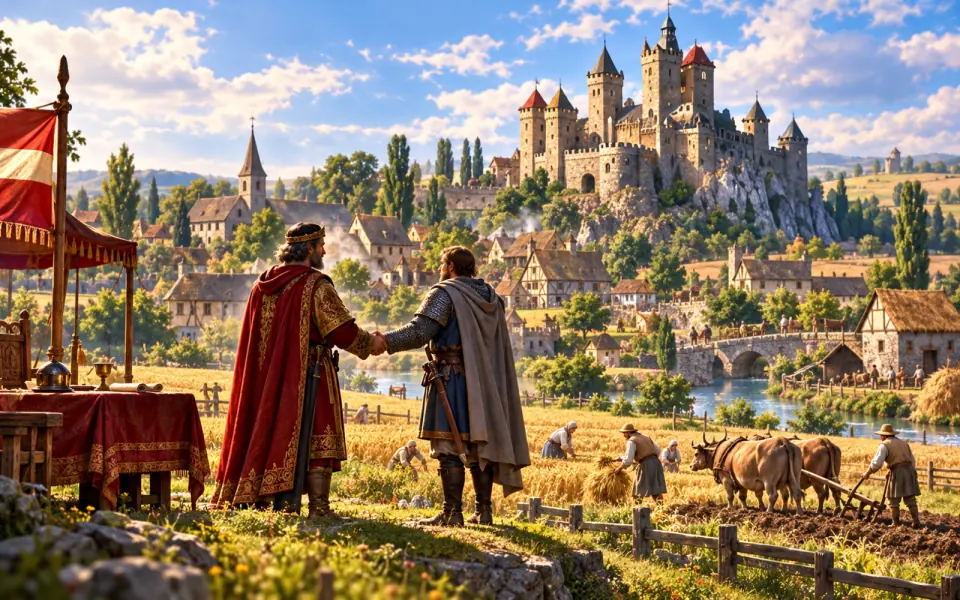 BeforeThe feudal system spreadsabout AD 900
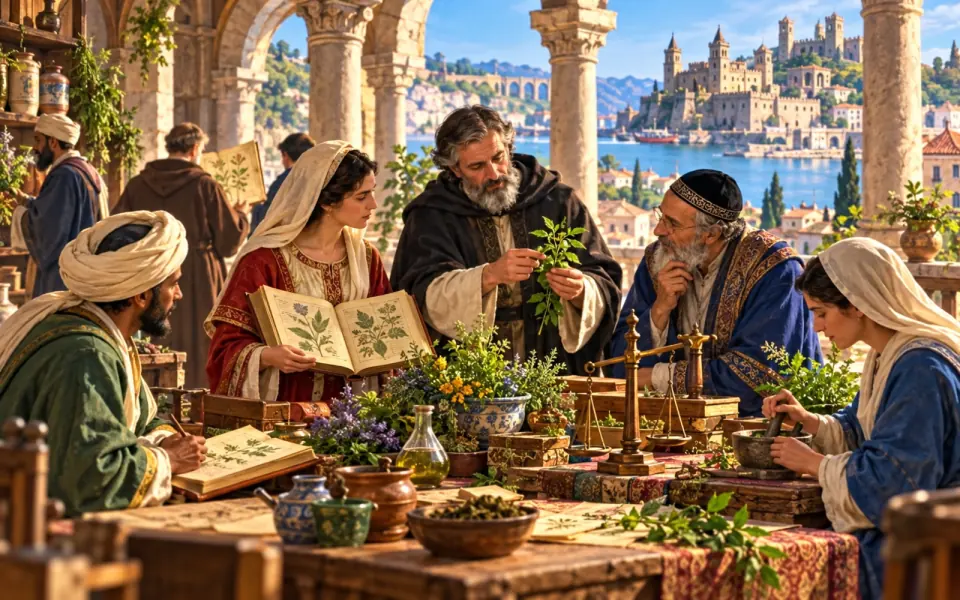 BeforeThe Medical School of Salernoabout AD 950
- You are hereThe Vikings in Greenlandabout AD 985
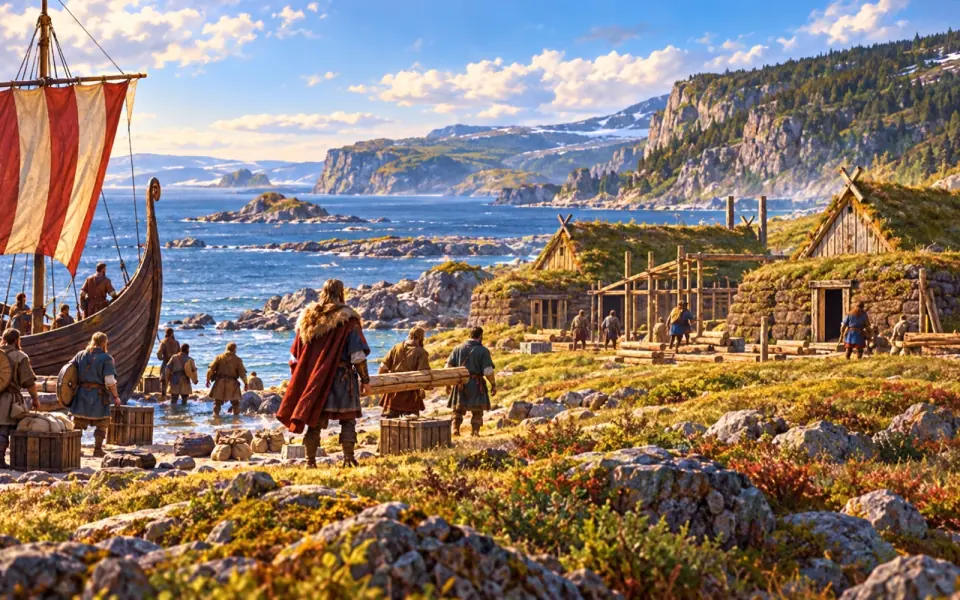 AfterLeif Erikson in North Americaabout 1000
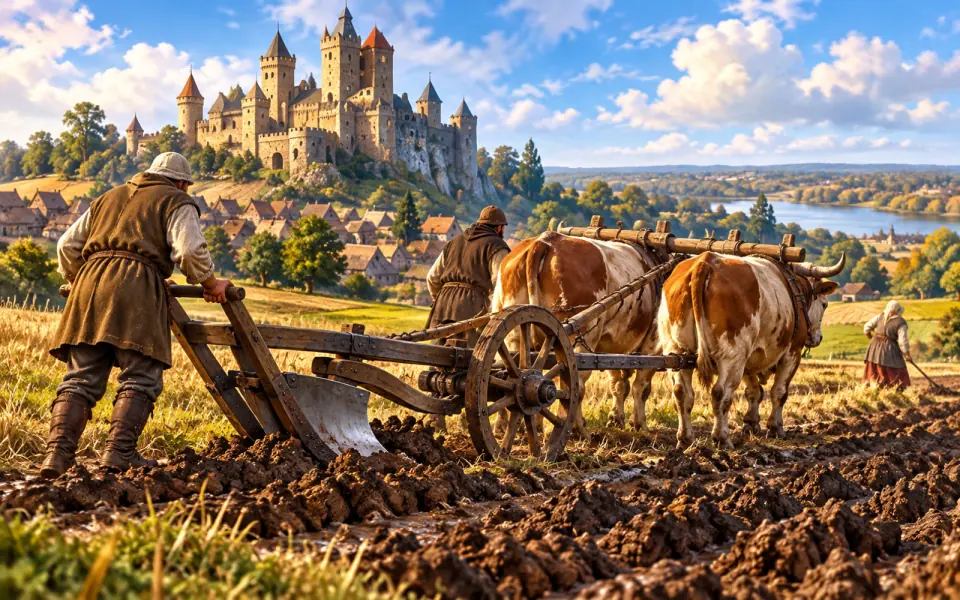 AfterThe heavy plough spreadsabout 1000
In legend
Listen / Read next
- Music to read by: Cinematic JourneyEpic film-style music, no lyrics, by Ciro Simone IrmiciSpotifyYouTube Music
Meanwhile, elsewhere in the world
Other events of the era “Early Middle Ages”
- The Romano-Germanic kingdoms
- Emperor Justinian
- Justinian's Code
- Benedictine monks
- Hagia Sophia in Constantinople
- The mosaics of San Vitale in Ravenna
- The Lombards in Italy
- Muhammad's Hijra
- Isidore writes the Etymologies
- The spread of Islam
- Paper reaches Samarkand
- Charlemagne, King of the Franks
- The Carolingian Renaissance
- The Book of Kells
- Charlemagne crowned emperor
- Hindu-Arabic numerals head west
- Writing music down with neumes
- The Diamond Sutra, oldest dated printed book
- Alfred the Great
- The Vikings reach Iceland
- The feudal system spreads
- The Medical School of Salerno
- Leif Erikson in North America
- The heavy plough spreads
