Paper reaches Samarkand
about AD 751 Samarkand (now Uzbekistan)
In short
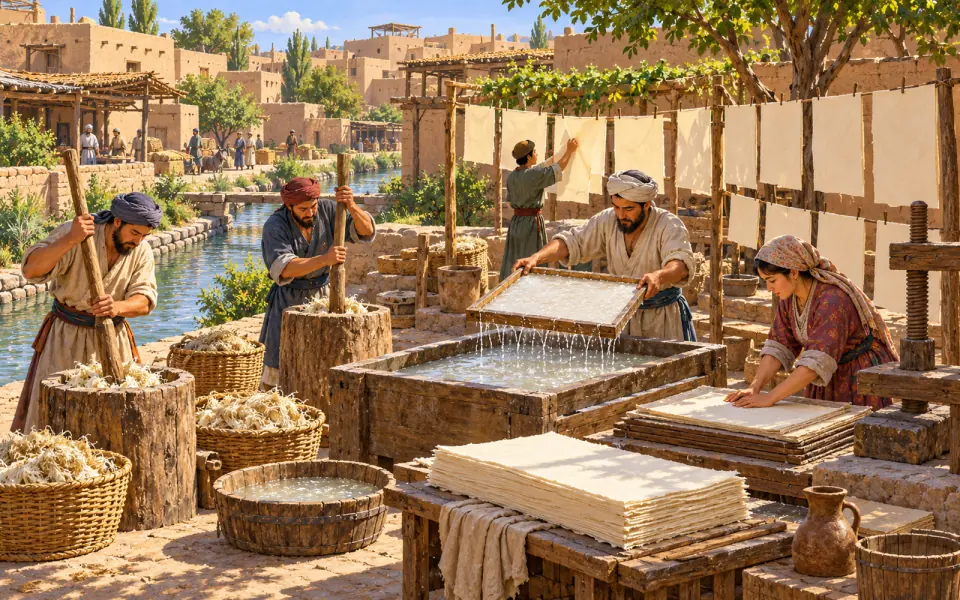
Paper had been invented in China many centuries earlier. One tradition says that in AD 751, after the Battle of Talas between Arabs and Chinese, some Chinese prisoners taught people in Samarkand how to make it. Historians today think this is mostly a legend, because paper had already been used in Central Asia for some time. What is certain is that Samarkand became famous for its paper and that from there the craft reached Baghdad and the whole Islamic world.
Why it matters Paper cost less than parchment and made it possible to copy and spread many more books.
Source: Encyclopaedia Britannica, “Paper”
Study card about 5 minutes of reading
The story
A city of roads and merchants
Samarkand, in present-day Uzbekistan, stood in Central Asia, in a place where the caravans crossing the continent met. Passing through, travellers and merchants exchanged goods, news and techniques. It was here, according to the accounts, that the Islamic world learned to make paper. In this entry we talk about that step and about what happened afterwards, in the Arab cities: China and the long journey to Europe are dealt with in the entry on paper in the Middle Ages.
An account and a doubt
The best-known account is this. In AD 751, after the battle of the river Talas, the Arabs took prisoner some Chinese craftsmen expert in paper. These taught the process at Samarkand, which had been conquered by the Arabs. The account appears in some Arabic sources, but very late, and for this reason historians today are cautious: paper, perhaps, was already known in Central Asia. According to some sources, the Arabs came to know paper as early as 637, on entering Ctesiphon, the capital of the Persians, but they learned its secret only in the following century.
What we know for certain is that Samarkand became famous for its paper. It was made with hemp and flax fibres, and its Arabic name, kaghad, came to mean paper in general. Then the craftsmen of Samarkand discovered that using cotton fibres produced a thinner and finer sheet. It was a better paper, lighter and easier to carry.
From the city to the capital
Paper, at this point, was ready to arrive where it was needed most: at Baghdad. It was the capital of the Abbasid caliphs, the dynasty that ruled after the fall of the Umayyads in 750. In the chanceries and offices of the state a great deal was written: orders, letters, tax registers, contracts. Until then papyrus or parchment had been used, materials that were expensive and hard to find in large quantities.
Around 794-795, in the time of the caliph Harun al-Rashid, the sources place the first paper mills at Baghdad (some date it to 793, others to 794). The Barmakids contributed to their birth, a Persian family of ministers who governed on behalf of the caliph. According to historians, within a short time the offices of the state gave up papyrus and parchment and used paper to record their acts.
A paper that travels
After Baghdad, the craft spread. Already in the 8th century production reached Egypt and, in the following centuries, North Africa. In Syria, the paper mills of the city of Manbij produced a paper that in Europe was called “bombycine paper”. In Sicily, in 972, a traveller named Ibn Hawqal reported having seen paper among the goods at Palermo, and today it is thought that there too a production existed, supervised by the authorities.
The House of Wisdom
With paper it became easier to copy and keep books. In the same period at Baghdad the Bayt al-Hikma, the “House of Wisdom”, was very famous. It began as the private library of the caliph Harun al-Rashid; from 832 his son al-Maʾmun greatly enlarged it. It was a library, but also a translation centre: here works in Greek, Syriac, Hebrew, Coptic, Middle Persian and Sanskrit were translated into Arabic. It also served as a higher school, a hospital open to all the sick and an astronomical observatory. It is said that at its best it was an enormous library, although some scholars, such as Dimitri Gutas, doubt its size and even its existence as a great institution. For this reason it is best to speak of it with caution.
Among the scholars who worked there were al-Khwarizmi (about 780-850), the philosopher al-Kindi (801-873), the translator Hunayn ibn Ishaq (808-873), who translated Galen and Hippocrates, the mathematician Thabit ibn Qurra (826-901) and the brothers Banu Musa, mathematicians and engineers. It was a world in which the knowledge of the Greeks, Persians and Indians met and was discussed in Arabic.
In 1258, when the Mongols led by Hulagu took Baghdad, the House of Wisdom was destroyed. How many books were lost cannot be said precisely.
Why it matters today
Paper changed the way people wrote and governed. It made it cheaper to pass on orders, easier to keep registers, simpler to copy works of science and literature. In an immense empire, where different languages were spoken, paper was a fundamental tool for holding together offices, cities and schools.
Why it happened
Paper arrived at Samarkand because the city was a hub of exchange, where techniques travelled together with goods. According to the account, the Arabs found craftsmen there who knew how to make it and learned from them.
The next step, that of Baghdad, arose from a need: a vast and organised empire required a great deal of writing. Papyrus and parchment cost too much and were not enough. Paper, made from rags and water, was cheaper. The Barmakids, ministers of the caliph, supported the start of the paper mills.
What changed
With paper the administration of the state became faster and cheaper: more documents, more registers, more letters. Books too became easier to produce and sell, and in cities such as Baghdad libraries and centres of study were formed, like the House of Wisdom.
Paper left Samarkand and travelled: to Egypt, to North Africa, to Syria and to Sicily, as far as the gates of Europe. Its use was not, however, immediately accepted everywhere: in 1221 the emperor Frederick II banned its use in public documents, because it was considered less durable than parchment. But its low price won the day.
In this way paper became the material on which, centuries later, the first books were printed in Europe.
Key people and places
People
- Harun al-Rashid
- Abbasid caliph: in his time, around 794-795, the first paper mills were born at Baghdad.
- Al-Maʾmun
- Harun's son: from 832 he greatly enlarged the House of Wisdom.
- Al-Khwarizmi
- Scholar who worked at Baghdad, who lived roughly between 780 and 850.
- Hunayn ibn Ishaq
- Translator (808-873) who translated the works of Galen and Hippocrates into Arabic.
- The Barmakids
- Persian family of the caliph's ministers who supported the start of the paper mills.
Places
- Samarkand
- City of Central Asia, now in Uzbekistan, famous for its paper (kaghad).
- Baghdad
- Capital of the Abbasid caliphate, with the first paper mills from 794-795 and the House of Wisdom.
- Manbij
- City in Syria where “bombycine paper” was produced.
- Ctesiphon
- Capital of the Persians, where the Arabs came to know paper in 637.
Good to know
- The Arabic name of Samarkand paper, kaghad, came to mean paper in general.
- The paper of Syria, made at Manbij, was called “bombycine” in Europe.
- In 1221 Frederick II banned the use of paper in public documents.
- The House of Wisdom at Baghdad was destroyed in 1258 by the Mongols.
- Some scholars doubt that the House of Wisdom was as large as the stories say.
Find out more
- Wikipedia, “Paper” en.wikipedia.org
- Wikipedia, “House of Wisdom” en.wikipedia.org
- Wikipedia, “Samarkand” en.wikipedia.org
- Wikipedia, “Harun al-Rashid” en.wikipedia.org
Related events
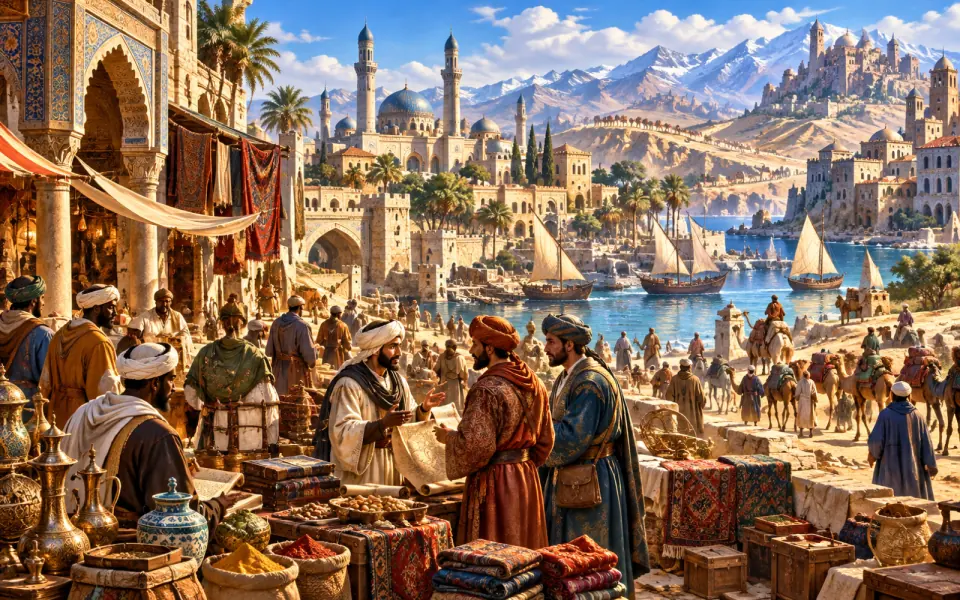
- The spread of IslamAD 632–750 · Early Middle AgesPaper arrived in the Islamic world after the great conquests of the Arabs.
- Hindu-Arabic numerals head westabout AD 825 · Early Middle AgesAl-Khwarizmi worked at Baghdad, in the House of Wisdom.
- The Diamond Sutra, oldest dated printed bookAD 868 · Early Middle AgesIn China, meanwhile, books were being printed on paper: the Diamond Sutra.
- Paper arrives in Europeabout 1150 · Late Middle AgesThe story of paper continues in Europe, in another entry.
Before and after, in the era “Early Middle Ages”
Event 11 of 25
 BeforeThe Romano-Germanic kingdomsabout AD 480
 BeforeEmperor JustinianAD 527
 BeforeJustinian's CodeAD 529
 BeforeBenedictine monksabout AD 529
 BeforeHagia Sophia in ConstantinopleAD 537
 BeforeThe mosaics of San Vitale in RavennaAD 547
 BeforeThe Lombards in ItalyAD 568
 BeforeMuhammad's HijraAD 622
 BeforeIsidore writes the Etymologiesabout AD 625
 BeforeThe spread of IslamAD 632–750
- You are herePaper reaches Samarkandabout AD 751
 AfterCharlemagne, King of the FranksAD 768
 AfterThe Carolingian Renaissanceabout AD 790
 AfterThe Book of Kellsabout AD 800
 AfterCharlemagne crowned emperorAD 800
 AfterHindu-Arabic numerals head westabout AD 825
 AfterWriting music down with neumesabout AD 850
 AfterThe Diamond Sutra, oldest dated printed bookAD 868
 AfterAlfred the GreatAD 871
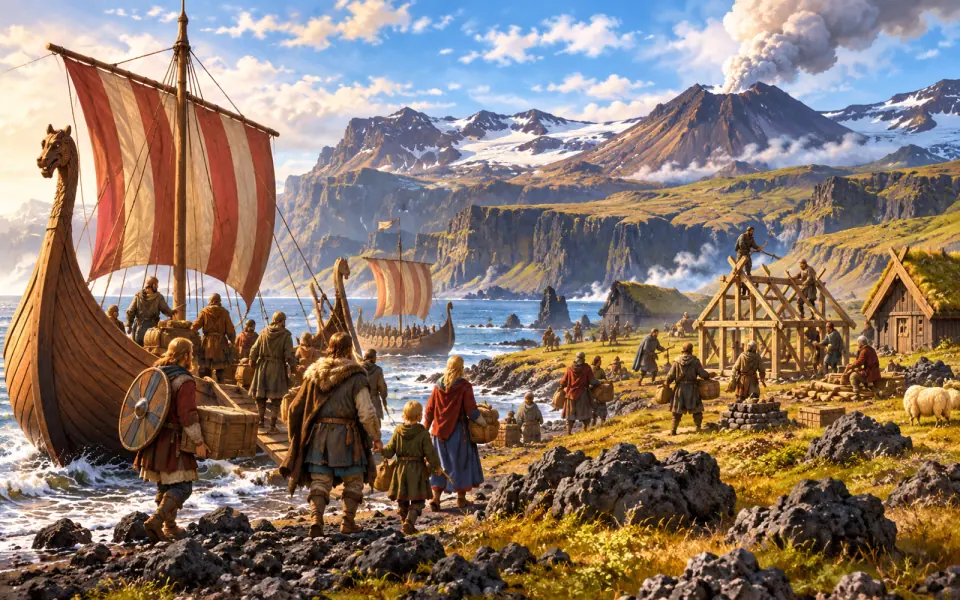 AfterThe Vikings reach Icelandabout AD 874
 AfterThe feudal system spreadsabout AD 900
 AfterThe Medical School of Salernoabout AD 950
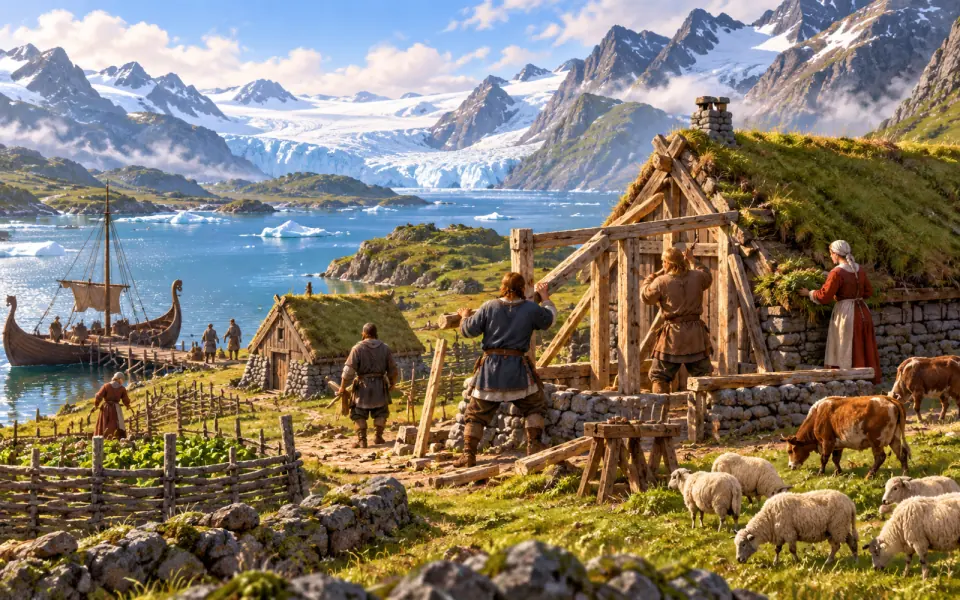 AfterThe Vikings in Greenlandabout AD 985
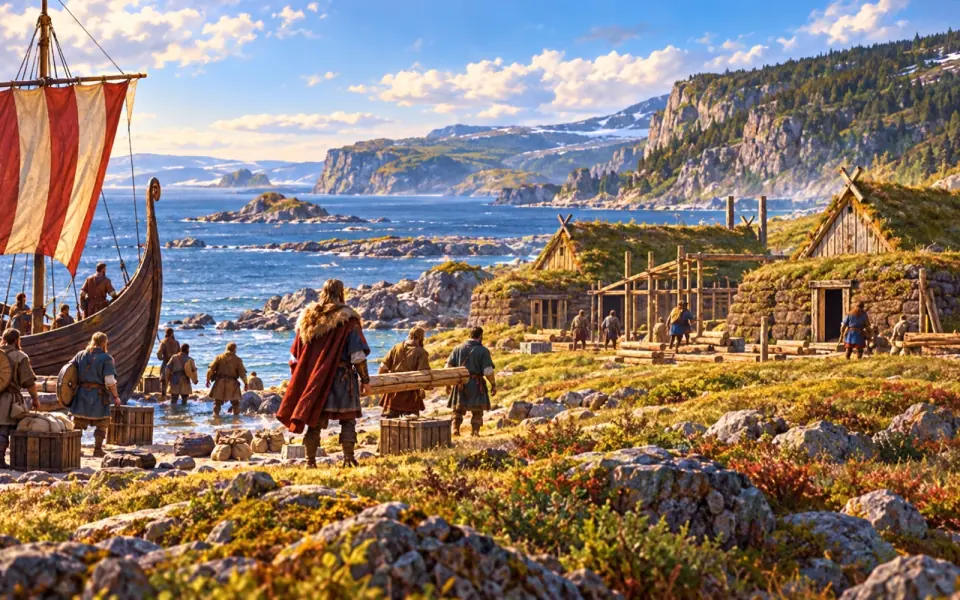 AfterLeif Erikson in North Americaabout 1000
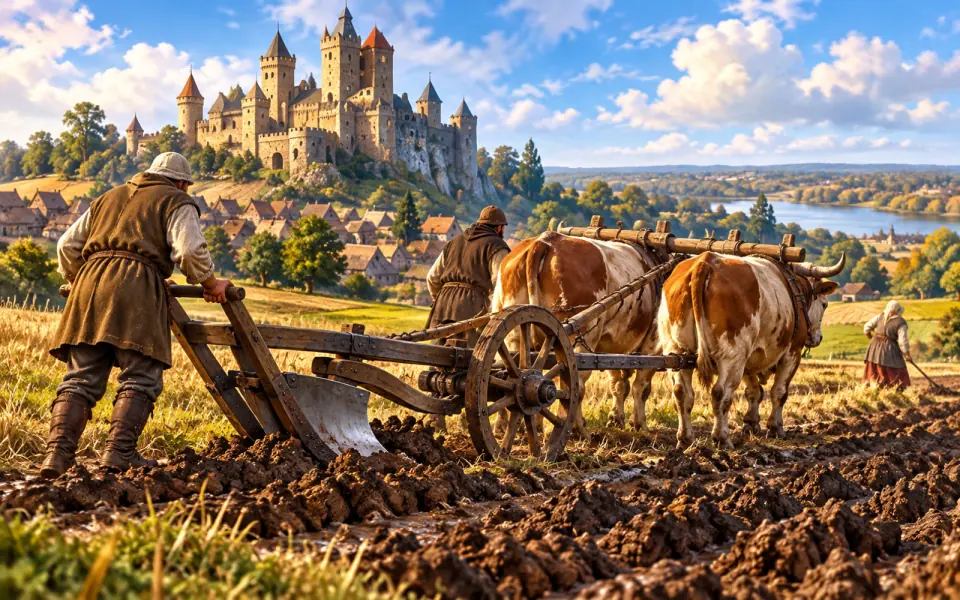 AfterThe heavy plough spreadsabout 1000
Listen / Read next
- Music to read by: Cinematic JourneyEpic film-style music, no lyrics, by Ciro Simone IrmiciSpotifyYouTube Music
Meanwhile, elsewhere in the world
Other events of the era “Early Middle Ages”
- The Romano-Germanic kingdoms
- Emperor Justinian
- Justinian's Code
- Benedictine monks
- Hagia Sophia in Constantinople
- The mosaics of San Vitale in Ravenna
- The Lombards in Italy
- Muhammad's Hijra
- Isidore writes the Etymologies
- The spread of Islam
- Charlemagne, King of the Franks
- The Carolingian Renaissance
- The Book of Kells
- Charlemagne crowned emperor
- Hindu-Arabic numerals head west
- Writing music down with neumes
- The Diamond Sutra, oldest dated printed book
- Alfred the Great
- The Vikings reach Iceland
- The feudal system spreads
- The Medical School of Salerno
- The Vikings in Greenland
- Leif Erikson in North America
- The heavy plough spreads
