The feudal system spreads
about AD 900 The Frankish kingdoms and western Europe
In short
After Charlemagne's death his empire split up and the kings could no longer defend all their lands. So a powerful lord would hand over a territory, the fief, to a vassal, who in return swore loyalty to him and helped him in war. Peasants worked the lord's land and received protection, but many of them, the serfs, could not leave the land where they lived. Castles sprang up everywhere, where people took refuge in times of danger.
Why it matters This system organised life, work and power in Europe for several centuries.
Source: Treccani, entry “Feudalesimo”
Study card about 5 minutes of reading
The story
An empire too big to defend
At the beginning of the 9th century Charlemagne ruled an enormous empire, from present-day France to Italy and Germany. To administer it he sent out officials, the counts, to govern the various regions in his name. But after his death, in 814, his descendants quarrelled and divided the empire. The kings, weak and fighting among themselves, could no longer control their territories.
Meanwhile Europe was being attacked from all sides. From the north came the Vikings with their ships, which sailed up the rivers and plundered towns and monasteries. From the east the Hungarians, or Magyars, rode in on horseback, raiding as far as Italy and Germany. From the south came Muslim pirates, who set themselves up on the coasts. A faraway king could not defend anyone. People looked for help from the local lords, who had castles, horses and soldiers.
A pact of trust
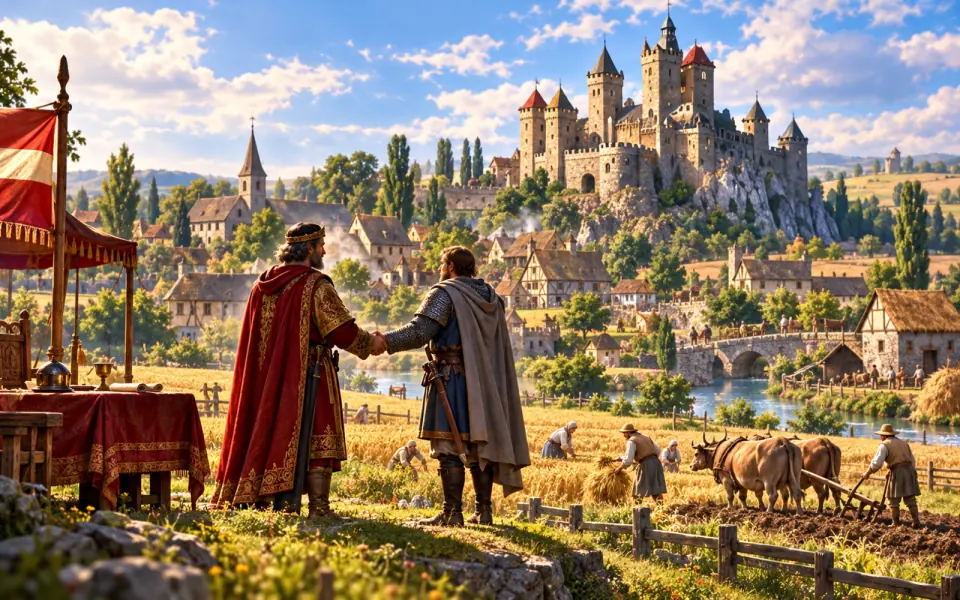
A system of personal relationships spread. A powerful lord, the senior, offered a free man, the vassal, protection and a fief, that is, a piece of land or an office (such as the administration of an area) which allowed him to support himself. In return the vassal swore loyalty to him, and had to help him in battle and give him advice.
The oath was taken in a solemn ceremony: the vassal knelt before the lord, placed his joined hands in his, and swore; this was the homage. Then he swore on the Gospel or on a relic to be faithful. The lord made him stand up and gave him a symbolic object, such as a clod of earth or a branch.
This mechanism involved everyone. The king gave fiefs to the great nobles, the dukes and counts, who in turn gave them to lesser vassals, the knights, and so on. It was a kind of pyramid: on the highest steps stood a few powerful men, at the bottom many small lords. Often, though, things were not so tidy: a vassal could have several lords and had to choose whom to obey.
Being a knight was expensive. You needed a war horse, a coat of mail made of iron rings, a helmet, a shield, a lance and a sword, as well as servants and a spare horse. A warrior could not afford it alone: it was the income from the land received as a fief that paid for all this, and that is why land was worth more than money.
The castle and the village
To defend themselves, the lords built castles: at first simple wooden towers on an artificial hill, surrounded by a ditch, then stone fortresses. Around them lived the peasants, who worked the lord's land and received protection from him. Many were serfs: they could not leave their farm and owed the lord part of the harvest, days of unpaid work and fees for using the mill, the oven or the press.
A bishop around the year 1000, Adalbero of Laon, described society as divided into three orders: those who pray (the clergy), those who fight (the nobles) and those who work (the peasants). For him it was an order willed by God, but the poorest did not agree.
A system... or not?
The word “feudalism” was invented a long time later, between the 17th and 18th centuries (“féodal” in 1614, “feudal system” in 1736, “feudalism” in 1771), by jurists and historians. Today many scholars think that there was never a single identical system across the whole of Europe: the relationship between lords and vassals varied greatly from region to region and from century to century. In England, for example, after the Norman Conquest of 1066 King William gave the lands to his barons in a more orderly way than in France, and in 1086 he made all the landholders swear loyalty. In Italy, the cities played a different role.
Why it happened
The end of the authority of the Carolingian kings and the constant threat of new invaders made it necessary for every territory to defend itself. Whoever had a castle and some warriors became the point of reference for the area.
In a world where little money circulated, paying for services with land was simpler than paying with coins, and it bound people together in a lasting way.
What changed
Power was fragmented: Europe was divided into thousands of small lordships, and kings often counted for less than certain great nobles. For centuries wars and conflicts took place between local lords.
Chivalry was born, an ideal of the Christian warrior who had to defend the weak and the Church, with rules of honour that inspired poems, romances and festivals. From here come the tournaments and the stories of King Arthur.
With the revival of the towns after the year 1000 and the return of strong kings, the feudal system weakened. Traces of it, such as noble titles and hereditary estates, remained until the 19th century, and in Italy some feudal rights were abolished only in the Napoleonic period.
Key people and places
People
- The vassal
- Free man who swore loyalty to a lord and received a fief.
- The senior (lord)
- Powerful noble who offered land and protection in return for military help.
- Adalbero of Laon
- French bishop (died about 1030): he described society in three orders.
- Charlemagne
- King of the Franks and emperor (about 748–814): he created an empire that was later divided.
Places
- Kingdom of the Franks
- Territory of present-day France, where the feudal system developed most.
- The castle
- Fortified residence of the lord, centre of the surrounding territory.
Good to know
- The word “feudalism” was invented centuries after the Middle Ages.
- Feudal homage was made with joined hands between those of the lord.
- The first castles were made of wood, on an artificial hill.
- Serfs could not leave the land without the lord's permission.
- According to Adalbero of Laon society had three orders: those who pray, those who fight, those who work.
Find out more
- Wikipedia, “Feudalism” en.wikipedia.org
- Wikipedia, “Vassal” en.wikipedia.org
- Wikipedia, “Motte-and-bailey castle” en.wikipedia.org
- Wikipedia, “Serfdom” en.wikipedia.org
Related events
- Charlemagne, King of the FranksAD 768 · Early Middle AgesCharlemagne ruled with counts and vassals.
- Charlemagne crowned emperorAD 800 · Early Middle AgesCharlemagne's empire broke up after his death.
- The heavy plough spreadsabout 1000 · Early Middle AgesVillage peasants used the heavy plough.
- Alfred the GreatAD 871 · Early Middle AgesAlfred the Great defended England from the Vikings.
Before and after, in the era “Early Middle Ages”
Event 21 of 25
 BeforeThe Romano-Germanic kingdomsabout AD 480
 BeforeEmperor JustinianAD 527
 BeforeJustinian's CodeAD 529
 BeforeBenedictine monksabout AD 529
 BeforeHagia Sophia in ConstantinopleAD 537
 BeforeThe mosaics of San Vitale in RavennaAD 547
 BeforeThe Lombards in ItalyAD 568
 BeforeMuhammad's HijraAD 622
 BeforeIsidore writes the Etymologiesabout AD 625
 BeforeThe spread of IslamAD 632–750
 BeforePaper reaches Samarkandabout AD 751
 BeforeCharlemagne, King of the FranksAD 768
 BeforeThe Carolingian Renaissanceabout AD 790
 BeforeThe Book of Kellsabout AD 800
 BeforeCharlemagne crowned emperorAD 800
 BeforeHindu-Arabic numerals head westabout AD 825
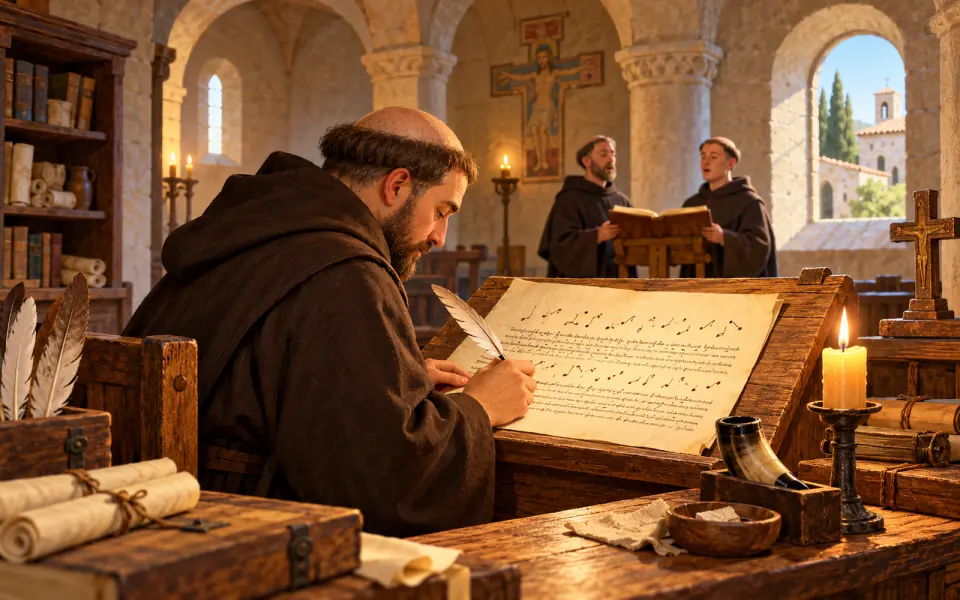 BeforeWriting music down with neumesabout AD 850
 BeforeThe Diamond Sutra, oldest dated printed bookAD 868
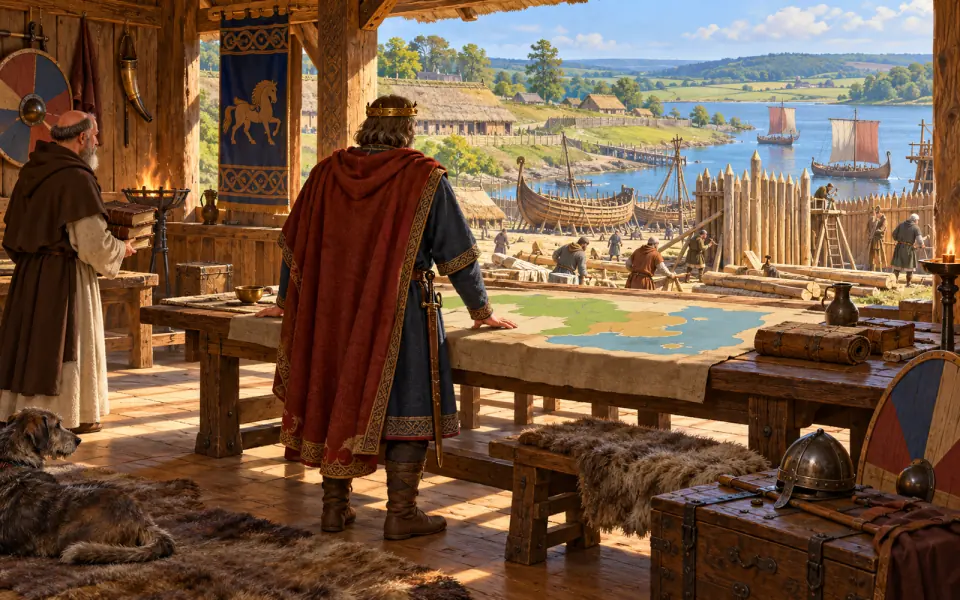 BeforeAlfred the GreatAD 871
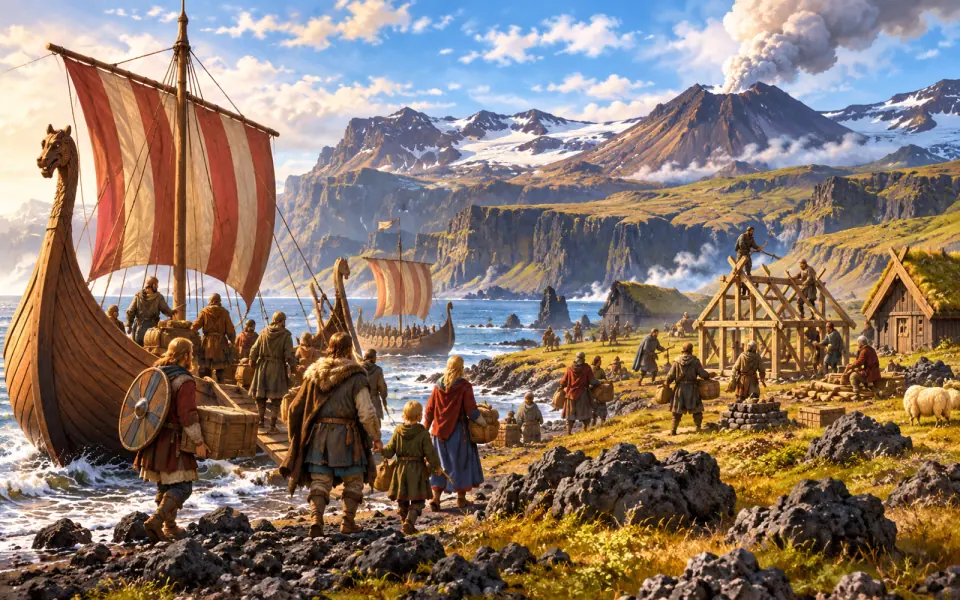 BeforeThe Vikings reach Icelandabout AD 874
- You are hereThe feudal system spreadsabout AD 900
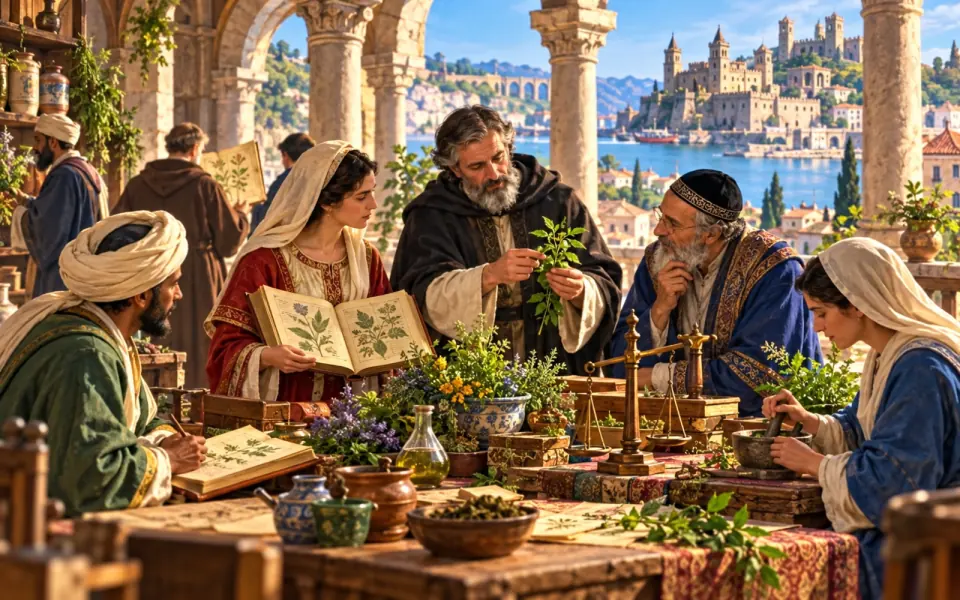 AfterThe Medical School of Salernoabout AD 950
 AfterThe Vikings in Greenlandabout AD 985
 AfterLeif Erikson in North Americaabout 1000
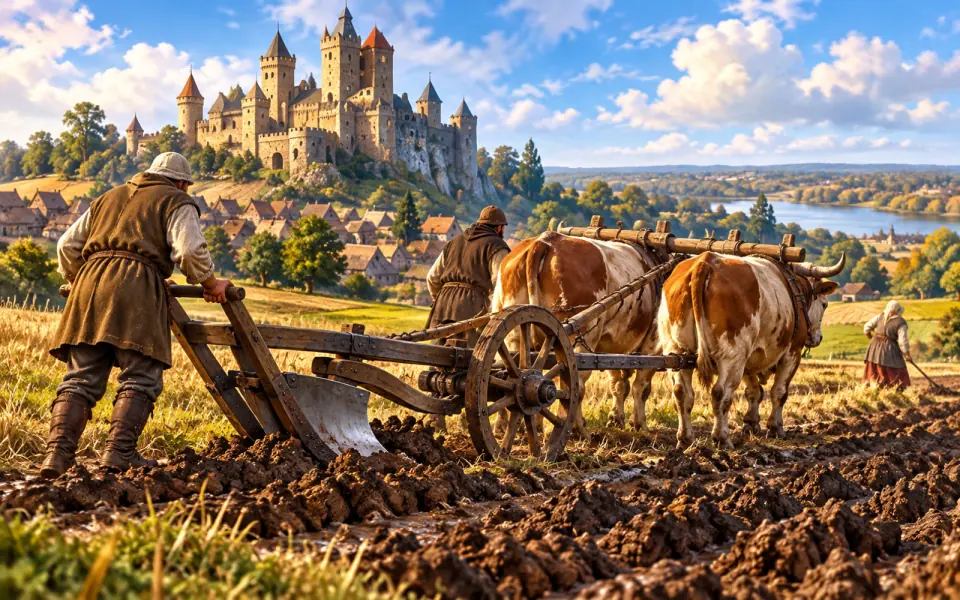 AfterThe heavy plough spreadsabout 1000
Listen / Read next
- Music to read by: Cinematic JourneyEpic film-style music, no lyrics, by Ciro Simone IrmiciSpotifyYouTube Music
Meanwhile, elsewhere in the world
Other events of the era “Early Middle Ages”
- The Romano-Germanic kingdoms
- Emperor Justinian
- Justinian's Code
- Benedictine monks
- Hagia Sophia in Constantinople
- The mosaics of San Vitale in Ravenna
- The Lombards in Italy
- Muhammad's Hijra
- Isidore writes the Etymologies
- The spread of Islam
- Paper reaches Samarkand
- Charlemagne, King of the Franks
- The Carolingian Renaissance
- The Book of Kells
- Charlemagne crowned emperor
- Hindu-Arabic numerals head west
- Writing music down with neumes
- The Diamond Sutra, oldest dated printed book
- Alfred the Great
- The Vikings reach Iceland
- The Medical School of Salerno
- The Vikings in Greenland
- Leif Erikson in North America
- The heavy plough spreads
