Charlemagne crowned emperor
AD 800 St Peter's Basilica, Rome
In short
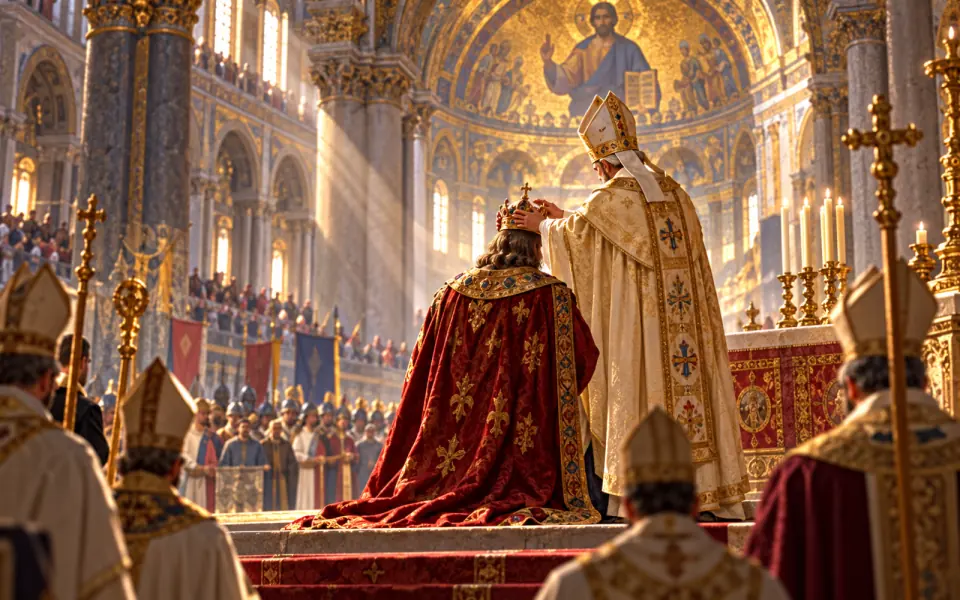
On Christmas night in AD 800, in St Peter's Basilica in Rome, Pope Leo III placed a crown on Charlemagne's head. He was proclaimed Emperor of the Romans: after more than three centuries the West had an emperor again. The empress in Constantinople and her court were not at all pleased, because they saw themselves as the only heirs of Rome. The bond between pope and emperor would become one of the great themes of the whole Middle Ages.
Why it matters From here the Holy Roman Empire would grow, lasting in various forms until 1806.
Source: Encyclopaedia Britannica, “Charlemagne”
Study card about 4 minutes of reading
The story
A pope in danger
In the year 799 Pope Leo III was attacked in the streets of Rome by a group of Roman nobles who were his enemies; they tried to blind him and tear out his tongue, and accused him of various crimes. The pope managed to escape and went to ask for help from Charles, king of the Franks, who was in the north, at Paderborn in Germany. Charles, who considered himself the protector of the Church, welcomed him and had him taken back to Rome with an escort.
Charles was a very powerful ruler. He had reigned since 768 and, with his wars, had united under his rule a large part of Western Europe: France, western Germany, northern Italy and parts of Spain. Since 476 there had been no ruler in the West with such a large kingdom. At his court, meanwhile, scholars such as Alcuin of York spoke of his kingdom as a new Christian empire.
Christmas of the year 800
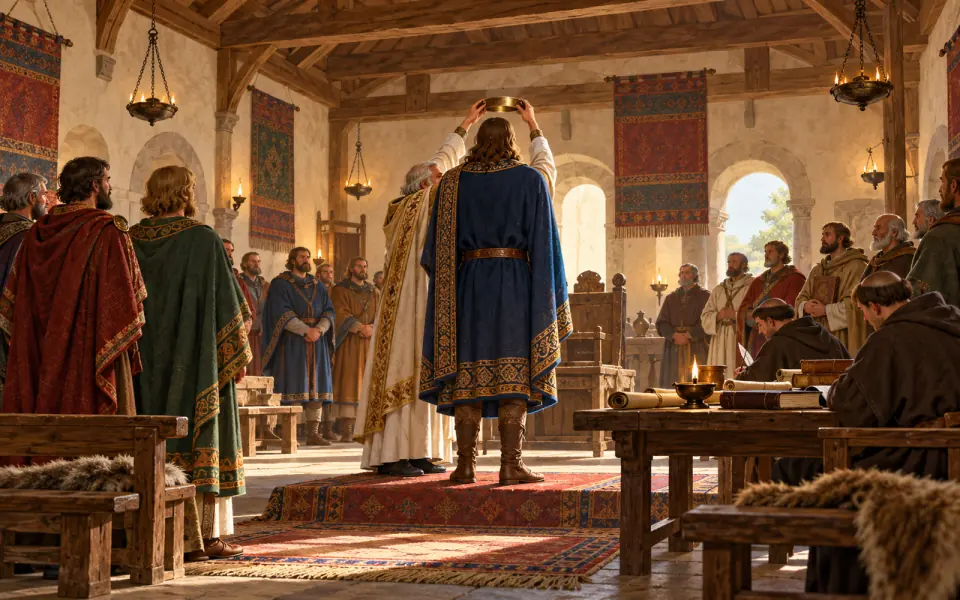
Charles arrived in Rome in November 800. On 23 December the pope, before an assembly, swore that he was not guilty of the accusations made against him. Two days later, on the morning of 25 December, Christmas Day, Charles went to Mass in St Peter's Basilica. The annals of the Franks tell us that the king had knelt down to pray before the tomb of the apostle when Leo III placed a crown on his head and the Roman people shouted three times: “To Charles Augustus, crowned by God, great and peaceful emperor of the Romans, life and victory!”
The pope bowed down before Charles, following the custom of the old emperors of Constantinople. From that day Charles had the title of emperor. Einhard also writes that Charles later said he would not have entered the church if he had known what the pope was about to do. Historians argue about whether this is true: perhaps Charles did not like the coronation to seem like a gift from the pope, rather than a recognition of his worth.
Einhard describes him as an imposing man: tall, with a thick neck and a bit of a belly, but with a voice thinner than his build would suggest. He loved riding, hunting and swimming, and he had learned to speak Latin and to understand Greek. He also tried to learn to write, but managed little, because he started too late.
An empire that already existed?
In Constantinople there was already a Roman emperor, or rather an empress: Irene, who had taken power in 797 after having her son, the lawful emperor, blinded. In the West people thought the throne was vacant, because there had never been a woman emperor. The Byzantines, however, did not accept Charles's coronation; to them he was a usurper. The conflict was settled only after some years: in 812 the emperor Michael I recognised Charles's title of emperor, but not as “emperor of the Romans”.
Charles ruled the empire for about thirteen years. He died on 28 January 814 and was buried in the chapel at Aachen. After him his son Louis the Pious reigned, and in 843, with the Treaty of Verdun, his three grandsons divided the empire into three parts: from these, over time, came France, Germany and a middle kingdom that included Italy.
A title that lasted a thousand years
The imperial title, after a long break, was taken up again in 962 by the German king Otto I, and from then on people spoke of the Holy Roman Empire, which survived, with enormous changes, until 1806, when it was dissolved, under pressure from Napoleon, by the emperor Francis II. For centuries popes and emperors argued over who had the right to supreme power: could the emperor crown himself, or was it the pope who decided?
Why it happened
Charles was the most powerful ruler in the West and wanted to give his kingdom a name worthy of its strength. The Church, with a weak and threatened pope, needed a powerful protector.
The idea of a Christian empire, reborn after the fall of Rome, was circulating at the Carolingian court, and the pope saw the coronation as a way of strengthening his own authority.
What changed
With Charles an empire began again in the West, and Western Europe rediscovered the idea of political and religious unity. The memory of Rome stayed alive throughout the Middle Ages.
The link between pope and emperor created a long conflict over power: who should have the last word, and who should crown whom. It was one of the great political questions of the Middle Ages.
The empire soon split apart, but its model stayed in the memory of the kings of Germany and of the popes. Charlemagne is also called the “father of Europe”.
Key people and places
People
- Charlemagne
- King of the Franks from 768 and emperor from 800 (about 748–814).
- Leo III
- Pope from 795 to 816: he crowned Charles in Rome.
- Einhard
- Frankish scholar (about 770–840): he wrote the “Life of Charlemagne”.
- Irene
- Byzantine empress (about 752–803): she ruled in Constantinople in 800.
- Otto I
- King of Germany (912–973): he took up the imperial title in 962.
Places
- St Peter's Basilica, Rome
- The place where the coronation took place, on 25 December 800.
- Aachen
- Charlemagne's capital, where he was buried.
Good to know
- Charles was crowned emperor on Christmas Day in the year 800.
- The Roman people hailed Charles three times.
- According to Einhard, Charles would not have entered the church if he had known what the pope would do.
- In 800 an empress, Irene, was reigning in Constantinople.
- The Holy Roman Empire ended in 1806, when Francis II gave up the crown under pressure from Napoleon.
Find out more
- Wikipedia, “Charlemagne” en.wikipedia.org
- Wikipedia, “Pope Leo III” en.wikipedia.org
- Wikipedia, “Holy Roman Empire” en.wikipedia.org
- Wikipedia, “Einhard” en.wikipedia.org
Related events
- Charlemagne, King of the FranksAD 768 · Early Middle AgesCharles became king of the Franks in 768.
- The Carolingian Renaissanceabout AD 790 · Early Middle AgesAt his court learning was reborn, with Carolingian minuscule.
- The feudal system spreadsabout AD 900 · Early Middle AgesAfter the end of the Carolingian empire the feudal system spread.
- The Lombards in ItalyAD 568 · Early Middle AgesThe Lombards had dominated Italy until Charles's conquest in 774.
Before and after, in the era “Early Middle Ages”
Event 15 of 25
 BeforeThe Romano-Germanic kingdomsabout AD 480
 BeforeEmperor JustinianAD 527
 BeforeJustinian's CodeAD 529
 BeforeBenedictine monksabout AD 529
 BeforeHagia Sophia in ConstantinopleAD 537
 BeforeThe mosaics of San Vitale in RavennaAD 547
 BeforeThe Lombards in ItalyAD 568
 BeforeMuhammad's HijraAD 622
 BeforeIsidore writes the Etymologiesabout AD 625
 BeforeThe spread of IslamAD 632–750
 BeforePaper reaches Samarkandabout AD 751
 BeforeCharlemagne, King of the FranksAD 768
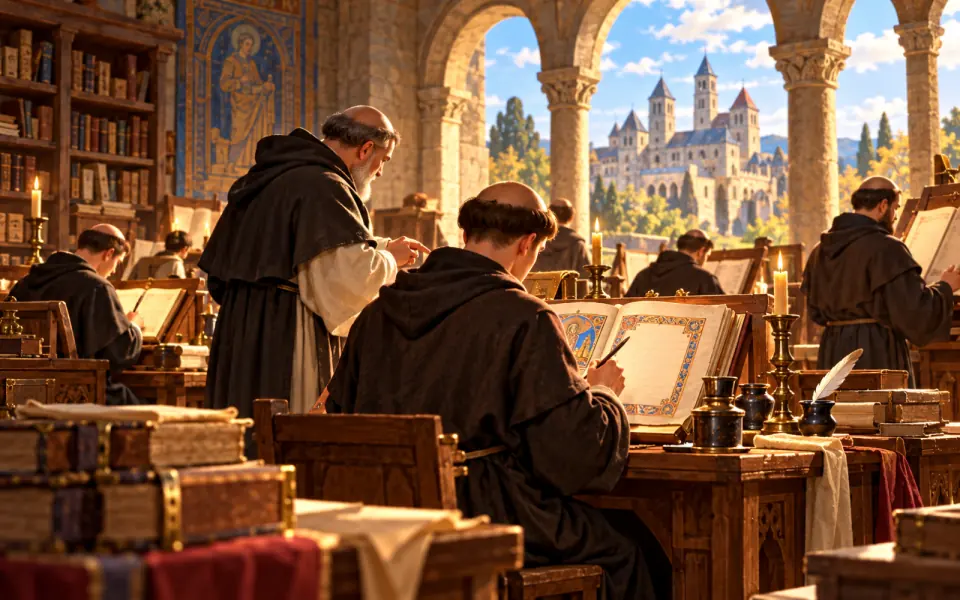 BeforeThe Carolingian Renaissanceabout AD 790
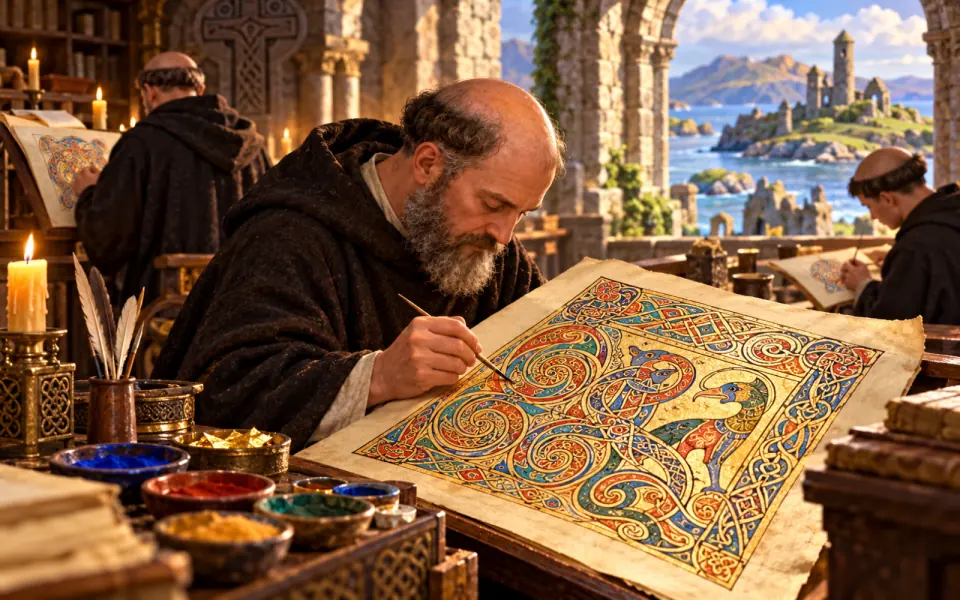 BeforeThe Book of Kellsabout AD 800
- You are hereCharlemagne crowned emperorAD 800
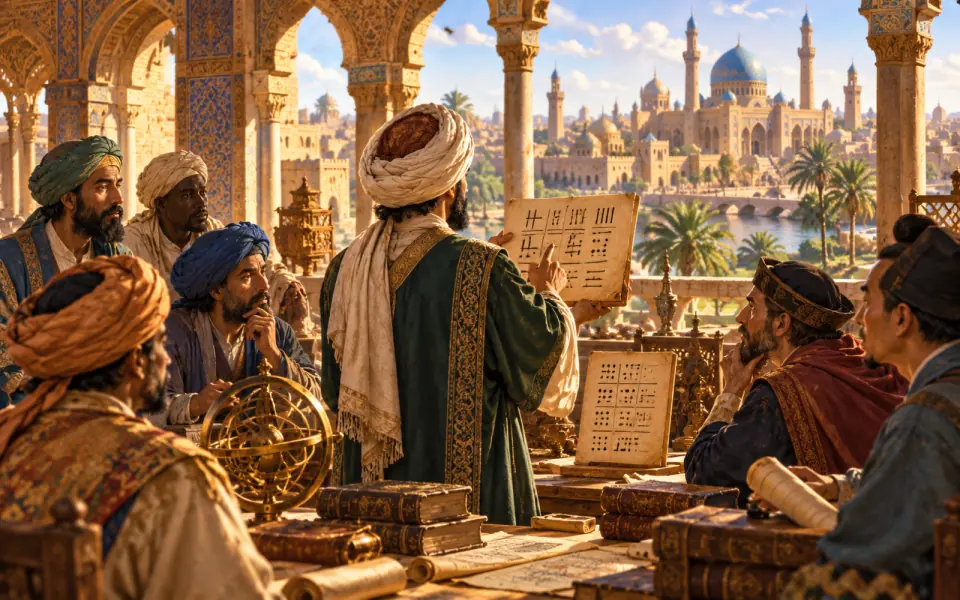 AfterHindu-Arabic numerals head westabout AD 825
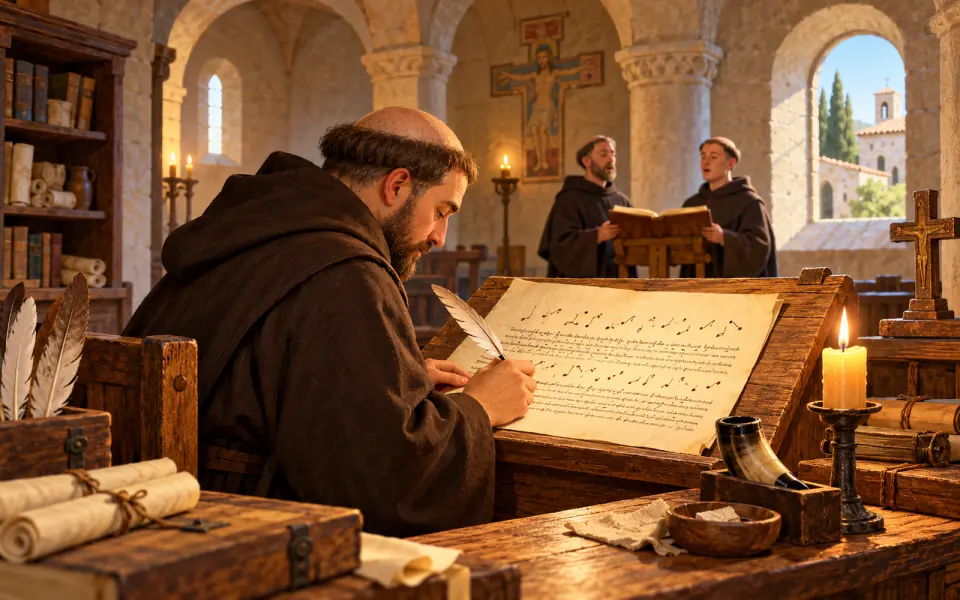 AfterWriting music down with neumesabout AD 850
 AfterThe Diamond Sutra, oldest dated printed bookAD 868
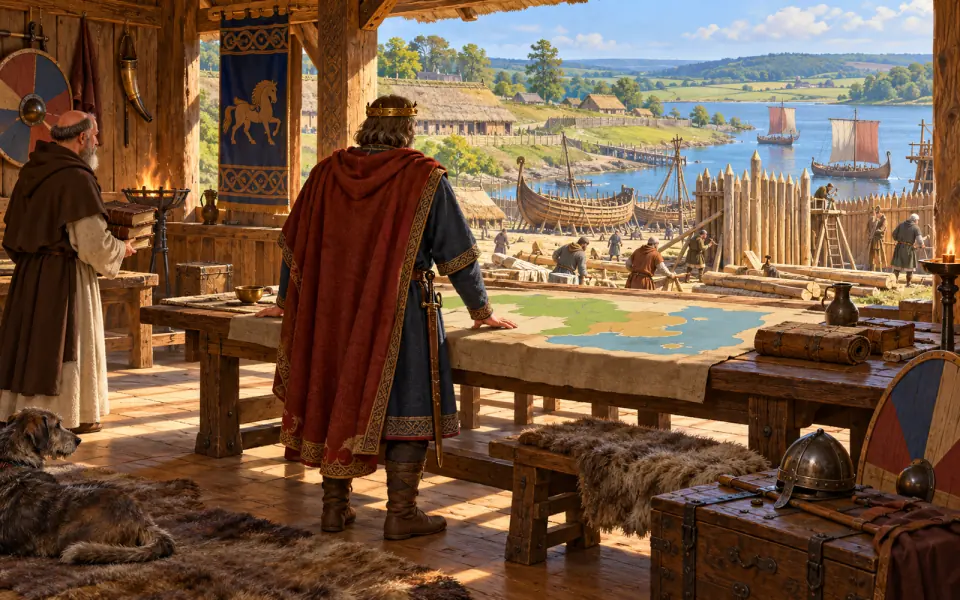 AfterAlfred the GreatAD 871
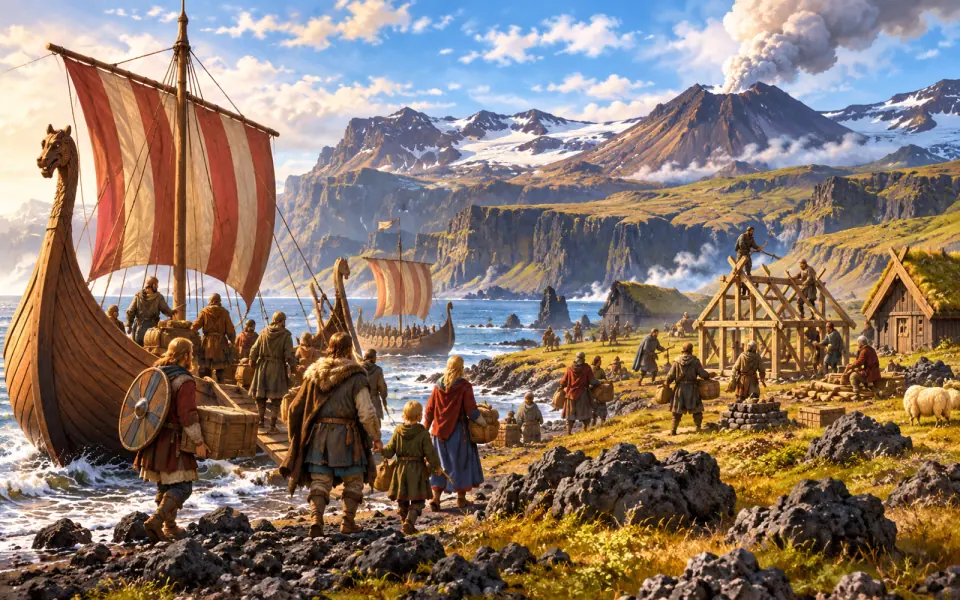 AfterThe Vikings reach Icelandabout AD 874
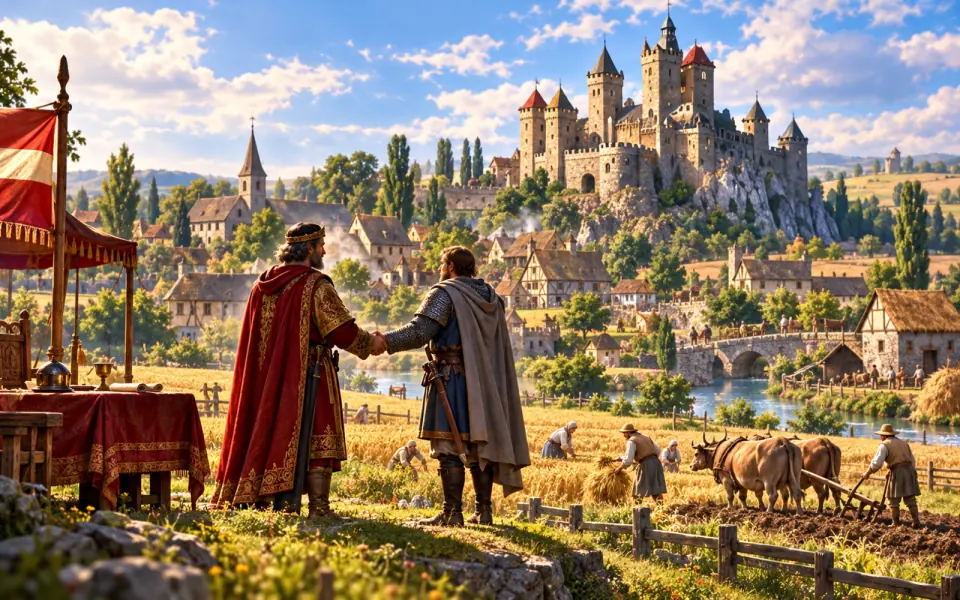 AfterThe feudal system spreadsabout AD 900
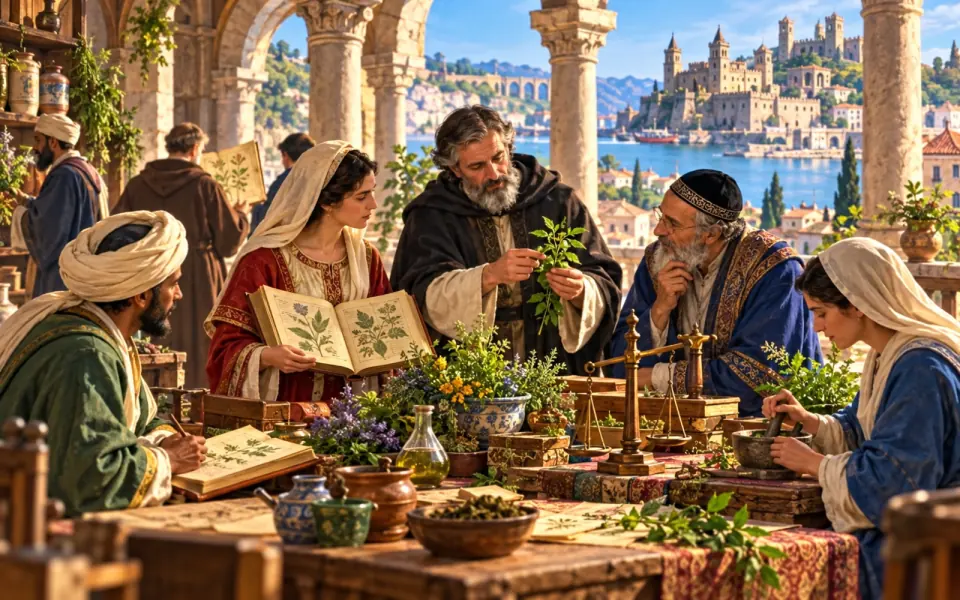 AfterThe Medical School of Salernoabout AD 950
 AfterThe Vikings in Greenlandabout AD 985
 AfterLeif Erikson in North Americaabout 1000
 AfterThe heavy plough spreadsabout 1000
Listen / Read next
- Music to read by: Cinematic JourneyEpic film-style music, no lyrics, by Ciro Simone IrmiciSpotifyYouTube Music
Meanwhile, elsewhere in the world
Other events of the era “Early Middle Ages”
- The Romano-Germanic kingdoms
- Emperor Justinian
- Justinian's Code
- Benedictine monks
- Hagia Sophia in Constantinople
- The mosaics of San Vitale in Ravenna
- The Lombards in Italy
- Muhammad's Hijra
- Isidore writes the Etymologies
- The spread of Islam
- Paper reaches Samarkand
- Charlemagne, King of the Franks
- The Carolingian Renaissance
- The Book of Kells
- Hindu-Arabic numerals head west
- Writing music down with neumes
- The Diamond Sutra, oldest dated printed book
- Alfred the Great
- The Vikings reach Iceland
- The feudal system spreads
- The Medical School of Salerno
- The Vikings in Greenland
- Leif Erikson in North America
- The heavy plough spreads
