Muhammad's Hijra
AD 622 From Mecca to Medina, Arabia (now Saudi Arabia)
In short
Muhammad was born in Mecca, in Arabia, and according to Islamic tradition at about forty he began to receive revelations from God. His preaching, which called on people to worship one God, met many opponents in the city. In AD 622 he and his followers moved to Medina: this journey is called the Hijra, meaning ‘migration’. The Islamic calendar, still used today, starts from that year.
Why it matters The Hijra marks the birth of the first Muslim community, from which Islam spread across much of the world.
Source: Treccani, entry “Maometto”

Study card about 5 minutes of reading
The story
Mecca in Muhammad's time
At the end of the 6th century Mecca was a city in western Arabia, tied to trade. In the life of the city the tribes counted for a great deal: everyone belonged to a family group that protected him. The Quraysh were the tribe of Muhammad and of the leaders of the city.
Muhammad was born in Mecca around AD 570; the exact date is not known. His father died before he was born and his mother when he was about six, so he was brought up first by his grandfather and then by an uncle, Abu Talib. As an adult he worked as a merchant and won a reputation as an honest person. He married Khadija, a rich widow, who was the first to believe in him.
The revelations and the opposition
According to Muslim tradition, around 610, when he was about forty, Muhammad received the first revelation in a cave on Mount Hira, near Mecca: the angel Gabriel ordered him to “recite”. From then on, throughout his life, Muhammad would receive further revelations from God. They were collected in the Quran, the holy book of Muslims, which was put together after his death, at the time of the caliph Uthman.
His message was clear: there is only one God and one must trust in him. Not everyone liked it. Many of his fellow citizens, according to the account, feared for their business interests and their traditional beliefs. Muhammad's followers were mocked, boycotted and ill-treated. Around 614-615 a group of believers took refuge in Ethiopia, in the kingdom of Axum, to escape persecution. In 619 Khadija died, and so did his uncle Abu Talib, who protected him: from that moment Muhammad was more alone and in greater danger.
The invitation from Yathrib
In the meantime another city came forward, Yathrib, about 340 kilometres in a straight line from Mecca. It was torn by long quarrels between its tribes, and was looking for someone to act as arbitrator, a neutral person who would make peace. The inhabitants knew Muhammad and invited him. This is how, in 622, the Hijra, the “migration”, took shape.
The departure
About seventy Muslims followed him. Muhammad left later, in the company of a faithful friend, Abu Bakr. They hid for three days in a cave on Mount Thawr, while the Quraysh searched for them, then took up the journey north again. The arrival at Yathrib is dated 24 September 622, although historians point out that the journey took place between 9 and 24 September, and the city was later called Medina.
The word “hijra”, in Arabic, means “emigration”, but it indicates something more: the breaking of ties with one's own tribe. In Arabia the tribe was everything: it gave protection, identity and justice. Leaving it was a courageous and dangerous act. Those who left with Muhammad chose to belong to a community founded on faith and not on blood.
Medina: the community is born
At Medina Muhammad became a religious and political leader. To regulate relations between the different communities of the city he issued the so-called Constitution of Medina. The “umma”, the community of believers, was founded. Armed clashes with the Meccans followed, including the battles of Badr, Uhud and the Trench. In 628 Muhammad made an agreement with Mecca and in 630 he returned to take the city. He died at Medina in 632, and his followers chose successors, the caliphs.
The calendar of the Hijra
Historians remember the Hijra above all for the calendar. The second caliph, ʿUmar, decided that the numbering of the Islamic years should begin from 622. It is a lunar calendar: the months follow the phases of the Moon, so the dates do not coincide with those of the Gregorian calendar. The first day of the first month, Muharram, of year 1 corresponds to 16 July 622. To go from an Islamic year to a Gregorian one you can use an approximate formula: h = (g − 622) × 33 ÷ 32.
Why it happened
The Hijra arose from a situation of tension. In Mecca Muhammad preached the worship of one God, and for the leaders of the city this endangered both their traditions and the trade linked to the sanctuary. The persecutions of the Muslims became heavier and heavier, so much so that already in 614-615 a first group had sought refuge in Ethiopia. The death of his wife Khadija and of his uncle Abu Talib, in 619, took away two important supports from Muhammad.
At the same time, at Yathrib there was an opposite need: the tribes of the city were in constant conflict and wanted an impartial arbitrator. Muhammad was a respected person with no ties to their rivalries. From this meeting between the Muslims' need for protection and the search for peace by the citizens of Yathrib came the journey of 622.
What changed
At Medina the Muslims were no longer a persecuted minority, but a community with a leader, rules and a space of its own. For this reason many scholars see in the Hijra the beginning of the first Muslim community. From there, after Muhammad's death in 632, the expansion of the caliphs set out.
For Muslims the Hijra is so important that the years of their calendar are counted from that year, and the calendar is still used today for religious dates.
But there is also a wider meaning: the idea that a community can be founded on faith and choice and not only on family or tribe profoundly changed Arab society.
Key people and places
People
- Muhammad
- Prophet of Islam, born in Mecca around 570 and died at Medina in 632.
- Khadija
- Rich widow, Muhammad's first wife and the first to believe in him; she died in 619.
- Abu Bakr
- Faithful companion who accompanied Muhammad on the journey of the Hijra.
- Abu Talib
- Uncle who raised Muhammad and protected him in Mecca until his death, in 619.
- ʿUmar
- Second caliph: he is credited with choosing 622 as year 1 of the Islamic calendar.
Places
- Mecca
- City in western Arabia where Muhammad was born and where the Quraysh had their power.
- Medina
- The new name of Yathrib, about 340 km in a straight line from Mecca: here Muhammad organised the first community.
- Mount Thawr
- Mountain near Mecca where Muhammad and Abu Bakr hid for three days in a cave.
Good to know
- The Hijra is not Muhammad's birth or the first revelation: year 1 of the Islamic calendar starts from this journey.
- The Islamic year follows the Moon: for this reason its dates do not coincide each year with those of the calendar we use.
- Muhammad and Abu Bakr hid for three days in a cave while the Quraysh were searching for them.
- 1 Muharram of year 1 corresponds to 16 July 622.
- Already in 614-615 a group of believers had taken refuge in Ethiopia: it is called the “little Hijra”.
Find out more
- Wikipedia, “Hijrah” en.wikipedia.org
- Wikipedia, “Muhammad” en.wikipedia.org
- Wikipedia, “Islamic calendar” en.wikipedia.org
- Wikipedia, “Medina” en.wikipedia.org
Related events
- The spread of IslamAD 632–750 · Early Middle AgesAfter Muhammad's death the caliphs led the great expansion.
- Paper reaches Samarkandabout AD 751 · Early Middle AgesPaper reached the Islamic world at Samarkand.
- Hindu-Arabic numerals head westabout AD 825 · Early Middle AgesIn the Islamic world scholars such as al-Khwarizmi worked at Baghdad.
- Benedictine monksabout AD 529 · Early Middle AgesIn the same century, in Europe, Benedictine monasticism was born.
Before and after, in the era “Early Middle Ages”
Event 8 of 25
 BeforeThe Romano-Germanic kingdomsabout AD 480
 BeforeEmperor JustinianAD 527
 BeforeJustinian's CodeAD 529
 BeforeBenedictine monksabout AD 529
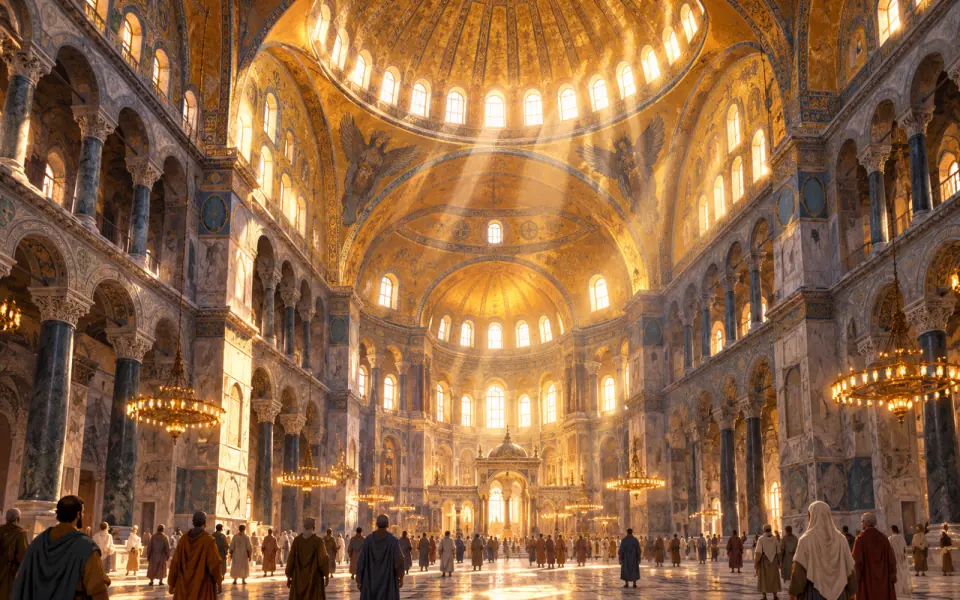 BeforeHagia Sophia in ConstantinopleAD 537
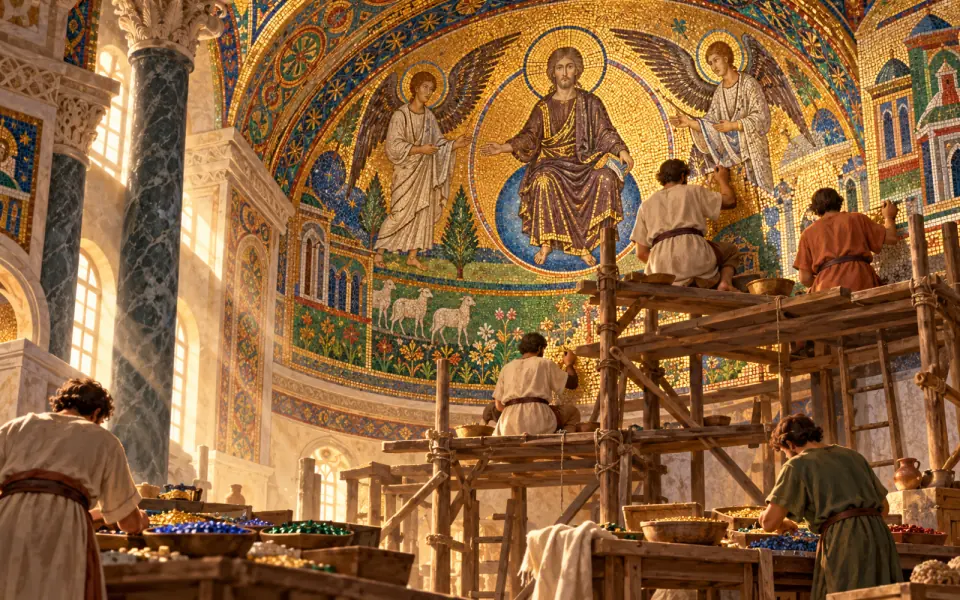 BeforeThe mosaics of San Vitale in RavennaAD 547
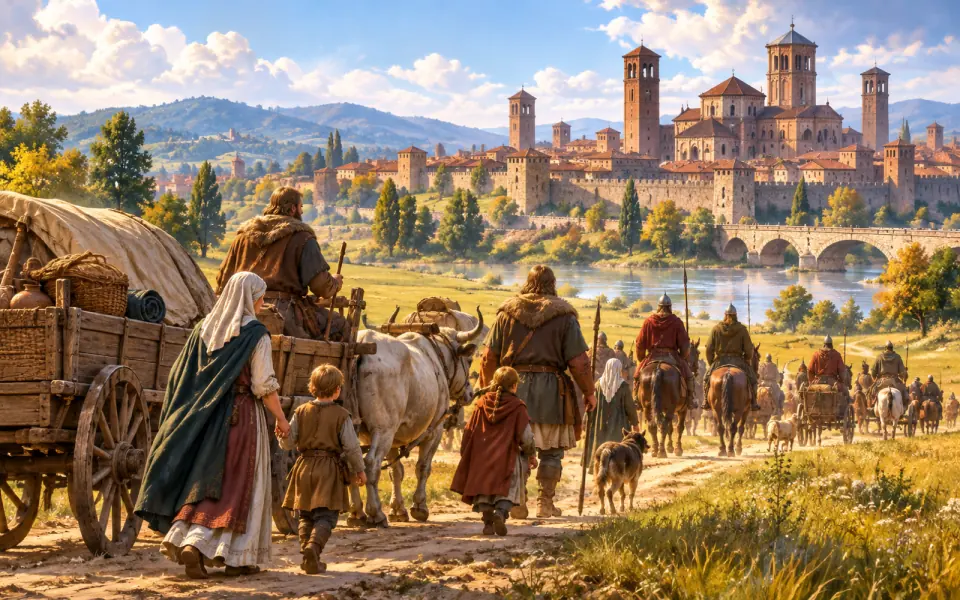 BeforeThe Lombards in ItalyAD 568
- You are hereMuhammad's HijraAD 622
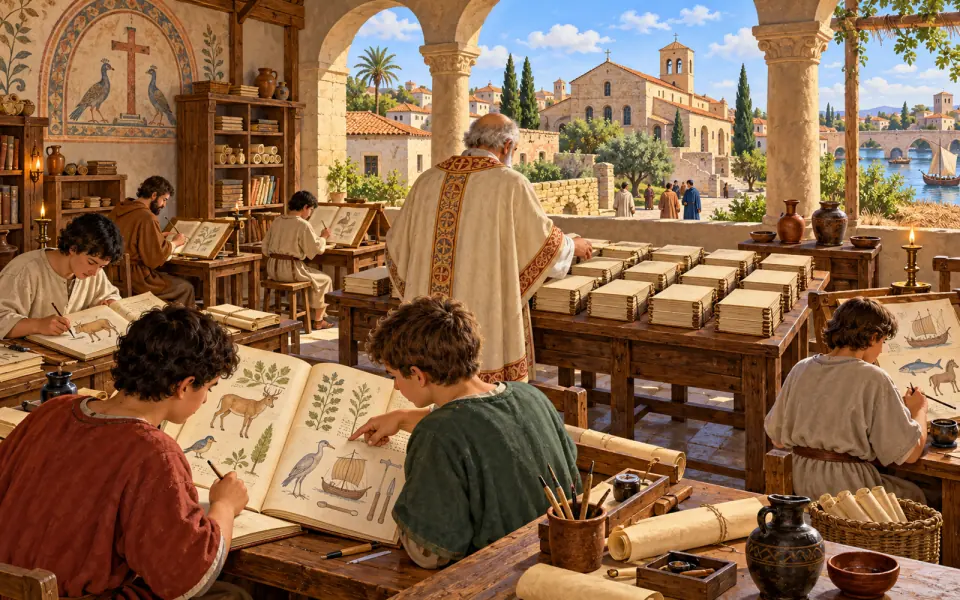 AfterIsidore writes the Etymologiesabout AD 625
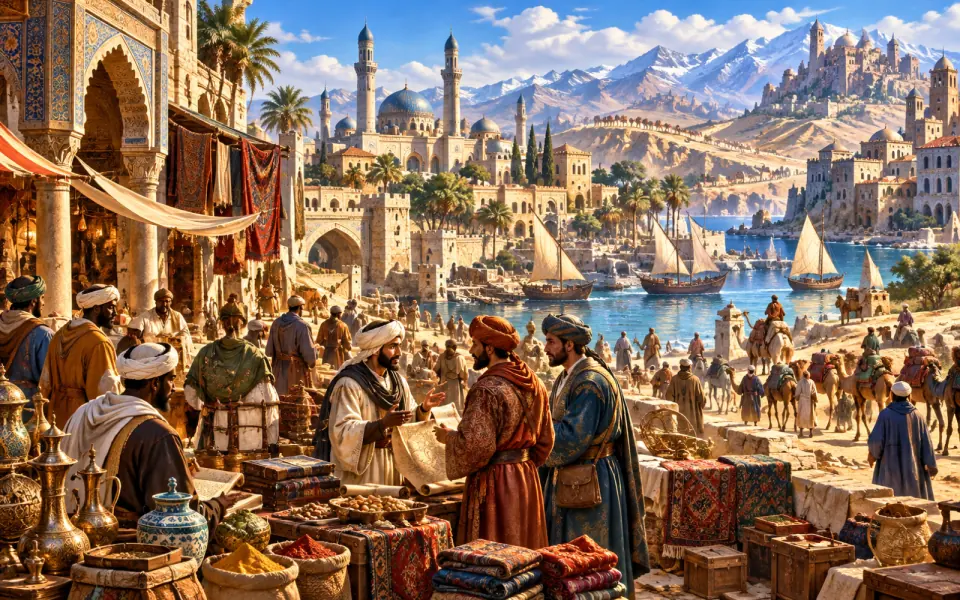 AfterThe spread of IslamAD 632–750
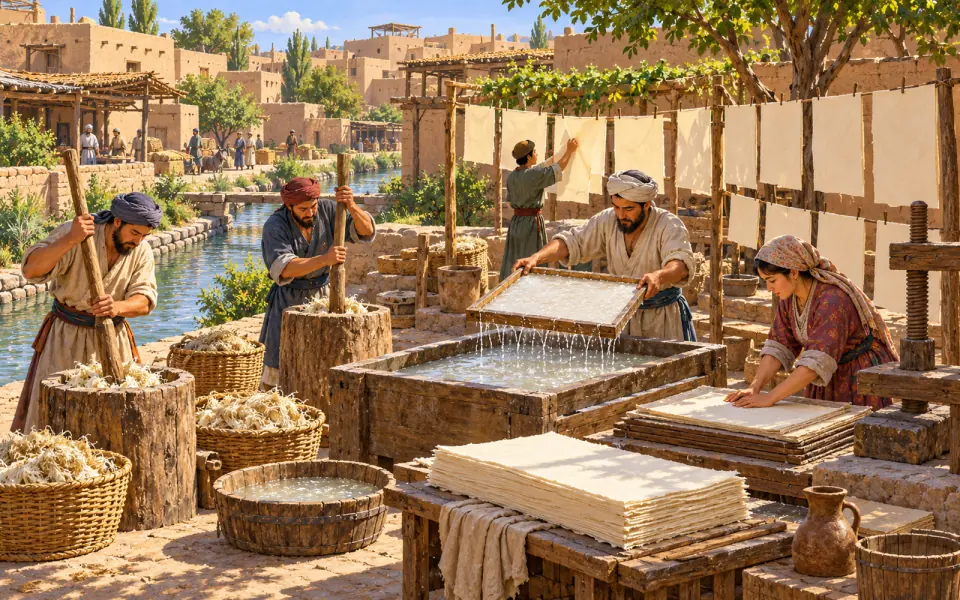 AfterPaper reaches Samarkandabout AD 751
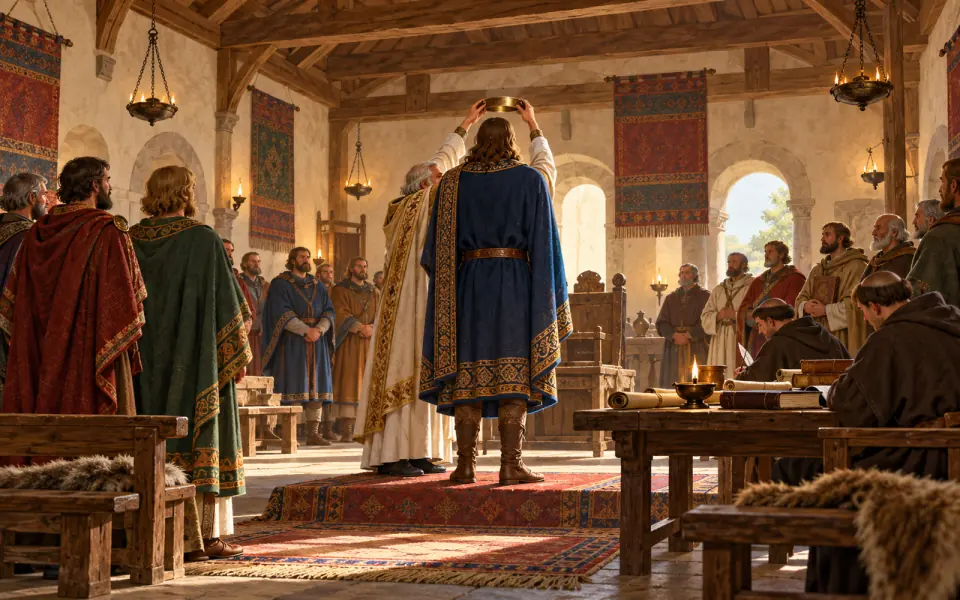 AfterCharlemagne, King of the FranksAD 768
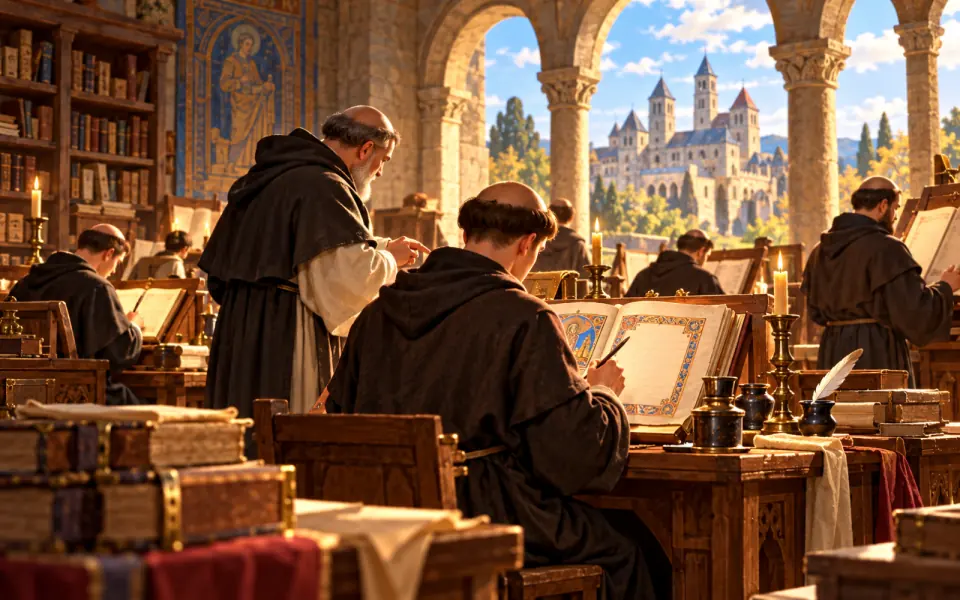 AfterThe Carolingian Renaissanceabout AD 790
 AfterThe Book of Kellsabout AD 800
 AfterCharlemagne crowned emperorAD 800
 AfterHindu-Arabic numerals head westabout AD 825
 AfterWriting music down with neumesabout AD 850
 AfterThe Diamond Sutra, oldest dated printed bookAD 868
 AfterAlfred the GreatAD 871
 AfterThe Vikings reach Icelandabout AD 874
 AfterThe feudal system spreadsabout AD 900
 AfterThe Medical School of Salernoabout AD 950
 AfterThe Vikings in Greenlandabout AD 985
 AfterLeif Erikson in North Americaabout 1000
 AfterThe heavy plough spreadsabout 1000
Listen / Read next
- Music to read by: Cinematic JourneyEpic film-style music, no lyrics, by Ciro Simone IrmiciSpotifyYouTube Music
Meanwhile, elsewhere in the world
Other events of the era “Early Middle Ages”
- The Romano-Germanic kingdoms
- Emperor Justinian
- Justinian's Code
- Benedictine monks
- Hagia Sophia in Constantinople
- The mosaics of San Vitale in Ravenna
- The Lombards in Italy
- Isidore writes the Etymologies
- The spread of Islam
- Paper reaches Samarkand
- Charlemagne, King of the Franks
- The Carolingian Renaissance
- The Book of Kells
- Charlemagne crowned emperor
- Hindu-Arabic numerals head west
- Writing music down with neumes
- The Diamond Sutra, oldest dated printed book
- Alfred the Great
- The Vikings reach Iceland
- The feudal system spreads
- The Medical School of Salerno
- The Vikings in Greenland
- Leif Erikson in North America
- The heavy plough spreads
