Charlemagne, King of the Franks
AD 768 Kingdom of the Franks; capital Aachen (now Germany)
In short
Charles, son of King Pepin the Short, became King of the Franks together with his brother Carloman, and from AD 771 he ruled alone. He fought for many years and enlarged the kingdom: he defeated the Lombards in Italy, the Saxons in Germany and the Avars in eastern Europe. His favourite residence was Aachen, where he had a great palace and a chapel built. He could not write well, but he loved learning and wanted others to learn too.
Why it matters He united much of western Europe under one king, something that had not happened since Roman times.
Source: Treccani, entry “Carlo Magno”
Study card about 5 minutes of reading
The story
The kings of the Franks and their stewards
The Franks were a Germanic people who, after the fall of the Western Roman Empire, had settled in Gaul, which is now France. Their first great Christian king, Clovis, had converted around the year 500. But two centuries later Clovis's descendants, the Merovingians, were weak kings, called “do-nothing kings” by historians, and the real power was in the hands of their steward, the “mayor of the palace”, who was head of the administration and of the army.
The most powerful family of stewards was the Carolingians. Charles Martel stopped the Arabs at Poitiers in 732. His son Pepin the Short, in 751, with the support of the pope, removed the last Merovingian king and had himself crowned king in his place: the pope needed a protector against the Lombards, who were threatening Rome, and a few years later (754–756) Pepin helped him by giving the Church a part of central Italy (the so-called “Donation of Pepin”).
Two brothers on the throne
Pepin died on 24 September 768. According to Frankish custom, the kingdom was divided between his two sons. Charles received the northern and western part, Carloman the southern and eastern part. Charles was about twenty years old; he was probably born in 747 or 748, but the date is not certain. The two brothers did not get along, and their mother, Bertrada, tried to keep the peace between them. In 771 Carloman died suddenly, and Charles took his kingdom as well, ruling alone.
Charles would go down in history as Charlemagne, from the Latin “Carolus Magnus”, meaning “Charles the Great”.
A king always at war
His reign was full of wars. He fought the Saxons, a pagan Germanic people of northern Germany, for more than thirty years, from 772 to 804, in harsh and cruel campaigns: in 782 at Verden he had about four thousand five hundred rebel Saxons put to death, according to the chronicles. He forced them to become Christians.
One of his first acts against the Saxons was the destruction, in 772, of the Irminsul, an enormous sacred tree trunk which, in their belief, held up the sky. But the Saxons rebelled several times, led by their chief Widukind, and Charles had to return every year. In the end he forced them to be baptised and to join his kingdom.
In 773–774 he attacked the Lombards, who were threatening the pope: he besieged Pavia, their capital, captured King Desiderius and proclaimed himself king of the Lombards. He entered Spain to fight the Muslims, but in 778 the rear guard of his army was massacred by the Basques in the Pyrenees, at Roncesvalles; this episode later inspired the poem “The Song of Roland”. Around 796 he defeated the Avars, a people of the steppes.
Governing a huge kingdom
Charles did not rule only with the sword. He divided the kingdom into counties, entrusted to officials called counts. To keep watch over them, he usually sent out pairs of inspectors every year, a churchman and a layman, called “missi dominici”, meaning “envoys of the lord”. He issued laws, called “capitularies”, because they were divided into chapters. He had a single silver coin minted, the denarius, which made trade easier.
The counts had the job of collecting taxes, judging cases and gathering the warriors in case of war. To help people who could not read the capitularies, the bishops had them read aloud in the churches. It was a way of reaching all the subjects in a kingdom with no newspapers and no post stations.
Unlike the kings of ancient times, he had no real capital. In the early years he moved with his court from one residence to another, eating the produce of his own lands. Later he settled mostly at Aachen, where he had a great palace built, and an eight-sided chapel inspired by the Italian churches of Ravenna.
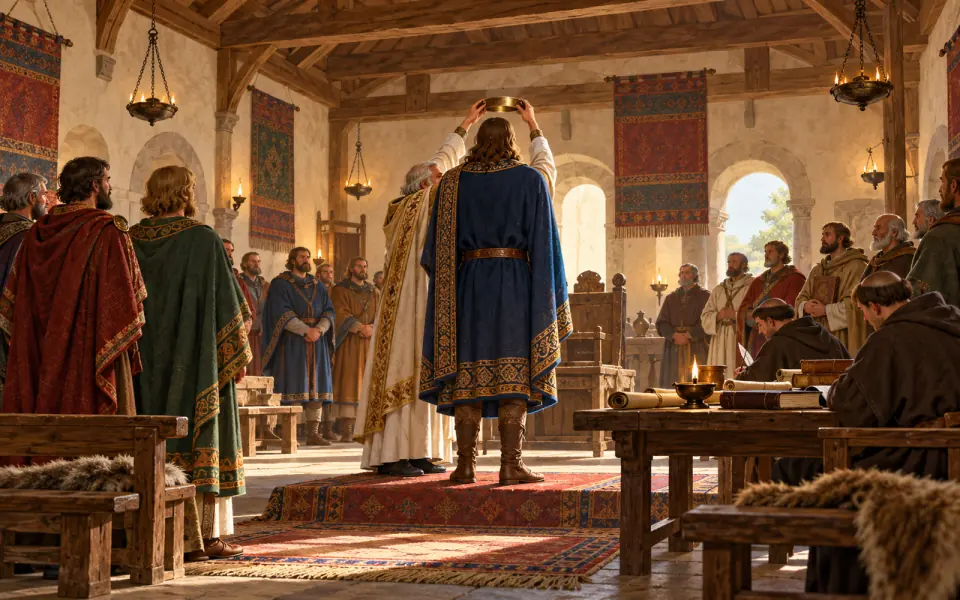
In 800 Charles was crowned emperor in Rome. He died on 28 January 814, after about forty-five years as king.
Why it happened
The Carolingian family now held the real power, and the pope was looking for a strong protector. Pepin had strengthened his position and left his sons a solid kingdom, with an army and a loyal nobility.
Charles was ambitious, energetic and intelligent. His army was well organised, and the gains from the wars, the loot and the tribute, allowed him to reward the loyal nobles.
What changed
Charles united under his rule a large part of Christian Western Europe, a territory that had not been brought together since the fall of Rome. His time was a period of cultural revival and of strengthening of the Church.
His empire split up after his death, but the kingdoms born from the division, above all France and Germany, have their roots there. That is why Charles is also called the “father of Europe”.
The model of a strong Christian king, protector of the Church and maker of laws, influenced medieval rulers for centuries.
Key people and places
People
- Charlemagne
- King of the Franks from 768 (747/748–814), later emperor.
- Pepin the Short
- King of the Franks from 751 to 768 (714–768): Charles's father.
- Carloman
- Charles's brother (751–771): he ruled alongside him for three years.
- Bertrada
- Charles's mother (about 720–783): she tried to keep her sons at peace.
- Desiderius
- Last king of the Lombards: defeated by Charles in 774.
Places
- Aachen
- The German city where Charles built his palace and chapel.
- Pavia
- Capital of the Lombards, conquered in 774.
- Roncesvalles
- Pyrenean pass where Charles's rear guard was massacred in 778.
Good to know
- The name “Charlemagne” comes from the Latin “Carolus Magnus”.
- Charles reigned for about forty-five years.
- The wars against the Saxons lasted more than thirty years.
- In 778 the Frankish rear guard was destroyed at Roncesvalles: this gave rise to the Song of Roland.
- The eight-sided chapel at Aachen is still standing.
Find out more
- Wikipedia, “Charlemagne” en.wikipedia.org
- Wikipedia, “Pepin the Short” en.wikipedia.org
- Wikipedia, “Saxon Wars” en.wikipedia.org
- Wikipedia, “Missus dominicus” en.wikipedia.org
Related events
- Charlemagne crowned emperorAD 800 · Early Middle AgesIn 800 Charles was crowned emperor in Rome.
- The Carolingian Renaissanceabout AD 790 · Early Middle AgesAt his court culture was reborn, with Carolingian minuscule writing.
- The Lombards in ItalyAD 568 · Early Middle AgesThe Lombards, defeated by Charles in 774, had dominated Italy since 568.
- The feudal system spreadsabout AD 900 · Early Middle AgesAfter Charles the feudal system spread.
Before and after, in the era “Early Middle Ages”
Event 12 of 25
 BeforeThe Romano-Germanic kingdomsabout AD 480
 BeforeEmperor JustinianAD 527
 BeforeJustinian's CodeAD 529
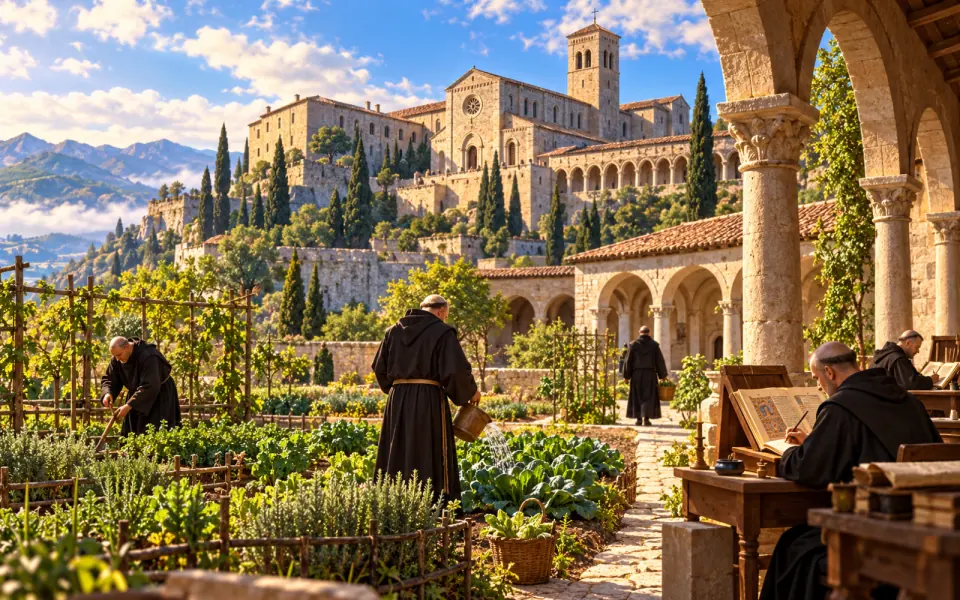 BeforeBenedictine monksabout AD 529
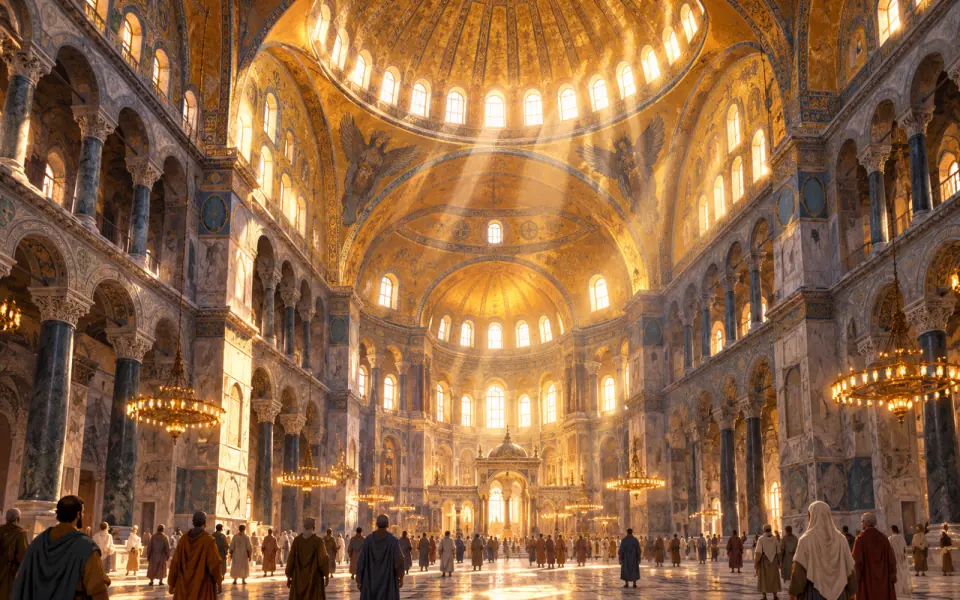 BeforeHagia Sophia in ConstantinopleAD 537
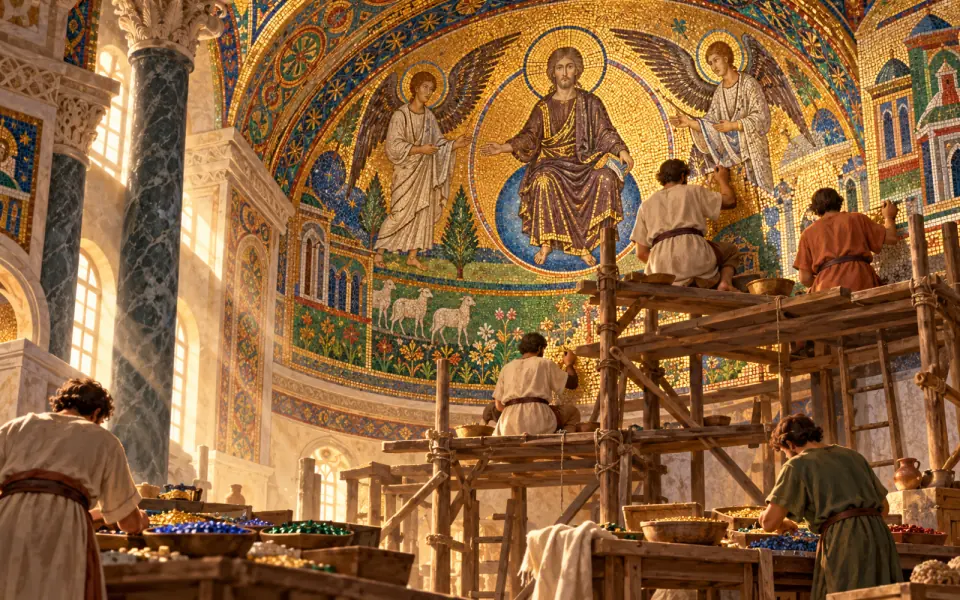 BeforeThe mosaics of San Vitale in RavennaAD 547
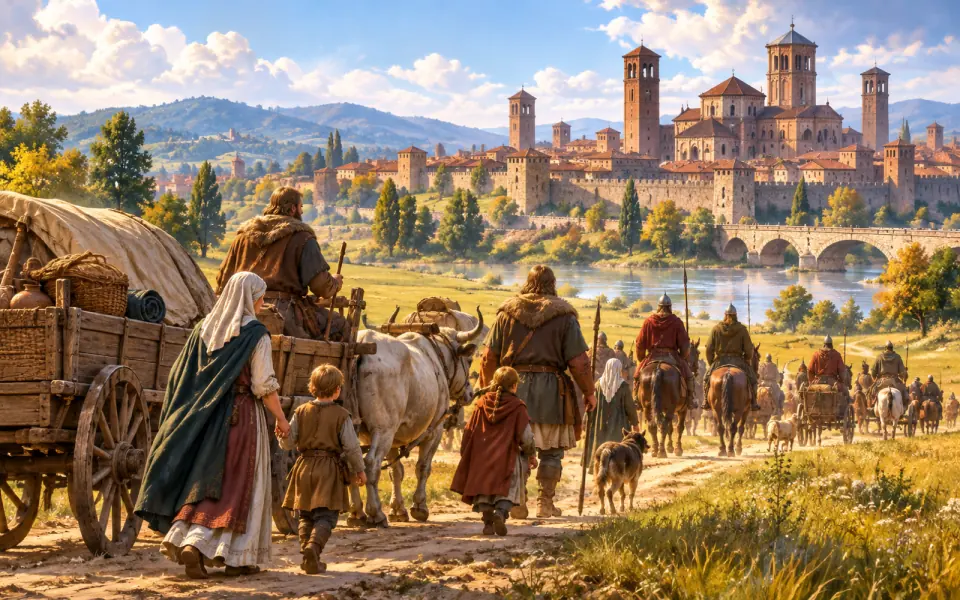 BeforeThe Lombards in ItalyAD 568
 BeforeMuhammad's HijraAD 622
 BeforeIsidore writes the Etymologiesabout AD 625
 BeforeThe spread of IslamAD 632–750
 BeforePaper reaches Samarkandabout AD 751
- You are hereCharlemagne, King of the FranksAD 768
 AfterThe Carolingian Renaissanceabout AD 790
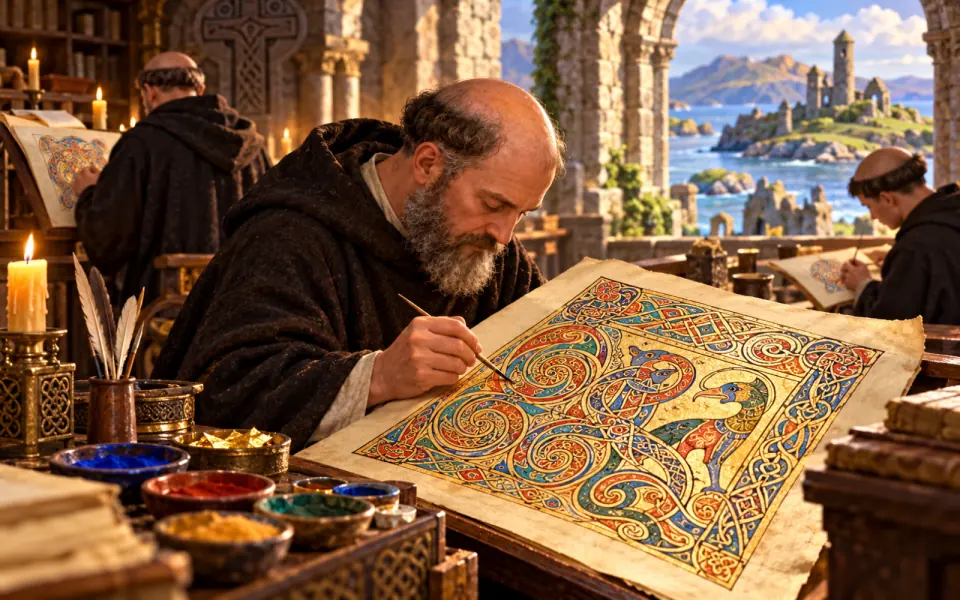 AfterThe Book of Kellsabout AD 800
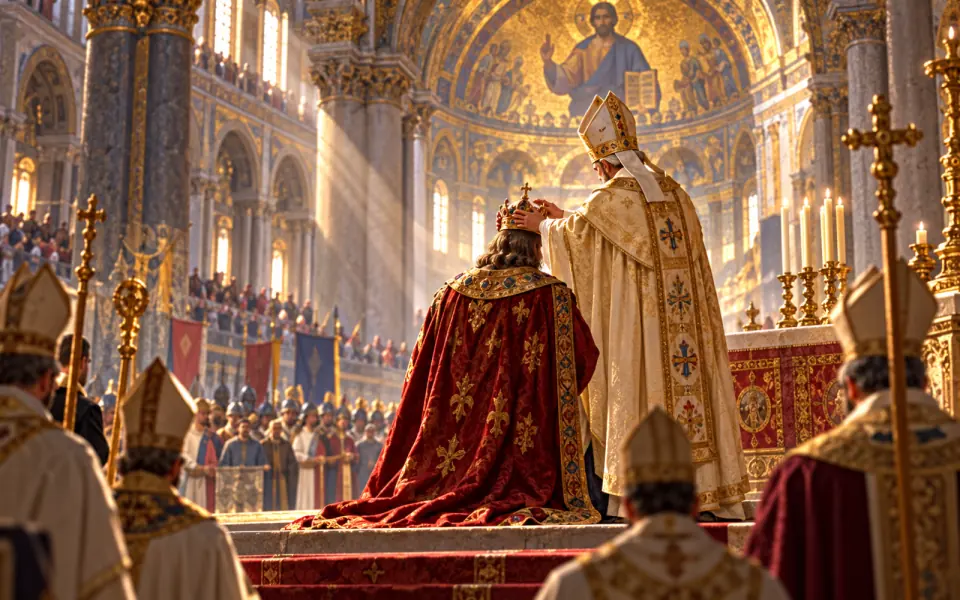 AfterCharlemagne crowned emperorAD 800
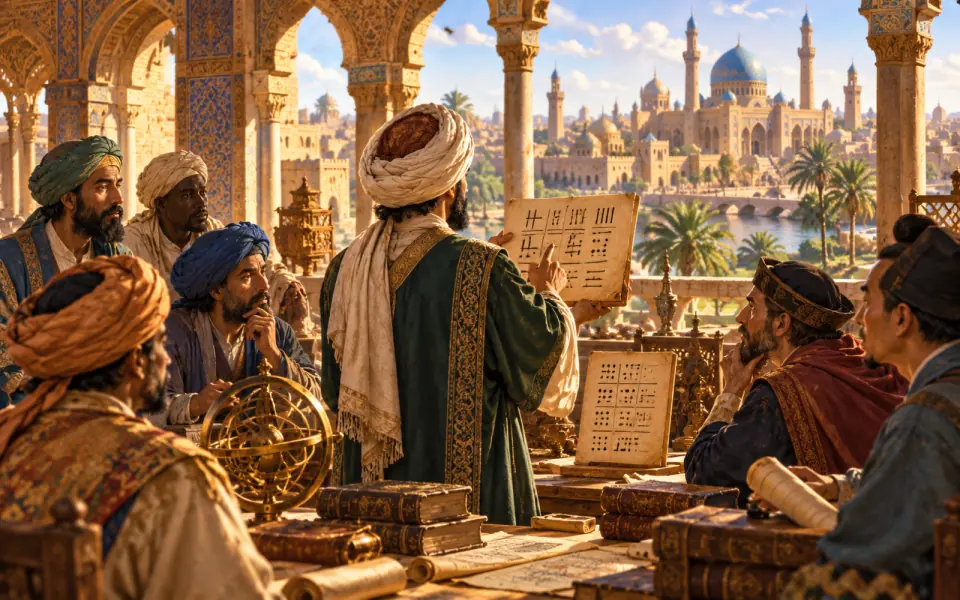 AfterHindu-Arabic numerals head westabout AD 825
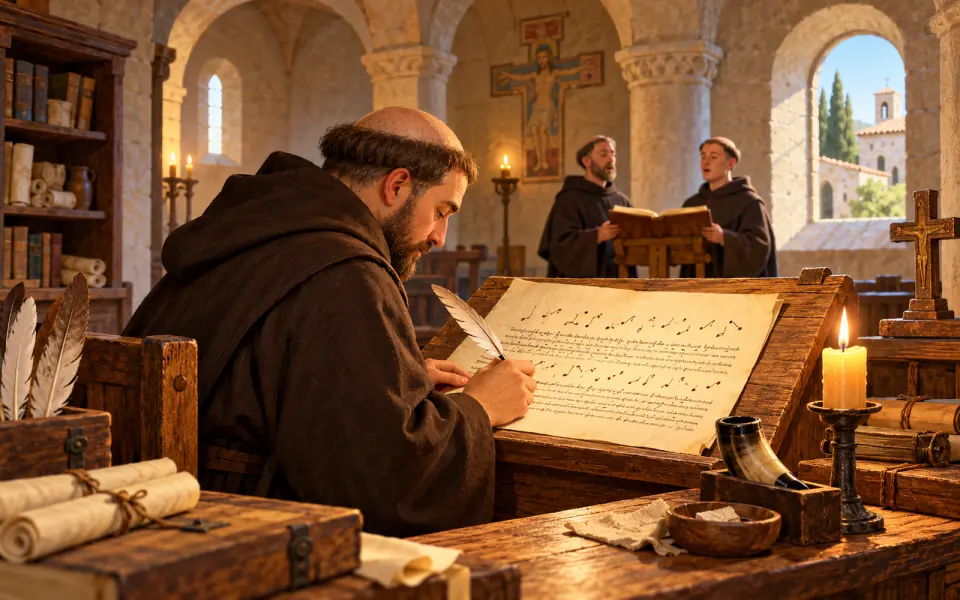 AfterWriting music down with neumesabout AD 850
 AfterThe Diamond Sutra, oldest dated printed bookAD 868
 AfterAlfred the GreatAD 871
 AfterThe Vikings reach Icelandabout AD 874
 AfterThe feudal system spreadsabout AD 900
 AfterThe Medical School of Salernoabout AD 950
 AfterThe Vikings in Greenlandabout AD 985
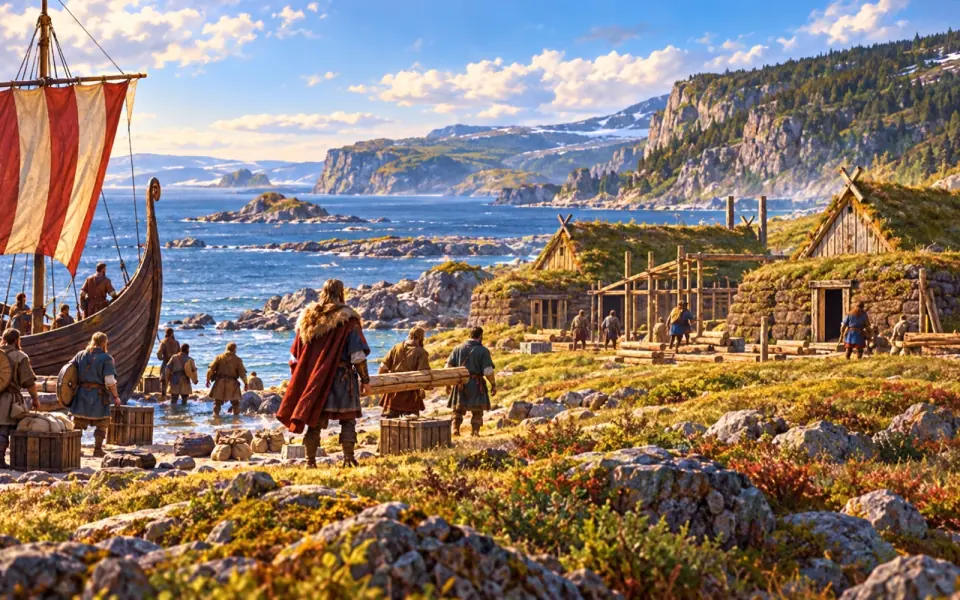 AfterLeif Erikson in North Americaabout 1000
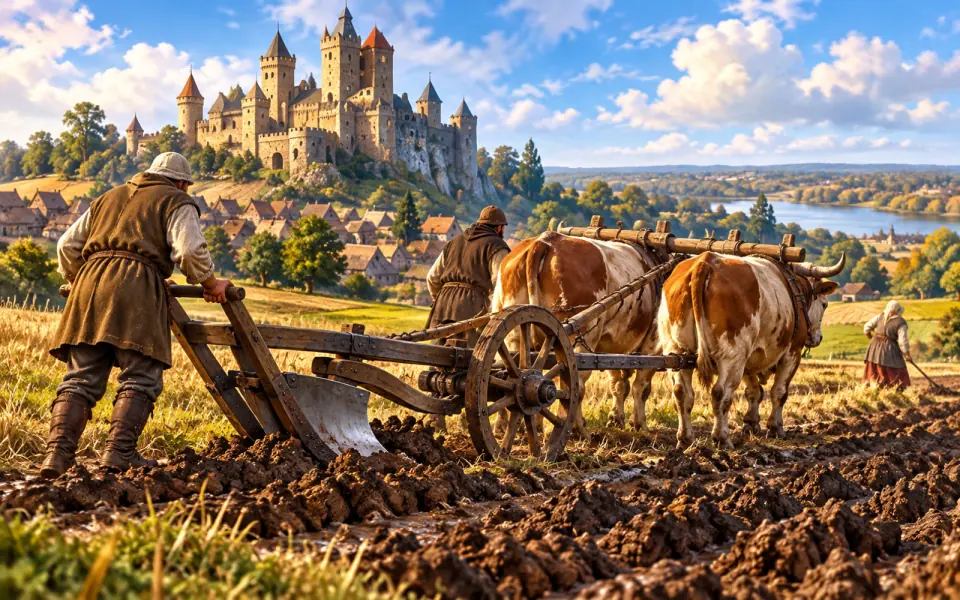 AfterThe heavy plough spreadsabout 1000
Listen / Read next
- Music to read by: Cinematic JourneyEpic film-style music, no lyrics, by Ciro Simone IrmiciSpotifyYouTube Music
Meanwhile, elsewhere in the world
Other events of the era “Early Middle Ages”
- The Romano-Germanic kingdoms
- Emperor Justinian
- Justinian's Code
- Benedictine monks
- Hagia Sophia in Constantinople
- The mosaics of San Vitale in Ravenna
- The Lombards in Italy
- Muhammad's Hijra
- Isidore writes the Etymologies
- The spread of Islam
- Paper reaches Samarkand
- The Carolingian Renaissance
- The Book of Kells
- Charlemagne crowned emperor
- Hindu-Arabic numerals head west
- Writing music down with neumes
- The Diamond Sutra, oldest dated printed book
- Alfred the Great
- The Vikings reach Iceland
- The feudal system spreads
- The Medical School of Salerno
- The Vikings in Greenland
- Leif Erikson in North America
- The heavy plough spreads
