Alfred the Great
AD 871 Wessex, southern England (Winchester)
In short
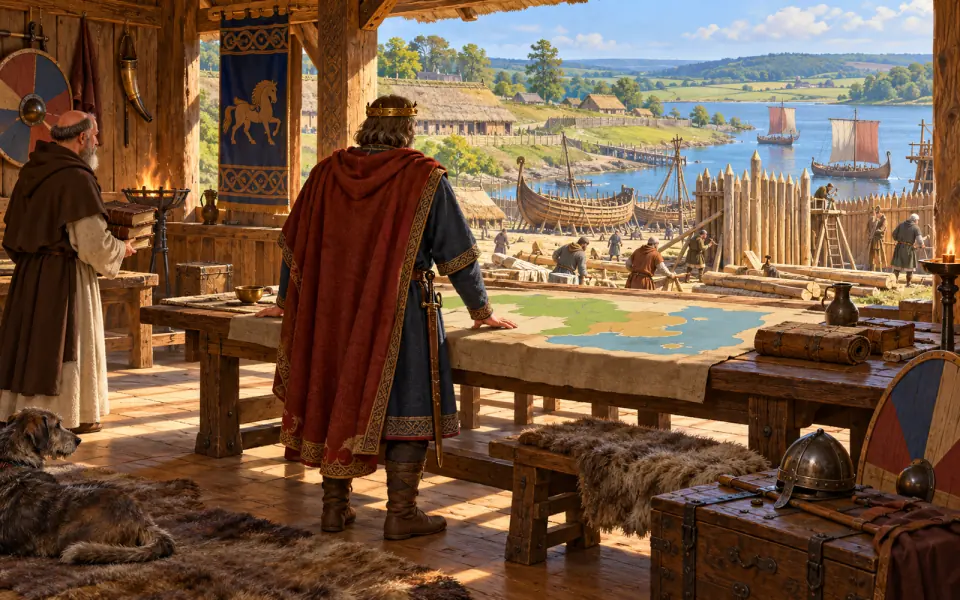
Alfred became King of Wessex, in the south of England, while the Danish Vikings were conquering much of the island. After a defeat he had to hide in the marshes, but he rebuilt his army and won at Edington in AD 878. He had fortified towns built, and ships to defend the coasts. He loved books and had some important works translated from Latin into Old English, so that more people could read them.
Why it matters He is the only English king called ‘the Great’, and his reign laid the foundations of the future England.
Source: Encyclopaedia Britannica, “Alfred”
Study card about 5 minutes of reading
The story
England under attack
In the 9th century England was not a single kingdom but a group of four Anglo-Saxon kingdoms: Northumbria, East Anglia, Mercia and Wessex. In 865 a great army of Danish Vikings arrived from the sea, which the English chronicles call the “great heathen army”. They did not come only to raid, but to conquer. In a few years they took Northumbria, East Anglia and most of Mercia. Wessex, in the south, was the only kingdom still standing.
Alfred was born in 849 at Wantage, in Wessex, the youngest of King Æthelwulf's sons. As a boy he was sent to Rome, twice, on pilgrimage, and came to know a bigger world. One story says he was struck by a book of poems that his mother showed her children, promising it to whoever learned it first: he won it. He was not a born warrior, but he found himself becoming king in 871, at the age of twenty-two, when his brother Æthelred died during the war against the Danes.
In the marshes
In the first years of his reign Alfred fought, and now and then bought peace by paying tribute to the Danes. Then, on the night of Twelfth Night in 878, the Danish leader Guthrum made a surprise attack on Chippenham, where Alfred was celebrating the Christmas festivities. The king managed to escape with a few men and took refuge in the Somerset marshes, at Athelney, an island in the middle of mud and reed beds. It seemed to be the end of Wessex.
From this period comes the best-known story about Alfred: the legend of the burnt cakes. A tale that first appears in the 11th century, about a century after his death, says that the king, hiding under a false name in a peasant woman's house, was distracted by his thoughts and let the cakes he was supposed to watch burn, and was scolded for it. It is very probably an invention, but it shows how people remembered him as a humble man.
Meanwhile Alfred was preparing his comeback. In the spring he called together the warriors of three counties and, in May 878, at Edington, defeated Guthrum's army. After the battle, the Danish leader agreed to be baptised, with Alfred as his godfather, and to withdraw. North-eastern England stayed with the Danes, under their own laws: this was the “Danelaw”.
After the battle Alfred made a treaty with Guthrum, which fixed the border between the English and Danish lands along a line running from the Thames to Watling Street, the ancient Roman road. In 886 he retook London, which had fallen into Danish hands, and had it rebuilt, with great benefit to trade.
Burhs, a fleet and books
Alfred understood that to resist he needed a new way of defending the country. He had thirty-three fortified towns built, the “burhs”, spread out so that nobody in Wessex was more than a day's march from one of them. According to the Anglo-Saxon Chronicle he divided the army into two shifts: half the men worked in the fields and half stood guard, so that the country was always protected. He also built ships bigger and taller than those of the Vikings.
But Alfred was also a learned king. He had been struck by the fact that many priests could no longer read Latin. He called scholars to court, such as the Welsh monk Asser, who wrote his biography, and had important books translated into Old English, partly by his own hand, such as Boethius's “Consolation of Philosophy”. He promoted schools and had the “Anglo-Saxon Chronicle” begun, a yearly record of the country's history. He gathered the laws into a code.
To make people respect the rules, in his law code he wrote that judges must judge fairly, with no distinction between rich and poor, and he reminded them that the laws had to respect the ancient customs of the kingdom. Alfred died in 899 and was buried at Winchester. He is the only English king we remember with the title “the Great”.
Why it happened
The Danes had a fast army and great skill at sea, and they had arrived when the Anglo-Saxon kingdoms were divided and in conflict with one another. With their ships they could strike wherever they wanted and then vanish, and they spent the winters in fortified camps.
Wessex held out thanks to Alfred's gifts as a commander and organiser, and to his ability to unite the people around him.
What changed
Wessex survived and, in the 10th century, Alfred's descendants reconquered the north. His grandson Æthelstan was the first king of all England: the English kingdom was born from Alfred.
His military reforms and fortified towns made the kingdom safer and better organised. Many of those towns, such as Winchester and Oxford, still exist.
His commitment to learning and to the English language gave rise to prose in Old English and to a tradition of written history. In the 19th century Alfred was rediscovered as a model of a learned and just king; at Winchester there is a large statue of him.
Key people and places
People
- Alfred the Great
- King of Wessex from 871 to 899 (849–899): he defended England from the Danes.
- Guthrum
- Danish leader (died in 890): defeated at Edington and baptised.
- Asser
- Welsh monk (died about 909): he wrote the “Life of King Alfred”.
- Æthelstan
- Alfred's grandson (about 894–939): first king of all England.
Places
- Wessex
- Anglo-Saxon kingdom in the south of England.
- Athelney (Somerset)
- Island in the marshes where Alfred took refuge in 878.
- Winchester
- Capital of the kingdom, where Alfred was buried.
Good to know
- Alfred is the only English king, by birth, to be called “the Great”.
- The legend of the burnt cakes arose about a century after his death, between the 10th and the 11th century.
- He had thirty-three fortified towns built, the burhs.
- He translated, or had translated, Latin books into Old English.
- A famous Anglo-Saxon jewel, the Alfred Jewel, bears the inscription “Alfred had me made”.
Find out more
- Wikipedia, “Alfred the Great” en.wikipedia.org
- Wikipedia, “Battle of Edington” en.wikipedia.org
- Wikipedia, “Danelaw” en.wikipedia.org
- Wikipedia, “Alfred Jewel” en.wikipedia.org
Related events
- The Vikings reach Icelandabout AD 874 · Early Middle AgesOther Vikings were settling Iceland in the same years.
- The feudal system spreadsabout AD 900 · Early Middle AgesIn continental Europe local lords were building castles.
- Charlemagne, King of the FranksAD 768 · Early Middle AgesCharlemagne had promoted culture a century earlier.
- The Carolingian Renaissanceabout AD 790 · Early Middle AgesAlfred, like Charlemagne, encouraged schools and books.
Before and after, in the era “Early Middle Ages”
Event 19 of 25
 BeforeThe Romano-Germanic kingdomsabout AD 480
 BeforeEmperor JustinianAD 527
 BeforeJustinian's CodeAD 529
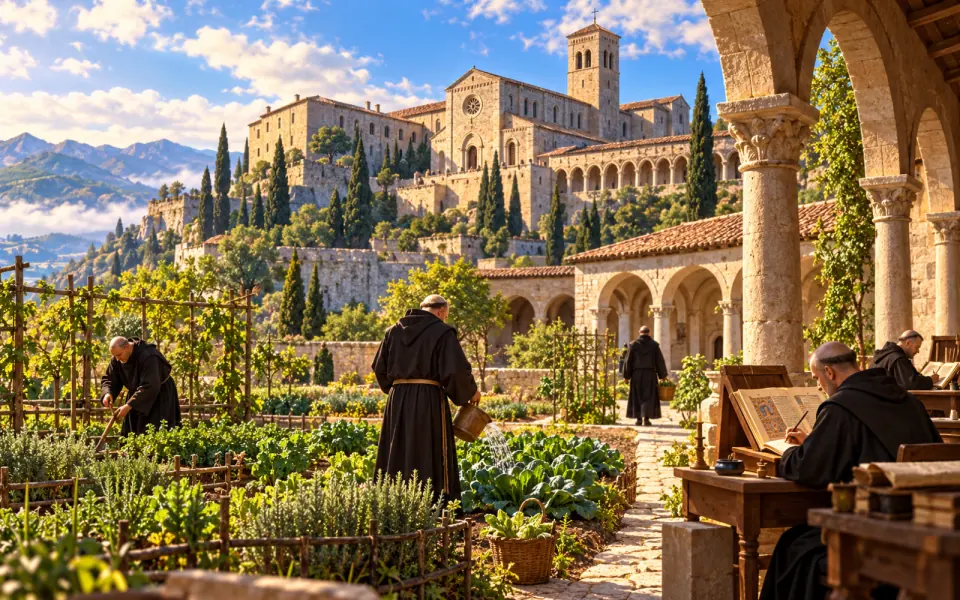 BeforeBenedictine monksabout AD 529
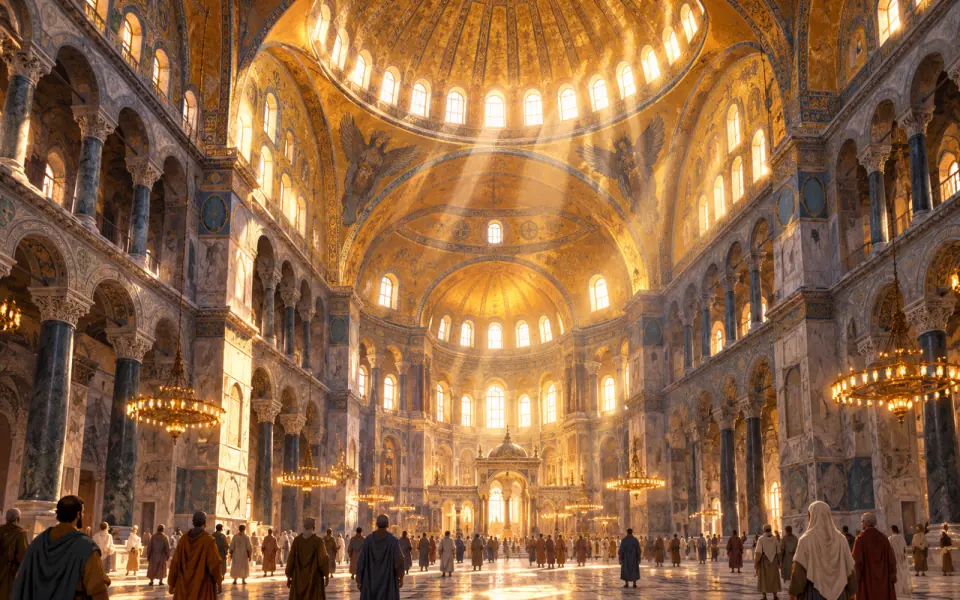 BeforeHagia Sophia in ConstantinopleAD 537
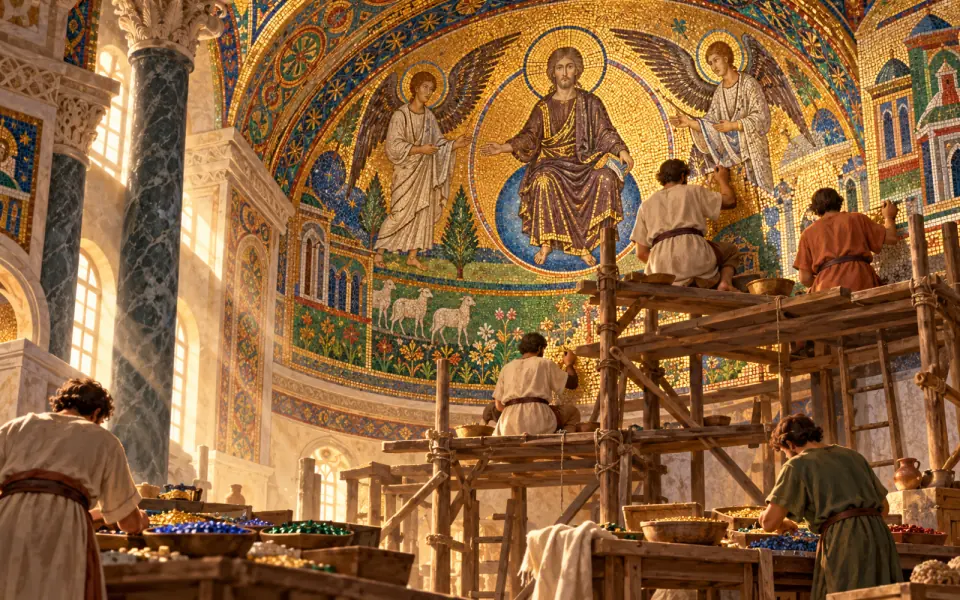 BeforeThe mosaics of San Vitale in RavennaAD 547
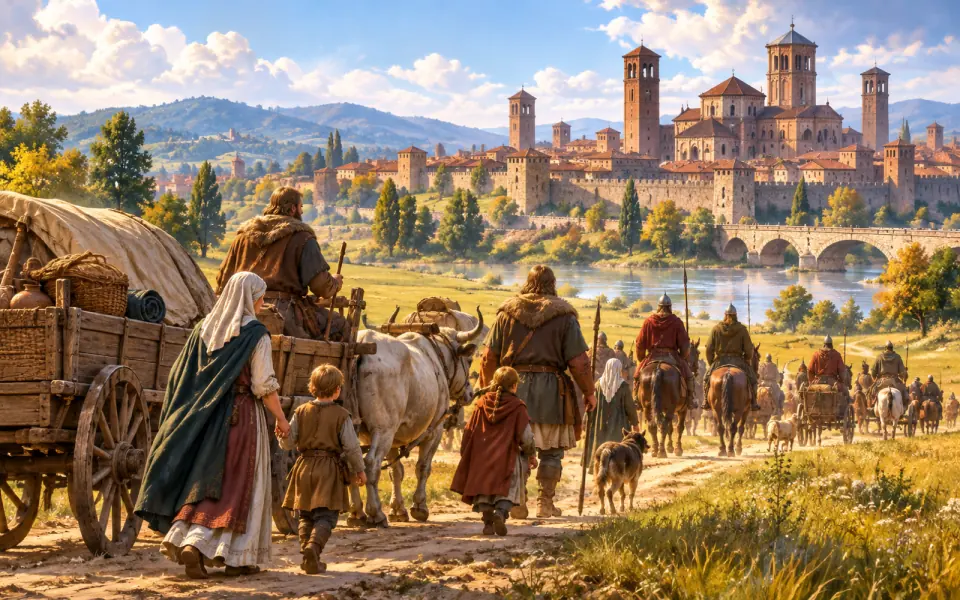 BeforeThe Lombards in ItalyAD 568
 BeforeMuhammad's HijraAD 622
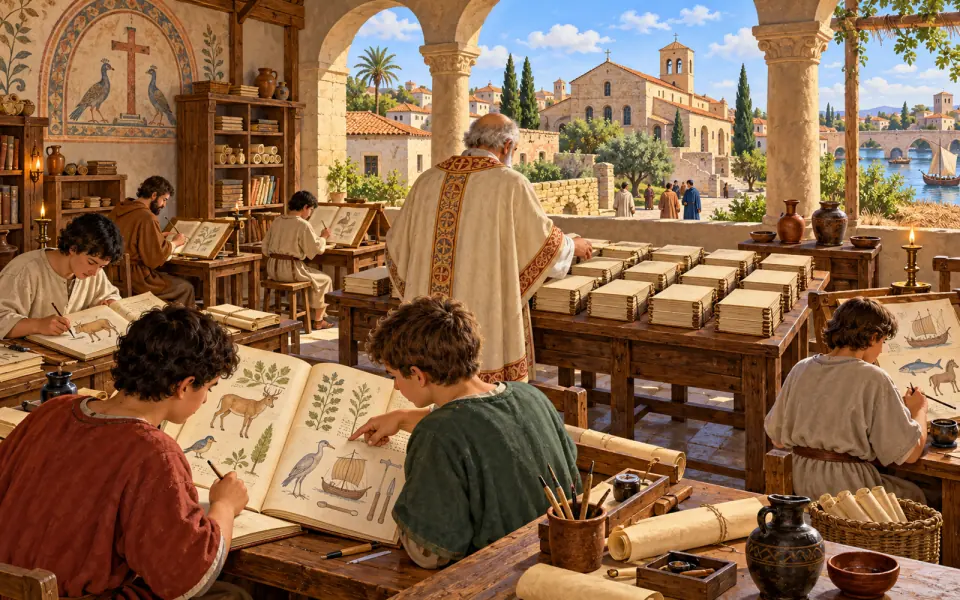 BeforeIsidore writes the Etymologiesabout AD 625
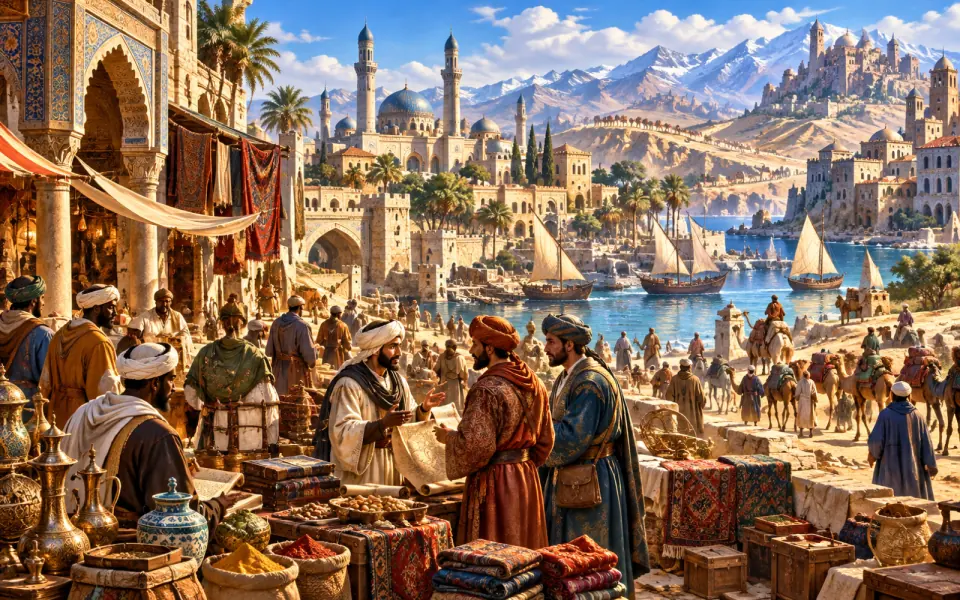 BeforeThe spread of IslamAD 632–750
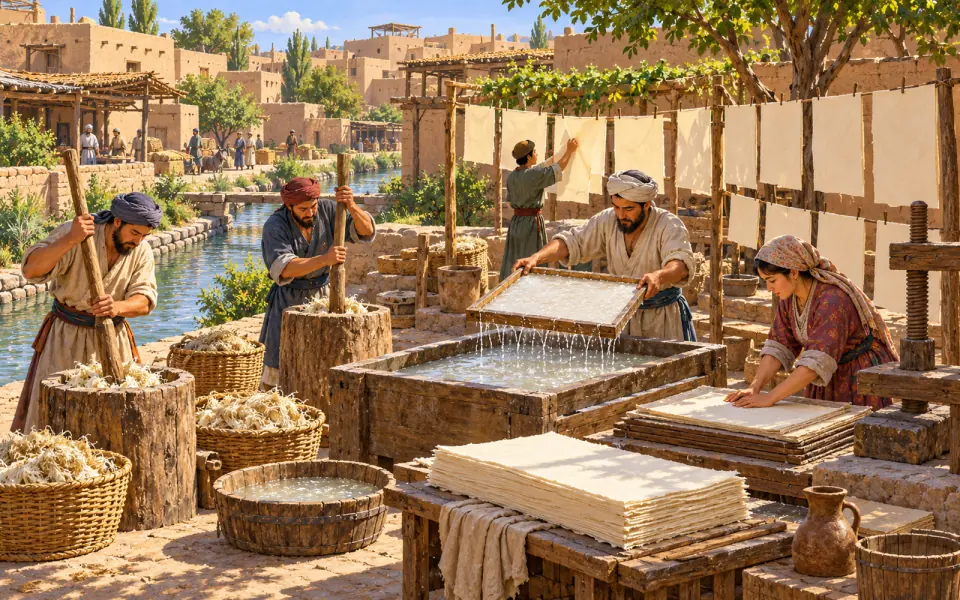 BeforePaper reaches Samarkandabout AD 751
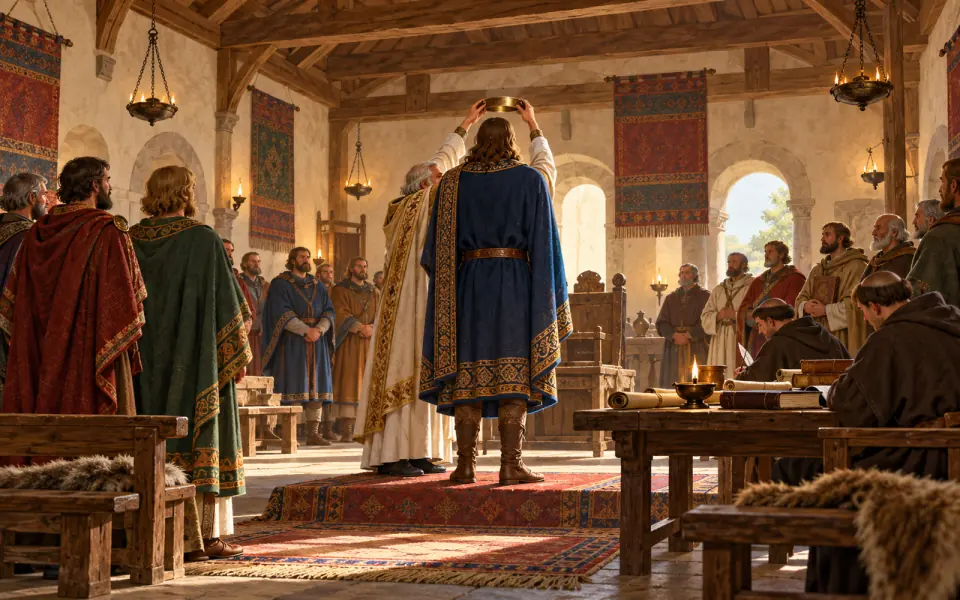 BeforeCharlemagne, King of the FranksAD 768
 BeforeThe Carolingian Renaissanceabout AD 790
 BeforeThe Book of Kellsabout AD 800
 BeforeCharlemagne crowned emperorAD 800
 BeforeHindu-Arabic numerals head westabout AD 825
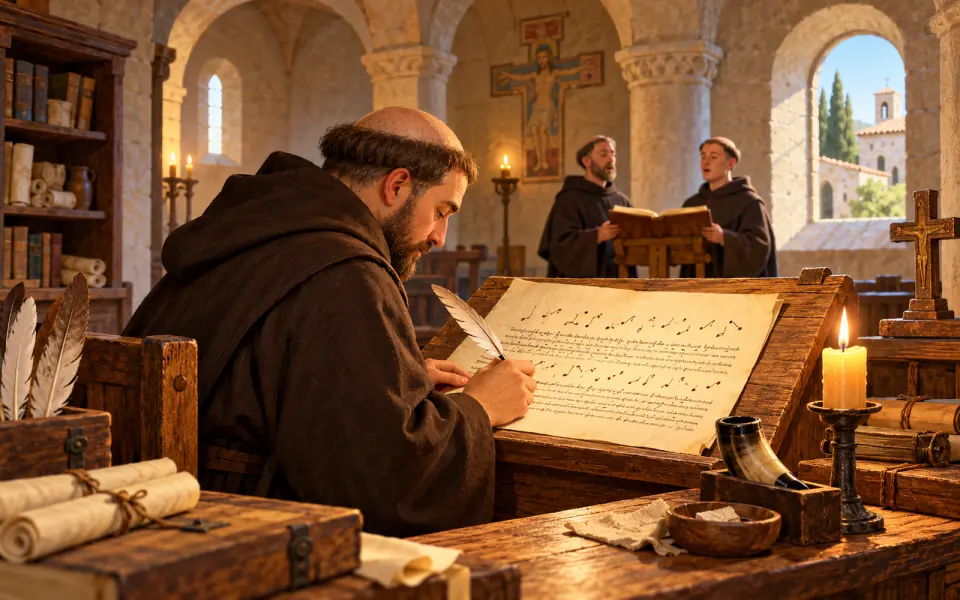 BeforeWriting music down with neumesabout AD 850
 BeforeThe Diamond Sutra, oldest dated printed bookAD 868
- You are hereAlfred the GreatAD 871
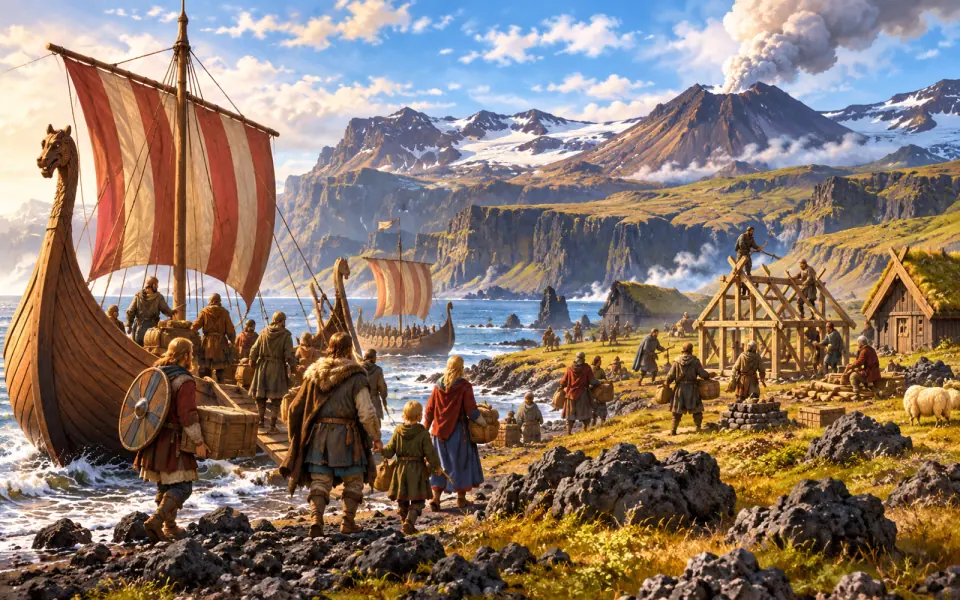 AfterThe Vikings reach Icelandabout AD 874
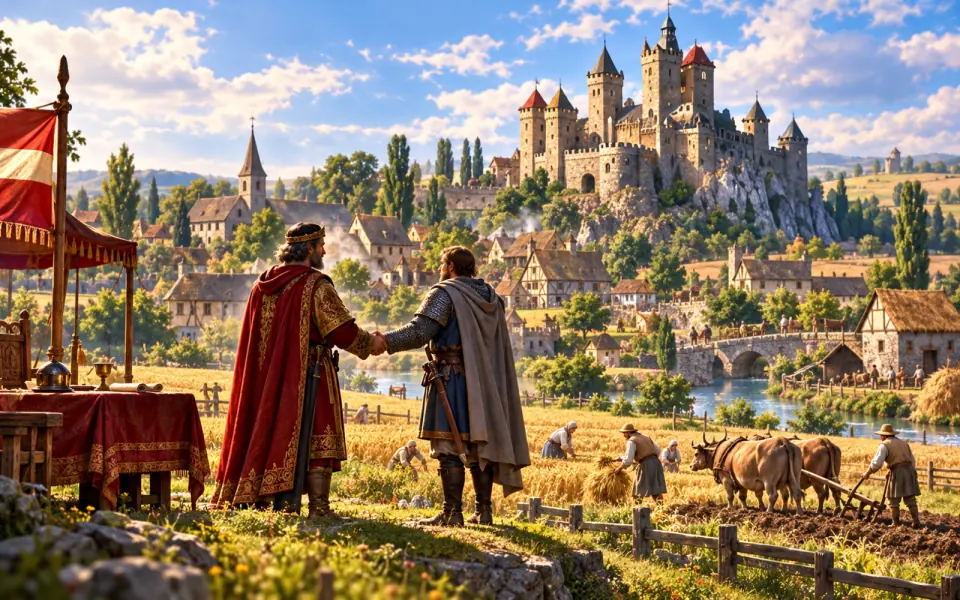 AfterThe feudal system spreadsabout AD 900
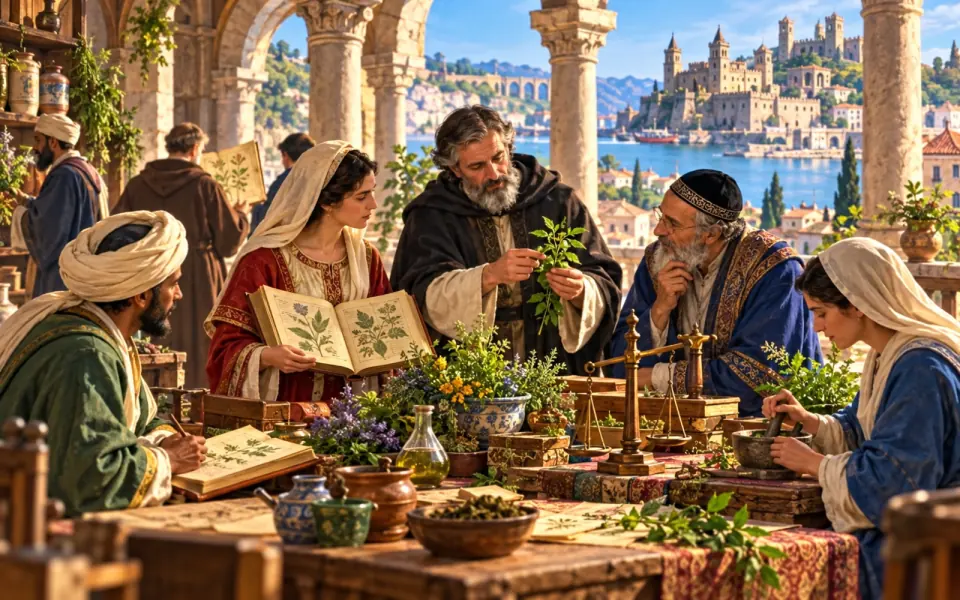 AfterThe Medical School of Salernoabout AD 950
 AfterThe Vikings in Greenlandabout AD 985
 AfterLeif Erikson in North Americaabout 1000
 AfterThe heavy plough spreadsabout 1000
Listen / Read next
- Music to read by: Cinematic JourneyEpic film-style music, no lyrics, by Ciro Simone IrmiciSpotifyYouTube Music
Meanwhile, elsewhere in the world
Other events of the era “Early Middle Ages”
- The Romano-Germanic kingdoms
- Emperor Justinian
- Justinian's Code
- Benedictine monks
- Hagia Sophia in Constantinople
- The mosaics of San Vitale in Ravenna
- The Lombards in Italy
- Muhammad's Hijra
- Isidore writes the Etymologies
- The spread of Islam
- Paper reaches Samarkand
- Charlemagne, King of the Franks
- The Carolingian Renaissance
- The Book of Kells
- Charlemagne crowned emperor
- Hindu-Arabic numerals head west
- Writing music down with neumes
- The Diamond Sutra, oldest dated printed book
- The Vikings reach Iceland
- The feudal system spreads
- The Medical School of Salerno
- The Vikings in Greenland
- Leif Erikson in North America
- The heavy plough spreads
