The first Sumerian cities
about 4000 BC Uruk and Eridu, Mesopotamia (now Iraq)
In short
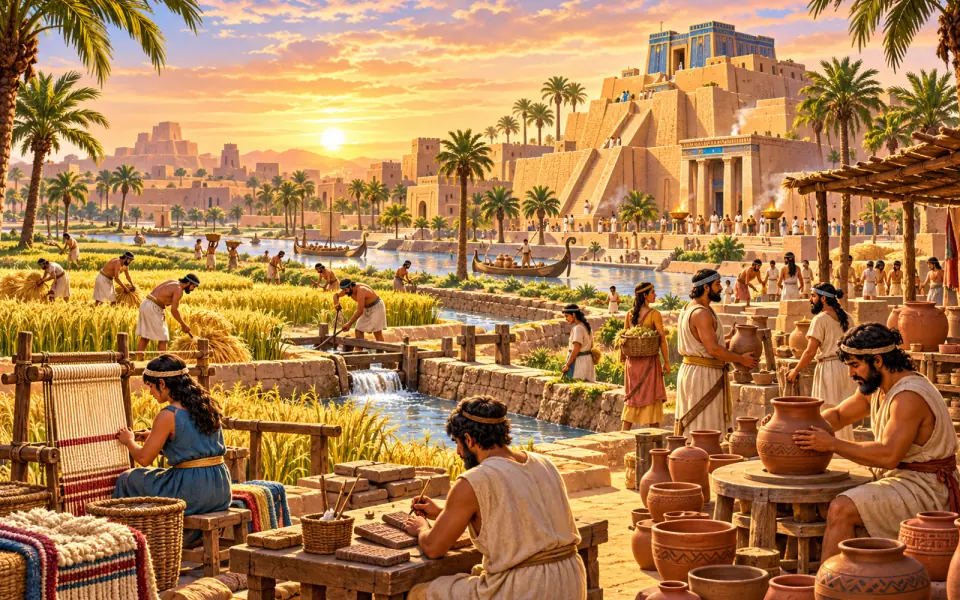
Between the Tigris and the Euphrates, in the south of today's Iraq, the villages of the Sumerians grew until they became the first cities in the world. Canals dug by hand carried river water to the barley fields, and the harvest was enough to feed even people who did not farm. So new trades were born: potters, weavers, priests and scribes. At the centre of every city stood the temple of its protecting god.
Why it matters With cities begins a way of life made up of different jobs, shared rules and constant exchange.
Source: Treccani, entry “Sumeri”
Study card about 6 minutes of reading
The story
A plain without stones or forests
Imagine a flat, mud-coloured stretch of land crossed by two great rivers, the Tigris and the Euphrates. In summer it is terribly hot, rain is very scarce and there are almost no stones or big trees. Yet it was right here, in the south of what is now Iraq, in a region the ancients called Sumer, that the first cities in history were born. Scholars place them between about 4000 and 3100 BC, a period archaeologists call the “Uruk period”, after its most important city. For such a distant age the dates are approximate and may change by a few centuries.
The Sumerians did not call themselves that. They described themselves as “the black-headed people” and called their land Kiengi, a word usually translated as “land of the civilised lords”. The name “Sumerians” was used by neighbouring peoples, and it is the one we use today. They spoke a language unlike any other known language, so scholars are not sure where their ancestors came from, or whether they came from anywhere at all.
Water that could be guided
The secret of this success was water. In spring the rivers swelled with melting snow from far away, but the flood often came at the wrong moment: too late for the fields, and sometimes with sudden force. To make use of it, even the oldest villages, those of the so-called Ubaid culture (about 6500 to 3800 BC), began to dig canals. These were earth ditches, dug with stone hoes and with reed baskets to carry the soil away, which led water from the river to the fields and took it back again when needed. A canal could not be dug alone. Building it, and clearing the mud out of it every year, took the work of many families together, and someone had to decide where it would run and whose turn it was to get the water first.
With irrigation, barley grew so well that a field produced much more than the people who farmed it needed. The inhabitants also kept sheep, goats and cattle, grew date palms and fished in the marshes of the south. For the first time there was food to spare, and this changed everything.
A city is known by what it does not grow
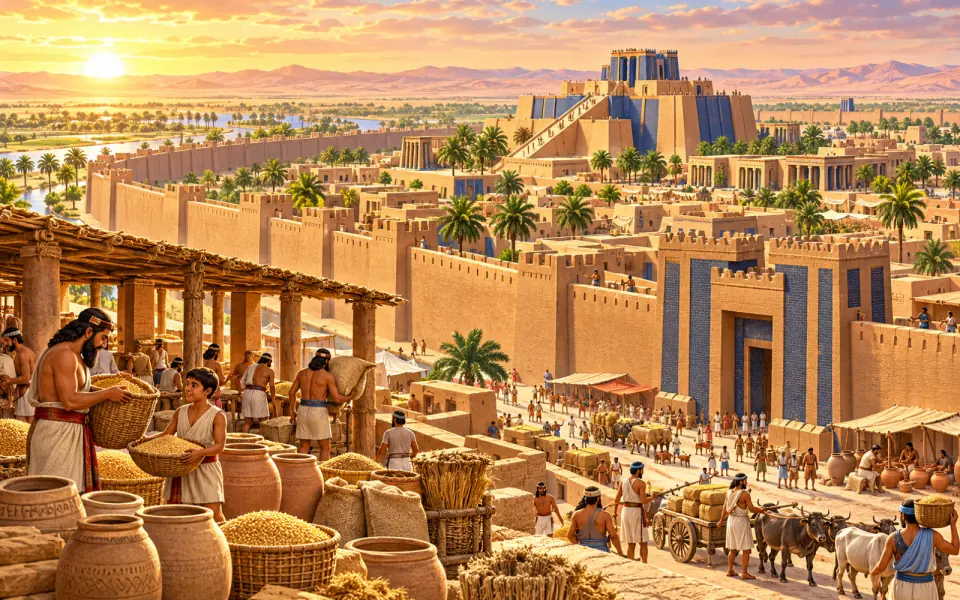
If farmers produce more than they eat, some people can stop being farmers. So, beside the fields, there appeared potters, weavers, copper smiths, stonecutters, boatmen and merchants. Priests appeared too and, later, scribes. Houses were no longer scattered among the fields but packed close together behind a wall. At this point we are no longer talking about villages: these are cities, with thousands of inhabitants, and in some, like Uruk, tens of thousands.
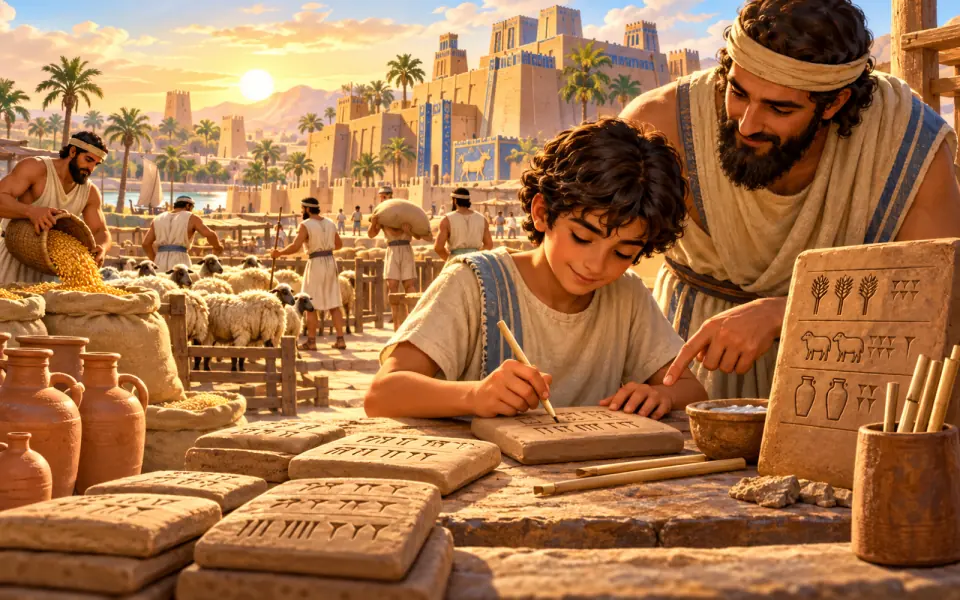
At the centre of every city stood the temple of its protecting god: Enki at Eridu, Inanna at Uruk, Nanna at Ur. The Sumerians believed that the city belonged to the god and that people worked to serve him. For this reason the temple was not only a place of prayer. It was also a great storehouse and workshop: it received part of the harvest, shared it out as rations to the workers and kept the accounts of the flocks. Remembering all this later made it necessary to invent writing (see the card on cuneiform writing).
Eridu, the oldest city?
Sumerian tradition says that the first city was Eridu. In a list of kings written many generations later we read that “kingship came down from heaven” at Eridu. Excavations have shown that a small shrine was built here around 5500 BC, then rebuilt eighteen times, each time on top of the one before and always bigger, until it became an imposing temple. Other cities, such as Uruk, Ur, Kish, Nippur and Lagash, were growing in the same period. They were not united in a single state. Each city had its own governor or king, its own walls, canals and god; for this reason historians speak of “city-states”. They often quarrelled over a canal or a boundary.
What we do not know
It is not easy to say how and why the change from village to city happened. Some scholars think it was driven by a drier climate, which led people to gather along the rivers, and by the need to organise the canals. Others stress the role of temples and trade. Probably several causes worked together. Another thing is uncertain: the relationship between the Sumerians and neighbouring Semitic peoples, such as the Akkadians, who already lived beside them and whom we will discuss in another card. Sumerian cities were, from the start, a place where different languages and peoples met.
The first cities in the world were therefore born from an idea that is both simple and difficult: to use the water all together, and to share out the jobs.
Why it happened
The first cause is the place. The flood plain between the Tigris and the Euphrates has very fertile soil, because the rivers cover it with silt, but it hardly ever rains. Anyone who wanted to farm had to bring water to the fields, and doing it well took many people working in agreement.
The second cause is the food surplus. Plentiful harvests of barley and dates, and large flocks, allowed part of the population to take up other trades. Without surplus there are no craftsmen, priests, scribes or professional soldiers.
The third cause is the lack of raw materials. In the south of Mesopotamia there was no stone, metal or building timber. They had to be obtained from far away, from the mountains of Iran, Anatolia and Oman, in exchange for barley, textiles and wool. This needed merchants, storehouses and someone to keep the accounts: all activities that work better in a city.
What changed
With cities came a way of life that is also ours: many people with different jobs, shared rules, constant exchange, roads and walls, leaders and officials. Not everyone was equal. There were rich and poor, those who gave orders and those who worked, and also slaves, often prisoners of war. So cities also brought inequality and wars over the control of water and borders.
In Sumerian cities many things were invented or improved that we still use today, directly or through the peoples who came after: writing, the cylinder seal for signing, the wheel for transport, the potter's wheel, the measuring of time in base 60 (which we still find in the minutes of a clock) and the first written laws.
After the Sumerians, cities spread along the Nile, in the Indus valley, in China, in Greece and in America. Today more than half of all human beings live in a city. When you look at a map with streets, neighbourhoods and walls, you are looking at an idea born more than 6,000 years ago on a plain full of mud.
Key people and places
People
- Julius Jordan
- German archaeologist (1877–1945) who directed the first excavations at Uruk, from 1912, and brought to light the city's great temples.
- Jules Oppert
- French scholar of cuneiform writing (1825–1905). In 1869 he proposed calling the non-Semitic language written on the tablets “Sumerian”, at a time when nobody remembered the name of that people any more.
- The Sumerian scribes
- We do not know the names of the first city dwellers, but we know their work: it was they who counted harvests and flocks and turned a world of villages into a world of cities.
Places
- Uruk (now Warka, Iraq)
- The biggest and most important Sumerian city of the period. Temples, storehouses and the first written tablets have been excavated there.
- Eridu (now Tell Abu Shahrain, Iraq)
- The oldest city, according to Sumerian tradition. Excavations have found a shrine rebuilt many times on the same spot.
- Ur (now Tell al-Muqayyar, Iraq)
- A Sumerian city on the ancient course of the Euphrates, famous for its ziggurat and for the royal tombs excavated by Leonard Woolley.
Good to know
- The Sumerians called themselves “the black-headed people” and said they lived in the “land of the civilised lords”. The name Sumer was given to us by others.
- The temple of Eridu was rebuilt about eighteen times on the same spot: archaeologists were able to dig it up like a layer cake, finding the older temple beneath each new one.
- Irrigation canals had to be cleared of mud every year. In Sumerian texts, neglecting a canal was considered a serious offence.
- Sumerians and Akkadians had lived side by side for centuries and spoke different languages, and many scribes could read and write in both.
- The name Iraq, according to one of the explanations put forward, may come from Uruk, the great Sumerian city, although scholars do not agree on this origin.
Find out more
- World History Encyclopedia, “Sumer” worldhistory.org
- Wikipedia, “Sumerians” en.wikipedia.org
- Wikipedia, “Eridu” en.wikipedia.org
- World History Encyclopedia, “Uruk” worldhistory.org
- Wikipedia, “Mesopotamia” en.wikipedia.org
Related events
- The Neolithic Revolutionabout 12,000 years ago · PrehistoryThe Neolithic revolution, that is farming, is the foundation on which cities were born.
- Cuneiform writingabout 3200 BC · River civilisationsTo keep the accounts of temples and harvests, Sumerian cities invented writing.
- Uruk, the great cityabout 3000 BC · River civilisationsUruk was the biggest of the first cities.
- The invention of the wheelabout 5,500 years ago · PrehistoryThe wheel appeared in the same period and was also used to carry harvests.
- Sargon and the Akkadian Empireabout 2334 BC · River civilisationsThe Sumerian cities were later conquered by Sargon, who united them in a single empire.
Before and after, in the era “River civilisations”
Event 1 of 25
- You are hereThe first Sumerian citiesabout 4000 BC
 AfterCuneiform writingabout 3200 BC
 AfterEgyptian hieroglyphsabout 3200 BC
 AfterThe unification of Egyptabout 3100 BC
 AfterUruk, the great cityabout 3000 BC
 AfterThe Egyptian calendarabout 2800 BC
 AfterThe Step Pyramid of Djoserabout 2650 BC
 AfterThe Standard of Urabout 2600 BC
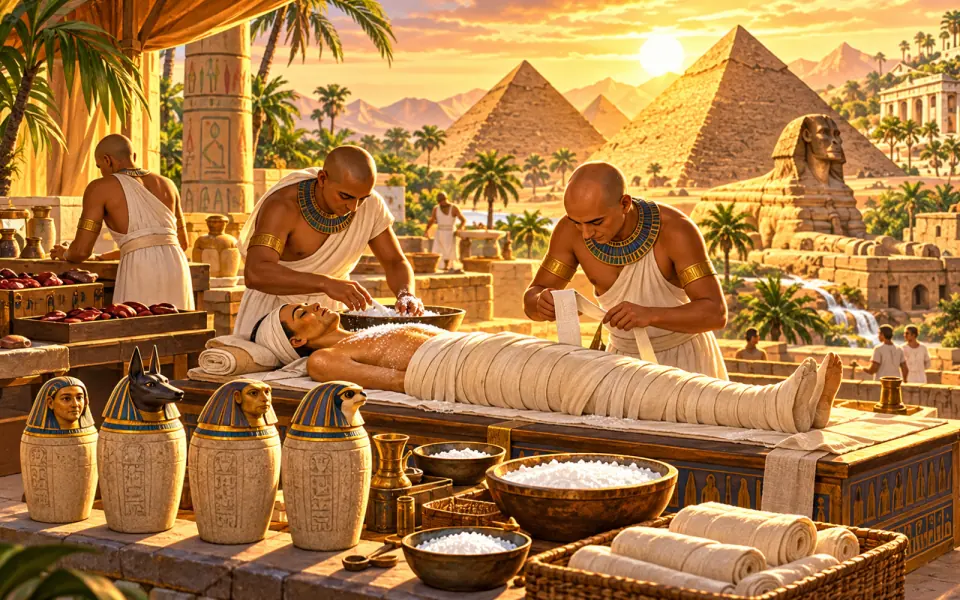 AfterEgyptian mummificationabout 2600 BC
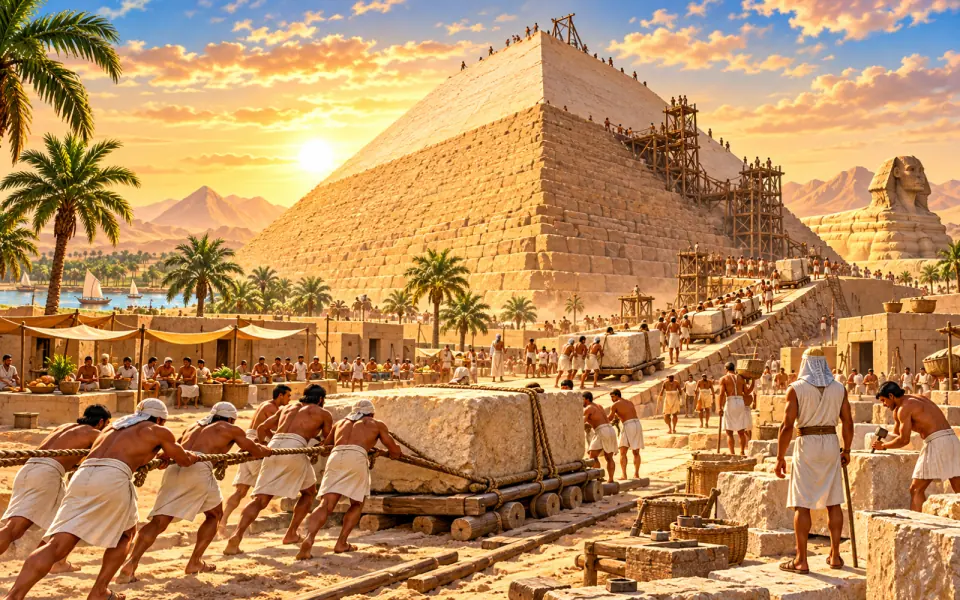 AfterThe Great Pyramid of Gizaabout 2560 BC
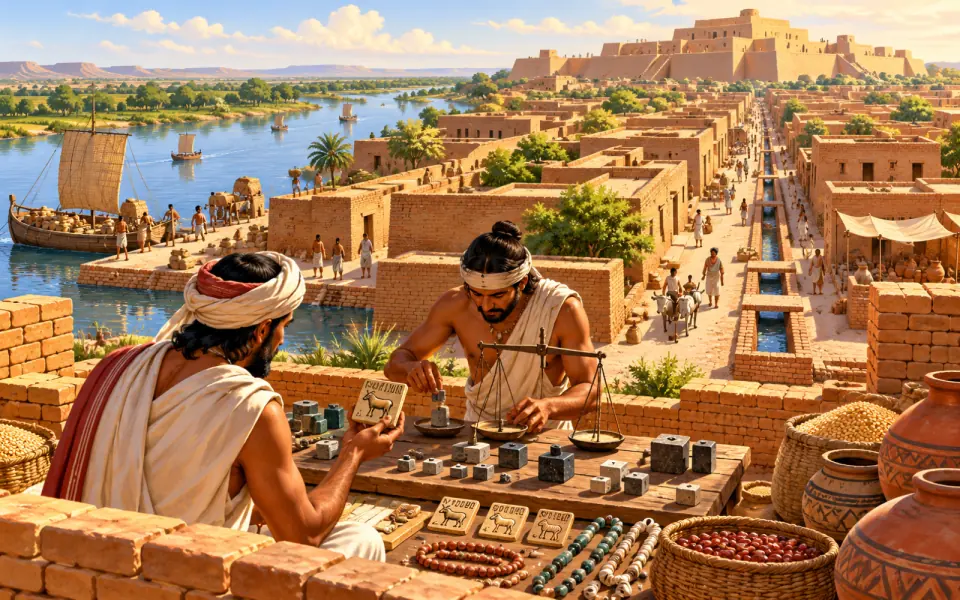 AfterThe cities of the Indus Valleyabout 2500 BC
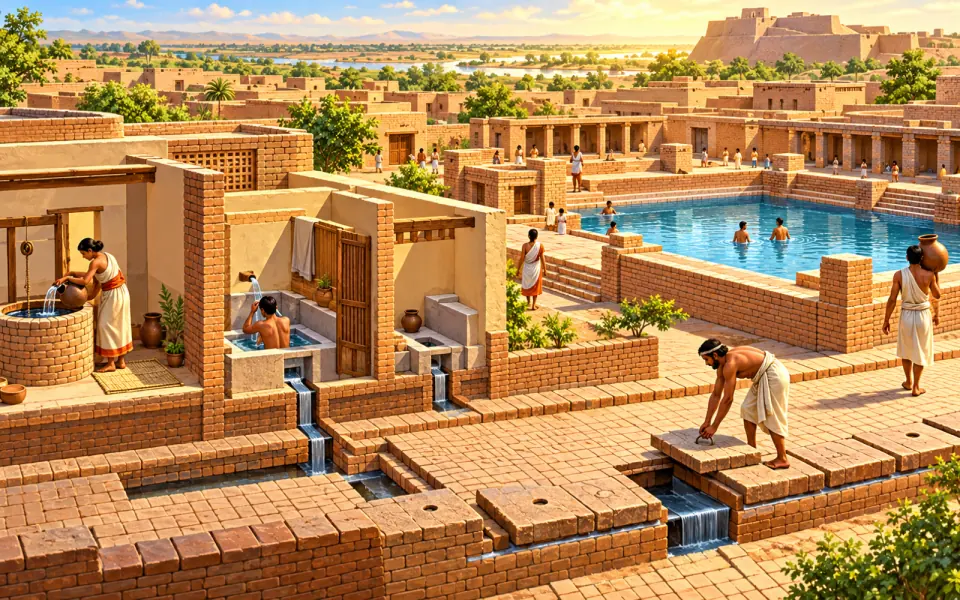 AfterThe drains and baths of Mohenjo-daroabout 2450 BC
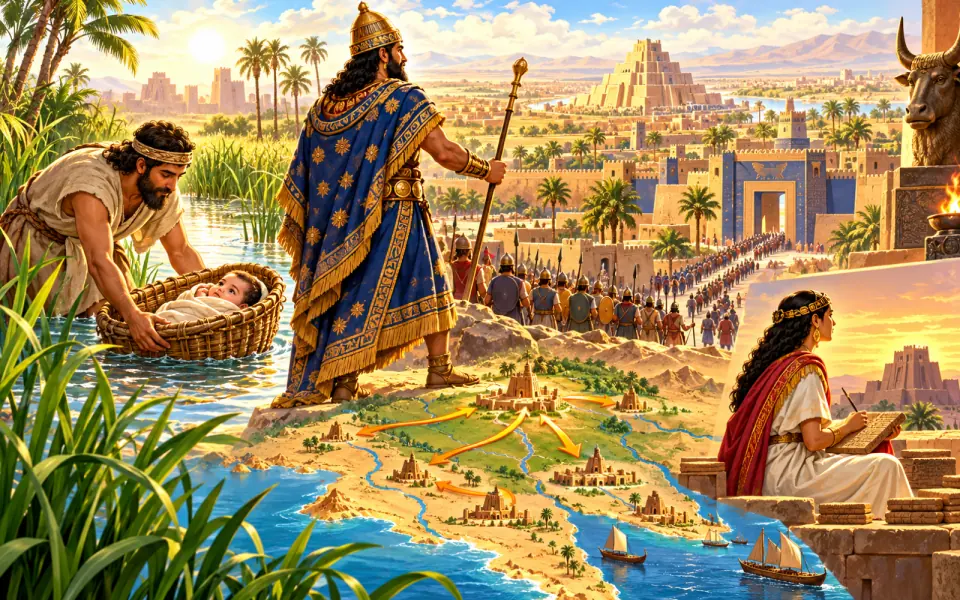 AfterSargon and the Akkadian Empireabout 2334 BC
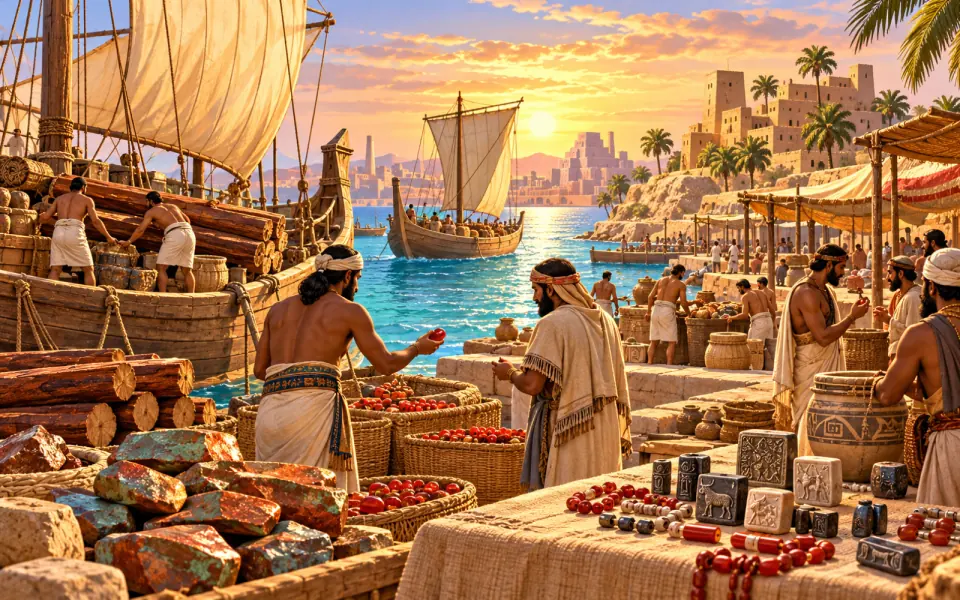 AfterTrade between the Indus and Mesopotamiaabout 2300 BC
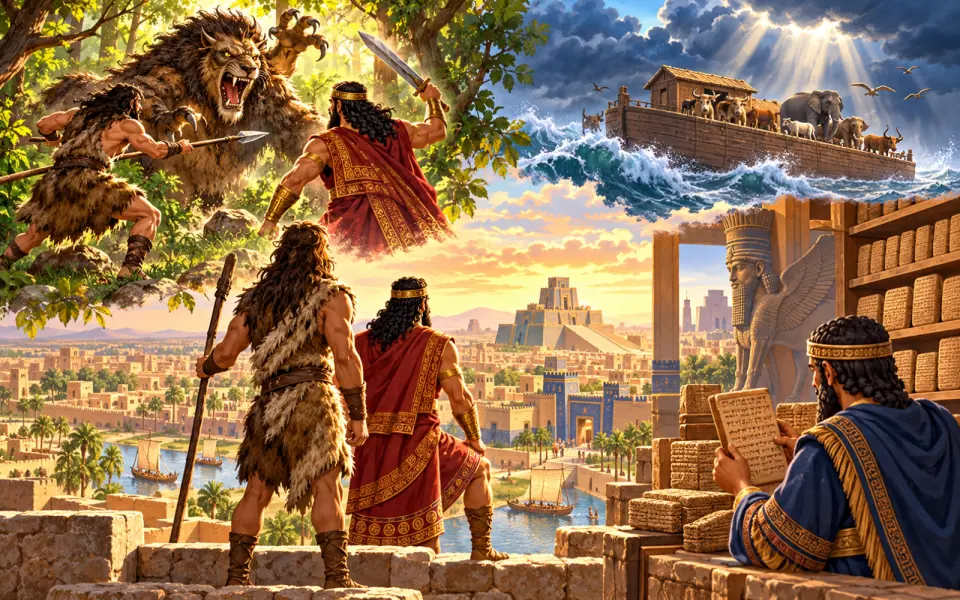 AfterThe Epic of Gilgameshabout 2100 BC
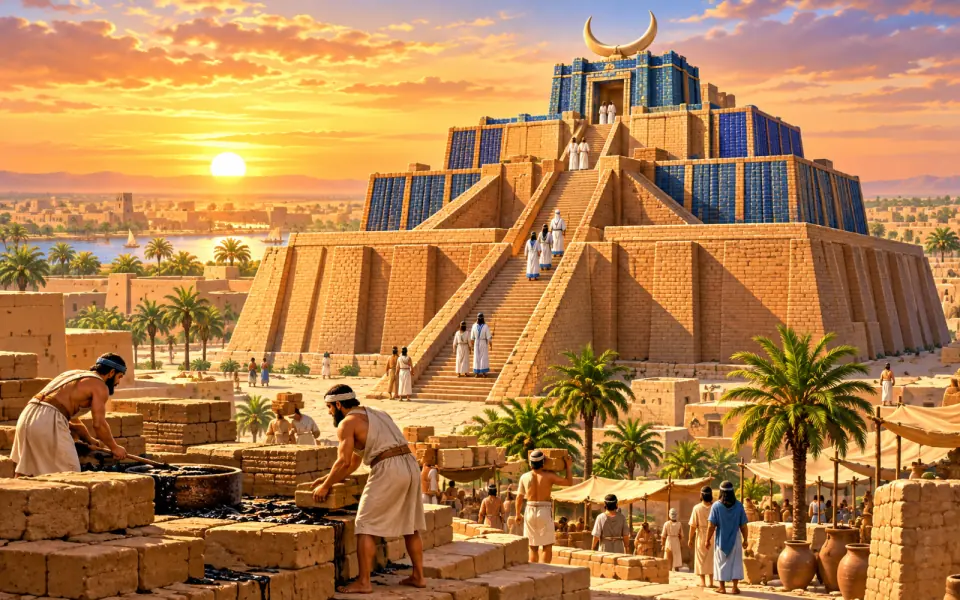 AfterThe Ziggurat of Urabout 2100 BC
 AfterBabylonian mathematicsabout 1800 BC
 AfterThe Code of Hammurabiabout 1754 BC
 AfterWar chariotsabout 1700 BC
 AfterThe Shang dynastyabout 1600–1046 BC
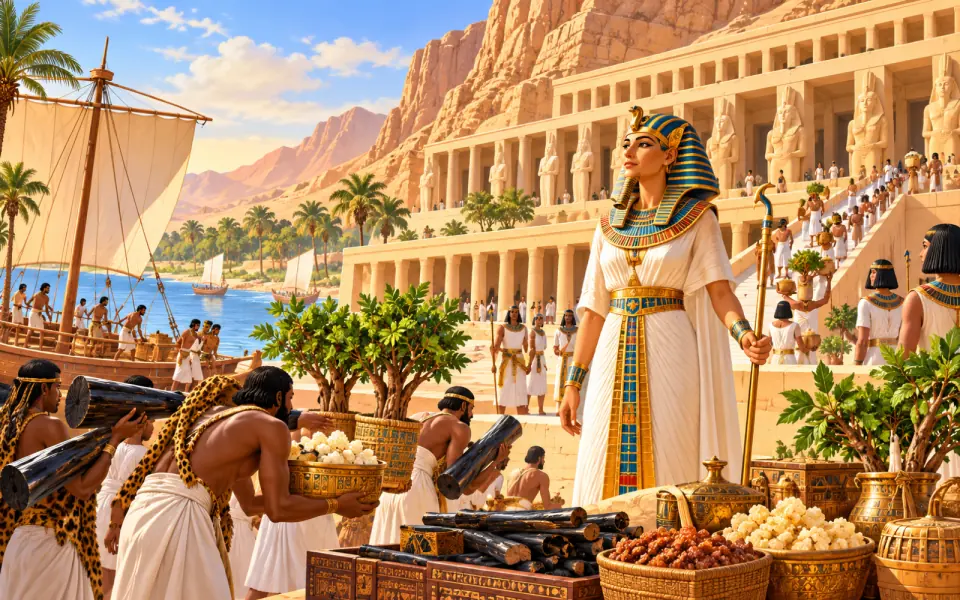 AfterHatshepsut, the woman pharaohabout 1479–1458 BC
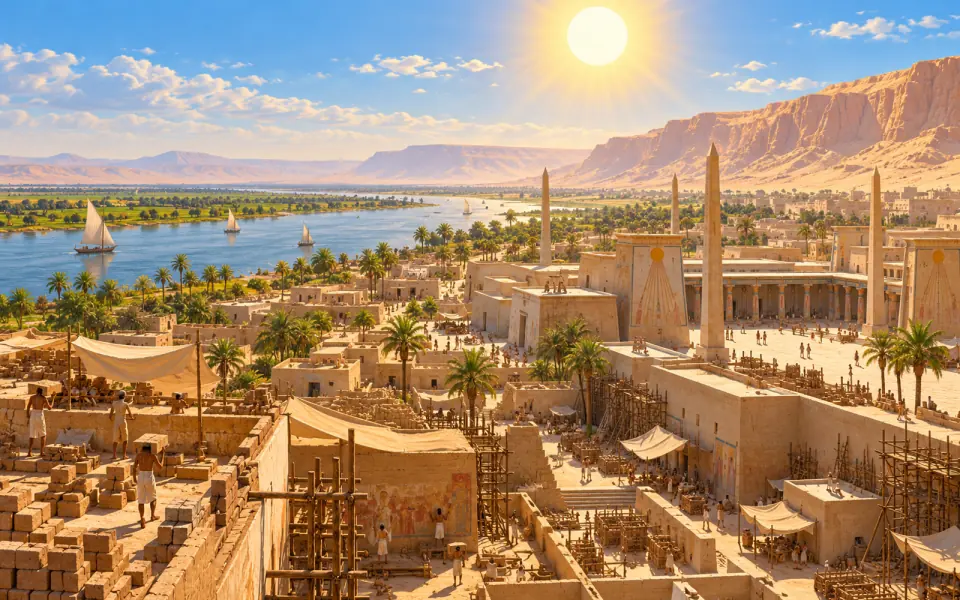 AfterThe reign of Akhenatenabout 1353–1336 BC
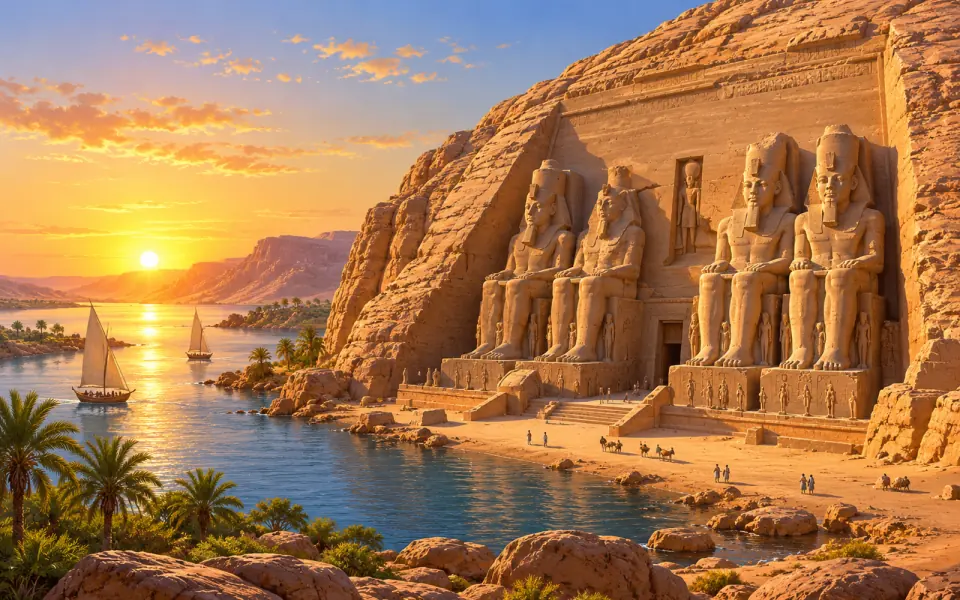 AfterThe reign of Ramesses IIabout 1279–1213 BC
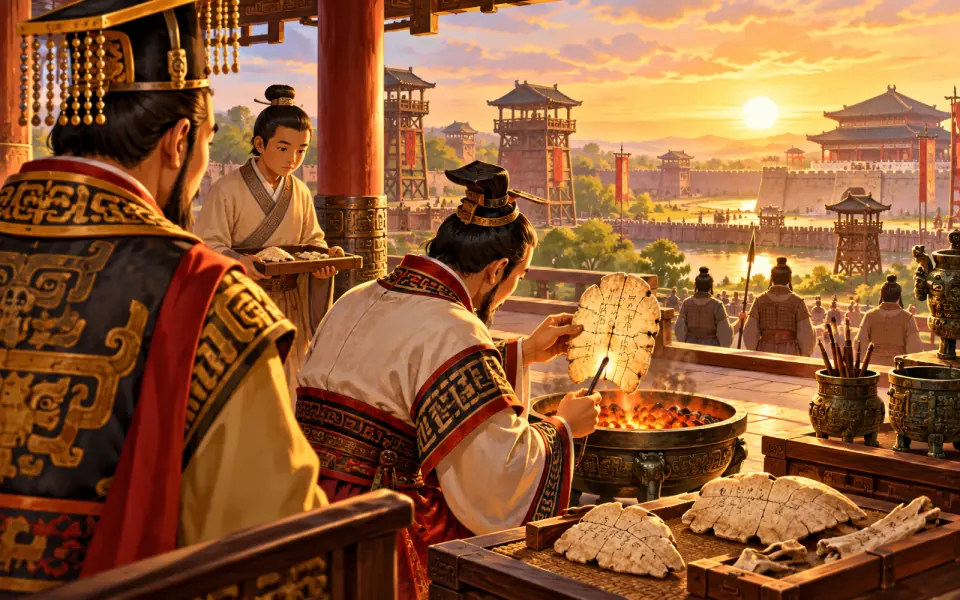 AfterWriting on oracle bonesabout 1250 BC
 AfterThe Bronze Age collapseabout 1200 BC
Listen / Read next
- Music to read by: Cinematic JourneyEpic film-style music, no lyrics, by Ciro Simone IrmiciSpotifyYouTube Music
Other events of the era “River civilisations”
- Cuneiform writing
- Egyptian hieroglyphs
- The unification of Egypt
- Uruk, the great city
- The Egyptian calendar
- The Step Pyramid of Djoser
- The Standard of Ur
- Egyptian mummification
- The Great Pyramid of Giza
- The cities of the Indus Valley
- The drains and baths of Mohenjo-daro
- Sargon and the Akkadian Empire
- Trade between the Indus and Mesopotamia
- The Epic of Gilgamesh
- The Ziggurat of Ur
- Babylonian mathematics
- The Code of Hammurabi
- War chariots
- The Shang dynasty
- Hatshepsut, the woman pharaoh
- The reign of Akhenaten
- The reign of Ramesses II
- Writing on oracle bones
- The Bronze Age collapse
