Hatshepsut, the woman pharaoh
about 1479–1458 BC Deir el-Bahari, near Luxor (Egypt)
In short
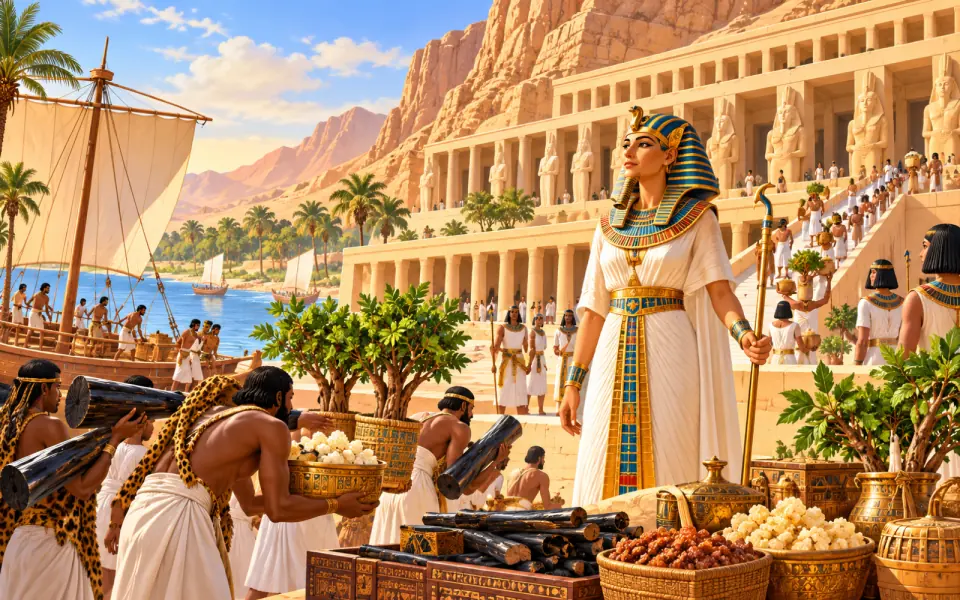
Hatshepsut was one of the few women to rule Egypt as pharaoh, for about twenty years. In her statues she was shown with a false beard and the clothes of a king, as tradition required. She organised a sea expedition to the land of Punt, which brought back incense, ebony and myrrh trees. Her terraced temple at Deir el-Bahari, near Luxor, is one of the most elegant in ancient Egypt.
Why it matters Her story shows that even a woman could reach the highest power in a world led by men.
Source: Encyclopaedia Britannica, “Hatshepsut”
Study card about 6 minutes of reading
The story
A queen who wears a beard
In her statues, Hatshepsut has a woman's body or a man's, depending on the period in which it was carved. At the start of her reign she is seen in a woman's dress and with a delicate face; later she appears with the short kilt of the pharaohs, the striped headcloth and a false beard tied to her chin, like all kings. She did not want people to believe she was a man. In the inscriptions she often uses the feminine, speaks of herself as “I” and calls herself “daughter of Amun”. But for Egypt the pharaoh was by definition the king, the keeper of the order of the world, and a king wore those symbols. Hatshepsut had to adapt tradition, because there were very few models of a woman pharaoh: only Sobekneferu, centuries earlier.
She was born around 1500 BC, daughter of Thutmose I, and married her half-brother Thutmose II, who became king. When he died, around 1479 BC, the son he had had by a secondary wife, Thutmose III, was a child of a few years. It was normal for a widowed queen to govern in the name of the little king, and for a few years Hatshepsut acted as regent. Then, around the seventh year of the reign, she took an extraordinary step: she had herself crowned king of Egypt in full, beside her nephew and stepson Thutmose III, who remained formally co-ruler but without power.
How she justified her power
Hatshepsut understood that to be accepted she had to show that the gods wanted her. She had the story of her divine birth told on the walls of her temple: the god Amun, in the form of her father Thutmose, was said to have visited her mother, and the god Khnum to have shaped the baby on the potter's wheel. Another story says that her father, Thutmose I, had chosen her as heir before the court. Historians think these stories were political propaganda, which she felt she needed.
She did not reign alone. She surrounded herself with loyal officials, among whom Senenmut stands out, a man of non-noble origins who became her highest officer, tutor to her daughter and overseer of works. There has been much discussion of a closer relationship between them, but there is no evidence: they are only guesses.
The reign of peace and trade
Unlike many other pharaohs of her dynasty, Hatshepsut was not remembered for wars. The inscriptions speak of a few campaigns in Nubia, but her reign was above all a long season of peace, rebuilding and trade. She restored the temples damaged in the time of the Hyksos and had two very tall granite obelisks raised at Karnak: one is still standing, about thirty metres tall, and is among the tallest of antiquity.
The enterprise she was proudest of was the expedition to Punt, in the ninth year of her reign, around 1471 BC. Five large ships set out from the Red Sea and came back loaded with incense, myrrh, ebony, ivory, gold, leopard skins, live animals such as monkeys, and even thirty-one myrrh trees with their roots, carried in big baskets, perhaps the first known attempt to transplant trees from one country to another. Where Punt was is not known precisely: scholars suggest the coast of Eritrea and Sudan, or Somalia, or even the Arabian peninsula. The expedition is told in lively reliefs on the walls of her temple, including the queen of Punt, portrayed with a body shape that scholars have interpreted as a sign of illness.
The temple at Deir el-Bahari
Hatshepsut's masterpiece is her mortuary temple at Deir el-Bahari, on the west bank at Luxor. It stands at the foot of a very pale rock wall, as if it were a continuation of it, and consists of three great terraces linked by long ramps, with rows of elegant columns. The Egyptians called it Djeser-djeseru, “the holiest of the holy”. Tradition says Senenmut designed it, but the attribution is uncertain. Today it is among the most visited monuments in Egypt.
Erased, but not entirely
Hatshepsut reigned about twenty-two years and died around 1458 BC. Then Thutmose III took power alone and became Egypt's greatest conqueror. Towards the end of his long reign, about twenty years after his aunt's death, Hatshepsut's names and images were chiselled from the temple walls, and the statues broken and thrown into a quarry. For a long time it was believed to be a personal revenge. Today historians are more cautious: the erasure happened late, and perhaps served to make the line of succession towards Thutmose III's son, Amenhotep II, clear, or to remove the example of a woman on the throne. Certainly, the Egyptians did not intend to destroy her completely.
And her remains? In 2007 a team led by the Egyptologist Zahi Hawass claimed to have identified her mummy, thanks to a tooth found in a box with her name. Other scholars, however, have raised doubts about this conclusion, and the matter is not closed.
Why it happened
The immediate cause was Thutmose III's young age. When Thutmose II died there was a child king, and a regent was needed. Hatshepsut was the little king's stepmother, daughter of a pharaoh and wife of a pharaoh: the person with the most legitimacy.
Her qualities did the rest. Hatshepsut showed she knew how to govern, had a network of capable officials and knew how to present herself. The years of peace and prosperity after the wars of her predecessors gave her the support she needed to keep power.
Finally, there was ideology: her divine birth and the support of the priesthood of Amun, which had received great donations. The favour of the priests was fundamental in the New Kingdom, and Hatshepsut made the temples of Amun the centre of her policy.
What changed
Hatshepsut left behind a rich and stable Egypt, which allowed Thutmose III to build an empire in Syria and Nubia. The trade routes, temples and sacred gardens opened the way to an age of splendour, which historians call the 18th dynasty.
Her case shows how history can be erased and rebuilt. For more than two thousand years her name was almost forgotten: the lists of pharaohs did not mention her. Only in the nineteenth century, thanks to the reading of hieroglyphs (see the card on Champollion), did scholars realise that the reliefs at Deir el-Bahari spoke of a woman king.
Today she is a figure much loved by the girls and boys who come to history, an example of female leadership. Historians warn, however, against making comparisons too easily: Hatshepsut acted according to the rules of her time, not according to our ideas of equality.
Key people and places
People
- Hatshepsut
- Woman pharaoh of the 18th dynasty (about 1479–1458 BC). Her name means “the foremost of noble ladies”.
- Thutmose III
- Nephew and co-ruler of Hatshepsut, he became Egypt's greatest conqueror. It was he, or his successors, who had her monuments erased.
- Senenmut
- Hatshepsut's highest officer, tutor to her daughter and overseer of works; he may have had a part in the design of the temple.
- Howard Carter
- English archaeologist who in 1903 excavated tomb KV20 in the Valley of the Kings, prepared for Hatshepsut, years before discovering Tutankhamun.
Places
- Deir el-Bahari (Luxor, Egypt)
- A rocky bay on the west bank of the Nile, at Luxor, where Hatshepsut's terraced temple stands.
- Karnak (Luxor, Egypt)
- The great temple complex of the god Amun. Here Hatshepsut had two obelisks raised, one of which is still standing.
- Punt
- A land on the Red Sea, perhaps in the region between Eritrea, Sudan and Somalia, from which incense and myrrh came.
Good to know
- Hatshepsut wore the pharaohs' false beard, but in the inscriptions she used the feminine: she presented herself as king and as woman at once.
- The expedition to Punt brought back 31 live myrrh trees, carried in baskets: perhaps the first tree transplant in history.
- The Karnak obelisk that is still standing is about 30 metres tall: one of the tallest of antiquity.
- Her temple at Deir el-Bahari was called “the holiest of the holy”: it seems to grow out of the rock.
- Her name was erased from the walls about twenty years after her death, but many images were left clearly visible: that is why we know her.
Find out more
- Wikipedia, “Hatshepsut” en.wikipedia.org
- Wikipedia, “Mortuary temple of Hatshepsut” en.wikipedia.org
- Wikipedia, “Senenmut” en.wikipedia.org
- Museo Egizio, Turin (in English) museoegizio.it
Related events
- The unification of Egyptabout 3100 BC · River civilisationsThe title of pharaoh was born with the unification, and Hatshepsut had to adapt it for a woman.
- The reign of Akhenatenabout 1353–1336 BC · River civilisationsAkhenaten reigned a century later, in the same dynasty.
- The reign of Ramesses IIabout 1279–1213 BC · River civilisationsRamesses II was the most celebrated pharaoh after her.
- The Shang dynastyabout 1600–1046 BC · River civilisationsFu Hao, in China, was a powerful woman in the same historical period.
- Augustus, the first emperor27 BC · Ancient RomeAugustus, as the first emperor, had to invent a new role for power.
Before and after, in the era “River civilisations”
Event 21 of 25
 BeforeThe first Sumerian citiesabout 4000 BC
 BeforeCuneiform writingabout 3200 BC
 BeforeEgyptian hieroglyphsabout 3200 BC
 BeforeThe unification of Egyptabout 3100 BC
 BeforeUruk, the great cityabout 3000 BC
 BeforeThe Egyptian calendarabout 2800 BC
 BeforeThe Step Pyramid of Djoserabout 2650 BC
 BeforeThe Standard of Urabout 2600 BC
 BeforeEgyptian mummificationabout 2600 BC
 BeforeThe Great Pyramid of Gizaabout 2560 BC
 BeforeThe cities of the Indus Valleyabout 2500 BC
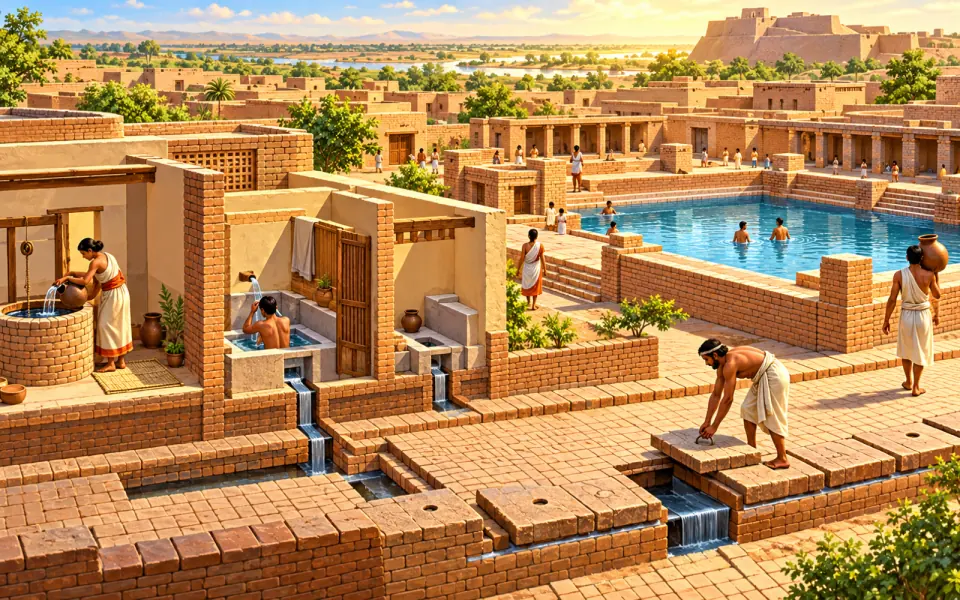 BeforeThe drains and baths of Mohenjo-daroabout 2450 BC
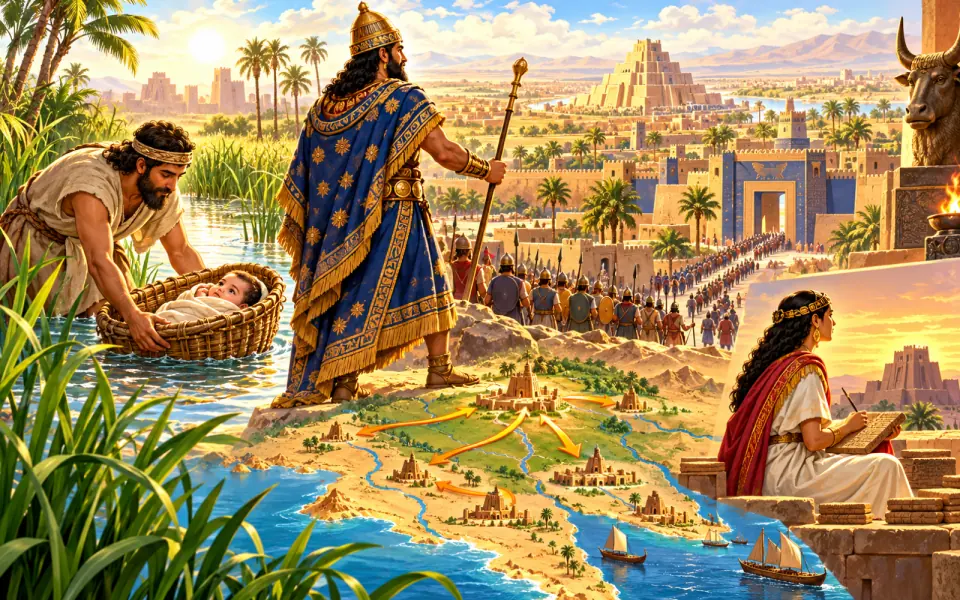 BeforeSargon and the Akkadian Empireabout 2334 BC
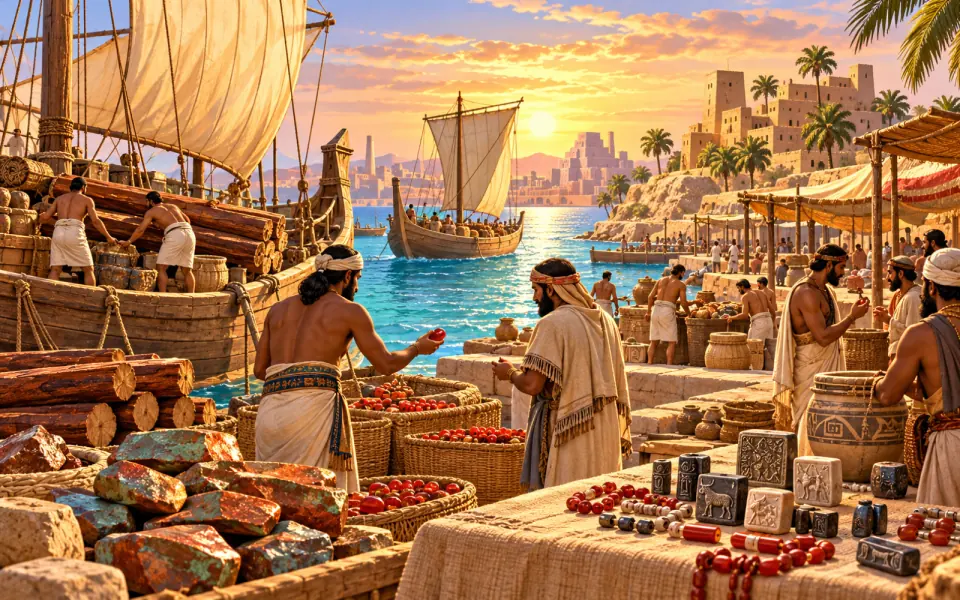 BeforeTrade between the Indus and Mesopotamiaabout 2300 BC
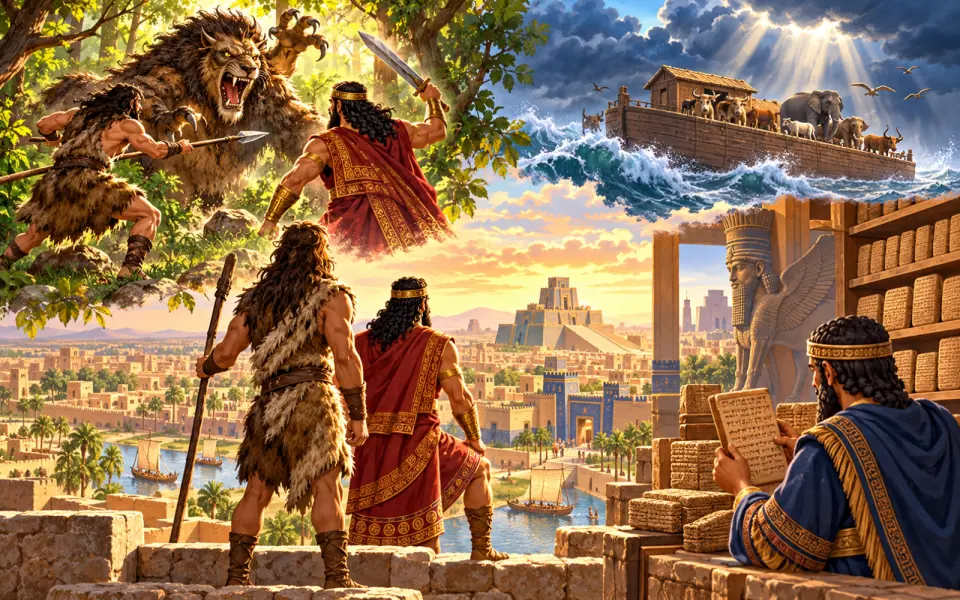 BeforeThe Epic of Gilgameshabout 2100 BC
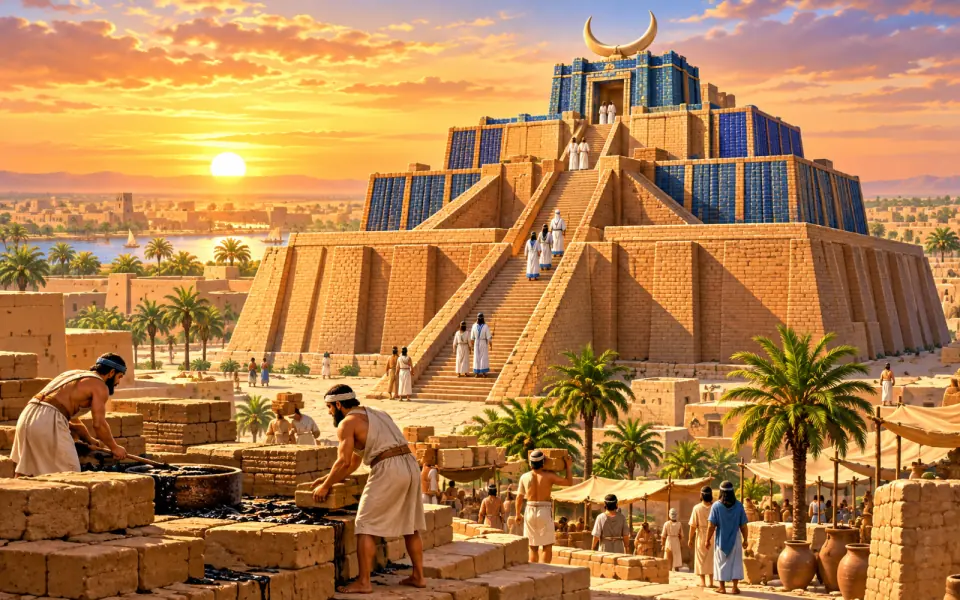 BeforeThe Ziggurat of Urabout 2100 BC
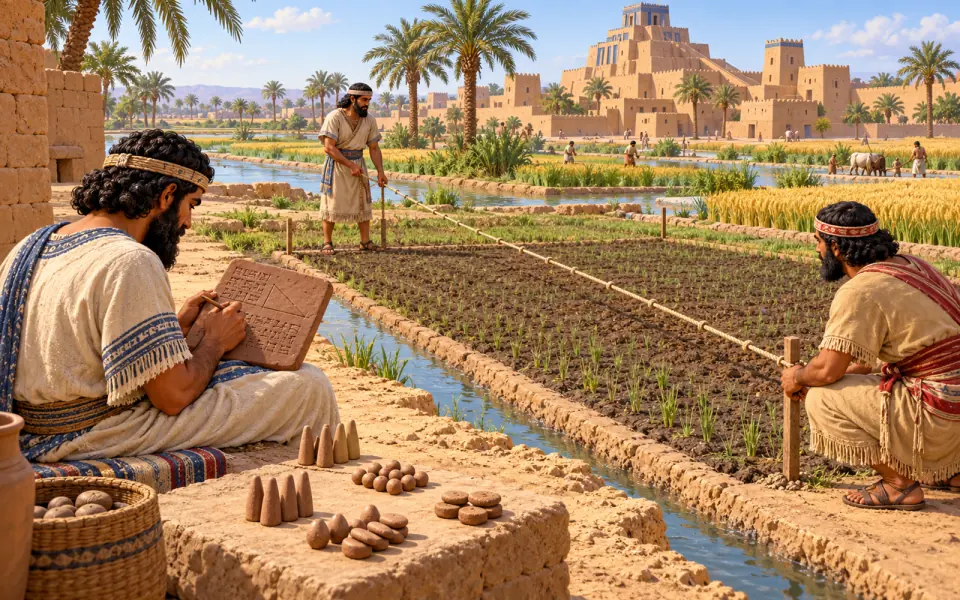 BeforeBabylonian mathematicsabout 1800 BC
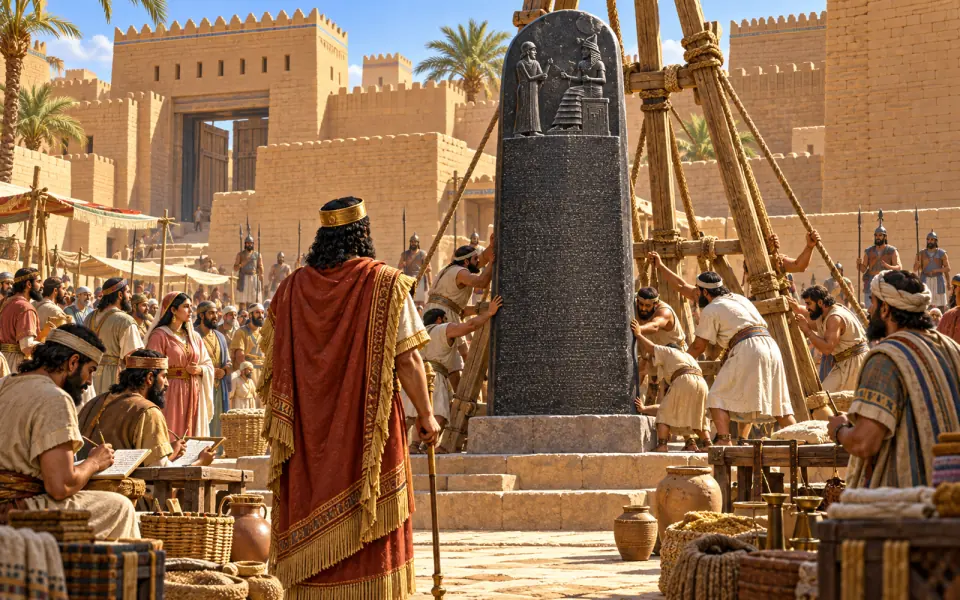 BeforeThe Code of Hammurabiabout 1754 BC
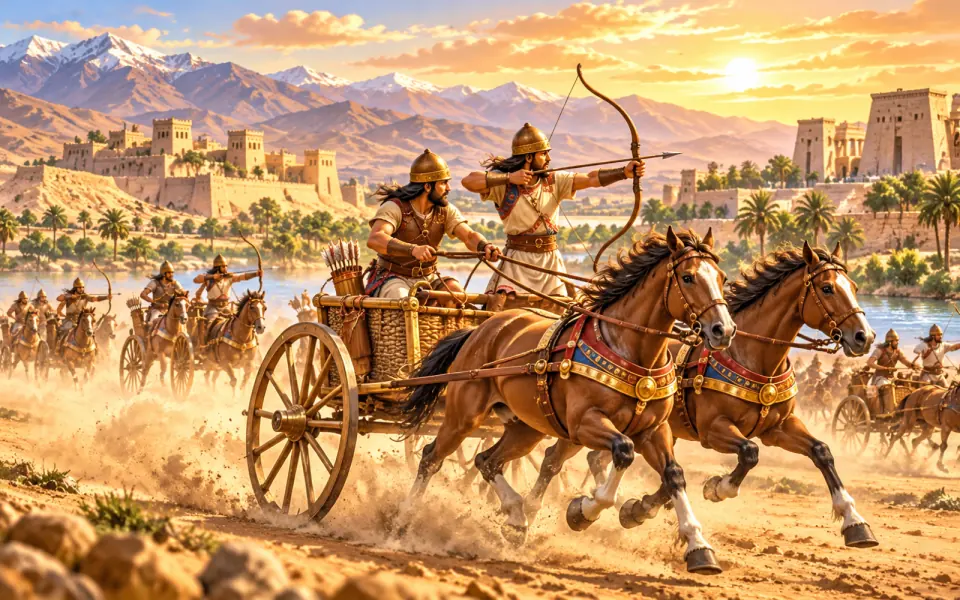 BeforeWar chariotsabout 1700 BC
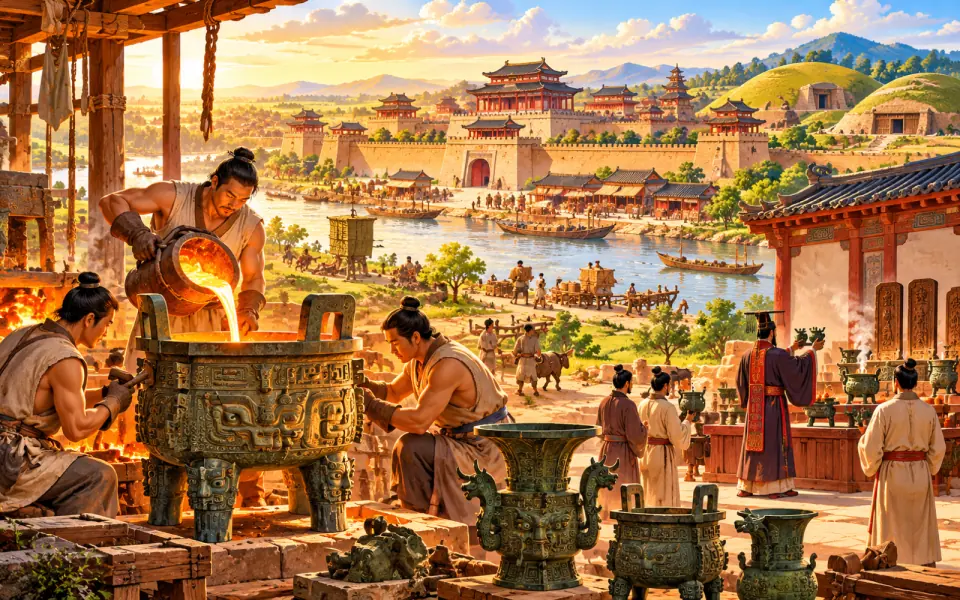 BeforeThe Shang dynastyabout 1600–1046 BC
- You are hereHatshepsut, the woman pharaohabout 1479–1458 BC
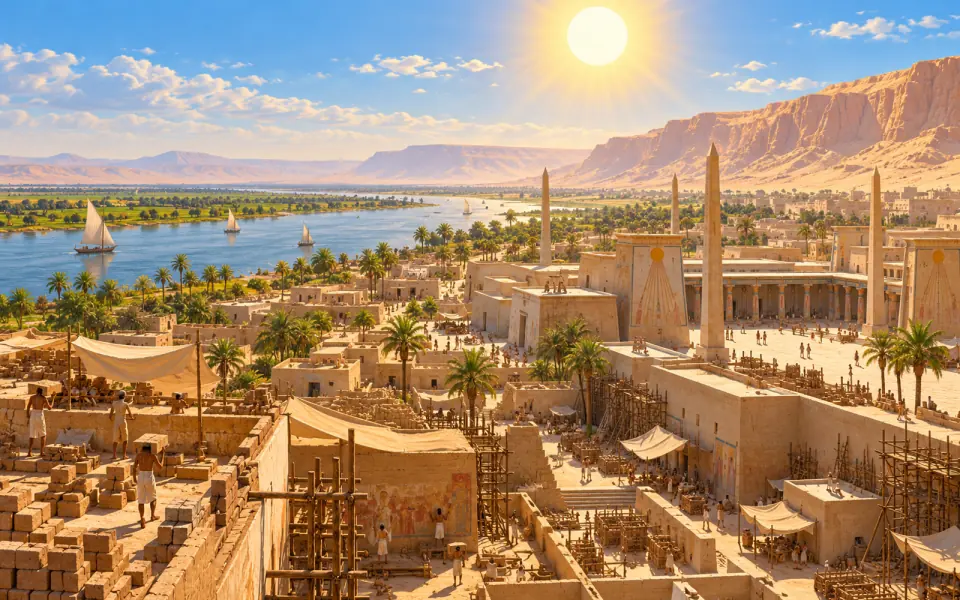 AfterThe reign of Akhenatenabout 1353–1336 BC
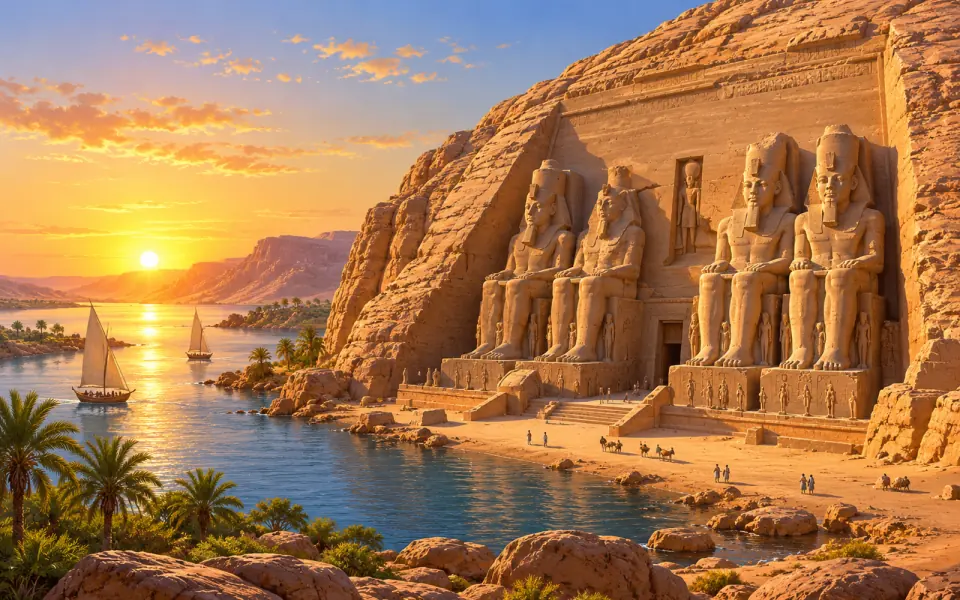 AfterThe reign of Ramesses IIabout 1279–1213 BC
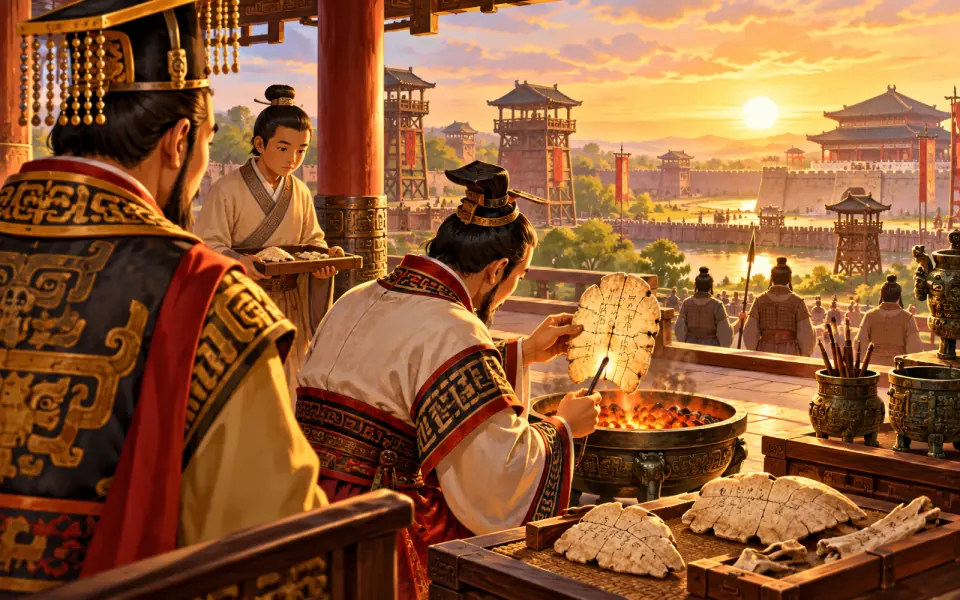 AfterWriting on oracle bonesabout 1250 BC
 AfterThe Bronze Age collapseabout 1200 BC
Listen / Read next
- Music to read by: Cinematic JourneyEpic film-style music, no lyrics, by Ciro Simone IrmiciSpotifyYouTube Music
Meanwhile, elsewhere in the world
Other events of the era “River civilisations”
- The first Sumerian cities
- Cuneiform writing
- Egyptian hieroglyphs
- The unification of Egypt
- Uruk, the great city
- The Egyptian calendar
- The Step Pyramid of Djoser
- The Standard of Ur
- Egyptian mummification
- The Great Pyramid of Giza
- The cities of the Indus Valley
- The drains and baths of Mohenjo-daro
- Sargon and the Akkadian Empire
- Trade between the Indus and Mesopotamia
- The Epic of Gilgamesh
- The Ziggurat of Ur
- Babylonian mathematics
- The Code of Hammurabi
- War chariots
- The Shang dynasty
- The reign of Akhenaten
- The reign of Ramesses II
- Writing on oracle bones
- The Bronze Age collapse
