The Code of Hammurabi
about 1754 BC Babylon, Mesopotamia (now Iraq)
In short
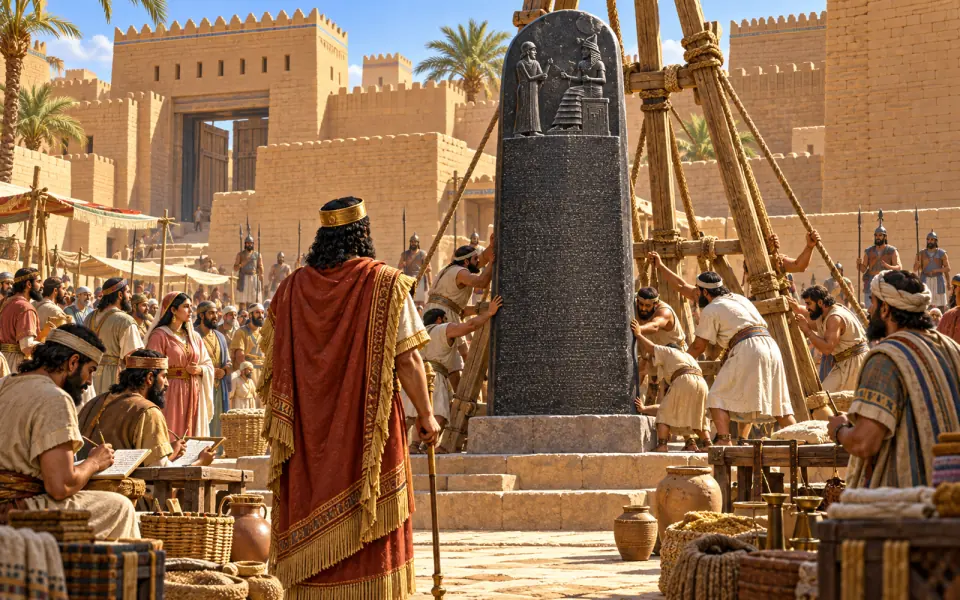
Hammurabi, King of Babylon, had about 280 laws carved on a slab of black basalt more than two metres high. At the top the king stands before Shamash, the god of the sun and of justice. The laws dealt with trade, loans, family and work, and the punishments changed depending on whether the guilty person was rich, poor or a slave. The slab was found at Susa, in Iran, in the early 1900s and is now on display in the Louvre in Paris.
Why it matters Putting the laws in writing, for everyone to see, made it harder to change them at will.
Source: Musée du Louvre, “Code de Hammurabi”
Study card about 7 minutes of reading
The story
A black stone among the ruins of Susa
In December 1901 a team of French archaeologists, led by Jacques de Morgan, was digging at Susa, in present-day south-western Iran, an ancient capital of the Elamites. Out of the earth came large pieces of a black, shiny stone, covered with cuneiform writing. Put back together, they formed a block of basalt two metres twenty-five tall, in the shape of a finger. At the top was a relief: a king standing, with his hand raised in a sign of respect, before a god seated on a throne. Below, columns and columns of signs. The Dominican father Jean-Vincent Scheil, a cuneiform scholar, began to translate and understood: it was the text of a collection of laws commissioned by Hammurabi, king of Babylon.
It was published in 1902 and caused a sensation. It was not the first collection of laws (we know older ones, like that of Ur-Nammu), but it was the most complete and best preserved, and for the first time the modern world was reading laws written more than 3,600 years earlier. The stele is now in the Louvre Museum in Paris.
Who Hammurabi was
Hammurabi (in Akkadian Ammurapi) became king of Babylon around 1792 BC and reigned for about forty-three years. Babylon, at that time, was only one of the city-states of Mesopotamia, big but not the most powerful. Through diplomacy and war Hammurabi turned it into the centre of a kingdom. First he allied himself with his neighbours, then defeated them one by one: in 1763 he beat Rim-Sin of Larsa and in 1761 he destroyed Mari, on the Euphrates. In the end he ruled much of Mesopotamia.
He was a king very attentive to organisation. The letters that survive show that he dealt with canals, disputes between farmers, taxes and even small details: he wrote to an official telling him to send workers at once to clear a canal. He considered himself the “shepherd” of his people, chosen by the gods to make justice reign.
How the stele is made
The text is divided into three parts. In the prologue the king lists his titles and the cities he has protected, and says that the gods called him “to make justice shine in the land, to destroy the wicked and the violent, to prevent the strong from oppressing the weak”. Next comes the body of the text, with about two hundred and eighty paragraphs, always built with the same formula: “If a man does this, this will happen to him.” The epilogue contains blessings for those who respect the laws and terrible curses for those who erase them.
The laws concern everyday life: thefts, debts, prices, rents of fields, marriages, inheritances, slaves, trades, doctors, builders. Some are very harsh. Law 229 says that if a builder makes a house that is not sturdy and it collapses and kills the owner, the builder will be put to death. Others provide for the famous “an eye for an eye”: if a free man blinds another free man, he will lose an eye. But the penalty changed according to social class: if the victim was a man of lower status, it was enough to pay a sum of silver. The laws, then, were not the same for everyone.
Other laws protect the weakest: for example, a farmer does not have to repay a debt in a year when the harvest is lost to a storm; a woman has a right to her dowry and is protected if her husband leaves her without reason; there are official rates for doctors, boatmen, workers. In a trial that would seem cruel but was normal then, a person accused of sorcery had to throw himself into the river: if he drowned he was guilty, if he was saved he was innocent.
A written and visible law
The stele was not a book to be read in a library, but a monument. It was meant to be seen by everyone. The relief shows the god Shamash, lord of the Sun and of justice, giving the king the symbols of power, a rod and a ring. The message is clear: the laws come from the gods and the king is their guarantor. Some scholars have observed that very few people could read then, so the stele served more to impress than to be read. What is certain is that the text was copied for centuries in the scribes' schools.
How it came to Susa
The stele was not carved at Susa. Scholars think it stood in a city of Babylonia and that in the 12th century BC the Elamite king Shutruk-Nahhunte, after a victory, carried it off as booty along with other monuments. On the stone some columns of laws (seven, it seems) were erased by smoothing them, perhaps to have his own name written in their place. He never did. This detail explains why some laws are missing: they are the ones that were erased.
The value and the limits
It is often said that the Code of Hammurabi is the first written law or a “code” like modern ones. Neither statement is entirely right. It is not the oldest, and it is not a code, because it does not seem to be a text that judges applied to the letter: in the trials we know of, judges almost never cite it. It is rather a collection of exemplary decisions, and a political manifesto of the just king.
Why it happened
Hammurabi wanted to govern a new territory, made of cities with different traditions. A collection of common rules, under the same ruler, served to unify the kingdom and reduce conflicts between cities, tribes and social groups. That is why he put down in writing laws that were partly already in use.
The ideology of the just king also counted. In the cities of Mesopotamia kings, to be accepted, had to show that they protected orphans, widows and the poor. Putting the laws before everyone's eyes was a way of showing that he kept his promise.
Finally there was the tradition of the jurists. Before Hammurabi there were already collections of laws in Sumerian and Akkadian, like those of Ur-Nammu, Lipit-Ishtar and the city of Eshnunna. The scribes of Babylon knew them and used them as a model.
What changed
The stele of Hammurabi has made us realise that in the ancient Near East there was a highly developed legal culture, with ideas that we find in later centuries: proportion between harm and penalty, the responsibility of those who build, the protection of contracts. Some formulas, like “an eye for an eye”, are also present in the Bible, and scholars debate how far it is indebted to them.
It has had great weight in the history of justice. In the Western tradition Hammurabi is remembered among the great lawgivers: his portrait appears among those of the “lawgivers” in some rooms of courts and parliaments, for example in the United States House of Representatives. The symbolic value is that of the idea of a written law, equal and visible.
Today the stele also teaches us something important: ancient laws were not the same for everyone. They distinguished between free men, dependants and slaves, between rich and poor, between men and women. The long road towards laws equal for all, which includes Magna Carta and modern constitutions, began there too, with written rules that could be discussed and changed.
Key people and places
People
- Hammurabi
- King of Babylon (about 1792–1750 BC), conqueror and lawgiver. His name in Akkadian is Ammurapi.
- Jean-Vincent Scheil
- French Assyriologist, a Dominican (1858–1940), who translated the stele right after its discovery and published it in 1902.
- Jacques de Morgan
- French archaeologist (1857–1924) who directed the Susa excavations when the stele came to light.
- Shutruk-Nahhunte
- King of Elam (12th century BC) who brought the stele and other Babylonian monuments to Susa as spoils of war.
Places
- Babylon (Iraq)
- A city on the Euphrates, Hammurabi's capital, in his time the centre of Mesopotamia.
- Susa (Iran)
- The ancient capital of Elam, where the stele was taken as booty and rediscovered in 1901–1902.
- Louvre Museum (Paris)
- The museum that has kept the stele since 1902, in the department of Near Eastern antiquities.
Good to know
- The stele is 2.25 metres tall and is made from a single block of black basalt.
- At the top, the god Shamash hands the king a rod and a ring, symbols of measure and justice.
- On the stele some columns were erased in antiquity, probably on the orders of the Elamite king who had taken it as booty.
- Law 229 provides that a builder who makes a house that is not sturdy and it collapses and kills the owner is to be put to death.
- The Code was copied in the scribes' schools for more than a thousand years: numerous copies on tablets survive.
Find out more
- World History Encyclopedia, “Hammurabi” worldhistory.org
- Wikipedia, “Code of Hammurabi” en.wikipedia.org
- Wikipedia, “Hammurabi” en.wikipedia.org
- Musée du Louvre, collection record for the stele (in English) collections.louvre.fr
- World History Encyclopedia, “Babylon” worldhistory.org
Related events
- Cuneiform writingabout 3200 BC · River civilisationsThe laws are carved in cuneiform, the writing born at Uruk.
- The Ziggurat of Urabout 2100 BC · River civilisationsUr-Nammu, builder of the ziggurat, promoted an older law code.
- The Laws of the Twelve Tablesabout 450 BC · Ancient RomeThe Roman Twelve Tables are another example of written laws for all citizens.
- Magna Carta1215 · Late Middle AgesMagna Carta limited the king's power with written rules.
- Justinian's CodeAD 529 · Early Middle AgesThe Code of Justinian gathered and ordered centuries of Roman law.
Before and after, in the era “River civilisations”
Event 18 of 25
 BeforeThe first Sumerian citiesabout 4000 BC
 BeforeCuneiform writingabout 3200 BC
 BeforeEgyptian hieroglyphsabout 3200 BC
 BeforeThe unification of Egyptabout 3100 BC
 BeforeUruk, the great cityabout 3000 BC
 BeforeThe Egyptian calendarabout 2800 BC
 BeforeThe Step Pyramid of Djoserabout 2650 BC
 BeforeThe Standard of Urabout 2600 BC
 BeforeEgyptian mummificationabout 2600 BC
 BeforeThe Great Pyramid of Gizaabout 2560 BC
 BeforeThe cities of the Indus Valleyabout 2500 BC
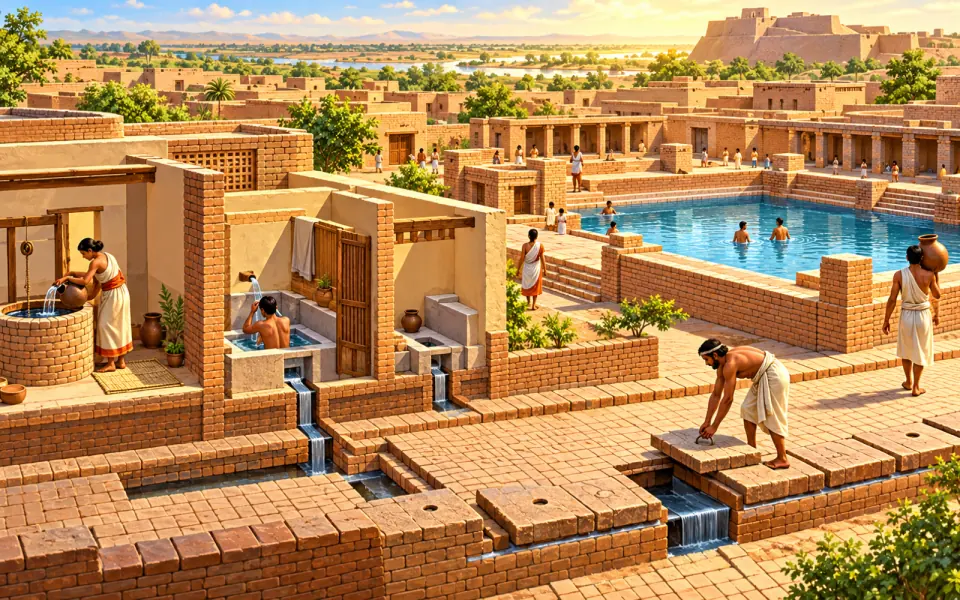 BeforeThe drains and baths of Mohenjo-daroabout 2450 BC
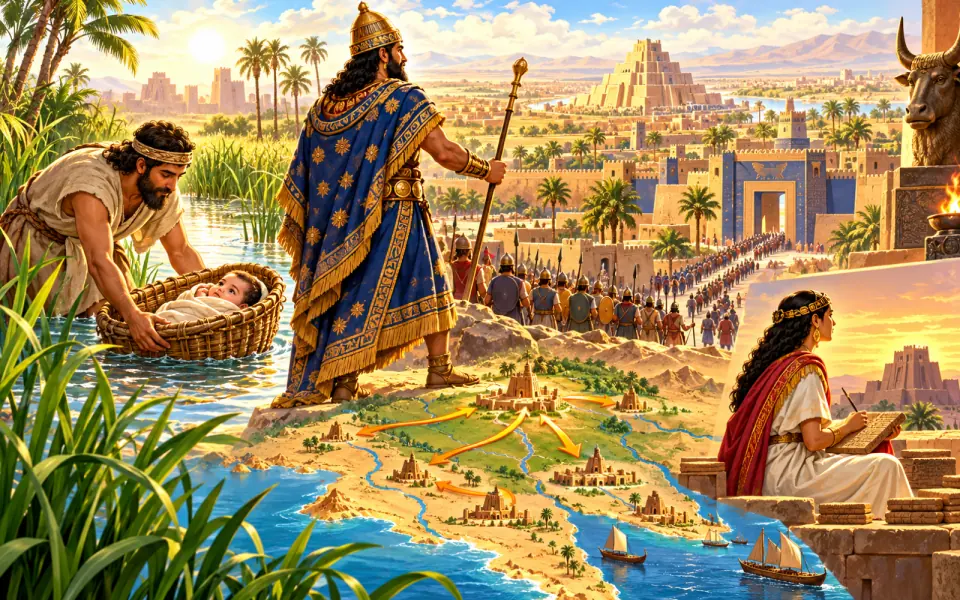 BeforeSargon and the Akkadian Empireabout 2334 BC
 BeforeTrade between the Indus and Mesopotamiaabout 2300 BC
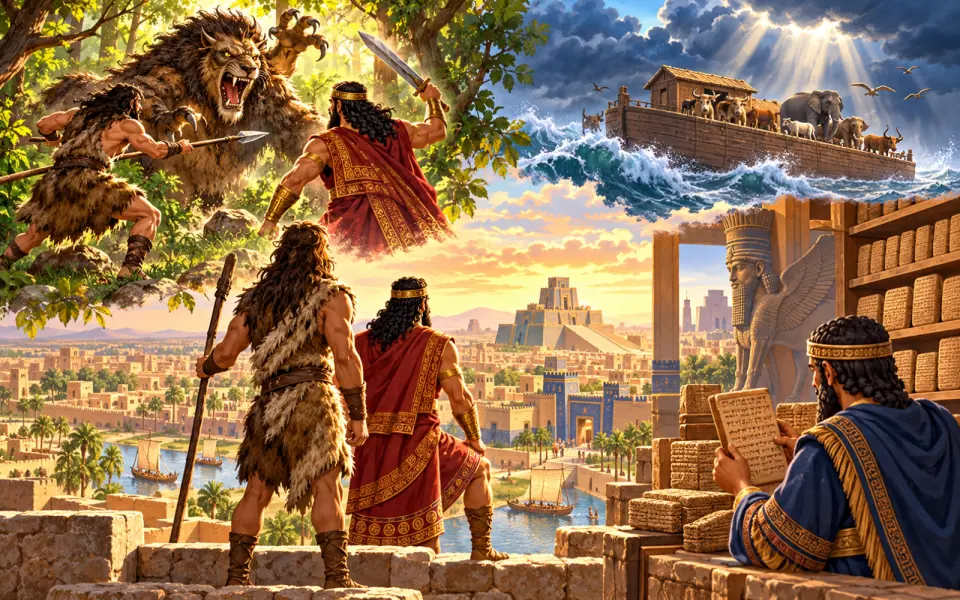 BeforeThe Epic of Gilgameshabout 2100 BC
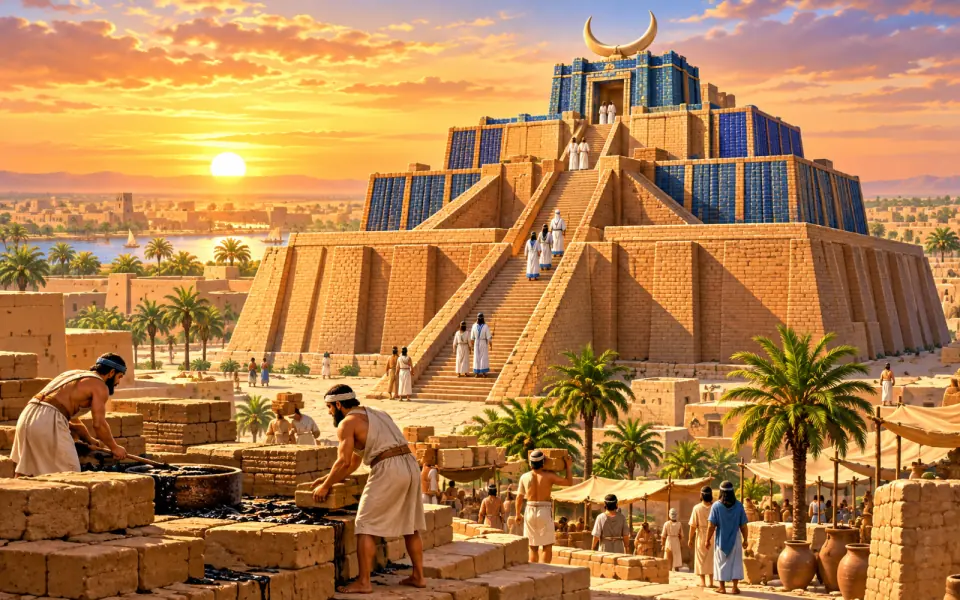 BeforeThe Ziggurat of Urabout 2100 BC
 BeforeBabylonian mathematicsabout 1800 BC
- You are hereThe Code of Hammurabiabout 1754 BC
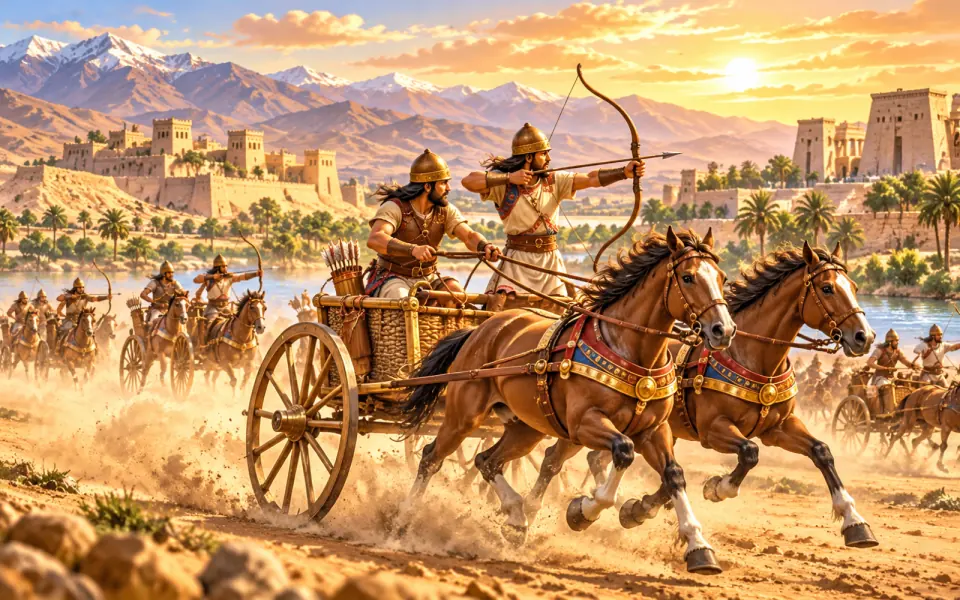 AfterWar chariotsabout 1700 BC
 AfterThe Shang dynastyabout 1600–1046 BC
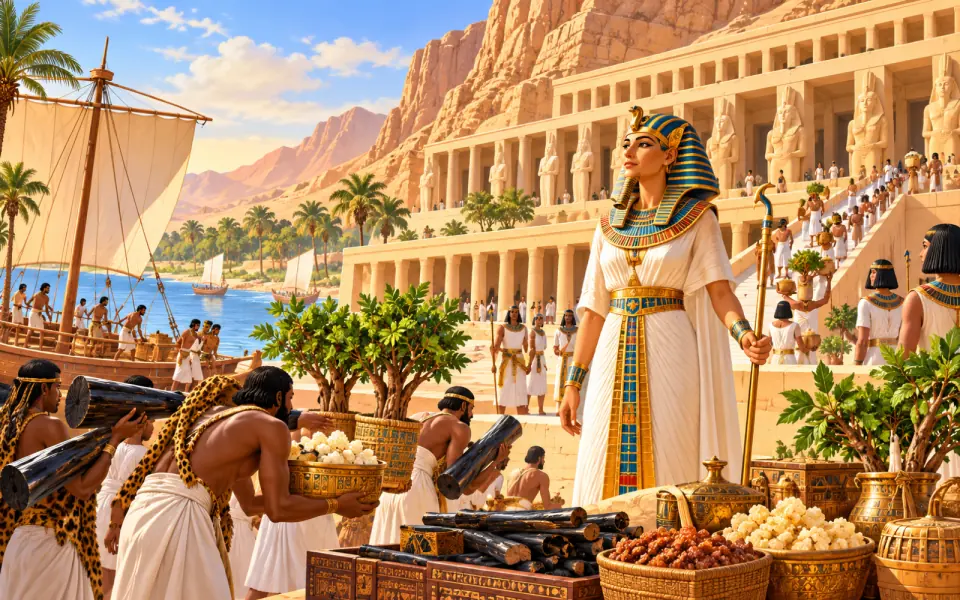 AfterHatshepsut, the woman pharaohabout 1479–1458 BC
 AfterThe reign of Akhenatenabout 1353–1336 BC
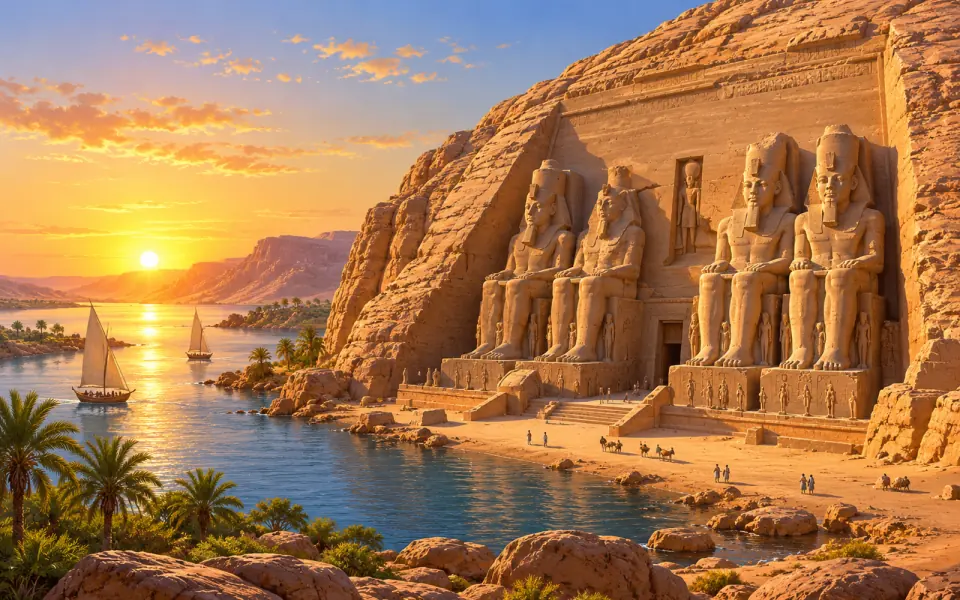 AfterThe reign of Ramesses IIabout 1279–1213 BC
 AfterWriting on oracle bonesabout 1250 BC
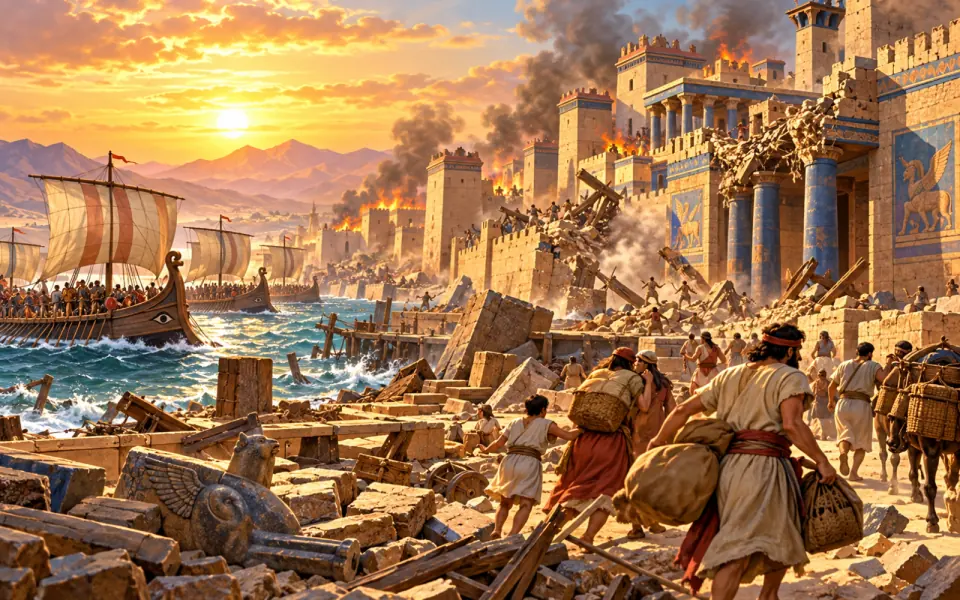 AfterThe Bronze Age collapseabout 1200 BC
Listen / Read next
- Music to read by: Cinematic JourneyEpic film-style music, no lyrics, by Ciro Simone IrmiciSpotifyYouTube Music
Meanwhile, elsewhere in the world
Other events of the era “River civilisations”
- The first Sumerian cities
- Cuneiform writing
- Egyptian hieroglyphs
- The unification of Egypt
- Uruk, the great city
- The Egyptian calendar
- The Step Pyramid of Djoser
- The Standard of Ur
- Egyptian mummification
- The Great Pyramid of Giza
- The cities of the Indus Valley
- The drains and baths of Mohenjo-daro
- Sargon and the Akkadian Empire
- Trade between the Indus and Mesopotamia
- The Epic of Gilgamesh
- The Ziggurat of Ur
- Babylonian mathematics
- War chariots
- The Shang dynasty
- Hatshepsut, the woman pharaoh
- The reign of Akhenaten
- The reign of Ramesses II
- Writing on oracle bones
- The Bronze Age collapse
