The Bronze Age collapse
about 1200 BC Eastern Mediterranean (Ugarit, now Syria)
In short
Around 1200 BC many kingdoms of the eastern Mediterranean fell into crisis within a few decades. The Hittite Empire vanished, the Mycenaean palaces in Greece were abandoned and the city of Ugarit, in Syria, was destroyed. There were probably many causes at once: droughts, famines, earthquakes, revolts and attacks by the so-called ‘Sea Peoples’. Egypt held out, but came out weakened.
Why it matters It shows how even rich, well-connected civilisations can collapse when problems all arrive at once.
Source: Encyclopaedia Britannica, “Sea Peoples”
Study card about 7 minutes of reading
The story
The last letters of the king of Ugarit
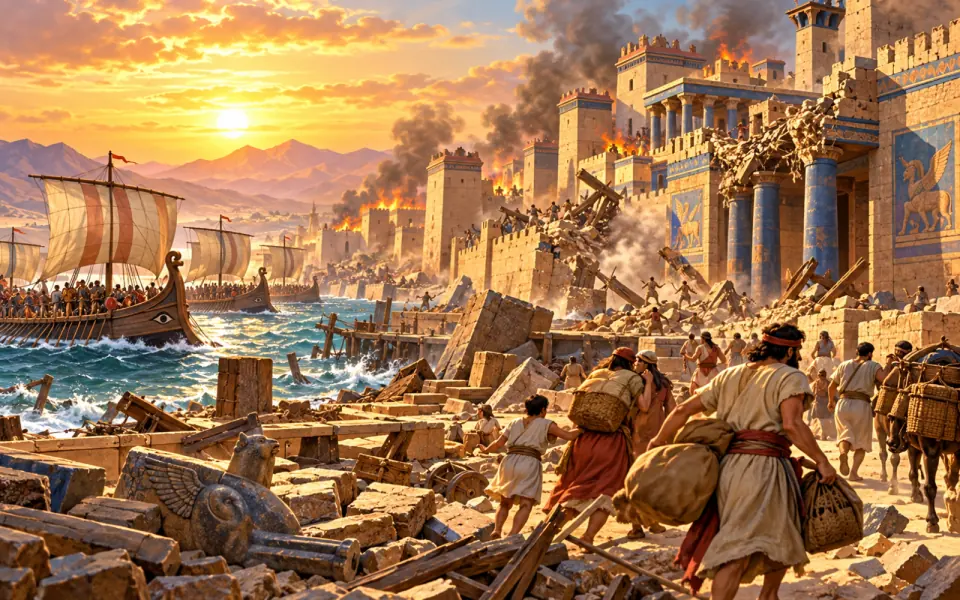
Ugarit was a rich port city on the coast of Syria, famous for its trade, its sailors and its library. Around 1190 BC its last king, Ammurapi, wrote a desperate letter to the king of Alashiya, usually identified with Cyprus. The text says more or less this: “The enemy ships have come. They have set my cities on fire and done harm in my country. Does my father not know that all my troops are in Hatti and all my ships in Lycia? The land is left to itself.” It was a request for help, but we do not know whether anyone read it. Soon afterwards Ugarit burned, and never became a real city again.
Paradoxically, the fire saved its library: the tablets, baked by the flames, became as hard as bricks and were rediscovered in 1929, almost intact. Thanks to them we know what people thought and wrote at the moment of the catastrophe.
A world of linked kingdoms
To understand what happened, we must imagine what the eastern Mediterranean was like around 1250 BC. It was a world of great rich kingdoms: the Egypt of Ramesses II, the Hittite empire in Anatolia, the palaces of the Mycenaeans in Greece, Babylon and Assyria in Mesopotamia, the cities of the Syrian coast like Ugarit. Letters were written, treaties signed, princesses married and gifts exchanged. Trade was very intense: the copper of Cyprus and the tin of Central Asia, which mixed together gave bronze, travelled on ships that called at many ports. This is what historians call the Late Bronze Age.
This world had a weak point: the kingdoms depended on one another. Bronze was essential for weapons and tools, and if the routes were cut, the palaces that controlled everything, with their storehouses and scribes, were left without raw materials.
Fifty years of collapse
Between about 1200 and 1150 BC, within a few generations, many of these centres fell into crisis. In the Hittite kingdom, already hit by famines (the pharaoh Merneptah had sent grain to help it), the capital Hattusa was abandoned and partly burned. In Greece, the Mycenaean palaces of Pylos, Mycenae, Tiryns and Thebes were destroyed or left: at Pylos a great fire baked the Linear B tablets, which speak of “coast-watchers”. Ugarit was destroyed. Cities of the Levant and Cyprus went up in flames, and even Troy, in one of its phases, suffered damage.
The Egyptians left accounts of those years. Already around 1208 BC, the pharaoh Merneptah had to repel an attack by Libyans allied with groups that had come from the sea. About thirty years later, around 1177 BC, Ramesses III faced a much bigger invasion. On the walls of his temple at Medinet Habu he had a battle carved in which Egyptian ships face those of enemies with strange feathered helmets, with two-wheeled carts drawn by oxen and whole families in tow. The pharaoh says he defeated them. The Egyptian texts name them by the names of the individual groups: “Sea Peoples” is a modern name, given to them by 19th-century Egyptologists. Egypt held out, but came out weakened and was no longer able to keep its territories in Syria and Canaan.
Who were the “Sea Peoples”?
The names the Egyptians record, such as Shardana, Shekelesh, Peleset, Tjeker, do not correspond to one precise people. Some scholars link them to groups that later settled in Sardinia, in Sicily, in Palestine (the Philistines would be the Peleset), but these identifications are uncertain. They were probably a mixture of groups of people on the move: warriors, pirates, but also families fleeing famine and war. They were not the sole cause of the collapse, perhaps not even the main one: they were also a consequence.
One crisis, many causes
There is no single explanation. Scholars propose a series of causes that added up. A long drought, shown by pollen and layers of sediment in various places around the Mediterranean, brought famine. Earthquakes close together struck several cities, although this hypothesis now seems less strong. Trade routes were cut by piracy and wars. New weapons and tactics, such as foot soldiers with swords and javelins, made war chariots less decisive. Internal revolts and disease may have made things worse. Some researchers speak of a “systems collapse”: when everything is connected, a problem in one place spreads to others.
It must be said that some recent historians urge caution: not all destructions are certain, not all happened at the same time and some areas, such as Assyria, Phoenicia and Cyprus in part, carried on living. To speak of a “total collapse” is an exaggeration; it is better to say that the system of the great palaces broke up.
The first strike in history?
A small detail that shows the mood of those years: on an Egyptian papyrus, from Deir el-Medina, the village of the workers on the royal tombs, it is told that around 1157 BC the workmen, whose grain wages had not arrived for weeks, put down their tools, left the village and sat in front of the temples. It would be the first documented strike in history. They got their food, but the problems continued.
Why it happened
The first cause was the fragility of a world that was too connected. The states of the Bronze Age depended on one another for copper, tin, grain and luxury goods. It was a rich but inflexible system, like a chain in which one broken link makes the others fall.
The second was changes in the environment. Analyses of pollen and sediments show a long period of drought around 1200 BC. Bad harvests mean hunger, and hunger causes revolts and migrations. Even a people arriving from afar may be fleeing its own problems.
The third cause was wars and new ways of fighting. The so-called Sea Peoples, and other groups, attacked cities and trade routes. The palaces, with their armies of costly chariots, found themselves unprepared against mobile, numerous warriors on foot. The collapse is usually explained by the sum of several causes, not by a single one.
What changed
The collapse changed the Mediterranean. In Greece the so-called Greek Dark Age began, in which the population fell, the palaces disappeared and Linear B writing was lost: for centuries nobody wrote any more. We must wait for the alphabet, around the 8th century BC. Many historians think the memory of the Bronze Age, with its heroes and ruined palaces, flowed into the Homeric poems.
From the ashes new peoples were born. On the coast of Lebanon the Phoenicians, free from the pressure of the great empires, became masters of the seas and spread the alphabet. In the Levant the Philistines, the Arameans and the kingdom of Israel emerged. In Anatolia, the remains of the Hittite empire gave rise to small Neo-Hittite kingdoms. Bronze also ceased to be the dominant metal: the Iron Age arrived, cheaper, with weapons and tools within the reach of many.
For us the collapse is also a warning. It shows that even rich, connected and sophisticated civilisations can crumble if several problems, climate, economy and war, arrive together. That is why historians today study it carefully, and books and documentaries tell it as an example of the fragility of complex systems, without forgetting, however, that history never repeats itself in an identical way.
Key people and places
People
- Ammurapi
- Last king of Ugarit. A letter of his, found in the ruins, desperately asks for help while enemy ships attack.
- Ramesses III
- Pharaoh of the 20th dynasty (about 1186–1155 BC) who faced the so-called Sea Peoples and had them portrayed at Medinet Habu.
- Merneptah
- Pharaoh, son of Ramesses II, who repelled the first great attack around 1208 BC and sent grain to the Hittites.
- Claude Schaeffer
- French archaeologist (1898–1982) who from 1929 excavated Ugarit and brought to light the tablets of the library.
Places
- Ugarit (Ras Shamra, Syria)
- A rich port city on the Syrian coast, destroyed around 1185 BC. Thousands of texts have been found here.
- Hattusa (Turkey)
- Capital of the Hittite empire, abandoned and partly burned in the period of the collapse.
- Medinet Habu (Luxor, Egypt)
- Temple of Ramesses III with the reliefs showing the battle against the so-called Sea Peoples.
Good to know
- The fire that destroyed Ugarit baked its clay tablets and preserved them: today they are a precious source.
- At Medinet Habu the so-called Sea Peoples are carved with feathered helmets, and with them are two-wheeled carts drawn by oxen.
- Around 1157 BC, the workers of Deir el-Medina did what is considered the first documented strike.
- The collapse lasted decades: it was not a sudden event, but a series of crises that followed one another.
- In Greece, after the collapse, Linear B writing vanished for centuries: people no longer knew how to write until the alphabet arrived.
Find out more
- Wikipedia, “Late Bronze Age collapse” en.wikipedia.org
- Wikipedia, “Sea Peoples” en.wikipedia.org
- World History Encyclopedia, “Sea Peoples” worldhistory.org
- World History Encyclopedia, “Ugarit” worldhistory.org
- Wikipedia, “Ugarit” en.wikipedia.org
Related events
- The reign of Ramesses IIabout 1279–1213 BC · River civilisationsThe peace treaty between Egyptians and Hittites lost its value with the fall of the Hittite empire.
- War chariotsabout 1700 BC · River civilisationsWar chariots lost importance with the new tactics.
- The Iron Age beginsabout 1200 BC · Sea civilisationsThe Iron Age began right in the period of the collapse.
- The Phoenicians spread outabout 1200 BC · Sea civilisationsThe Phoenicians expanded after the collapse of the great empires.
- Linear Babout 1450 BC · Sea civilisationsLinear B writing, used by the Mycenaean palaces, disappeared with their collapse.
Before and after, in the era “River civilisations”
Event 25 of 25
 BeforeThe first Sumerian citiesabout 4000 BC
 BeforeCuneiform writingabout 3200 BC
 BeforeEgyptian hieroglyphsabout 3200 BC
 BeforeThe unification of Egyptabout 3100 BC
 BeforeUruk, the great cityabout 3000 BC
 BeforeThe Egyptian calendarabout 2800 BC
 BeforeThe Step Pyramid of Djoserabout 2650 BC
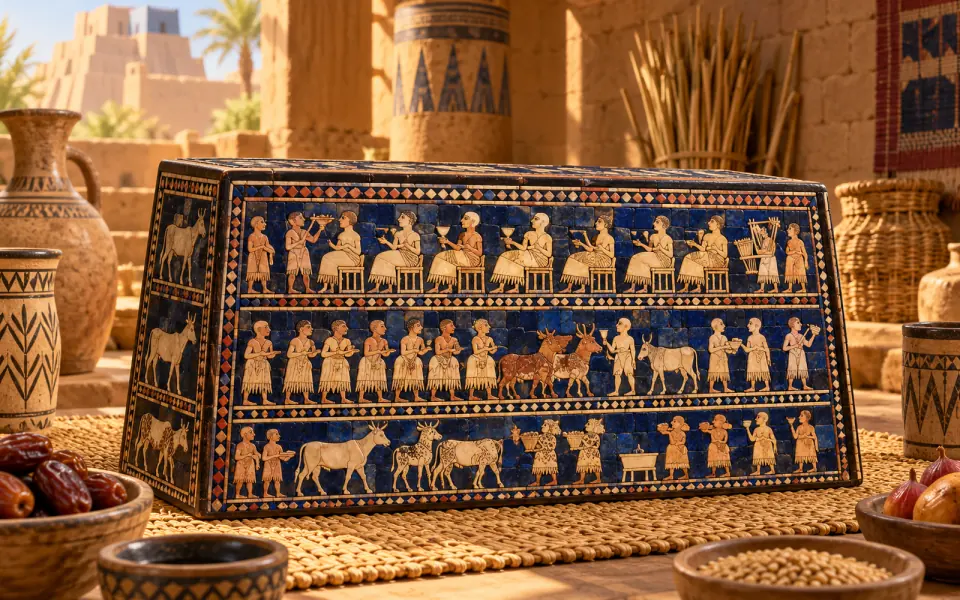 BeforeThe Standard of Urabout 2600 BC
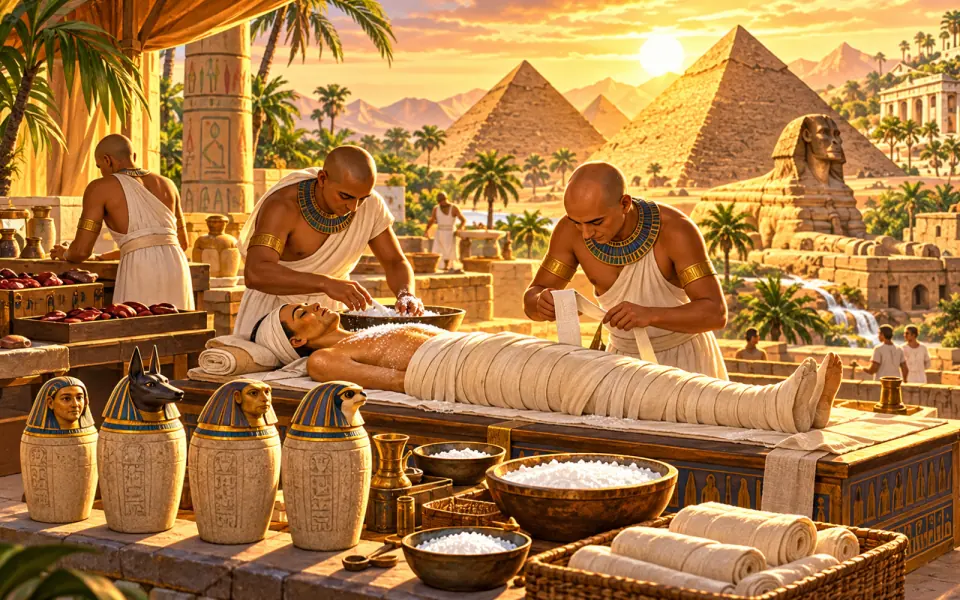 BeforeEgyptian mummificationabout 2600 BC
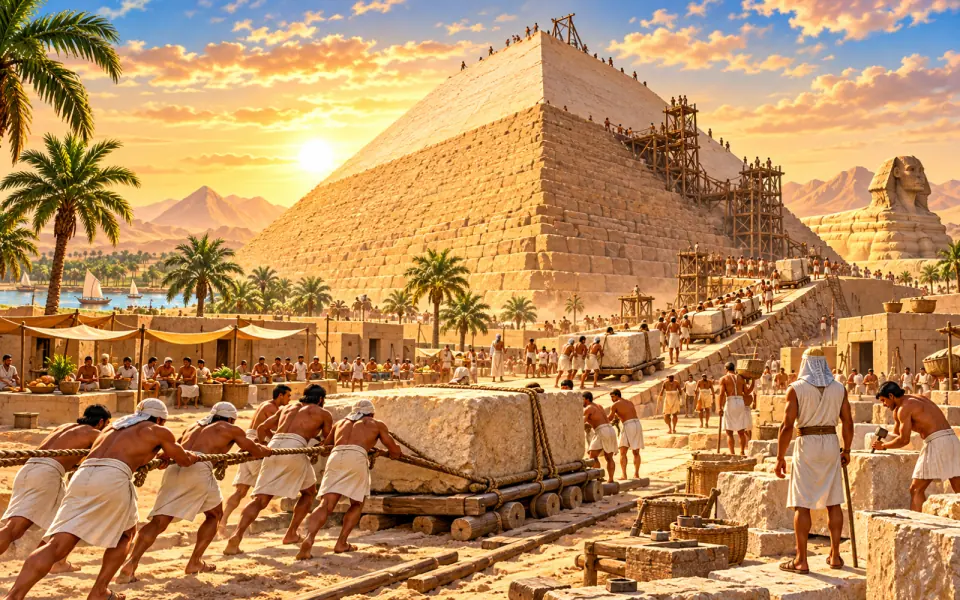 BeforeThe Great Pyramid of Gizaabout 2560 BC
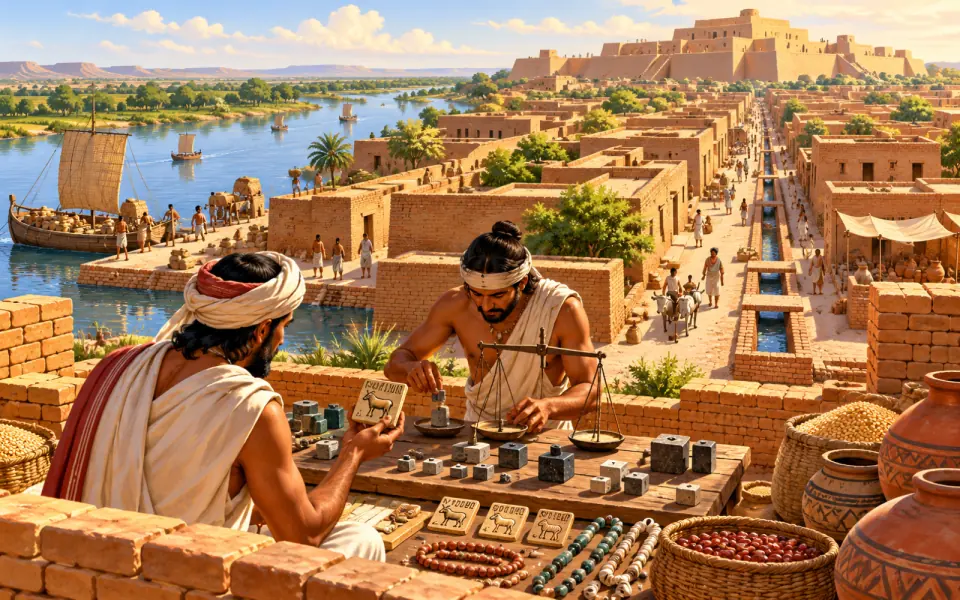 BeforeThe cities of the Indus Valleyabout 2500 BC
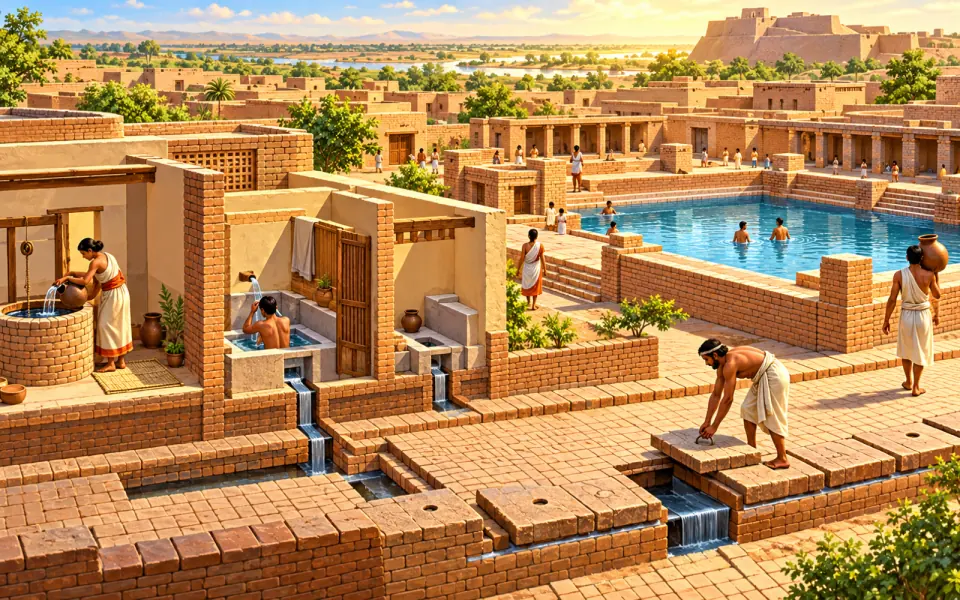 BeforeThe drains and baths of Mohenjo-daroabout 2450 BC
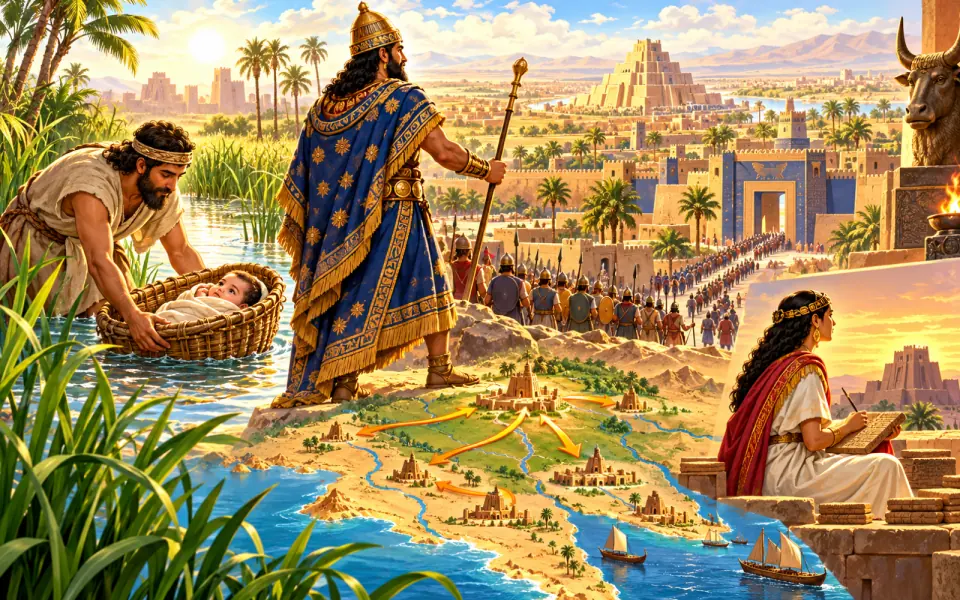 BeforeSargon and the Akkadian Empireabout 2334 BC
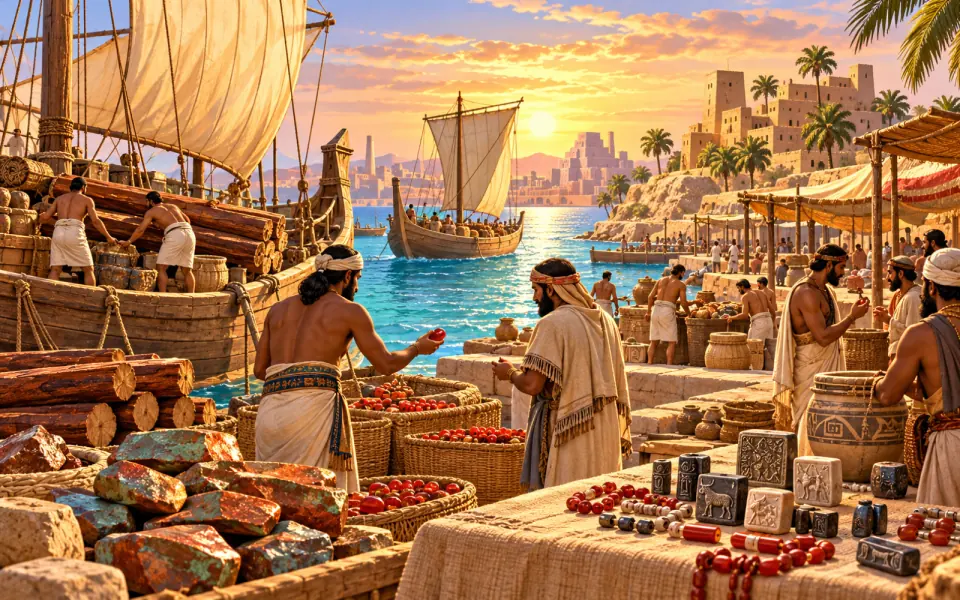 BeforeTrade between the Indus and Mesopotamiaabout 2300 BC
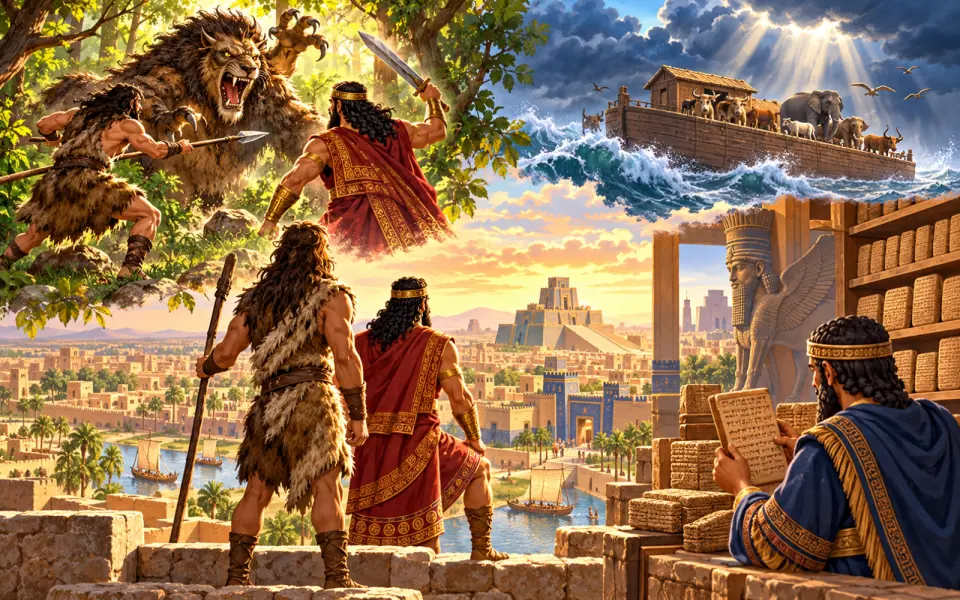 BeforeThe Epic of Gilgameshabout 2100 BC
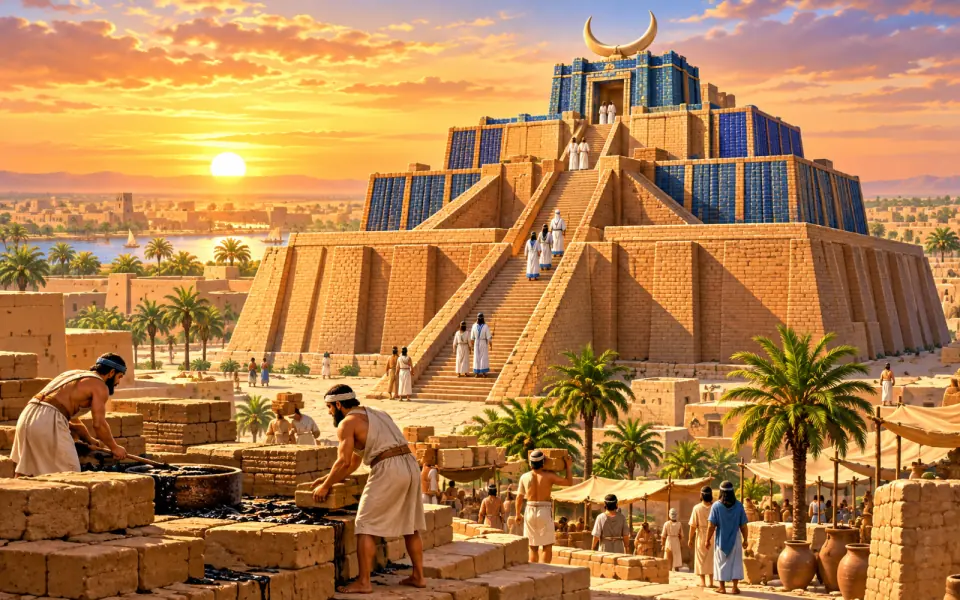 BeforeThe Ziggurat of Urabout 2100 BC
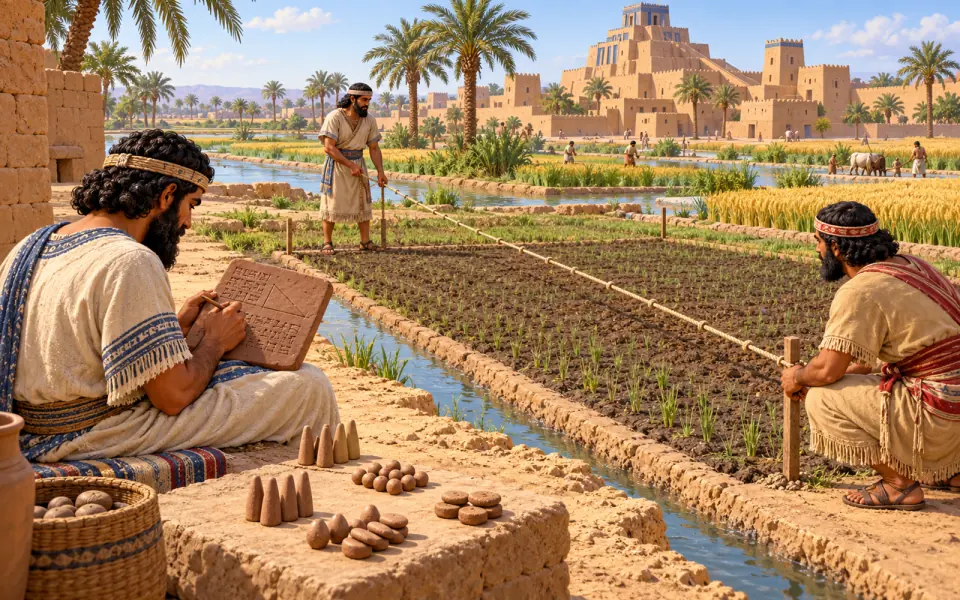 BeforeBabylonian mathematicsabout 1800 BC
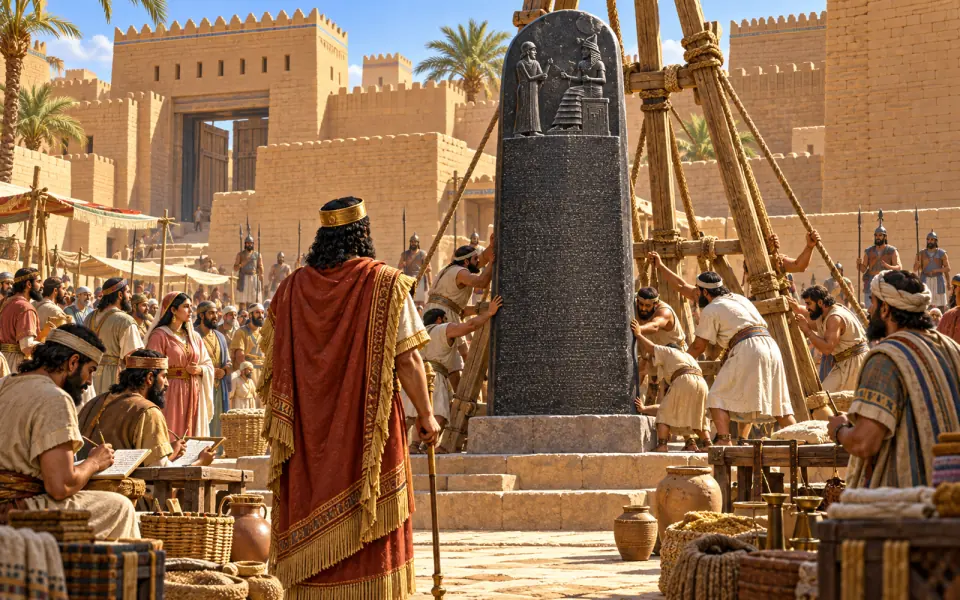 BeforeThe Code of Hammurabiabout 1754 BC
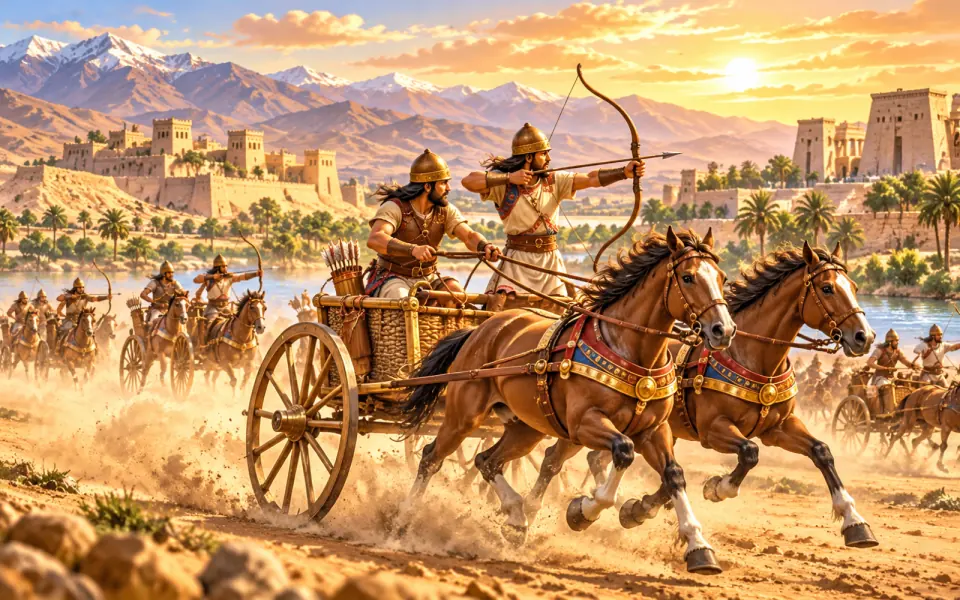 BeforeWar chariotsabout 1700 BC
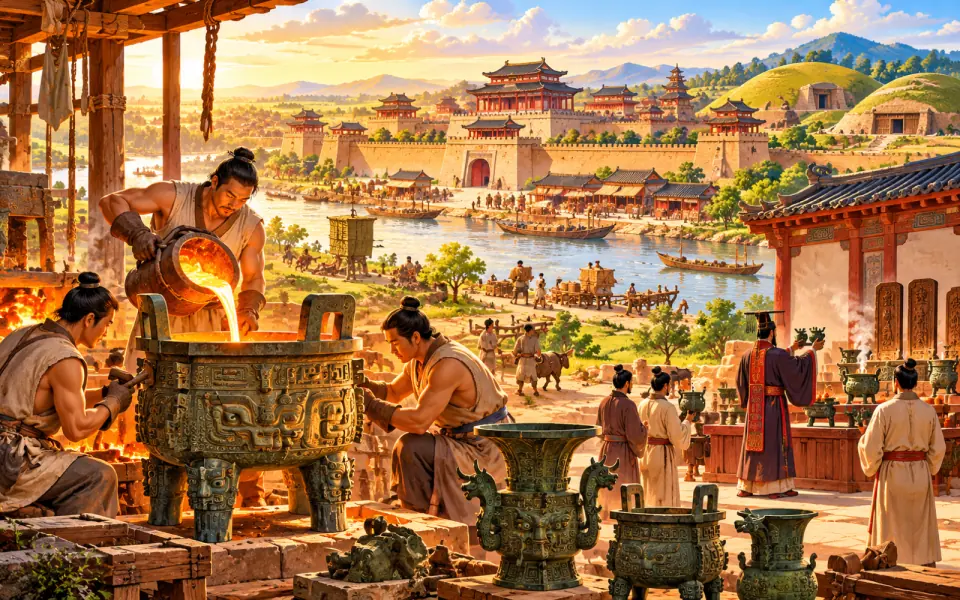 BeforeThe Shang dynastyabout 1600–1046 BC
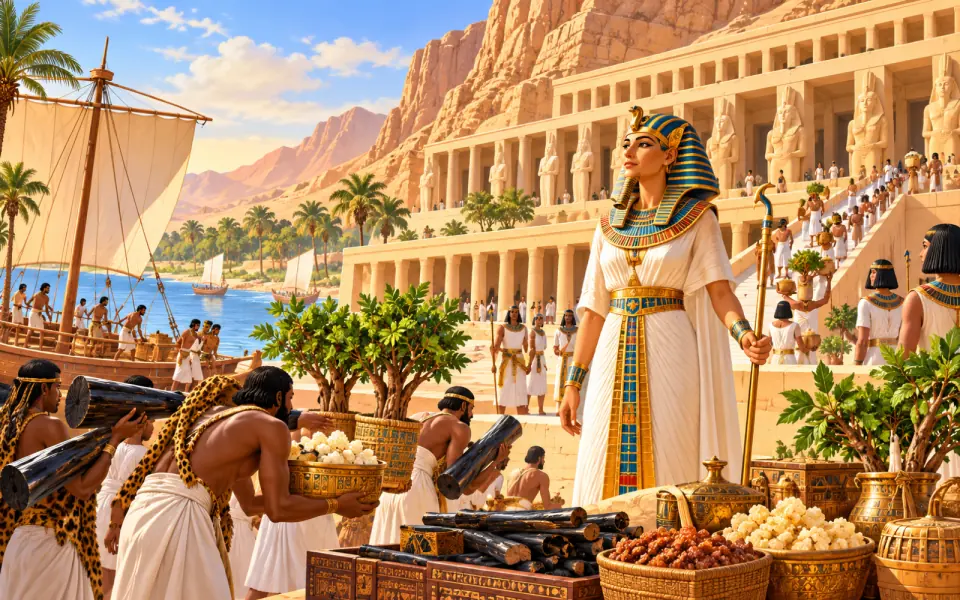 BeforeHatshepsut, the woman pharaohabout 1479–1458 BC
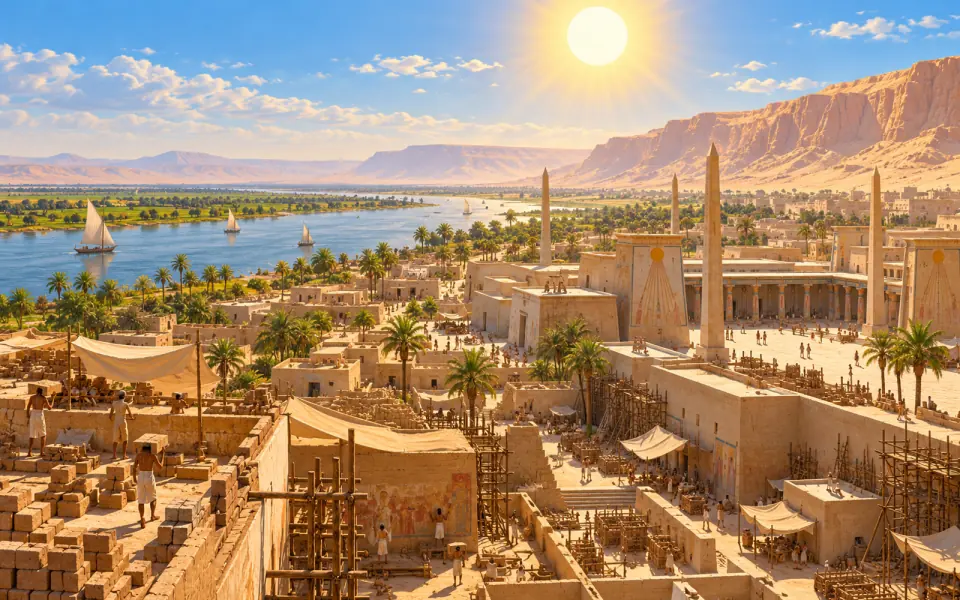 BeforeThe reign of Akhenatenabout 1353–1336 BC
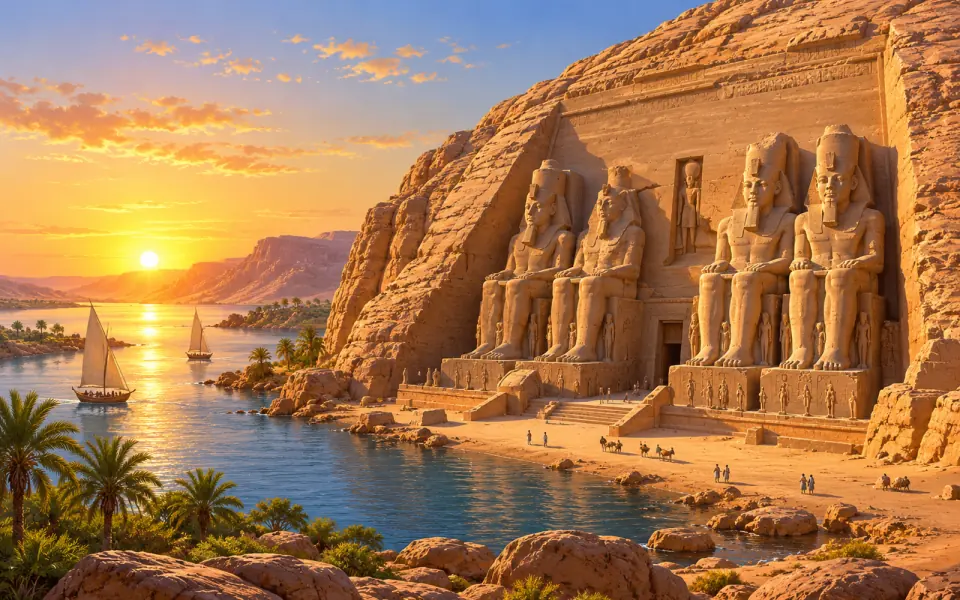 BeforeThe reign of Ramesses IIabout 1279–1213 BC
 BeforeWriting on oracle bonesabout 1250 BC
- You are hereThe Bronze Age collapseabout 1200 BC
Listen / Read next
- Music to read by: Cinematic JourneyEpic film-style music, no lyrics, by Ciro Simone IrmiciSpotifyYouTube Music
Meanwhile, elsewhere in the world
Other events of the era “River civilisations”
- The first Sumerian cities
- Cuneiform writing
- Egyptian hieroglyphs
- The unification of Egypt
- Uruk, the great city
- The Egyptian calendar
- The Step Pyramid of Djoser
- The Standard of Ur
- Egyptian mummification
- The Great Pyramid of Giza
- The cities of the Indus Valley
- The drains and baths of Mohenjo-daro
- Sargon and the Akkadian Empire
- Trade between the Indus and Mesopotamia
- The Epic of Gilgamesh
- The Ziggurat of Ur
- Babylonian mathematics
- The Code of Hammurabi
- War chariots
- The Shang dynasty
- Hatshepsut, the woman pharaoh
- The reign of Akhenaten
- The reign of Ramesses II
- Writing on oracle bones
