The reign of Ramesses II
about 1279–1213 BC Abu Simbel, Nubia (Egypt)
In short
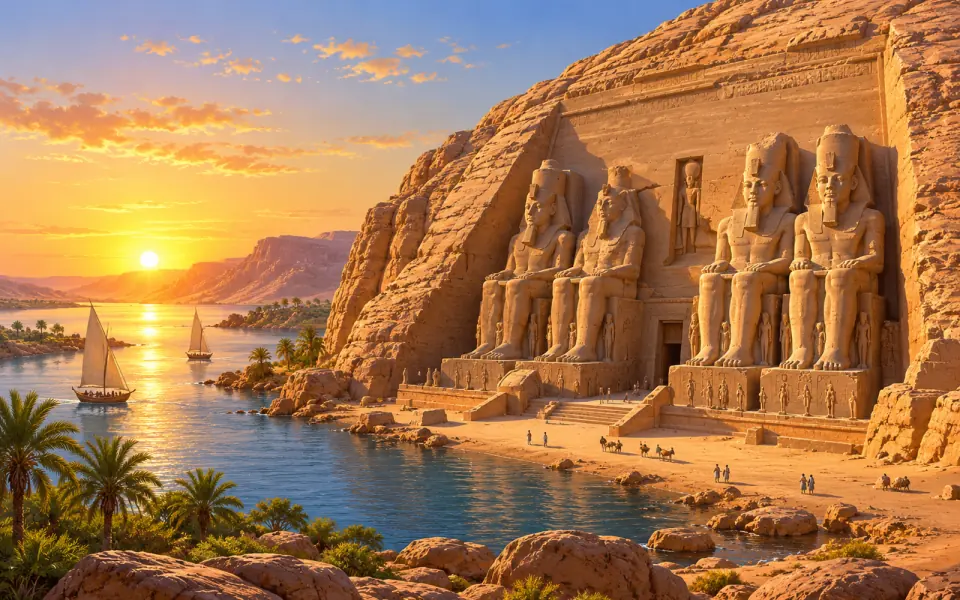
Ramesses II ruled Egypt for 66 years and had a great many children. He fought the Hittites at Kadesh, in Syria, and years later signed with them one of the oldest known peace treaties. At Abu Simbel he had four gigantic statues of himself carved into the rock, about 20 metres tall. In the 1960s the temples were cut into blocks and moved higher up, to save them from the waters of the Aswan Dam.
Why it matters His treaty with the Hittites shows that even then a war could be ended with a written agreement.
Source: UNESCO, “Nubian Monuments from Abu Simbel to Philae”
Study card about 7 minutes of reading
The story
The king who had himself carved into the mountain
If you travel up the Nile to the far south of Egypt, almost at the border with Sudan, you find a wall of reddish sandstone facing the great Lake Nasser. In the middle of the wall sit four stone giants, about twenty metres tall: they are four statues of the same man, the pharaoh Ramesses II, carved in the living rock more than three thousand two hundred years ago. Behind them, in the mountain, a temple goes in for more than sixty metres. It is called Abu Simbel, and it was built for a very clear message, aimed at anyone arriving from the south: this country belongs to a powerful king.
The temple is carefully aligned: twice a year, around 22 February and 22 October, the morning sun's rays go all the way down the corridor and light up the statues of the gods in the sanctuary at the back. The one of the god Ptah, lord of darkness, stays in shadow. Tradition links these dates to the king's birthday and coronation, but there is no direct proof.
The pharaoh of records
Ramesses II, called by his subjects and then by everyone “the Great”, reigned for sixty-six years and two months, from about 1279 to 1213 BC. He came to the throne still young and died at around ninety: an exceptional age for antiquity. When he died, almost no Egyptian had a memory of another king. He had many wives, among them his favourite, Nefertari, to whom he dedicated a small temple beside his own, at Abu Simbel, and a very large number of children, sons and daughters, according to estimates between 88 and 103. For many years he outlived his heirs: the thirteenth son, Merneptah, followed him on the throne when he was already about sixty.
He was also a great builder. He had a new capital built in the Nile delta, Pi-Ramesses, finished the great hall at Karnak, built the Ramesseum, his mortuary temple at Thebes, and added his name to a great many monuments, sometimes erasing those of his predecessors. The English poet Shelley, in 1818, was inspired by a great statue of Ramesses II, which had arrived at the British Museum, to write the poem “Ozymandias”: the name is the Greek form of Usermaatra, the king's throne name.
The Battle of Kadesh
In the fifth year of his reign, around 1274 BC, Ramesses II led the army into Syria to take back territories disputed with the Hittites, the great power of Anatolia. The battle was fought near the city of Kadesh, on the river Orontes. The Hittite king, Muwatalli II, sent Ramesses two false deserters, who told him the enemy army was still far away. It was a trap: the Hittite chariots suddenly attacked an Egyptian division on the march and overwhelmed it. Ramesses, according to the Egyptian account, found himself almost alone and managed to turn the tide of the battle with courage and with the arrival of reinforcements.
The Battle of Kadesh is one of the best documented in antiquity, because Ramesses had it told and portrayed in enormous reliefs on several temples, including Abu Simbel. But those images are propaganda: they show the pharaoh as an absolute victor. In reality, historians think the battle ended without a true winner, and that the Hittites kept Kadesh. One of the best pieces of evidence: after the battle, Syria remained in Hittite hands.
The oldest peace we know
The war with the Hittites lasted about fifteen more years. Then, around 1259 BC, in the twenty-first year of his reign, Ramesses II and the Hittite king Hattusili III decided to make peace. The treaty that resulted is the oldest peace agreement of which we have the text. It exists in two versions: the Egyptian one, in hieroglyphs, carved on the walls of Karnak and the Ramesseum, and the Hittite one, written in Akkadian on clay tablets found in the archives of the Hittite capital, Hattusa, in Turkey.
The treaty says there will be “brotherhood and peace for ever” between the two kingdoms, that neither will attack the other, that they will help each other if an enemy attacks one of them, and that they will hand over fugitives. Each swears before the gods of the two countries, with curses for whoever does not keep the pact. A few years later, Ramesses married a Hittite princess, Hattusili's daughter, to strengthen the alliance. A copy of the treaty is displayed at the United Nations headquarters in New York, as a symbol of the search for peace.
Saved from the waters
In 1960 Egypt began to build the great Aswan Dam, which would create an enormous lake and drown Nubia, with its temples. UNESCO issued an appeal to the world and a group of countries, forty-eight in all, contributed to a colossal rescue operation. Between 1964 and 1968 the temple of Abu Simbel was cut into over a thousand blocks, moved higher up, 65 metres above the original level and more than 200 metres from the shore, and rebuilt with a precision of a few millimetres. The operation cost about 42 million dollars. Today the temples stand on an artificial hill, and everything looks as before.
The king's mummy
The mummy of Ramesses II was found in 1881 in a hiding place at Deir el-Bahari, where the priests had put it to keep it safe from thieves. Today it is kept in the National Museum of Egyptian Civilization at Fustat, in Cairo. Analyses show a tall man, with reddish hair (perhaps dyed with henna), a hooked nose, teeth badly ruined by abscesses and joints deformed by arthritis. He was old and ill, as was normal after so long a life.
Why it happened
Ramesses II's very long reign was possible thanks to a rich and stable Egypt, which had received a solid inheritance from his father Seti I. The gold mines of Nubia, trade and taxes supported an army and great building projects.
The war with the Hittites was born from competition for Syria, a land of passage that made it possible to control the trade routes towards Mesopotamia and the coast. Both powers wanted it, and neither managed to prevail.
Peace came from mutual weariness and from a common danger. The Hittites had problems with Assyria, which was growing stronger in the east, and Egypt did not want to continue a war without a winner. An agreement suited both.
What changed
The peace with the Hittites lasted for the rest of Ramesses' reign and for over eighty years, until the collapse of the Hittite empire. For trade and for the cities of Syria and Canaan it was a period of relative security. It is one of the first documented examples of modern diplomacy: ambassadors, written treaties, exchange of gifts and marriages.
The figure of Ramesses II remained very powerful: in the following centuries, nine more pharaohs were called Ramesses. The memory of his reign influenced tales, legends and even modern literature. Abu Simbel became one of the most famous monuments in the world.
The rescue of the temples of Abu Simbel, in the 1960s, was an example of cooperation between countries. From that experience came the idea of World Heritage, that is, that the most precious monuments belong to all humanity and should be protected together.
Key people and places
People
- Ramesses II
- Pharaoh of the 19th dynasty (1279–1213 BC), called “the Great”. He reigned for 66 years, fought at Kadesh and signed the first known peace treaty.
- Nefertari
- Favourite wife of Ramesses II, to whom he dedicated the small temple of Abu Simbel and a splendid tomb in the Valley of the Queens.
- Muwatalli II and Hattusili III
- Hittite kings, the first the adversary at Kadesh, the second the signatory of the peace treaty.
- Percy Bysshe Shelley
- English poet (1792–1822) who wrote “Ozymandias” about the statue of Ramesses II and the fragility of power.
Places
- Abu Simbel (Nubia, Egypt)
- Site of the two rock-cut temples of Ramesses II and Nefertari, moved in the 1960s.
- Kadesh (Syria)
- A city on the Orontes where in 1274 BC the Egyptians and Hittites fought a great chariot battle.
- Pi-Ramesses (Nile delta)
- The capital Ramesses II built in the north, near Palestine; few ruins remain today.
Good to know
- The four statues of Abu Simbel are about 20 metres tall and the king is shown four times, identical.
- In 1964–1968 the temple was cut into more than a thousand blocks and moved over 200 metres and 65 metres higher up.
- Shelley's poem “Ozymandias” comes from the Greek name of Ramesses II, which in Egyptian was Usermaatra.
- The treaty with the Hittites, written in two languages and two scripts, is the oldest of which we have the text; a copy is displayed at the United Nations.
- Twice a year, around 22 February and 22 October, sunlight enters the temple as far as the statues of the sanctuary.
Find out more
- Wikipedia, “Ramesses II” en.wikipedia.org
- World History Encyclopedia, “Ramesses II” worldhistory.org
- Wikipedia, “Battle of Kadesh” en.wikipedia.org
- Wikipedia, “Abu Simbel” en.wikipedia.org
- Museo Egizio, Turin (in English) museoegizio.it
Related events
- War chariotsabout 1700 BC · River civilisationsAt Kadesh one of the greatest chariot battles in history was fought.
- The Bronze Age collapseabout 1200 BC · River civilisationsA few decades after his reign, the treaty with the Hittites lost its value because of the collapse of the Bronze Age.
- Hatshepsut, the woman pharaohabout 1479–1458 BC · River civilisationsHatshepsut reigned two centuries earlier.
- Egyptian hieroglyphsabout 3200 BC · River civilisationsHieroglyphs let us read the account of Kadesh on temple walls.
- The reign of Akhenatenabout 1353–1336 BC · River civilisationsAkhenaten was the predecessor of the pharaohs of the 19th dynasty, who brought back the old gods.
Before and after, in the era “River civilisations”
Event 23 of 25
 BeforeThe first Sumerian citiesabout 4000 BC
 BeforeCuneiform writingabout 3200 BC
 BeforeEgyptian hieroglyphsabout 3200 BC
 BeforeThe unification of Egyptabout 3100 BC
 BeforeUruk, the great cityabout 3000 BC
 BeforeThe Egyptian calendarabout 2800 BC
 BeforeThe Step Pyramid of Djoserabout 2650 BC
 BeforeThe Standard of Urabout 2600 BC
 BeforeEgyptian mummificationabout 2600 BC
 BeforeThe Great Pyramid of Gizaabout 2560 BC
 BeforeThe cities of the Indus Valleyabout 2500 BC
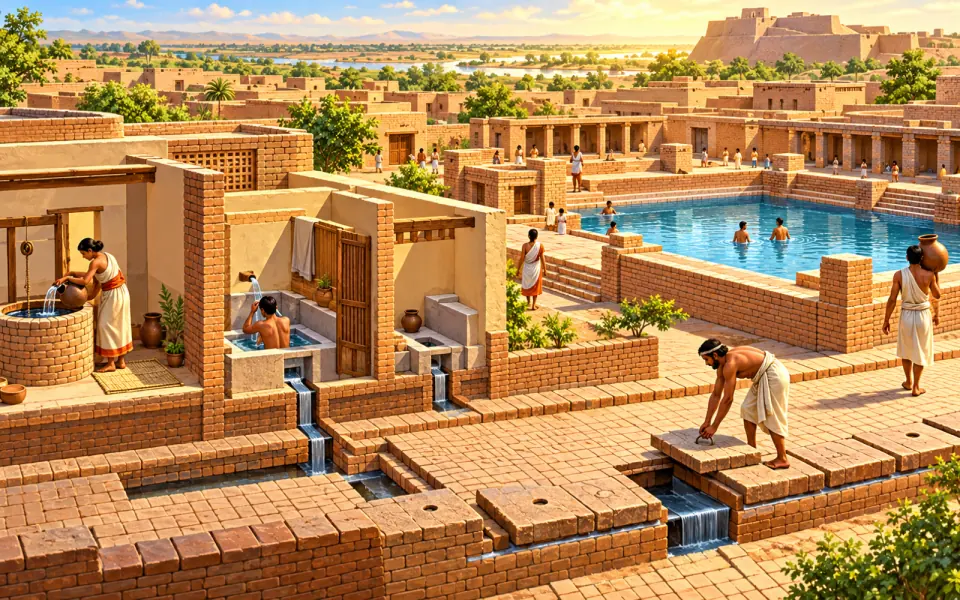 BeforeThe drains and baths of Mohenjo-daroabout 2450 BC
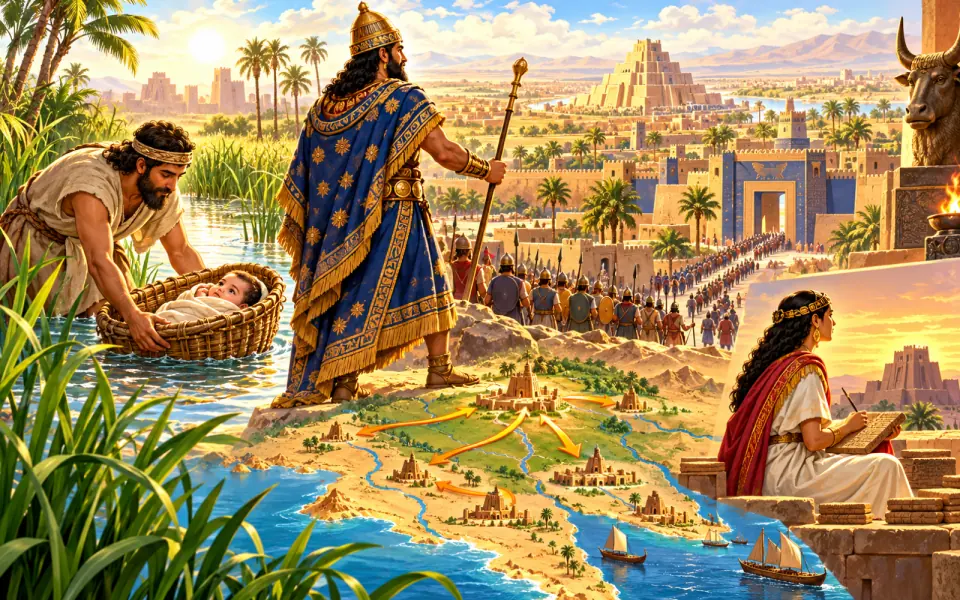 BeforeSargon and the Akkadian Empireabout 2334 BC
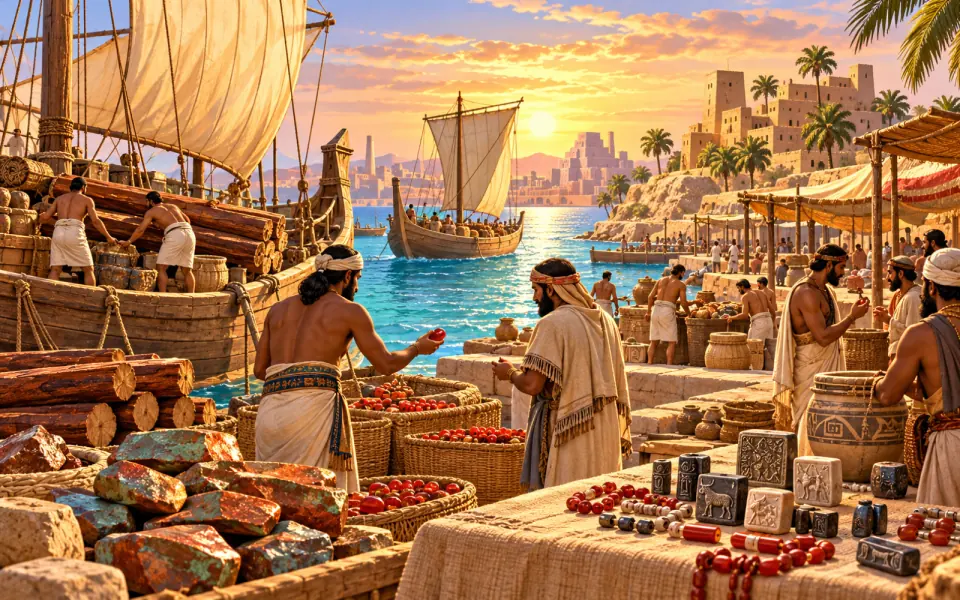 BeforeTrade between the Indus and Mesopotamiaabout 2300 BC
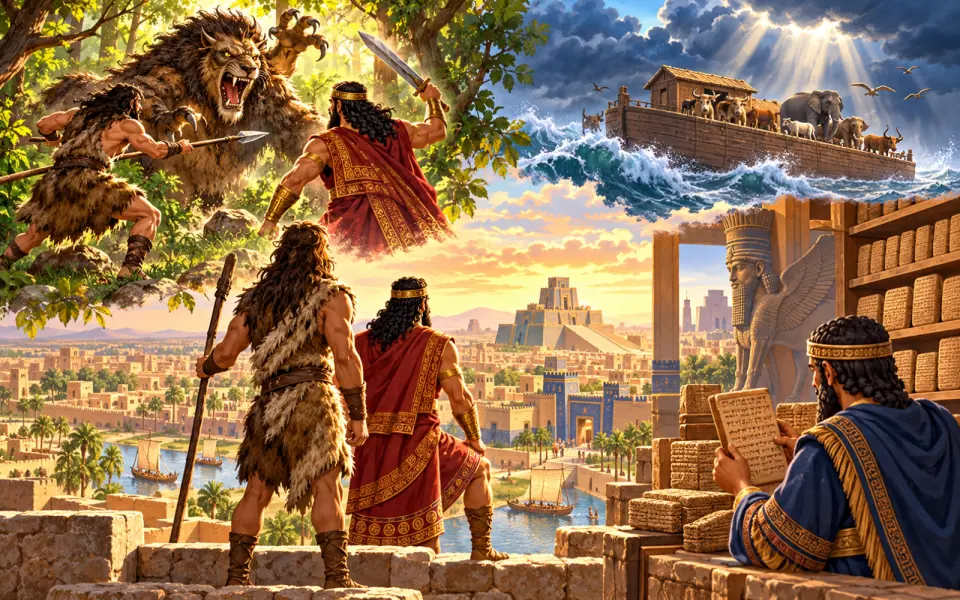 BeforeThe Epic of Gilgameshabout 2100 BC
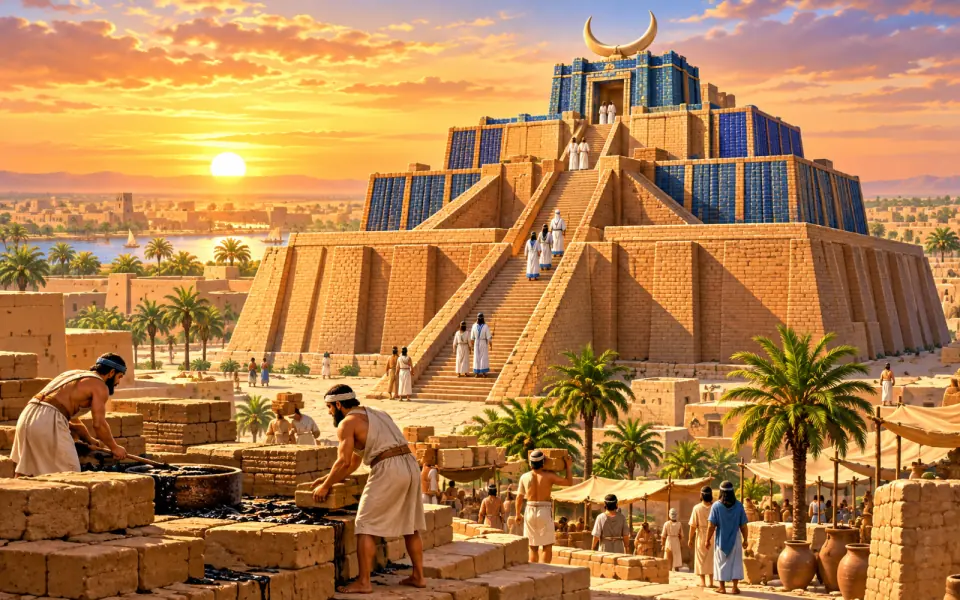 BeforeThe Ziggurat of Urabout 2100 BC
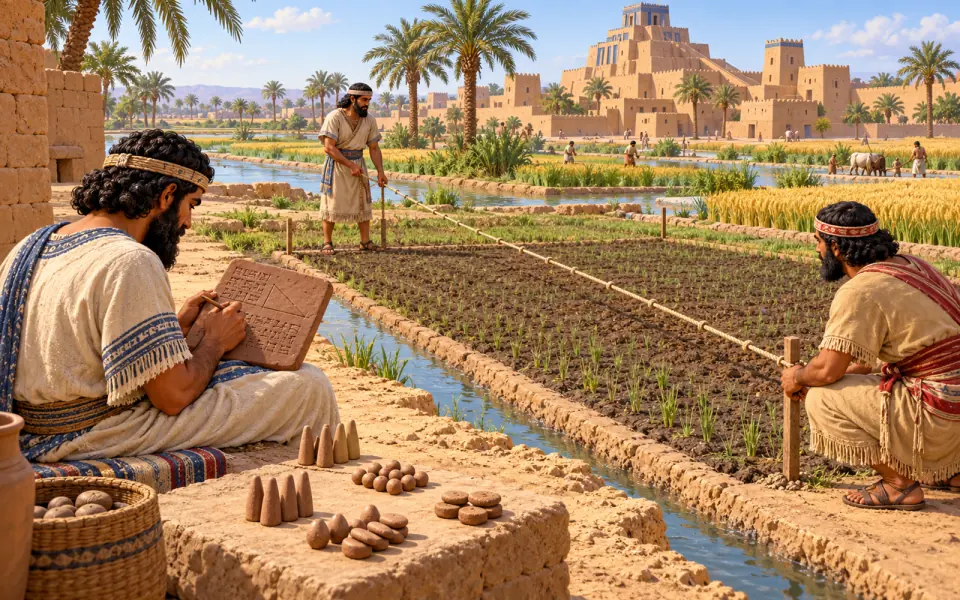 BeforeBabylonian mathematicsabout 1800 BC
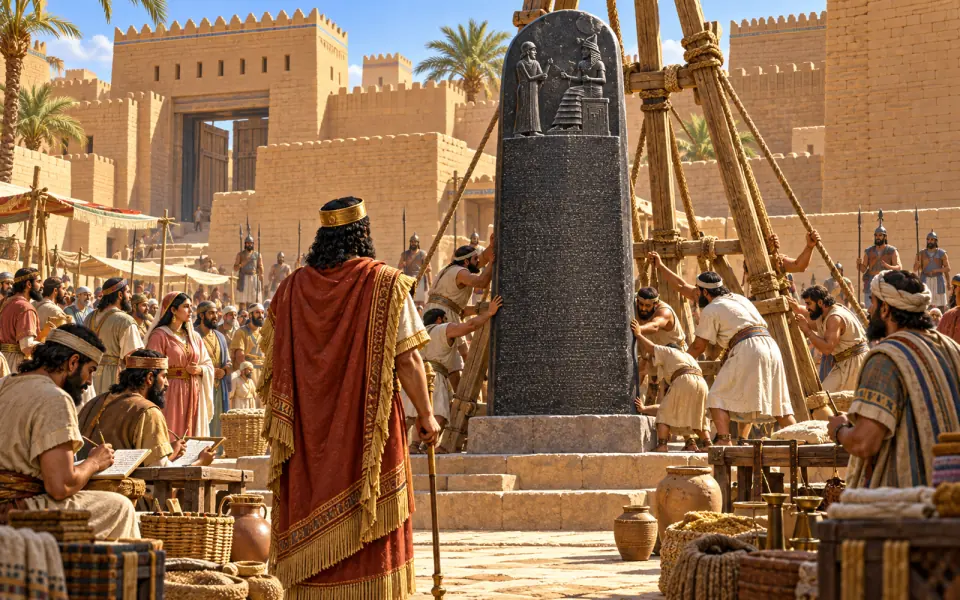 BeforeThe Code of Hammurabiabout 1754 BC
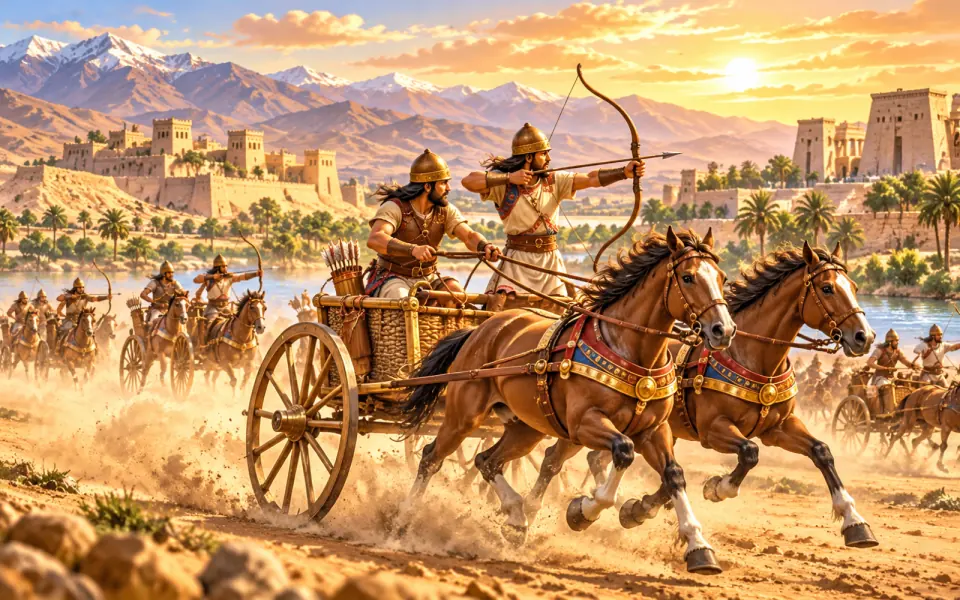 BeforeWar chariotsabout 1700 BC
 BeforeThe Shang dynastyabout 1600–1046 BC
 BeforeHatshepsut, the woman pharaohabout 1479–1458 BC
 BeforeThe reign of Akhenatenabout 1353–1336 BC
- You are hereThe reign of Ramesses IIabout 1279–1213 BC
 AfterWriting on oracle bonesabout 1250 BC
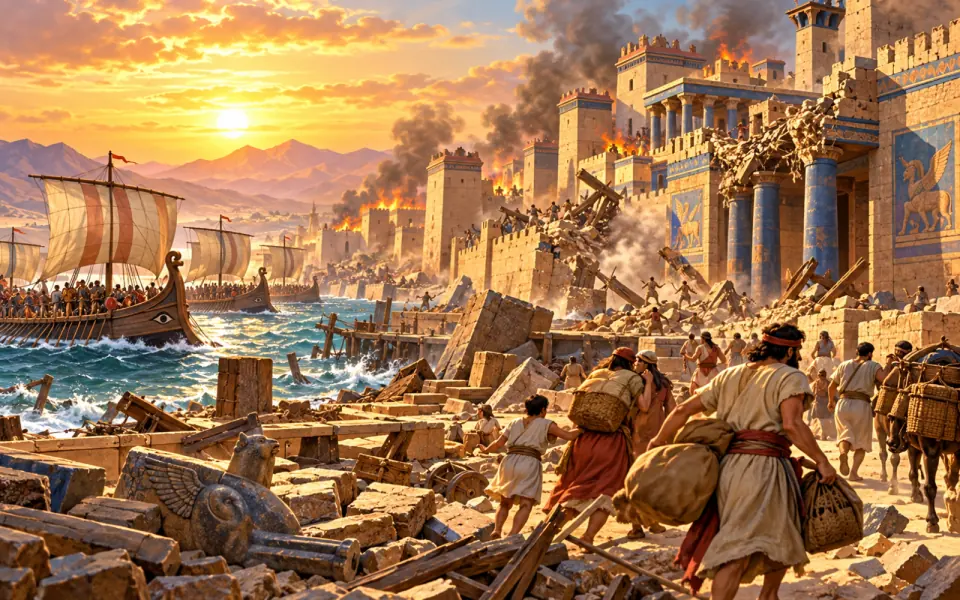 AfterThe Bronze Age collapseabout 1200 BC
Listen / Read next
- Music to read by: Cinematic JourneyEpic film-style music, no lyrics, by Ciro Simone IrmiciSpotifyYouTube Music
Meanwhile, elsewhere in the world
Other events of the era “River civilisations”
- The first Sumerian cities
- Cuneiform writing
- Egyptian hieroglyphs
- The unification of Egypt
- Uruk, the great city
- The Egyptian calendar
- The Step Pyramid of Djoser
- The Standard of Ur
- Egyptian mummification
- The Great Pyramid of Giza
- The cities of the Indus Valley
- The drains and baths of Mohenjo-daro
- Sargon and the Akkadian Empire
- Trade between the Indus and Mesopotamia
- The Epic of Gilgamesh
- The Ziggurat of Ur
- Babylonian mathematics
- The Code of Hammurabi
- War chariots
- The Shang dynasty
- Hatshepsut, the woman pharaoh
- The reign of Akhenaten
- Writing on oracle bones
- The Bronze Age collapse
