Trade between the Indus and Mesopotamia
about 2300 BC Dilmun (now Bahrain), in the Persian Gulf
In short
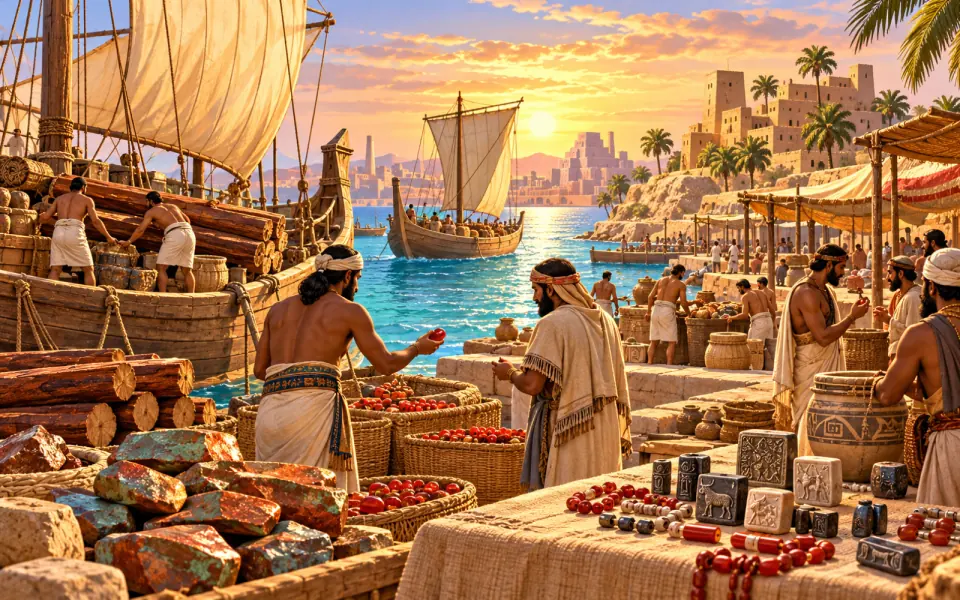
Ships set out from the Indus Valley loaded with fine woods, red carnelian beads and copper, and crossed the Persian Gulf to Mesopotamia. In Sumerian texts that faraway land is called Meluhha. The island of Dilmun, today's Bahrain, was an important stop for trade. In Mesopotamian cities archaeologists have found seals and beads that came all the way from the Indus.
Why it matters More than 4000 years ago, trade was already linking peoples who lived very far apart.
Source: The Metropolitan Museum of Art, Heilbrunn Timeline of Art History, “Indus Valley Civilization”
Study card about 6 minutes of reading
The story
An interpreter at Akkad?
In the Louvre in Paris there is a small stone cylinder with a carved design, a seal from the time of Akkad. A line of writing says, according to the most widespread interpretation, that it belongs to a certain Shu-ilishu, “interpreter of the language of Meluhha”. Some scholars dispute the reading, but the idea is fascinating: already more than four thousand years ago, in Mesopotamia, there was someone whose job was to translate from the language of a distant country. That country, Meluhha, was probably the Indus valley.
For the Sumerians and Akkadians, the world was divided into three great regions overseas, mentioned in the texts of that period. Dilmun was the island of Bahrain and the nearby coast; Magan was the Oman peninsula; Meluhha was the far east, the land of the Indus. An inscription of King Sargon says that at his quay at Akkad ships from all three docked. Mesopotamian merchants, it seems, did not have a real empire across the sea, but a very dense network of exchanges.
What was sold and what was bought
Mesopotamia was rich in grain, wool and textiles, but poor in metals, stone and wood. That is why it imported almost everything that craftsmen and temples needed. From Magan came copper, which was mined in large mines, and diorite, a dark and extremely hard stone from which statues of kings were carved. From Meluhha came fine wood, ivory, gold, red carnelian beads, lapis lazuli and, according to the texts, exotic animals. Almost everything passed through Dilmun, a centre of trade, and there one found pearls, dates and goods in transit. In exchange Mesopotamia sent barley, wool, clothing and oil.
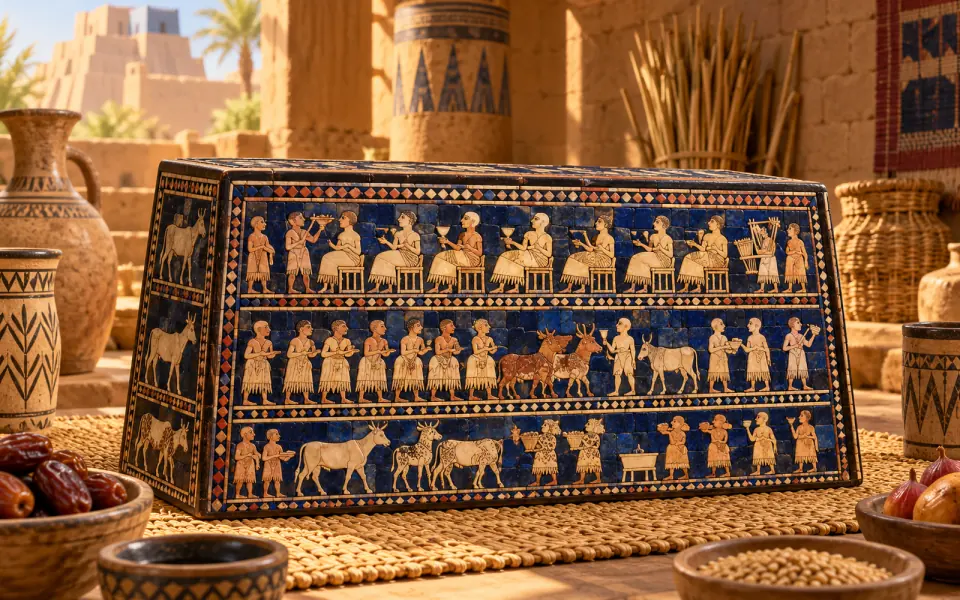
From Afghanistan, then, lapis lazuli set out, the most precious blue stone. The people of the Indus valley had founded a trading centre of their own right near the mines, at Shortugai, and from there the lapis lazuli travelled down to the cities of the Indus and, by sea and by land, to Ur and even to Egypt. The famous necklace of Queen Puabi, at Ur, and the decorations of the Standard of Ur contain lapis lazuli that had come from thousands of kilometres away.
The material evidence
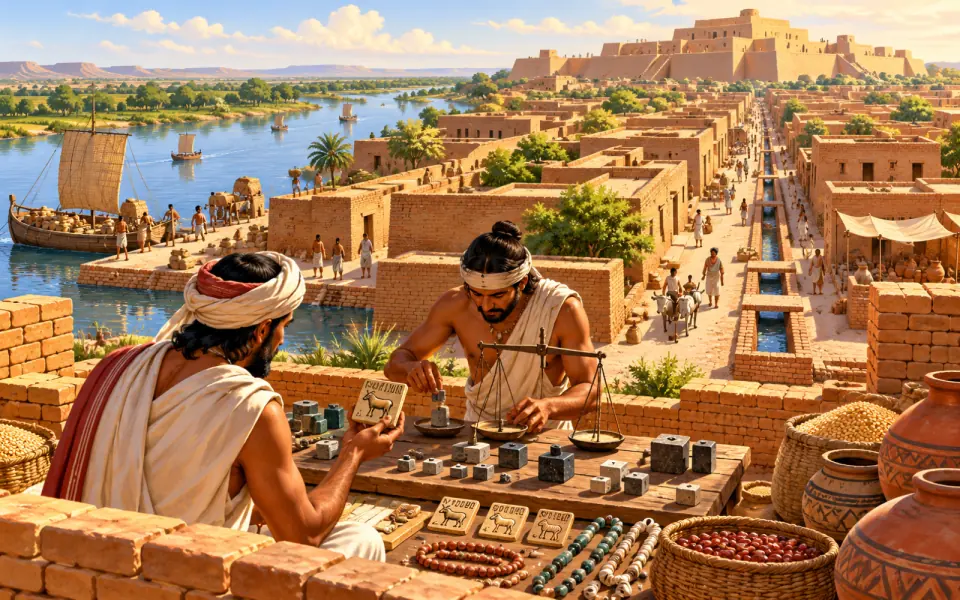
We do not have only texts. In many Mesopotamian cities, including Ur, Kish and Susa, archaeologists have found square Indus seals, with the “unicorn” and the still undeciphered script. In the tombs of Ur there are carnelian necklaces with white designs made by a chemical process typical of the Indus valley. In the Gulf countries, such as Failaka in Kuwait and Bahrain, stone weights appear with the same measures as the Indus cities. On the other side, at Lothal in India, objects that came from the Gulf have been found. They are traces that two worlds so far apart knew each other.
At Lothal, in Gujarat, there is also a large brick structure, more than two hundred metres long, which some archaeologists have considered an artificial harbour, a basin for ships. Other scholars think it was a water tank or one for irrigation. The debate goes on.
How people travelled
The ships were boats of wood and reeds, with a sail and a rudder, able to hug the coast for days. Some Indus seals and clay models show boats, even with a mast. From the Indus valley to Mesopotamia people sailed along the coast of what is now Pakistan, Iran and Oman, stopping in ports, following the seasons of the winds. The journey could last weeks, but it brought enormous profits. Other goods took the land route, with caravans of donkeys across the plateaus of Iran.
A market with its quarrels
Trade was carried out with contracts written on tablets. A later example, but a very lively one, comes from Ur, around 1750 BC: a customer named Nanni writes to the copper merchant Ea-nasir a furious letter because he delivered ingots of poor quality. “Who are you, that you treat me like this?”, he writes, in essence. The tablet is now in the British Museum and has been called, half jokingly, the oldest complaint letter in the world.
What became of it
Trade between the Indus and Mesopotamia lasted for a few centuries. Between about 2000 and 1800 BC, with the crisis of the Indus cities (see the card on the Indus civilisation), the ships of Meluhha became ever rarer. Dilmun and Magan carried on their exchanges with Mesopotamia for a long time. The name Meluhha, in later texts, came to mean other distant lands, such as Ethiopia: a sign that the memory of the Indus valley had been lost.
Why it happened
The main cause was the lack of raw materials in Mesopotamia. The plain between the Tigris and the Euphrates gave grain and wool, but no stone, metals or wood. Whoever wanted to build temples and palaces, make weapons or craft jewellery had to obtain those materials elsewhere.
The second was the wealth of temples and kings. Thanks to the surpluses of barley and textiles, temples could finance expeditions and professional merchants, who had capital and also the protection of the state. Kings, especially Sargon, wanted to control these routes, because they brought wealth and prestige.
The third cause was geographical: the Persian Gulf is a calm sea, easy to navigate with simple boats and regular winds. Islands such as Dilmun supplied fresh water and safe harbours. So that sea, more than a barrier, was a road that joined Mesopotamia to the Indus.
What changed
Long-distance trade joined different worlds for the first time. With goods travelled ideas: shapes of seals, styles of pottery, techniques for working stone, probably also customs and stories.
New professions arose: specialised merchants, interpreters, ship captains, scribes who recorded loans and deliveries. To make trade work, common weights and measures, contracts and systems of payment in silver were needed. These are rules that find an echo in modern commercial law.
Today archaeologists use these objects as a thread to connect distant cultures. A carnelian bead found at Ur and a weight found in Bahrain show us a world that was already global, over three thousand years before Marco Polo: the first “Silk Road”, even though silk has nothing to do with it.
Key people and places
People
- Shu-ilishu
- A person named on an Akkadian seal in the Louvre as “interpreter of the language of Meluhha”. The inscription is debated, but it indicates that there were interpreters for distant languages.
- Ea-nasir
- A copper merchant of Ur (about 1750 BC) to whom customers wrote letters of complaint, like Nanni's famous tablet.
- Sargon of Akkad
- The king who boasted of having ships from Meluhha, Magan and Dilmun docked at his port.
Places
- Dilmun (Bahrain)
- An island in the Persian Gulf, a great market between Mesopotamia, Oman and the Indus. The Sumerians also remembered it as a pure and happy land.
- Lothal (Gujarat, India)
- An Indus city with a large brick basin, perhaps a harbour, and a workshop for carnelian beads.
- Magan (Oman)
- The land of copper and diorite, mentioned in Sumerian and Akkadian texts.
Good to know
- In Sumerian texts Dilmun was also a paradise where “there is no sickness or death”. It was described as a pure and bright land.
- Carnelian necklaces with white designs, made with a technique typical of the Indus, have been found in the royal tombs of Ur.
- Nanni's letter to Ea-nasir, of about 1750 BC, is the oldest known commercial complaint: the customer is furious about poor-quality copper.
- The statues of King Gudea of Lagash (about 2100 BC) are of diorite, the dark stone that, as he wrote himself, he had brought by ship from Magan.
- The lapis lazuli of the Ur necklaces came from Afghanistan, more than 2,000 kilometres away, and passed through different hands before arriving.
Find out more
- Wikipedia, “Dilmun” en.wikipedia.org
- Wikipedia, “Meluhha” en.wikipedia.org
- Wikipedia, “Magan (civilization)” en.wikipedia.org
- Wikipedia, “Lothal” en.wikipedia.org
- Wikipedia, “Indus Valley Civilisation” en.wikipedia.org
Related events
- The cities of the Indus Valleyabout 2500 BC · River civilisationsMeluhha is most probably the Indus Valley civilisation.
- Sargon and the Akkadian Empireabout 2334 BC · River civilisationsSargon boasted of the ships of Meluhha, Magan and Dilmun moored at Akkad.
- The Standard of Urabout 2600 BC · River civilisationsThe lapis lazuli of the Standard of Ur came from Afghanistan.
- Phoenician seafaringabout 1000 BC · Sea civilisationsLater the Phoenicians made trade routes even wider.
- Marco Polo sets off for Asia1271 · Late Middle AgesMarco Polo followed trade routes to Asia more than three thousand years later.
Before and after, in the era “River civilisations”
Event 14 of 25
 BeforeThe first Sumerian citiesabout 4000 BC
 BeforeCuneiform writingabout 3200 BC
 BeforeEgyptian hieroglyphsabout 3200 BC
 BeforeThe unification of Egyptabout 3100 BC
 BeforeUruk, the great cityabout 3000 BC
 BeforeThe Egyptian calendarabout 2800 BC
 BeforeThe Step Pyramid of Djoserabout 2650 BC
 BeforeThe Standard of Urabout 2600 BC
 BeforeEgyptian mummificationabout 2600 BC
 BeforeThe Great Pyramid of Gizaabout 2560 BC
 BeforeThe cities of the Indus Valleyabout 2500 BC
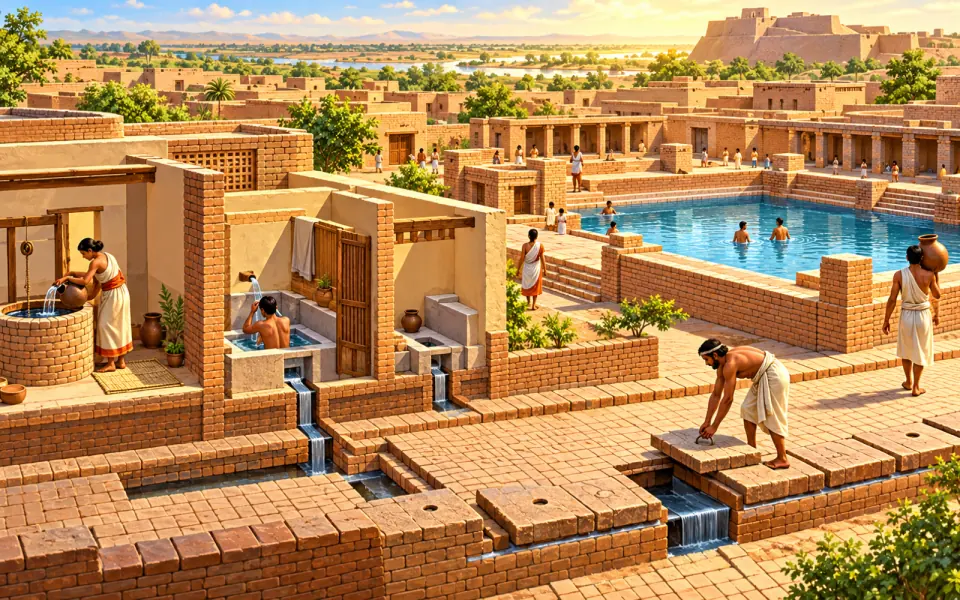 BeforeThe drains and baths of Mohenjo-daroabout 2450 BC
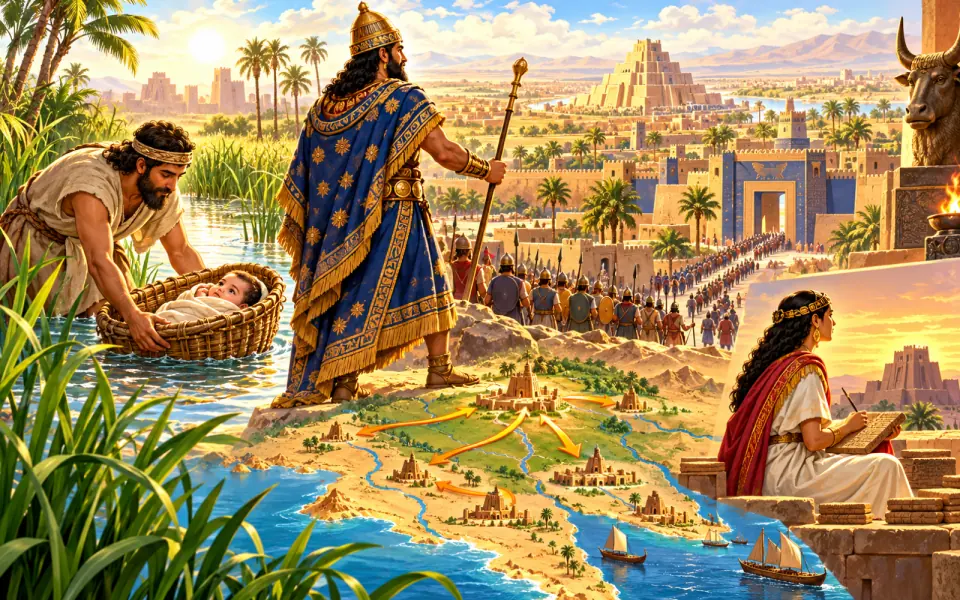 BeforeSargon and the Akkadian Empireabout 2334 BC
- You are hereTrade between the Indus and Mesopotamiaabout 2300 BC
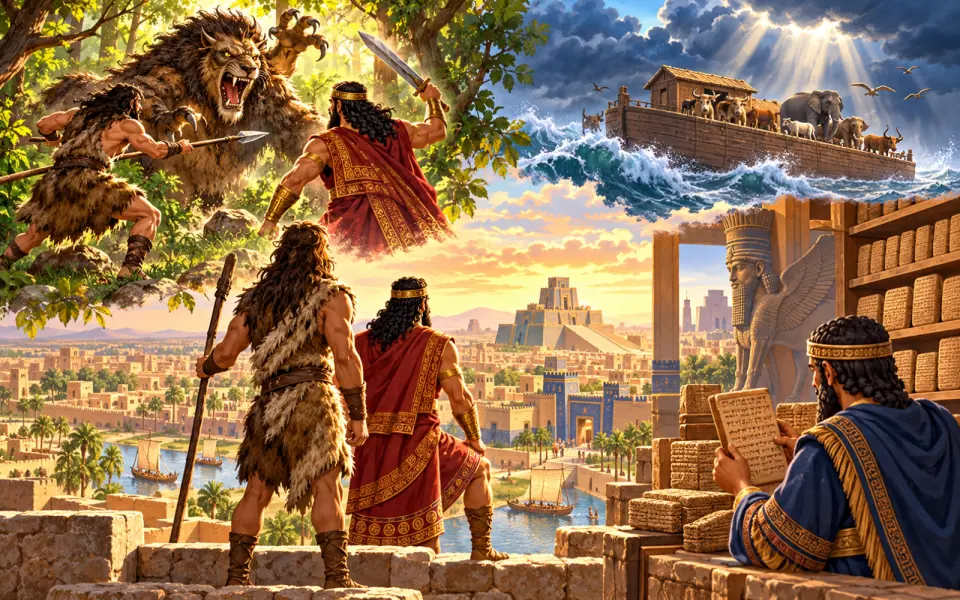 AfterThe Epic of Gilgameshabout 2100 BC
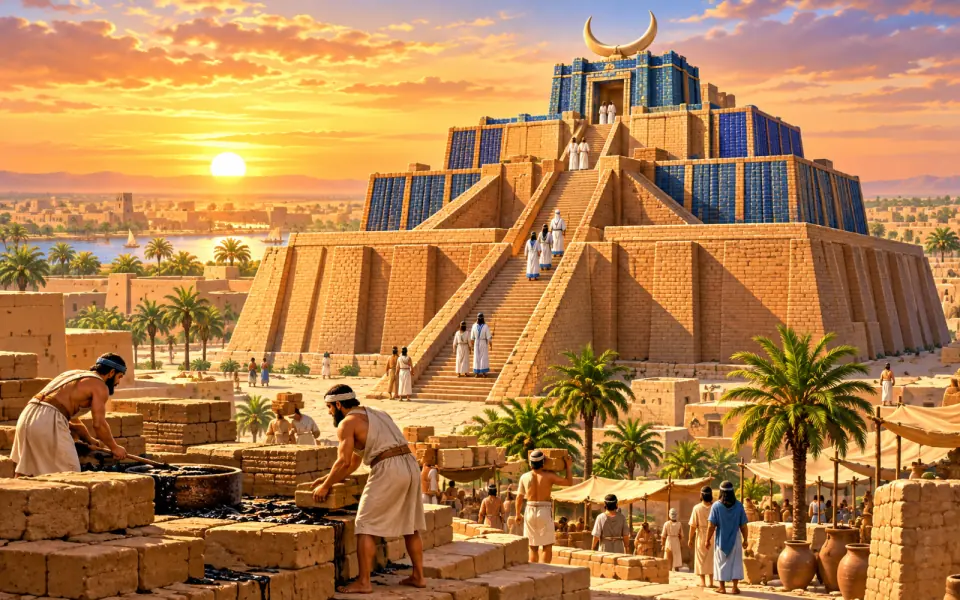 AfterThe Ziggurat of Urabout 2100 BC
 AfterBabylonian mathematicsabout 1800 BC
 AfterThe Code of Hammurabiabout 1754 BC
 AfterWar chariotsabout 1700 BC
 AfterThe Shang dynastyabout 1600–1046 BC
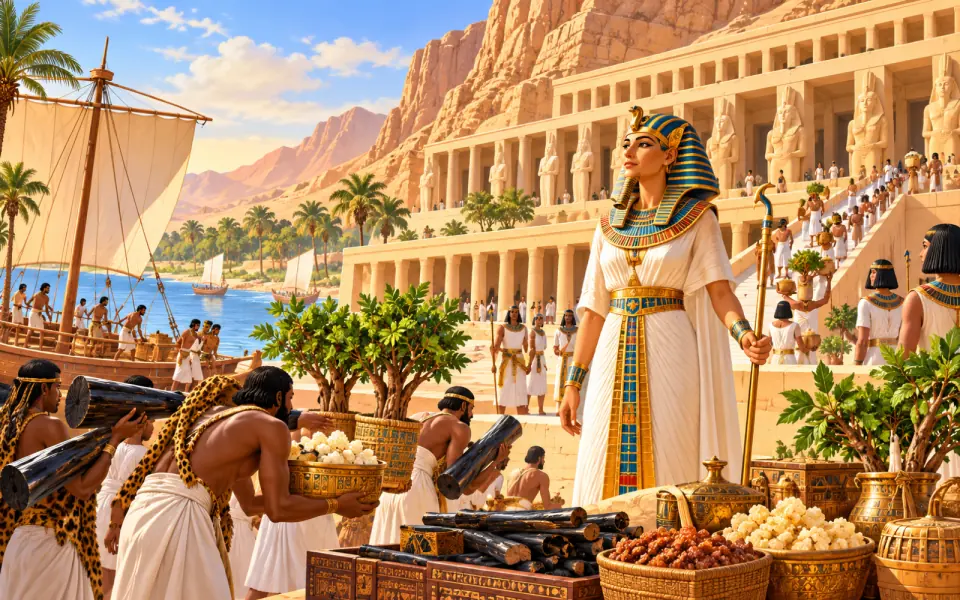 AfterHatshepsut, the woman pharaohabout 1479–1458 BC
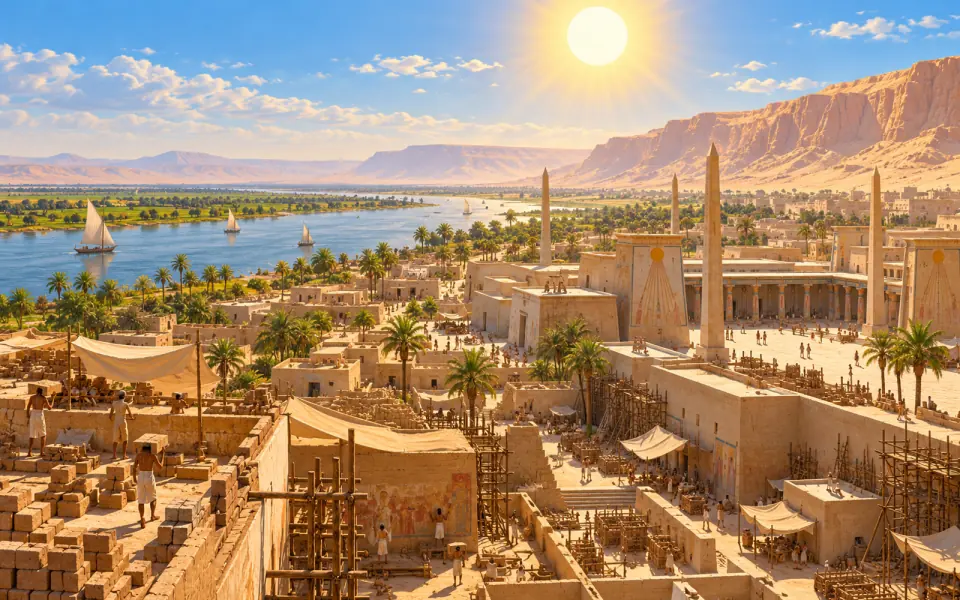 AfterThe reign of Akhenatenabout 1353–1336 BC
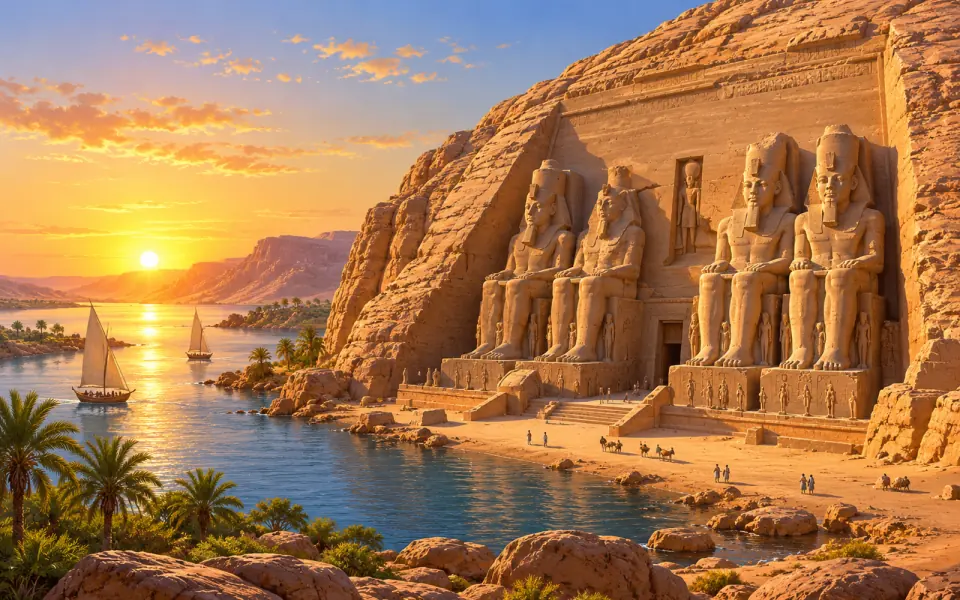 AfterThe reign of Ramesses IIabout 1279–1213 BC
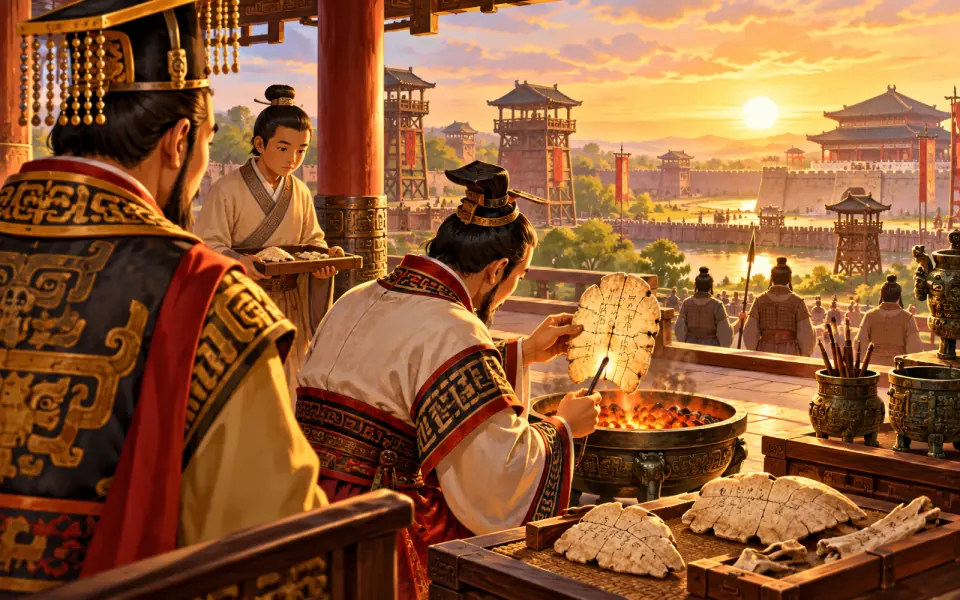 AfterWriting on oracle bonesabout 1250 BC
 AfterThe Bronze Age collapseabout 1200 BC
Listen / Read next
- Music to read by: Cinematic JourneyEpic film-style music, no lyrics, by Ciro Simone IrmiciSpotifyYouTube Music
Meanwhile, elsewhere in the world
Other events of the era “River civilisations”
- The first Sumerian cities
- Cuneiform writing
- Egyptian hieroglyphs
- The unification of Egypt
- Uruk, the great city
- The Egyptian calendar
- The Step Pyramid of Djoser
- The Standard of Ur
- Egyptian mummification
- The Great Pyramid of Giza
- The cities of the Indus Valley
- The drains and baths of Mohenjo-daro
- Sargon and the Akkadian Empire
- The Epic of Gilgamesh
- The Ziggurat of Ur
- Babylonian mathematics
- The Code of Hammurabi
- War chariots
- The Shang dynasty
- Hatshepsut, the woman pharaoh
- The reign of Akhenaten
- The reign of Ramesses II
- Writing on oracle bones
- The Bronze Age collapse
