Cuneiform writing
about 3200 BC Uruk, Mesopotamia (now Iraq)
In short
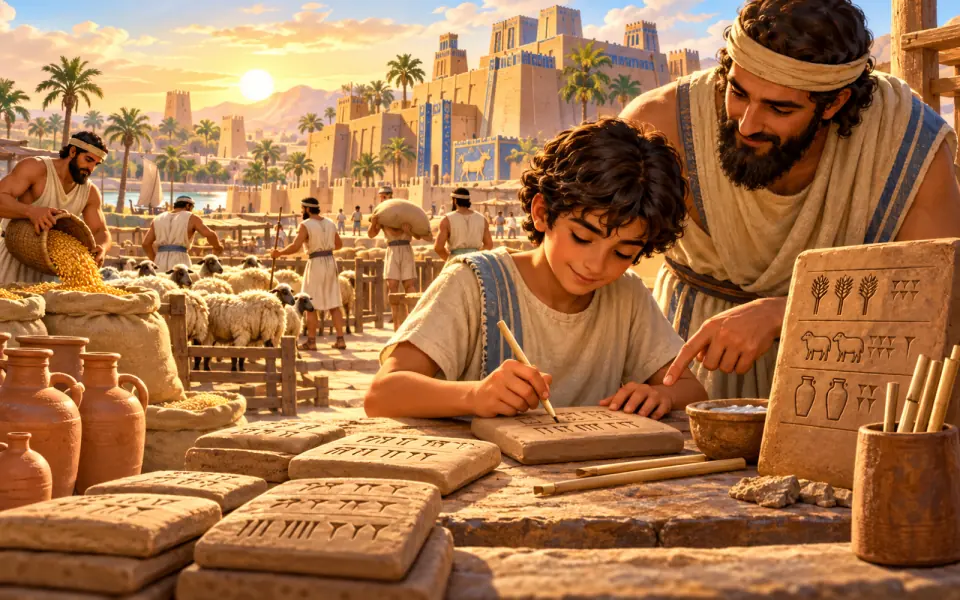
The first written tablets come from Uruk and were used for counting: sacks of grain, sheep, jars of beer. Scribes pressed a pointed reed into wet clay and left wedge-shaped marks, which is where the name ‘cuneiform’ comes from. At first they were little drawings, then they became simpler and simpler signs. This writing was used for about three thousand years and for many different languages.
Why it matters Writing made it possible to remember accounts, laws and stories without relying on memory alone.
Source: Encyclopaedia Britannica, “Cuneiform”
Study card about 6 minutes of reading
The story
Accounts to keep, not poems
If you could walk into a storehouse in Uruk more than 5,000 years ago, you would see sacks of barley, jars of beer, flocks of sheep and men asking: how much do we have? And how much do we have to give to each person? The problem was a serious one. The temple received the harvests, paid its workers in food rations and had to remember everything. But one person's memory is not enough when there are thousands of objects and many people. That is why writing was born in the temple of the goddess Inanna, in the district called Eanna.
The German archaeologists who have been digging at Uruk since 1912 have found about five thousand very ancient clay tablets, dated to between about 3400 and 3000 BC. They are small, about the size of the palm of a hand, and the great majority contain accounts: barley rations, numbers of animals, lists of workers and objects. Almost none tells a story. Writing was not born for the pleasure of writing, but for doing sums.
From tokens to signs
Before the tablets, in Mesopotamia people used small clay objects of different shapes, called tokens, to stand for goods: one shape for sheep, one for sacks of grain, another for oil. They were sealed inside a hollow ball of clay, called an “envelope”, which worked as a receipt. One archaeologist, Denise Schmandt-Besserat, has suggested that written signs came from these very tokens; other scholars think the story is more complicated. It is a debated hypothesis, but it tells us the starting idea well: a sign in place of a thing.
The first tablets use drawn signs, pictograms: the head of an ox, an ear of barley, a jar. Beside them, notches and little circles show numbers. This stage is called “proto-cuneiform”. In time, however, drawing an exact picture was slow. Scribes began to simplify, and above all they changed the way of writing: instead of scratching curved lines, they pressed a reed cut at a slant into fresh clay. The mark had the shape of a wedge, that is, a nail with a broad head and a thin point. From this comes the name “cuneiform” (from the Latin cuneus, “wedge”). After a few centuries the pictures could no longer be recognised: they had become groups of wedges.
From signs for things to signs for sounds
The most important step came when signs began to stand not only for objects but also for sounds. In Sumerian the word for “arrow” (ti) and the word for “life” (til) sounded almost the same, so the same picture could be used for both. With this trick, called a rebus, it became possible to write personal names and abstract words, and then whole sentences. By about 2600 BC writing could record spoken language; soon afterwards people were writing letters, contracts, hymns to the gods, laws, word lists and stories.
The signs came to number hundreds: at first about nine hundred, then fewer and fewer, down to about six hundred in everyday use. A sign could have more than one value. Learning to read and write took years of work. Trainee scribes went to the “tablet house” (in Sumerian edubba), copied lists of words and learned to prepare clay, cut reeds and calculate. Many of the school texts that survive are exercises, sometimes with the pupils' mistakes.
One script for a thousand languages
Cuneiform was used for about three thousand years, from 3300 BC almost to the start of our era. The last text we know is an astronomical tablet from about AD 75. In that time it was used to write Sumerian, but also very different languages: Akkadian (with its Babylonian and Assyrian dialects), Elamite, Hittite, Hurrian, and in Persia even an Old Persian that Darius's scribes wrote in a simplified form. It was a bit like our Latin alphabet, which today serves for Italian, English, Turkish and many other languages.
For a long time nobody remembered how to read it. It was detective work. In the nineteenth century Georg Grotefend managed to read the names of Persian kings, Henry Rawlinson climbed the rock of Behistun, in Iran, to copy a long inscription in three languages, and other scholars, among them Edward Hincks and Jules Oppert, discovered how the signs worked. In 1857 the Royal Asiatic Society of London put four scholars to the test, asking each to translate the same newly discovered text on his own. The four translations turned out broadly in agreement (above all those of Hincks and Rawlinson): cuneiform had been deciphered.
One invention, or two?
Soon after the birth of cuneiform, Egyptian hieroglyphs appear too (see the card on them). Some scholars think the Egyptians got the idea of writing from the Mesopotamians; others maintain that the two scripts arose independently, because the signs are different and the Egyptian finds at Abydos are almost the same age. The question is not closed. Chinese writing and Maya writing, on the other hand, seem to be completely separate inventions.
Why it happened
Writing was born from a practical need: temples and cities had become too big for memory to be enough. Whoever received and handed out barley, wool and animals had to be able to prove how much had been received and how much given.
Two factors helped make writing possible. The first was clay, which is found everywhere in Mesopotamia: it costs nothing, can be shaped by hand and, dried in the sun, lasts a long time (and if it is burned in a fire it becomes even harder). The second was the already ancient habit of using tokens and seals to mark who owned things.
Then there was the work of many generations of scribes, who simplified the signs and discovered the principle of the rebus. Without these steps, writing would have stayed a system for counting and would never have become a writing for telling stories.
What changed
With writing, history begins in the strict sense of the word: we can read what the people of that time wrote, not only look at what they left behind. What came before is called prehistory. Thanks to the tablets we know prices, trials, love letters, recipes, lists of gods and forecasts of the sky.
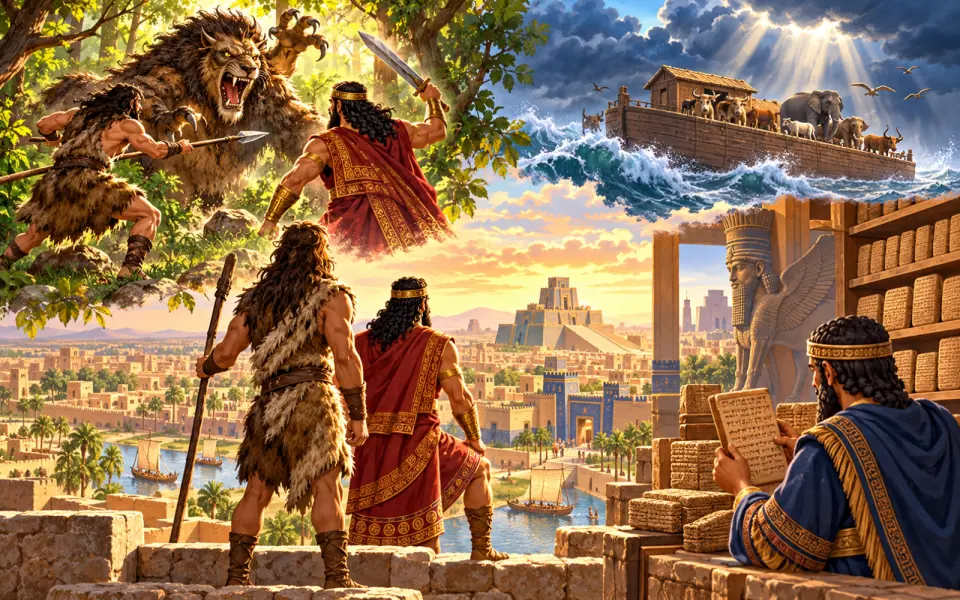
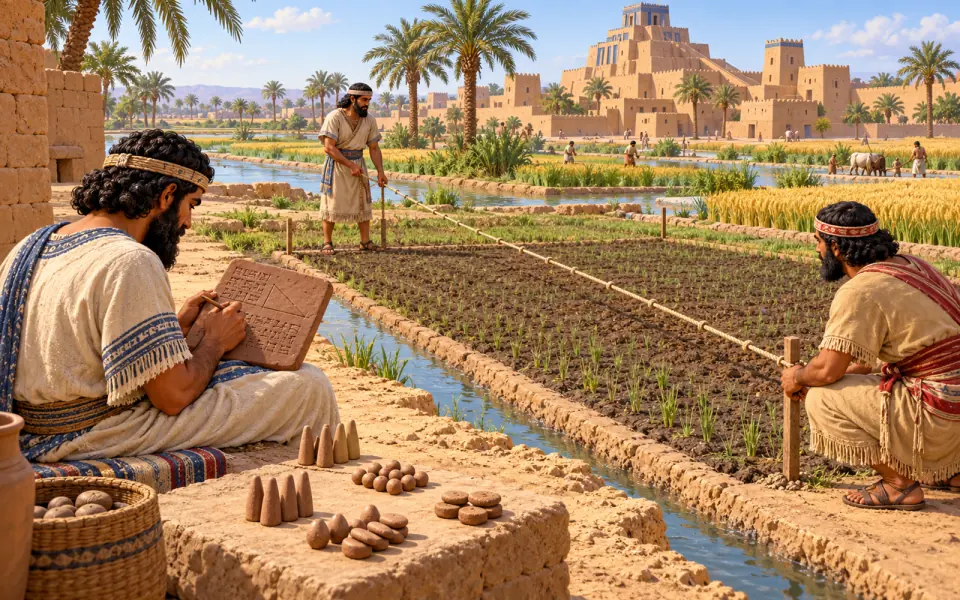
With writing, written laws, contracts, school texts and literature became possible. The first poems with an author whose name we know, those of Enheduanna, and the great Epic of Gilgamesh were written in cuneiform. Science was changed too: Babylonian mathematicians and astronomers could record their results and hand them down.
Finally, cuneiform has left us an enormous heritage: hundreds of thousands of tablets kept in museums around the world, many of them not yet read. Every year Assyriologists, the scholars of those languages, discover new texts. A great part of what we know about the ancient world comes from these nail-shaped marks pressed into a little mud.
Key people and places
People
- Denise Schmandt-Besserat
- Franco-American archaeologist (born 1933). She has proposed that writing came from the clay tokens used to count goods.
- Georg Friedrich Grotefend
- German teacher (1775–1853) who in 1802 managed to read the first names of Persian kings in cuneiform, opening the way to decipherment.
- Henry Rawlinson
- British officer and scholar (1810–1895). He copied the three-language inscription of Behistun, in Iran, and from it obtained the key to reading Akkadian.
- Jules Oppert
- French Assyriologist (1825–1905), one of the decipherers of cuneiform, who gave the name “Sumerian” to the oldest language.
Places
- Uruk (now Warka, Iraq)
- A city in the south of Mesopotamia where, in the district of the temple of Inanna, the oldest written tablets have been found.
- Behistun (western Iran)
- A rock face high above a road, on which the Persian king Darius I had a long text carved in three languages. It was the “Rosetta Stone” of cuneiform.
- Iraq Museum, Baghdad
- The Iraqi national museum keeps thousands of cuneiform tablets and many objects from ancient Mesopotamia.
Good to know
- The first tablets were used above all for counting: rations of barley, sheep, jars of beer. Poems and laws came much later.
- In 1857, in a famous test, four scholars translated the same inscription separately and got broadly agreeing results: this showed that cuneiform had really been deciphered.
- A cuneiform text burned in a fire survives better than an intact one, because the fire bakes the clay and makes it like a brick. That is why the destruction of cities saved many libraries.
- Cuneiform was used to write very different languages. The last dated text we know is from about AD 75, more than three thousand years after the first ones.
- Schoolchildren wrote their exercises on roundish tablets, called “lens-shaped”, made to fit in the palm of the hand.
Find out more
- World History Encyclopedia, “Cuneiform” worldhistory.org
- Wikipedia, “Cuneiform” en.wikipedia.org
- Wikipedia, “Uruk” en.wikipedia.org
- World History Encyclopedia, “Sumer” worldhistory.org
Related events
- The first Sumerian citiesabout 4000 BC · River civilisationsSumerian cities needed writing to keep the accounts of their temples.
- Egyptian hieroglyphsabout 3200 BC · River civilisationsEgyptian hieroglyphs were born at almost the same time.
- The Epic of Gilgameshabout 2100 BC · River civilisationsThe Epic of Gilgamesh was written in cuneiform.
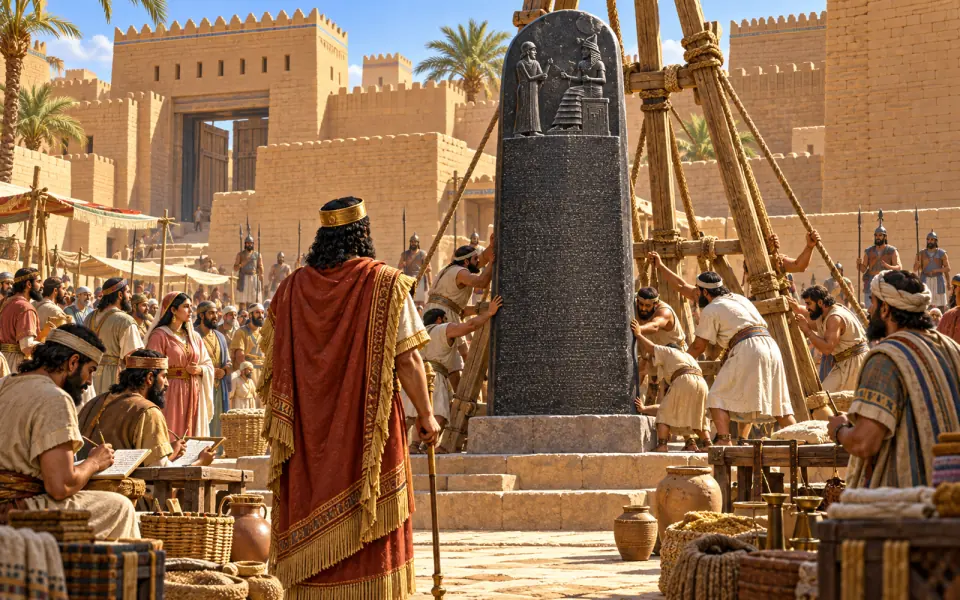
- The Code of Hammurabiabout 1754 BC · River civilisationsThe Code of Hammurabi is carved in cuneiform on a stele.
- The Phoenician alphabetabout 1050 BC · Sea civilisationsThe Phoenician alphabet simplified writing compared with the hundreds of cuneiform signs.
Before and after, in the era “River civilisations”
Event 2 of 25
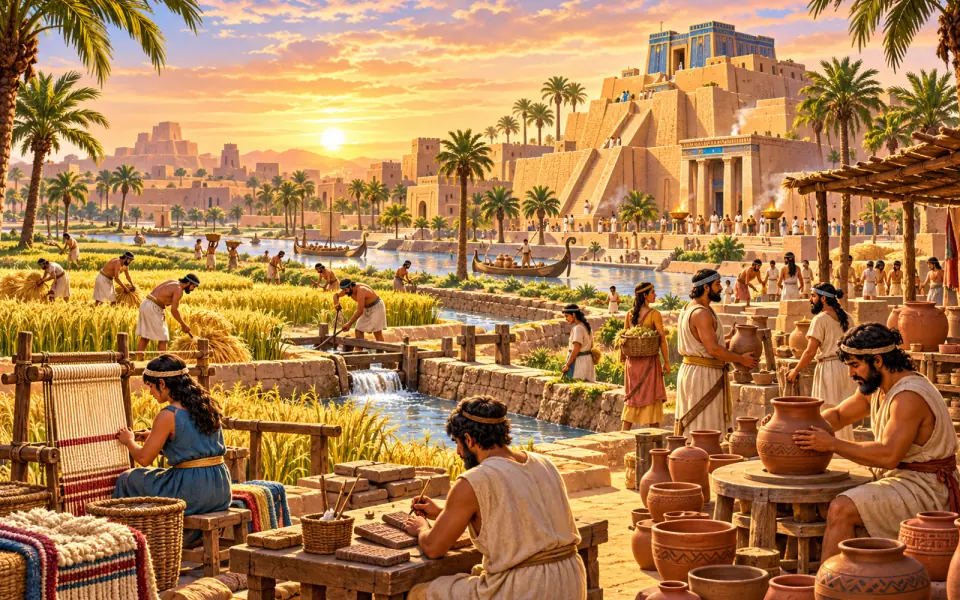 BeforeThe first Sumerian citiesabout 4000 BC
- You are hereCuneiform writingabout 3200 BC
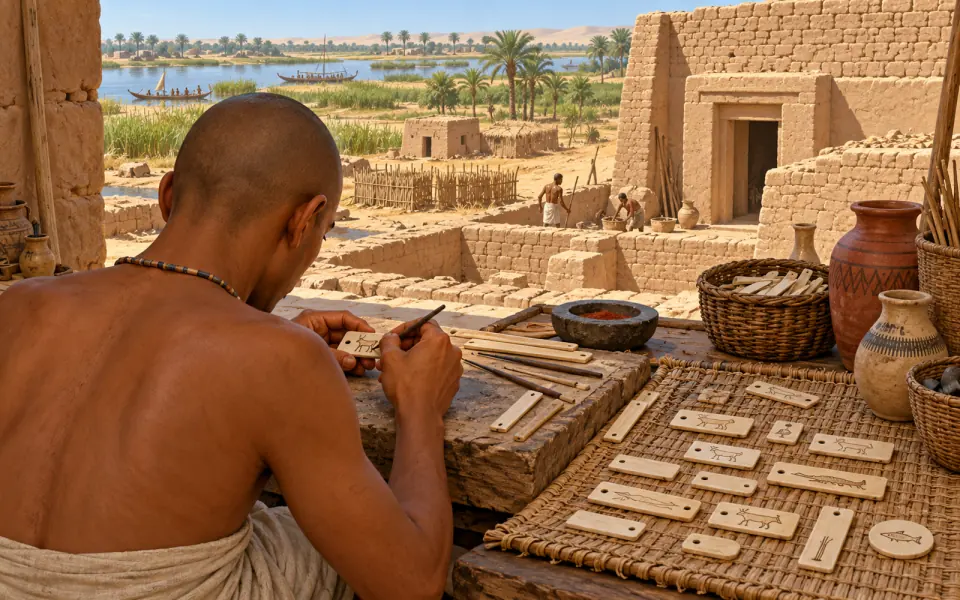 AfterEgyptian hieroglyphsabout 3200 BC
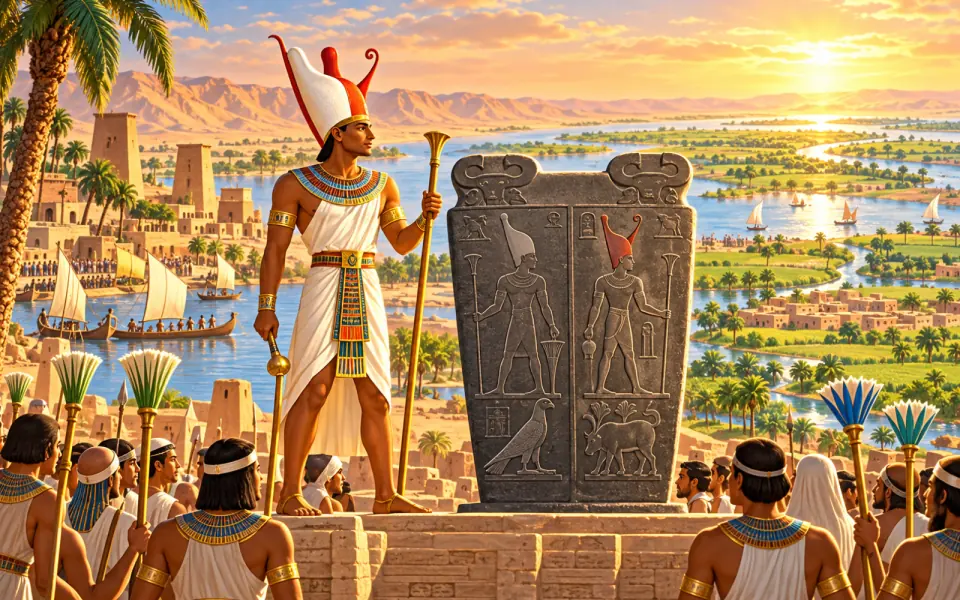 AfterThe unification of Egyptabout 3100 BC
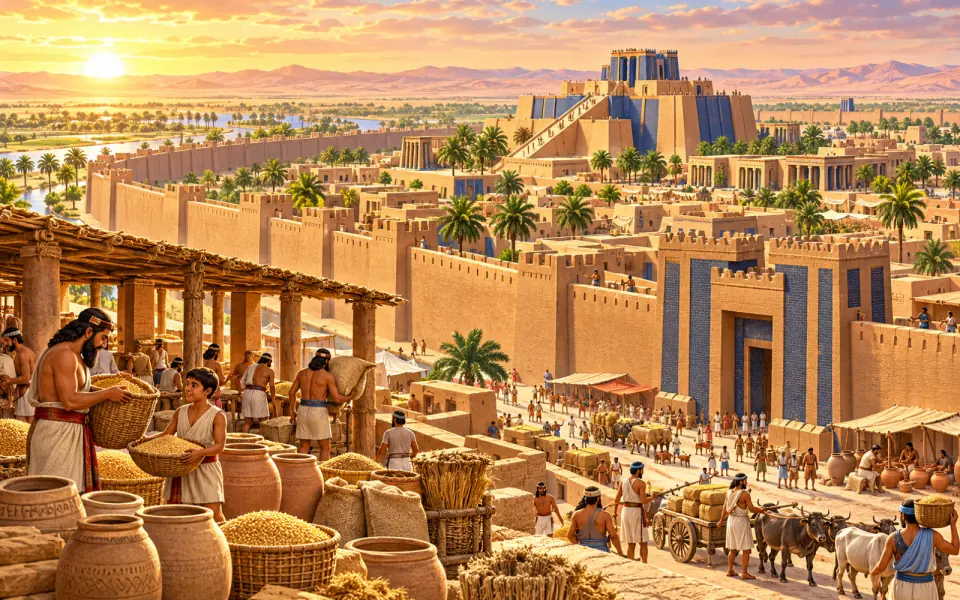 AfterUruk, the great cityabout 3000 BC
 AfterThe Egyptian calendarabout 2800 BC
 AfterThe Step Pyramid of Djoserabout 2650 BC
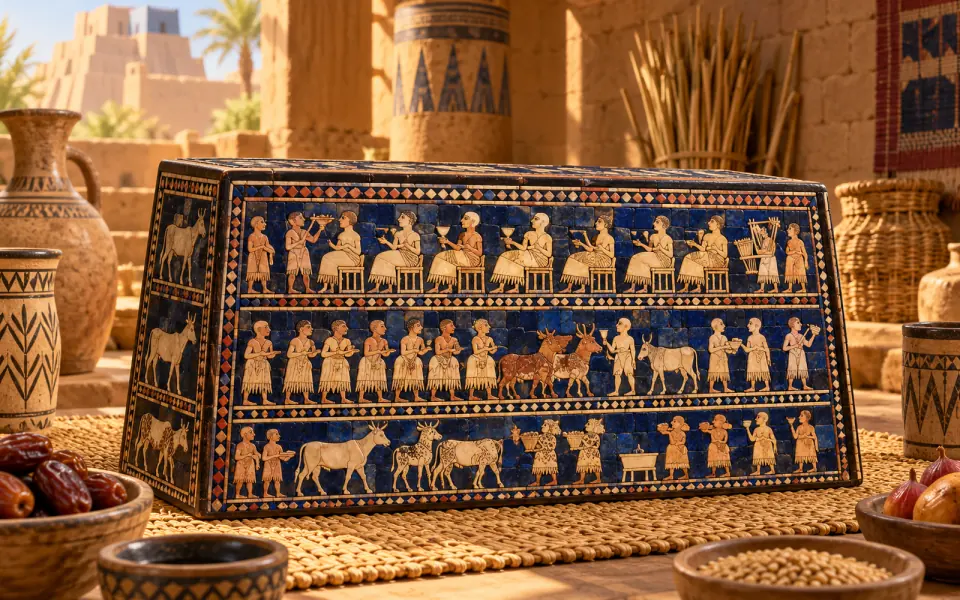 AfterThe Standard of Urabout 2600 BC
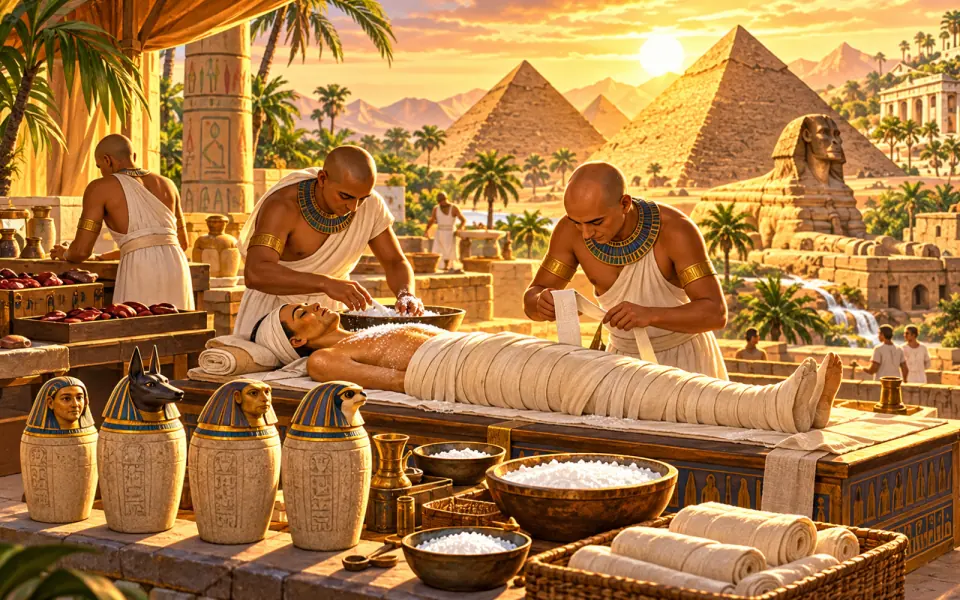 AfterEgyptian mummificationabout 2600 BC
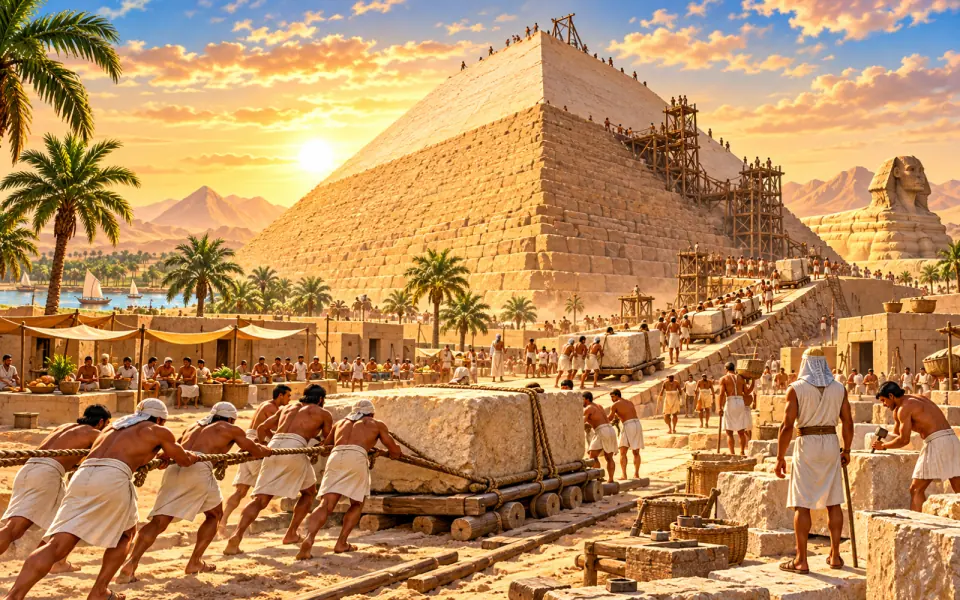 AfterThe Great Pyramid of Gizaabout 2560 BC
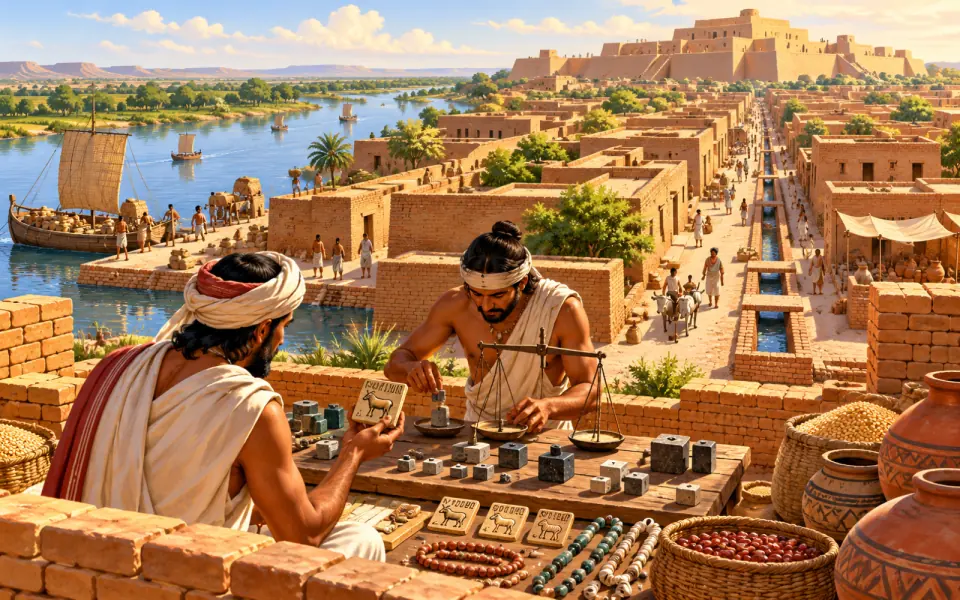 AfterThe cities of the Indus Valleyabout 2500 BC
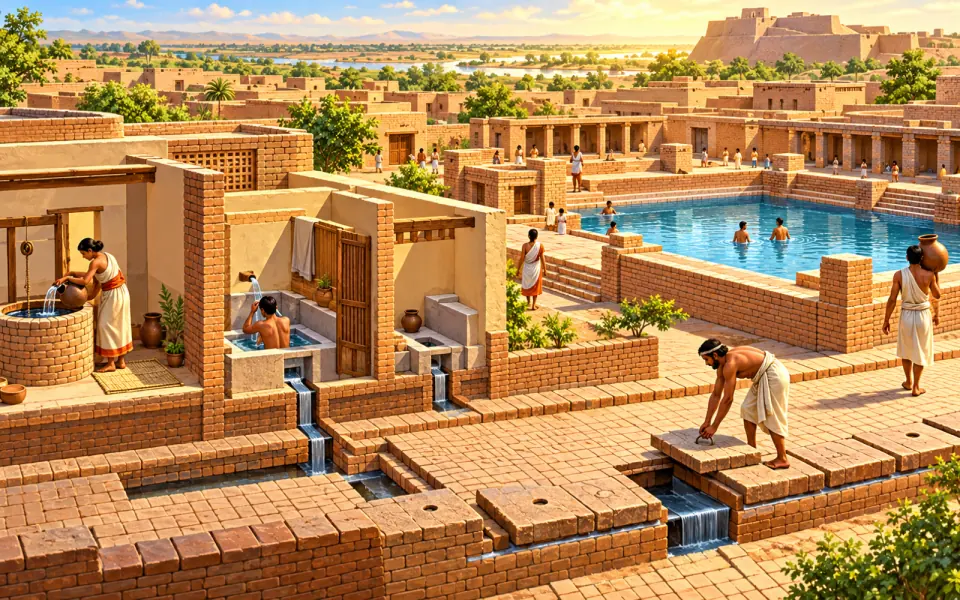 AfterThe drains and baths of Mohenjo-daroabout 2450 BC
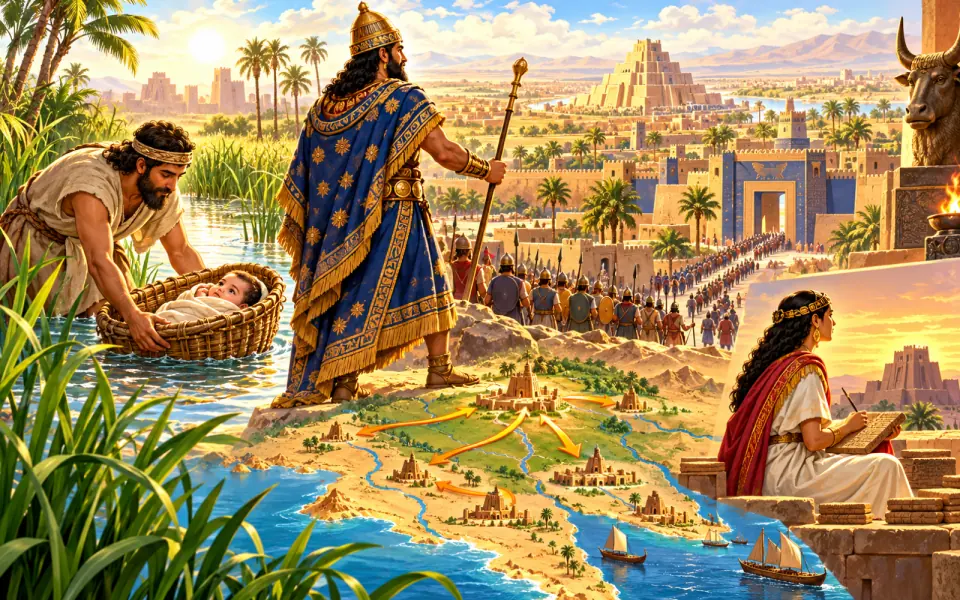 AfterSargon and the Akkadian Empireabout 2334 BC
 AfterTrade between the Indus and Mesopotamiaabout 2300 BC
 AfterThe Epic of Gilgameshabout 2100 BC
 AfterThe Ziggurat of Urabout 2100 BC
 AfterBabylonian mathematicsabout 1800 BC
 AfterThe Code of Hammurabiabout 1754 BC
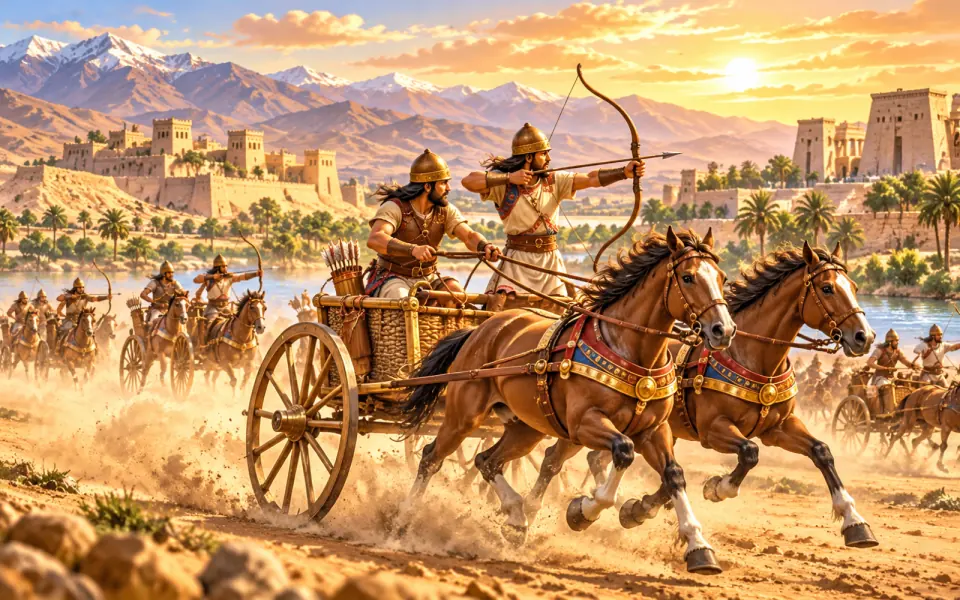 AfterWar chariotsabout 1700 BC
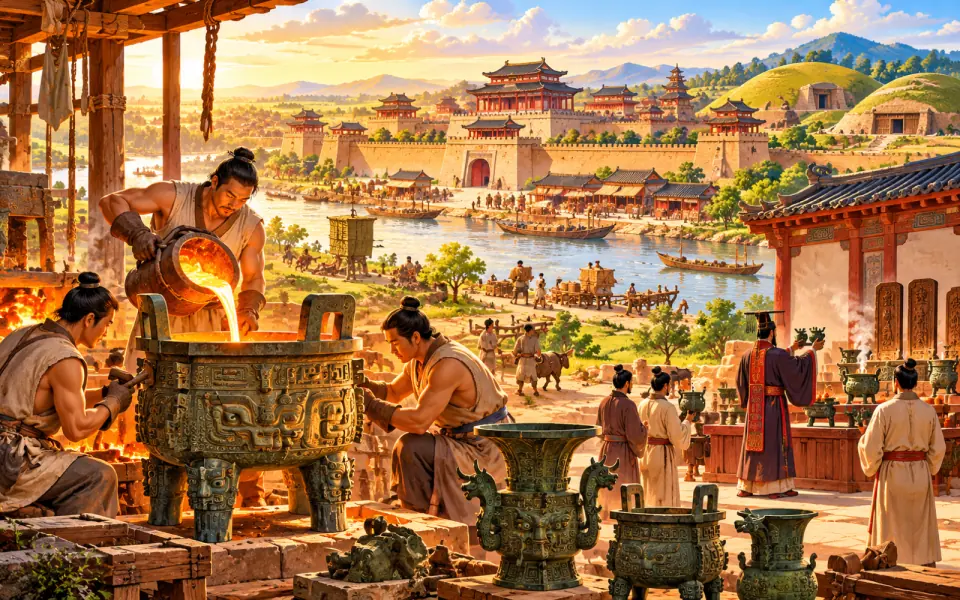 AfterThe Shang dynastyabout 1600–1046 BC
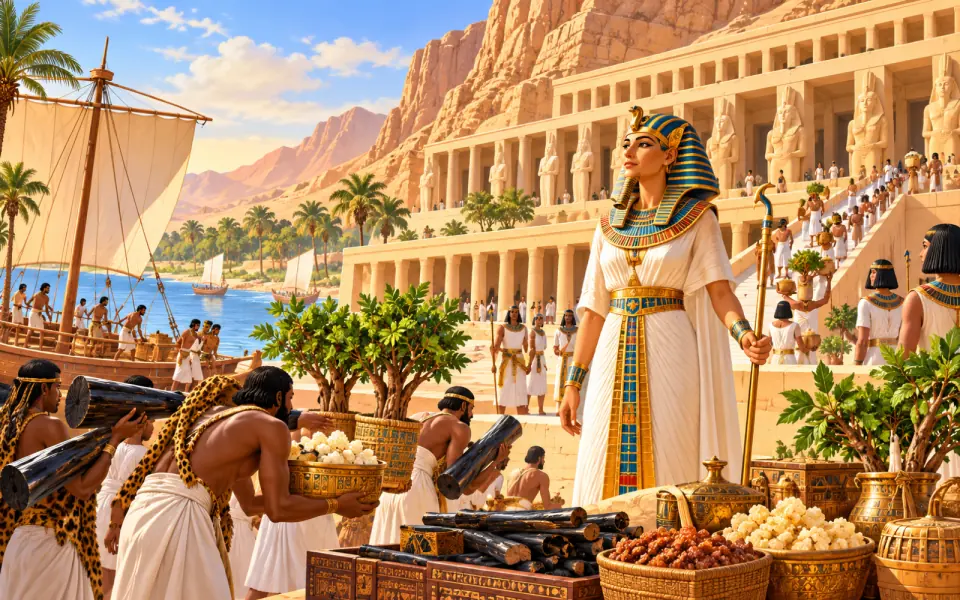 AfterHatshepsut, the woman pharaohabout 1479–1458 BC
 AfterThe reign of Akhenatenabout 1353–1336 BC
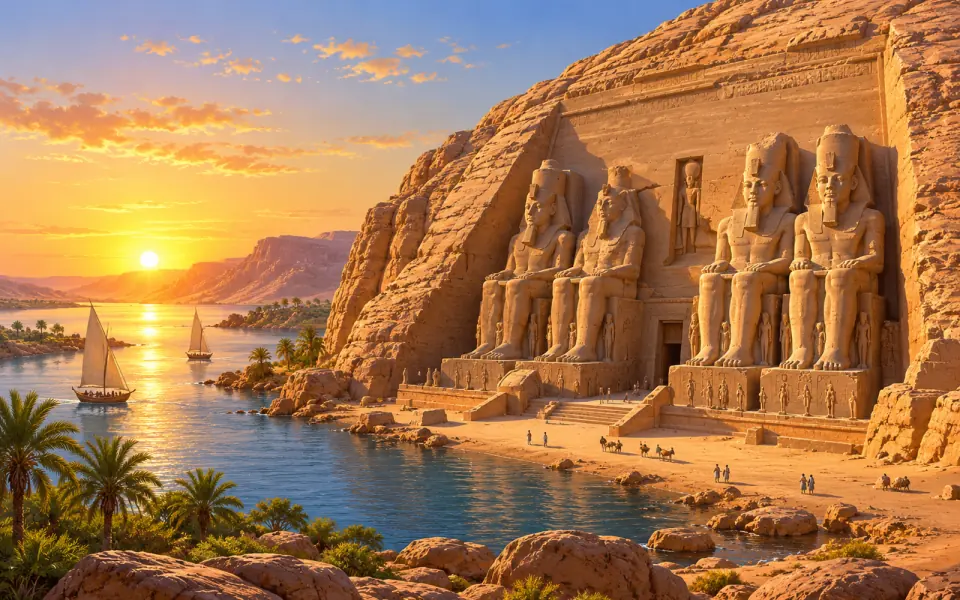 AfterThe reign of Ramesses IIabout 1279–1213 BC
 AfterWriting on oracle bonesabout 1250 BC
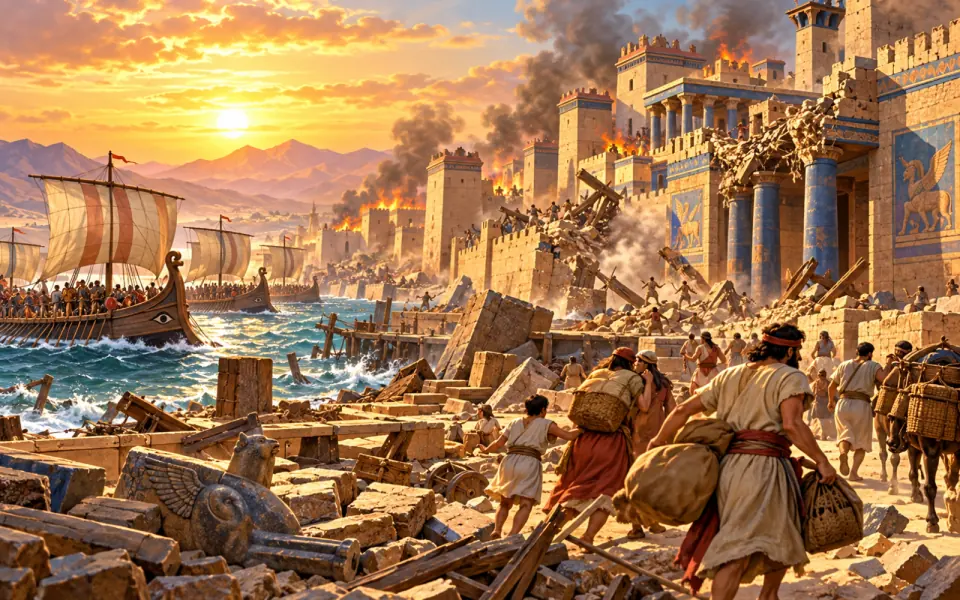 AfterThe Bronze Age collapseabout 1200 BC
Listen / Read next
- Music to read by: Cinematic JourneyEpic film-style music, no lyrics, by Ciro Simone IrmiciSpotifyYouTube Music
Meanwhile, elsewhere in the world
Other events of the era “River civilisations”
- The first Sumerian cities
- Egyptian hieroglyphs
- The unification of Egypt
- Uruk, the great city
- The Egyptian calendar
- The Step Pyramid of Djoser
- The Standard of Ur
- Egyptian mummification
- The Great Pyramid of Giza
- The cities of the Indus Valley
- The drains and baths of Mohenjo-daro
- Sargon and the Akkadian Empire
- Trade between the Indus and Mesopotamia
- The Epic of Gilgamesh
- The Ziggurat of Ur
- Babylonian mathematics
- The Code of Hammurabi
- War chariots
- The Shang dynasty
- Hatshepsut, the woman pharaoh
- The reign of Akhenaten
- The reign of Ramesses II
- Writing on oracle bones
- The Bronze Age collapse
