The unification of Egypt
about 3100 BC Hierakonpolis, Nile Valley (Egypt)
In short
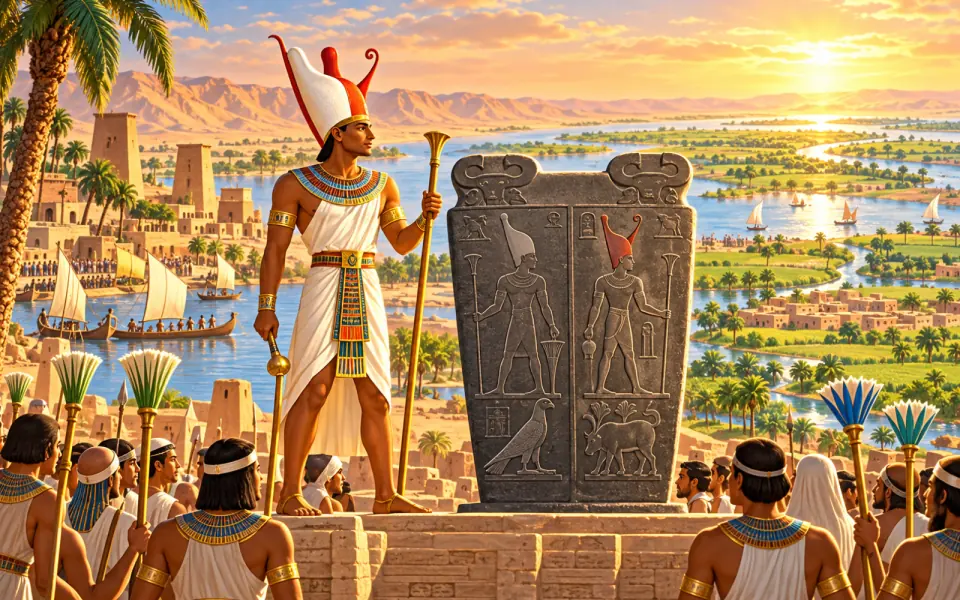
Around 3100 BC Upper Egypt, in the south, and Lower Egypt, in the Nile Delta, were joined under a single king. Tradition calls him Menes; many historians think he was the pharaoh Narmer. On the Narmer Palette, a carved stone slab, the king wears the white crown of the south on one side and the red crown of the north on the other. From then on the pharaohs boasted of being ‘lords of the Two Lands’.
Why it matters The united kingdom along the Nile lasted, with ups and downs, for almost three thousand years.
Source: Encyclopaedia Britannica, “Narmer”
Study card about 6 minutes of reading
The story
A slab of stone that tells of a victory
In 1897–1898 two English archaeologists, James Quibell and Frederick Green, were digging at Hierakonpolis, in Upper Egypt, the place the ancients called Nekhen. In the storeroom of a temple they found a slab of dark green stone, about 64 centimetres tall, carved on both faces. At the top, on both sides, are two cow heads with horns and, between them, a rectangle with the name of a king written with two signs: a catfish (nar) and a chisel (mer). It reads Narmer. Today the slab is called the Narmer Palette and is in the Egyptian Museum in Cairo.
On one side we see a king wearing the white crown, tall and shaped like a skittle, raising a mace to strike a kneeling enemy; above them a falcon, symbol of the god Horus, holds by a rope a prisoner whose head grows out of a papyrus-shaped land. On the other side the same king wears the red crown, low, with a stalk rising at the back, and walks behind ten beheaded enemies. It is a very clear political message: this king wins in the south and wins in the north, and wears both crowns. That is why many scholars regard it as the oldest document of the unification.
Two lands under one king
To understand what this means, we have to look at Egypt as it was. The Nile flows for more than a thousand kilometres from south to north and, near the sea, fans out into the delta. The Egyptians called the south, the narrow valley, Upper Egypt, and the north, the delta, Lower Egypt. The first was symbolised by the lotus plant and the white crown, the second by papyrus and the red crown. Together they made the double crown, which the Greeks called the pschent. The pharaoh called himself “lord of the Two Lands”. And even when Egypt was united, the Egyptians went on talking about the Two Lands.
Before 3100 BC several communities lived in the valley, each with its own chief: one at Naqada, one at Thinis (near Abydos) and one at Hierakonpolis, perhaps the most powerful in the south. These communities shared the same culture, called the Naqada culture, and traded with the Levant and with Mesopotamia. Over the centuries the strongest swallowed up the others. Around 3100 BC a single king, who came from the south, also controlled the delta. Scholars think the unification was not a single day of battle, but a long process, perhaps lasting generations.
Narmer or Menes?
Here a small riddle begins. In the lists of kings written much later, and in the account of Manetho, an Egyptian priest who wrote in Greek around 280 BC, the first pharaoh was called Menes. According to the Greek historian Herodotus, Menes built a dam to divert the Nile and founded the city of Memphis, at the point where the two lands met. But there is no inscription of a King Menes from that time. What do exist are the names of Narmer and of his successor Aha. Many scholars think Menes is another name for Narmer, others that he is Aha, and others still that Menes is only a symbolic figure. There is no certain answer.
The date is approximate too. The unification is placed around 3100 BC, but with an uncertainty of a few decades, perhaps more. Radiocarbon work on remains from that period has helped to pin it down, but not to remove the doubts.
What came next
With the new state came a completely new form of government: a god-king, the pharaoh (the word means “great house”, that is, the palace), helped by officials and scribes. The king was seen as the embodiment of the falcon god Horus, and after death he became Osiris. A capital, Memphis, controlled the whole country, and the river was its main road: with the wind behind you, you sailed upstream; with the current, you rowed downstream. Egypt became the first great territorial state in history, much larger than the city-states of Mesopotamia.
The united kingdom, with interruptions and periods of crisis, lasted more than three thousand years, until the Roman conquest in 30 BC. Historians divide it into the Old, Middle and New Kingdoms, separated by intermediate periods in which power broke apart. Each time Egypt was reunited, kings went back to calling themselves “lords of the Two Lands” and wearing the double crown: a very ancient image that for their subjects meant order, peace and good harvests.
Why it happened
The first cause was the river. The Nile was a very fast route of communication and the only source of water for the whole country. Whoever controlled the current could move soldiers, grain and messages from south to north in a few weeks. A territory so long and thin, stretched along a river, could be governed from a single centre far better than a land of mountains and valleys.
The second cause was competition between the centres of the south. Naqada, Thinis and Hierakonpolis were rich in gold, copper, hard stones and trade with Nubia. Each chief tried to get the better of the others, and the winner could go on northwards to the delta, which was fertile but had fewer strong chiefs.
The third cause was ideological. Chiefs used symbols that became more and more shared: the falcon Horus, the crowns, the victor's mace. On the jar, the palette, the seal, the same way of showing the king created the idea that a single man should rule. Writing too, just born (see the card on hieroglyphs), was used to put the king's power on record.
What changed
The unified Egyptian state was stable and rich. It could organise great common works, such as canals, the Sinai mines and the pyramids, and could keep up a bureaucracy that recorded the Nile floods and distributed the harvests. That is why Egypt is remembered as one of the longest-lasting civilisations in the world.
From the unification also came the idea of the divine pharaoh, which influenced the portrayal of power for thousands of years. The double crown, the false beard, the crook and the flail are symbols we find unchanged for three thousand years. The traditions of Egyptian religion, with Horus and Osiris, are also interwoven with the history of the king.
Today the Narmer Palette is a symbolic work of the Egyptian Museum in Cairo. It also reminds us of something important for studying history: an image can be a source, but we must always ask who made it and why. That slab is propaganda: it tells the victory as the winner saw it, not what the defeated thought.
Key people and places
People
- Narmer
- King of Egypt around 3100 BC, whose name appears on the famous Palette. Many scholars regard him as the king who completed the unification.
- Menes
- The first king of Egypt according to the king lists and Manetho. No inscription of his time names him, and he may be another name for Narmer or Aha.
- James Quibell and Frederick Green
- British archaeologists who in 1897–1898 dug at Hierakonpolis and discovered the Narmer Palette.
- Manetho
- Egyptian priest who wrote a history of Egypt in Greek around 280 BC. From him comes the division of the kings into 30 dynasties.
Places
- Hierakonpolis or Nekhen (Upper Egypt)
- An ancient city in the south, centre of the falcon god Horus. The Narmer Palette was found here.
- Memphis (near Cairo)
- Capital of the Old Kingdom. According to tradition it was founded by Menes just where the valley opens into the delta.
- Egyptian Museum in Cairo
- The great museum of the Egyptian capital, where the Narmer Palette is kept.
Good to know
- The Narmer Palette is about 64 centimetres tall. A palette is a flat stone on which colours were ground, but this one was too beautiful to be used: it was a ceremonial object, offered in the temple.
- Narmer's name is written with a catfish and a chisel, and the slab shows his name enclosed in a rectangle called a serekh, with the falcon Horus above it.
- The word “pharaoh” comes from the Egyptian per-aa, “great house”, and originally meant the palace; only centuries later did it begin to mean the king.
- The Egyptians called their country Kemet, “the black land”, for the Nile silt, and the desert Deshret, “the red land”.
- The united kingdom lasted, with a few interruptions, from 3100 BC until 30 BC, when Cleopatra died and Egypt became a Roman province.
Find out more
- World History Encyclopedia, “Narmer” worldhistory.org
- Wikipedia, “Narmer” en.wikipedia.org
- Wikipedia, “Hierakonpolis” en.wikipedia.org
- Wikipedia, “Ancient Egypt” en.wikipedia.org
- Museo Egizio, Turin (in English) museoegizio.it
Related events
- Egyptian hieroglyphsabout 3200 BC · River civilisationsThe oldest hieroglyphs appear a little earlier, in the same region as Abydos.
- The Egyptian calendarabout 2800 BC · River civilisationsThe united state made it possible to organise a civil calendar for the whole country.
- The Step Pyramid of Djoserabout 2650 BC · River civilisationsA few centuries later, the pharaohs of the Old Kingdom built the first pyramids.
- The Great Pyramid of Gizaabout 2560 BC · River civilisationsThe Great Pyramid is the most famous work of the pharaonic state.
- Hatshepsut, the woman pharaohabout 1479–1458 BC · River civilisationsHatshepsut ruled as pharaoh, a title born with this very united kingdom.
Before and after, in the era “River civilisations”
Event 4 of 25
 BeforeThe first Sumerian citiesabout 4000 BC
 BeforeCuneiform writingabout 3200 BC
 BeforeEgyptian hieroglyphsabout 3200 BC
- You are hereThe unification of Egyptabout 3100 BC
 AfterUruk, the great cityabout 3000 BC
 AfterThe Egyptian calendarabout 2800 BC
 AfterThe Step Pyramid of Djoserabout 2650 BC
 AfterThe Standard of Urabout 2600 BC
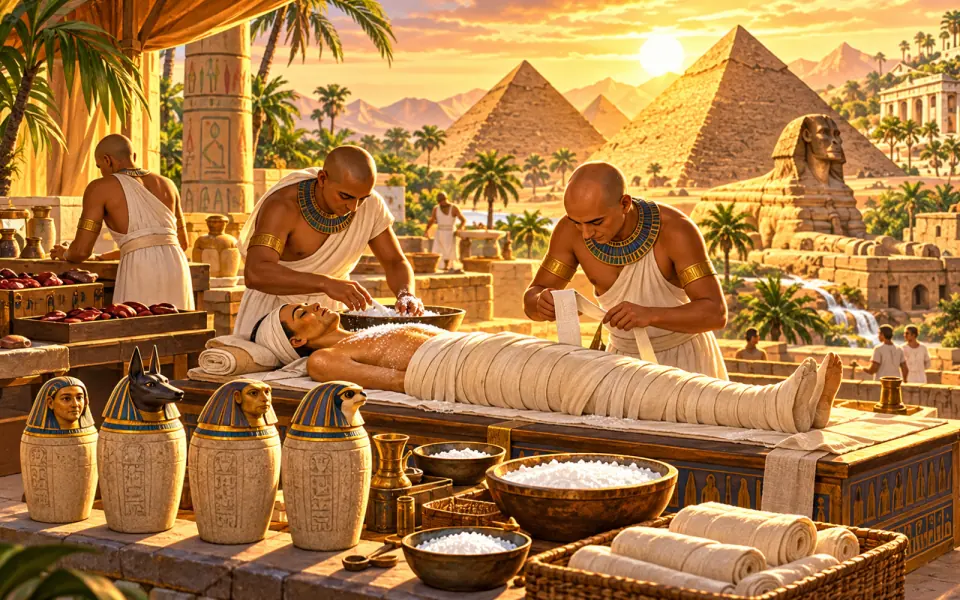 AfterEgyptian mummificationabout 2600 BC
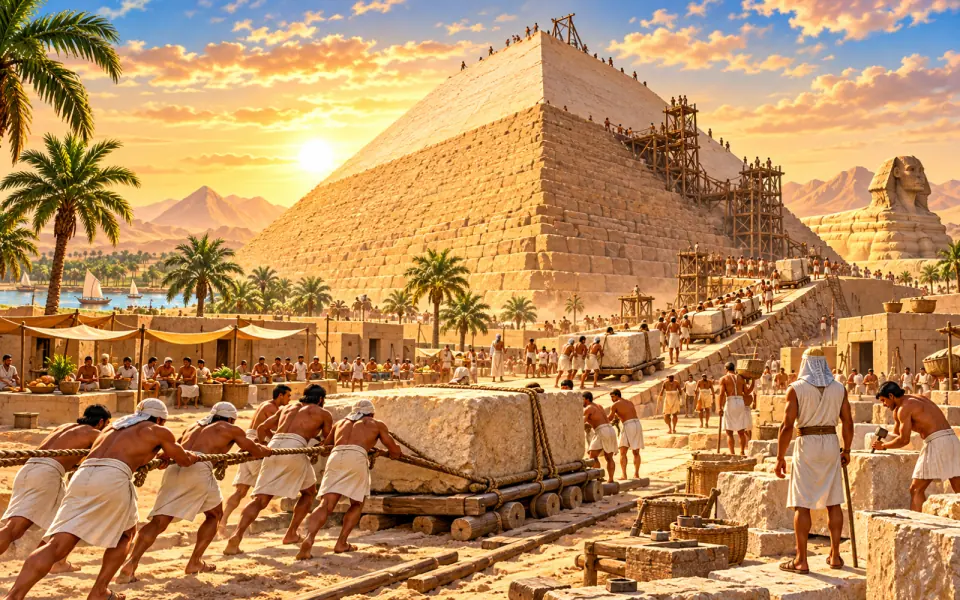 AfterThe Great Pyramid of Gizaabout 2560 BC
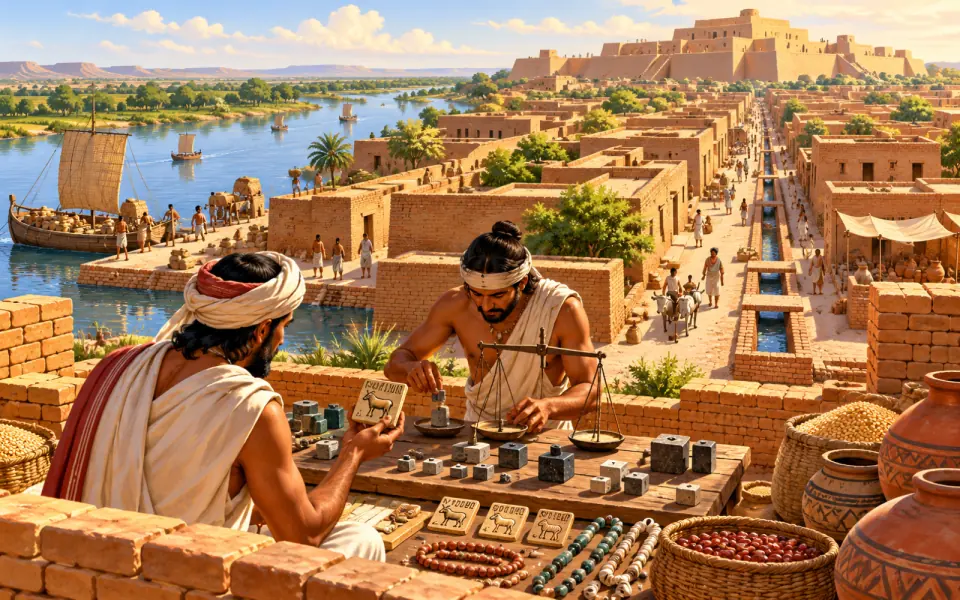 AfterThe cities of the Indus Valleyabout 2500 BC
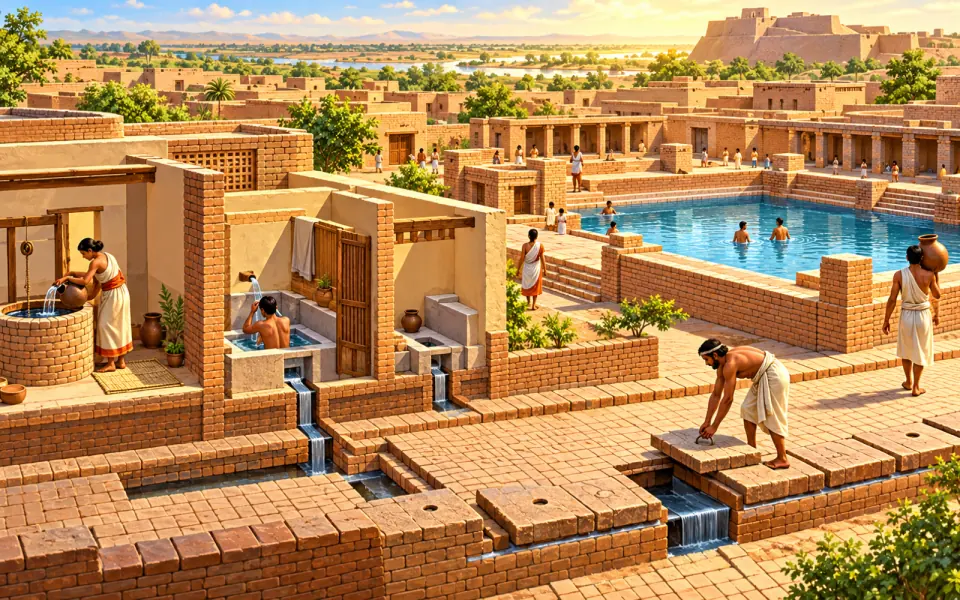 AfterThe drains and baths of Mohenjo-daroabout 2450 BC
 AfterSargon and the Akkadian Empireabout 2334 BC
 AfterTrade between the Indus and Mesopotamiaabout 2300 BC
 AfterThe Epic of Gilgameshabout 2100 BC
 AfterThe Ziggurat of Urabout 2100 BC
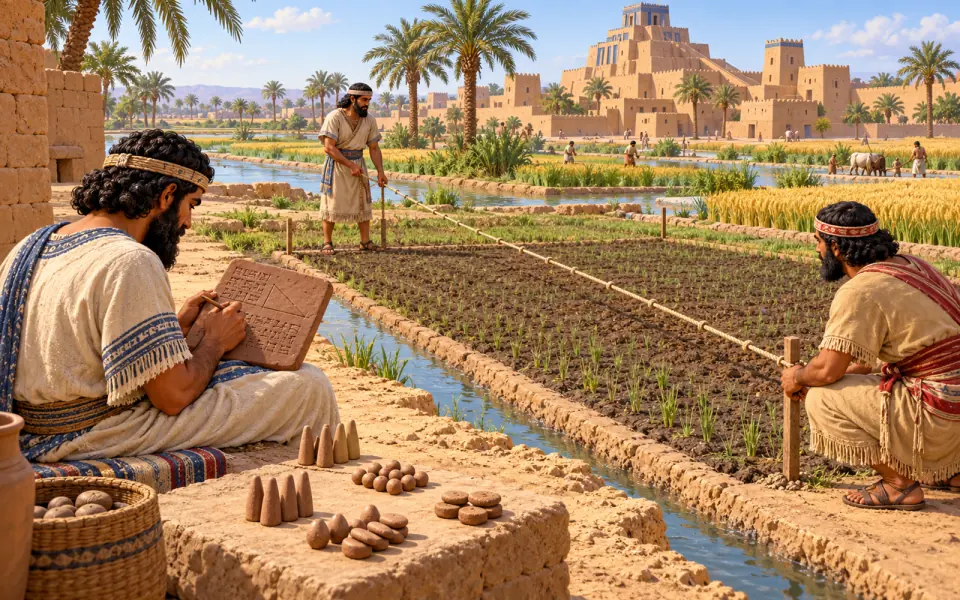 AfterBabylonian mathematicsabout 1800 BC
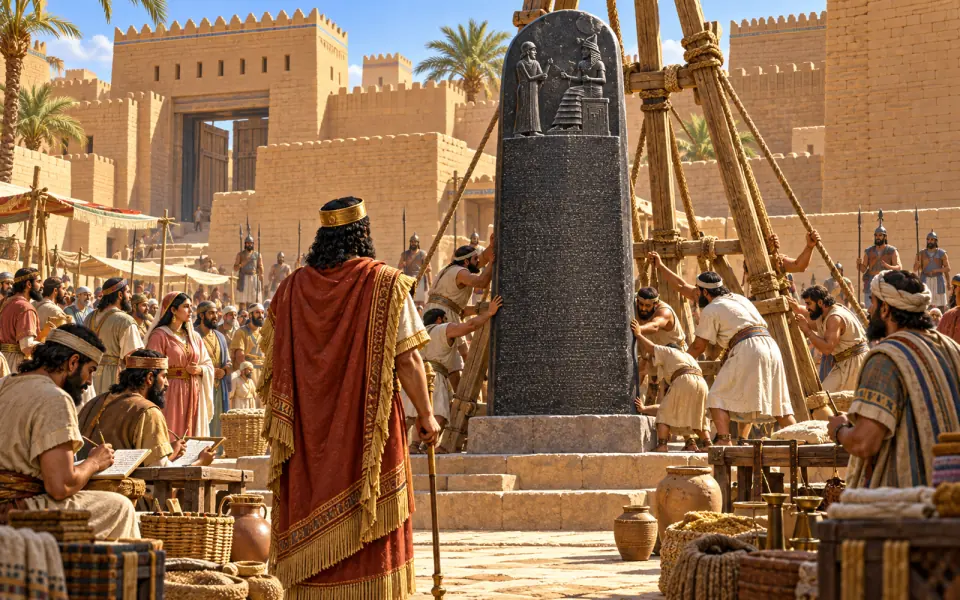 AfterThe Code of Hammurabiabout 1754 BC
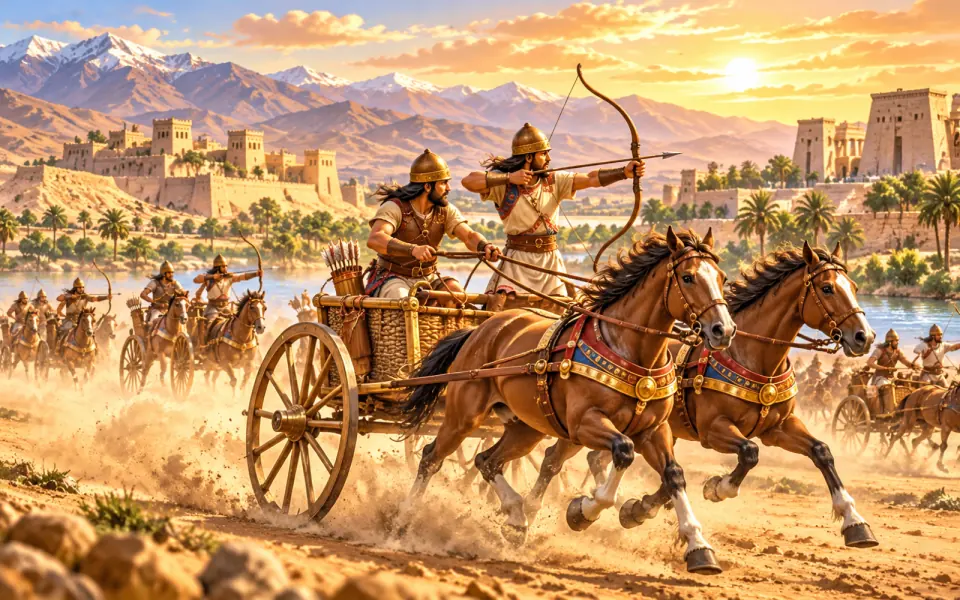 AfterWar chariotsabout 1700 BC
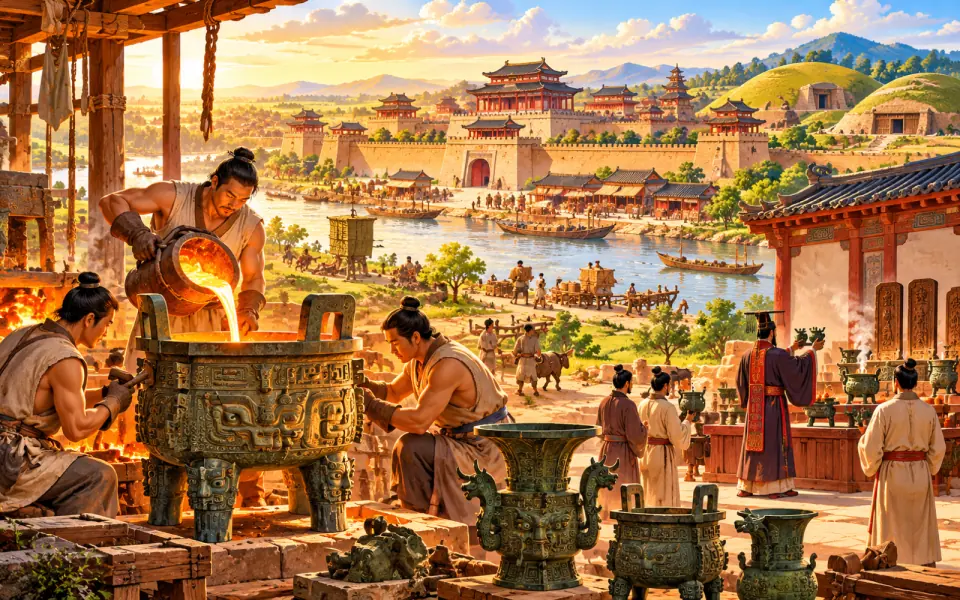 AfterThe Shang dynastyabout 1600–1046 BC
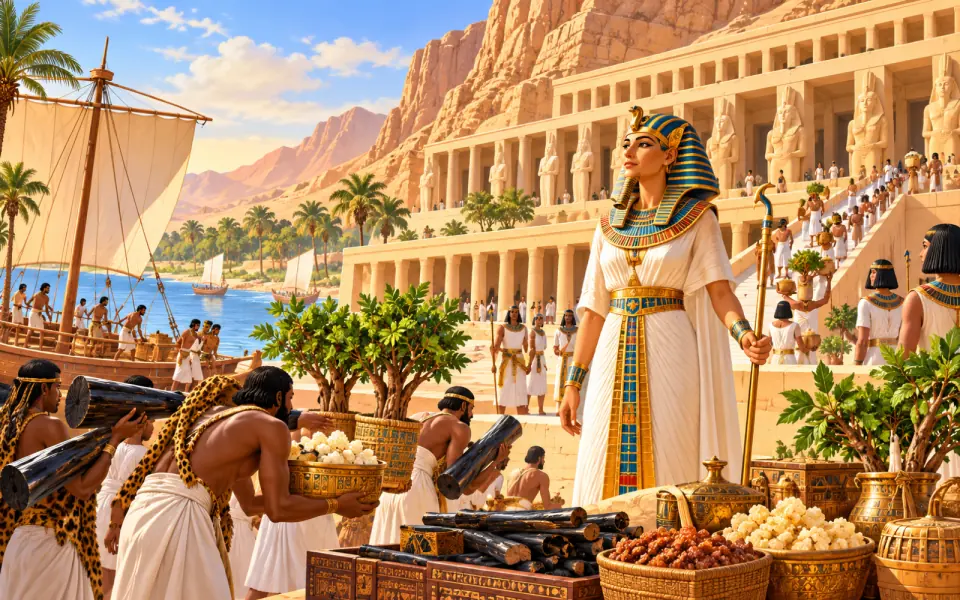 AfterHatshepsut, the woman pharaohabout 1479–1458 BC
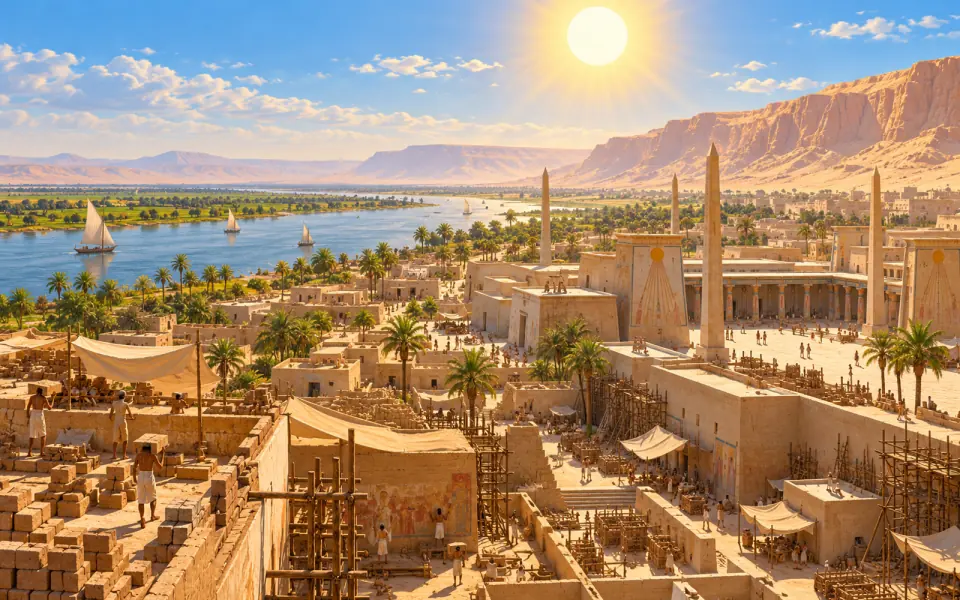 AfterThe reign of Akhenatenabout 1353–1336 BC
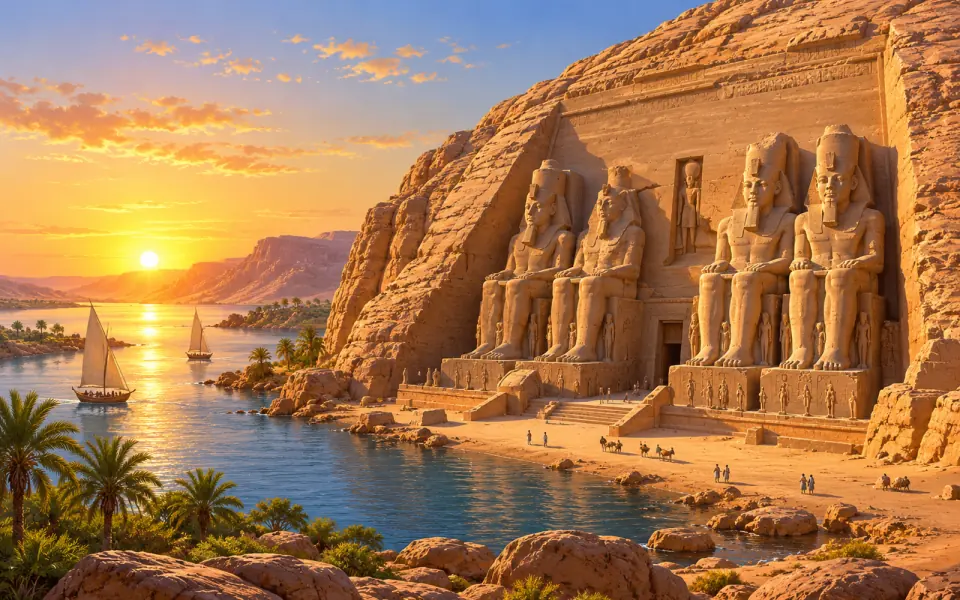 AfterThe reign of Ramesses IIabout 1279–1213 BC
 AfterWriting on oracle bonesabout 1250 BC
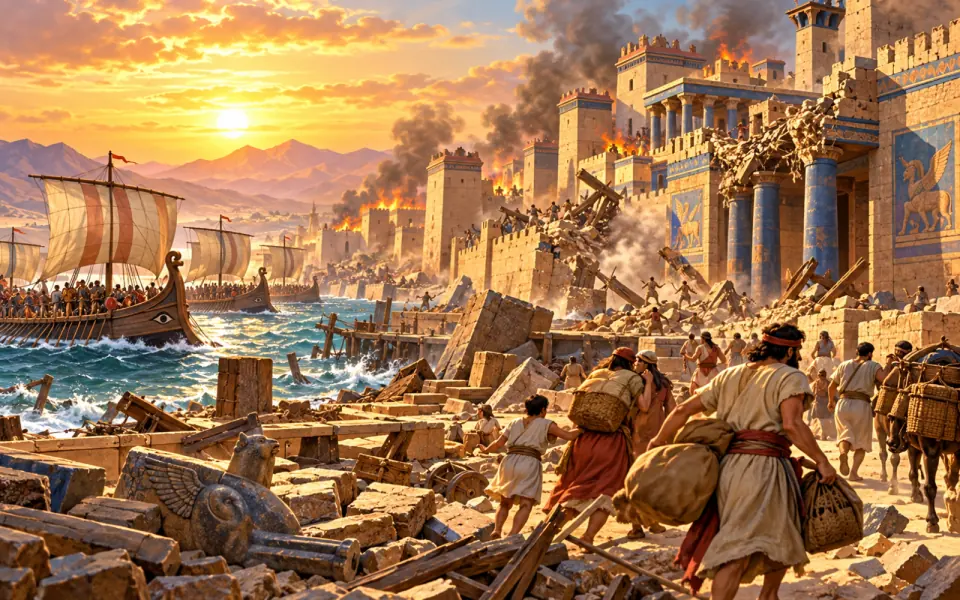 AfterThe Bronze Age collapseabout 1200 BC
Listen / Read next
- Music to read by: Cinematic JourneyEpic film-style music, no lyrics, by Ciro Simone IrmiciSpotifyYouTube Music
Meanwhile, elsewhere in the world
Other events of the era “River civilisations”
- The first Sumerian cities
- Cuneiform writing
- Egyptian hieroglyphs
- Uruk, the great city
- The Egyptian calendar
- The Step Pyramid of Djoser
- The Standard of Ur
- Egyptian mummification
- The Great Pyramid of Giza
- The cities of the Indus Valley
- The drains and baths of Mohenjo-daro
- Sargon and the Akkadian Empire
- Trade between the Indus and Mesopotamia
- The Epic of Gilgamesh
- The Ziggurat of Ur
- Babylonian mathematics
- The Code of Hammurabi
- War chariots
- The Shang dynasty
- Hatshepsut, the woman pharaoh
- The reign of Akhenaten
- The reign of Ramesses II
- Writing on oracle bones
- The Bronze Age collapse
