The palace of Knossos
about 1900 BC Knossos, Crete (Greece)
In short
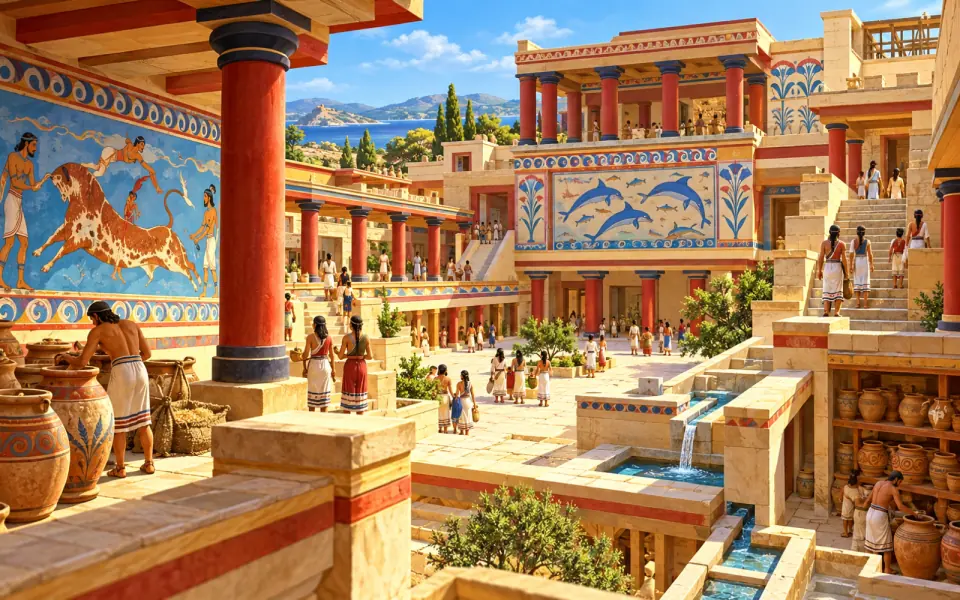
The palace of Knossos was an enormous building with hundreds of rooms arranged around a large courtyard, on several floors linked by stairs and corridors. The walls were decorated with brightly coloured frescoes: dolphins, lilies, processions and young people leaping over a bull. There were storerooms full of jars for oil and grain, and even water pipes. Perhaps it was its complicated layout that gave rise to the myth of the Minotaur's labyrinth.
Why it matters The palace was at once the king's home, a storehouse, a place of worship and a trading centre: the heart of the whole island.
Source: Encyclopaedia Britannica, “Knossos”
Study card about 6 minutes of reading
The story
A hill near Heraklion
About five kilometres from the centre of Heraklion, the largest city on Crete, there is a low hill called Kephala. Beneath the soil of that hill the palace of Knossos lay hidden for almost three thousand years. The people of the area knew there were ancient ruins down there. In 1878 and 1879 a Cretan merchant, Minos Kalokairinos, carried out the first digs and brought some rooms with big jars to light. But the great exploration began in March 1900, when the English archaeologist Arthur Evans, having bought part of the land, set a team of workmen to work. In a few weeks walls, staircases, frescoes and clay tablets appeared.
What it was like
The palace covered about 20,000 square metres. It did not look like a castle: it was a set of buildings leaning against one another, built on different levels, around a large central courtyard. The courtyard was used for ceremonies and festivals. Wide staircases, corridors, rooms joined by double doors and light wells that brought sunshine into the innermost rooms made up a complicated whole, in which a visitor could easily get lost.
In the west wing there were long, narrow storerooms, with rows of enormous terracotta jars, the pithoi, where oil, grain and wine were kept. They were the wealth of the island: farmers brought their harvests to the palace, and the palace recorded them and handed them out. Traces also remain of a system for bringing water in and carrying waste away: channels and pipes that were well thought out for the Bronze Age.
The painted walls
The rooms were decorated with frescoes: paintings made on plaster that was still fresh. Among the most famous are the bull-leaping fresco, the procession, the cup-bearer and the dolphins. They show elegant young people, court life, animals and the sea. One fact should be stated honestly: of many frescoes only fragments survive, and the images we see in books and on this site are partly reconstructed by modern artists, who filled in the missing parts.
The throne room
One of the most celebrated rooms is the one known as the “throne room”. It contains a gypsum seat with a tall, wavy back, stone benches along the walls, a small basin sunk into the floor and frescoes of two griffins, creatures with a lion's body and a bird's head. Evans called it the “throne room of King Minos”. Today scholars disagree about its purpose: it may have been a place for religious ceremonies, with a priestess in place of a king.
Two palaces and an earthquake
The digs show that people were already living on that spot around 7000 BC. The first palace was built around 1900 BC. Around 1700 BC it was destroyed, probably by an earthquake or a series of tremors, and rebuilt larger and more beautiful: the “second palace”, in use until about 1450 BC. Then came the Mycenaeans, a Greek people, who settled at Knossos and went on using the palace for a long time. This is why thousands of tablets in Linear B have been found among the remains: they are the accounts of the new masters. A major destruction of the palace is conventionally dated to around 1350 BC, but scholars debate when it really happened.
The labyrinth
The Greeks, many centuries later, told a story: on Crete reigned Minos, who had Daedalus build a labyrinth in which to shut up the Minotaur, a monster half man and half bull. Every year the Athenians had to send young people to be fed to the monster, until the hero Theseus, helped by Ariadne, killed it and found his way out by following a thread. It is a myth, not a historical fact. But it is likely that the memory of an enormous palace made up of corridors and rooms, which had vanished centuries before, gave shape to the tale. The word “labyrinth” too perhaps comes from a term linked to the double axe, a symbol found everywhere at Knossos: this explanation, however, is only a hypothesis.
Criticism of Evans
Evans did not just dig: he rebuilt. He had columns put back up, floors propped up and walls repainted, using reinforced concrete and the help of artists. The result is a palace that gives a vivid idea of what it was like, but part of what you see today is modern invention. Many archaeologists criticise this method; others defend it because it saved the remains from ruin. When you visit Knossos, then, it is a good idea to ask yourself: is this wall ancient, or was it rebuilt in the twentieth century?
Why it happened
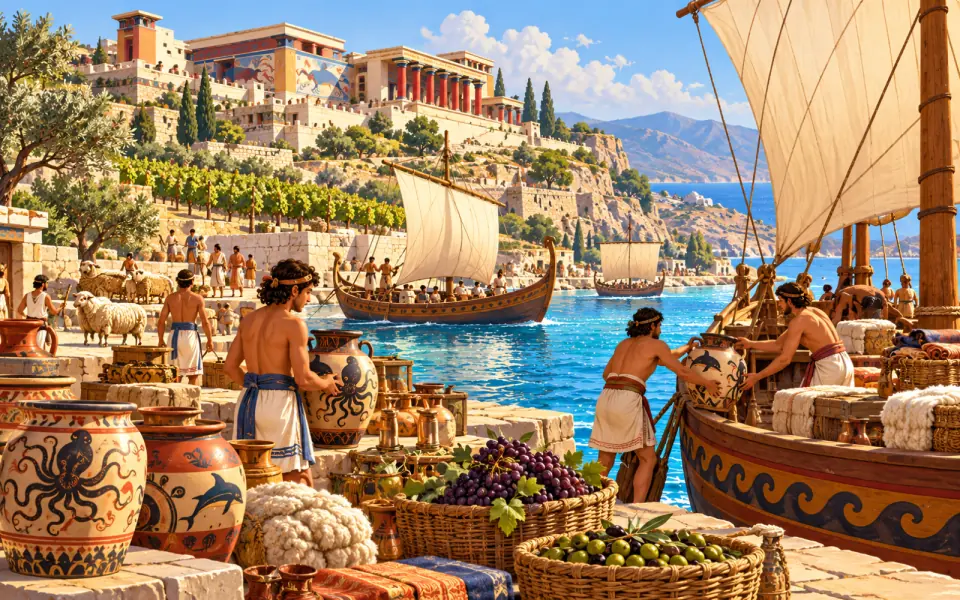
The Cretan palaces were born because Minoan society needed a centre that would collect and hand out what the island produced. Every year the farmers had a surplus of oil, grain, wine and wool, and someone had to receive that surplus, store it, exchange it for the metals brought by ships and feed those who worked for the palace, from craftsmen to scribes.
This is why the palace was not just the king's home. It was storehouse, workshop, archive and temple. Its shape, with so many small rooms, reflects exactly this life: many storerooms, many workshops, many rooms for rituals. And the fact that at Knossos, the largest of the island's towns, the palace was enormous says that this centre governed a wide territory.
What changed
The discovery of Knossos in 1900 changed the history books. Until then people thought Greece had begun with the poems of Homer. Knossos showed that more than a thousand years earlier, in Europe, there was already a civilisation with palaces, writing, art and trade. The palace became the symbol of the discovery of the Greek Bronze Age.
From the archives of Knossos also came the tablets in Linear B, which Michael Ventris managed to read in 1952 and which showed that the people who had written them spoke Greek. It was one of the greatest discoveries in the history of archaeology.
Today Knossos is one of the most visited archaeological sites in Greece. The debate over Evans's reconstructions has also taught archaeologists to distinguish carefully between what is ancient and what has been rebuilt, and to tell visitors so.
Key people and places
People
- Arthur Evans
- English archaeologist (1851–1941): he bought the land and directed the excavations at Knossos from 1900; he published the results in his work “The Palace of Minos”.
- Minos Kalokairinos
- A Cretan who in 1878 and 1879 carried out the first digs on the hill of Knossos, twenty years before Evans.
- Minos
- Legendary king of Crete in Greek myths, master of the labyrinth and father of Ariadne.
- Theseus
- Athenian hero of myth: according to the story he killed the Minotaur and escaped from the labyrinth with Ariadne's thread.
Places
- Knossos
- Minoan palace on the hill of Kephala, about five kilometres from Heraklion, on the island of Crete.
- Heraklion
- The largest city on Crete; its Archaeological Museum keeps the frescoes and finds from Knossos.
- Central court
- The large courtyard around which the palace was built, used for ceremonies and festivals.
- Pithoi storerooms
- Long rooms in the west wing full of enormous jars for oil, grain and wine.
Good to know
- The palace covered about 20,000 square metres, much more than a football pitch.
- The throne room still has a gypsum seat with a wavy back, next to a small basin sunk into the floor.
- Many frescoes that we see today were partly redone in the twentieth century by artists who completed the fragments.
- Thousands of tablets in Linear B were found at Knossos: its archive is the richest in Mycenaean writing.
- The myth of the Minotaur was born centuries after the palace: the Greeks remembered Knossos as a place of endless rooms.
Find out more
- World History Encyclopedia, “Knossos” worldhistory.org
- Wikipedia, “Labyrinth” en.wikipedia.org
- Wikipedia, “Arthur Evans” en.wikipedia.org
- Wikipedia, “Knossos” en.wikipedia.org
Related events
- Minoan civilisation on Creteabout 2000 BC · Sea civilisationsThe palace was the heart of Minoan civilisation.
- Linear Babout 1450 BC · Sea civilisationsThe tablets in Linear B were found in the archive of Knossos.
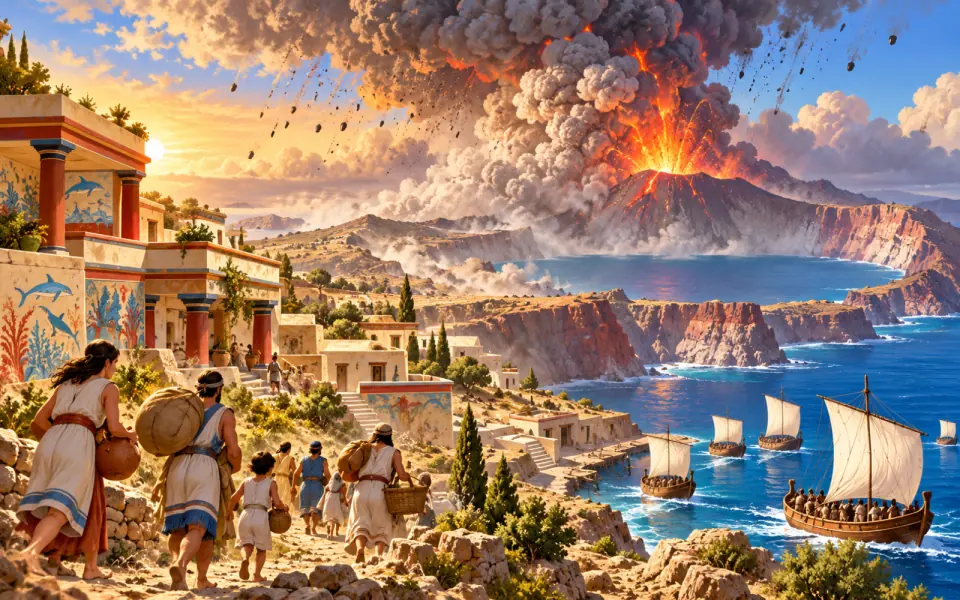
- The eruption of Theraabout 1600 BC · Sea civilisationsThe eruption of Thera shook the Minoan world in the years of the new palaces.
- The gold mask of Mycenaeabout 1550 BC · Sea civilisationsOn the mainland the Mycenaeans were contemporaries of the last palaces of Knossos.
- The Bronze Age collapseabout 1200 BC · River civilisationsThe collapse of the Bronze Age made the great palaces of the Mediterranean disappear.
Before and after, in the era “Sea civilisations”
Event 2 of 25
 BeforeMinoan civilisation on Creteabout 2000 BC
- You are hereThe palace of Knossosabout 1900 BC
 AfterThe Proto-Sinaitic alphabetabout 1800 BC
 AfterThe eruption of Theraabout 1600 BC
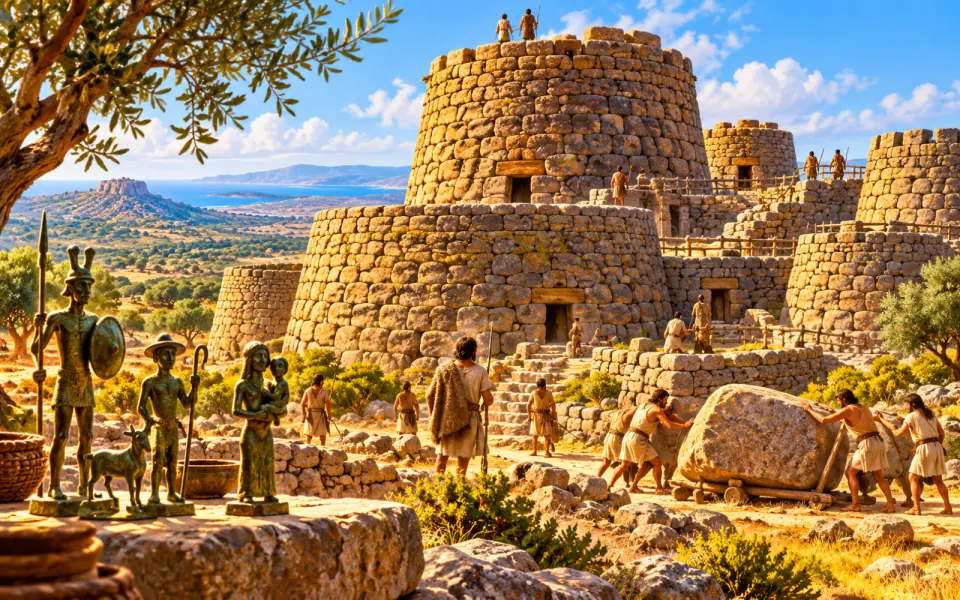 AfterThe nuraghi of Sardiniaabout 1600 BC
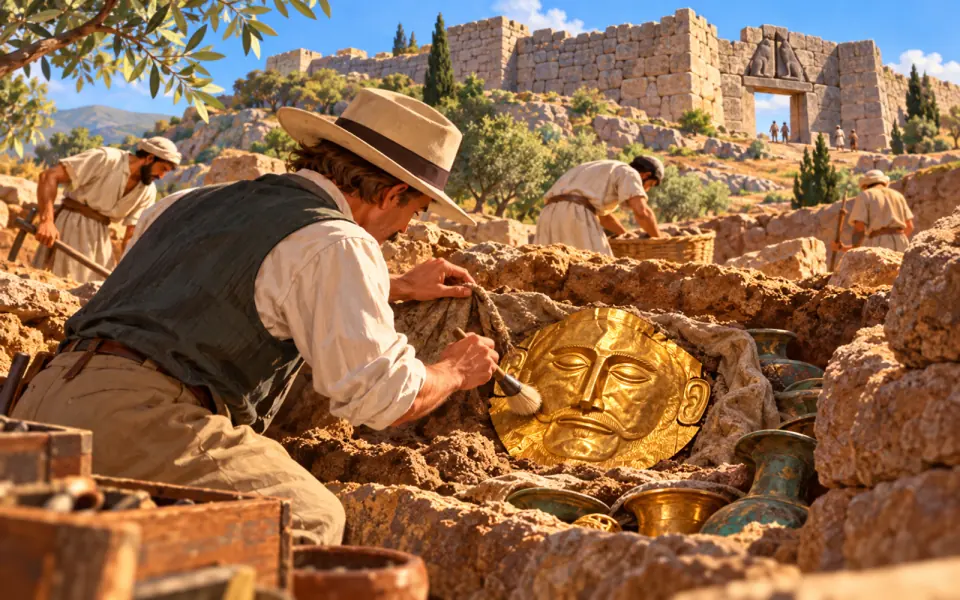 AfterThe gold mask of Mycenaeabout 1550 BC
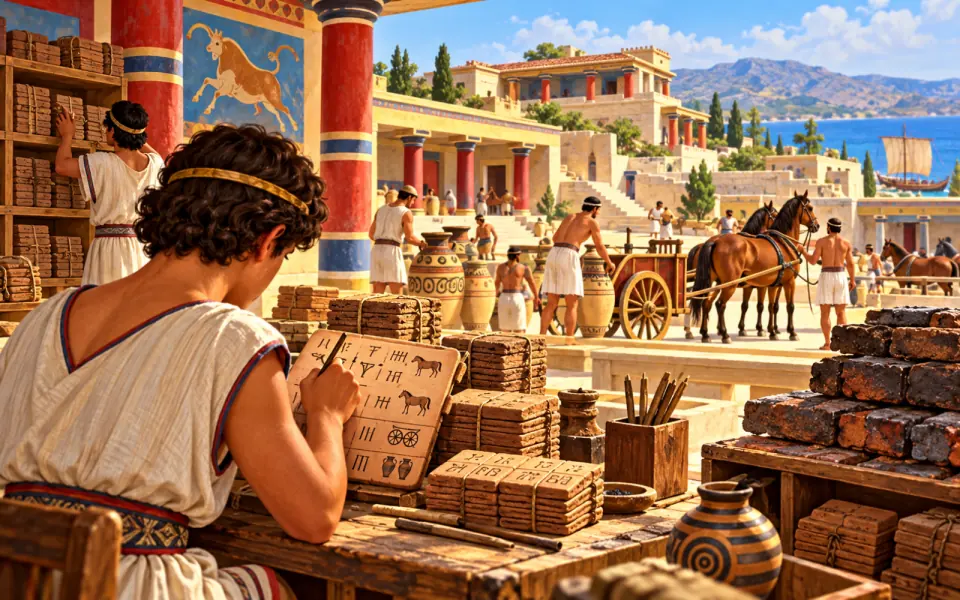 AfterLinear Babout 1450 BC
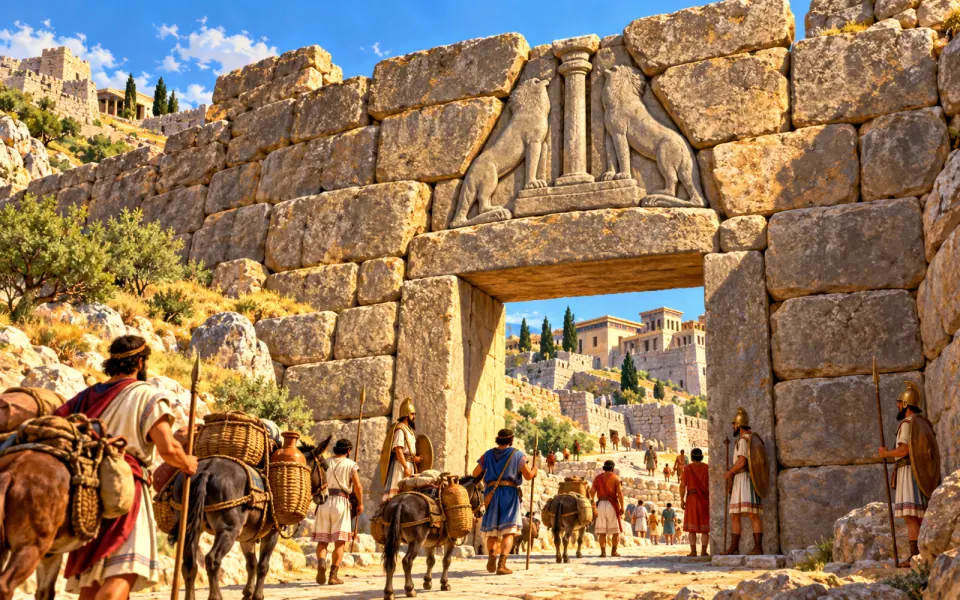 AfterThe Lion Gate at Mycenaeabout 1250 BC
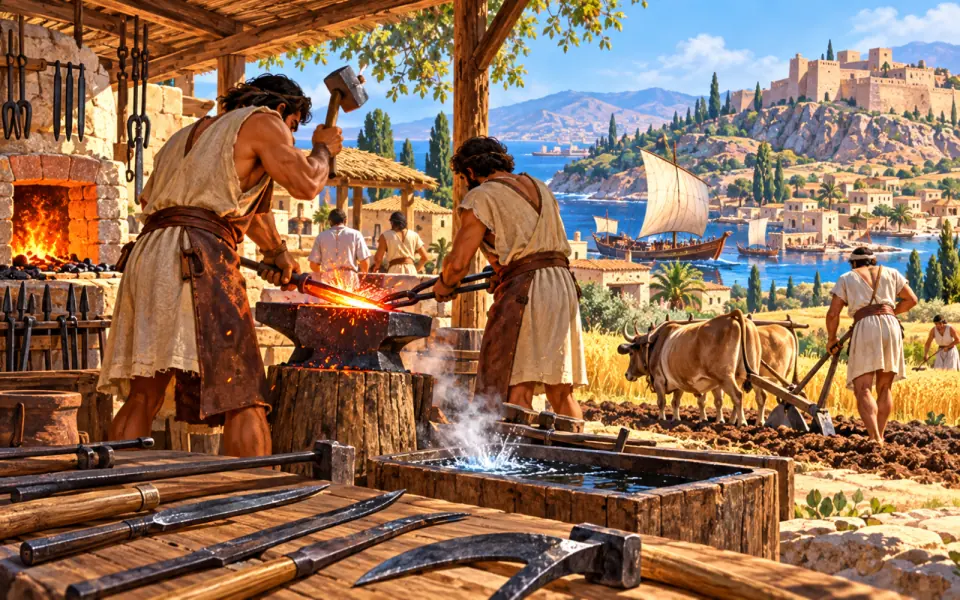 AfterThe Iron Age beginsabout 1200 BC
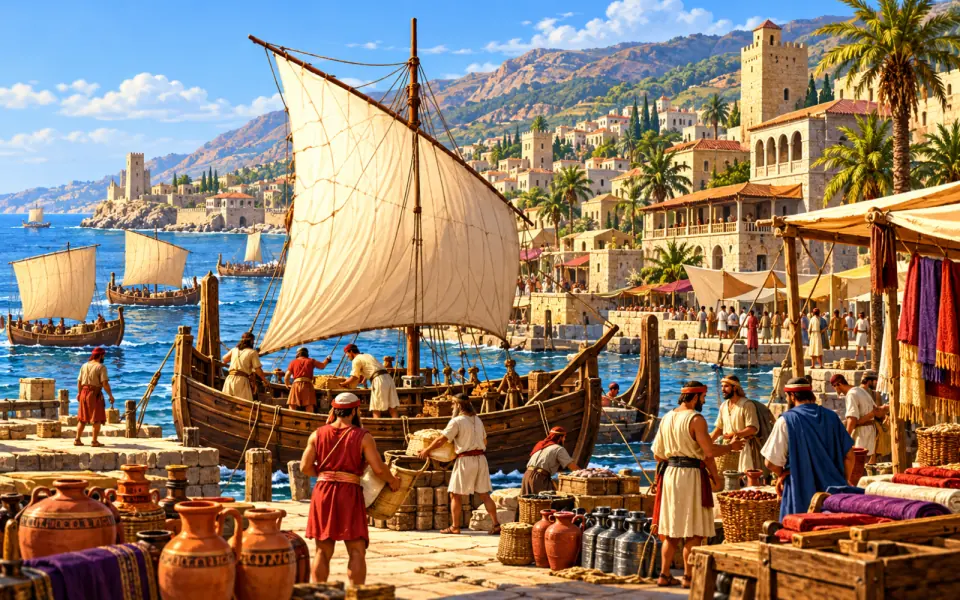 AfterThe Phoenicians spread outabout 1200 BC
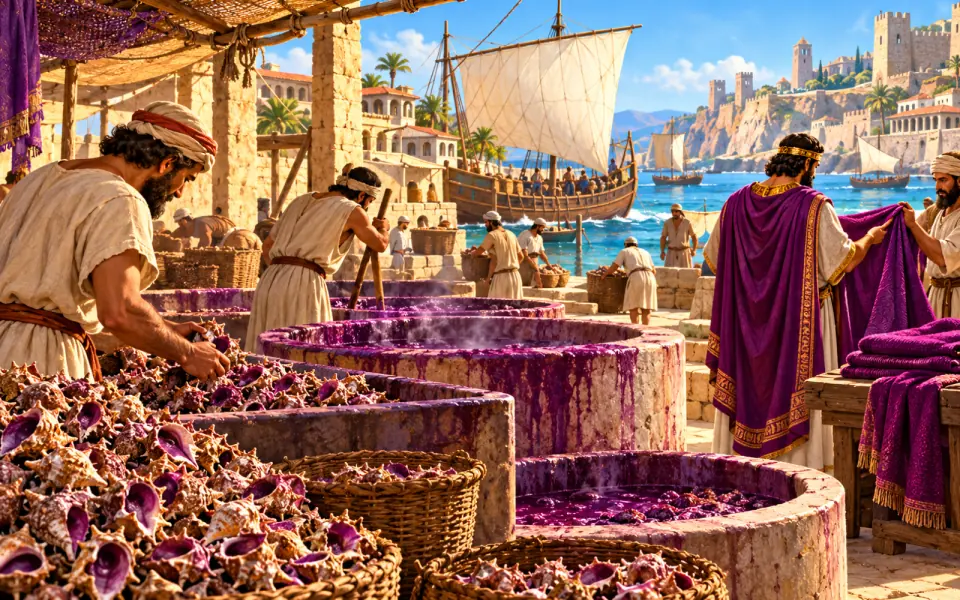 AfterPhoenician purpleabout 1100 BC
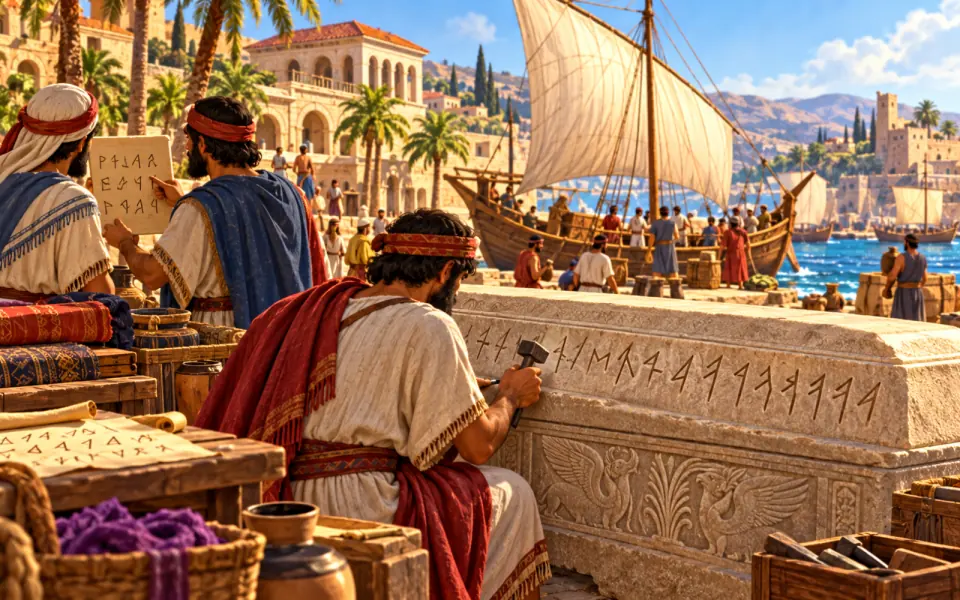 AfterThe Phoenician alphabetabout 1050 BC
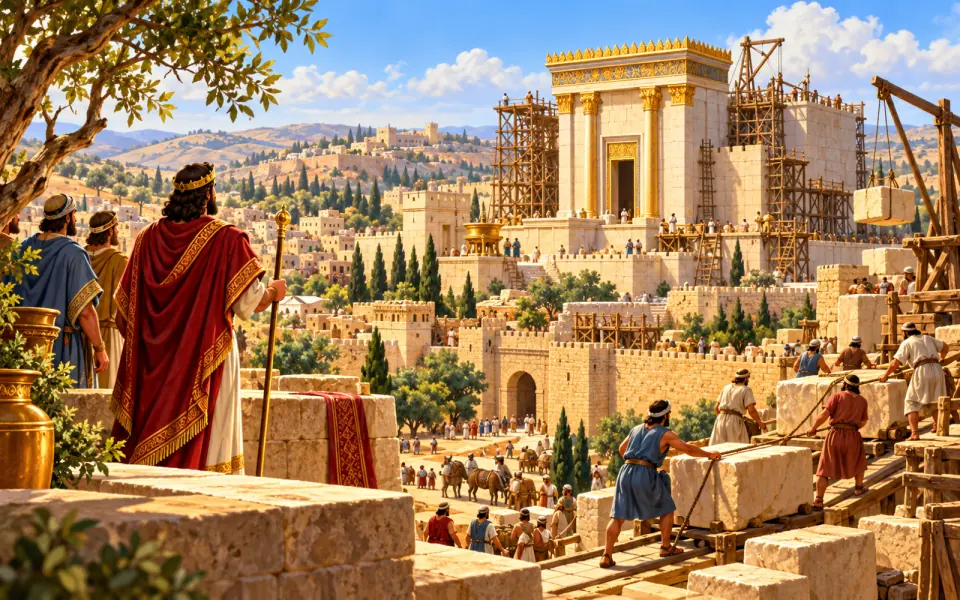 AfterThe Kingdom of Israelabout 1000 BC
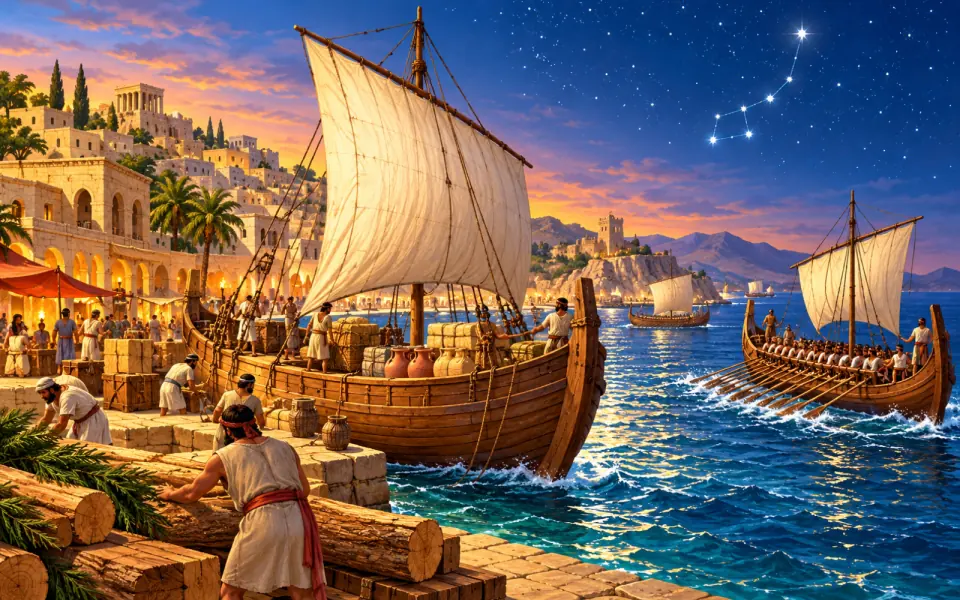 AfterPhoenician seafaringabout 1000 BC
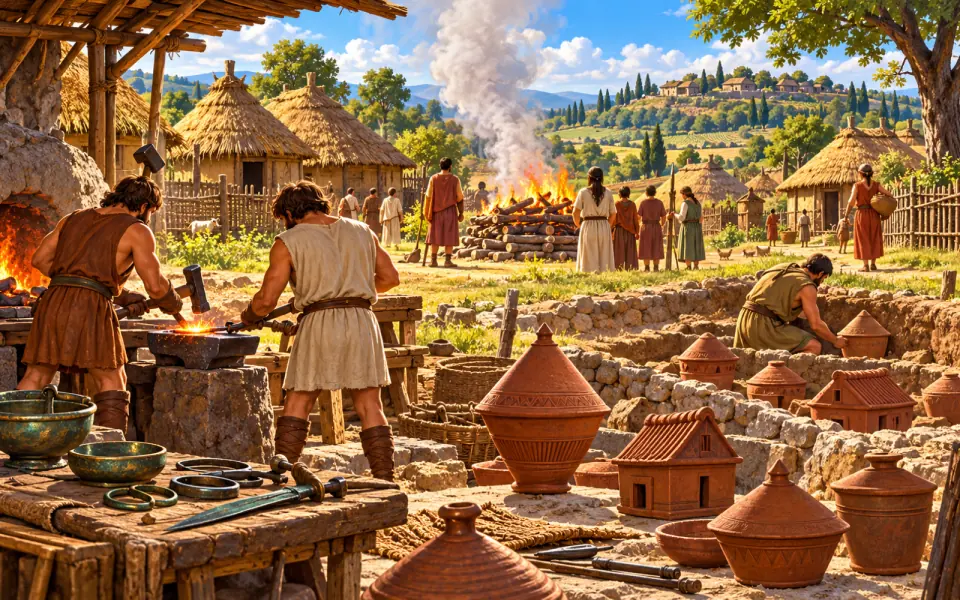 AfterThe Villanovan culture in Italyabout 900 BC
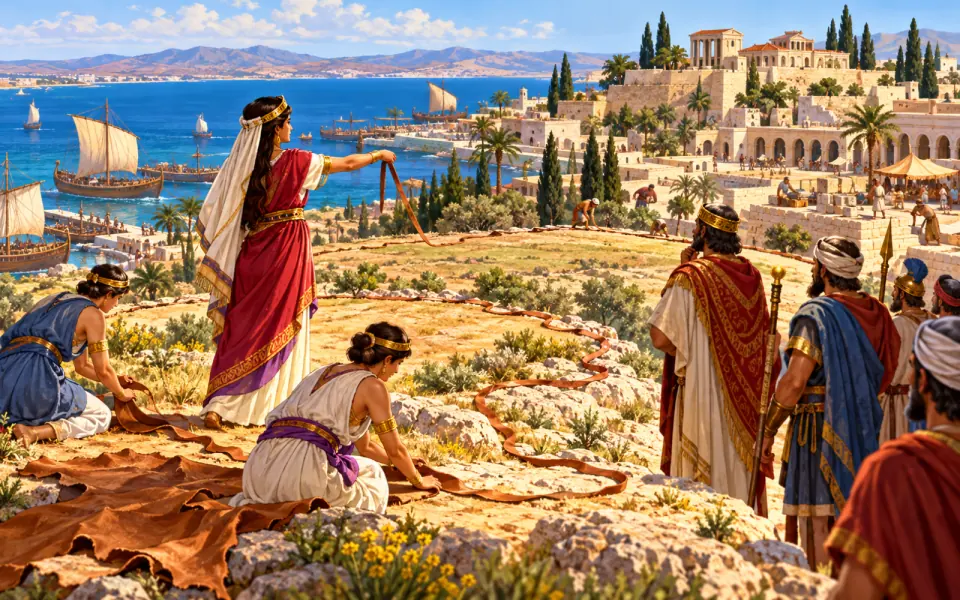 AfterTraditional founding of Carthageabout 814 BC
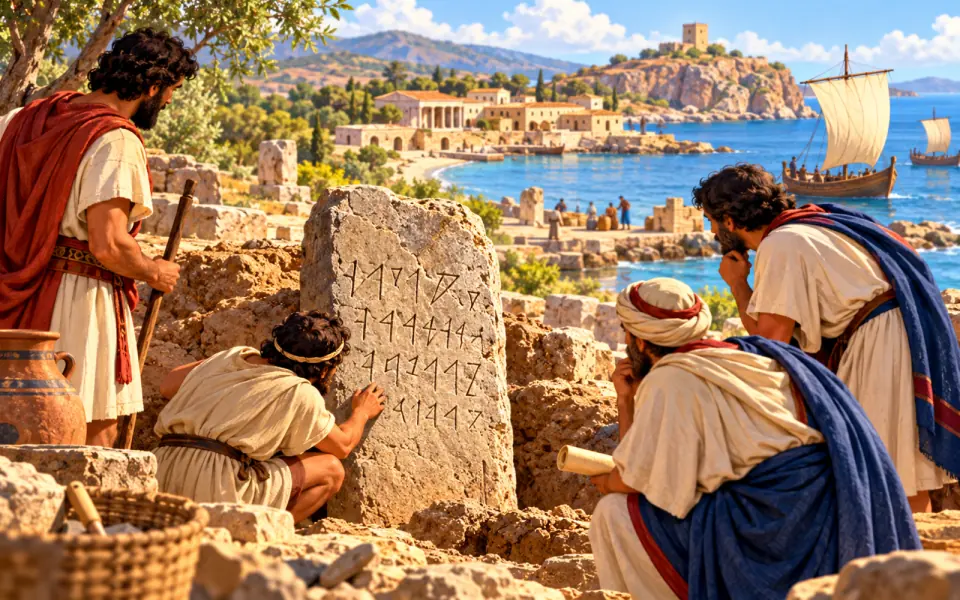 AfterThe Nora Stoneabout 800 BC
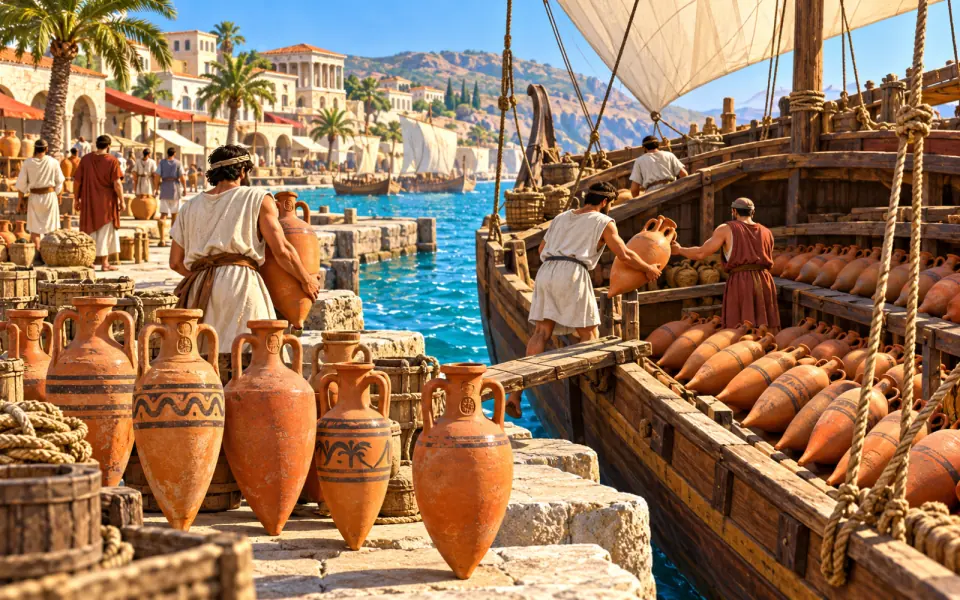 AfterAmphorae for oil and wineabout 800 BC
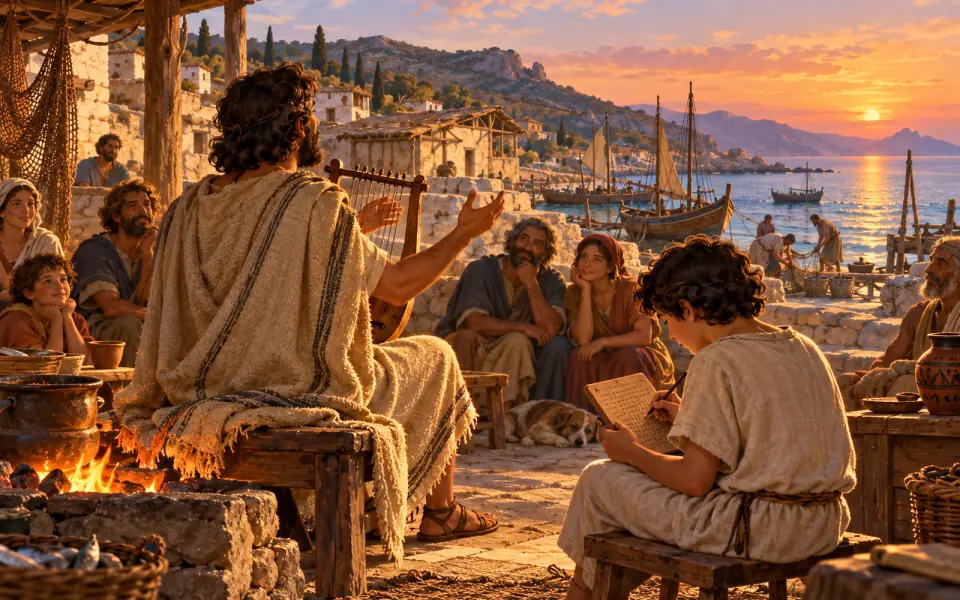 AfterHomer's poems are written downabout 750 BC
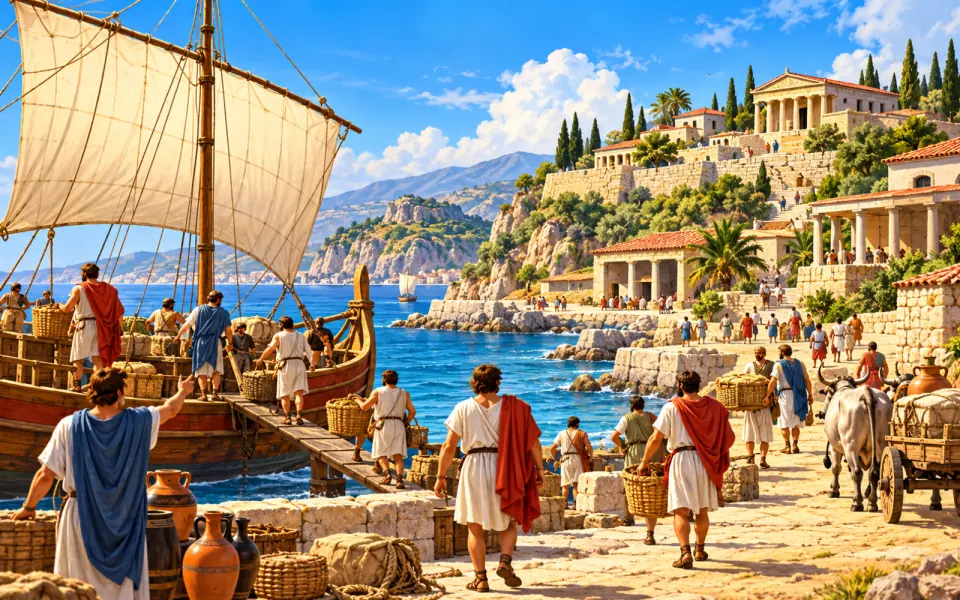 AfterGreek colonies in the Westabout 750 BC
 AfterThe Etruscans, lords of the Tyrrhenian Seaabout 700 BC
 AfterPhoenician glass spreadsabout 600 BC
 AfterCoins in the Mediterraneanabout 600 BC
 AfterThe Babylonian Exileabout 586 BC
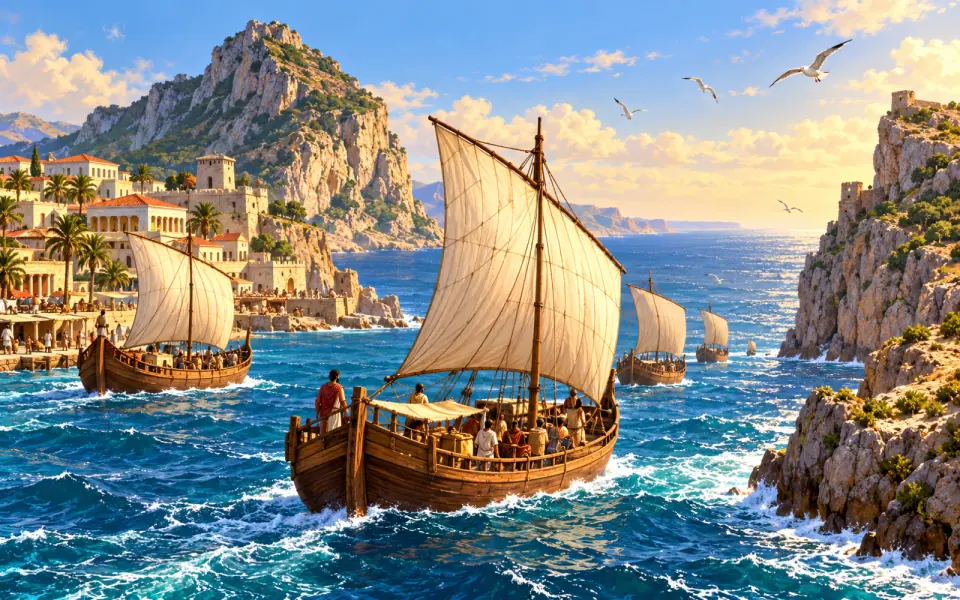 AfterSailing beyond Gibraltarabout 500 BC
In legend
Listen / Read next
- Music to read by: Cinematic JourneyEpic film-style music, no lyrics, by Ciro Simone IrmiciSpotifyYouTube Music
Meanwhile, elsewhere in the world
Other events of the era “Sea civilisations”
- Minoan civilisation on Crete
- The Proto-Sinaitic alphabet
- The eruption of Thera
- The nuraghi of Sardinia
- The gold mask of Mycenae
- Linear B
- The Lion Gate at Mycenae
- The Iron Age begins
- The Phoenicians spread out
- Phoenician purple
- The Phoenician alphabet
- The Kingdom of Israel
- Phoenician seafaring
- The Villanovan culture in Italy
- Traditional founding of Carthage
- The Nora Stone
- Amphorae for oil and wine
- Homer's poems are written down
- Greek colonies in the West
- The Etruscans, lords of the Tyrrhenian Sea
- Phoenician glass spreads
- Coins in the Mediterranean
- The Babylonian Exile
- Sailing beyond Gibraltar
