Renaissance perspective
about 1420 Florence, Italy
In short
In the early 1400s, in Florence, Filippo Brunelleschi showed with an experiment how to draw space realistically. Lines moving away from the viewer seem to run towards a single point, called the vanishing point. The painter Masaccio used these rules in his Holy Trinity fresco in Santa Maria Novella, and the scholar Leon Battista Alberti explained them in a book. So paintings began to look like windows opening onto the world.
Why it matters This is where the way of showing depth that we still use in drawing, photography and video games comes from.
Source: Treccani, entry “Prospettiva”
Study card about 5 minutes of reading
The story
Paintings without depth
If you look at a painting from the Middle Ages, for example an altarpiece from the 13th century, you will notice some strange things. The figures look flat, as if they had been cut out. The background is often gold, with no landscape. The sizes do not follow reality: the Virgin Mary is bigger than the saints beside her, because she is more important, and buildings are smaller than the people walking into them. Medieval painters were not trying to copy what the eye sees, but to show the spiritual order of the world.
Things began to change with Giotto, around 1300, who made his figures more solid and placed his characters in rooms or landscapes with some depth. But there was still no rule for showing space accurately. It was in Florence, at the start of the 15th century, that a group of artists and scholars found one.
Brunelleschi's experiment
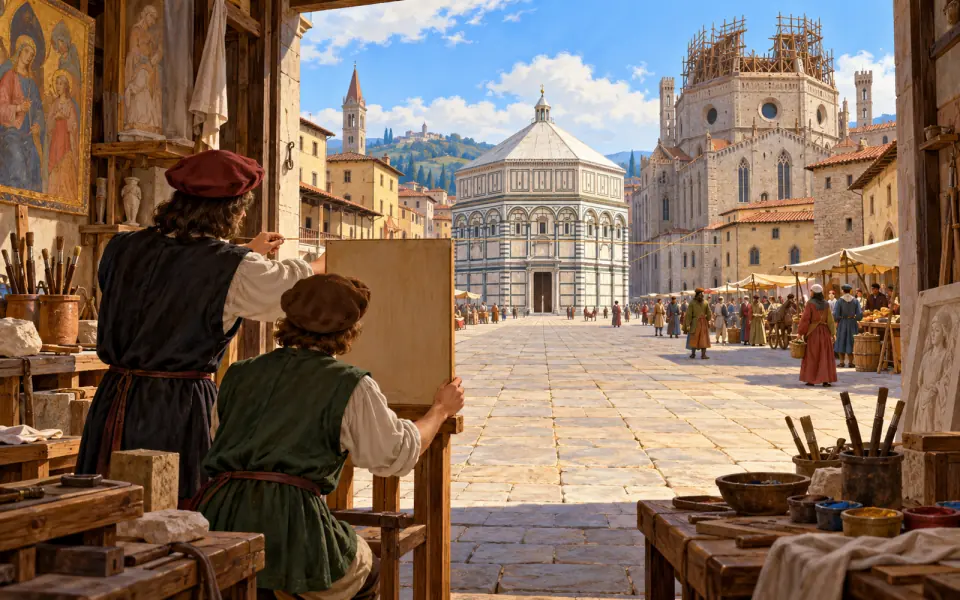
Filippo Brunelleschi was a Florentine goldsmith and architect, passionate about mathematics and geometry. Around 1415–1420, according to his biographers, he carried out an experiment, almost a conjuring trick. He painted a view of the Baptistery of Florence, the eight-sided building in front of the Cathedral, on a small panel with a hole in the middle. Then he stood just inside the central doorway of the Cathedral, a few metres from where he had painted, and looked through the hole from behind the panel, with the painted side facing the Baptistery. In front of the panel he held a mirror, which reflected the painting. When he took the mirror away he saw the real Baptistery, and when he put it back he saw the painting, and there was no difference: the painting was so faithful that it looked like reality.
The secret was “linear perspective”: a geometric method for drawing objects the way an eye placed at one exact point sees them. Parallel lines that move away from you, like the edges of a road or the beams of a ceiling, seem to come together at a single faraway point, the “vanishing point”, which lies on the horizon line; and objects become smaller as they move away, following a precise rule.
From practice to theory
The idea spread quickly. The young Masaccio was the first to use it in a spectacular way in the “Trinity”, a fresco painted around 1425–28 in Santa Maria Novella, in Florence: a chapel with a barrel vault seems to open up in the wall, so real that visitors stood there open-mouthed. Donatello used perspective in his carved reliefs, Lorenzo Ghiberti in the doors of the Baptistery, and Paolo Uccello in the “Battle of San Romano”, full of lances and foreshortened horses.
In 1435–36 a humanist and architect, Leon Battista Alberti, wrote the first treatise on painting, “De pictura” (“On Painting”), dedicating the Italian version to Brunelleschi and explaining how to build painted space: imagine the picture, he said, as an “open window” through which you look at the world. Later Piero della Francesca, a painter and mathematician, wrote a treatise on the subject, “De prospectiva pingendi” (“On Perspective for Painting”), and Leonardo da Vinci and Raphael brought perspective to perfection, with works such as the “Last Supper” and the “School of Athens”.
The word “perspective” comes from the Latin “perspicere”, which means “to see through”: it recalls Alberti's window. Artists learned the technique with grids of threads and measuring tools, and they often drew the geometric plan first, with the lines coming together, and only afterwards added the colours.
A revolution in the way of looking
Perspective was not only a technique. By placing the eye of the viewer at the centre, it reflected the new way of thinking of humanism, in which man is the measure of the world. The world became something that could be measured, calculated and shown with mathematics.
Why it happened
Perspective was born from a meeting of art and science. The artists of the 15th century, in a Florence full of workshops, trade and curiosity, wanted to show the world more truthfully. Mathematicians knew the geometry of Euclid and the optics of Arab scholars, such as Ibn al-Haytham, translated into Latin.
The new role of artists mattered too: they were no longer simple craftsmen, but men of learning. Brunelleschi, Alberti and Piero della Francesca were all at once architects, mathematicians, writers and painters.
What changed
Thanks to perspective, Western painting became, for almost five centuries, an art that imitated real space. Architecture, theatre scenery and town planning changed too, with cities designed as images of order, with wide avenues meeting at one point.
Its rules, five centuries later, are the basis of photography, cinema and computer graphics. 3D video games and virtual-reality headsets use perspective calculations descended from those of the 15th century.
At the start of the 20th century artists such as Picasso and Kandinsky gave up perspective, showing objects from several points of view, or giving up showing them at all. But understanding perspective helps you look at, and understand, other forms of art better too.
Key people and places
People
- Filippo Brunelleschi
- Florentine architect and goldsmith (1377–1446): he devised linear perspective through his experiments.
- Leon Battista Alberti
- Humanist and architect (1404–1472): he wrote the first treatise on painting, “De pictura”.
- Masaccio
- Tuscan painter (1401–1428): he was the first to use perspective in a great fresco, the “Trinity”.
- Piero della Francesca
- Painter and mathematician (about 1412–1492): he wrote a treatise on perspective.
- Paolo Uccello
- Florentine painter (1397–1475): passionate about perspective, he used it in the “Battle of San Romano”.
Places
- Baptistery and Cathedral of Florence
- The place of Brunelleschi's experiment: from the doorway of the Cathedral you could see the Baptistery.
- Santa Maria Novella, Florence
- The church that holds Masaccio's “Trinity”, one of the first examples of perspective.
Good to know
- Brunelleschi painted a view of the Baptistery of Florence with a hole in the middle to carry out an experiment.
- In 1435–36 Alberti described the picture as an “open window” on the world.
- In the Middle Ages important figures were painted bigger than less important ones.
- Masaccio's “Trinity” seems to open up a chapel in the wall.
- The rules of perspective are still used in 3D video games.
Find out more
- Wikipedia, “Perspective (graphical)” en.wikipedia.org
- Wikipedia, “Filippo Brunelleschi” en.wikipedia.org
- Wikipedia, “Holy Trinity (Masaccio)” en.wikipedia.org
- Wikipedia, “De pictura” en.wikipedia.org
Related events
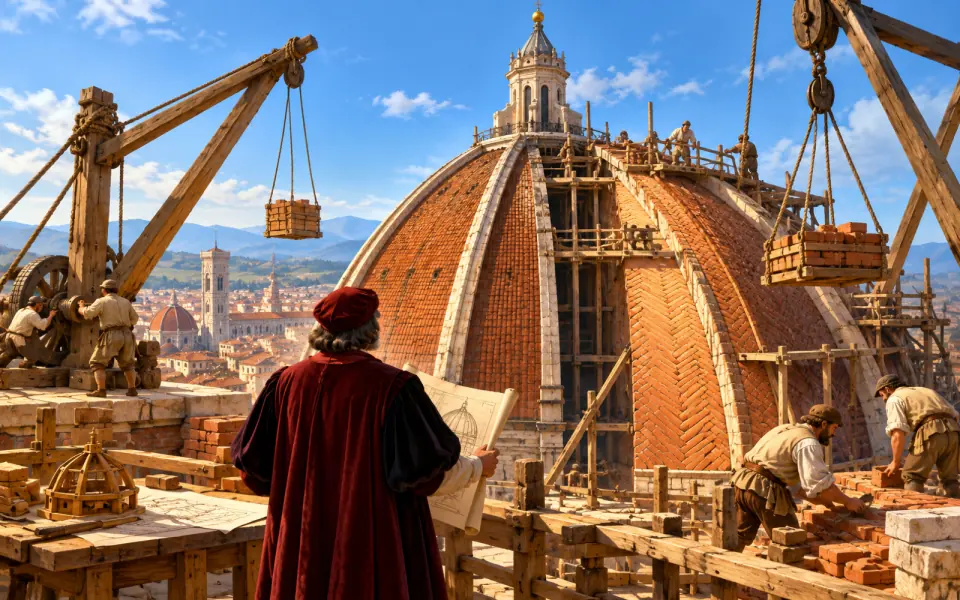
- Brunelleschi completes the dome1436 · Early modern ageBrunelleschi also built the dome of Florence Cathedral.
- Leonardo designs machinesabout 1485 · Early modern ageLeonardo da Vinci brought perspective to perfection.
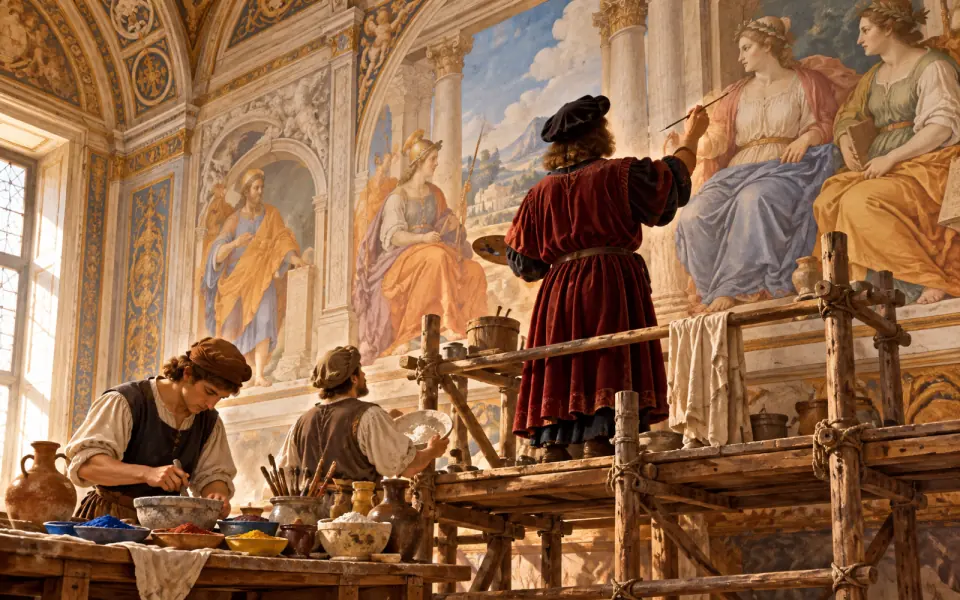
- Raphael paints the Vatican Rooms1508 · Early modern ageRaphael painted the Stanze frescoes using perspective.
- Abstract artabout 1910 · Early 20th centuryIn the 20th century abstract art gave up perspective.
Before and after, in the era “Early modern age”
Event 1 of 25
- You are hereRenaissance perspectiveabout 1420
 AfterBrunelleschi completes the dome1436
 AfterThe fall of Constantinople1453
 AfterGutenberg prints the Bibleabout 1455
 AfterLorenzo de' Medici in Florence1469
 AfterLeonardo designs machinesabout 1485
 AfterColumbus's voyage1492
 AfterVasco da Gama reaches India1498
 AfterMichelangelo carves David1504
 AfterRaphael paints the Vatican Rooms1508
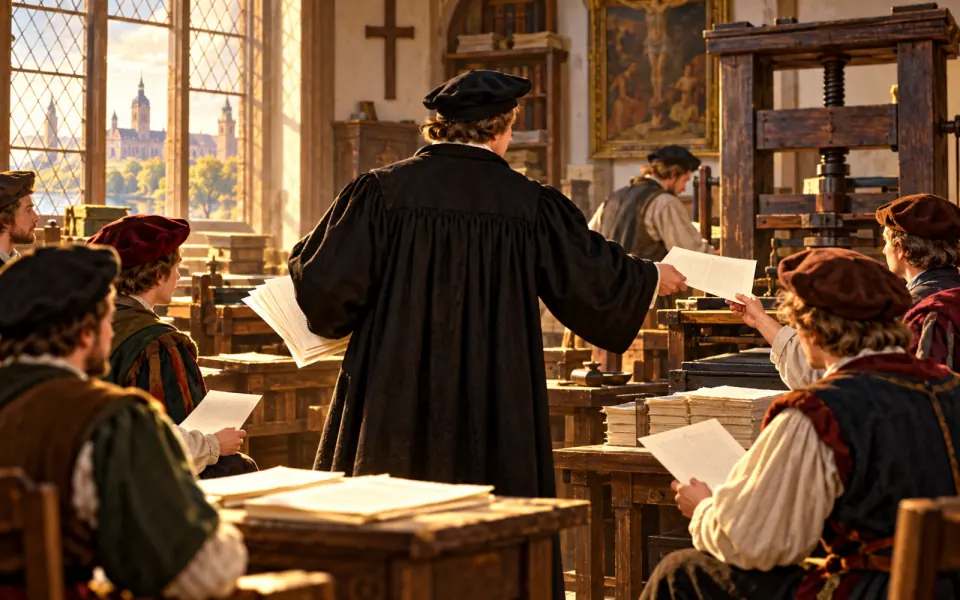 AfterLuther and the Reformation1517
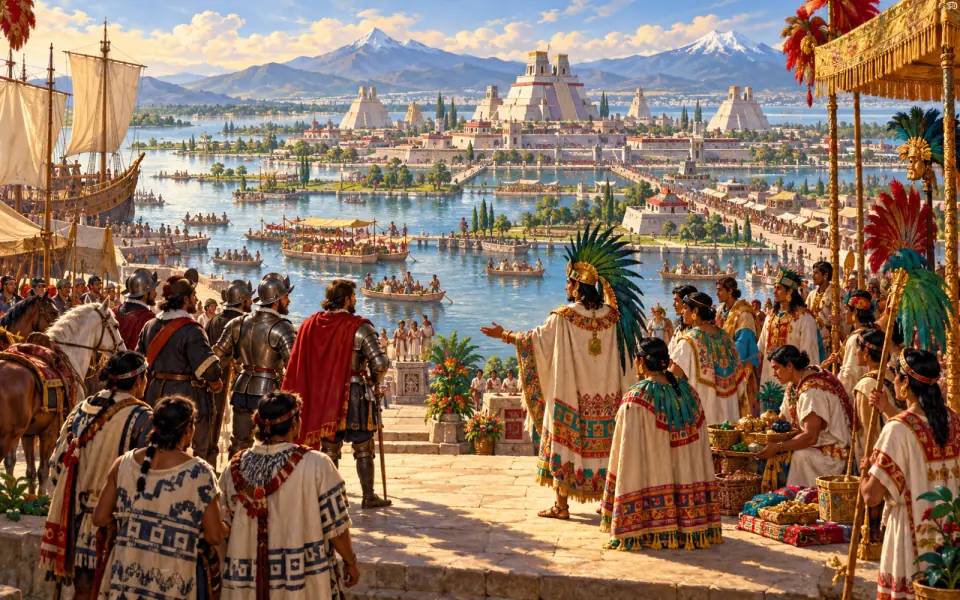 AfterThe conquest of Tenochtitlán1521
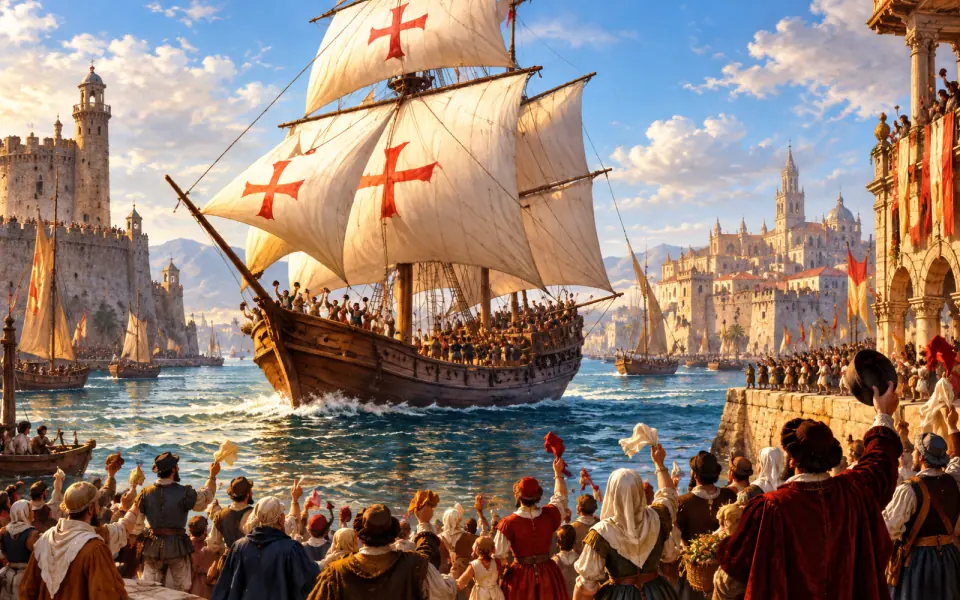 AfterThe first voyage round the world1522
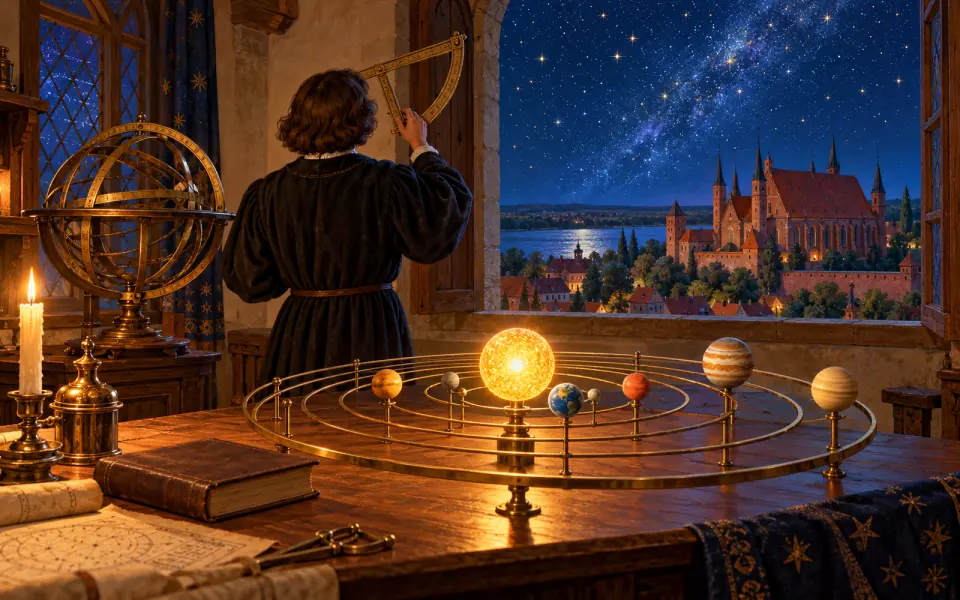 AfterCopernicus puts the Sun at the centre1543
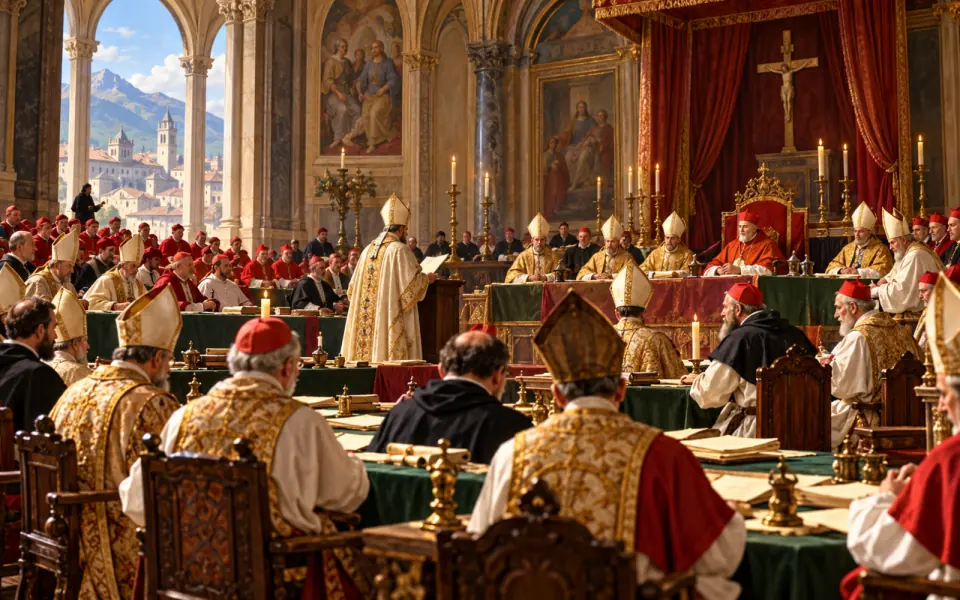 AfterThe Council of Trent1545–1563
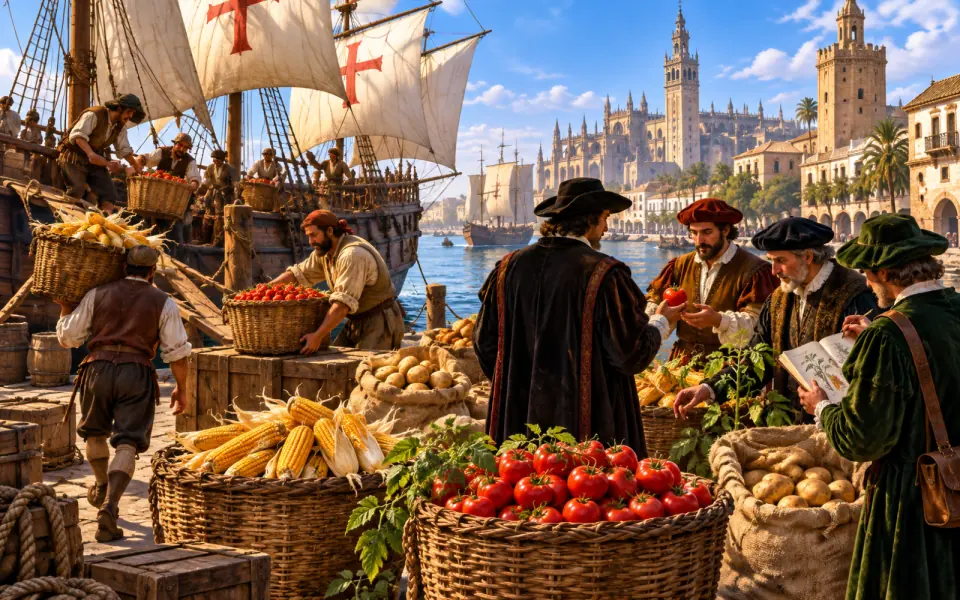 AfterTomatoes, maize and potatoes reach Europeabout 1550
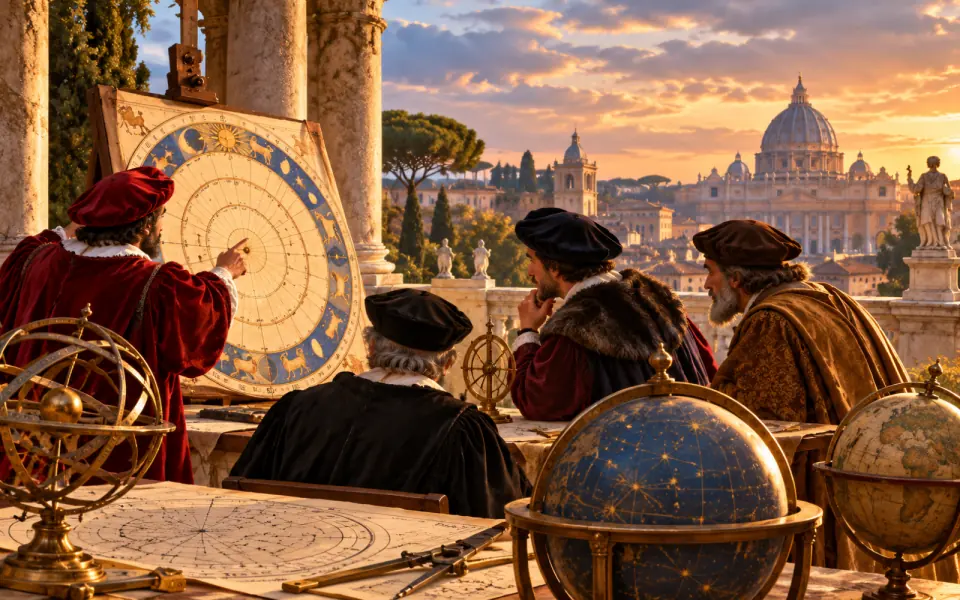 AfterThe Gregorian calendar1582
 AfterShakespeare's theatreabout 1590
 AfterRegular newspapers1605
 AfterGalileo turns his telescope to the sky1609
 AfterKepler describes the orbits1609
 AfterArtemisia Gentileschiabout 1612
 AfterHarvey studies the circulation of the blood1628
 AfterScientific academies1660
 AfterNewton publishes the Principia1687
Listen / Read next
- Music to read by: Cinematic JourneyEpic film-style music, no lyrics, by Ciro Simone IrmiciSpotifyYouTube Music
Meanwhile, elsewhere in the world
Other events of the era “Early modern age”
- Brunelleschi completes the dome
- The fall of Constantinople
- Gutenberg prints the Bible
- Lorenzo de' Medici in Florence
- Leonardo designs machines
- Columbus's voyage
- Vasco da Gama reaches India
- Michelangelo carves David
- Raphael paints the Vatican Rooms
- Luther and the Reformation
- The conquest of Tenochtitlán
- The first voyage round the world
- Copernicus puts the Sun at the centre
- The Council of Trent
- Tomatoes, maize and potatoes reach Europe
- The Gregorian calendar
- Shakespeare's theatre
- Regular newspapers
- Galileo turns his telescope to the sky
- Kepler describes the orbits
- Artemisia Gentileschi
- Harvey studies the circulation of the blood
- Scientific academies
- Newton publishes the Principia
