Michelangelo carves David
1504 Florence, Italy
In short
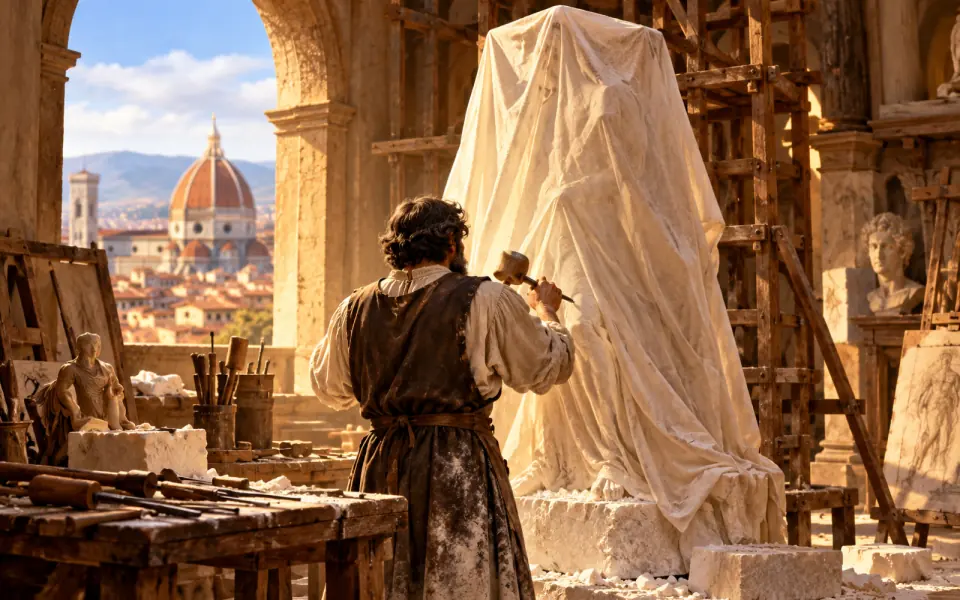
Michelangelo Buonarroti was 26 when he began carving David from a large block of marble that other sculptors had left half-finished. He worked on it for about three years. The statue, more than four metres tall, shows the young hero of the Bible concentrating just before he faces the giant Goliath. In 1504 it was placed in front of the Palazzo Vecchio; today the original is in the Galleria dell'Accademia and there is a copy in the square.
Why it matters It became a symbol of the Florentine Republic and of the strength of those who defend their freedom.
Source: Galleria dell'Accademia di Firenze, “David di Michelangelo”
Study card about 5 minutes of reading
The story
An abandoned block of marble
In the middle of the 15th century the Opera del Duomo of Florence, the body in charge of the cathedral, ordered an enormous block of Carrara marble, more than five metres tall, to make a statue to be placed high up, between the buttresses of the Cathedral. It was a difficult block: long and narrow, and full of tiny cracks. In 1464 the sculptor Agostino di Duccio began to rough it out, but soon gave up. Another sculptor, Antonio Rossellino, examined it twelve years later and said it was not worth working on.
For almost forty years the marble stayed in the yard of the Opera, exposed to rain and sun, and the Florentines called it, with a mixture of affection and regret, “the Giant”. It seemed that nobody was able to make anything beautiful out of it.
A young sculptor
In 1501 Florence had been a republic for only a few years: the Medici had been driven out in 1494 and the city, led by gonfalonieri (from 1502 by Pier Soderini), wanted symbols that spoke of freedom. In August 1501 the Opera del Duomo gave the Giant to a young sculptor of twenty-six, Michelangelo Buonarroti. Michelangelo was born in 1475 at Caprese, in Tuscany, and in Rome had already carved the Pietà, now in St Peter's, which had made him famous.
Michelangelo decided to carve David, the young shepherd of the Bible who defeated the giant Goliath with a sling. For the Florentines David was a dearly loved hero: a small one who beats the big one, a symbol of courage and justice. Michelangelo made a new choice. Earlier statues of David, such as those by Donatello and Verrocchio, showed him after the battle, with Goliath's head at his feet. His David is instead a young naked man, standing, with the sling over his shoulder, a moment before the fight, with a tense gaze and a frowning brow.
Three years of work
Michelangelo worked for about three years, in a wooden enclosure so as to be left in peace, carving the block very carefully: the marble was so narrow that he had to adapt the pose to its shape. He did not use a large model, but started from small sketches in wax and clay. The finished statue is more than five metres tall, about 5.17 metres without the base, and weighs about five to six tonnes.
When the statue was almost finished, in January 1504, the leaders of the city gathered a committee of artists to decide where to put it. Leonardo da Vinci and Botticelli were among its members. Some suggested the Loggia dei Lanzi, others the Cathedral; in the end they chose Piazza della Signoria, in front of the palace of the city government. The transport, in mid-May 1504, took four days: the statue was tied inside a wooden frame and dragged on rollers by dozens of men through the streets, from the workshop to the square. It was unveiled on 8 September 1504.
A statue as a symbol
For the Florentines the David became the symbol of their republic: a small state, surrounded by powerful neighbours, but determined to defend itself. It is also said that during the transport some people threw stones at it, in protest against the new government; it is hard to say how much of this is true.
Over the centuries the statue suffered damage from time and from historical events. In 1527, during a revolt, a bench thrown from a window of the palace broke one of its arms. In 1873 it was moved to the Galleria dell'Accademia, to protect it from the weather, and a copy was put in its place in the square. In 1991 a man struck it with a hammer and broke a toe of its left foot, which was later restored.
Why it happened
Florence, after the expulsion of the Medici, had given itself a republican government and wanted symbols of freedom. David, a young man who defeats a giant, was perfect for a small state surrounded by powerful neighbours.
Michelangelo was an artist of extraordinary skill, still young but already famous. The abandoned block offered him a challenge that others had refused, and it was a test he could not let slip.
What changed
The David became one of the most famous statues in the world and the model for the sculpture of the 16th century. It showed how much an artist could do with a difficult material and a deep knowledge of human anatomy.
After the David, Michelangelo was called to Rome by Pope Julius II and painted the ceiling of the Sistine Chapel (1508–1512), the Last Judgement and other great works. He lived to almost ninety, and died in Rome in 1564.
The statue drew visitors to Florence and was copied all over the world: the copy in Piazza della Signoria, the one in Piazzale Michelangelo, and many others. Even today the Accademia receives over a million visitors a year, who come to admire the original.
Key people and places
People
- Michelangelo Buonarroti
- Sculptor, painter and architect (1475–1564): he carved the David at the age of twenty-six to twenty-nine.
- Agostino di Duccio
- Florentine sculptor (1418–1481): he began working on the block in 1464.
- Antonio Rossellino
- Florentine sculptor (1427–1479): he examined the block in 1476.
- Pier Soderini
- Gonfaloniere of the Florentine Republic from 1502: he governed the city in those years.
- Donatello
- Florentine sculptor (about 1386–1466): the maker of a bronze David, very different from this one.
Places
- Galleria dell'Accademia, Florence
- The museum where the original is kept today.
- Piazza della Signoria, Florence
- The square where the David stood from 1504 to 1873.
Good to know
- The David is more than five metres tall and weighs about five to six tonnes.
- The block of marble was abandoned for almost forty years before Michelangelo carved it.
- Compared with other statues of David, Michelangelo's shows the moment before the battle.
- In 1527 the David lost an arm, broken by a bench thrown from a window.
- In the square today there is a marble copy.
Find out more
- Wikipedia, “David (Michelangelo)” en.wikipedia.org
- Wikipedia, “Michelangelo” en.wikipedia.org
- Wikipedia, “Galleria dell'Accademia” en.wikipedia.org
- Wikipedia, “Piazza della Signoria” en.wikipedia.org
Related events
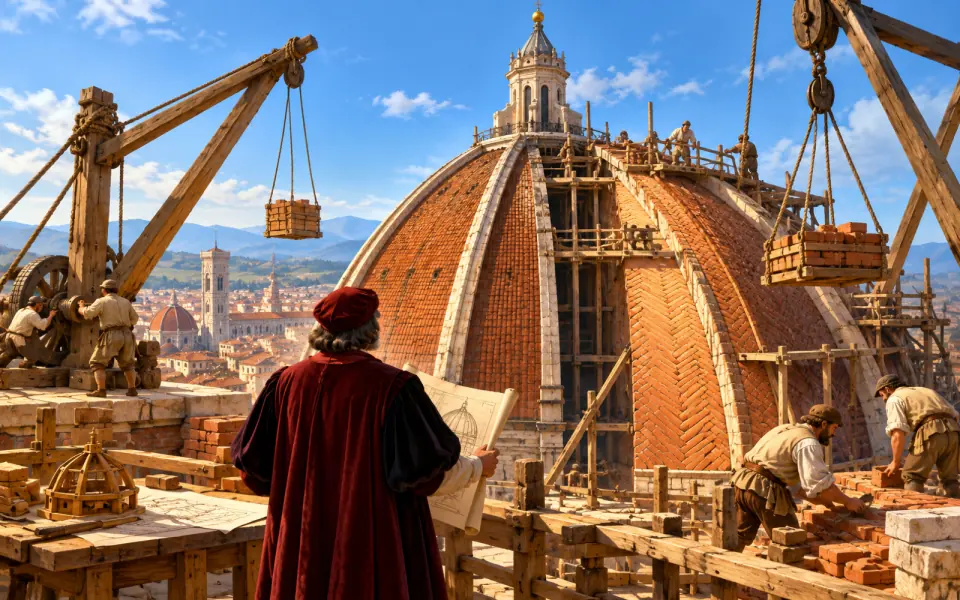
- Brunelleschi completes the dome1436 · Early modern ageThe dome of the Cathedral dates from the century before.
- Lorenzo de' Medici in Florence1469 · Early modern ageMichelangelo grew up in the circles of the Medici.
- Leonardo designs machinesabout 1485 · Early modern ageLeonardo was part of the committee that chose the place for the David.
- Raphael paints the Vatican Rooms1508 · Early modern ageRaphael too worked in Rome and in Florence in the same years.
Before and after, in the era “Early modern age”
Event 9 of 25
 BeforeRenaissance perspectiveabout 1420
 BeforeBrunelleschi completes the dome1436
 BeforeThe fall of Constantinople1453
 BeforeGutenberg prints the Bibleabout 1455
 BeforeLorenzo de' Medici in Florence1469
 BeforeLeonardo designs machinesabout 1485
 BeforeColumbus's voyage1492
 BeforeVasco da Gama reaches India1498
- You are hereMichelangelo carves David1504
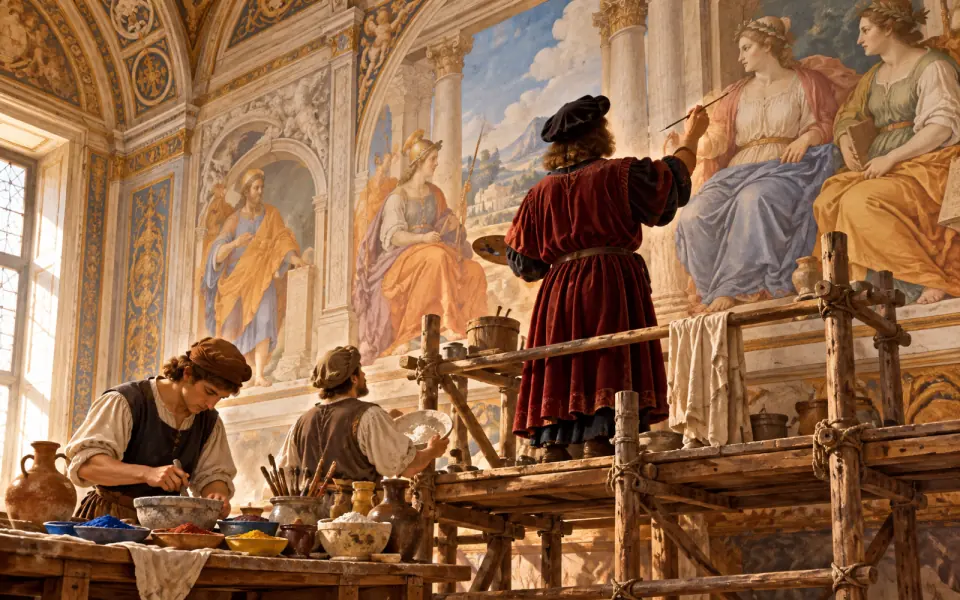 AfterRaphael paints the Vatican Rooms1508
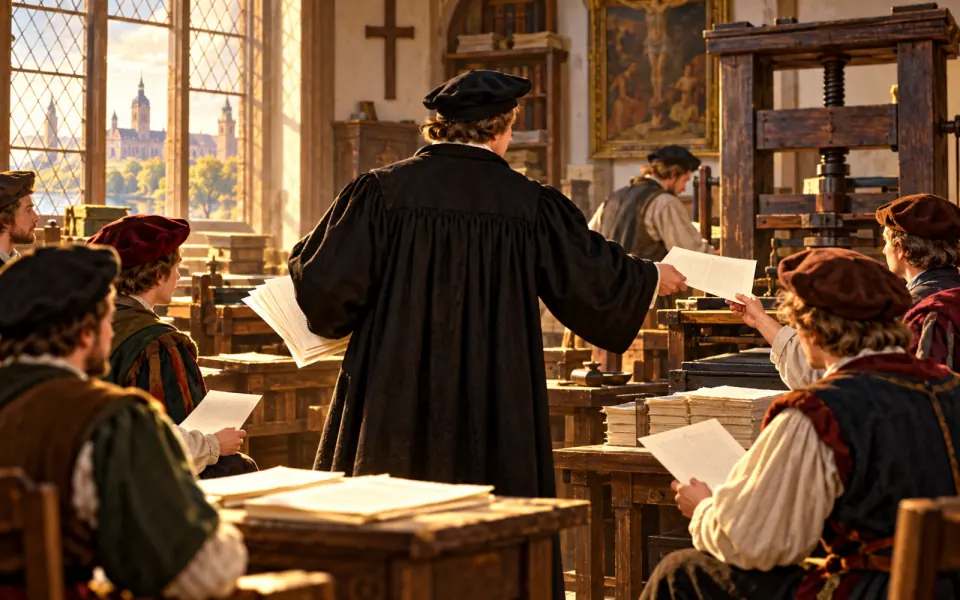 AfterLuther and the Reformation1517
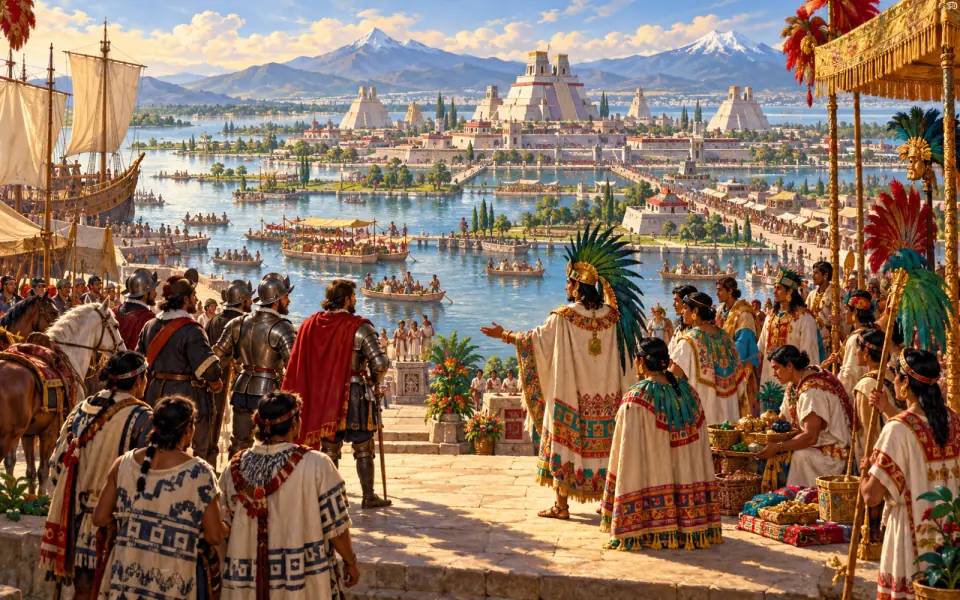 AfterThe conquest of Tenochtitlán1521
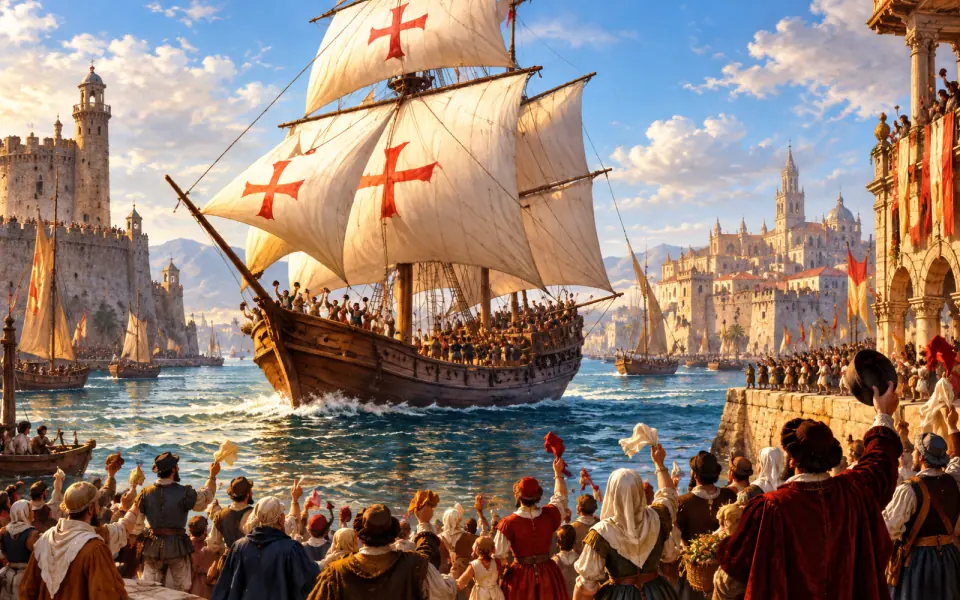 AfterThe first voyage round the world1522
 AfterCopernicus puts the Sun at the centre1543
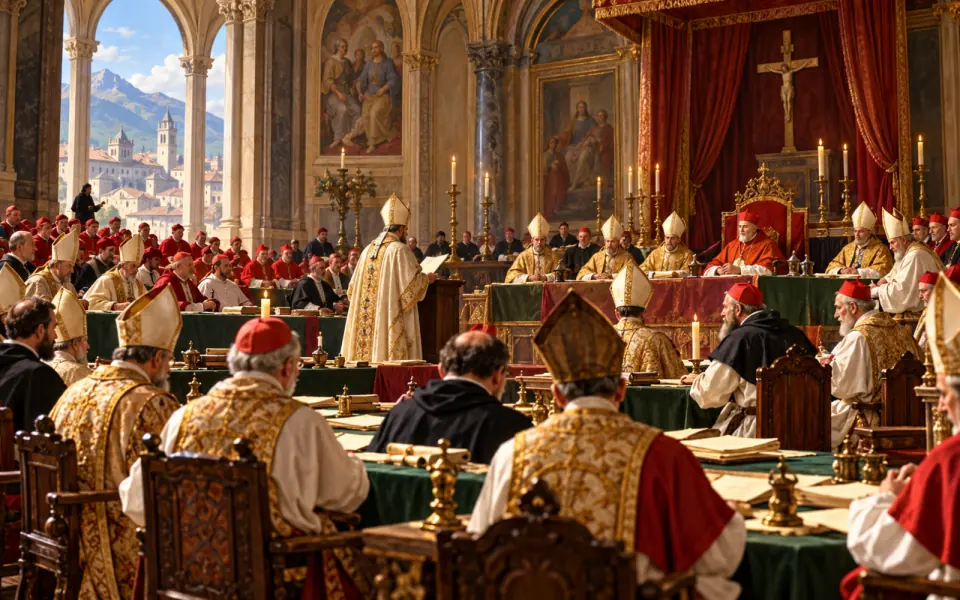 AfterThe Council of Trent1545–1563
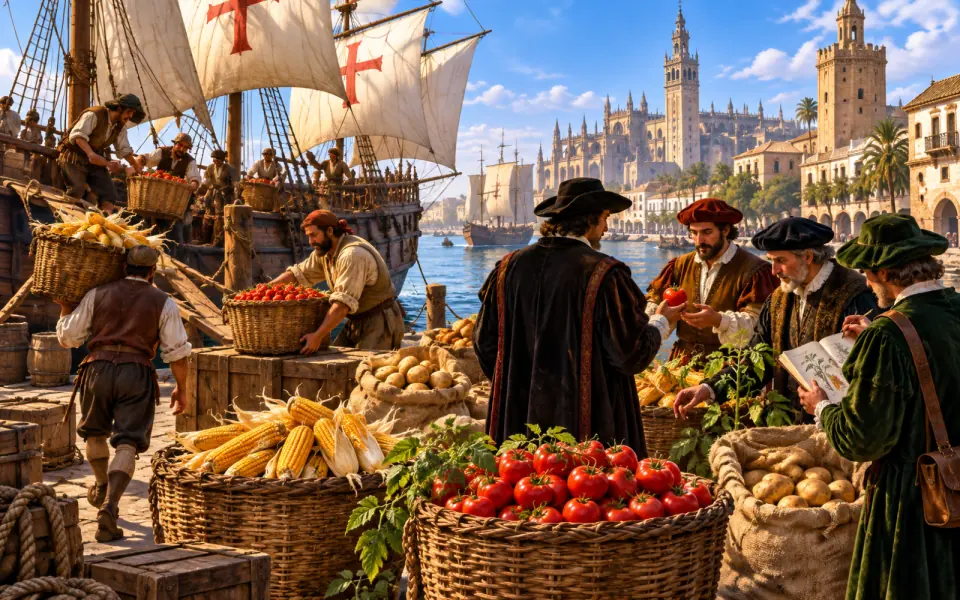 AfterTomatoes, maize and potatoes reach Europeabout 1550
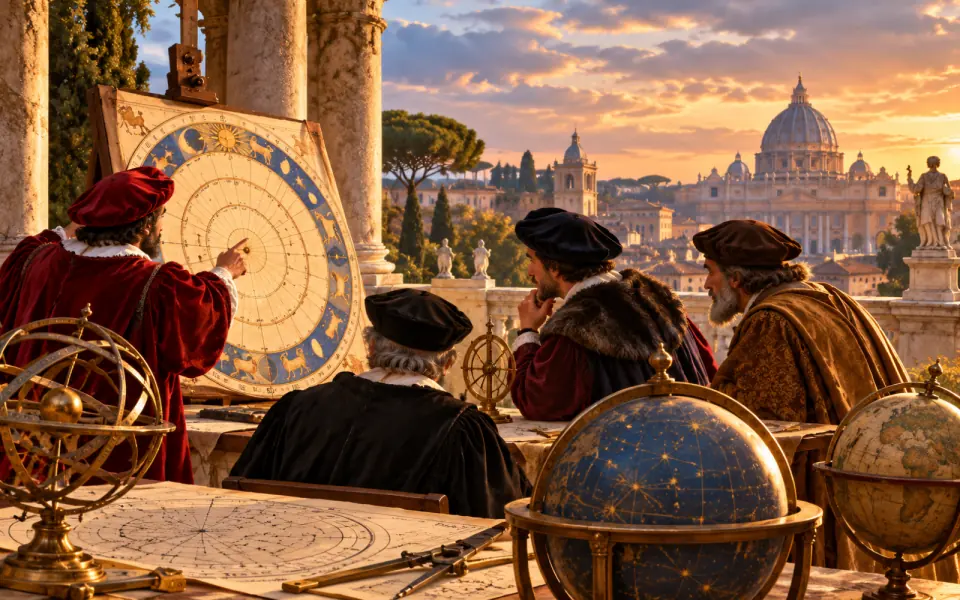 AfterThe Gregorian calendar1582
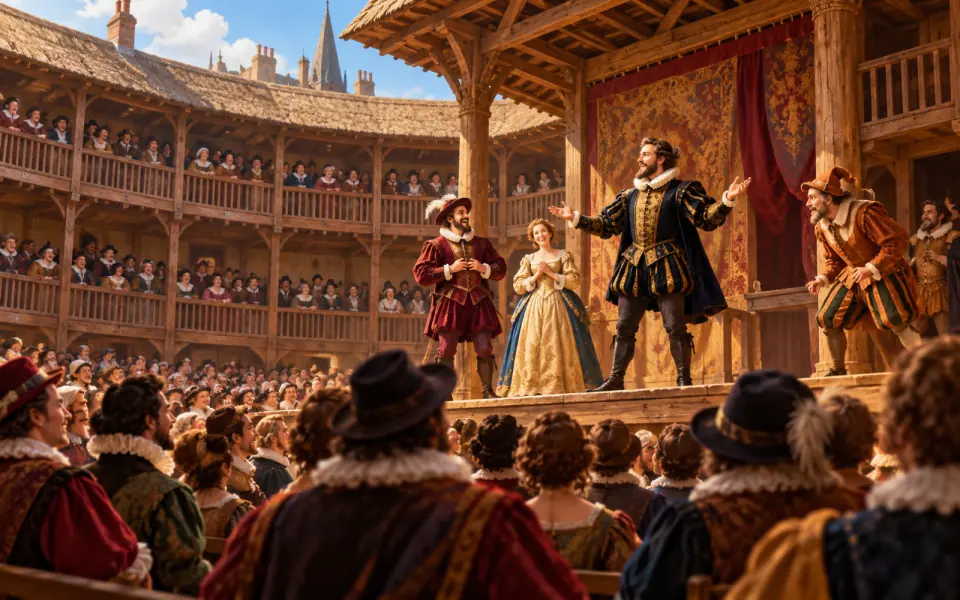 AfterShakespeare's theatreabout 1590
 AfterRegular newspapers1605
 AfterGalileo turns his telescope to the sky1609
 AfterKepler describes the orbits1609
 AfterArtemisia Gentileschiabout 1612
 AfterHarvey studies the circulation of the blood1628
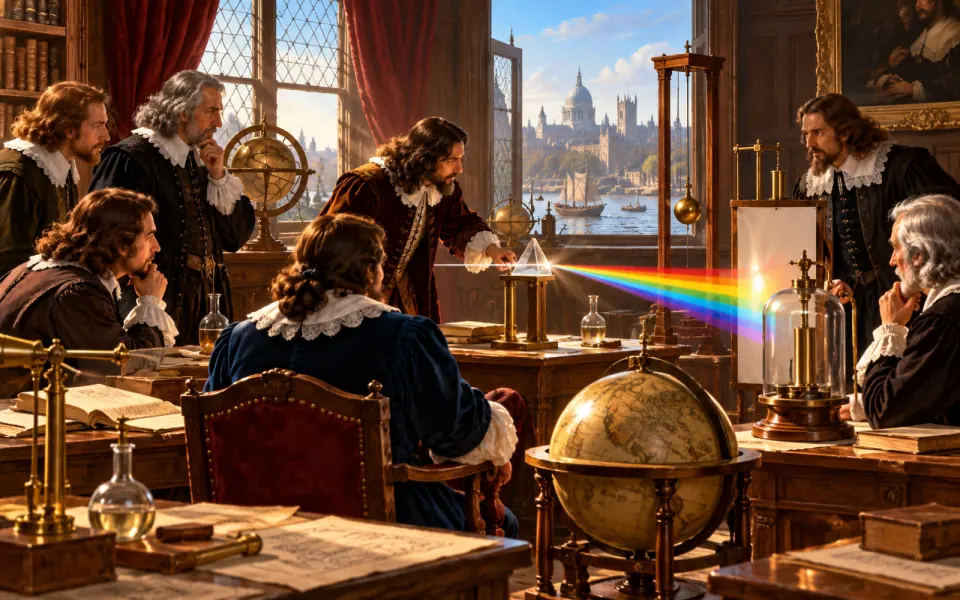 AfterScientific academies1660
 AfterNewton publishes the Principia1687
Listen / Read next
- Music to read by: Cinematic JourneyEpic film-style music, no lyrics, by Ciro Simone IrmiciSpotifyYouTube Music
Meanwhile, elsewhere in the world
Other events of the era “Early modern age”
- Renaissance perspective
- Brunelleschi completes the dome
- The fall of Constantinople
- Gutenberg prints the Bible
- Lorenzo de' Medici in Florence
- Leonardo designs machines
- Columbus's voyage
- Vasco da Gama reaches India
- Raphael paints the Vatican Rooms
- Luther and the Reformation
- The conquest of Tenochtitlán
- The first voyage round the world
- Copernicus puts the Sun at the centre
- The Council of Trent
- Tomatoes, maize and potatoes reach Europe
- The Gregorian calendar
- Shakespeare's theatre
- Regular newspapers
- Galileo turns his telescope to the sky
- Kepler describes the orbits
- Artemisia Gentileschi
- Harvey studies the circulation of the blood
- Scientific academies
- Newton publishes the Principia
