Gutenberg prints the Bible
about 1455 Mainz, Germany
In short
In Mainz, in Germany, Johannes Gutenberg perfected a way of printing with movable metal letters, which could be set, used and then reused. Along with the type he developed a suitable ink and a press similar to the ones used for squeezing grapes. His most famous work is a Bible in Latin, printed in about 180 copies around 1455. Fewer than fifty survive today, kept in great libraries.
Why it matters Books became cheaper and more plentiful, and ideas began to spread much faster.
Study card about 5 minutes of reading
The story
Books copied by hand
Before Gutenberg every book in Europe was written by hand. In monasteries and in the workshops of scribes, copyists wrote out a text word by word, for months or years, on parchment or paper. A book cost a huge amount, as much as several years' pay for an office clerk, and very few people could afford one. Every copy was a little different from the others, because whoever was copying could make mistakes or change something without noticing.
In China and Korea people had been printing for centuries: in China they used carved wooden blocks, and in Korea, at least since the 13th century, movable metal type. In Europe, however, there was still little printing. Woodcuts, that is, prints made with carved wooden blocks, were used for pictures and a few short texts, but carving a whole page on wood for every book took a very long time.
Johannes Gutenberg's idea
Johannes Gutenberg was born in Mainz, in Germany, around 1400. He was a goldsmith, which means he knew how to work metals, and this was decisive. He realised that many small letters could be cast in metal, one for each letter of the alphabet, all identical to each other, and used to put together a page. When the printing was finished, the letters could be taken apart and used again for another page. This was the system of “movable type”.
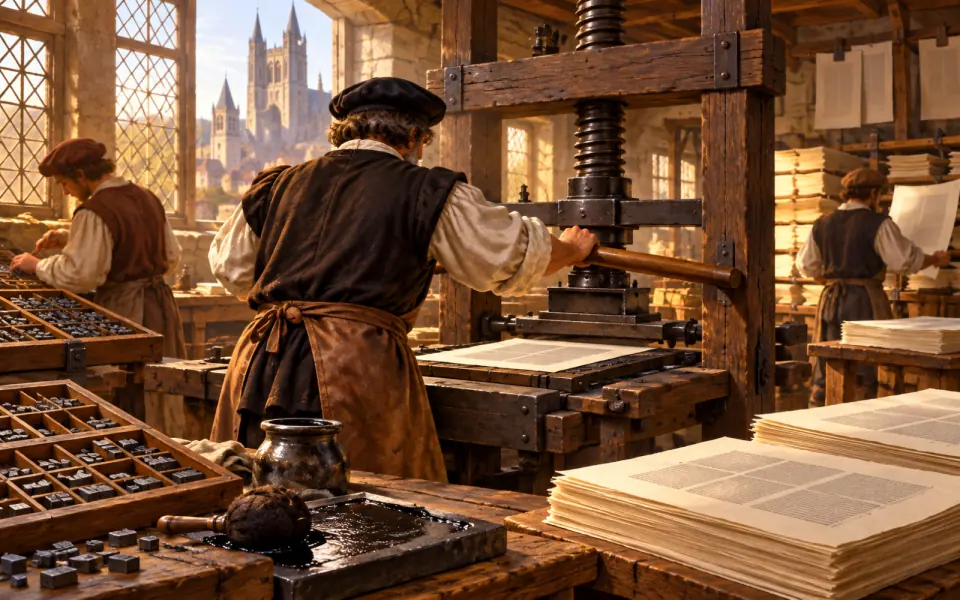
Gutenberg had to solve many practical problems. To cast the letters he invented an adjustable mould, into which he poured an alloy of lead, tin and antimony that cooled quickly and stayed hard. He developed an oil-based ink, thicker than the ink of the copyists, which stuck well to metal. And he adapted for printing the press, a screw machine used for squeezing grapes and olives, which pressed the sheet against the inked type.
Setting a page was patient work. The compositor chose the letters one by one from a case divided into compartments and arranged them, back to front like in a mirror, on a tray. Then the ink was spread, the sheet was laid on top and the press was lowered. In one day a team of workers could print hundreds of sheets, a pace that no copyist could have dreamed of.
The 42-line Bible
To get the technique going, money was needed, and Gutenberg borrowed some from a wealthy financier of Mainz, Johann Fust. The result of this work was the Bible in Latin, printed around 1455, called the “42-line Bible” because each column held forty-two lines. Each page had two columns, and the whole work was in two volumes, with a total of about twelve hundred pages.
It is thought that about one hundred and eighty copies were printed, some on parchment and others on paper. About forty-nine survive, whole or in part. Some initial letters and decorations were added by hand, after printing, by illuminators, because the readers of the time wanted books as beautiful as those copied by hand.
Gutenberg, however, had trouble with Fust: Fust asked for the loan to be repaid, and in 1455 the print shop passed to him, in a lawsuit that historians piece together from documents. Gutenberg died in Mainz in 1468, without being rich. The trade he had invented, however, spread across the whole of Europe.
After the Bible
In the following decades printing spread with incredible speed. By 1500, less than half a century later, there were printing shops in more than two hundred and fifty European cities (this is an estimate), and millions of volumes had been printed. The price of books collapsed. Books produced before 1501 are called “incunabula”, which in Latin means “cradle”, because they are the books of the infancy of printing.
Why it happened
In the 15th century the demand for books was growing in Europe: universities had been founded, merchants needed to read and write, and many people wanted religious and study texts. Copying by hand was no longer enough.
The right knowledge was needed too: metalworking, the press, and paper, which was cheaper than parchment and had been common in Europe for only a few centuries. Gutenberg joined together techniques that already existed in a new combination.
What changed
Printing with movable type changed the way ideas were spread. Identical texts could reach many people at the same time, and this helped scientific, literary and religious works to circulate. Luther's ideas, in the following century, spread thanks to pamphlets printed by the thousand.
Literacy, libraries and schools spread, because books cost less. National languages, such as Italian, German and English, became fixed more easily: the print shops chose one form of spelling for their books, and everyone began to read in the same way.
Controlling ideas became harder for those who governed. This is why censorship and lists of forbidden books were born, such as the Index of the Catholic Church. In some countries the first copyrights and the first newspapers appeared too.
Key people and places
People
- Johannes Gutenberg
- Goldsmith of Mainz (about 1400–1468): he invented printing with movable type in Europe.
- Johann Fust
- Banker and financier of Mainz: he lent money to Gutenberg, then took over the print shop.
- Peter Schöffer
- Gutenberg's assistant, later Fust's partner: he carried on the work of the print shop.
Places
- Mainz (Germany)
- City on the Rhine where Gutenberg worked and where there is now a museum dedicated to him.
- Gutenberg Museum
- The museum in Mainz dedicated to the history of printing and to original Bibles.
Good to know
- About forty-nine copies of the Gutenberg Bible still exist, whole or in part.
- An alloy of lead, tin and antimony was used to cast the letters.
- Books printed before 1501 are called incunabula, from the Latin for “cradle”.
- In Korea people were already printing with movable metal type before Gutenberg.
- Gutenberg adapted for printing the press that was used for grapes and olives.
Find out more
- Wikipedia, “Johannes Gutenberg” en.wikipedia.org
- Wikipedia, “Gutenberg Bible” en.wikipedia.org
- Wikipedia, “Incunable” en.wikipedia.org
- Wikipedia, “Movable type” en.wikipedia.org
Related events
- The fall of Constantinople1453 · Early modern ageAfter the fall of Constantinople, Greek scholars brought ancient texts to Italy, which were later printed.
- Luther and the Reformation1517 · Early modern ageLuther spread his ideas with printed pamphlets.
- Regular newspapers1605 · Early modern ageA few decades later, the first periodical newspapers used printing.
- Copernicus puts the Sun at the centre1543 · Early modern ageCopernicus's book was published in print.
Before and after, in the era “Early modern age”
Event 4 of 25
 BeforeRenaissance perspectiveabout 1420
 BeforeBrunelleschi completes the dome1436
 BeforeThe fall of Constantinople1453
- You are hereGutenberg prints the Bibleabout 1455
 AfterLorenzo de' Medici in Florence1469
 AfterLeonardo designs machinesabout 1485
 AfterColumbus's voyage1492
 AfterVasco da Gama reaches India1498
 AfterMichelangelo carves David1504
 AfterRaphael paints the Vatican Rooms1508
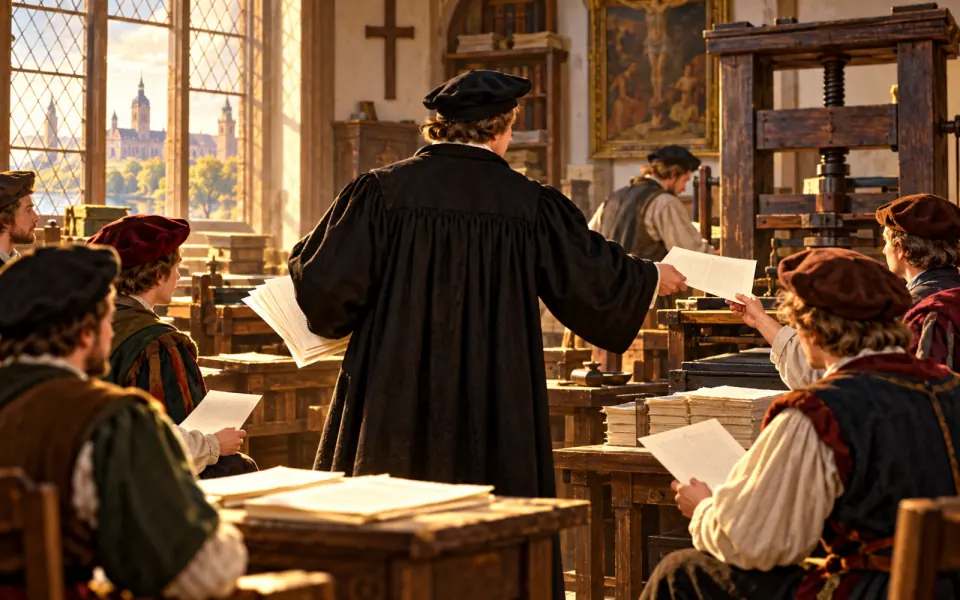 AfterLuther and the Reformation1517
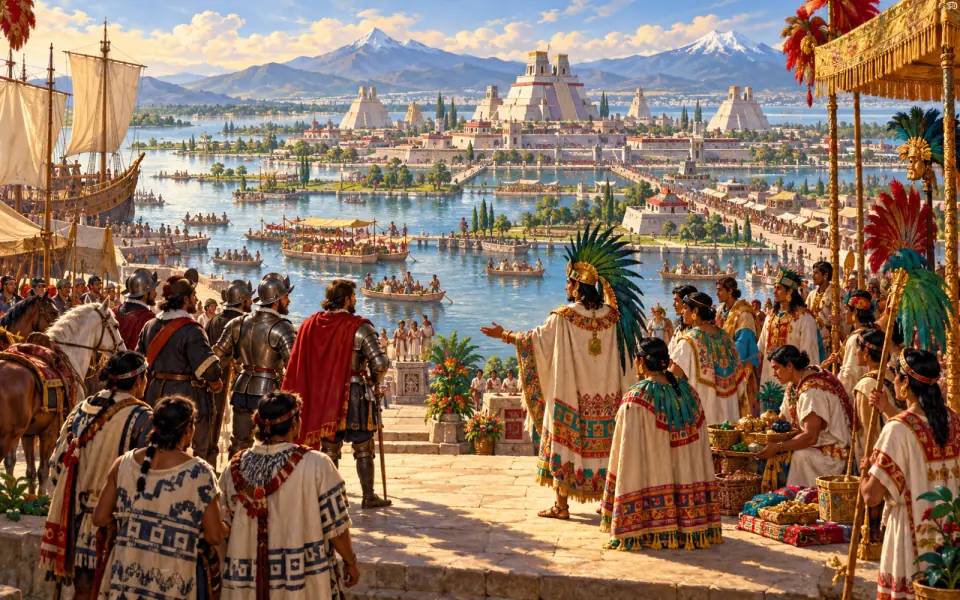 AfterThe conquest of Tenochtitlán1521
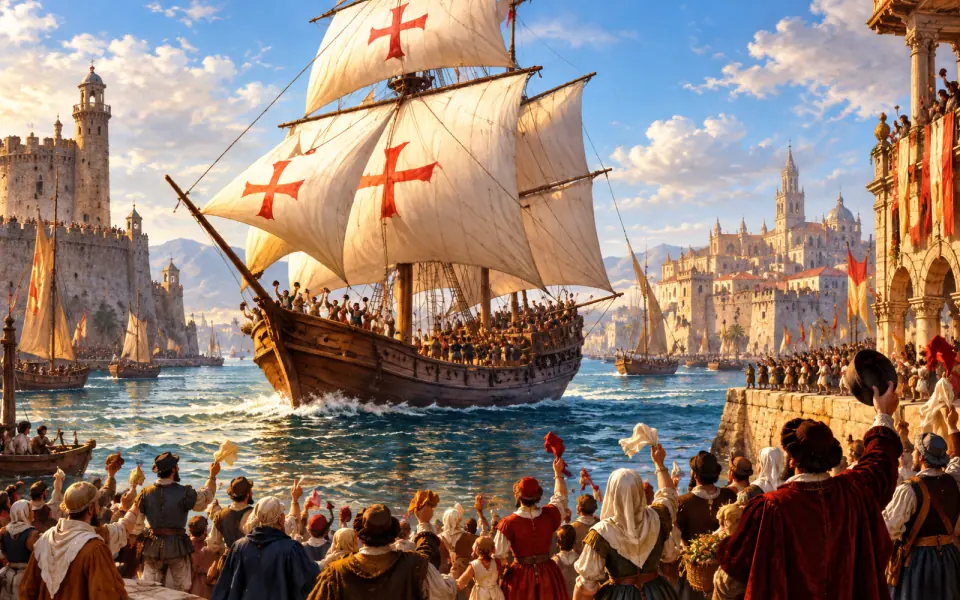 AfterThe first voyage round the world1522
 AfterCopernicus puts the Sun at the centre1543
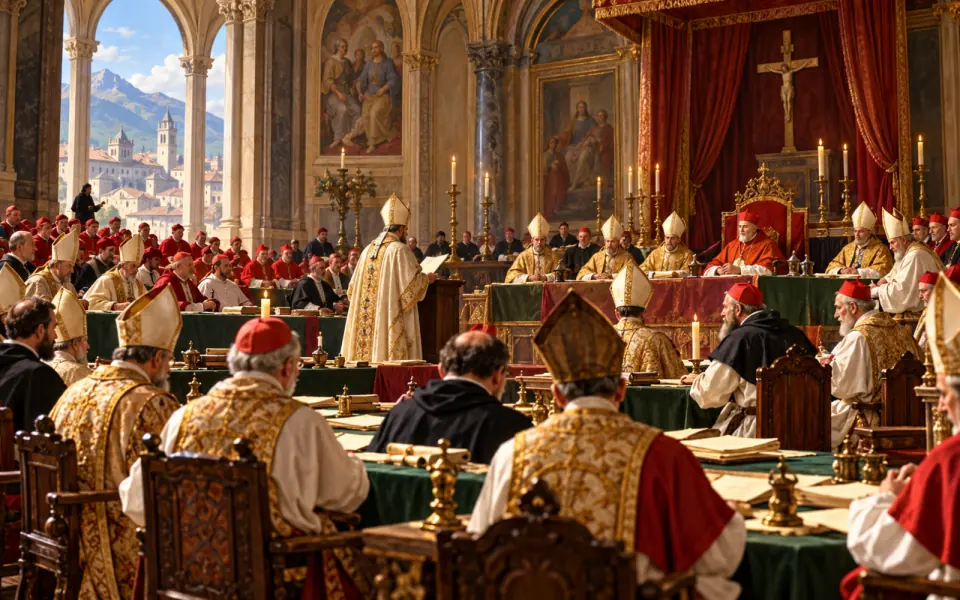 AfterThe Council of Trent1545–1563
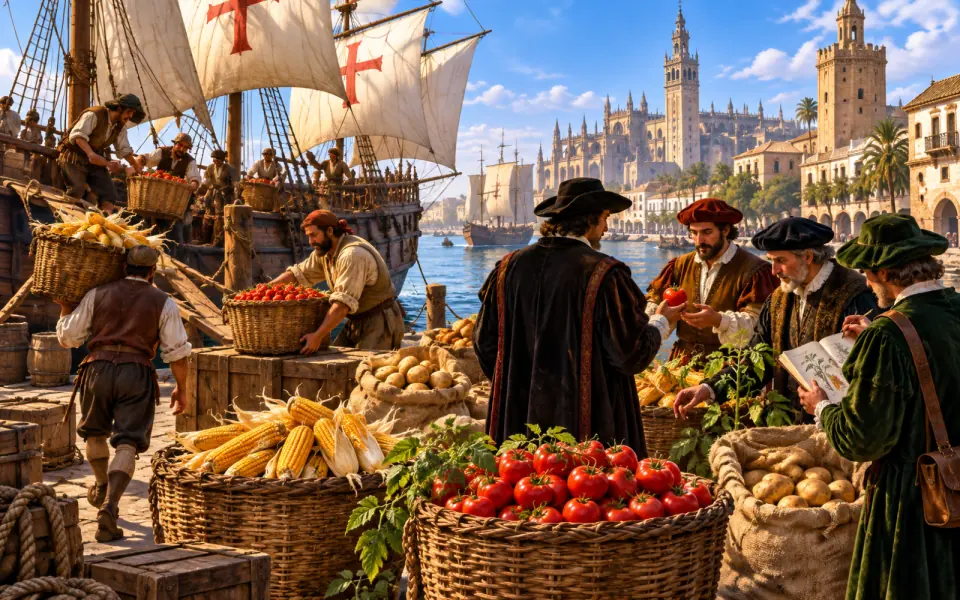 AfterTomatoes, maize and potatoes reach Europeabout 1550
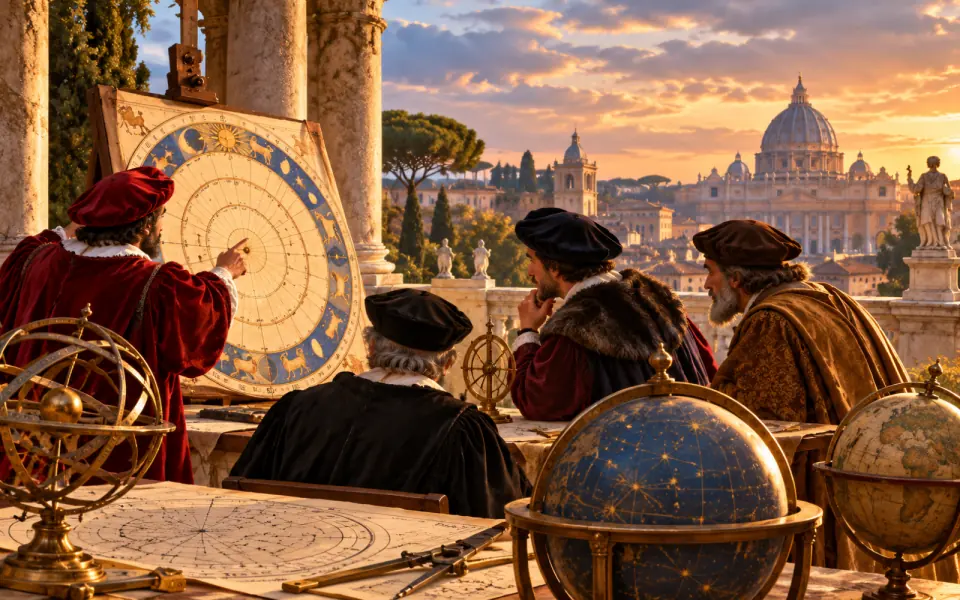 AfterThe Gregorian calendar1582
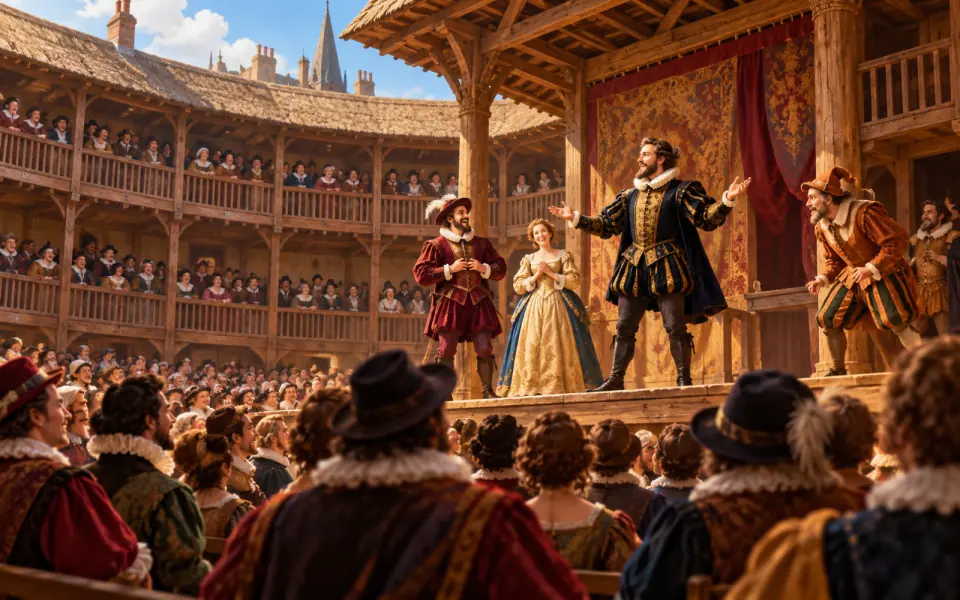 AfterShakespeare's theatreabout 1590
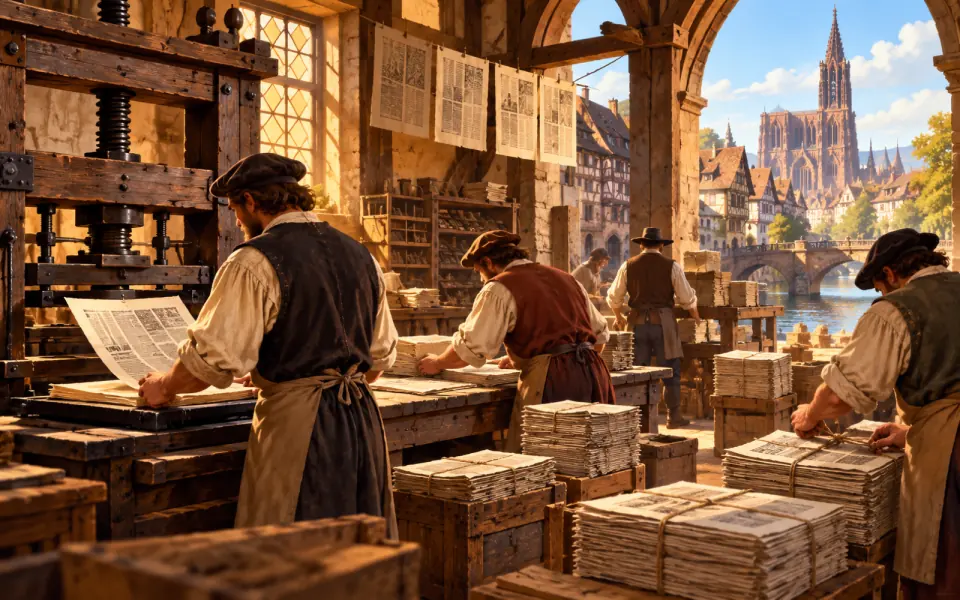 AfterRegular newspapers1605
 AfterGalileo turns his telescope to the sky1609
 AfterKepler describes the orbits1609
 AfterArtemisia Gentileschiabout 1612
 AfterHarvey studies the circulation of the blood1628
 AfterScientific academies1660
 AfterNewton publishes the Principia1687
Listen / Read next
- Music to read by: Cinematic JourneyEpic film-style music, no lyrics, by Ciro Simone IrmiciSpotifyYouTube Music
Meanwhile, elsewhere in the world
Other events of the era “Early modern age”
- Renaissance perspective
- Brunelleschi completes the dome
- The fall of Constantinople
- Lorenzo de' Medici in Florence
- Leonardo designs machines
- Columbus's voyage
- Vasco da Gama reaches India
- Michelangelo carves David
- Raphael paints the Vatican Rooms
- Luther and the Reformation
- The conquest of Tenochtitlán
- The first voyage round the world
- Copernicus puts the Sun at the centre
- The Council of Trent
- Tomatoes, maize and potatoes reach Europe
- The Gregorian calendar
- Shakespeare's theatre
- Regular newspapers
- Galileo turns his telescope to the sky
- Kepler describes the orbits
- Artemisia Gentileschi
- Harvey studies the circulation of the blood
- Scientific academies
- Newton publishes the Principia
