Shakespeare's theatre
about 1590 London, England
In short
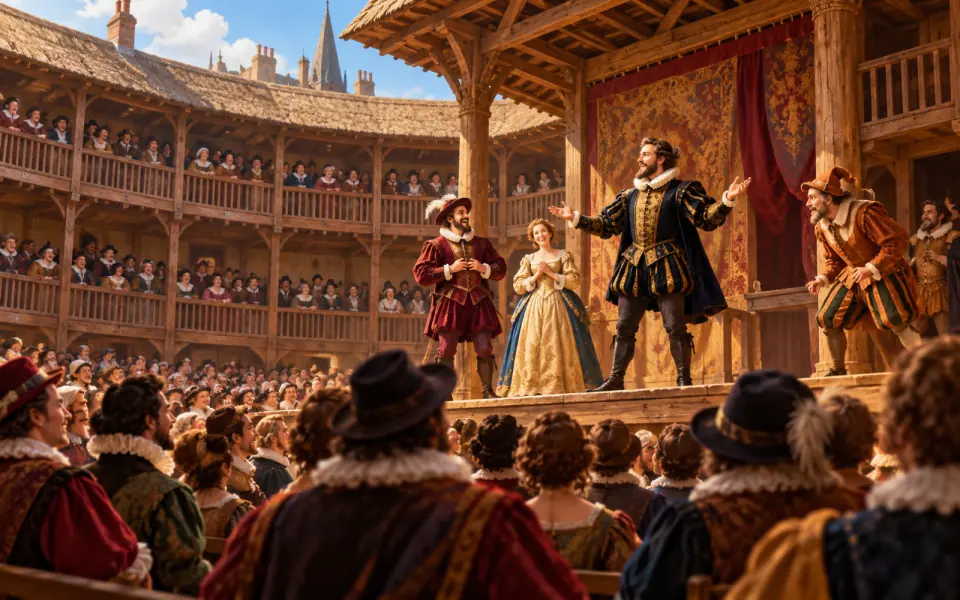
William Shakespeare, born in Stratford-upon-Avon, came to London and began writing for the theatre around 1590. He wrote comedies, tragedies and history plays, such as Romeo and Juliet, set in Verona, and Hamlet. His plays were performed at the Globe, a round wooden theatre where the poorest members of the audience watched standing up. In those days even the women's parts were played by boys.
Why it matters His stories and words are still translated and performed all over the world today.
Source: Encyclopaedia Britannica, “William Shakespeare”
Study card about 4 minutes of reading
The story
A boy from Stratford
William Shakespeare was born in 1564 in Stratford-upon-Avon, an English town, the son of a craftsman and glove-maker who had also been a town magistrate. He studied at the local school, where the main subject was Latin. At eighteen he married Anne Hathaway, who was twenty-six, and they had three children: Susanna and the twins Hamnet and Judith. Little Hamnet died at the age of eleven, in 1596.
We do not know much about these years. Then, around 1590, Shakespeare was in London, the biggest city in England, where he worked as an actor and was already beginning to write for the theatre. In 1592 another writer mentioned him with scorn as an “upstart crow”, a sign that he was already having success.
Theatre in London
In London, in the age of Queen Elizabeth I, theatre had become a popular entertainment. Until shortly before, companies had performed in the yards of inns or in the houses of noblemen. In 1576 an actor and builder, James Burbage, had the first permanent wooden theatre built outside the city, and simply called it “The Theatre”. Others followed, such as the Curtain and the Rose. The theatres were outside the walls, first to the north in Shoreditch and then on the south bank of the Thames, where the city authorities, worried about public order and epidemics, had less power.
The Elizabethan theatre was a round or many-sided building, open to the sky in the middle. The stage jutted out into the audience. The poorest people, called “groundlings”, stood in the yard in front of the stage and paid a penny, while the richer ones sat in the covered galleries. Plays were performed in the afternoon, by daylight, and the audience was noisy: they ate nuts, made comments and joined in.
There were no actresses: women's parts, like Juliet or Lady Macbeth, were played by boys. The scenery was simple, and a lot was left to the words, the costumes, the music and the imagination of the spectators. This is why Shakespeare's texts contain so many descriptions of place and time.
A company and a Globe
In 1594 Shakespeare joined a company, the Lord Chamberlain's Men, of which he was actor, author and also partner. In 1599 the company built a new theatre, the Globe, on the south bank of the Thames, using the timber of the old Theatre. Many of Shakespeare's masterpieces were staged here. When James I came to the throne, in 1603, the company became the king's own, the King's Men.
Shakespeare wrote about thirty-eight plays, including comedies, tragedies and history plays, and 154 sonnets, that is, poems of fourteen lines. Among the best-known titles are “Romeo and Juliet”, “Hamlet”, “Othello”, “King Lear”, “Macbeth”, “A Midsummer Night's Dream” and “The Tempest”. In 1613 the Globe burned down during a performance of “Henry VIII”: a cannon shot used as a stage effect set fire to the thatched roof. It was rebuilt the following year; in 1642 the Puritans, who considered theatre a sin, had the theatres closed, and the Globe was pulled down soon afterwards.
The book
Shakespeare died in 1616, aged fifty-two, in his home town. Seven years later two of his fellow actors gathered his works in a big volume, the “First Folio” (1623), with thirty-six plays. Without them, more than a dozen plays, including “Macbeth” and “The Tempest”, would not have come down to us. In 1997 a Globe rebuilt on the basis of historical records was opened in London, near the site of the original, where his plays are still performed today.
Why it happened
London was becoming a big city, and people wanted entertainment. Queen Elizabeth I loved the theatre, and at court and in the city the companies found patrons and audiences.
With the end of the medieval religious plays and with the Renaissance, authors in England discovered the ancient texts of Plautus, Seneca and Ovid and combined popular stories with learned poetry.
What changed
Shakespeare is considered one of the greatest writers of all time. His works have been translated into more than a hundred languages and performed all over the world, and his way of describing feelings such as love, jealousy, ambition and fear still seems true today.
He helped to fix modern English: many phrases and expressions still used today come from his texts. It is said that he coined hundreds of new words, although scholars know that many were already in use and that the figure is probably exaggerated.
Theatre became an institution. After him bigger and bigger theatres were built, and the playwright gained prestige.
Key people and places
People
- William Shakespeare
- English poet and playwright (1564–1616): author of comedies, tragedies, history plays and sonnets.
- Elizabeth I
- Queen of England from 1558 to 1603 (1533–1603): she loved the theatre.
- James Burbage
- Actor and builder (about 1531–1597): he had the first permanent theatre in London built.
- Richard Burbage
- James's son (about 1568–1619): the first great actor in Shakespeare's plays.
- John Heminges and Henry Condell
- Actors and friends of Shakespeare: they prepared the First Folio in 1623.
Places
- Globe Theatre, London
- The theatre on the Thames, rebuilt in 1997.
- Stratford-upon-Avon
- Shakespeare's birthplace and the place where he died.
Good to know
- The poorest people watched the shows standing up, paying a penny.
- Women's parts were played by boys.
- The Globe burned down in 1613 because of a cannon shot fired during a performance.
- The First Folio, of 1623, has preserved for us plays such as Macbeth and The Tempest.
- Shakespeare wrote 154 sonnets.
Find out more
- Wikipedia, “William Shakespeare” en.wikipedia.org
- Wikipedia, “Globe Theatre” en.wikipedia.org
- Wikipedia, “First Folio” en.wikipedia.org
- Wikipedia, “English Renaissance theatre” en.wikipedia.org
Related events
- Regular newspapers1605 · Early modern ageIn the same period the first periodical newspapers were appearing.
- Gutenberg prints the Bibleabout 1455 · Early modern agePrinting made it possible to preserve the plays in the First Folio.
- Galileo turns his telescope to the sky1609 · Early modern ageGalileo and Shakespeare lived in the same period.
- Scientific academies1660 · Early modern ageIn London, a few decades later, scientific academies were born too.
Before and after, in the era “Early modern age”
Event 18 of 25
 BeforeRenaissance perspectiveabout 1420
 BeforeBrunelleschi completes the dome1436
 BeforeThe fall of Constantinople1453
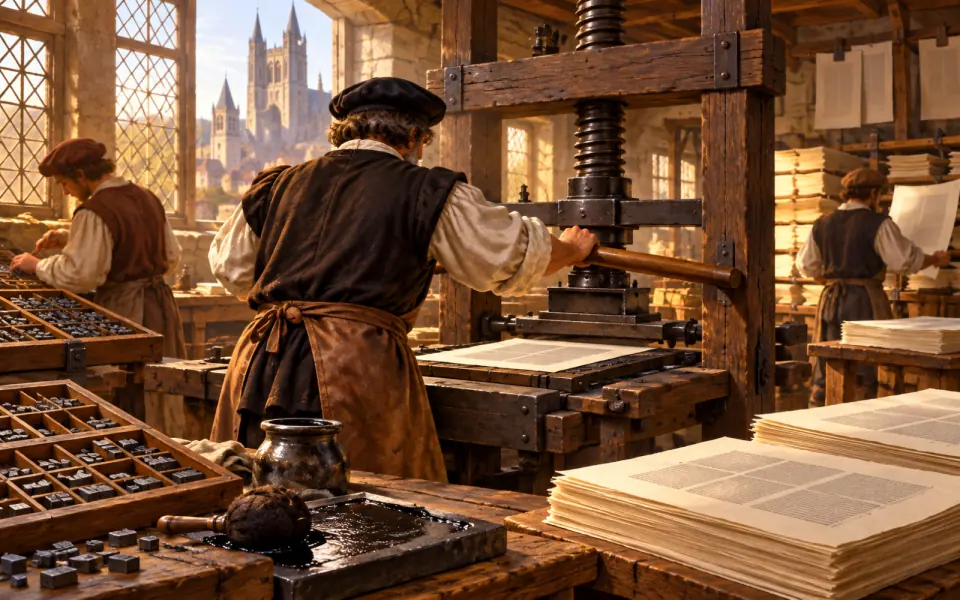 BeforeGutenberg prints the Bibleabout 1455
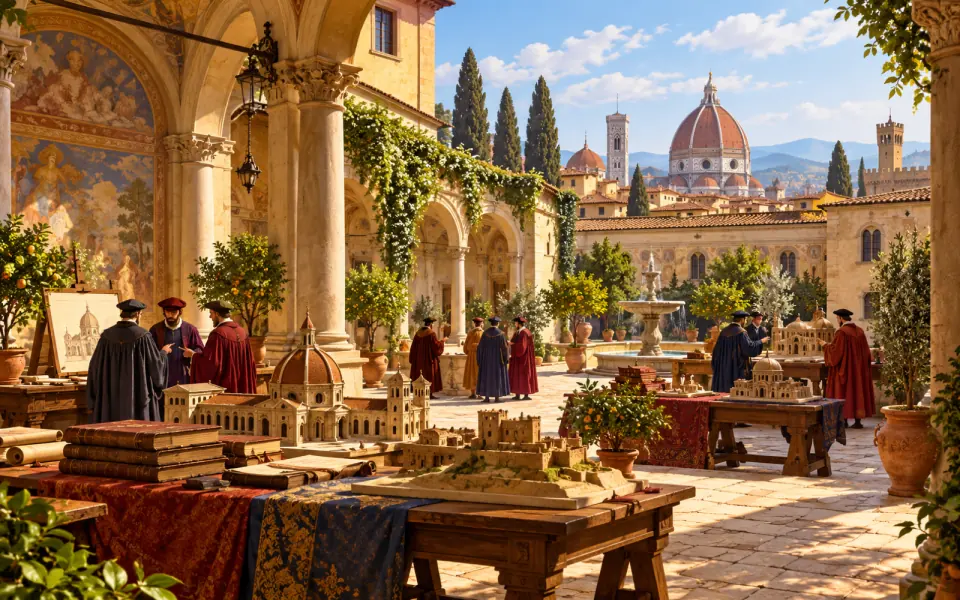 BeforeLorenzo de' Medici in Florence1469
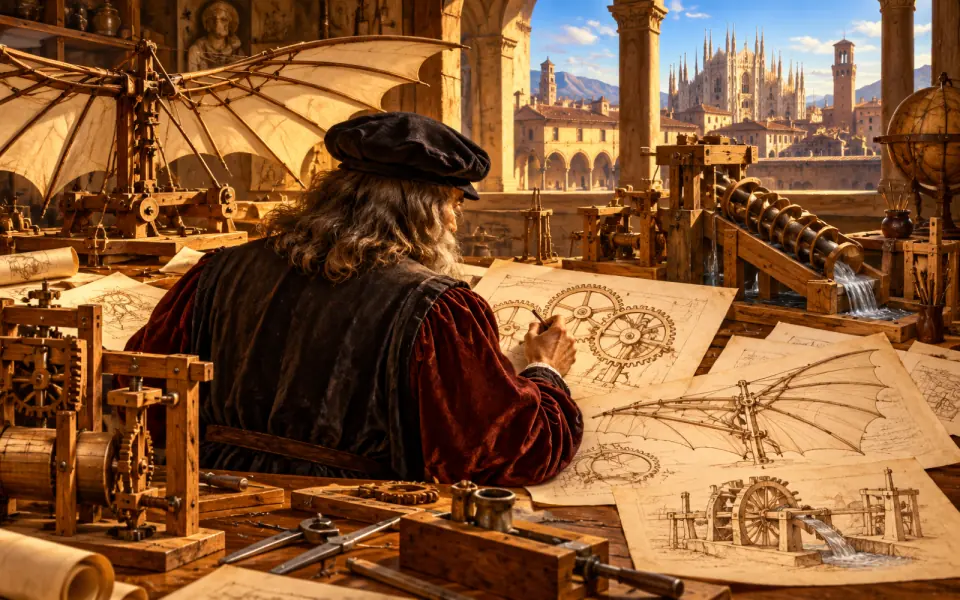 BeforeLeonardo designs machinesabout 1485
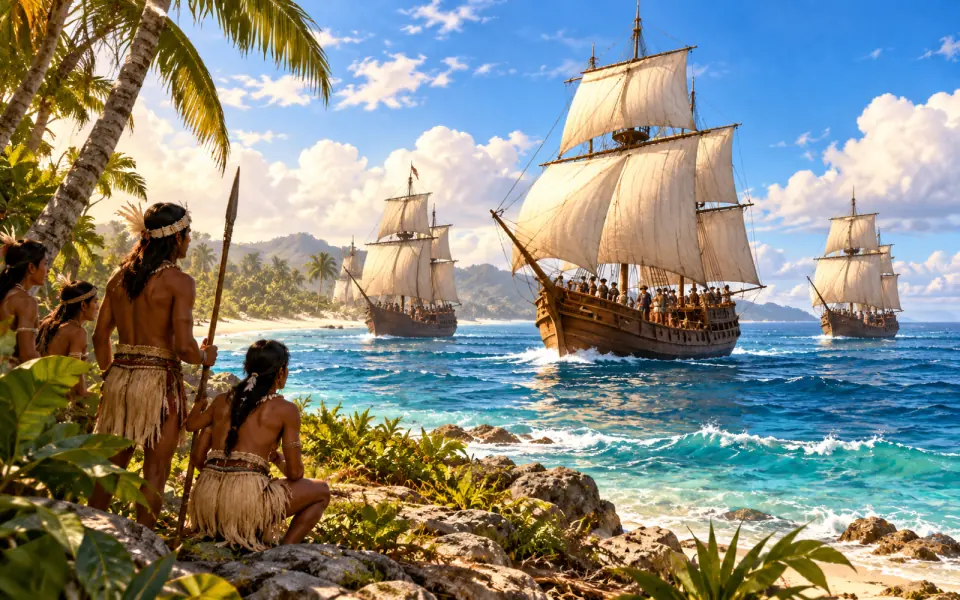 BeforeColumbus's voyage1492
 BeforeVasco da Gama reaches India1498
 BeforeMichelangelo carves David1504
 BeforeRaphael paints the Vatican Rooms1508
 BeforeLuther and the Reformation1517
 BeforeThe conquest of Tenochtitlán1521
 BeforeThe first voyage round the world1522
 BeforeCopernicus puts the Sun at the centre1543
 BeforeThe Council of Trent1545–1563
 BeforeTomatoes, maize and potatoes reach Europeabout 1550
 BeforeThe Gregorian calendar1582
- You are hereShakespeare's theatreabout 1590
 AfterRegular newspapers1605
 AfterGalileo turns his telescope to the sky1609
 AfterKepler describes the orbits1609
 AfterArtemisia Gentileschiabout 1612
 AfterHarvey studies the circulation of the blood1628
 AfterScientific academies1660
 AfterNewton publishes the Principia1687
Listen / Read next
- Music to read by: Cinematic JourneyEpic film-style music, no lyrics, by Ciro Simone IrmiciSpotifyYouTube Music
Meanwhile, elsewhere in the world
Other events of the era “Early modern age”
- Renaissance perspective
- Brunelleschi completes the dome
- The fall of Constantinople
- Gutenberg prints the Bible
- Lorenzo de' Medici in Florence
- Leonardo designs machines
- Columbus's voyage
- Vasco da Gama reaches India
- Michelangelo carves David
- Raphael paints the Vatican Rooms
- Luther and the Reformation
- The conquest of Tenochtitlán
- The first voyage round the world
- Copernicus puts the Sun at the centre
- The Council of Trent
- Tomatoes, maize and potatoes reach Europe
- The Gregorian calendar
- Regular newspapers
- Galileo turns his telescope to the sky
- Kepler describes the orbits
- Artemisia Gentileschi
- Harvey studies the circulation of the blood
- Scientific academies
- Newton publishes the Principia
