Artemisia Gentileschi
about 1612 Rome and Florence, Italy
In short
Artemisia Gentileschi, born in Rome in 1593, learnt to paint in the workshop of her father Orazio, also a painter. At a time when there were very few women artists, she created large paintings of heroines from the Bible and from history, full of strength and courage. Around 1613 she moved to Florence, where in 1616 she was admitted to the Academy of the Arts of Drawing, one of the very first women to receive this honour. She later worked in Venice, London and Naples.
Why it matters Her career shows that women have always had talent in art, even when they were held back.
Source: Treccani, Dizionario Biografico, entry “Gentileschi, Artemisia”
Study card about 4 minutes of reading
The story
A workshop in Rome
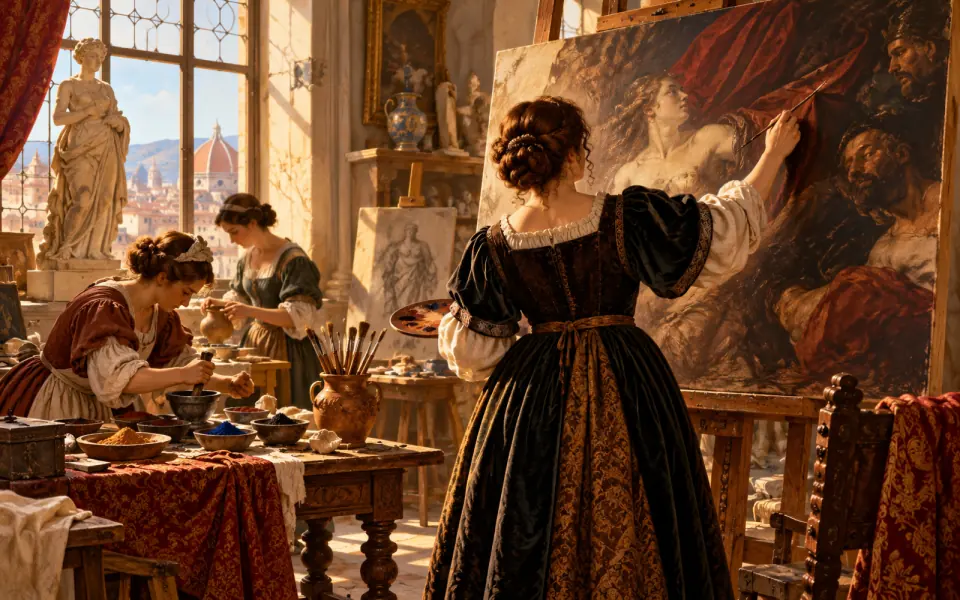
Artemisia Gentileschi was born in Rome in 1593, the daughter of the painter Orazio Gentileschi, one of the followers of Caravaggio. At the time girls did not go to art academies and could not frequent artists' workshops, but Artemisia grew up in a painter's house, and learned the trade from her father: how to prepare colours, to draw from life, to arrange figures. She had an uncommon talent. At seventeen, in 1610, she painted her first signed picture, “Susanna and the Elders”, which is striking for its strength and for the honesty with which it shows the fear of its heroine.
Orazio knew his daughter was good and wanted her to keep learning. So he found her a teacher of perspective, a painter named Agostino Tassi, who worked with him. It was a choice that changed her life.
The trial
In 1611 Tassi attacked her and did her violence. Artemisia said so, but for a while nothing happened; Tassi had promised to marry her to put things right, and she waited. When it became clear that he would not, in 1612 Orazio reported him to the pope's court. For almost seven months a public trial was held, and her case was discussed all over Rome.
To check whether Artemisia was telling the truth, the judges ordered a harsh practice of that time: during her testimony she was put to torture, with a cord tightened around her fingers, to see whether she would change her story. Artemisia did not change it. She kept saying: “It is true, it is true, it is true.” Tassi was found guilty and sentenced, but the sentence was not really carried out. For Artemisia, though, the affair stayed with her like a stain for years.
Florence
A few days after the end of the trial Artemisia married a Florentine painter, Pierantonio Stiattesi, and moved with him to Florence. There she found a new environment, where a woman artist could be welcomed with respect. She painted for the Medici family and for Grand Duke Cosimo II, was in contact with Galileo Galilei and became friends with Michelangelo's great-nephew, Michelangelo Buonarroti the Younger. In 1616 she was the first woman admitted to the Academy of the Arts of Drawing, the most important association of artists in Florence.
Her paintings often show strong women from the Bible and from history: Judith killing the general Holofernes to save her people, Jael, Lucretia, Cleopatra, Esther. They are not cartoon heroines: their faces are determined, their arms are strong, the blood is real. Her best-known masterpiece is “Judith Beheading Holofernes”, of which she made two versions: one now in Naples, the other in the Uffizi in Florence.
Her letters to clients show that she bargained firmly over the price of her paintings. In one of them, to a Sicilian collector, she wrote that in her woman's soul he would find “the spirit of Caesar”.
After Florence she lived in Rome, Venice and Naples, where she settled from 1630. In 1638 she joined her father in London, at the court of King Charles I, and stayed there even after his death (1639), until about 1642. She died in Naples after 1654, perhaps in the plague of 1656. She had children, and on her own she supported her family, which was rare for a woman in the 17th century.
Forgotten and rediscovered
After her death her name was almost forgotten. For many years some of her paintings were attributed to her father. In the 20th century an art historian, Roberto Longhi, brought her back to attention in 1916. In recent decades great exhibitions have been devoted to her all over the world, and many museums have bought her works. Today she is considered one of the most important women painters of the 17th century.
Why it happened
Artemisia had a natural talent and grew up in her father's workshop; he was an artist up to date with the novelties of Caravaggio, who used strong light and realistic figures. This gave her technique and a direct eye for emotions.
The art system of the time excluded women from regular training, and this makes it even more remarkable that she managed to become a recognised professional.
What changed
Artemisia showed that a woman could be a great painter, take on difficult subjects and be paid by princes. She opened a path for those who came after her.
Her trial is one of the first for which we have documents in which a woman publicly reports the violence she suffered. Today her courage is remembered as an example.
Her style, which joins Caravaggio's realism with a search for emotion, influenced other artists, especially in Naples. Her paintings can be seen at the Uffizi, at Capodimonte, at the National Gallery in London and in many other museums.
Key people and places
People
- Artemisia Gentileschi
- Italian painter (1593 – after 1654): one of the leading figures of Baroque painting.
- Orazio Gentileschi
- Painter from Pisa (1563–1639): Artemisia's father and first teacher.
- Agostino Tassi
- Painter (about 1578–1644): teacher of perspective, convicted in the trial of 1612.
- Cosimo II de' Medici
- Grand Duke of Tuscany (1590–1621): he protected Artemisia in Florence.
- Roberto Longhi
- Italian art historian (1890–1970): he rediscovered her in 1916.
Places
- Rome
- Artemisia's birthplace and the place of the trial of 1612.
- Florence
- The city where Artemisia worked from 1613 to 1620.
- Naples
- The city where she lived from 1630 and where she died.
Good to know
- Artemisia painted her first signed picture at the age of seventeen.
- She was the first woman admitted to the Academy of the Arts of Drawing in Florence.
- She was in contact with Galileo Galilei.
- She made two versions of “Judith Beheading Holofernes”: in Naples and at the Uffizi.
- For a long time some of her paintings were attributed to her father.
Find out more
- Wikipedia, “Artemisia Gentileschi” en.wikipedia.org
- Wikipedia, “Orazio Gentileschi” en.wikipedia.org
- Wikipedia, “Accademia delle Arti del Disegno” en.wikipedia.org
- Wikipedia, “Caravaggio” en.wikipedia.org
Related events
- Galileo turns his telescope to the sky1609 · Early modern ageGalileo was in contact with Artemisia in Florence.
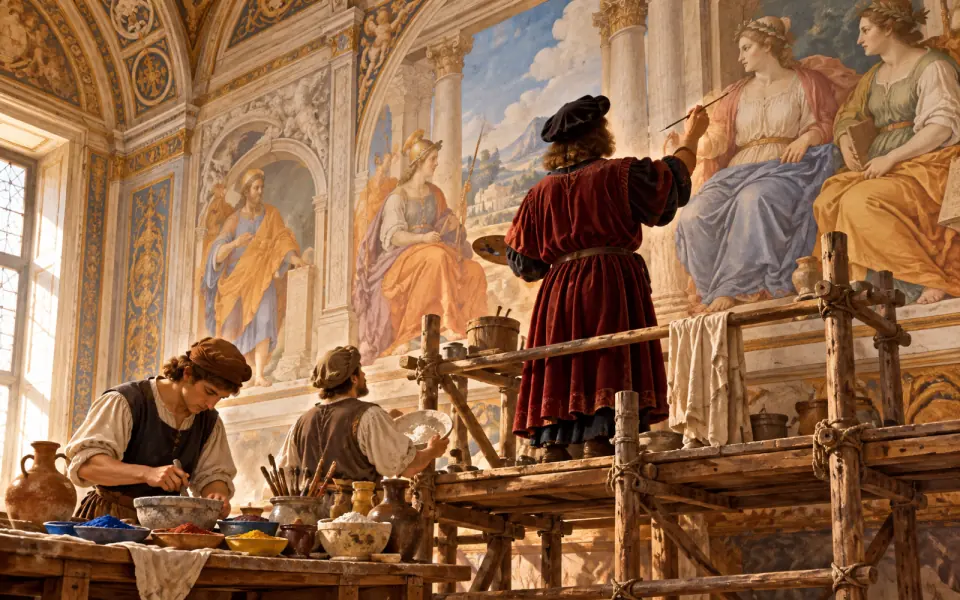
- Raphael paints the Vatican Rooms1508 · Early modern ageRaphael is the other great painter of Rome, from the century before.
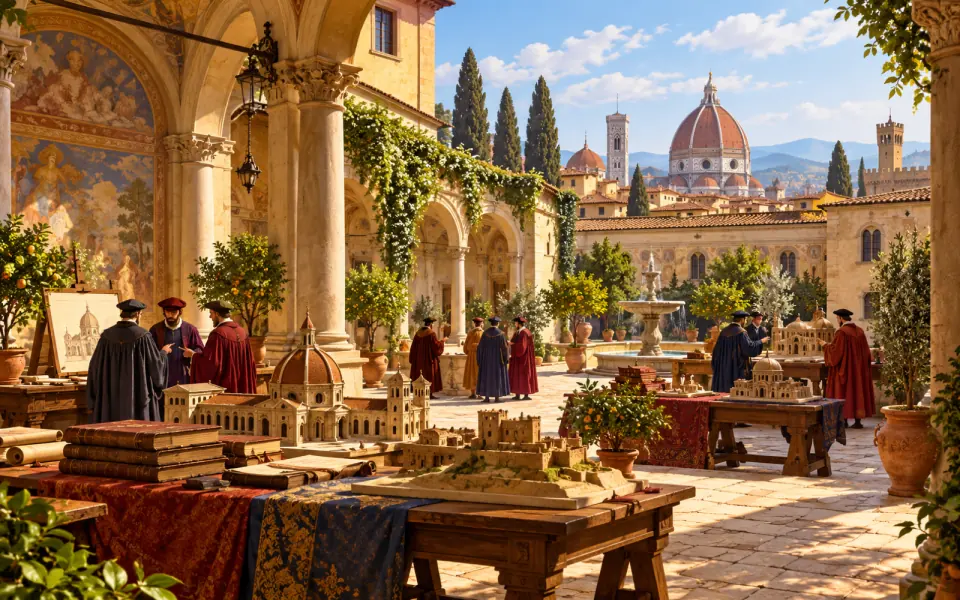
- Lorenzo de' Medici in Florence1469 · Early modern ageFlorence, with the Medici, was still a centre of patronage.
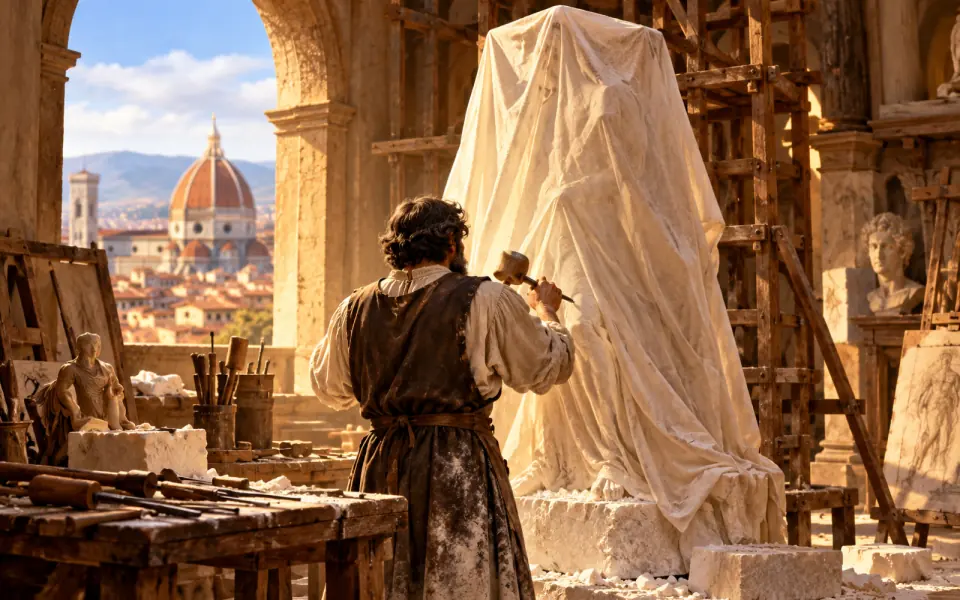
- Michelangelo carves David1504 · Early modern ageMichelangelo the Younger, Artemisia's friend, was the great sculptor's great-nephew.
Before and after, in the era “Early modern age”
Event 22 of 25
 BeforeRenaissance perspectiveabout 1420
 BeforeBrunelleschi completes the dome1436
 BeforeThe fall of Constantinople1453
 BeforeGutenberg prints the Bibleabout 1455
 BeforeLorenzo de' Medici in Florence1469
 BeforeLeonardo designs machinesabout 1485
 BeforeColumbus's voyage1492
 BeforeVasco da Gama reaches India1498
 BeforeMichelangelo carves David1504
 BeforeRaphael paints the Vatican Rooms1508
 BeforeLuther and the Reformation1517
 BeforeThe conquest of Tenochtitlán1521
 BeforeThe first voyage round the world1522
 BeforeCopernicus puts the Sun at the centre1543
 BeforeThe Council of Trent1545–1563
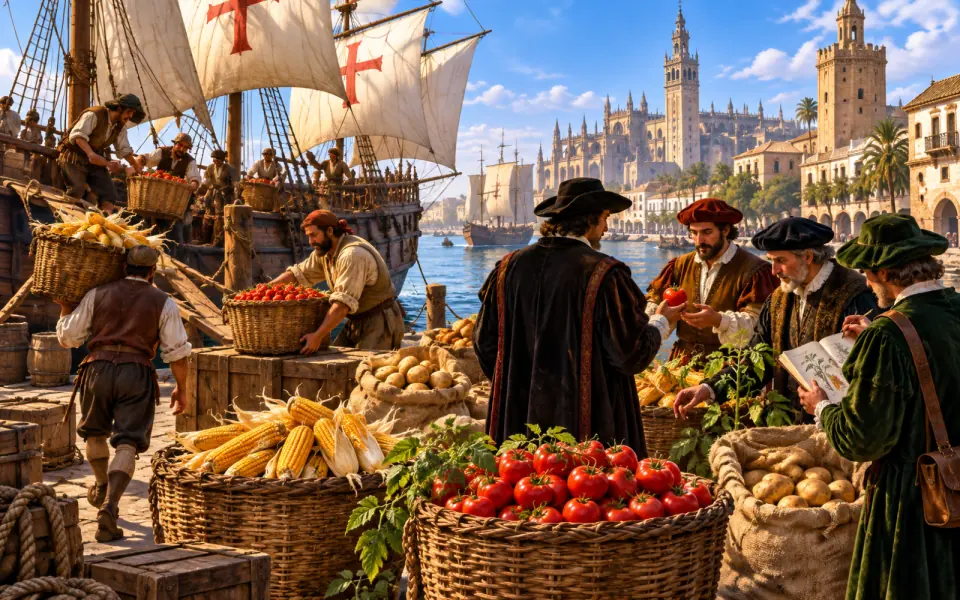 BeforeTomatoes, maize and potatoes reach Europeabout 1550
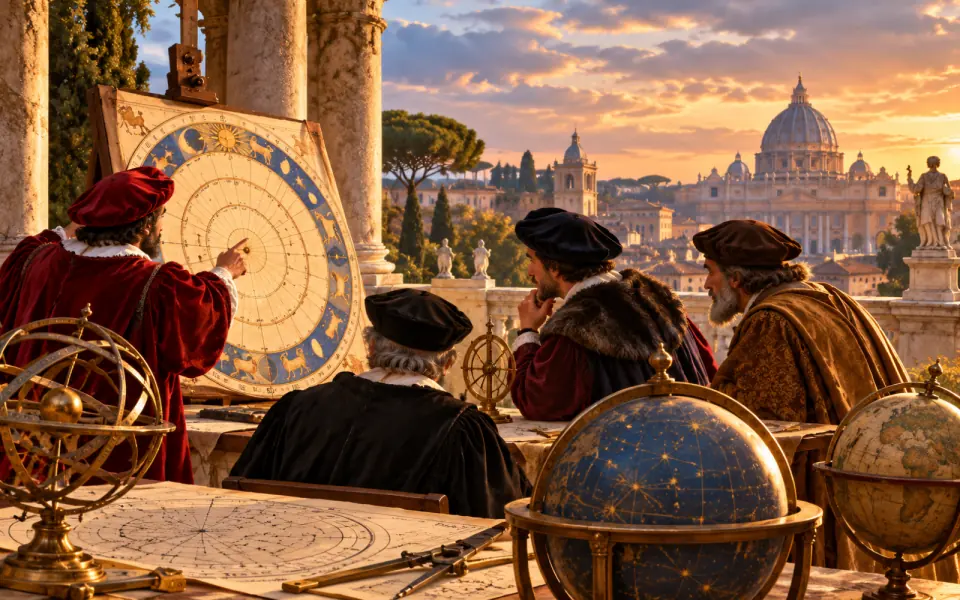 BeforeThe Gregorian calendar1582
 BeforeShakespeare's theatreabout 1590
 BeforeRegular newspapers1605
 BeforeGalileo turns his telescope to the sky1609
 BeforeKepler describes the orbits1609
- You are hereArtemisia Gentileschiabout 1612
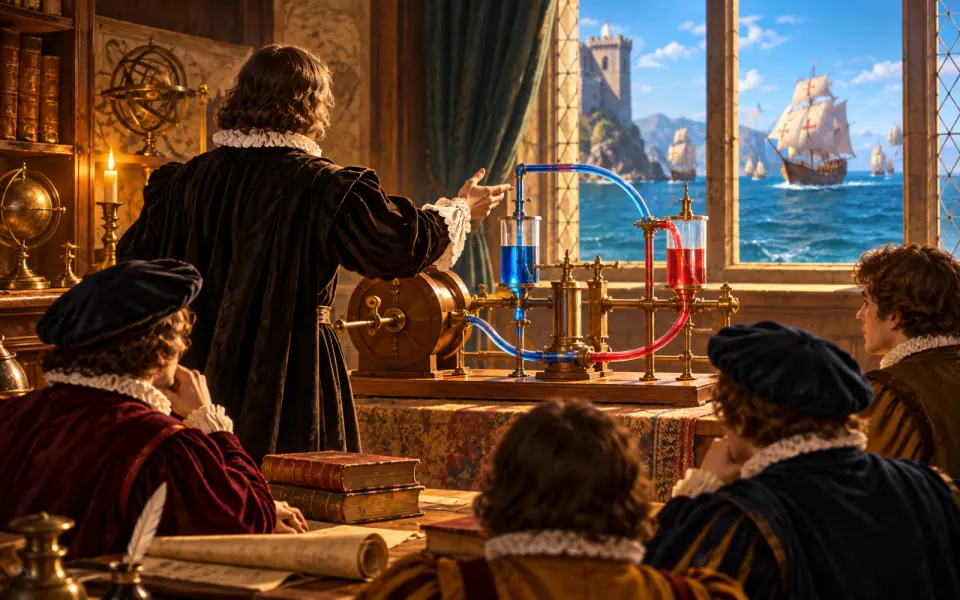 AfterHarvey studies the circulation of the blood1628
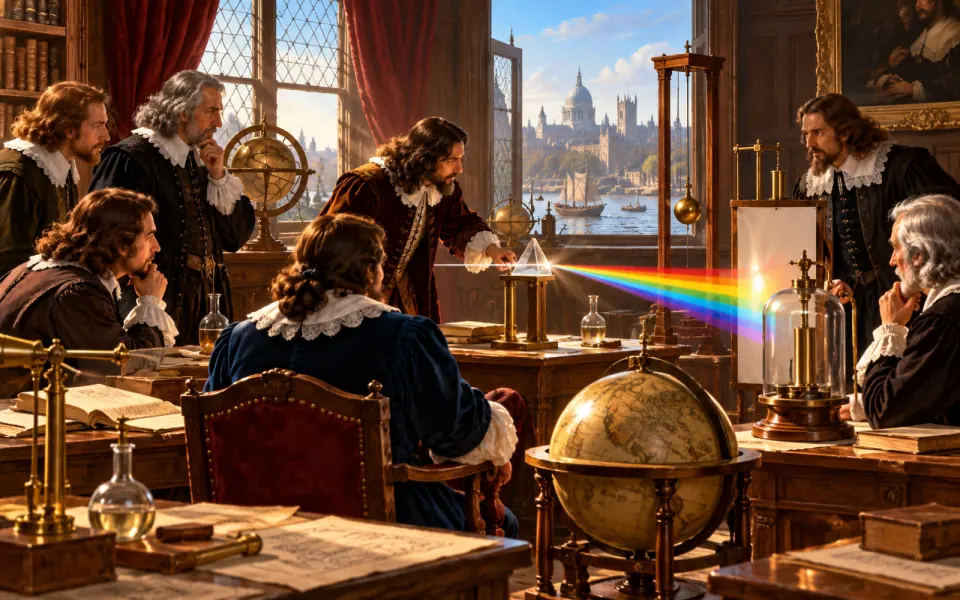 AfterScientific academies1660
 AfterNewton publishes the Principia1687
Listen / Read next
- Music to read by: Cinematic JourneyEpic film-style music, no lyrics, by Ciro Simone IrmiciSpotifyYouTube Music
Meanwhile, elsewhere in the world
Other events of the era “Early modern age”
- Renaissance perspective
- Brunelleschi completes the dome
- The fall of Constantinople
- Gutenberg prints the Bible
- Lorenzo de' Medici in Florence
- Leonardo designs machines
- Columbus's voyage
- Vasco da Gama reaches India
- Michelangelo carves David
- Raphael paints the Vatican Rooms
- Luther and the Reformation
- The conquest of Tenochtitlán
- The first voyage round the world
- Copernicus puts the Sun at the centre
- The Council of Trent
- Tomatoes, maize and potatoes reach Europe
- The Gregorian calendar
- Shakespeare's theatre
- Regular newspapers
- Galileo turns his telescope to the sky
- Kepler describes the orbits
- Harvey studies the circulation of the blood
- Scientific academies
- Newton publishes the Principia
