Galileo turns his telescope to the sky
1609 Padua, Italy
In short
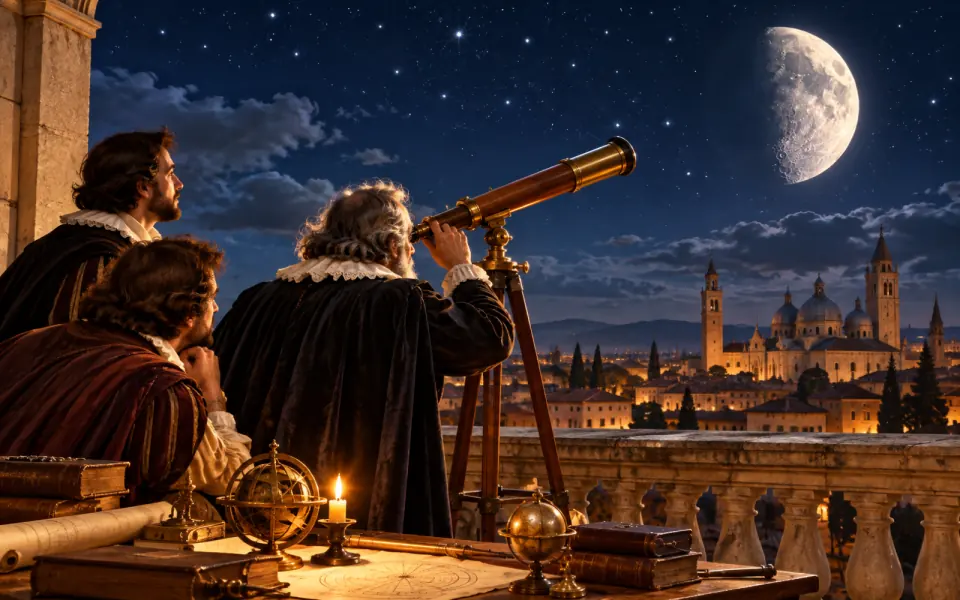
In 1609 Galileo Galilei, a professor in Padua, heard that a spyglass had been invented in Holland and built one of his own, much better. He pointed it at the sky and used it for careful, systematic observations, as almost nobody had done before. He discovered mountains and craters on the Moon, countless stars in the Milky Way and four moons around Jupiter. He described everything in the Sidereus Nuncius, ‘the starry messenger’, published in 1610.
Why it matters Galileo's observations supported Copernicus's idea and began a science based on evidence.
Source: Museo Galileo, Florence, “Il cannocchiale di Galileo”
Study card about 5 minutes of reading
The story
A spyglass from Holland
In the autumn of 1608, in Holland, a lens-maker, Hans Lippershey, asked the authorities for permission to produce in exclusive an instrument made with two lenses, which made faraway things look close. It was not granted, because other people claimed to have had the same idea. The news, however, spread quickly across Europe. At first that instrument was useful mainly to soldiers and sailors, to see ships and armies from far away.
In the summer of 1609 Galileo Galilei, professor of mathematics at the University of Padua, heard about it during a trip to Venice. He was forty-five, he had been born in Pisa in 1564 and had already done important studies on the movement of bodies. He had not yet seen one, but he understood how it must be made, went back to Padua and built by himself, with a convex and a concave lens in a lead tube, a spyglass that magnified about three times. Then he kept improving it: he reached eight times and finally about thirty.
The gift to the Republic
At the end of August 1609 (around 21–25 August) Galileo took his instrument up the bell tower of St Mark's in Venice, and let the senators of the Republic try it: from the top they saw ships arriving hours before they could be seen with the naked eye. For this gift Galileo obtained a raise in pay and the confirmation of his post for life. Galileo understood, though, that the spyglass could do something much more important than looking at ships. He pointed it at the sky.
A sky never seen before
In the autumn and winter of 1609 Galileo observed the Moon. He expected a smooth, perfect sphere, as the ancient philosophers had taught. Instead he saw mountains, craters and plains, a world made like the Earth. Then he looked at the Milky Way, the great milky “river” of the sky, and discovered that it was made of countless stars too small and distant to be told apart with the naked eye.
The most surprising discovery came on 7 January 1610, when Galileo pointed his instrument at Jupiter. Next to the planet he saw three tiny bright dots, in a line. In the following days he observed them again, and noticed that they moved and that there were four of them: they were not fixed stars, but bodies circling Jupiter, like the Moon around the Earth. Today they are called Io, Europa, Ganymede and Callisto. Galileo named them the “Medicean stars”, in honour of the Medici family, the grand dukes of Tuscany.
The account of these observations was published in March 1610 in a little book of a few pages, written in Latin, the “Sidereus Nuncius”, that is, “The Starry Messenger”, which was an immediate success. Within a few months Galileo left Padua and returned to Florence, as “mathematician and philosopher” to Grand Duke Cosimo II de' Medici.
Evidence for Copernicus
During the rest of 1610 Galileo also observed the phases of Venus, that is, the fact that, like the Moon, Venus sometimes appears as a full circle and sometimes as a thin crescent. This could not happen if Venus went around the Earth, as Ptolemy's system said, but it was explained very well if it went around the Sun. He then saw dark spots on the Sun and Saturn with a strange appearance: in his instrument it seemed to have two “ears”, because Galileo could not make out the rings.
These observations convinced him that Copernicus was right. Galileo began to defend this view strongly, and in the following years it brought him into conflict with many scholars and with the Church. In 1633 he was put on trial in Rome and forced to declare that he no longer believed in the Copernican system. He spent his last years under house arrest in his home at Arcetri, near Florence, where he died in 1642.
Why it happened
Galileo had a strong practical spirit: in the world of Padua and Venice there were shipyards, glassmakers and craftsmen from whom he learned a great deal. He knew how to build his own instruments, and he understood at once that he could use them to study nature.
The telescope had only just been invented, and the philosophers of the time had not yet thought of using it to observe the sky. Galileo was among the first, and the most systematic, to do so.
What changed
The sky no longer looked perfect and unchanging. The Moon had mountains, Jupiter had moons, the Sun had spots. These observations put the ideas of the ancient philosophers in difficulty and brought evidence in favour of Copernicus's system.
A new way of doing science spread: looking, measuring, repeating tests, and not trusting only the authority of ancient books. Galileo is considered one of the fathers of the scientific method.
The trial of 1633 became the symbol of the difficult relationship between science and power. The Church admitted its mistake only much later: in 1992 Pope John Paul II acknowledged that in Galileo's case the theologians had made errors.
Key people and places
People
- Galileo Galilei
- Italian scientist (1564–1642): he used the telescope to study the sky.
- Hans Lippershey
- Dutch lens-maker (about 1570–1619): the first to apply for a patent for the telescope, in 1608.
- Cosimo II de' Medici
- Grand Duke of Tuscany (1590–1621): he named Galileo his mathematician and philosopher.
- Nicolaus Copernicus
- Polish astronomer (1473–1543): his system was defended by Galileo.
Places
- Padua
- The city where Galileo taught from 1592 to 1610 and made his first observations.
- Bell tower of St Mark's, Venice
- The place where Galileo showed the spyglass to the senators.
- Arcetri (Florence)
- The place where Galileo spent his last years.
Good to know
- Galileo did not invent the telescope: he improved it and was the first to point it systematically at the sky.
- The four moons of Jupiter discovered by Galileo are called Io, Europa, Ganymede and Callisto.
- The “Sidereus Nuncius” was written in Latin and was a great success.
- Galileo's first telescopes magnified three, eight and then about thirty times.
- In 1992 the Church acknowledged mistakes in Galileo's trial.
Find out more
- Wikipedia, “Galileo Galilei” en.wikipedia.org
- Wikipedia, “Sidereus Nuncius” en.wikipedia.org
- Wikipedia, “Telescope” en.wikipedia.org
- Museo Galileo, Florence museogalileo.it
Related events
- Copernicus puts the Sun at the centre1543 · Early modern ageCopernicus had proposed the Sun at the centre: Galileo found evidence in its favour.
- Kepler describes the orbits1609 · Early modern ageIn the same year Kepler was describing the orbits of the planets.
- Newton publishes the Principia1687 · Early modern ageNewton explained the laws that Galileo had sensed.
- Scientific academies1660 · Early modern ageAcademies were born to discuss discoveries like these.
Before and after, in the era “Early modern age”
Event 20 of 25
 BeforeRenaissance perspectiveabout 1420
 BeforeBrunelleschi completes the dome1436
 BeforeThe fall of Constantinople1453
 BeforeGutenberg prints the Bibleabout 1455
 BeforeLorenzo de' Medici in Florence1469
 BeforeLeonardo designs machinesabout 1485
 BeforeColumbus's voyage1492
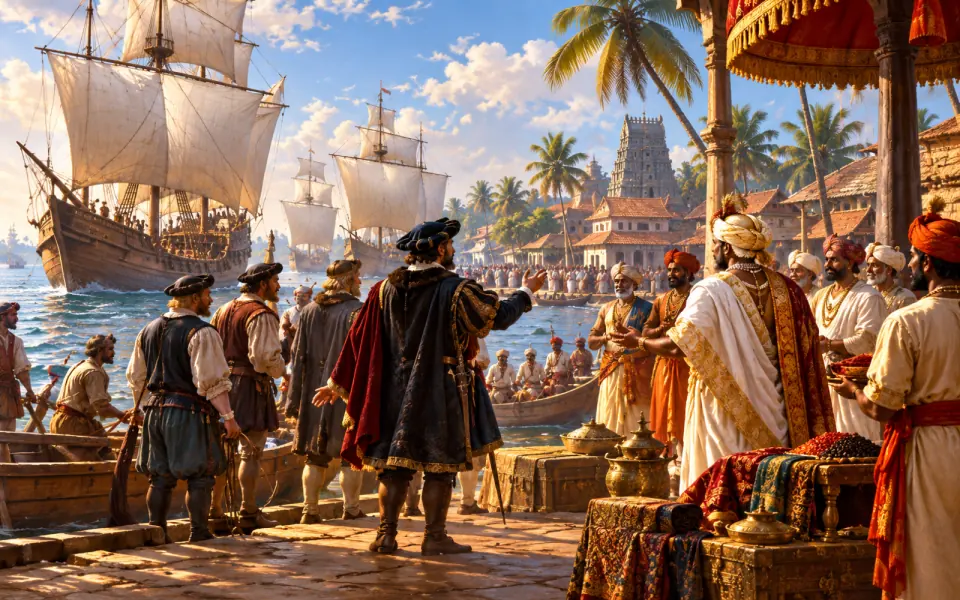 BeforeVasco da Gama reaches India1498
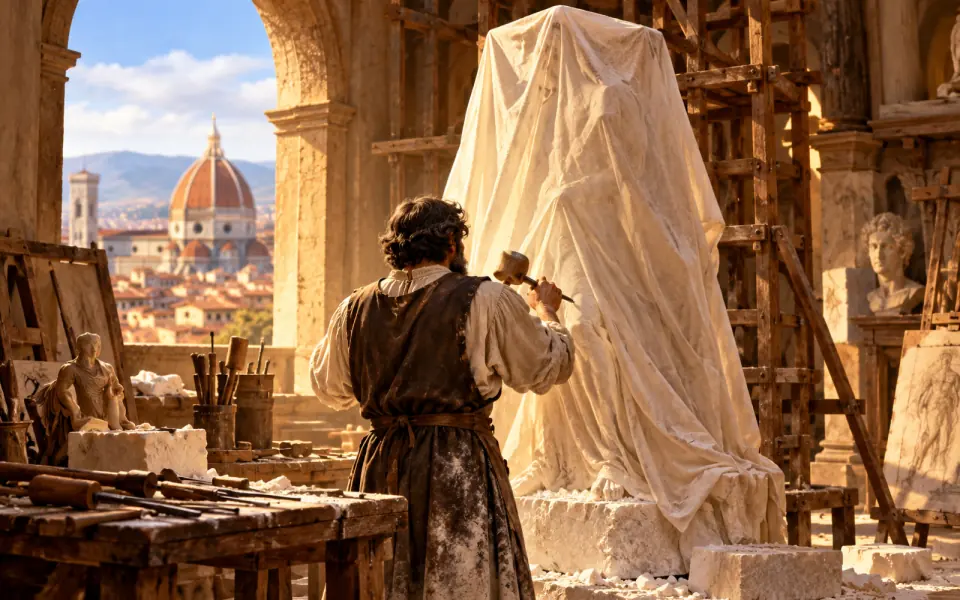 BeforeMichelangelo carves David1504
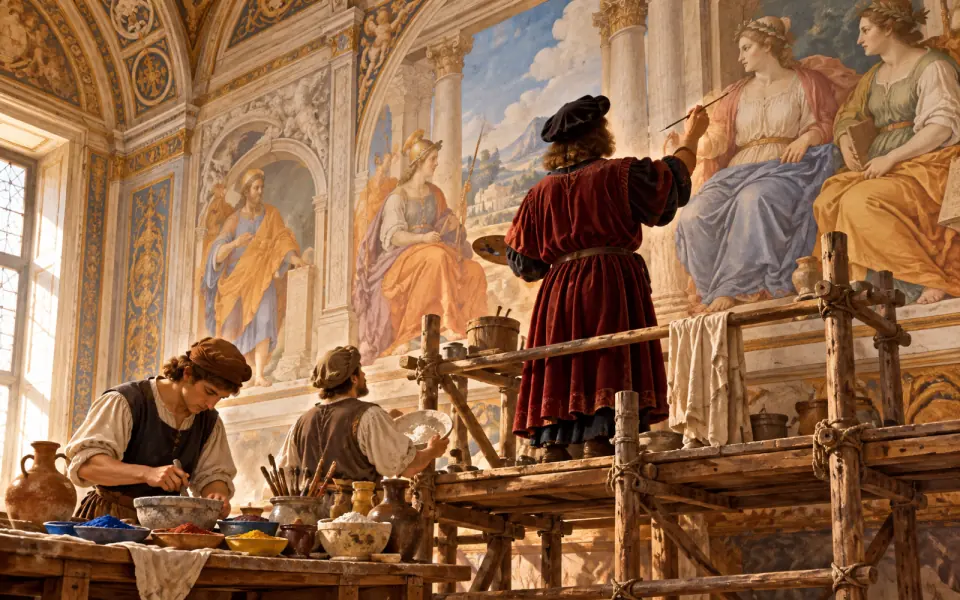 BeforeRaphael paints the Vatican Rooms1508
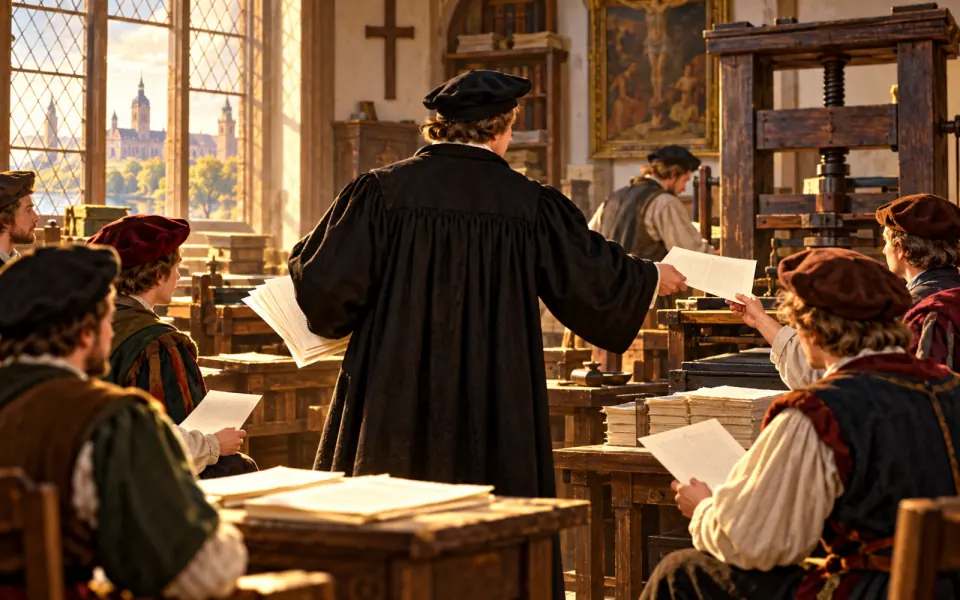 BeforeLuther and the Reformation1517
 BeforeThe conquest of Tenochtitlán1521
 BeforeThe first voyage round the world1522
 BeforeCopernicus puts the Sun at the centre1543
 BeforeThe Council of Trent1545–1563
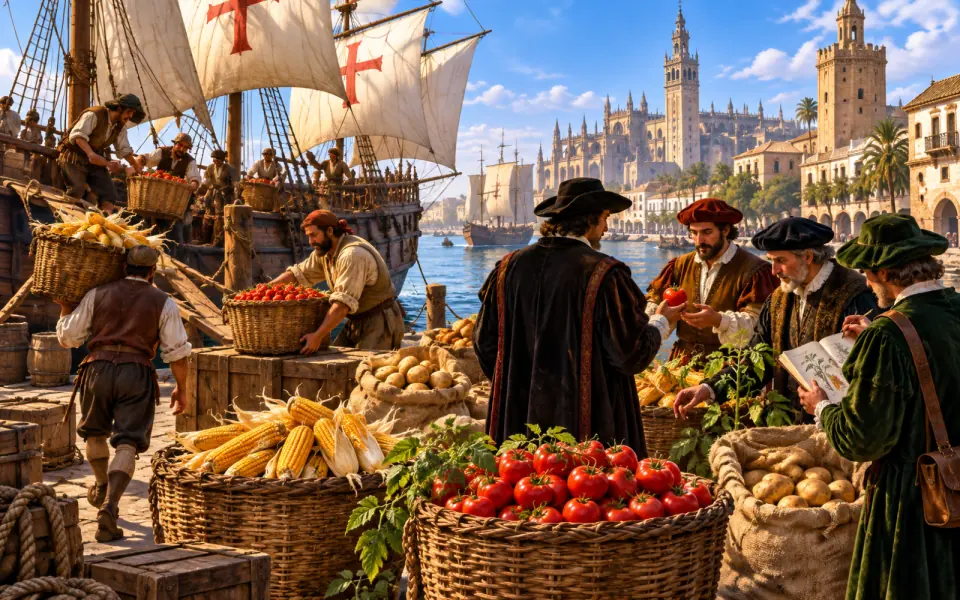 BeforeTomatoes, maize and potatoes reach Europeabout 1550
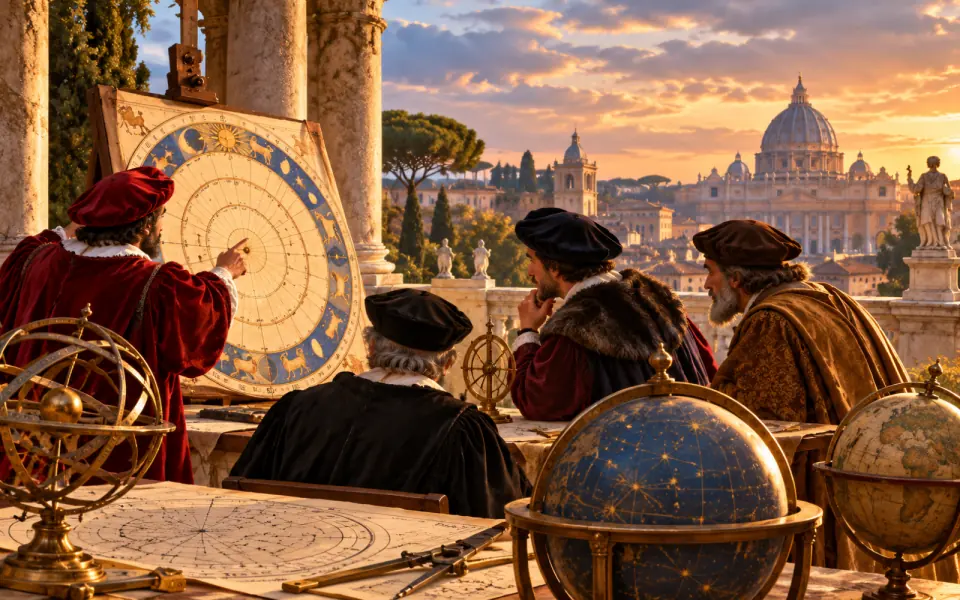 BeforeThe Gregorian calendar1582
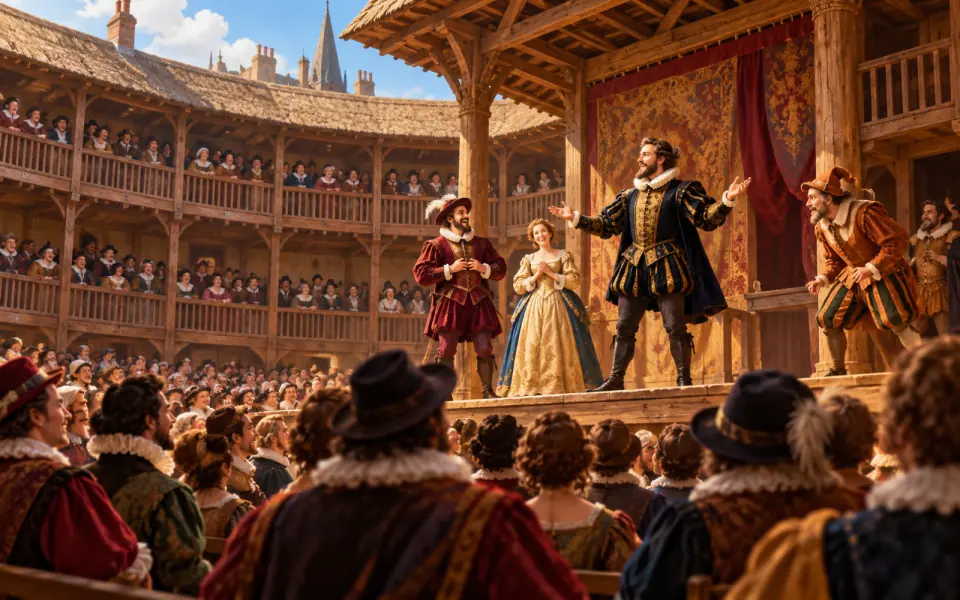 BeforeShakespeare's theatreabout 1590
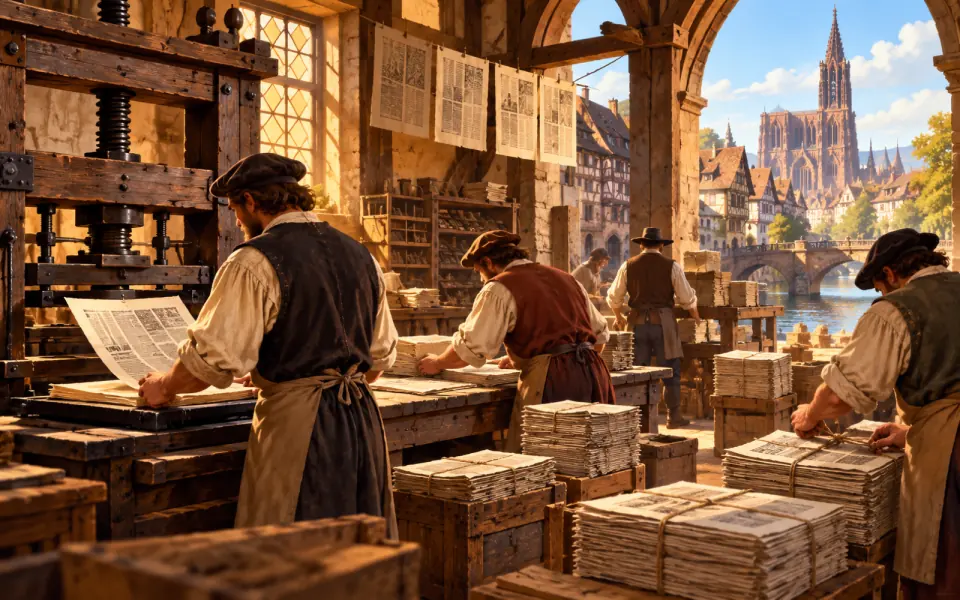 BeforeRegular newspapers1605
- You are hereGalileo turns his telescope to the sky1609
 AfterKepler describes the orbits1609
 AfterArtemisia Gentileschiabout 1612
 AfterHarvey studies the circulation of the blood1628
 AfterScientific academies1660
 AfterNewton publishes the Principia1687
Listen / Read next
- Music to read by: Cinematic JourneyEpic film-style music, no lyrics, by Ciro Simone IrmiciSpotifyYouTube Music
Meanwhile, elsewhere in the world
Other events of the era “Early modern age”
- Renaissance perspective
- Brunelleschi completes the dome
- The fall of Constantinople
- Gutenberg prints the Bible
- Lorenzo de' Medici in Florence
- Leonardo designs machines
- Columbus's voyage
- Vasco da Gama reaches India
- Michelangelo carves David
- Raphael paints the Vatican Rooms
- Luther and the Reformation
- The conquest of Tenochtitlán
- The first voyage round the world
- Copernicus puts the Sun at the centre
- The Council of Trent
- Tomatoes, maize and potatoes reach Europe
- The Gregorian calendar
- Shakespeare's theatre
- Regular newspapers
- Kepler describes the orbits
- Artemisia Gentileschi
- Harvey studies the circulation of the blood
- Scientific academies
- Newton publishes the Principia
