The conquest of Tenochtitlán
1521 Tenochtitlán (now Mexico City), Mexico
In short
Tenochtitlán, the Aztec capital, stood on an island in the middle of a lake and was one of the largest cities in the world, with canals, markets and temples. In 1519 the Spaniard Hernán Cortés arrived there with a few hundred soldiers, allied with peoples who were enemies of the Aztecs. After a long siege, the city fell in August 1521. European weapons and above all smallpox, a disease unknown in America, killed huge numbers of its people. Mexico City was built on its ruins.
Why it matters It marked the start of Spanish rule in America and the end of one of the continent's great civilisations.
Source: Encyclopaedia Britannica, “Tenochtitlán”
Study card about 5 minutes of reading
The story
A city on the water
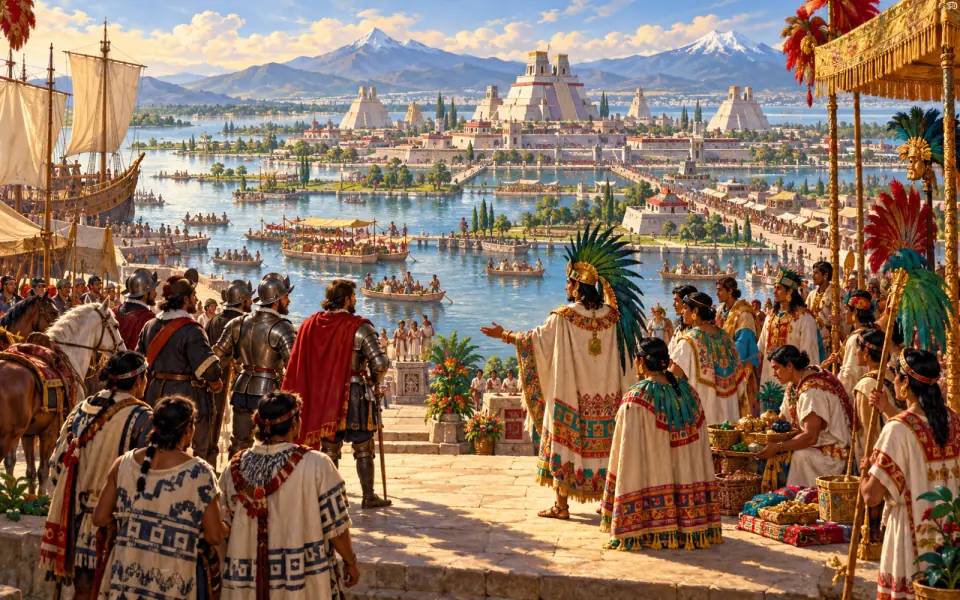
In 1519 the city of Tenochtitlan, capital of the Mexica people, whom we often call the Aztecs, was one of the largest in the world: perhaps two hundred thousand inhabitants, more than any Spanish city. It stood on an island in the middle of Lake Texcoco, linked to the mainland by long raised roads, the causeways. It had canals, markets, floating gardens, called chinampas, where maize and flowers were grown, and in the centre a great temple, the Templo Mayor. The Spaniards, who saw it from above, compared it to the cities in stories of knights.
The Mexica dominated much of central Mexico through a league of three cities, the Triple Alliance. Many neighbouring peoples had to pay them tribute, that is, hand over food, cloth and people, and they were not at all happy. This discontent played a decisive role.
Cortés lands
Hernán Cortés was a Spanish nobleman from Medellín. In 1519 he set out from Cuba with about five hundred and fifty men, sixteen horses and a few cannons, to explore the coast of Mexico. He founded a settlement on the coast, Veracruz, and had his ships burned, or sunk, according to tradition, to stop his men from turning back.
On the coast Cortés was given a young indigenous woman, baptised Marina and called Malintzin by her own people, later known as Malinche. She spoke two languages of the region and, learning Spanish, became his interpreter and adviser. With her help Cortés understood that many peoples hated the Mexica and he made an alliance with the Tlaxcalans, who had long resisted the Mexica, and with others. These allies, tens of thousands of warriors, made up most of the forces that marched on Tenochtitlan.
On the way to the capital, Moctezuma's messengers brought gifts of gold and fine feathers, hoping that the strangers would be satisfied and turn back. They had the opposite effect: the gold showed the Spaniards how rich the country was that they were about to reach.
Moctezuma and the “Sad Night”
On 8 November 1519 Cortés entered Tenochtitlan. The Mexica ruler, Moctezuma II, received him with great honours. Soon afterwards, according to Cortés's account, the Spaniards took him prisoner in his palace, to rule through him. In the spring of 1520 Cortés had to leave to deal with other Spaniards, sent to arrest him, and in his absence one of his lieutenants had many nobles killed during a festival. The city rose in revolt.
Moctezuma died in June 1520, but the Spanish and indigenous versions do not agree on how. On 30 June the Spaniards tried to flee by night, but they were attacked on the causeways and lost hundreds of men and almost all the treasure. This was called the “Sad Night” (Noche Triste). In the same period an epidemic of smallpox broke out, brought by a Spanish soldier, a disease the local peoples had never met: it killed a great many people, among them the new ruler, Cuitláhuac.
The siege
Cortés took refuge in Tlaxcala, recovered his strength and had thirteen small ships built, the brigantines, which were carried in pieces to the lake and put together there. In May 1521 the siege began. The besiegers blocked the causeways and the aqueducts, and the brigantines dominated the lake. The inhabitants, struck by hunger, thirst and disease, resisted for about eighty days, led by the new ruler, Cuauhtémoc, a young nobleman.
On 13 August 1521 Cuauhtémoc was captured while trying to escape by canoe, and the city fell. It was largely destroyed. On its ruins the Spaniards built the city of Mexico City, which is the capital of the country still today. Central Mexico became the core of New Spain, a great Spanish domain that lasted for almost three hundred years.
Why it happened
The Spanish success did not depend only on metal weapons, horses and cannons. What mattered were the alliances with the peoples subject to the Mexica, who wanted to be free of tribute and who supplied most of the fighters.
The diseases brought from Europe, such as smallpox, which hit the indigenous population hard, mattered a great deal too. Cortés also made skilful use of diplomacy, of the information from interpreters and of the divisions among his enemies.
What changed
The Mexica empire disappeared, and with New Spain Spanish colonial rule began in Mexico, later spreading across much of Central and South America. From the silver mines of the region, silver flowed into Europe in enormous quantities.
The indigenous population fell dramatically in the following decades, mainly because of epidemics, but also because of forced labour and war. Local cultures were partly wiped out: temples were torn down, and many indigenous books were burned.
In time a new society arose, with mixed languages, religion and customs: today Spanish is spoken, but Nahuatl, the language of the Mexica, is also spoken by more than a million people. The very name “Mexico” comes from that of the Mexica.
Key people and places
People
- Hernán Cortés
- Spanish conquistador (1485–1547): he led the expedition against the Mexica.
- Moctezuma II
- Mexica ruler from 1502 to 1520: he welcomed Cortés to Tenochtitlan.
- Malinche (Malintzin)
- Indigenous woman (about 1500–1529): she was Cortés's interpreter and adviser.
- Cuauhtémoc
- Last Mexica ruler (about 1495–1525): he defended the city and was captured in 1521.
- Cuitláhuac
- Mexica ruler for a few months in 1520: he died of smallpox.
Places
- Tenochtitlan
- Capital of the Mexica, on Lake Texcoco: today under Mexico City.
- Templo Mayor, Mexico City
- The remains of the great temple, discovered in the 20th century and open to visitors.
- Tlaxcala
- Territory of the people who allied with Cortés.
Good to know
- Tenochtitlan was built on an island in the middle of a lake.
- Most of Cortés's fighters were indigenous allies, not Spaniards.
- The city fell after about eighty days of siege.
- The Templo Mayor was rediscovered in 1978 beneath the centre of Mexico City.
- The name “Mexico” comes from that of the Mexica.
Find out more
- Wikipedia, “Spanish conquest of the Aztec Empire” en.wikipedia.org
- Wikipedia, “Tenochtitlan” en.wikipedia.org
- Wikipedia, “Hernán Cortés” en.wikipedia.org
- Wikipedia, “Malinche (volcano)” en.wikipedia.org
Related events
- Columbus's voyage1492 · Early modern ageColumbus's voyage opened the way to the conquest of the Americas.
- The first voyage round the world1522 · Early modern ageA few months later Magellan completed the first voyage around the world.
- Tomatoes, maize and potatoes reach Europeabout 1550 · Early modern ageFrom the Americas, tomatoes, maize and potatoes arrived in Europe.
- Luther and the Reformation1517 · Early modern ageCortés and Luther were contemporaries: in 1521 Luther was at Worms.
Before and after, in the era “Early modern age”
Event 12 of 25
 BeforeRenaissance perspectiveabout 1420
 BeforeBrunelleschi completes the dome1436
 BeforeThe fall of Constantinople1453
 BeforeGutenberg prints the Bibleabout 1455
 BeforeLorenzo de' Medici in Florence1469
 BeforeLeonardo designs machinesabout 1485
 BeforeColumbus's voyage1492
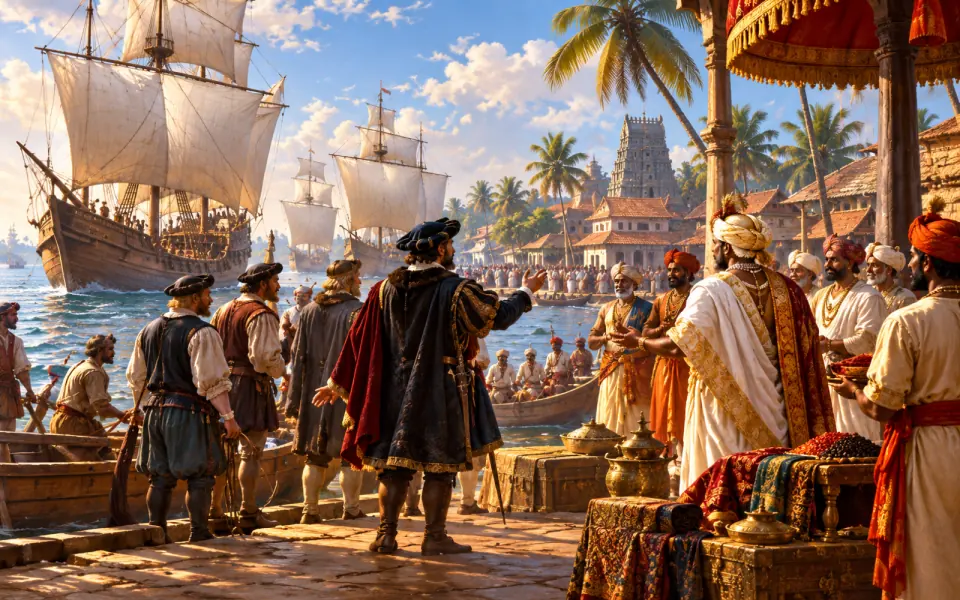 BeforeVasco da Gama reaches India1498
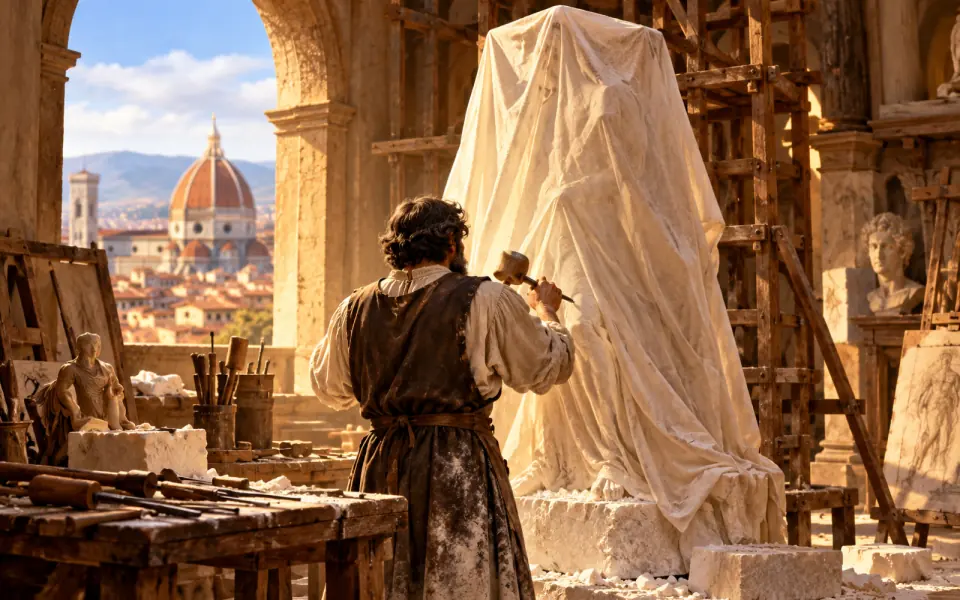 BeforeMichelangelo carves David1504
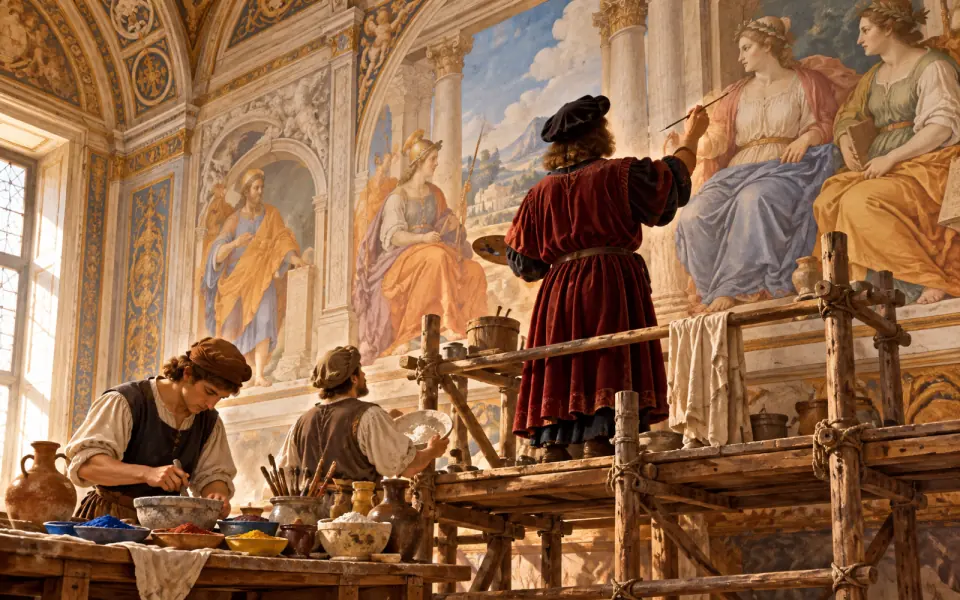 BeforeRaphael paints the Vatican Rooms1508
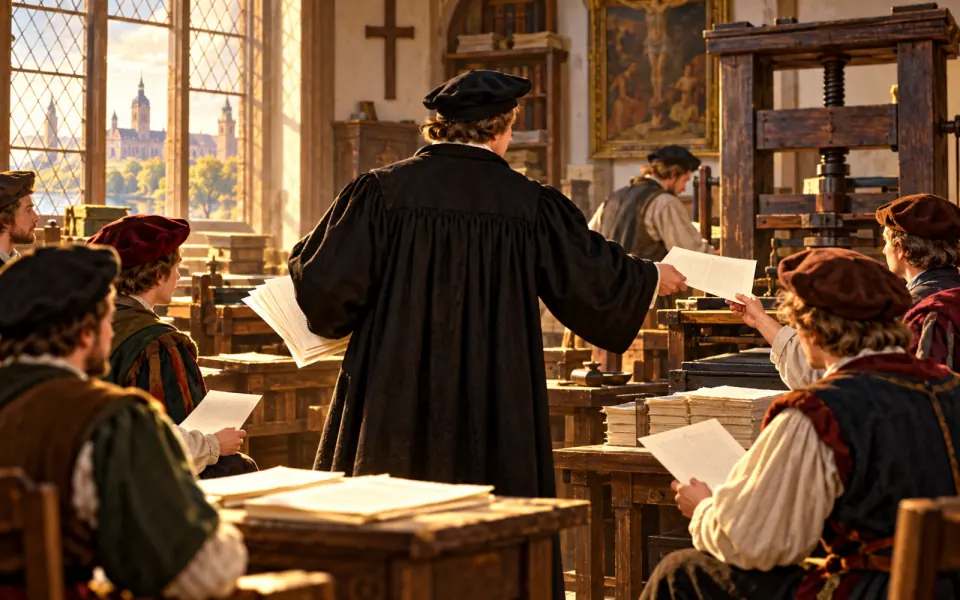 BeforeLuther and the Reformation1517
- You are hereThe conquest of Tenochtitlán1521
 AfterThe first voyage round the world1522
 AfterCopernicus puts the Sun at the centre1543
 AfterThe Council of Trent1545–1563
 AfterTomatoes, maize and potatoes reach Europeabout 1550
 AfterThe Gregorian calendar1582
 AfterShakespeare's theatreabout 1590
 AfterRegular newspapers1605
 AfterGalileo turns his telescope to the sky1609
 AfterKepler describes the orbits1609
 AfterArtemisia Gentileschiabout 1612
 AfterHarvey studies the circulation of the blood1628
 AfterScientific academies1660
 AfterNewton publishes the Principia1687
In legend
Listen / Read next
- Music to read by: Cinematic JourneyEpic film-style music, no lyrics, by Ciro Simone IrmiciSpotifyYouTube Music
Meanwhile, elsewhere in the world
Other events of the era “Early modern age”
- Renaissance perspective
- Brunelleschi completes the dome
- The fall of Constantinople
- Gutenberg prints the Bible
- Lorenzo de' Medici in Florence
- Leonardo designs machines
- Columbus's voyage
- Vasco da Gama reaches India
- Michelangelo carves David
- Raphael paints the Vatican Rooms
- Luther and the Reformation
- The first voyage round the world
- Copernicus puts the Sun at the centre
- The Council of Trent
- Tomatoes, maize and potatoes reach Europe
- The Gregorian calendar
- Shakespeare's theatre
- Regular newspapers
- Galileo turns his telescope to the sky
- Kepler describes the orbits
- Artemisia Gentileschi
- Harvey studies the circulation of the blood
- Scientific academies
- Newton publishes the Principia
