The Lumière brothers' cinema
1895 Grand Café, Paris, France
In short
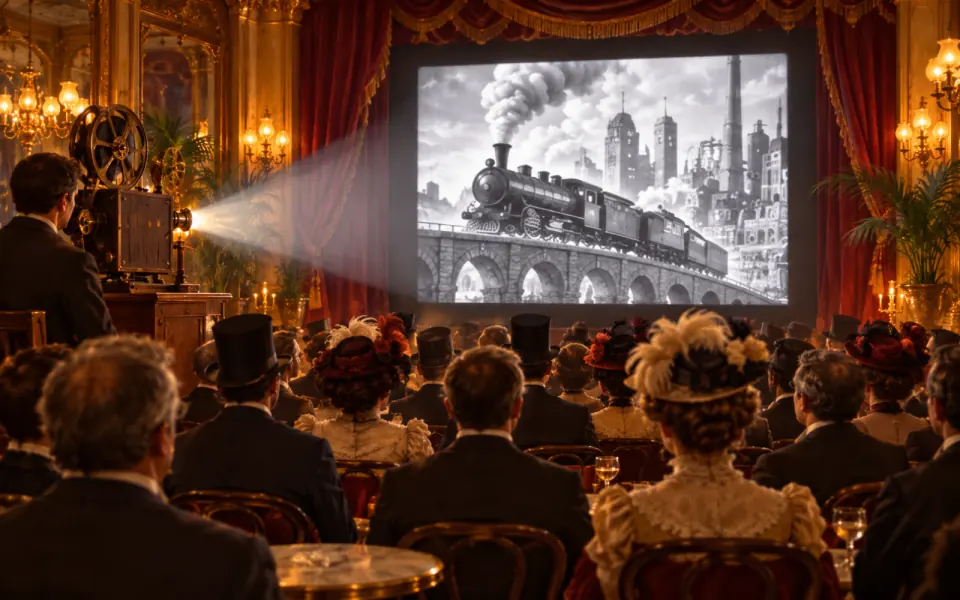
The brothers Auguste and Louis Lumière, from Lyon, invented the cinématographe, a device that filmed and projected moving pictures. On 28 December 1895, in the Salon Indien of the Grand Café in Paris, they held the first public screening for a paying audience. The programme included ten short films, each less than a minute long, such as workers leaving their factory. A ticket cost one franc.
Why it matters That evening cinema was born as a show to watch together, in a dark room in front of a screen.
Source: Institut Lumière, Lyon
Study card about 5 minutes of reading
The story
Moving pictures
At the end of the 19th century photography was already fifty years old, but the pictures stood still. Many inventors were trying to give them movement. It was known that the eye, when it sees many still pictures in rapid succession, blends them into a single moving picture: this was already the principle behind optical toys, such as the zoetrope, a cylinder with a series of drawings that seem to come to life as it spins. In 1878 the English photographer Eadweard Muybridge had photographed a galloping horse with a row of cameras, showing its movements.
In the United States, around 1891, the great inventor Thomas Edison and his collaborator William Dickson built the “kinetoscope”: a wooden box with a small peephole, through which only one person at a time could watch a short film for about half a minute. It was a success, but it was an individual show: you had to queue and look one at a time.
The Lumière brothers
In Lyon, in France, Antoine Lumière owned a factory making photographic plates, the biggest in Europe, which was run by his two sons, Auguste and Louis. Auguste, born in 1862, was an administrator and a man of science; Louis, born in 1864, was a brilliant inventor, who at seventeen had already perfected a new kind of plate. The two brothers had seen the kinetoscope and realised that they could do better: a machine able to project pictures onto a screen for a whole audience.
In 1894 Louis, who was ill, stayed at home and, in one night of work, had the idea for a mechanism able to move the film forward in jerks, like a sewing machine: the film stops for an instant in front of the lens, then jumps forward. The “cinématographe” was born, and was patented on 13 February 1895. It was a light wooden machine weighing 5 kilos, worked by a hand crank: it served as a film camera, as a projector and for printing copies. By turning the crank it took sixteen frames a second.
28 December 1895
On 22 March 1895 the Lumières held a first private screening for a group of scientists in Paris, and others followed. On 28 December 1895 came the first public screening with paying customers, in the basement of a Paris establishment, the Grand Café, on the boulevard des Capucines. There were about thirty spectators, with a ticket costing one franc. The programme lasted about twenty minutes and included ten short films, each about fifty seconds long.
They were scenes of everyday life. The most famous, “Workers Leaving the Lumière Factory”, showed the men and women workers streaming out of the factory. In “The Sprinkler Sprinkled”, perhaps the first comedy in history, a boy plays a trick on a gardener by stepping on the water hose. In 1896 another famous film, “The Arrival of a Train at La Ciotat Station”, showed a train coming towards the camera. It is said that, seeing it, some frightened spectators moved out of the way: perhaps it is only a legend (historians have found no accounts of any panic), but it shows how strong the amazement was at those living pictures.
Success and the magician Méliès
Success was immediate: after a few weeks the queues to get in were very long. The Lumières sent their operators all over the world, to film landscapes, festivals and ceremonies, and to organise screenings. In Italy the first took place in Rome and Milan in 1896. It is said that Louis Lumière called the cinema “an invention without a future”, because he thought that, once the curiosity had worn off, people would get tired of it.
He was wrong. Among the spectators at the Grand Café was a French illusionist, Georges Méliès, who asked to buy the machine, but the Lumières refused. Méliès had one built for himself, and realised that the cinema could tell fantastic stories: with editing tricks, painted sets, explosions and disappearances, in 1902 he made “A Trip to the Moon”, one of the first science-fiction films, with the famous image of the capsule stuck in the Moon's eye. In a short time the cinema went from a fairground curiosity to a new form of entertainment, with the first permanent cinemas. In Italy, in 1914, “Cabiria” was a great epic.
Why it happened
The cinema was born from the meeting of many discoveries: photography, flexible film (made practical by Eastman in 1889), the study of the persistence of images on the retina, and precision mechanics, needed to move the film forward regularly.
The determination of many inventors, in different countries, to succeed counted too. The Lumières were more successful because their machine was light, simple and versatile, and because they thought at once of a show for the public.
What changed
In a few years the cinema became the great mass entertainment of the 20th century. It spread with sound (1927), colour and the big studios, such as Hollywood in the United States and Cinecittà in Italy. It told stories, news and wars, shaped the imagination of whole generations, and was also an instrument of propaganda and of art. It had great film-makers in every country.
Today, with television, streaming and the phone, we watch films in many ways, but many people still love going to the cinema to watch a film all together. The technology has changed, from film to digital, but the basic idea is still that of the Lumières and of those moving pictures.
The date of 28 December 1895 is remembered as the birth of the cinema. In Lyon, the Lumière family villa is now a museum, the Institut Lumière.
Key people and places
People
- Auguste Lumière
- French industrialist and inventor (1862–1954): with his brother Louis he invented the cinématographe.
- Louis Lumière
- French inventor (1864–1948): he designed the mechanism of the cinématographe.
- Georges Méliès
- French illusionist and film director (1861–1938): he created the first fantasy films, such as “A Trip to the Moon”.
- Thomas Edison
- American inventor (1847–1931): with Dickson he invented the kinetoscope.
- William Dickson
- British inventor (1860–1935): Edison's collaborator, he designed the kinetoscope's film camera.
Places
- Grand Café, boulevard des Capucines, Paris
- The establishment where the first public screening with paying customers was held on 28 December 1895.
- Lyon, France
- The Lumières' city, where the Institut Lumière is.
Good to know
- The first public screening with paying customers was on 28 December 1895, with about thirty spectators.
- The cinématographe shot sixteen frames a second, with a hand crank.
- One of the 1895 films, “The Sprinkler Sprinkled”, is considered one of the first comedies.
- In 1902 Méliès made “A Trip to the Moon”, the first great science-fiction film.
- The Lumières' machine weighed about five kilos and worked as a camera, a projector and a printer.
Find out more
- Institut Lumière, Lyon (in French) institut-lumiere.org
- Wikipedia, “Lumière brothers” en.wikipedia.org
- Wikipedia, “Cinematograph” en.wikipedia.org
- Wikipedia, “Georges Méliès” en.wikipedia.org
Related events
- Niépce's photographabout 1826 · Age of revolutionsPhotography had prepared the way for the cinema.
- Talking pictures1927 · Early 20th centuryIn 1927 the cinema gained a voice.
- Television spreadsabout 1950 · Early 20th centuryAfter the cinema, television brought pictures into homes.
- The first powered flight1903 · Early 20th centuryIn the same period, the Wright brothers were inventing the aeroplane.
Before and after, in the era “Age of revolutions”
Event 25 of 25
 BeforeNewcomen's steam engine1712
 BeforeThe European Enlightenmentabout 1720
 BeforeDiderot's Encyclopédie1751
 BeforeWatt's steam engine1769
 BeforeThe American Revolution1776–1783
 BeforeThe first hot-air balloon flight1783
 BeforeThe French Revolution1789–1799
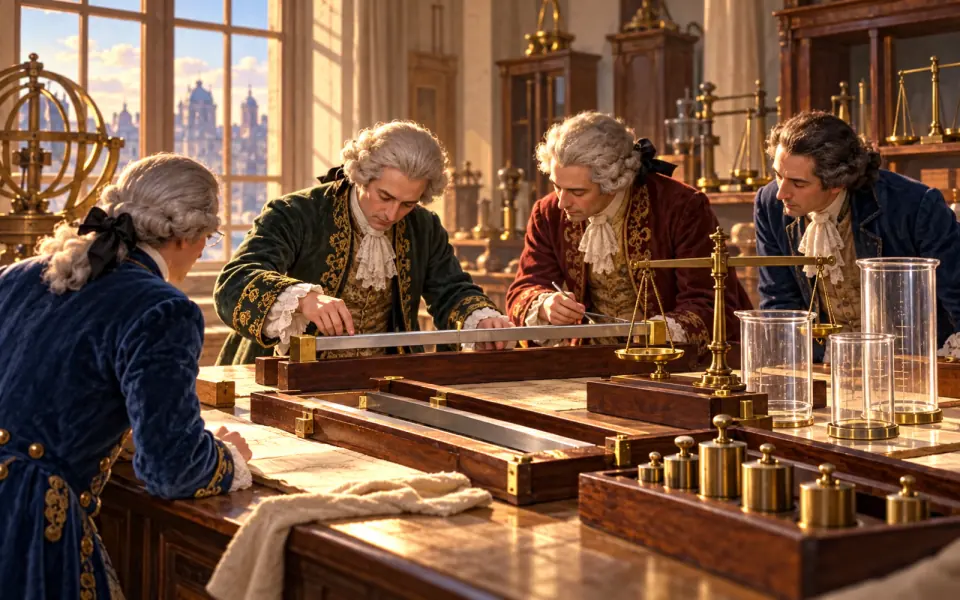 BeforeThe metric system1795
 BeforeJenner's vaccine1796
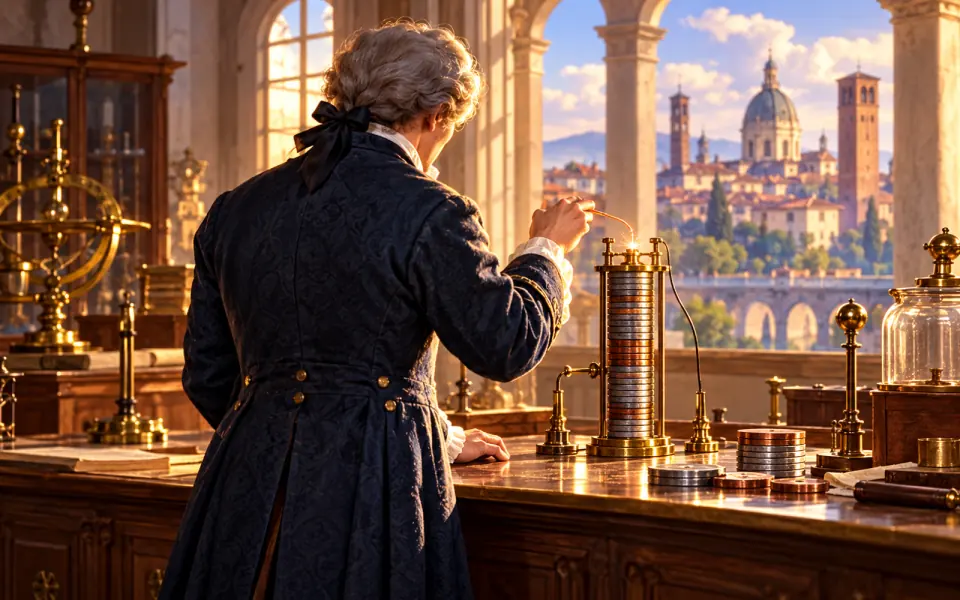 BeforeVolta's battery1800
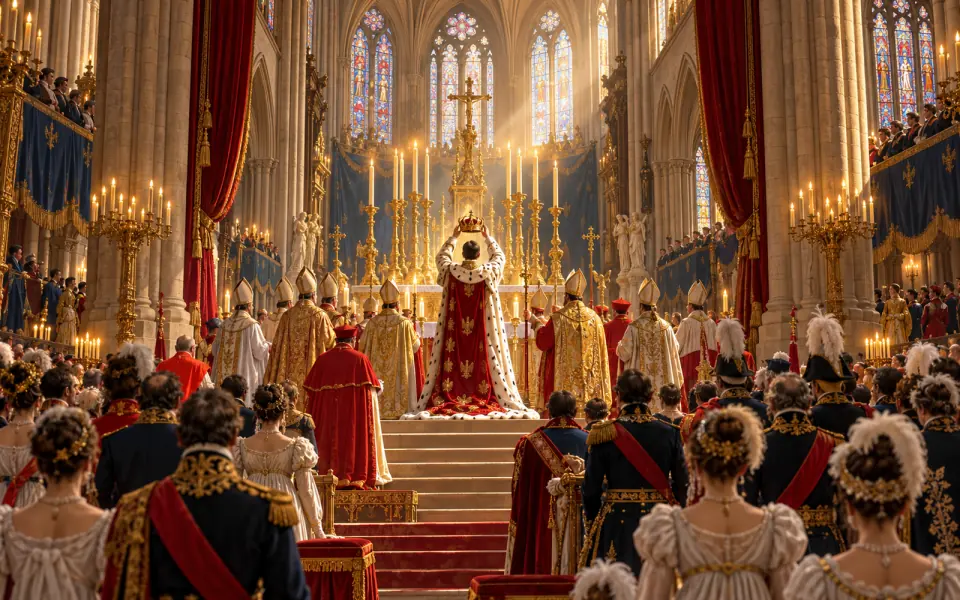 BeforeNapoleon becomes emperor1804
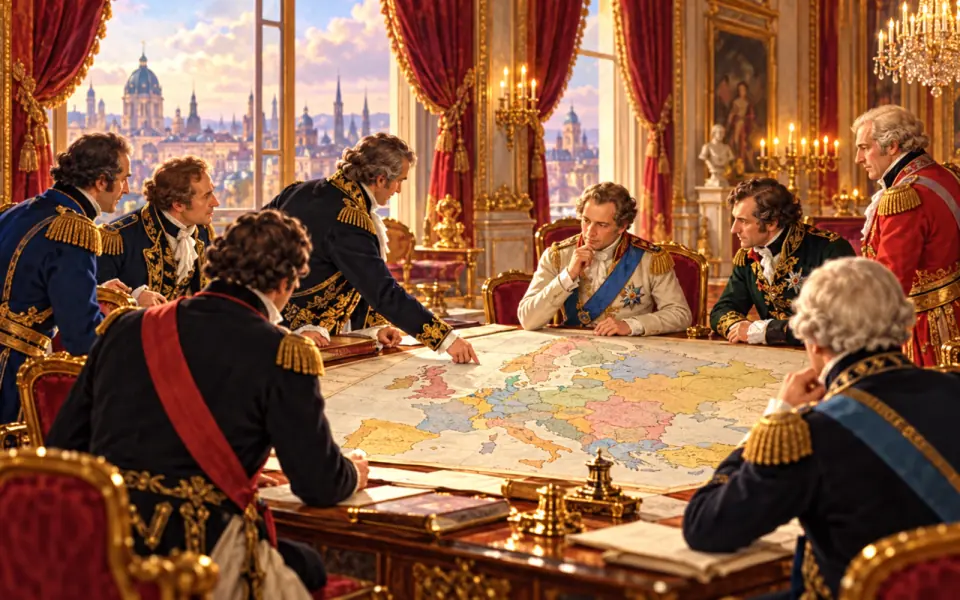 BeforeThe Congress of Vienna1815
 BeforeThe first public steam railway1825
 BeforeNiépce's photographabout 1826
 BeforeManzoni's The Betrothed1827
 BeforeThe electric telegraph1844
 BeforeThe revolutions of 18481848
 BeforeDarwin publishes On the Origin of Species1859
 BeforeThe Expedition of the Thousand1860
 BeforeThe unification of Italy1861
 BeforeThe labour movementabout 1864
 BeforeCompulsory primary school (Coppino law)1877
 BeforeA practical electric light bulb1879
 BeforeThe first modern motor car1886
- You are hereThe Lumière brothers' cinema1895
Listen / Read next
- Music to read by: Cinematic JourneyEpic film-style music, no lyrics, by Ciro Simone IrmiciSpotifyYouTube Music
Meanwhile, elsewhere in the world
Other events of the era “Age of revolutions”
- Newcomen's steam engine
- The European Enlightenment
- Diderot's Encyclopédie
- Watt's steam engine
- The American Revolution
- The first hot-air balloon flight
- The French Revolution
- The metric system
- Jenner's vaccine
- Volta's battery
- Napoleon becomes emperor
- The Congress of Vienna
- The first public steam railway
- Niépce's photograph
- Manzoni's The Betrothed
- The electric telegraph
- The revolutions of 1848
- Darwin publishes On the Origin of Species
- The Expedition of the Thousand
- The unification of Italy
- The labour movement
- Compulsory primary school (Coppino law)
- A practical electric light bulb
- The first modern motor car
