The Hundred Years' War
1337–1453 France
In short
King Edward III of England claimed the throne of France, and so began a very long war between the two kingdoms. In fact it lasted 116 years, with long truces between one period of fighting and the next. English archers with their longbows won great battles such as Crécy and Agincourt. In the end the French won back almost all their lands, and the English were left with only the town of Calais.
Why it matters During the war the French and the English began to feel they were two separate peoples, each with its own nation.
Source: Encyclopaedia Britannica, “Hundred Years' War”
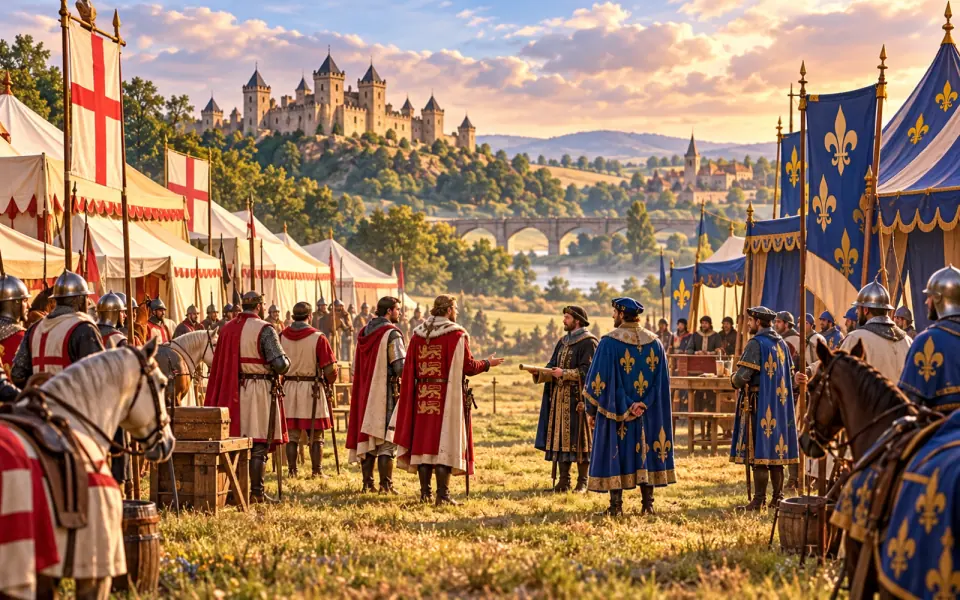
Study card about 4 minutes of reading
The story
Who should be King of France?
In 1328 King Charles IV of France died, without male children. The crown passed to a cousin of his, Philip of Valois, who became Philip VI. But the King of England, Edward III, was Charles IV's nephew through his mother Isabella, and claimed to have more right than Philip. The French replied that a woman could not pass on the throne, and so neither could her son.
The real reason for the quarrel, however, was another. The kings of England had long held part of France, Gascony, around Bordeaux, but for this they had to pay homage to the French king, as vassals. This was hard for a king to accept. Besides, the two kingdoms were disputing Flanders, the rich region of wool cloth, which bought English wool but depended politically on France.
In 1337 Philip VI confiscated Gascony and in 1340 Edward proclaimed himself King of France. A war began that, with truces and renewed fighting, lasted 116 years, until 1453. The name “Hundred Years' War” was invented by historians much later.
Arrows against knights
In the first great battles the English won against all expectations. At Crécy, in 1346, a much larger French army, with many knights in armour, was defeated by English and Welsh archers armed with the longbow: a weapon almost as tall as a man, able to shoot an arrow every few seconds, which at a distance could pierce armour. In 1356 at Poitiers the King of France himself, John II, was captured, and an enormous ransom was paid to free him.
On 25 October 1415, in the battle of Agincourt, Henry V of England, with a much smaller army, worn out and sick, again defeated the French cavalry on a field turned muddy by rain. After the victory Henry V managed to have himself recognised by the French as heir to the throne in the Treaty of Troyes of 1420.
The English archers were peasants and small landowners, but they trained from boyhood: by law young Englishmen had to practise with the bow on feast days, and to be able to draw a longbow took years of training, which even deformed the bones of the shoulders and back. The skeletons found in the wreck of the ship Mary Rose show this even today.
A teenager changes the course of the war
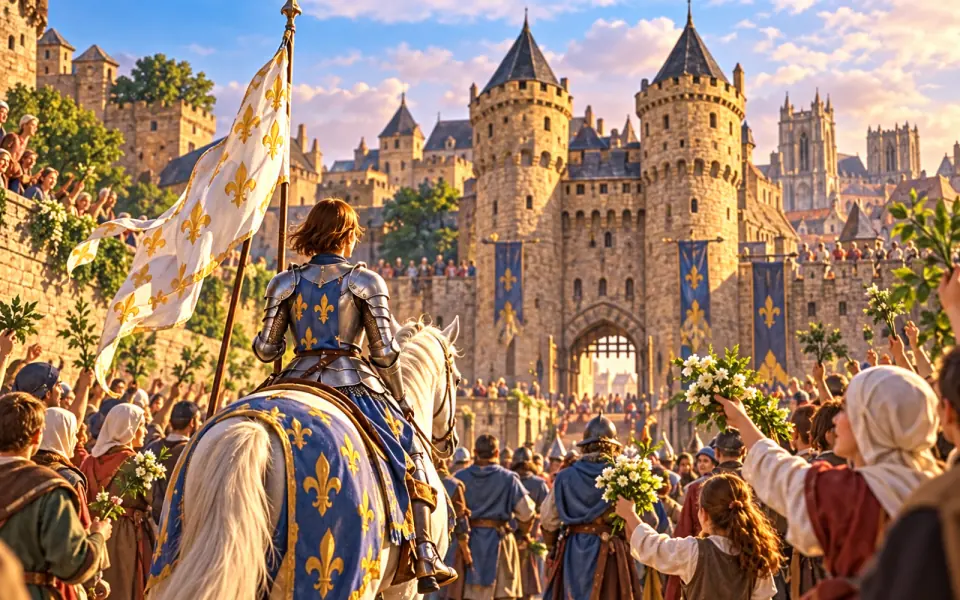
France seemed lost: Paris was in the hands of the English and their allies, the Burgundians, and the heir to the throne, the Dauphin Charles, was shut up south of the Loire. Then, in 1429, Joan of Arc arrived, a peasant girl of seventeen who said she had heard the voices of saints, and who led the army to free Orléans. The Dauphin was crowned king at Reims as Charles VII.
After Joan's death, burned at the stake at Rouen in 1431, the war went on. The French learned to use cannon and reorganised the army with a core of permanently paid soldiers. In 1453, at Castillon, in Gascony, French artillery destroyed the English army. Bordeaux surrendered in October. The English lost everything in France, except the town of Calais, which they held until 1558.
A war with many pauses
It was not a continuous war. For long periods there was truce or peace, and the fighting was mostly raiding: bands of soldiers who burned villages, stole cattle and destroyed crops. In the middle of it all there had also been the Black Death, which killed many people on both sides. The peasants, taxed and plundered, rebelled several times, as in the Jacquerie revolt of 1358.
Why it happened
The causes were dynastic, that is, linked to who should be king, but also territorial and economic: control of Gascony and of Flanders, where the wool cloth trade was carried on.
At the root was the mistrust between two neighbouring and powerful kingdoms, each of which wanted to strengthen its power over the nobles and territories, without depending on the other and without having to pay homage any more.
What changed
France came out of the war more united: the kings grew stronger, obtained the right to collect permanent taxes and created a standing army. A national consciousness formed, and Joan of Arc became a national heroine.
England, deprived of its French possessions, concentrated on its islands. Soon afterwards the Wars of the Roses broke out inside it, a civil war between two branches of the royal family.
Weapons changed: the longbow and then cannon showed that knights in armour were no longer unbeatable. The feudal world, based on warrior nobles, began to decline.
Key people and places
People
- Edward III
- King of England from 1327 to 1377 (1312-1377): he claimed the French throne.
- Philip VI of Valois
- King of France from 1328 to 1350: first king of the Valois dynasty.
- Henry V
- King of England from 1413 to 1422 (1386-1422): victor of Agincourt.
- Joan of Arc
- French heroine (about 1412-1431): she led the army to Orléans.
- Charles VII
- King of France from 1422 to 1461: crowned at Reims in 1429.
Places
- Crécy (France)
- Site of the first great English victory, in 1346.
- Agincourt (France)
- Village where in 1415 the English won on a muddy field.
- Castillon (France)
- Site of the last battle, in 1453.
Good to know
- The war actually lasted 116 years, from 1337 to 1453.
- The English longbow could shoot an arrow every few seconds.
- The English held Calais until 1558.
- The name “Hundred Years' War” was given by historians.
- At Castillon, in 1453, French cannon played a decisive part.
Find out more
- Wikipedia, “Hundred Years' War” en.wikipedia.org
- Wikipedia, “Battle of Agincourt” en.wikipedia.org
- Wikipedia, “Battle of Crécy” en.wikipedia.org
- Wikipedia, “Battle of Castillon” en.wikipedia.org
Related events
- Joan of Arc1429 · Late Middle AgesJoan of Arc changed the course of the war in 1429.
- The Black Death1347–1352 · Late Middle AgesThe Black Death struck both countries during the war.
- Magna Carta1215 · Late Middle AgesMagna Carta had already limited the power of the kings of England.
- Public mechanical clocksabout 1350 · Late Middle AgesPublic clocks by now marked time in the towns.
Before and after, in the era “Late Middle Ages”
Event 22 of 25
 BeforeThe growth of medieval townsabout 1050
 BeforeThe East–West Schism1054
 BeforeThe Bayeux Tapestryabout 1070
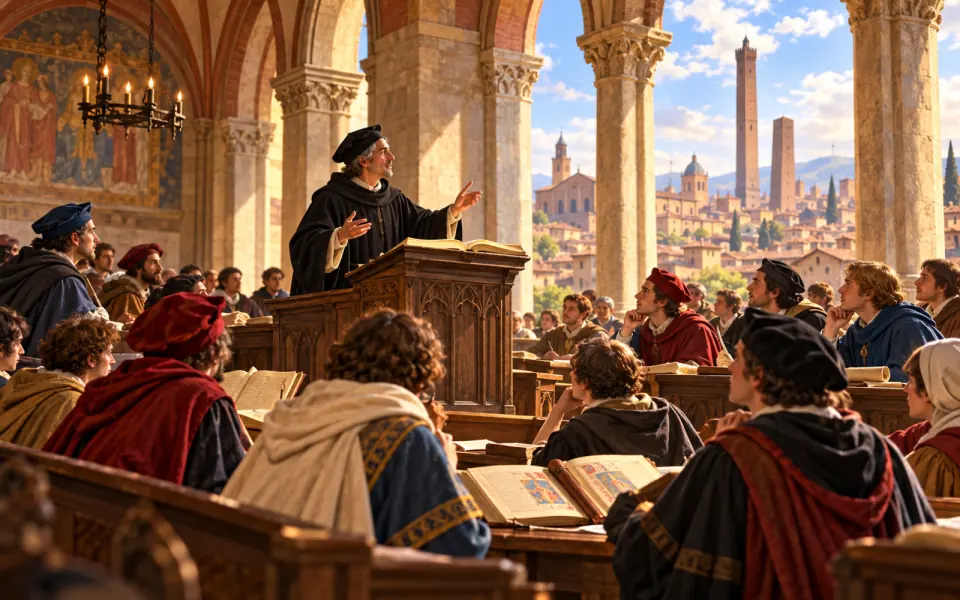 BeforeThe University of Bolognaabout 1088
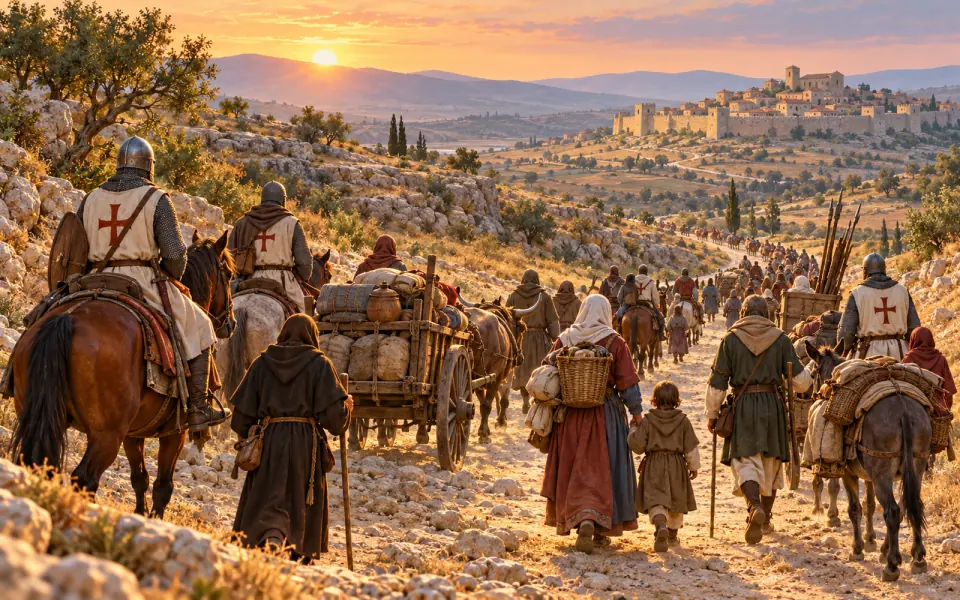 BeforeThe First Crusade1096–1099
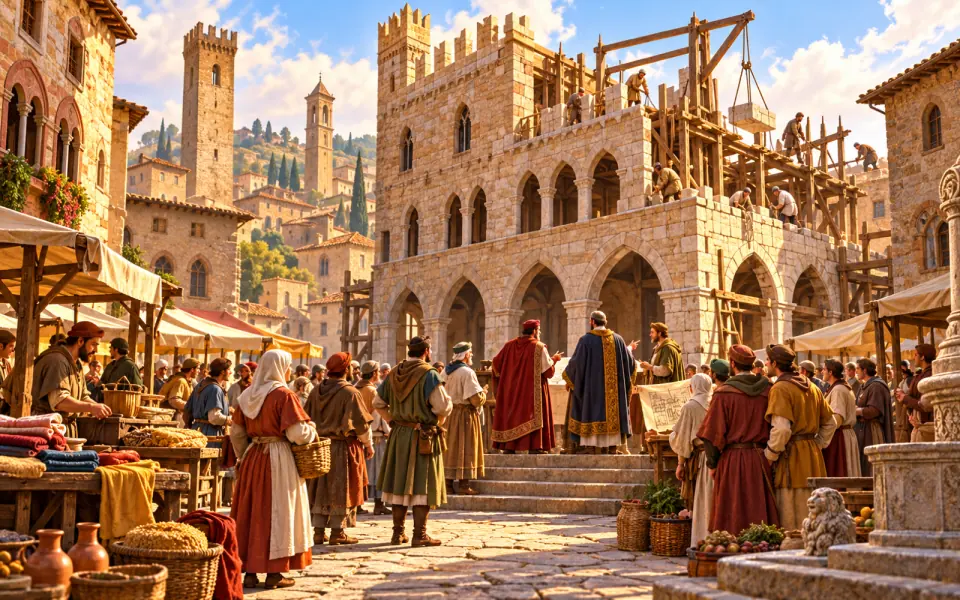 BeforeThe Italian communesabout 1100
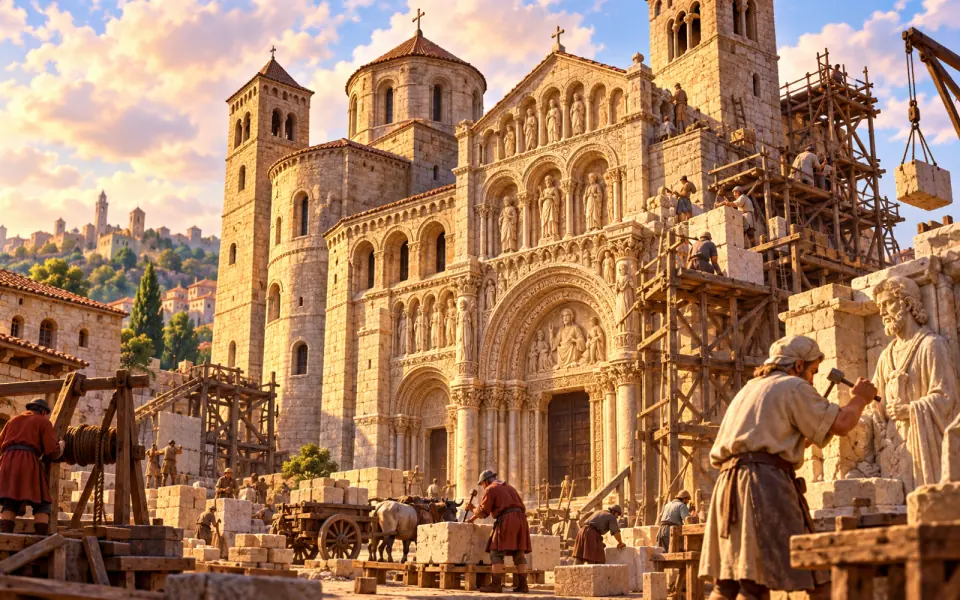 BeforeRomanesque cathedralsabout 1100
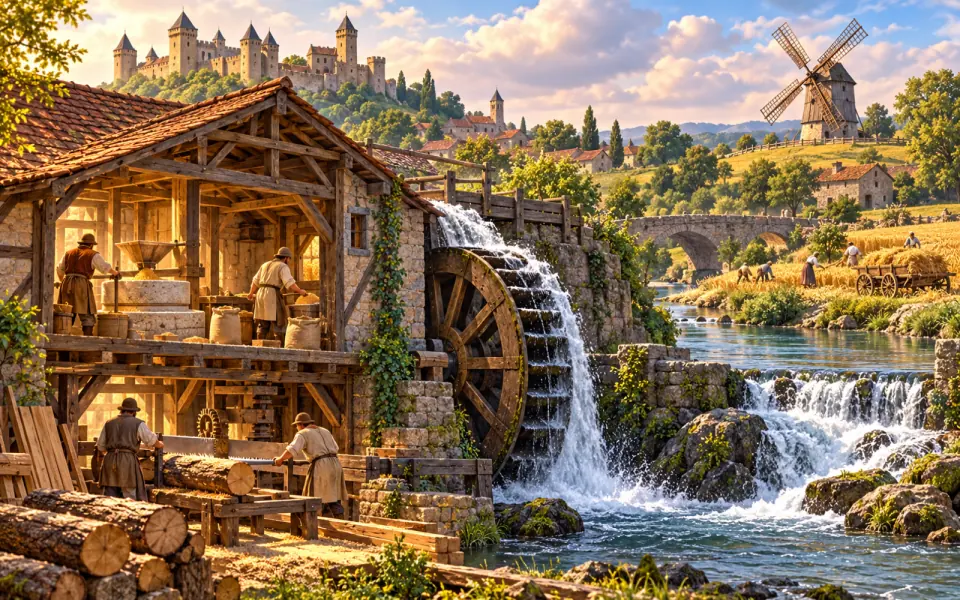 BeforeWatermills and windmillsabout 1100
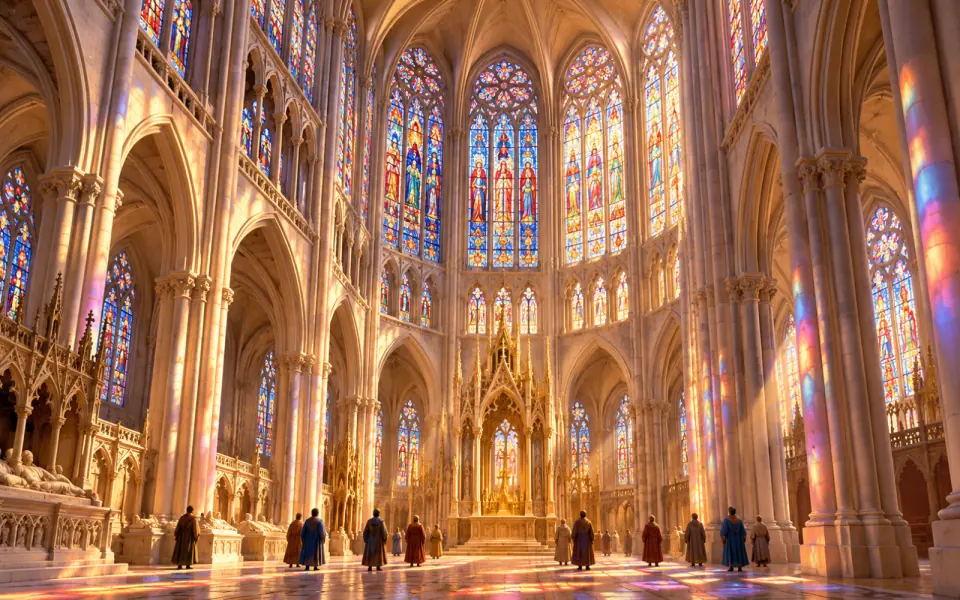 BeforeGothic style at Saint-Denis1144
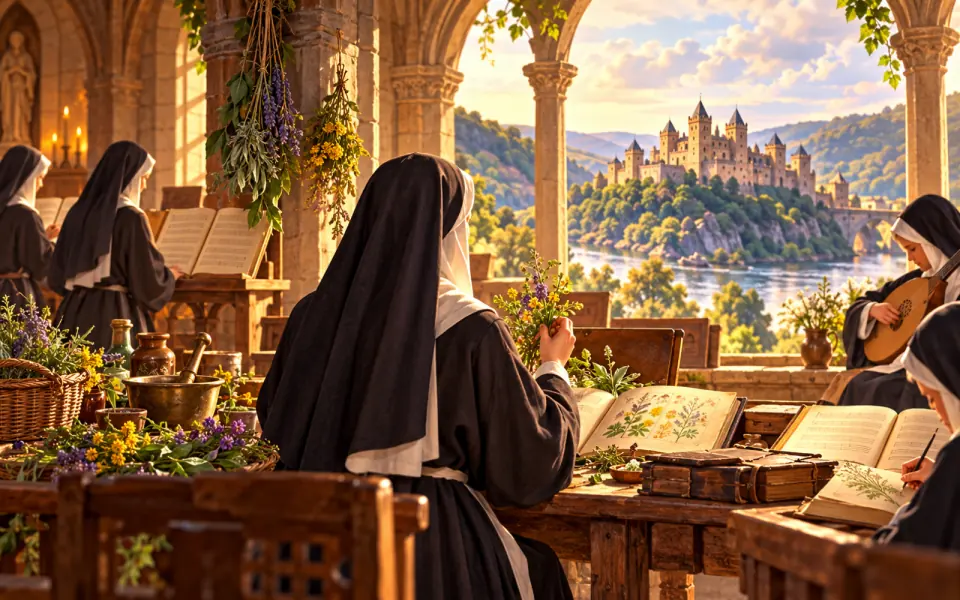 BeforeHildegard of Bingenabout 1150
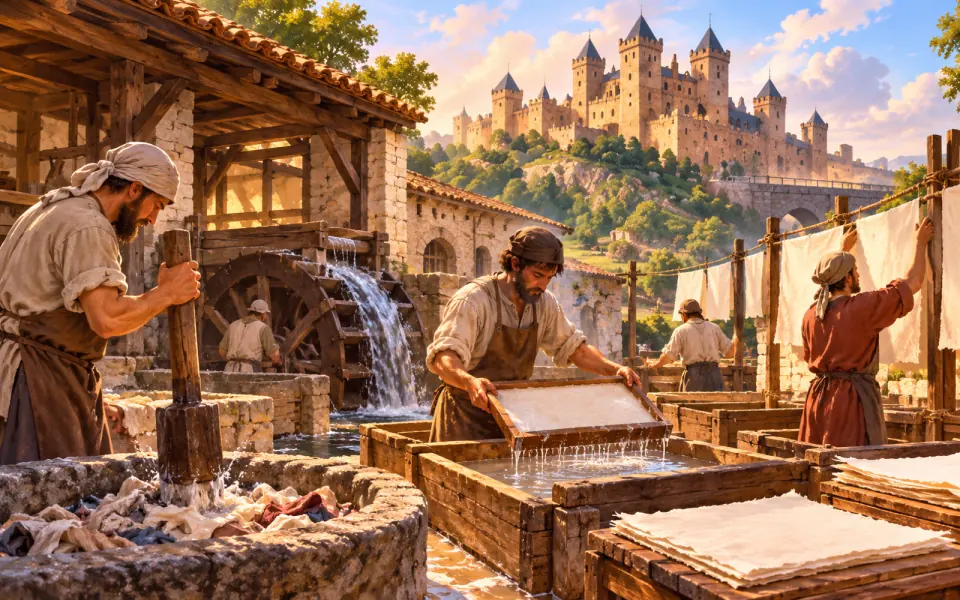 BeforePaper arrives in Europeabout 1150
 BeforeFrederick Barbarossa1155
 BeforeFrancis of Assisiabout 1182
 BeforeFibonacci and the Liber abaci1202
 BeforeMagna Carta1215
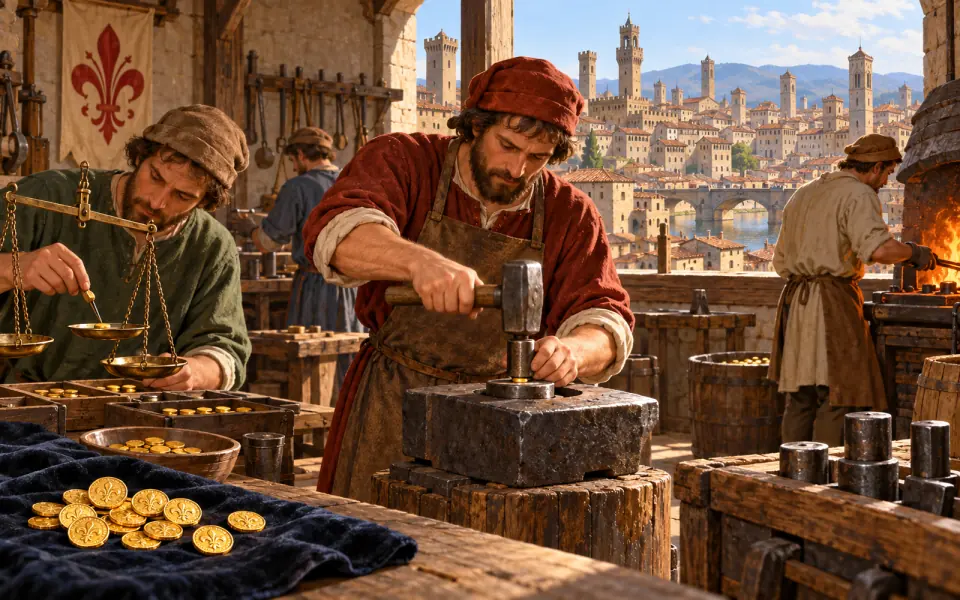 BeforeThe gold florin1252
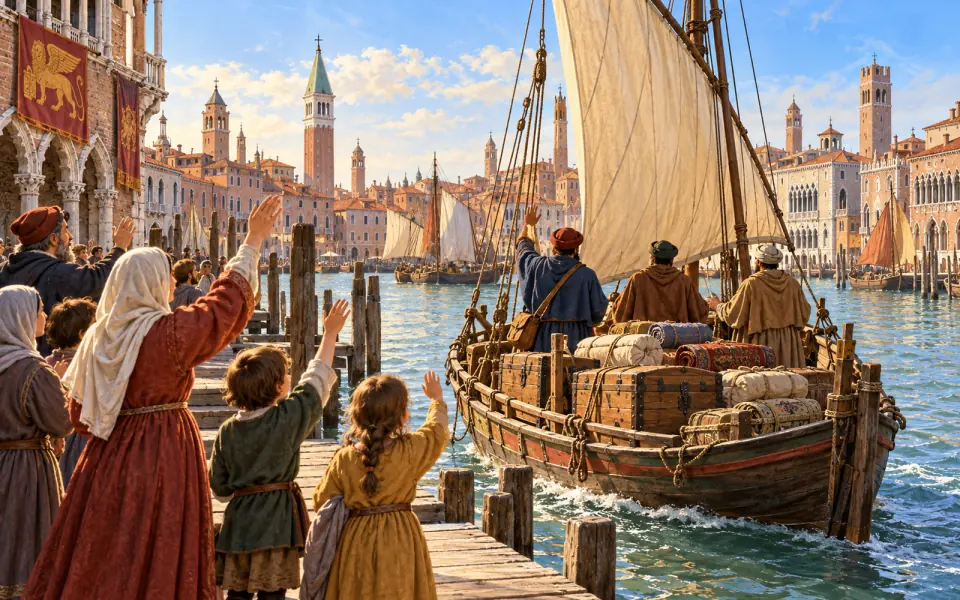 BeforeMarco Polo sets off for Asia1271
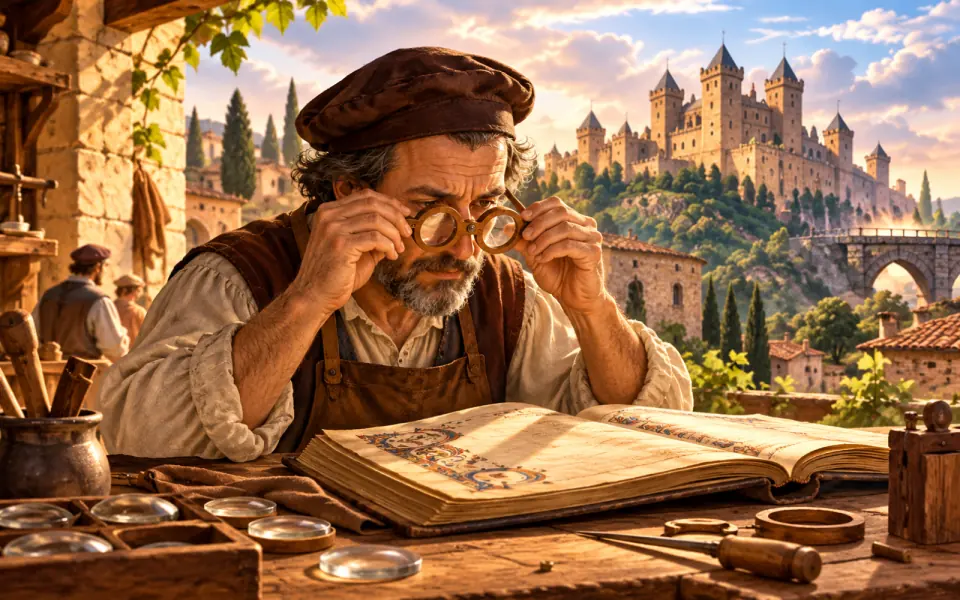 BeforeSpectaclesabout 1286
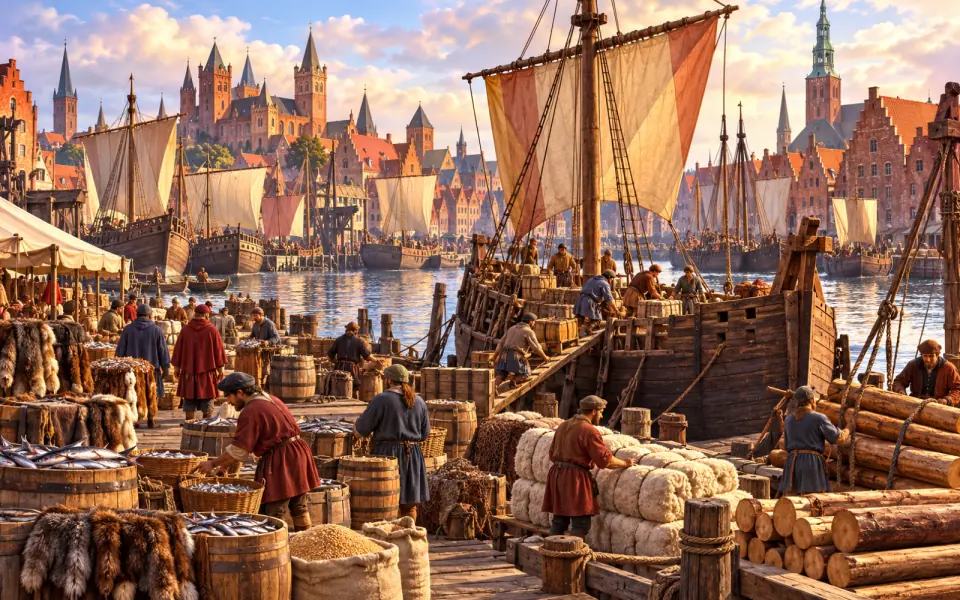 BeforeThe Hanseatic League and northern tradeabout 1300
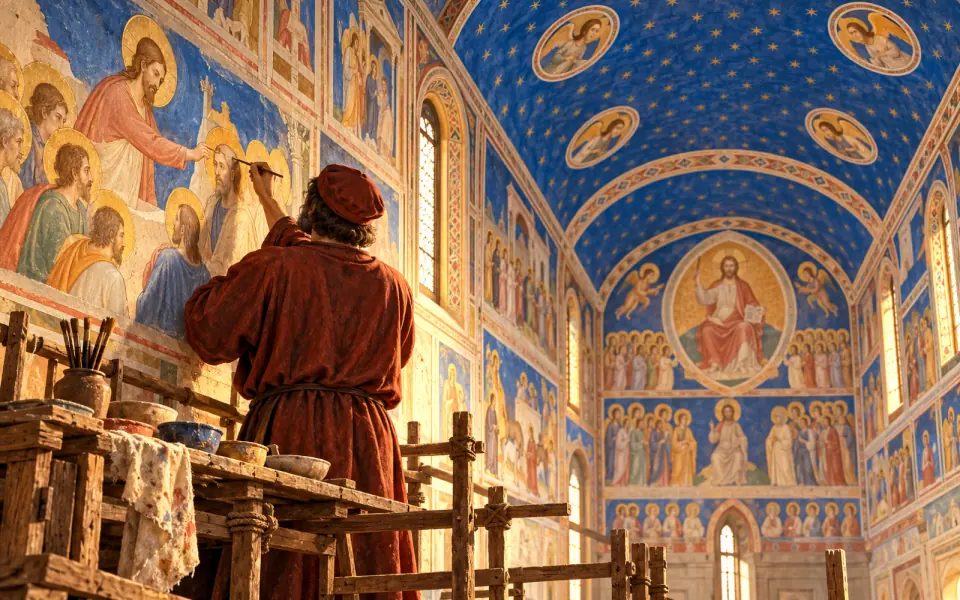 BeforeGiotto paints in Paduaabout 1305
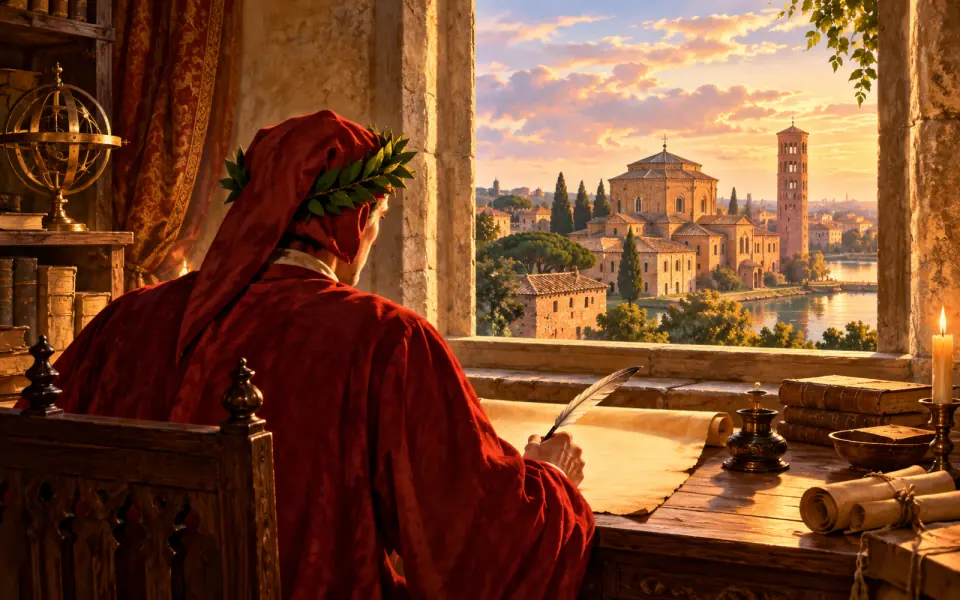 BeforeDante begins the Divine Comedyabout 1307
- You are hereThe Hundred Years' War1337–1453
 AfterThe Black Death1347–1352
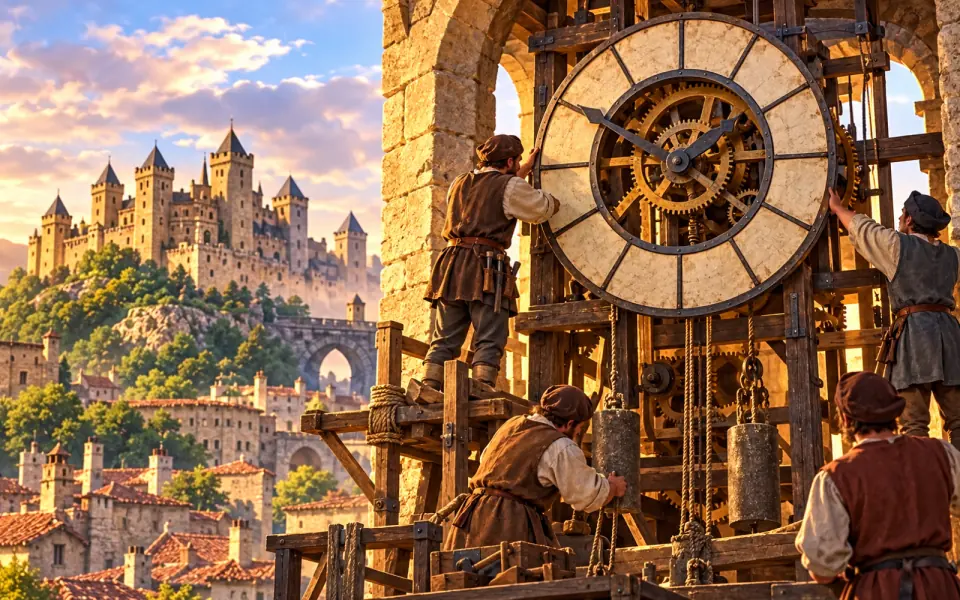 AfterPublic mechanical clocksabout 1350
 AfterJoan of Arc1429
Listen / Read next
- Music to read by: Cinematic JourneyEpic film-style music, no lyrics, by Ciro Simone IrmiciSpotifyYouTube Music
Meanwhile, elsewhere in the world
Other events of the era “Late Middle Ages”
- The growth of medieval towns
- The East–West Schism
- The Bayeux Tapestry
- The University of Bologna
- The First Crusade
- The Italian communes
- Romanesque cathedrals
- Watermills and windmills
- Gothic style at Saint-Denis
- Hildegard of Bingen
- Paper arrives in Europe
- Frederick Barbarossa
- Francis of Assisi
- Fibonacci and the Liber abaci
- Magna Carta
- The gold florin
- Marco Polo sets off for Asia
- Spectacles
- The Hanseatic League and northern trade
- Giotto paints in Padua
- Dante begins the Divine Comedy
- The Black Death
- Public mechanical clocks
- Joan of Arc
