The Bayeux Tapestry
about 1070 Bayeux, Normandy (France)
In short
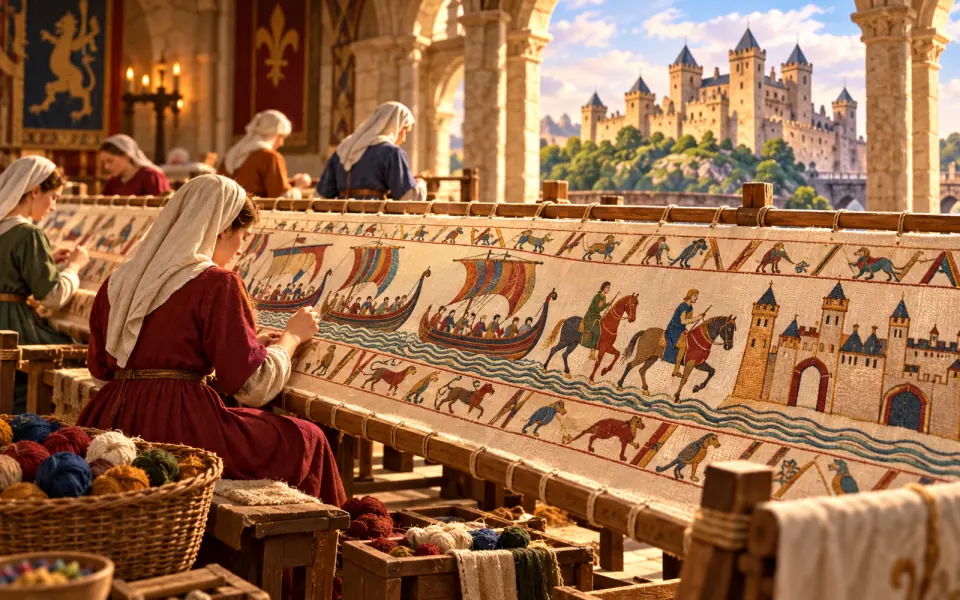
The Bayeux Tapestry is really a wool embroidery on linen, almost 70 metres long and half a metre high. It tells how William, Duke of Normandy, conquered England by winning the Battle of Hastings in 1066. Scene after scene there are ships, horses, castles, feasts and even a comet, while short captions in Latin explain what is happening. It was made a few years after the events, probably in England.
Why it matters It is a precious source on the weapons, clothes and ships of the 11th century.
Source: Musée de la Tapisserie de Bayeux, “La Tapisserie de Bayeux”
Study card about 5 minutes of reading
The story
An embroidery almost seventy metres long
The Bayeux Tapestry is a very long strip of linen cloth, about fifty centimetres wide and almost seventy metres long: more than two basketball courts laid end to end. Embroidered on it in coloured wool thread are dozens of scenes telling how, in 1066, William, Duke of Normandy, conquered England. In fact it is not a tapestry, which is a woven fabric, but an embroidery: the name has stuck by tradition.
The story begins with King Edward the Confessor, who ruled England and had no children. He died in early January 1066, and the crown was taken by Harold, the most powerful nobleman in the kingdom. But William, Duke of Normandy, also claimed to have a right to the throne. According to the Norman version, Harold, on a journey to Normandy, had sworn on sacred relics to support him as king. When he took the crown for himself, the Normans said he had broken his oath.
The star with a tail, and the battle
In the spring of 1066 a comet appeared in the sky, which we now know to be Halley's Comet. On the tapestry some people can be seen pointing at it, frightened, with the Latin words “Isti mirant stella”, that is, “These men wonder at the star”. For many it was a bad omen for Harold.
William had a fleet built, crossed the Channel in September, and on 14 October 1066 faced the English army near Hastings. It was a very hard battle, lasting almost all day. The English, on foot, took up position on top of a hill, joined together in a wall of shields. The Normans attacked several times with cavalry and archers and, according to the story, even pretended to flee to break up the English line. Harold died. A famous scene shows a warrior with an arrow in his eye, but historians argue about whether it is him or another soldier.
William was crowned King of England in London on Christmas Day 1066, and since then he has been called “the Conqueror”.
How it was made
The tapestry was probably commissioned around 1070 by Odo, Bishop of Bayeux and William's half-brother, perhaps to decorate his cathedral. Research suggests it was embroidered in England, perhaps at Canterbury, by English embroiderers, who were famous at the time for their skill. The words are in Latin, and along the edges, above and below the main scene, run bands with animals, fables and scenes of everyday life. There are many figures: about six hundred people, about two hundred horses and many other animals.
The technique is refined. The embroiderers used wool thread dyed with plants and minerals, in about ten colours, including blue, green, yellow and red. The linen was made of several pieces sewn together, and the figures were first outlined and then filled in with stitches. It was long work, done entirely by hand, by skilled people, who had to work precisely so as not to spoil the cloth and to tell each scene well.
Surviving a thousand years
The tapestry was kept at Bayeux for centuries, displayed once a year in the cathedral. During the French Revolution, in 1792, it was nearly cut up to cover a military wagon, but a citizen saved it. In 1803 Napoleon had it displayed in Paris to encourage the French to invade England. Today it is kept in a museum at Bayeux, in a case that protects it from light, and in 2007 UNESCO recognised it as one of the documents of the “Memory of the World” Programme.
The last part is missing: the final scene has been lost, perhaps that of William's coronation.
Why it happened
The death without children of Edward the Confessor opened a struggle for the succession: there were at least three serious claimants, and each had good reasons to put forward. William had behind him a strong and disciplined duchy.
The embroidery served to tell and to justify the Normans' victory, showing that Harold had broken an oath, and to recall the deed to people who saw it in church.
What changed
With the victory at Hastings the Normans conquered England. The old English nobility was replaced by Norman lords, who built stone castles throughout the country, such as the Tower of London. In 1086 William had the Domesday Book compiled, a great list of the lands and goods of the kingdom.
The language changed: for centuries the court and the nobility spoke Norman French, and English absorbed thousands of French words. That is why in English today there are pairs of words such as “cow” (the animal) and “beef” (the meat), the first of English origin, the second French.
For history, the tapestry is an extraordinary source: it shows ships, armour, buildings, weapons and clothes of the 11th century, in an age from which few illustrated documents have survived.
Key people and places
People
- William the Conqueror
- Duke of Normandy (about 1028-1087) and King of England from 1066.
- Harold II
- The last Anglo-Saxon king of England: he died at Hastings in 1066.
- Edward the Confessor
- King of England from 1042 to 1066: his death opened the struggle for the crown.
- Odo of Bayeux
- Bishop of Bayeux, William's half-brother: thought to have commissioned the tapestry.
Places
- Bayeux (Normandy)
- The French town where the tapestry is kept.
- Hastings (England)
- The site of the battle of 14 October 1066, near the town now called Battle.
Good to know
- The Bayeux Tapestry is almost 70 metres long and about 50 centimetres wide.
- It is not a woven tapestry but an embroidery on linen.
- It shows Halley's Comet of 1066.
- In 1792 it was saved by a hair's breadth from being cut up to cover a wagon.
- The final part of the tapestry has been lost.
Find out more
- Wikipedia, “Bayeux Tapestry” en.wikipedia.org
- Wikipedia, “Battle of Hastings” en.wikipedia.org
- Wikipedia, “William the Conqueror” en.wikipedia.org
- Bayeux Tapestry Museum bayeuxmuseum.com
Related events
- The First Crusade1096–1099 · Late Middle AgesA few decades later the Normans and other Europeans set off on the First Crusade.
- Magna Carta1215 · Late Middle AgesNorman England led on to Magna Carta.
- The Hundred Years' War1337–1453 · Late Middle AgesThe kings of England, descendants of William, claimed the throne of France.
- Romanesque cathedralsabout 1100 · Late Middle AgesThe Normans built cathedrals and castles in the Romanesque style.
Before and after, in the era “Late Middle Ages”
Event 3 of 25
 BeforeThe growth of medieval townsabout 1050
 BeforeThe East–West Schism1054
- You are hereThe Bayeux Tapestryabout 1070
 AfterThe University of Bolognaabout 1088
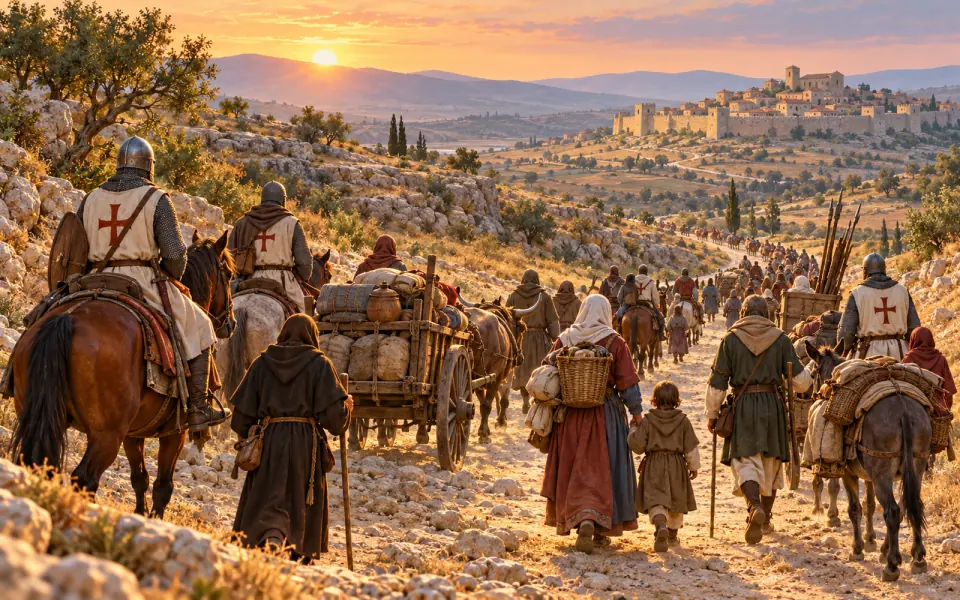 AfterThe First Crusade1096–1099
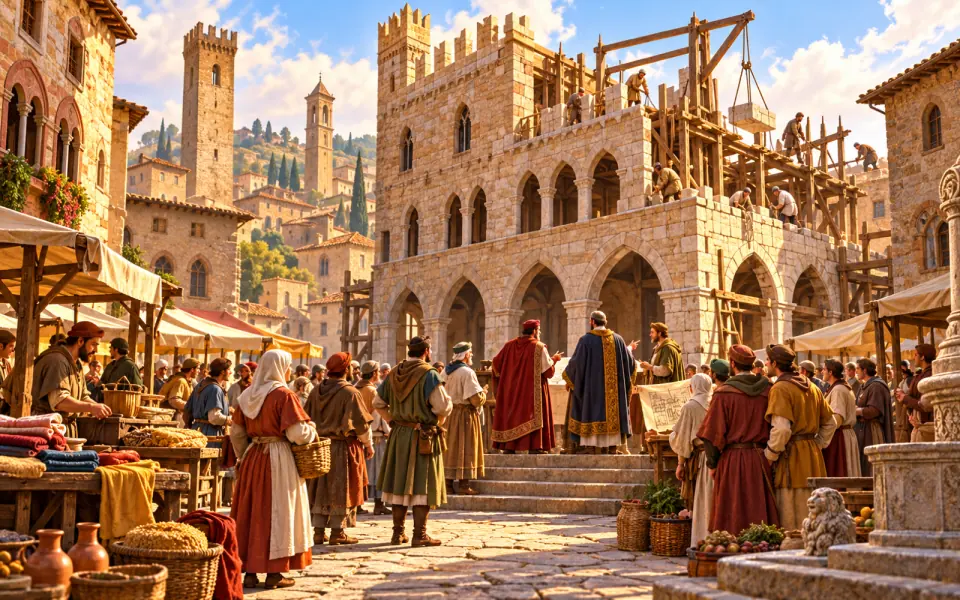 AfterThe Italian communesabout 1100
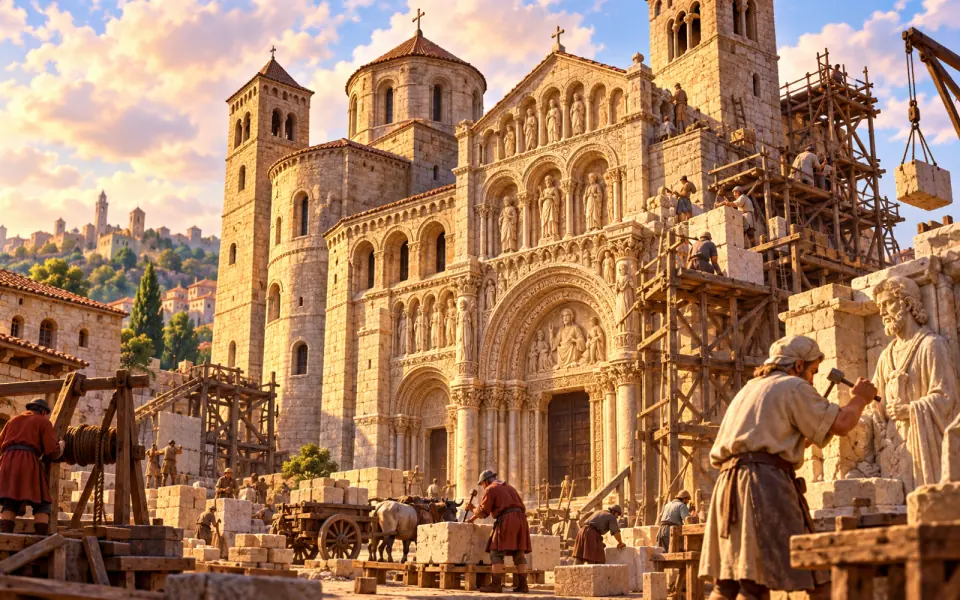 AfterRomanesque cathedralsabout 1100
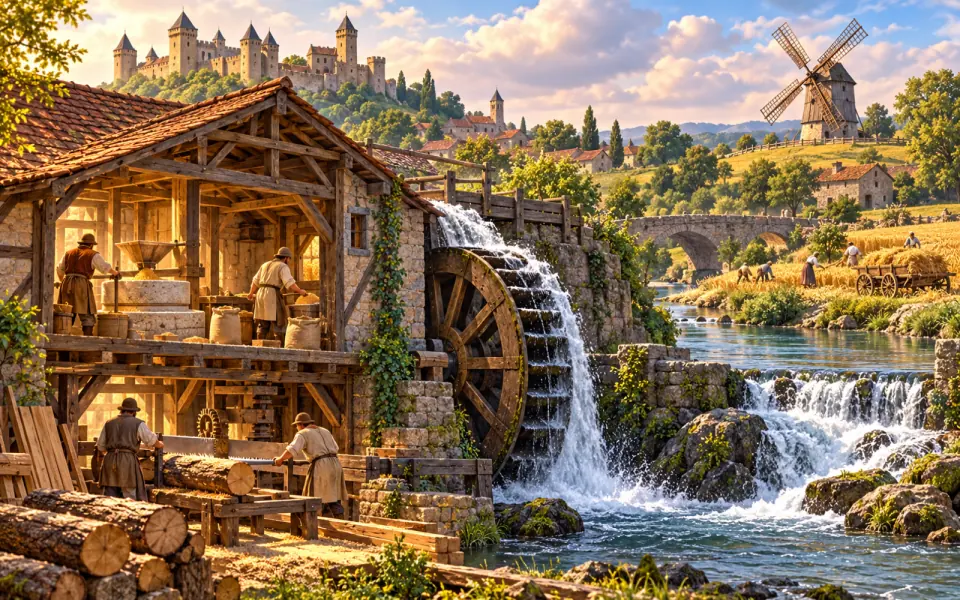 AfterWatermills and windmillsabout 1100
 AfterGothic style at Saint-Denis1144
 AfterHildegard of Bingenabout 1150
 AfterPaper arrives in Europeabout 1150
 AfterFrederick Barbarossa1155
 AfterFrancis of Assisiabout 1182
 AfterFibonacci and the Liber abaci1202
 AfterMagna Carta1215
 AfterThe gold florin1252
 AfterMarco Polo sets off for Asia1271
 AfterSpectaclesabout 1286
 AfterThe Hanseatic League and northern tradeabout 1300
 AfterGiotto paints in Paduaabout 1305
 AfterDante begins the Divine Comedyabout 1307
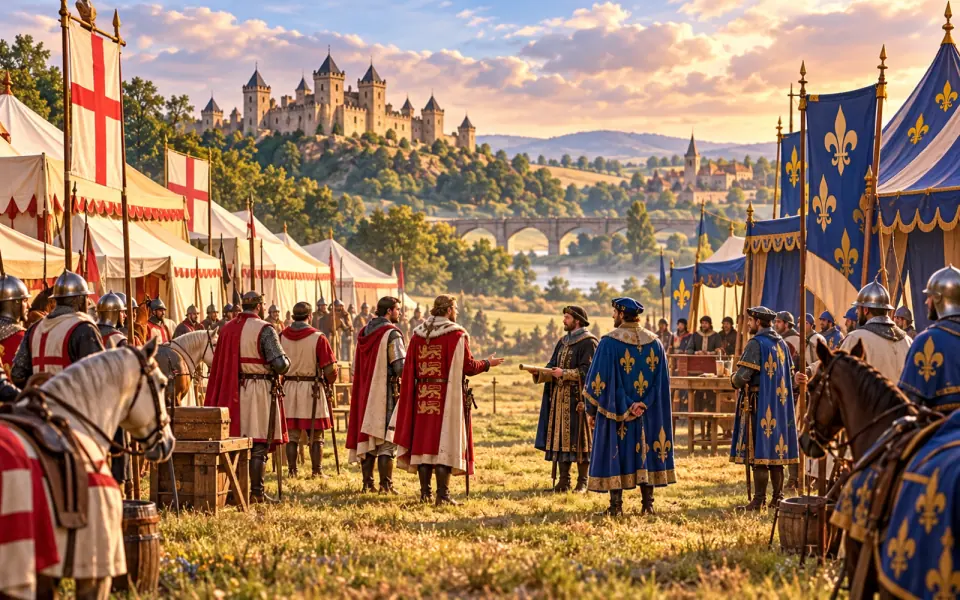 AfterThe Hundred Years' War1337–1453
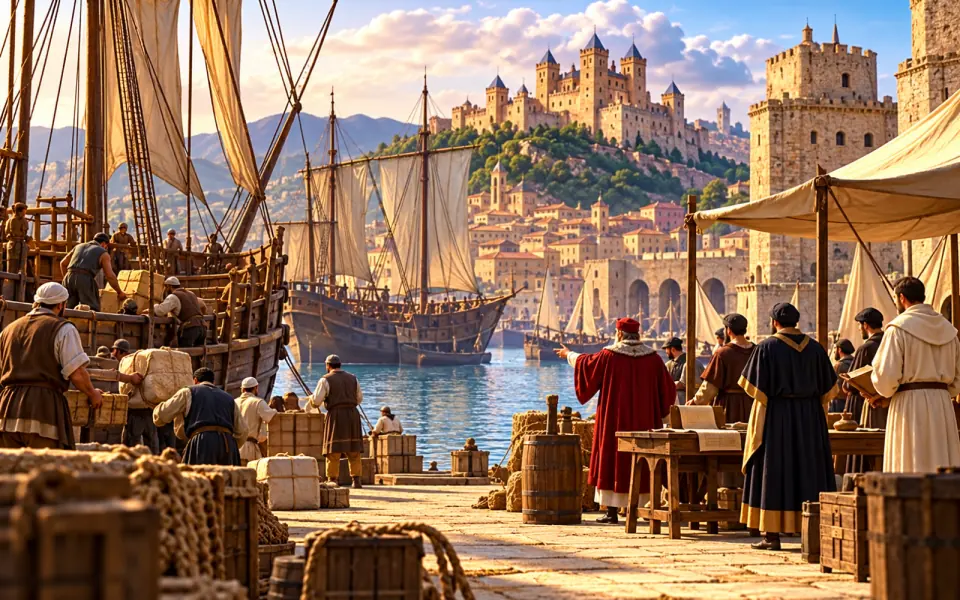 AfterThe Black Death1347–1352
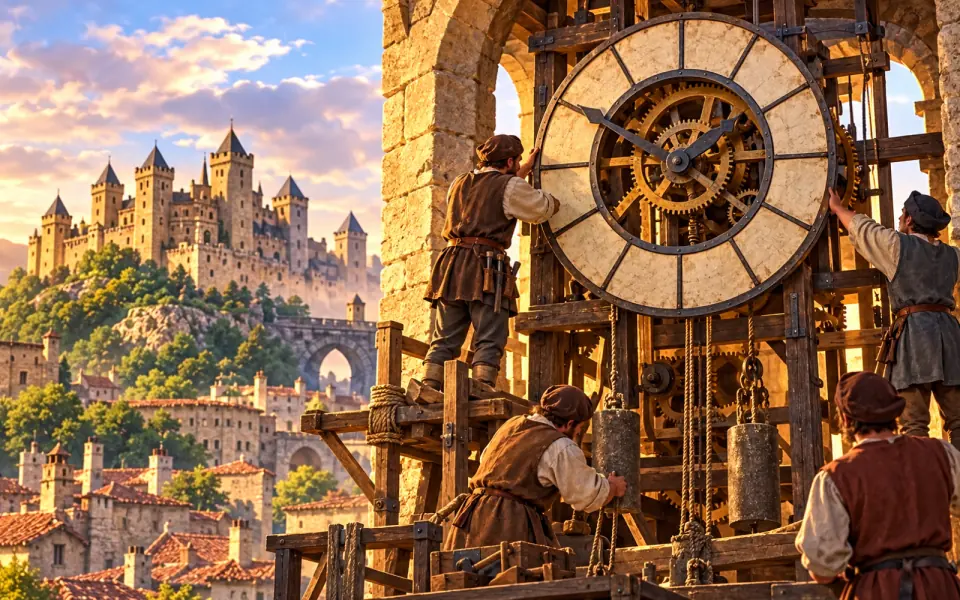 AfterPublic mechanical clocksabout 1350
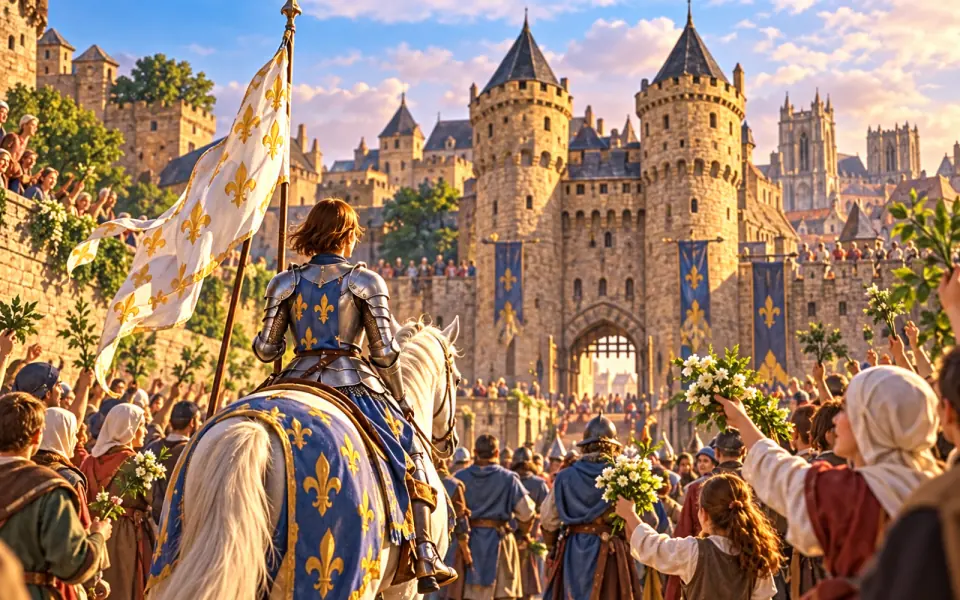 AfterJoan of Arc1429
Listen / Read next
- Music to read by: Cinematic JourneyEpic film-style music, no lyrics, by Ciro Simone IrmiciSpotifyYouTube Music
Meanwhile, elsewhere in the world
Other events of the era “Late Middle Ages”
- The growth of medieval towns
- The East–West Schism
- The University of Bologna
- The First Crusade
- The Italian communes
- Romanesque cathedrals
- Watermills and windmills
- Gothic style at Saint-Denis
- Hildegard of Bingen
- Paper arrives in Europe
- Frederick Barbarossa
- Francis of Assisi
- Fibonacci and the Liber abaci
- Magna Carta
- The gold florin
- Marco Polo sets off for Asia
- Spectacles
- The Hanseatic League and northern trade
- Giotto paints in Padua
- Dante begins the Divine Comedy
- The Hundred Years' War
- The Black Death
- Public mechanical clocks
- Joan of Arc
