Hildegard of Bingen
about 1150 Rupertsberg, near Bingen on the Rhine (Germany)
In short
Hildegard of Bingen was a German nun who ran a convent on the River Rhine. She wrote books about her religious visions, but also about plants, animals and illnesses, with advice on how to treat them. She composed a great deal of music for religious songs, which is still performed in concerts today. She wrote letters to popes and emperors, something very rare for a woman of her time. In 2012 she was declared a Doctor of the Church.
Why it matters She was one of the most original minds of the Middle Ages, able to bring together faith, science and art.
Source: Encyclopaedia Britannica, “Saint Hildegard”
Study card about 5 minutes of reading
The story
The girl who saw the light
Hildegard was born in 1098 at Bermersheim, in Germany, into a noble family. She was the tenth child, and in those days, when a family had many children, the last was sometimes offered to the Church as a kind of “tithe”: a gift to God. A frail child, often ill, Hildegard later said that from early childhood she had seen a special light, which she called “the living light”, and which showed her pictures and gave her ideas.
At eight years old, or perhaps fourteen, according to the sources, she was entrusted to a young nun, Jutta, who lived with a group of women near the men's monastery of Disibodenberg, on the river Nahe. There she learned to read, to pray, to sing the psalms in Latin and had a first education, slight but essential. When Jutta died, in 1136, the other nuns elected Hildegard as their leader (“magistra”).
“Write what you see”
In 1141, at about forty-three, Hildegard said she had heard a voice from heaven telling her to write down what she saw and heard. At first she was afraid: she thought she had no right to, being a woman and little educated. She fell ill. When she made up her mind, she worked for ten years on her first book, the “Scivias” (perhaps from “Sci vias Domini”, that is, “Know the ways of the Lord”), which describes twenty-six visions, with explanations of the mysteries of the faith. The pictures, coloured miniatures, show circles of fire, columns, men and animals.
To be sure that her writing would be accepted, Hildegard asked for an opinion from Bernard of Clairvaux, the most influential monk of that time, and Pope Eugenius III, gathered in a synod at Trier in 1147-1148, had the text read and approved it. From that moment her name became famous throughout Europe.
The convent on the Rhine
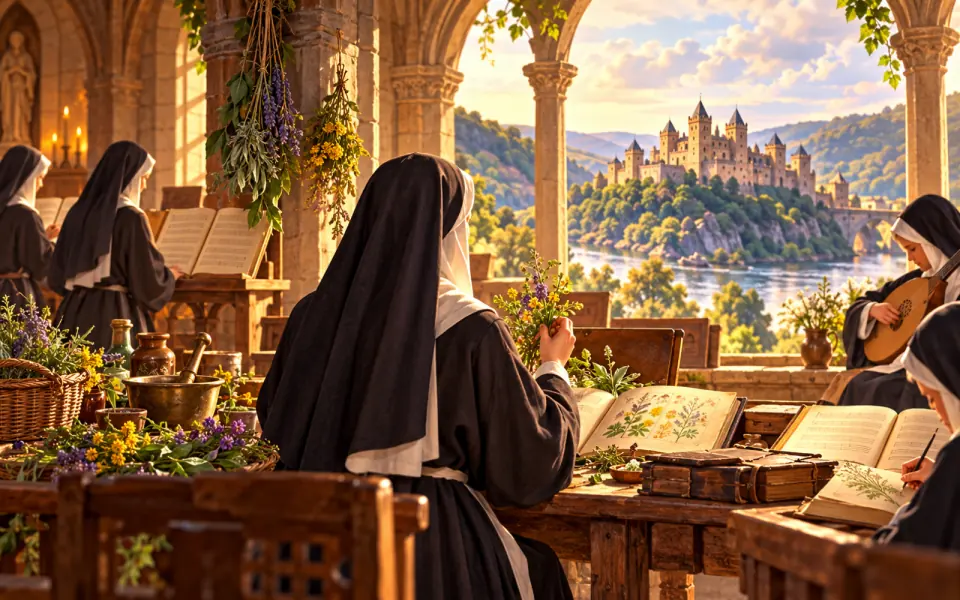
Around 1150 Hildegard moved her nuns to a new monastery, at Rupertsberg, near Bingen on the Rhine, despite the protests of the monks of Disibodenberg, who did not want to lose the most prestigious abbey. There she organised a life of study, prayer and work. In 1165 she founded a second monastery, at Eibingen, on the other side of the river.
Hildegard wrote a great deal: books of theology, two treatises on natural science and medicine, the “Physica” and the “Causae et curae”, in which she speaks of plants, animals, stones and illnesses, mixing true observations with ideas of the time that we now know to be wrong. She composed about seventy songs and a small musical drama, the “Ordo Virtutum”, in which the Virtues struggle against the Devil, who is the only character who does not sing but speaks. She also invented a secret language, the “lingua ignota”, with about a thousand words.
On great feast days her nuns sang wearing long white silk veils and crowns on their heads, and this drew criticism from some churchmen, who found such luxury unsuitable for nuns. Hildegard replied firmly that beauty is a way of praising God.
She kept up a busy correspondence: almost four hundred of her letters have survived, addressed to popes, emperors, bishops and simple nuns. She even wrote to the Emperor Frederick Barbarossa, to scold him when he behaved badly. In the years between 1158 and 1171 she made four preaching journeys along the Rhine and in Germany, something very rare for a woman of her time.
A saint and Doctor of the Church
Hildegard died at the monastery of Rupertsberg on 17 September 1179, aged eighty-one. For many she was considered a saint at once; for the Church, official recognition came much later, in 2012, when Pope Benedict XVI proclaimed her a saint for the whole Church and a “Doctor of the Church”, a title given to very few people, among them few women.
Why it happened
Hildegard was helped by her intelligence and strong personality, but also by the fact that in monasteries women could receive an education and lead communities. A convent for women was one of the few places where a woman of the Middle Ages could study and write.
The support of powerful people, such as Bernard of Clairvaux and the pope, and her fame as a mystic gave her the authority to be listened to even by emperors and bishops.
What changed
Her works are one of the few great bodies of writing by a woman of the Middle Ages. They show us how a nun thought, healed and saw the world. Her music, rediscovered in the 20th century, is now performed and recorded all over the world.
Her recipes of herbs and cures, although mixed with ancient ideas, are studied by historians of medicine, while not everything found today in her name is really hers: many products “of Hildegard” are modern inventions.
In 2012 she became a Doctor of the Church. Her example reminds us that in the Middle Ages there were also women who wrote, composed music and advised the powerful.
Key people and places
People
- Hildegard of Bingen
- Benedictine nun, writer and composer (1098-1179): abbess and visionary.
- Jutta of Sponheim
- Nun (about 1091-1136): Hildegard's first teacher and guide.
- Bernard of Clairvaux
- Abbot and preacher (1090-1153): he received a letter from Hildegard.
- Eugenius III
- Pope from 1145 to 1153: he approved her writings.
- Frederick Barbarossa
- Emperor (about 1122-1190): he received letters from Hildegard.
Places
- Rupertsberg (Bingen)
- The monastery founded around 1150 on the Rhine.
- Disibodenberg
- The monastery where Hildegard grew up, on the river Nahe.
- Eibingen
- The second monastery, founded in 1165 on the opposite bank of the Rhine.
Good to know
- Hildegard invented a secret language, the “lingua ignota”, with about a thousand words.
- She composed about seventy songs and a musical drama, the Ordo Virtutum.
- She made four preaching journeys between 1158 and 1171.
- Almost 400 of her letters have survived.
- In 2012 Pope Benedict XVI declared her a Doctor of the Church.
Find out more
- Wikipedia, “Hildegard of Bingen” en.wikipedia.org
- Wikipedia, “Scivias” en.wikipedia.org
- Wikipedia, “Ordo Virtutum” en.wikipedia.org
- Wikipedia, “Lingua Ignota” en.wikipedia.org
Related events
- Gothic style at Saint-Denis1144 · Late Middle AgesHildegard lived in the years when Gothic was born.
- Frederick Barbarossa1155 · Late Middle AgesShe also wrote to Frederick Barbarossa.
- Francis of Assisiabout 1182 · Late Middle AgesFrancis of Assisi, a century later, was another great religious figure of the Middle Ages.
- The University of Bolognaabout 1088 · Late Middle AgesWomen like Hildegard also found a form of education in monasteries.
Before and after, in the era “Late Middle Ages”
Event 10 of 25
 BeforeThe growth of medieval townsabout 1050
 BeforeThe East–West Schism1054
 BeforeThe Bayeux Tapestryabout 1070
 BeforeThe University of Bolognaabout 1088
 BeforeThe First Crusade1096–1099
 BeforeThe Italian communesabout 1100
 BeforeRomanesque cathedralsabout 1100
 BeforeWatermills and windmillsabout 1100
 BeforeGothic style at Saint-Denis1144
- You are hereHildegard of Bingenabout 1150
 AfterPaper arrives in Europeabout 1150
 AfterFrederick Barbarossa1155
 AfterFrancis of Assisiabout 1182
 AfterFibonacci and the Liber abaci1202
 AfterMagna Carta1215
 AfterThe gold florin1252
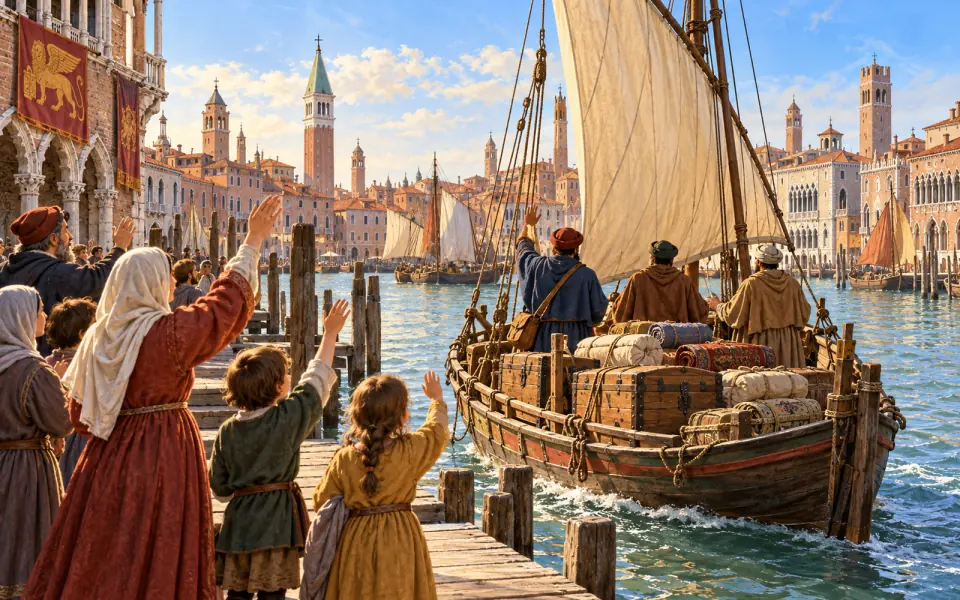 AfterMarco Polo sets off for Asia1271
 AfterSpectaclesabout 1286
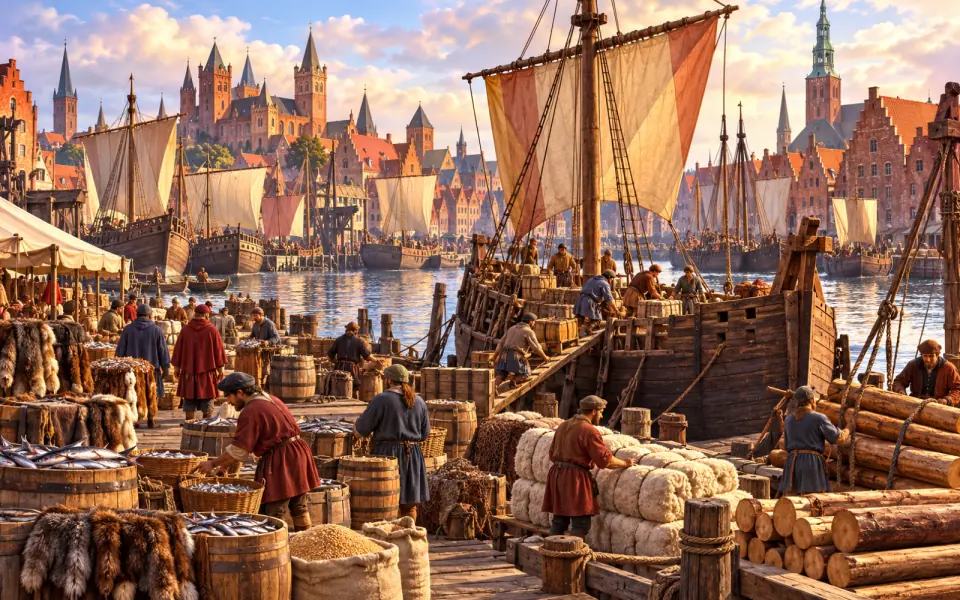 AfterThe Hanseatic League and northern tradeabout 1300
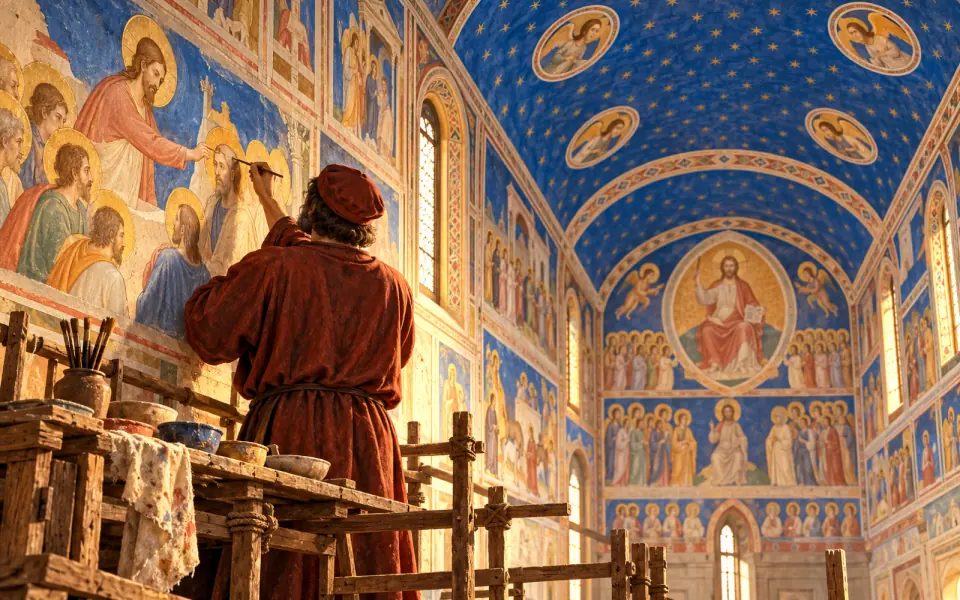 AfterGiotto paints in Paduaabout 1305
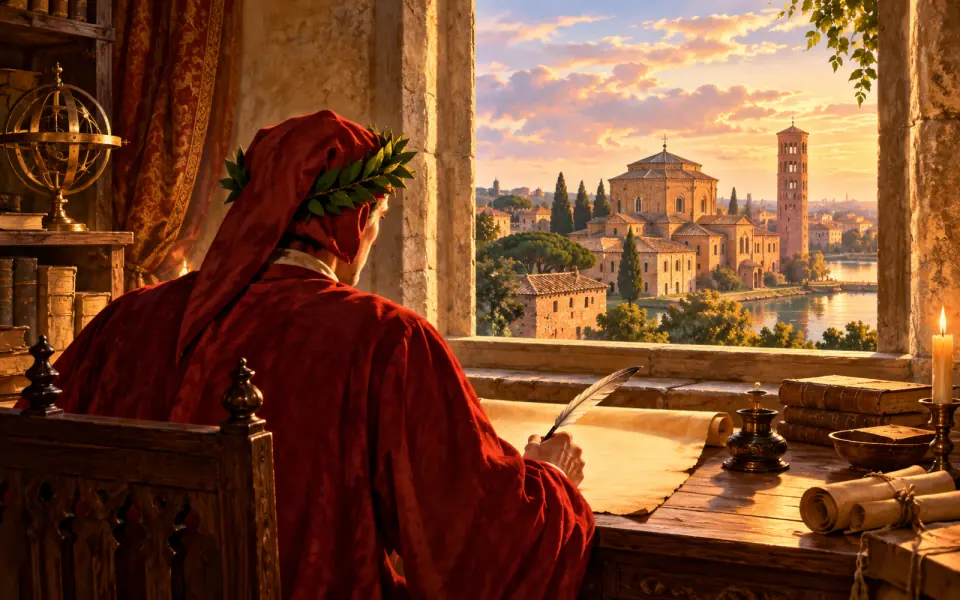 AfterDante begins the Divine Comedyabout 1307
 AfterThe Hundred Years' War1337–1453
 AfterThe Black Death1347–1352
 AfterPublic mechanical clocksabout 1350
 AfterJoan of Arc1429
Listen / Read next
- Music to read by: Cinematic JourneyEpic film-style music, no lyrics, by Ciro Simone IrmiciSpotifyYouTube Music
Meanwhile, elsewhere in the world
Other events of the era “Late Middle Ages”
- The growth of medieval towns
- The East–West Schism
- The Bayeux Tapestry
- The University of Bologna
- The First Crusade
- The Italian communes
- Romanesque cathedrals
- Watermills and windmills
- Gothic style at Saint-Denis
- Paper arrives in Europe
- Frederick Barbarossa
- Francis of Assisi
- Fibonacci and the Liber abaci
- Magna Carta
- The gold florin
- Marco Polo sets off for Asia
- Spectacles
- The Hanseatic League and northern trade
- Giotto paints in Padua
- Dante begins the Divine Comedy
- The Hundred Years' War
- The Black Death
- Public mechanical clocks
- Joan of Arc
