The First Crusade
1096–1099 From Europe to Jerusalem
In short
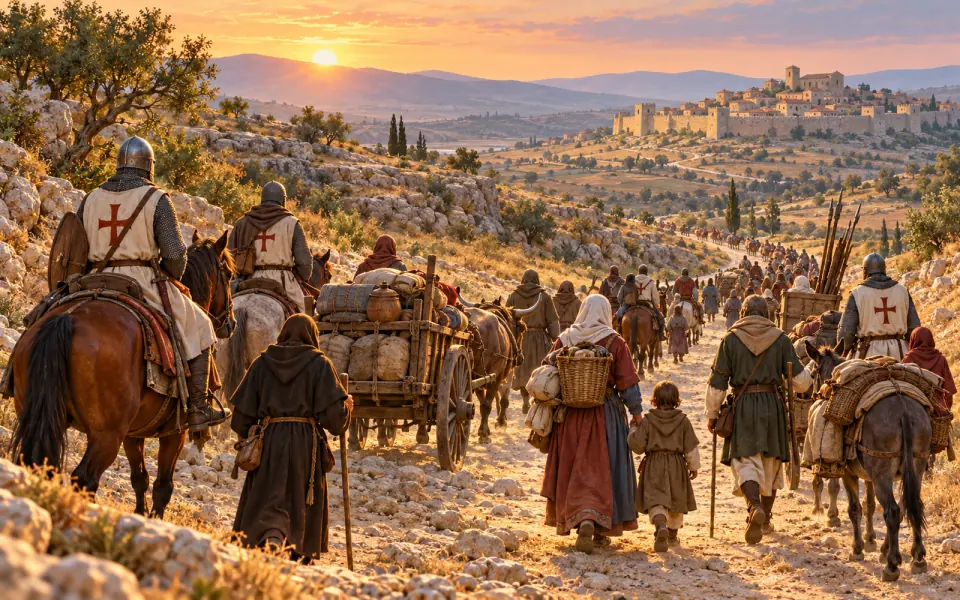
In 1095 Pope Urban II called on the Christians of Europe to set out and take Jerusalem, which was under Muslim rule. The following year thousands of knights and many ordinary people too set off, with a cross sewn on their clothes: that is why they were later called crusaders. After a very long journey, in 1099 they captured Jerusalem, with great violence against its Muslim and Jewish inhabitants. In the Holy Land some Christian kingdoms were set up that lasted almost two centuries.
Why it matters The Crusades brought the Christian and Islamic worlds into contact, and often into conflict, leaving painful memories but also exchanges of goods and knowledge.
Source: Encyclopaedia Britannica, “Crusades”
Study card about 5 minutes of reading
The story
The appeal at Clermont
In November 1095, at Clermont in France, Pope Urban II held a council, an assembly of bishops and nobles. At the end, before a great crowd in the open air, he spoke of the need to help the Christians of the East. A few years earlier the Seljuk Turks, a Muslim people who had come from Central Asia, had defeated the Byzantine army at Manzikert (1071) and conquered much of Anatolia, the peninsula of present-day Turkey. The Byzantine Emperor Alexios I had asked the West for help.
We do not have the exact text of the pope's speech, but we know that he asked knights to stop fighting one another and to turn their weapons against the enemies of Christians, to free Jerusalem and the Holy Sepulchre, the place where, according to tradition, Jesus was buried. To those who set out, the pope promised forgiveness of their sins. The crowd answered: “God wills it!” Those who decided to go sewed a cloth cross onto their clothes: hence the name “crusade”.
The crusade of the poor and that of the knights
In the spring of 1096 a first wave of ordinary people set off, led by the preacher Peter the Hermit. There were thousands of them, peasants, women and young people, poorly armed and without organisation. Along the way, in some towns of the Rhine valley in Germany, a persecution of the Jewish communities broke out: many Jews were killed or forced to be baptised. The bishops of some towns tried to protect them, often without success. When it reached Anatolia, this crusade was almost completely destroyed by the Turks in the autumn of 1096.
In August 1096 the armies of the nobles set out, in separate groups: that of Godfrey of Bouillon, Duke of Lower Lorraine, that of Raymond of Toulouse, that of Bohemond, a Norman from southern Italy, and others. They marched for months across Europe, and at Constantinople they swore to the emperor that the lands they reconquered would be returned to the empire. In June 1097 they took Nicaea.
An exceptional witness was Anna Komnene, daughter of the Byzantine emperor, who wrote the “Alexiad”, the history of her father's reign. She described with amazement and with worry the arrival at Constantinople of those armies of Western knights, whom the empire did not entirely trust: it seemed that half of Europe was arriving.
Antioch and Jerusalem
The journey was very hard. Food and water ran short, and many horses fell ill and died. At Antioch, a great city in Syria, the siege lasted from October 1097 to June 1098: the crusaders, reduced to starvation, took the city and immediately afterwards were themselves besieged by a Muslim army. They held out and won. In the meantime Bohemond made himself lord of Antioch, against the promise he had made to the emperor.
In June 1099 the crusaders, by now few in number, arrived before Jerusalem, which had recently come under the control of the Egyptian dynasty of the Fatimids. They built siege towers and on 15 July 1099 they entered the city. A terrible massacre followed: very many Muslim and Jewish inhabitants were killed, according to the chronicles even children. Historians do not agree on the number of victims, but they all agree on the ferocity of those days.
The crusader states
The crusaders did not return the lands to the empire, but founded four small states: the Kingdom of Jerusalem, the Principality of Antioch, the County of Edessa (as early as 1098) and, a few years later, the County of Tripoli (1109). Godfrey of Bouillon, chosen as leader, refused the title of king and called himself “Defender of the Holy Sepulchre”; after his death, in 1100, his brother Baldwin was crowned king. Only some of those who set out reached the Holy Land; most died along the way or went back home.
Why it happened
The causes were many and different. For the pope there was the defence of the Christians of the East and the wish to unite Europe under the guidance of the Church; for many knights, the wish for salvation, but also for land, wealth and glory; for the Italian maritime cities, new business in the ports of the East.
Europe had grown in population and there were many nobles without land, ready to fight elsewhere. Religious faith in those years was deep and pilgrimages were very common.
What changed
The Crusades lasted almost two centuries, with other expeditions (the main ones are eight, but more were organised). The crusader kingdoms held out for a long time, but in 1291 Acre, the last stronghold, fell to the Muslims.
Genoa, Pisa and Venice, which carried the crusaders and their supplies, obtained ports, quarters and trading privileges in the East and grew rich. Europeans came to know goods, techniques and ideas of the Arab and Byzantine worlds, although relations were often violent.
In the Muslim world the memory of the Crusades remained as a memory of invasion and violence; in the Christian world it was often remembered as a heroic enterprise. Today historians study them without celebration, bringing to light both the ideals and the cruelty.
Key people and places
People
- Urban II
- Pope from 1088 to 1099 (born around 1035-1042, died 1099): he made the appeal at Clermont.
- Alexios I Komnenos
- Byzantine emperor (born around 1050, died 1118): he asked the West for help.
- Godfrey of Bouillon
- Duke of Lower Lorraine (about 1060-1100): first ruler of Jerusalem.
- Bohemond of Taranto
- Norman from southern Italy (about 1054-1111): he became Prince of Antioch.
- Peter the Hermit
- Preacher (about 1050-1115): he led the people's crusade.
Places
- Clermont (France)
- Town where the pope made his appeal in 1095.
- Jerusalem
- The holy city for Christians, Jews and Muslims, conquered by the crusaders on 15 July 1099.
- Antioch
- Great city in Syria, taken after a siege of eight months.
Good to know
- The name “crusade” comes from the cloth cross that the participants sewed on their clothes.
- The cry of the crowd at Clermont, according to the chronicles, was “God wills it!”
- The siege of Antioch lasted from October 1097 to June 1098.
- Godfrey of Bouillon did not want to be called king.
- The last crusader stronghold, Acre, fell in 1291.
Find out more
- Wikipedia, “First Crusade” en.wikipedia.org
- Wikipedia, “Council of Clermont” en.wikipedia.org
- Wikipedia, “Godfrey of Bouillon” en.wikipedia.org
- Wikipedia, “Crusades” en.wikipedia.org
Related events
- The East–West Schism1054 · Late Middle AgesShortly before, in 1054, the Church had split between East and West.
- The Italian communesabout 1100 · Late Middle AgesThe Italian maritime communes grew rich from the Crusades.
- Marco Polo sets off for Asia1271 · Late Middle AgesTwo centuries later Marco Polo travelled to the East along routes opened by Italian merchants.
- Francis of Assisiabout 1182 · Late Middle AgesFrancis of Assisi met the sultan during a crusade.
Before and after, in the era “Late Middle Ages”
Event 5 of 25
 BeforeThe growth of medieval townsabout 1050
 BeforeThe East–West Schism1054
 BeforeThe Bayeux Tapestryabout 1070
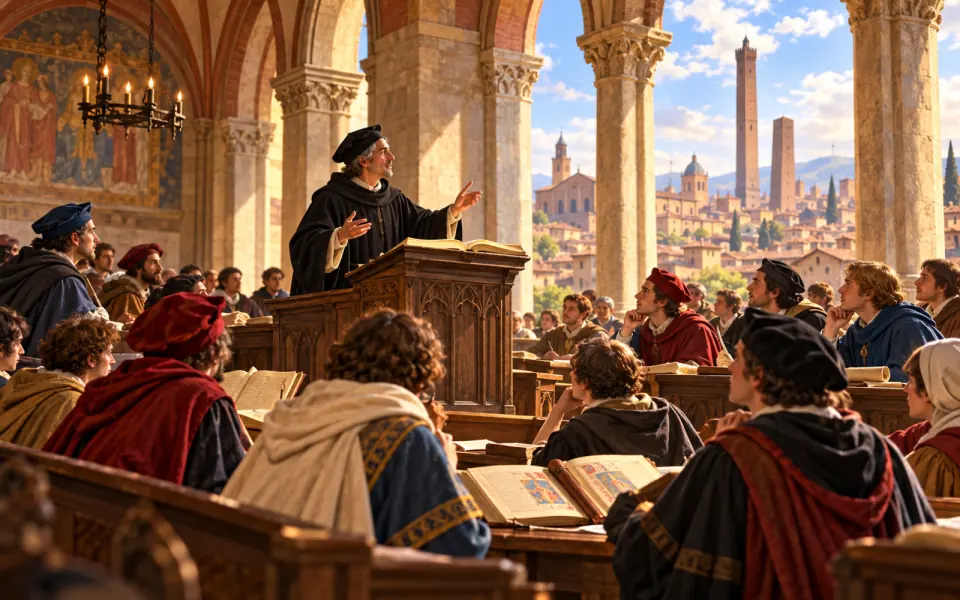 BeforeThe University of Bolognaabout 1088
- You are hereThe First Crusade1096–1099
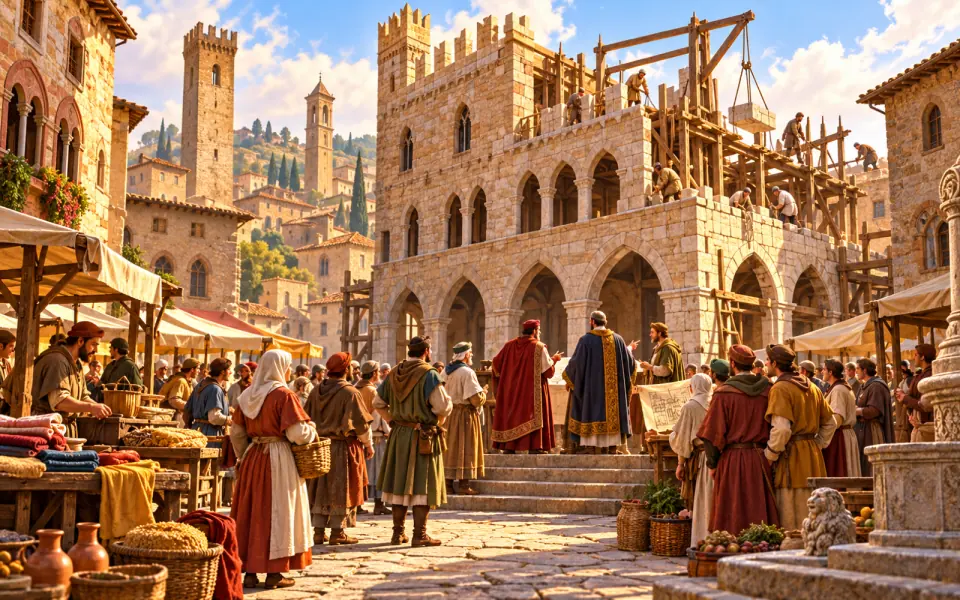 AfterThe Italian communesabout 1100
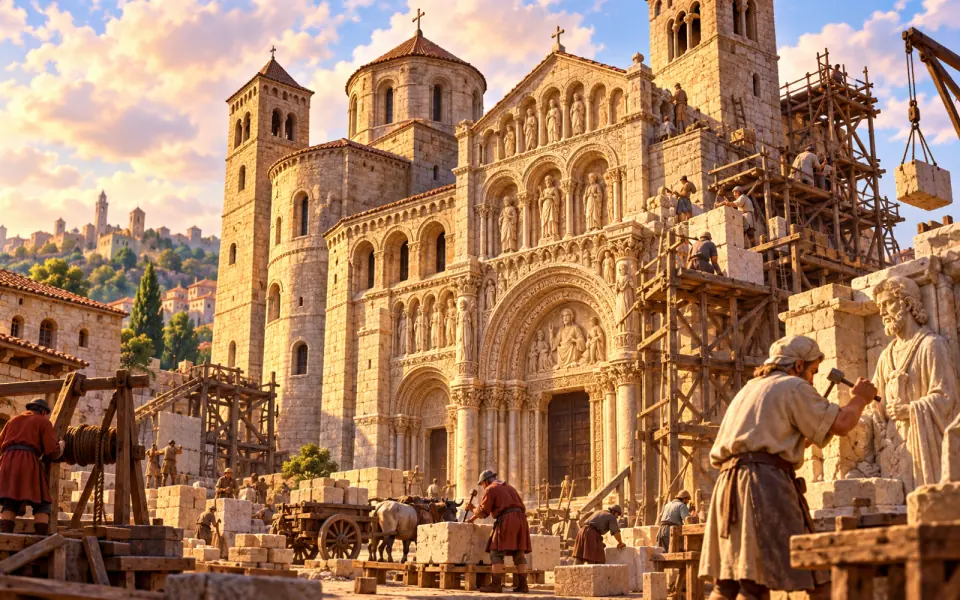 AfterRomanesque cathedralsabout 1100
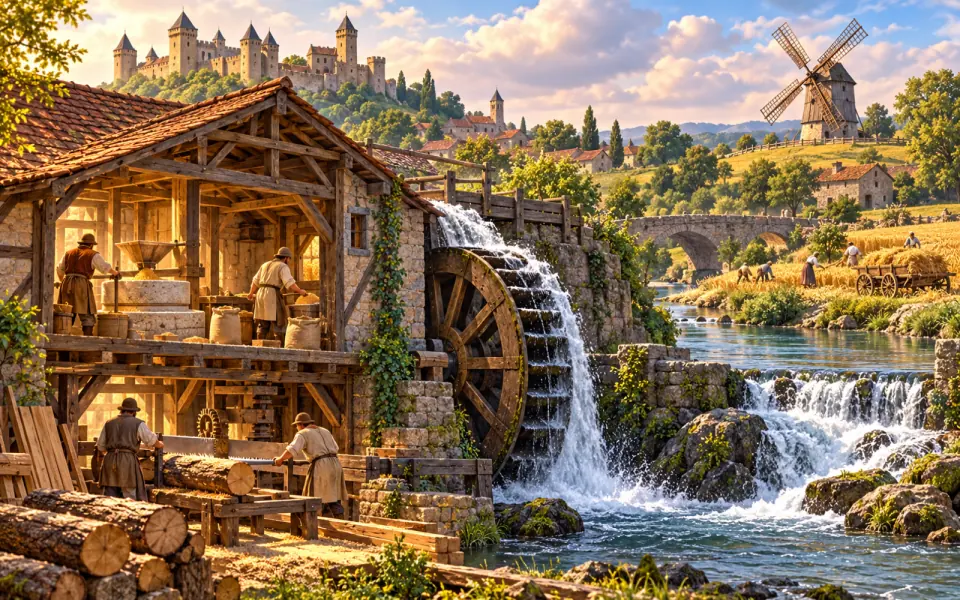 AfterWatermills and windmillsabout 1100
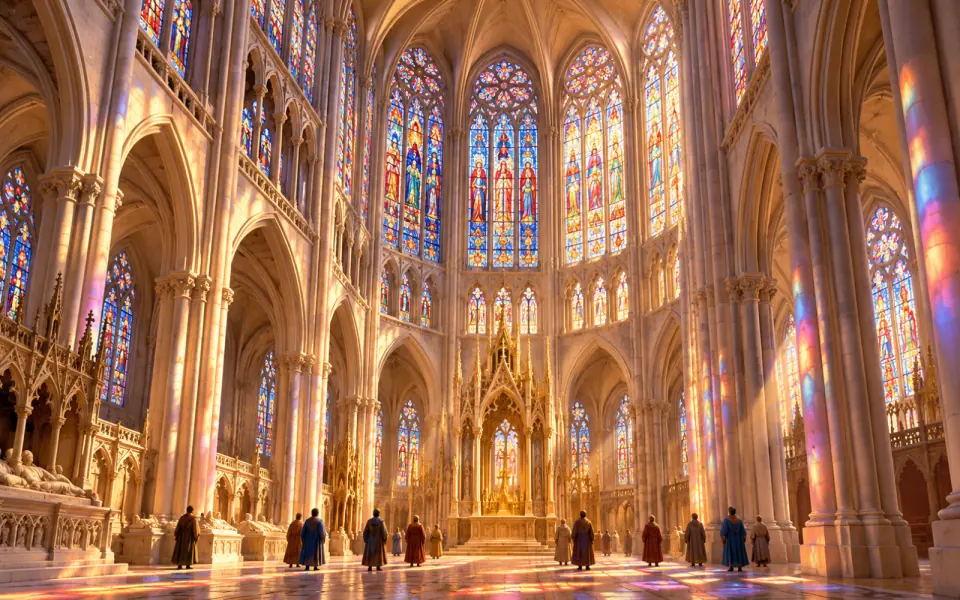 AfterGothic style at Saint-Denis1144
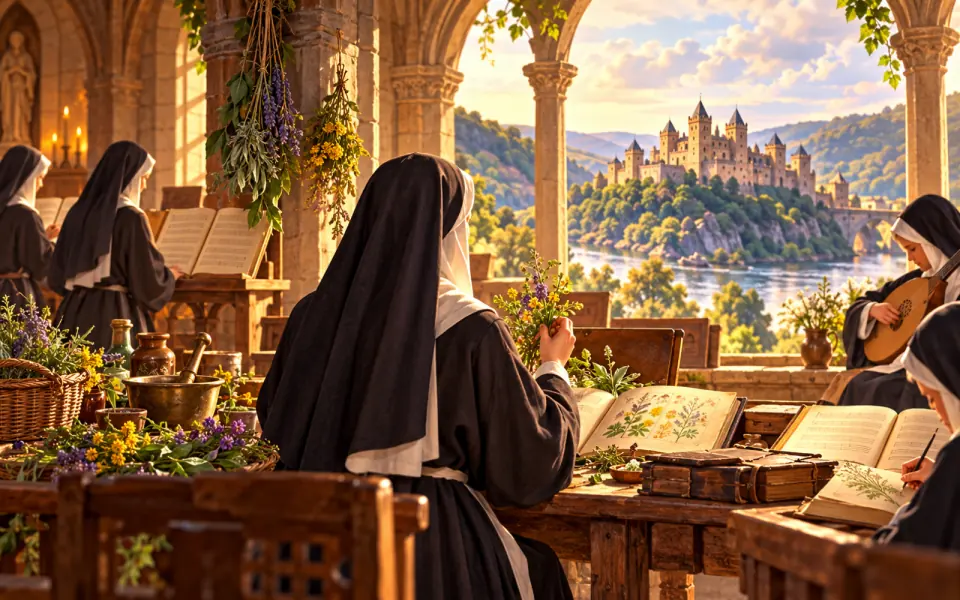 AfterHildegard of Bingenabout 1150
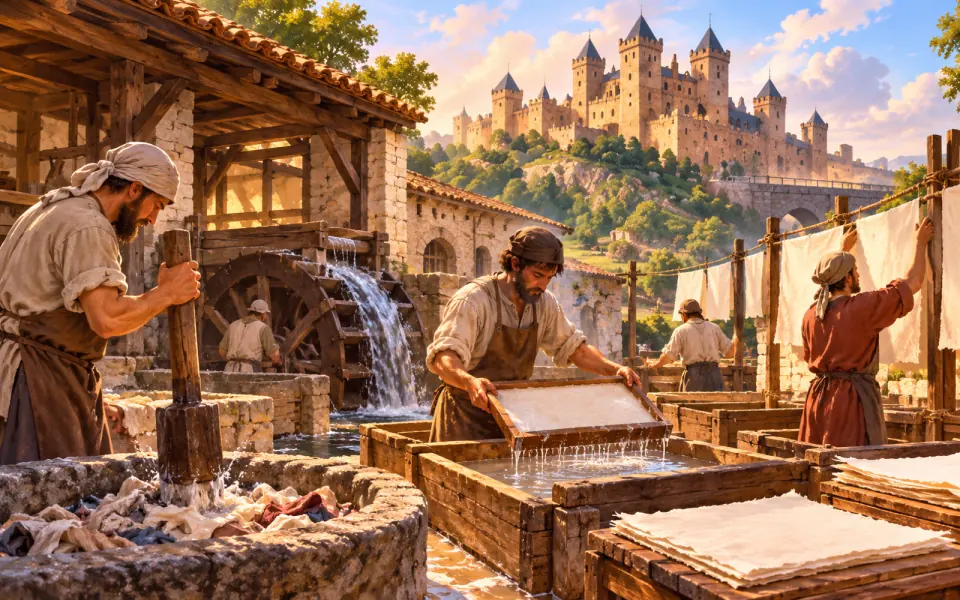 AfterPaper arrives in Europeabout 1150
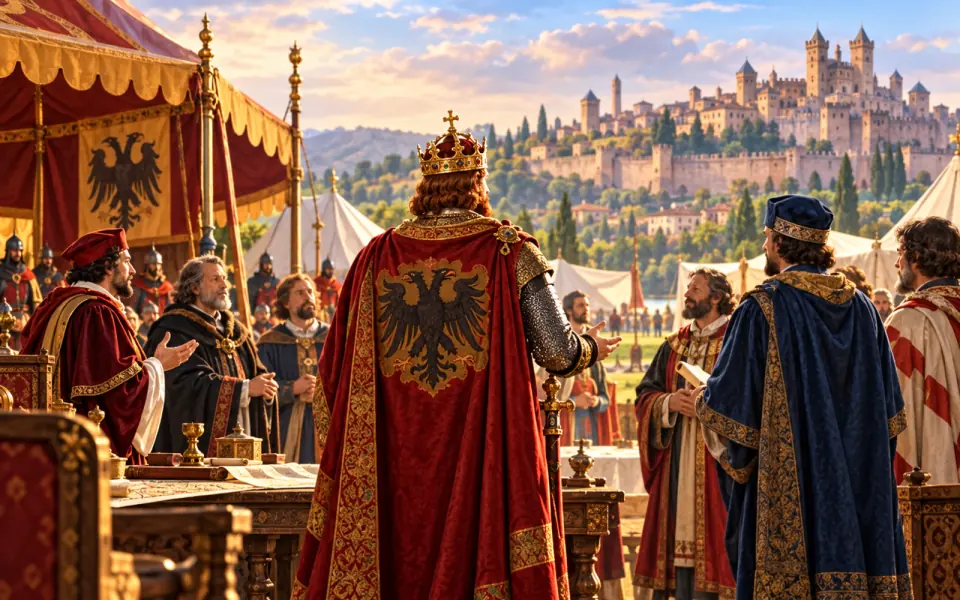 AfterFrederick Barbarossa1155
 AfterFrancis of Assisiabout 1182
 AfterFibonacci and the Liber abaci1202
 AfterMagna Carta1215
 AfterThe gold florin1252
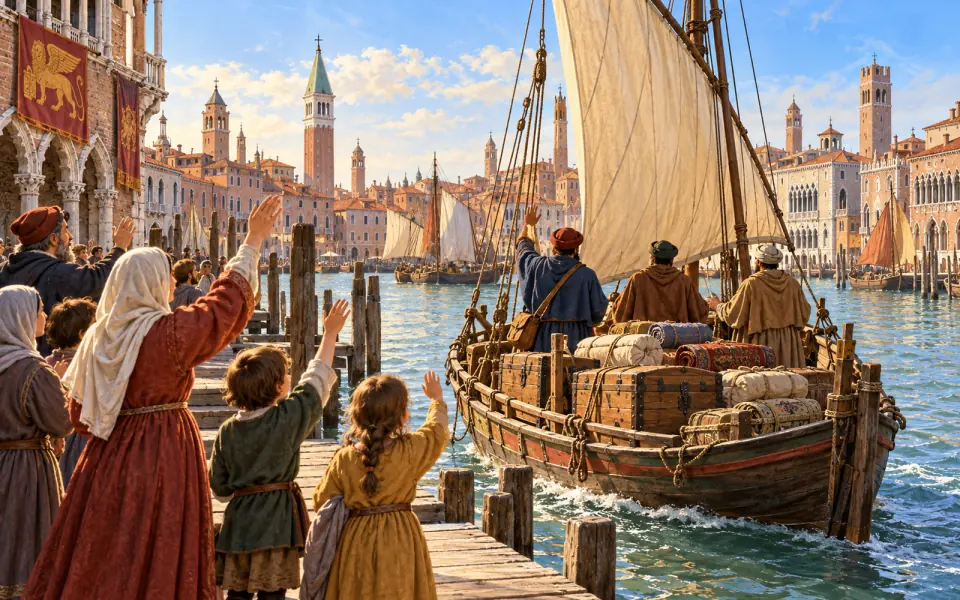 AfterMarco Polo sets off for Asia1271
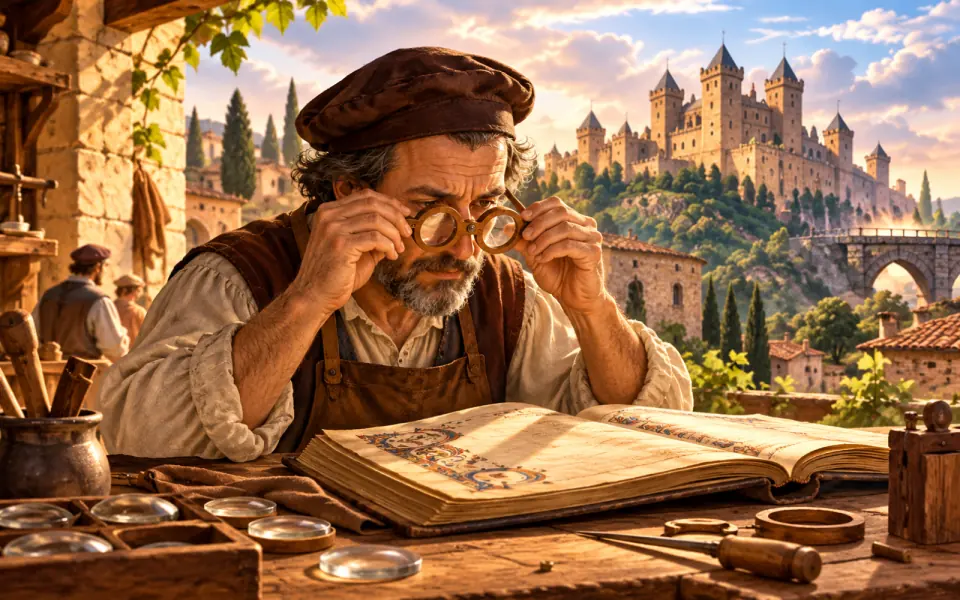 AfterSpectaclesabout 1286
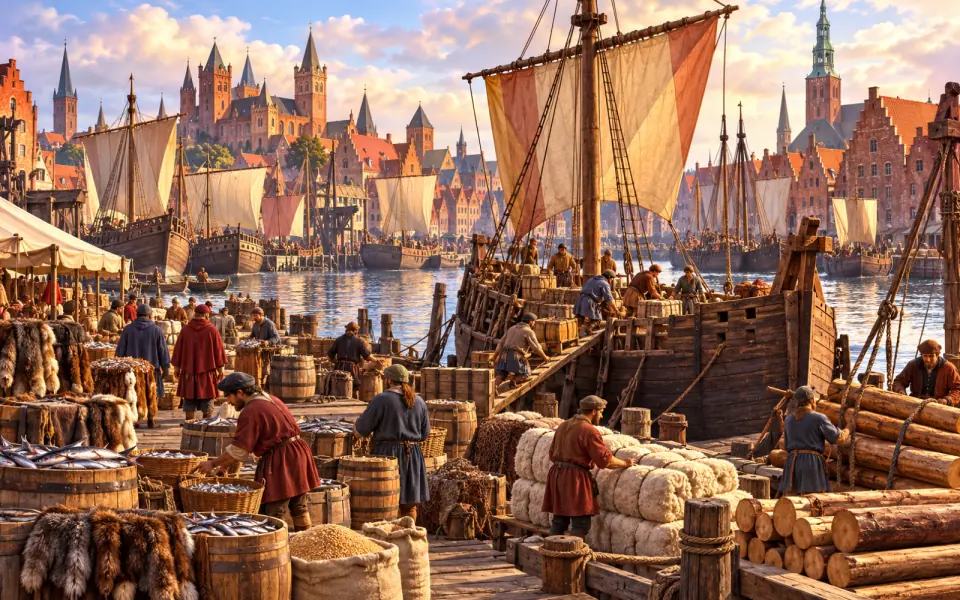 AfterThe Hanseatic League and northern tradeabout 1300
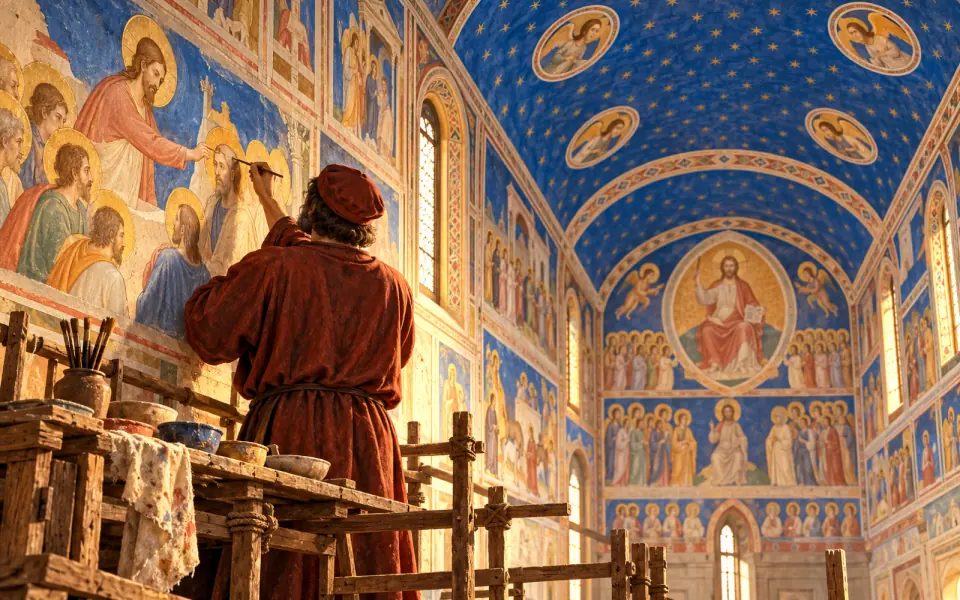 AfterGiotto paints in Paduaabout 1305
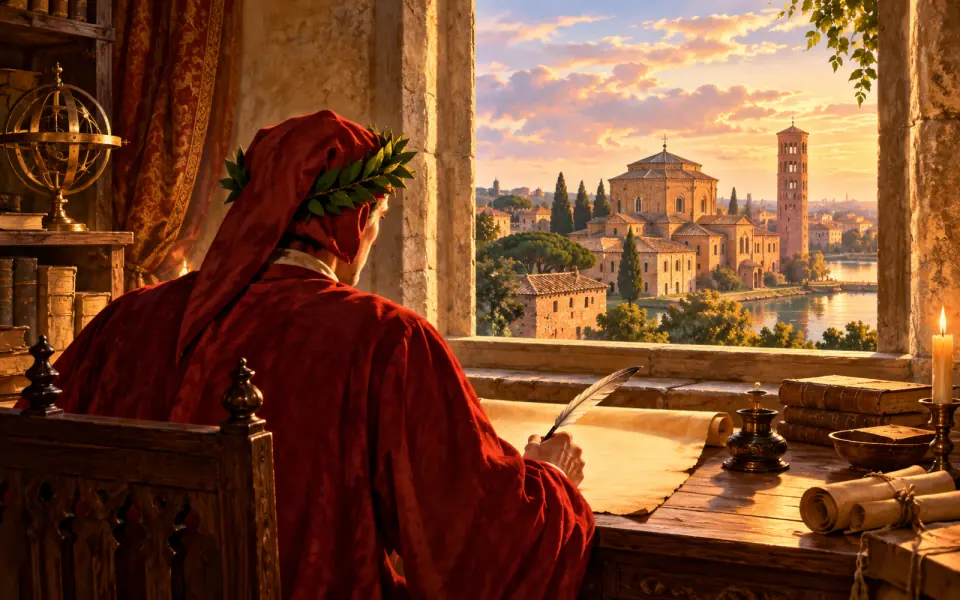 AfterDante begins the Divine Comedyabout 1307
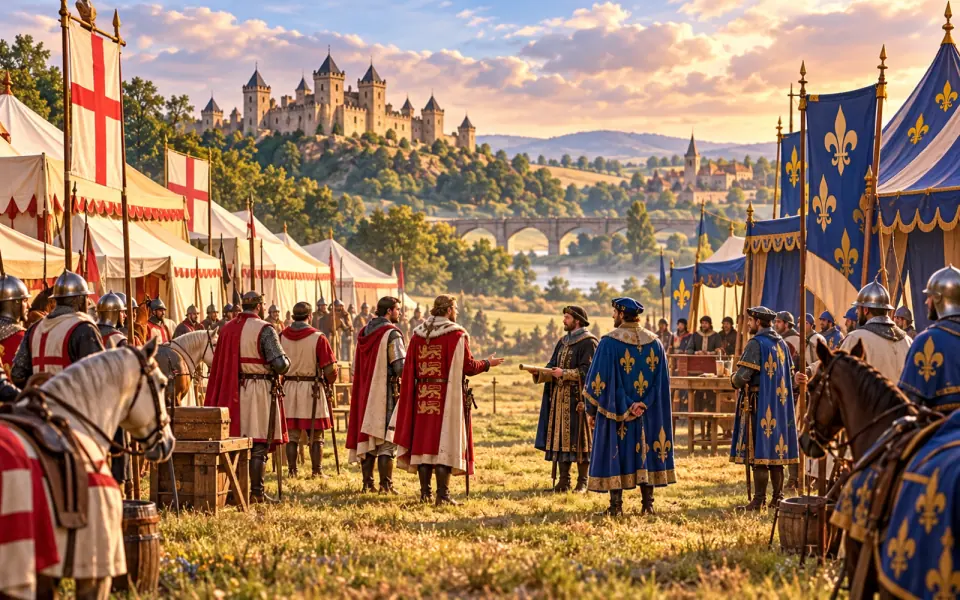 AfterThe Hundred Years' War1337–1453
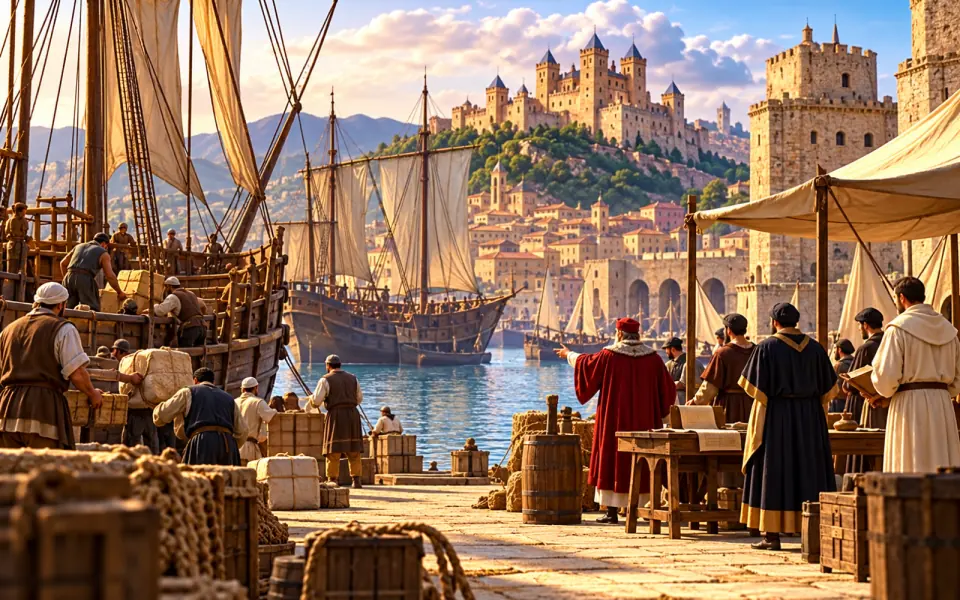 AfterThe Black Death1347–1352
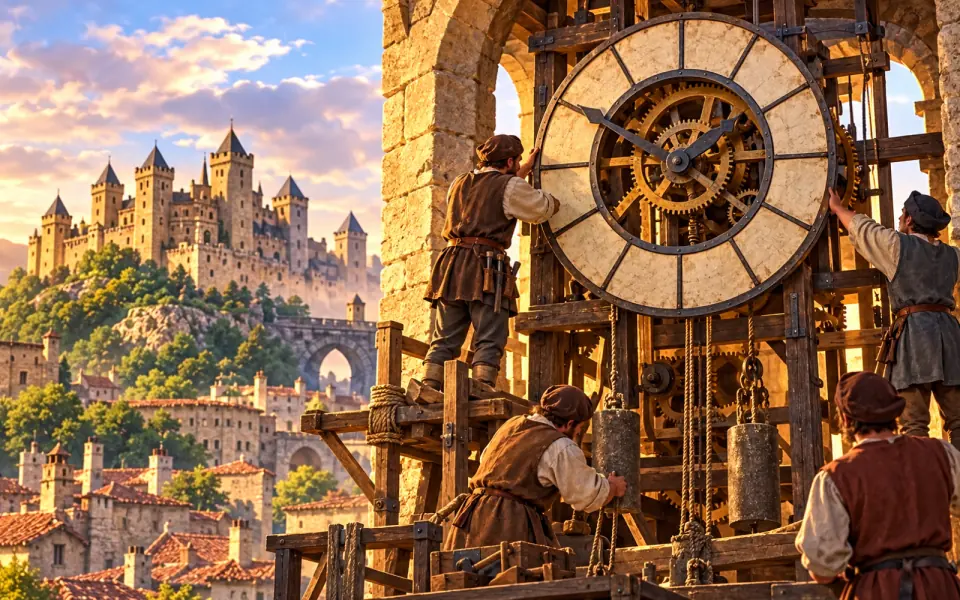 AfterPublic mechanical clocksabout 1350
 AfterJoan of Arc1429
Listen / Read next
- Music to read by: Cinematic JourneyEpic film-style music, no lyrics, by Ciro Simone IrmiciSpotifyYouTube Music
Meanwhile, elsewhere in the world
Other events of the era “Late Middle Ages”
- The growth of medieval towns
- The East–West Schism
- The Bayeux Tapestry
- The University of Bologna
- The Italian communes
- Romanesque cathedrals
- Watermills and windmills
- Gothic style at Saint-Denis
- Hildegard of Bingen
- Paper arrives in Europe
- Frederick Barbarossa
- Francis of Assisi
- Fibonacci and the Liber abaci
- Magna Carta
- The gold florin
- Marco Polo sets off for Asia
- Spectacles
- The Hanseatic League and northern trade
- Giotto paints in Padua
- Dante begins the Divine Comedy
- The Hundred Years' War
- The Black Death
- Public mechanical clocks
- Joan of Arc
