Taming the sheep
about 11,000 years ago Between Anatolia and Iran (Zagros Mountains)
In short
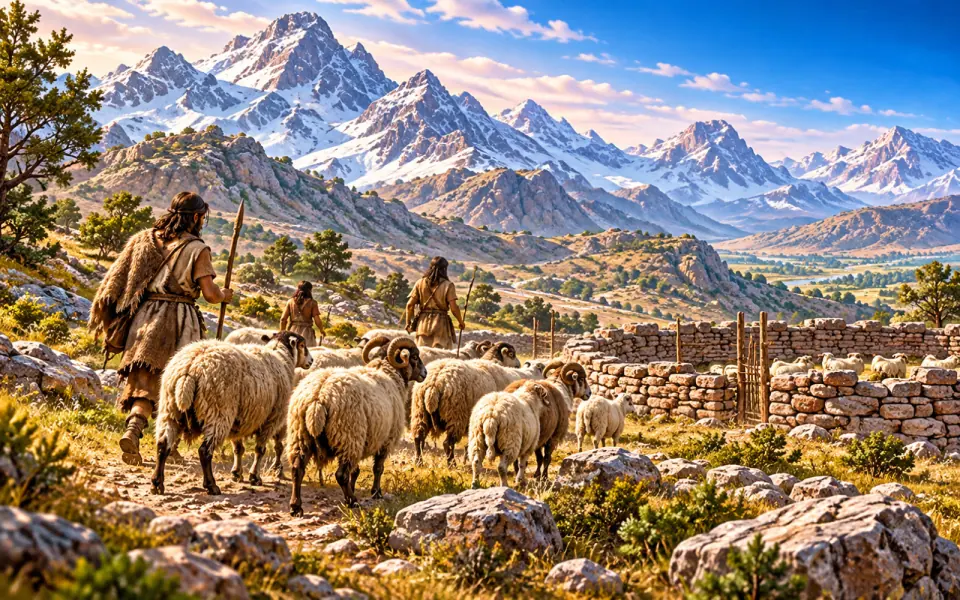
Sheep were among the first animals to be farmed, about 11,000 years ago, in the mountains between Anatolia and Iran. They gave meat, milk and skins; long wool for spinning came later. Even before that, humans had tamed the dog, their hunting companion.
Why it matters Keeping animals gave a reliable supply of food even in times without a harvest.
Study card about 6 minutes of reading
The story
A mountain animal
The Asiatic mouflon is a wild sheep that still lives today on the uplands of Anatolia, Armenia and Iran. It has a chestnut-coloured coat and the males carry big spiralling horns. It does not look much like the white, woolly sheep of today's meadows: it has short, coarse hair, which it sheds in spring, and it is always ready to run. And yet all the sheep in the world, now more than a billion, descend from it.
Archaeologists think the animals were domesticated about 11,000 to 10,000 years ago, in the mountains of south-eastern Anatolia and the Zagros Mountains, between Iran and Iraq. The evidence is in the bones found in villages: the age of the animals killed changes, with most of them young males, a sign of a choice made by humans; the proportion between males and females changes; over time the bones become smaller and thinner. Sometimes enclosures and deposits of dung are found too.
How an animal becomes domestic
Domesticating does not just mean keeping an animal in captivity. It means breeding it for many generations, choosing the most docile, those that let you come near and do not run away. Over time the animal changes: it becomes tamer, smaller, with a shorter muzzle and sometimes patches of different colours. For sheep and goats the process was probably gradual. Hunters, before herding them, hunted them while already selecting which to kill and which not, and so, without knowing it, they influenced the population. Then they began to keep them close to the villages, feed them and protect them from predators.
Scholars speak of “multiple” domestication: it did not happen in one place, or just once. In the Zagros Mountains, at Ganj Dareh in Iran, there is the oldest evidence of goats kept by humans, about 10,000 years old. Sheep followed in the same region. Analyses of ancient DNA show that over time the flocks mixed, even with wild animals, and that the story was more complicated than a single line of descent. Pigs and cattle were domesticated at about the same time, in nearby areas.
The dog, the first friend
Before sheep and goats humans already had a domestic animal: the dog. It descends from a population of wolves, but when and where this happened is much debated: DNA studies suggest a split from wolves between 40,000 and 20,000 years ago, while the first secure burials of dogs, such as the one at Bonn-Oberkassel in Germany, about 14,000 years old, where a dog was buried with two people, show an already close bond. Dogs helped with hunting, with guarding the camp and, later, with watching over flocks.
Milk, wool, skins
The first sheep were kept above all for meat and skins. Milk and wool came later. Traces of milk fat in clay pots show that already about 8,500 to 9,000 years ago, in Anatolia, milk was being produced to drink or to turn into cheese and yoghurt. In the rest of the world the use of milk spread with the herders. Adults, in most populations, cannot digest fresh milk well, because over the years they lose the enzyme needed, lactase. In some populations, mainly in northern Europe and East Africa, a genetic mutation is widespread precisely because of the advantage of being able to drink milk: it is one of the cases in which culture has changed our biology.
Wild sheep do not have real wool: their coat has coarse hair with a little undercoat. The long, soft fleece that is good for spinning appeared later, through selection, probably some thousands of years afterwards, perhaps between about 8,000 and 6,000 years ago; archaeologists study it from the remains of textiles and from images on Mesopotamian seals. With wool it became possible to make warm clothes, felt, blankets and carpets, and one of the great industries of antiquity was born: weaving.
Sheep on the move
Sheep travelled with the farmers. They arrived in Europe, Africa and central Asia together with the first farming peoples, and they were among the animals that human beings carried on ships. Even the mouflons that live today in Corsica and Sardinia are not wild in the strict sense: they descend from domesticated sheep brought to the islands by the first farmers, about 8,000 years ago, which then went back to the wild. They tell of the journey of the first shepherds across the Mediterranean Sea.
Why it happened
When the climate grew warmer, after the last ice age, human communities were growing and living in more settled places. Hunters began to find less game around the villages, and raising animals was a way of having them close at hand.
Sheep and goats had many advantages: they are social animals, living in herds with a hierarchy and therefore willing to follow a leader; they eat grass and even poor shrubs; they breed early. They were very well suited to being domesticated.
Besides, in a period when harvests could fail, having a flock was like having a walking store of food: meat, milk and skins even in difficult times.
What changed
Herding changed village life. For the first time human beings did not depend only on fields or hunting: they could count on another source of food and raw materials. In many regions a different way of life arose, pastoralism, with groups moving with their flocks between summer and winter pastures.
With animals came new diseases. Many germs that today cause human infections, such as those of some forms of flu or measles, have an animal origin, due to the prolonged closeness between people and livestock. It was a price paid for the advantages of herding.
Wool, milk and sheep meat are still among the most important products in the world today. In Italy sheep's cheeses, such as pecorino and ricotta, are a very ancient tradition, and the shepherds who move their flocks with the seasons have walked the roads of the Apennines for thousands of years.
Key people and places
People
- Melinda Zeder
- American archaeologist and archaeozoologist at the Smithsonian. She has studied how goats, sheep and other animals were domesticated in the Near East.
- Ian Wilmut
- British biologist (born 1944). In 1996 he led the team in Edinburgh that produced Dolly, the cloned sheep, the first mammal cloned from an adult cell.
Places
- Zagros Mountains (Iran and Iraq)
- A mountain range where wild mouflon and goats lived and where the oldest traces of herding are found.
- Ganj Dareh (Iran)
- A Neolithic village in the Zagros Mountains, with bones of kept goats about 10,000 years old.
- Bonn-Oberkassel (Germany)
- The place where the grave of two people and a dog about 14,000 years old was found.
Good to know
- Dolly, the sheep cloned in 1996 at the Roslin Institute, near Edinburgh in Scotland, lived six years and had six lambs.
- The word “pecuniary” comes from the Latin pecunia, which meant money, but derived from pecus, “cattle”: wealth was counted in animals.
- Sheep have a good memory: they can recognise dozens of faces of other sheep and also of people, and remember them for years.
- The European mouflon, which lives in Corsica and Sardinia, descends from domesticated sheep brought by the first farmers and then set free again.
- The pupil of a sheep's eye is horizontal, which gives a very wide field of view, almost all the way round, useful for spotting predators.
Find out more
- Wikipedia, “Sheep” en.wikipedia.org
- Wikipedia, “Domestication” en.wikipedia.org
- Wikipedia, “Neolithic Revolution” en.wikipedia.org
- Wikipedia, “Fertile Crescent” en.wikipedia.org
Related events
- The Neolithic Revolutionabout 12,000 years ago · PrehistoryHerding arose together with agriculture, in the Fertile Crescent.
- The first permanent villagesabout 14,000 years ago · PrehistoryThe first villages created the conditions for keeping animals near home.
- Çatalhöyükabout 9,000 years ago · PrehistoryAt Çatalhöyük people kept sheep and goats and hunted aurochs.
- Pottery spreadsabout 9,000 years ago · PrehistoryClay pots were also used to store milk.
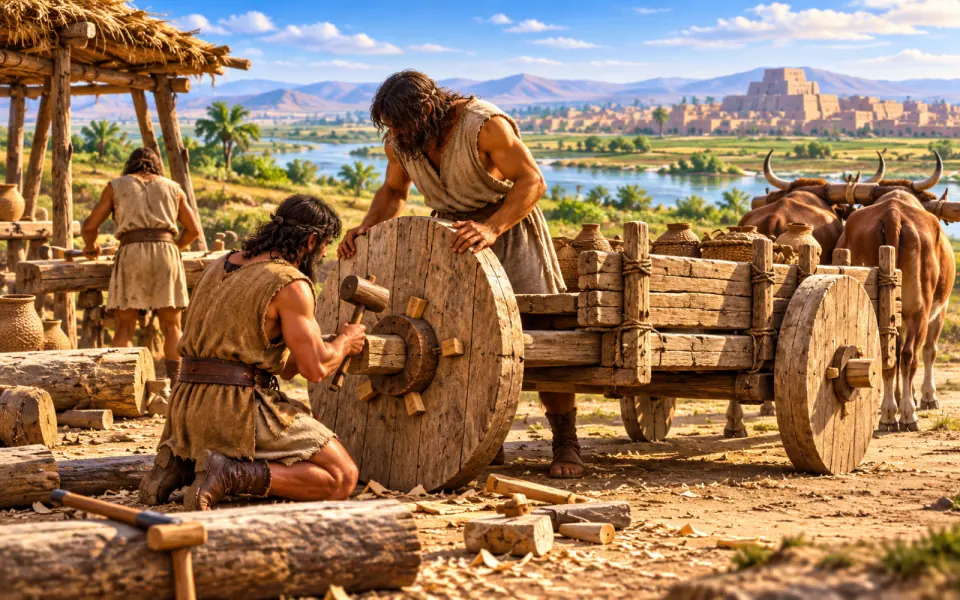
- The invention of the wheelabout 5,500 years ago · PrehistoryDomestic animals, such as oxen, pulled the first wheeled carts.
Before and after, in the era “Prehistory”
Event 19 of 25
 BeforeThe first homininsabout 7 million years ago
 BeforeLucy the australopithecineabout 3.2 million years ago
 BeforeThe first stone toolsabout 2.6 million years ago
 BeforeHomo habilisabout 2.4 million years ago
 BeforeHomo erectusabout 1.9 million years ago
 BeforeTaming fireabout 790,000 years ago
 BeforeHomo heidelbergensisabout 600,000 years ago
 BeforeNeanderthalsabout 400,000 years ago
 BeforeThe arrival of Homo sapiensabout 300,000 years ago
 BeforeThe first deliberate burialsabout 100,000 years ago
 BeforeHomo sapiens leaves Africaabout 60,000 years ago
 BeforeThe needle with an eyeabout 48,000 years ago
 BeforeThe first people in Australiaabout 48,000 years ago
 BeforeThe cave art of Sulawesiabout 44,000 years ago
 BeforeThe Venus of Willendorfabout 28,000 years ago
 BeforeThe Lascaux caveabout 19,000 years ago
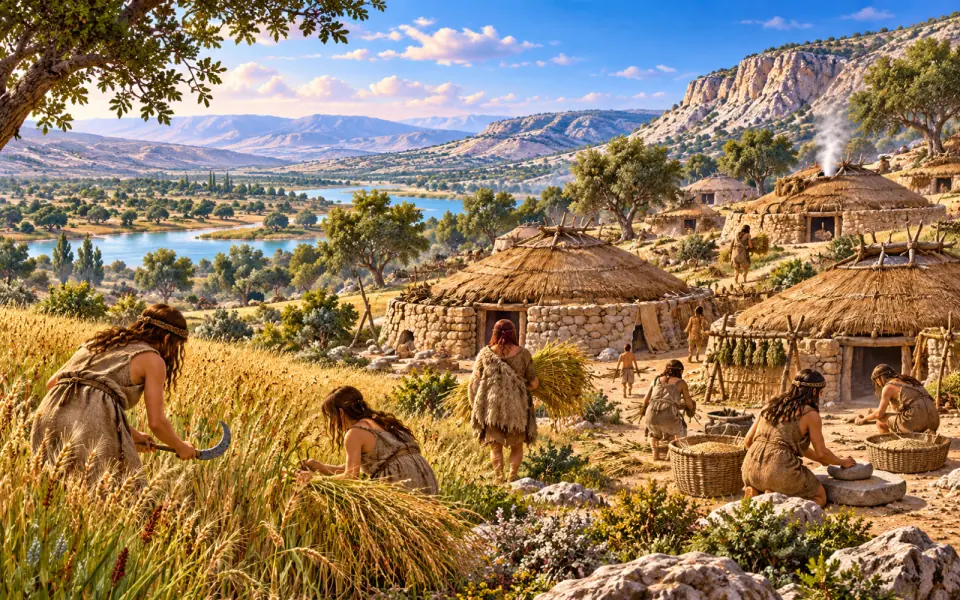 BeforeThe first permanent villagesabout 14,000 years ago
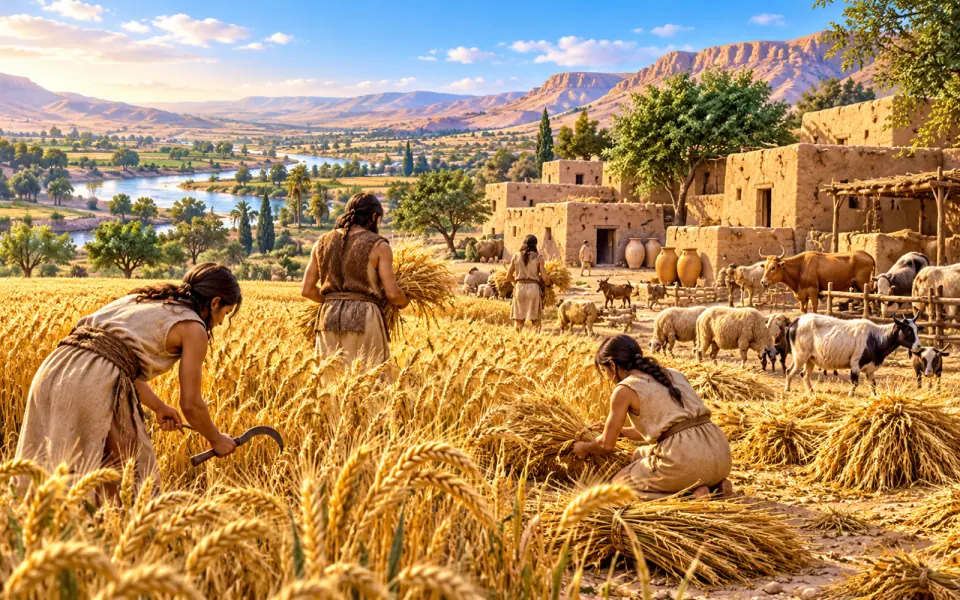 BeforeThe Neolithic Revolutionabout 12,000 years ago
- You are hereTaming the sheepabout 11,000 years ago
 AfterThe walls of Jerichoabout 10,300 years ago
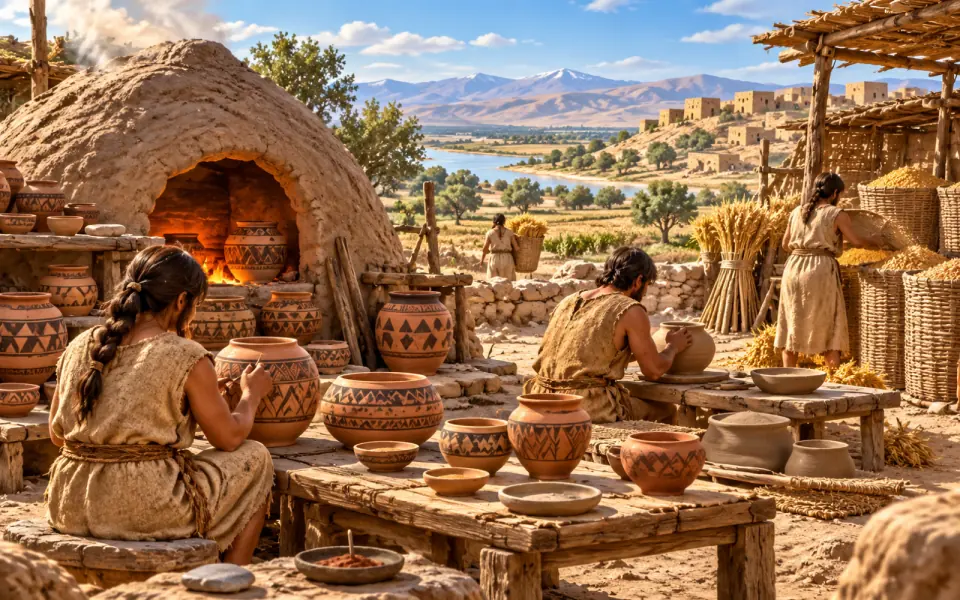 AfterPottery spreadsabout 9,000 years ago
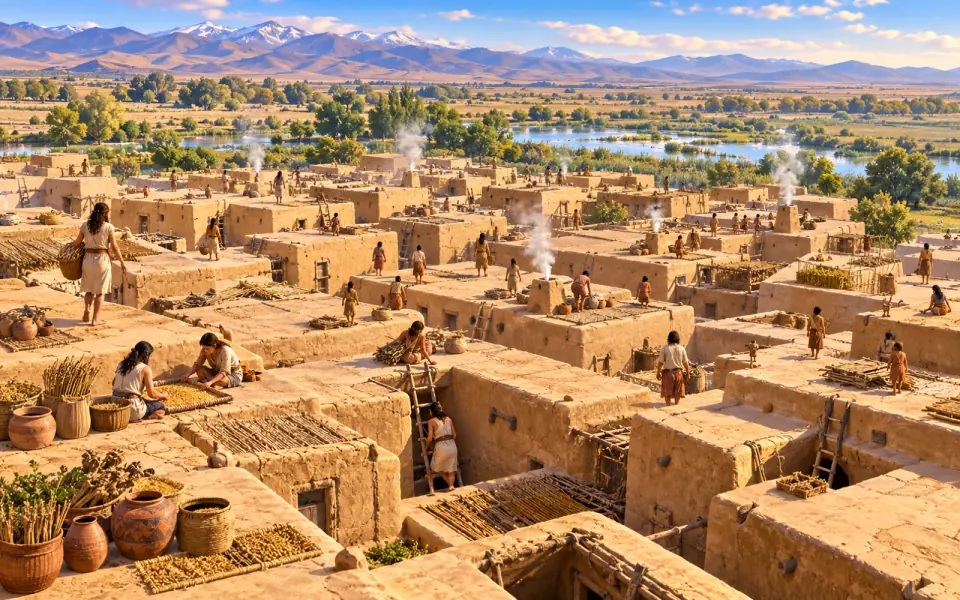 AfterÇatalhöyükabout 9,000 years ago
 AfterWorking with copperabout 7,000 years ago
 AfterThe invention of the wheelabout 5,500 years ago
 AfterThe Bronze Ageabout 5,300 years ago
Listen / Read next
- Music to read by: Cinematic JourneyEpic film-style music, no lyrics, by Ciro Simone IrmiciSpotifyYouTube Music
Other events of the era “Prehistory”
- The first hominins
- Lucy the australopithecine
- The first stone tools
- Homo habilis
- Homo erectus
- Taming fire
- Homo heidelbergensis
- Neanderthals
- The arrival of Homo sapiens
- The first deliberate burials
- Homo sapiens leaves Africa
- The needle with an eye
- The first people in Australia
- The cave art of Sulawesi
- The Venus of Willendorf
- The Lascaux cave
- The first permanent villages
- The Neolithic Revolution
- The walls of Jericho
- Pottery spreads
- Çatalhöyük
- Working with copper
- The invention of the wheel
- The Bronze Age
