The arrival of Homo sapiens
about 300,000 years ago Jebel Irhoud, Morocco
In short
The oldest fossils of our species, Homo sapiens, are about 300,000 years old and were found at Jebel Irhoud, in Morocco. Our species was born in Africa, perhaps from different groups that met and mixed. The face already looked like ours, while the shape of the skull went on changing for a long time.
Why it matters This is where the story of every human being alive today begins.
Source: Nature, 2017, “New fossils from Jebel Irhoud, Morocco and the pan-African origin of Homo sapiens”
Study card about 5 minutes of reading
The story
A mine in Morocco
About a hundred kilometres from Marrakesh, in western Morocco, on a hill called Jebel Irhoud (“Mount Irhoud”), there was in the 1960s a mine for barite, a white mineral. In 1961 the miners, blasting the rock, brought to light an almost complete skull and other bones. Scholars examined them, noticed the small, almost modern face but the elongated braincase, and considered them much more recent: remains of African Neanderthals, or of late modern humans. For decades nobody thought they were important.
Then, in 2004, the French palaeoanthropologist Jean-Jacques Hublin, of the Max Planck Institute in Leipzig, Germany, resumed the excavations with an international team and with his Moroccan colleague Abdelouahed Ben-Ncer. New datings, based on the light given off by flints burnt in an ancient fire (thermoluminescence) and on other methods, said something quite different: not a few tens of thousands of years, but about 315,000, with a margin of error of 34,000 years. The result was published in 2017 in the journal Nature and has changed school textbooks.
A modern face, an ancient head
The fossils of Jebel Irhoud belong to at least five individuals. The face is small, short and tucked beneath the forehead, with teeth of modern shape: it is in every way like ours. The braincase, however, is low and elongated like that of older species, and the brain, although as big as ours, had a different shape, less rounded. Only later, over tens of thousands of years, did the head of sapiens change towards the “ball” shape we have today.
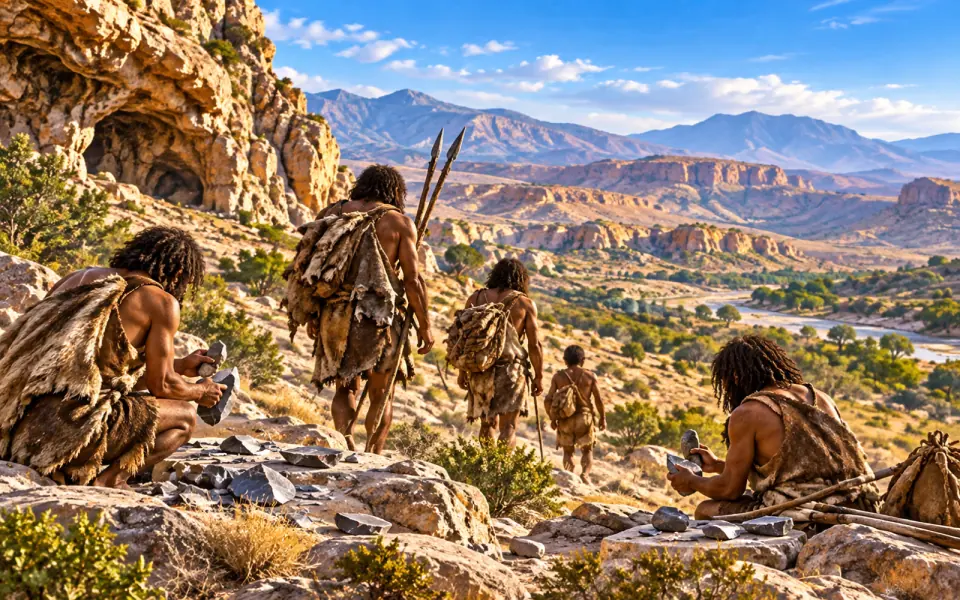
Beside the remains there were stone tools, bones of gazelles, zebras and other animals, and traces of fire: they were hunters who brought the meat to the cave and cooked it.
An origin across the whole of Africa
Before the discovery it was thought that sapiens had arisen in East Africa about 200,000 years ago, because the oldest fossils seemed to be those from Omo Kibish in Ethiopia, now dated to more than 230,000 years ago. Morocco lies at the far north-west of the continent. How come we find such an ancient sapiens right there? Hublin and his colleagues conclude that our species did not arise in a single place and at a single moment, but from different populations all over Africa, connected by meetings and exchanges. In that period the Sahara was green, with lakes and rivers, and different groups moved around and met. That is why people speak of a “pan-African” origin.
Other remains confirm this picture: in South Africa, at Florisbad, a skull about 260,000 years old shows a mixture of features; in Ethiopia, at Herto, fossils about 160,000 years old are already entirely like us. Studies of the DNA of African peoples today point to dates between 350,000 and 260,000 years ago for the split between the oldest lines of our species. The two roads, that of the fossils and that of the genes, are getting closer.
What does “Homo sapiens” mean?
There is no precise moment when a species is born. A population changes slowly, and the features we call “modern” appear one at a time: the face first, then the shape of the skull, the chin, the pelvis. That is why experts do not all agree that the people of Jebel Irhoud were already fully Homo sapiens; some prefer to speak of “archaic sapiens”. Outside Africa too there are disputed fossils, such as a skull 210,000 years old found at Apidima in Greece, which some assign to sapiens and others do not.
The name Homo sapiens, “wise man”, was given in 1758 by the Swedish naturalist Carl Linnaeus, who was the first to classify the human species together with the other animals. Linnaeus had no fossils; we discovered them after him.
Scientists use the word “sapiens” for a species that has lasted about 300,000 years, but for most of this time there was little in the museums of what makes us special: art, jewellery, burials, long journeys. Those novelties, as the following cards will tell, came much later.
Why it happened
Why sapiens arose at just that moment we do not know for certain. Between 400,000 and 300,000 years ago the climate of Africa changed several times, with wet periods when the Sahara was a savannah with lakes and dry periods when populations withdrew to isolated areas.
This alternation split groups and brought them together again: when they were separated, they built up differences; when they met again, they mixed their genes. A new species can arise like this, from a set of populations in contact rather than from a single group.
It is not clear what advantage the new look gave. Some think that the more rounded brain is linked to new abilities, such as language and abstract thought. It is an open field of research.
What changed
The discovery at Jebel Irhoud added about 100,000 years to the history of our species, taking it from 200,000 to 300,000 years, and shifted attention from East Africa to the whole continent. Today the story of humanity is told as an African story, with many centres and not just one.
All the people alive today descend from the African population: in a very concrete sense, we are all African. The greatest genetic variation on the planet is still found in Africa, because it is the continent where our species has lived the longest.
This also has a consequence for how we think about differences between people. Visible differences such as skin colour are superficial; most of humanity's genetic variation is already found inside Africa, where our species has lived the longest.
Key people and places
People
- Jean-Jacques Hublin
- French palaeoanthropologist (born 1953), then director at the Max Planck Institute in Leipzig. He led the new research at Jebel Irhoud published in 2017.
- Abdelouahed Ben-Ncer
- Moroccan archaeologist at the National Institute of Archaeology and Heritage in Rabat. He co-directed the excavations at Jebel Irhoud.
- Carl Linnaeus
- Swedish naturalist (1707–1778), inventor of the modern system for naming species. In 1758 he called our species Homo sapiens.
Places
- Jebel Irhoud (Morocco)
- A hill with an old barite mine, west of Marrakesh, where in 1961 the sapiens fossils about 315,000 years old were found.
- Omo Kibish (Ethiopia)
- An area of the Omo river, in southern Ethiopia, with other very ancient sapiens fossils, more than 230,000 years old.
- Florisbad (South Africa)
- A site with a spring where a skull about 260,000 years old, with partly modern features, was found.
Good to know
- The fossils of Jebel Irhoud stayed for decades with the wrong date: a discovery can hide for a long time inside a museum box.
- The face of the people of Jebel Irhoud is so modern that, seen from the front, it looks like that of a person today: it is the elongated shape of the back of the skull that gives away its age.
- Barite, the mineral of the Jebel Irhoud mine, is still used today in drilling oil wells and in X-rays of the stomach.
- The Sahara is a desert today, but in some phases of the past it was green enough to hold hippopotamuses and crocodiles.
- The scientific word “sapiens” means “who knows, who has taste”: in 1758 Linnaeus also added to it the motto “know thyself”.
Find out more
- Smithsonian, Homo sapiens page (in English) humanorigins.si.edu
- Wikipedia, “Jebel Irhoud” en.wikipedia.org
- Wikipedia, “Homo sapiens” en.wikipedia.org
- Wikipedia, “Human evolution” en.wikipedia.org
Related events
- Homo heidelbergensisabout 600,000 years ago · PrehistoryHomo heidelbergensis, or a similar population, was the African ancestor of sapiens.
- Neanderthalsabout 400,000 years ago · PrehistoryThe Neanderthals are the European branch; sapiens the African branch.
- The first deliberate burialsabout 100,000 years ago · PrehistoryThe first burials by sapiens date to about 100,000 years ago.
- Homo sapiens leaves Africaabout 60,000 years ago · PrehistoryFrom Africa, sapiens spread across the whole world.
- Darwin publishes On the Origin of Species1859 · Age of revolutionsDarwin imagined that humans had their origin in Africa, beside our closest relatives.
Before and after, in the era “Prehistory”
Event 9 of 25
 BeforeThe first homininsabout 7 million years ago
 BeforeLucy the australopithecineabout 3.2 million years ago
 BeforeThe first stone toolsabout 2.6 million years ago
 BeforeHomo habilisabout 2.4 million years ago
 BeforeHomo erectusabout 1.9 million years ago
 BeforeTaming fireabout 790,000 years ago
 BeforeHomo heidelbergensisabout 600,000 years ago
 BeforeNeanderthalsabout 400,000 years ago
- You are hereThe arrival of Homo sapiensabout 300,000 years ago
 AfterThe first deliberate burialsabout 100,000 years ago
 AfterHomo sapiens leaves Africaabout 60,000 years ago
 AfterThe needle with an eyeabout 48,000 years ago
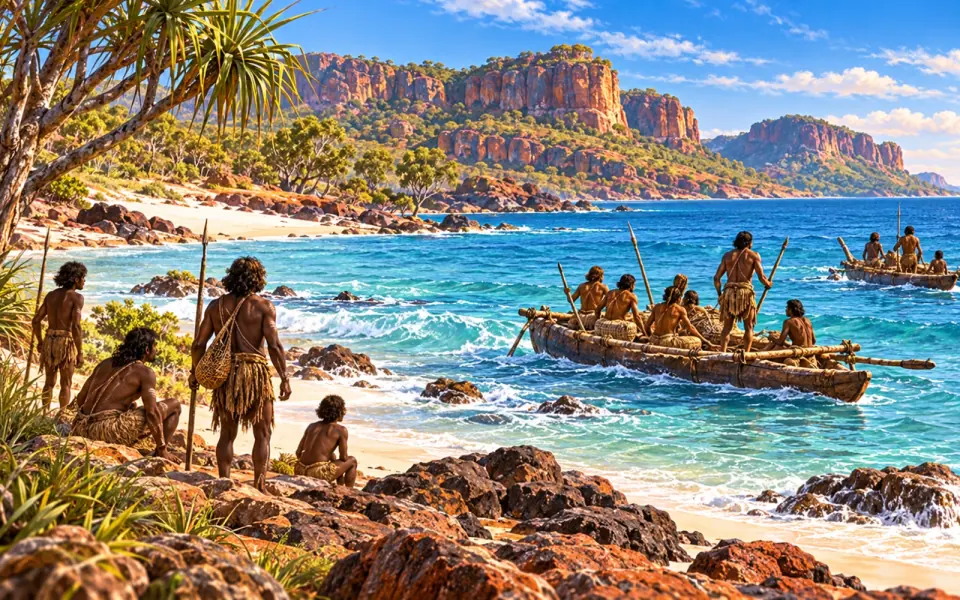 AfterThe first people in Australiaabout 48,000 years ago
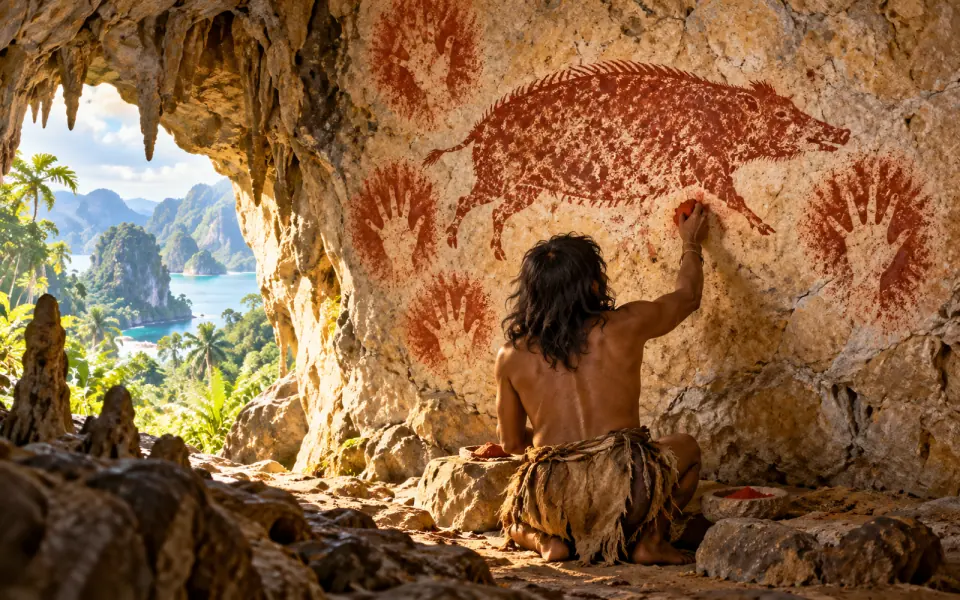 AfterThe cave art of Sulawesiabout 44,000 years ago
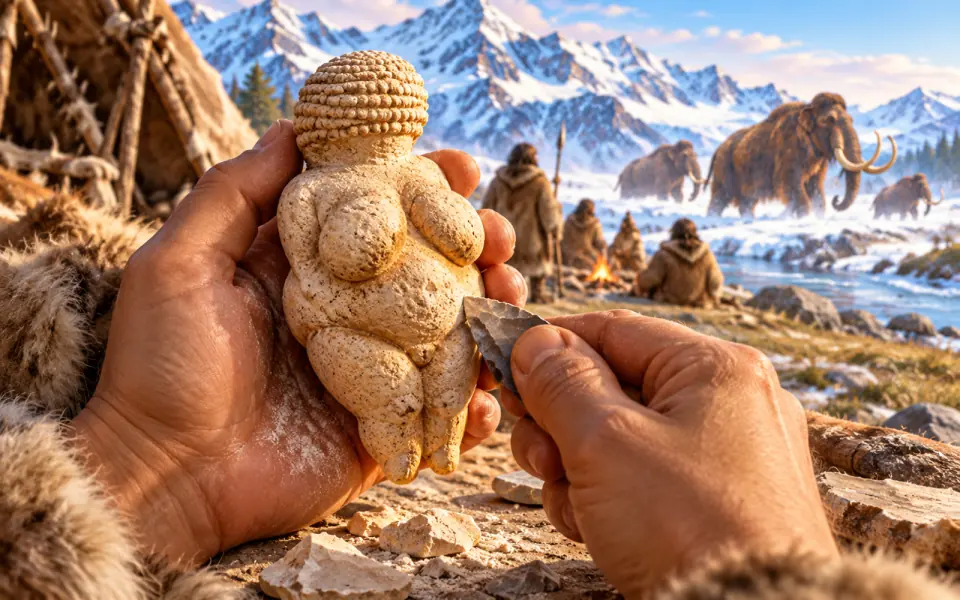 AfterThe Venus of Willendorfabout 28,000 years ago
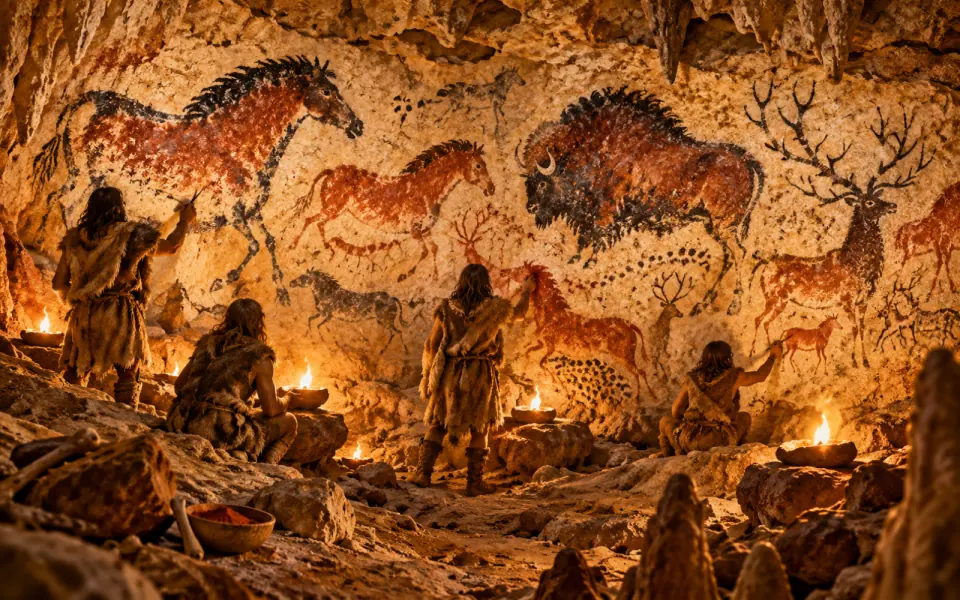 AfterThe Lascaux caveabout 19,000 years ago
 AfterThe first permanent villagesabout 14,000 years ago
 AfterThe Neolithic Revolutionabout 12,000 years ago
 AfterTaming the sheepabout 11,000 years ago
 AfterThe walls of Jerichoabout 10,300 years ago
 AfterPottery spreadsabout 9,000 years ago
 AfterÇatalhöyükabout 9,000 years ago
 AfterWorking with copperabout 7,000 years ago
 AfterThe invention of the wheelabout 5,500 years ago
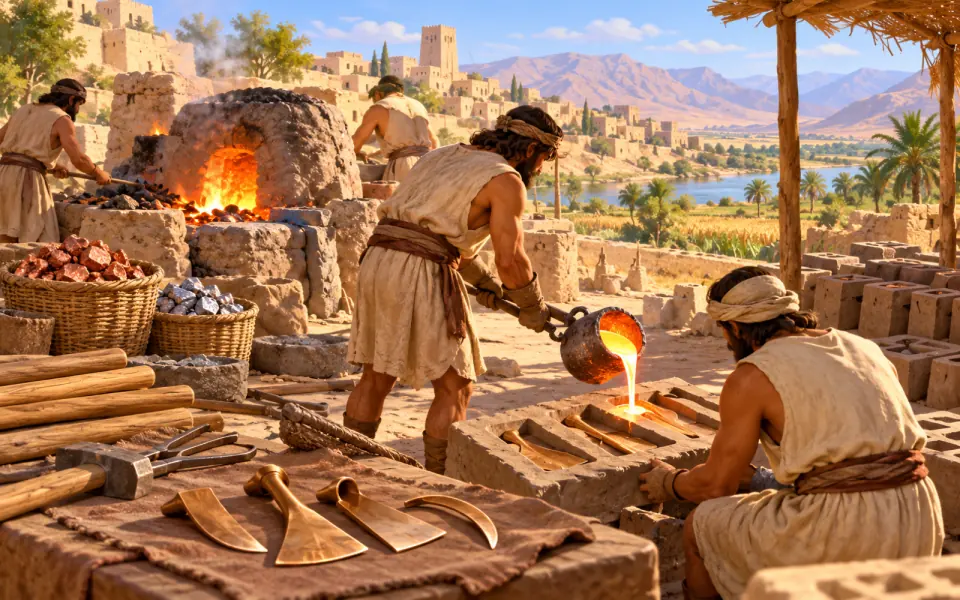 AfterThe Bronze Ageabout 5,300 years ago
Listen / Read next
- Music to read by: Cinematic JourneyEpic film-style music, no lyrics, by Ciro Simone IrmiciSpotifyYouTube Music
Meanwhile, elsewhere in the world
Other events of the era “Prehistory”
- The first hominins
- Lucy the australopithecine
- The first stone tools
- Homo habilis
- Homo erectus
- Taming fire
- Homo heidelbergensis
- Neanderthals
- The first deliberate burials
- Homo sapiens leaves Africa
- The needle with an eye
- The first people in Australia
- The cave art of Sulawesi
- The Venus of Willendorf
- The Lascaux cave
- The first permanent villages
- The Neolithic Revolution
- Taming the sheep
- The walls of Jericho
- Pottery spreads
- Çatalhöyük
- Working with copper
- The invention of the wheel
- The Bronze Age
