Homo erectus
about 1.9 million years ago Africa, then Asia (Georgia, China, Indonesia)
In short
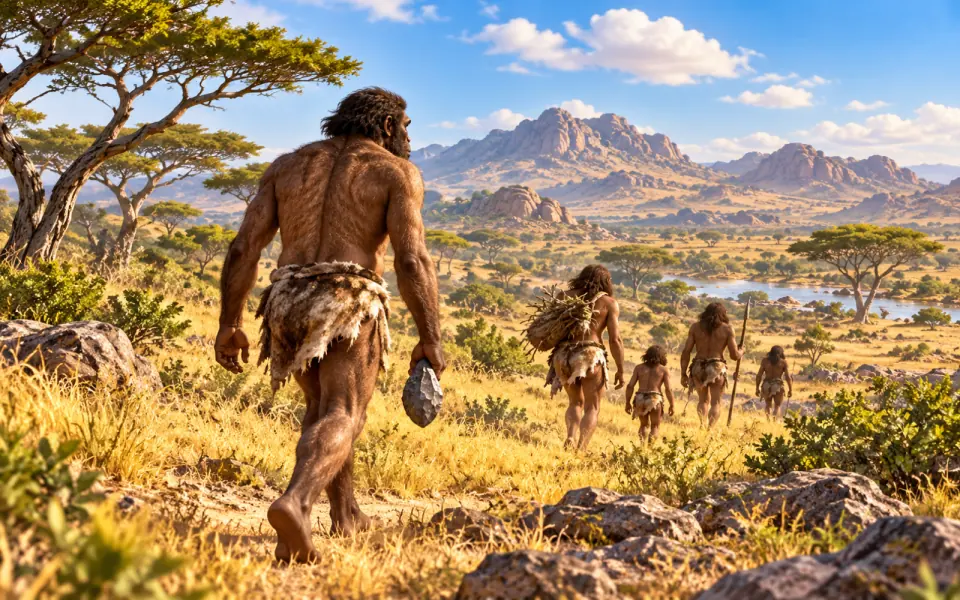
Homo erectus appeared in Africa about 1.9 million years ago: it was almost as tall as us and walked with long strides. It was the first human species to leave Africa, reaching as far as Georgia, China and Indonesia. It made hand axes, stones worked on both sides into the shape of an almond.
Why it matters It was the first great traveller of the human family and survived for more than a million years.
Study card about 5 minutes of reading
The story
A boy from 1.6 million years ago
In 1984, on the western shore of Lake Turkana in Kenya, a fossil hunter named Kamoya Kimeu noticed a tiny piece of dark bone on the gravel. It was a fragment of a skull. After a long digging campaign, Richard Leakey's team recovered an almost complete skeleton, with bones of the arms, legs, pelvis and spine. It belonged to a boy of eight to twelve years old, who lived about one million six hundred thousand years ago. His scientific name is KNM-WT 15000, but everyone calls him the Turkana Boy. Even at that age he was about 1.55–1.6 metres tall. As an adult, according to calculations, he would have been over 1.7 metres.
His proportions are surprising: long legs, a narrow chest, a pelvis suited to walking long distances. It is the body of a runner and endurance walker, much more like ours than Lucy's. He belonged to Homo erectus, “upright man”, the species that for a long time has been the star of prehistory.
From Indonesia to Africa
The story of the species began in a place far from Africa. In 1891 the Dutch doctor Eugène Dubois, who had gone to Indonesia precisely to look for the missing link between apes and humans, found on the island of Java, near the village of Trinil, a piece of skull and then a thigh bone. He called them Pithecanthropus erectus, “upright ape-man”. It was the first ancient human fossil found on purpose. Later, in the 1920s and 1930s, in a cave near Zhoukoudian, close to Beijing in China, the remains of dozens of individuals were found, known as “Peking Man”. Those fossils were lost in 1941, during the war, while they were being shipped abroad to keep them safe: the casts and drawings remain.
Only afterwards was it understood that the same beings had lived in Africa too. African fossils, like the Turkana Boy, are often classified by some scholars as a separate species, Homo ergaster, “working man”. Others consider them the earliest form of erectus. The debate is open.
The first great journey
It is thought that Homo erectus appeared in Africa about 2 million years ago and that, in geologically quick time, it reached Asia. The site that surprised people most is Dmanisi in Georgia, in the Caucasus: there, under the ruins of a medieval town, five skulls and many bones about 1.8 million years old have been found since 1991. They are among the oldest evidence of humans outside Africa. These individuals were small, with a brain of only about 550–780 cubic centimetres, and made very simple tools. One of them was an adult who had been almost toothless for years: he survived a long time, so someone must have helped him.
Then, over hundreds of thousands of years, erectus populations arrived in China and Indonesia. Because of the distance it is hard to imagine a single march: they were probably groups that advanced a little at a time, generation after generation, following game and sources of water.
A very long life
Homo erectus is the human species that lasted longest. It lived for almost two million years; the last known remains, at Ngandong in Indonesia, are dated to over 100,000 years ago, although the date is disputed. It changed a great deal over time and space: the brain grew, in the most recent fossils, up to 1,100 cubic centimetres, about three quarters of that of a person today.
It made hand axes, stones worked on two faces into a teardrop or almond shape, which appeared about 1.8–1.7 million years ago (perhaps a little earlier). In all likelihood it knew how to use fire, at least in the later periods, and ate more meat. It hunted and gathered, and scholars think it lived in small groups that helped one another, as the case of the Dmanisi individual cared for by the others shows.
After the end of Homo erectus, its descendants or relatives took different paths, leading to the species we will talk about in the next cards.
Why it happened
The great spread of Homo erectus was helped by its body. Long legs and an efficient stride made it possible to cover many kilometres a day with little effort, a huge advantage for anyone looking for carcasses, following herds or moving in search of water.
Diet mattered too: more meat brought more energy and made a bigger brain possible. It was probably a push to explore new lands, in a savannah that, through the ups and downs of the climate, stretched from Africa to the Middle East and Asia.
There is no need to imagine a travel plan. Populations grew and moved a few kilometres at a time. In a hundred thousand years, however, that very slow movement could carry them from one continent to another.
What changed
With Homo erectus, for the first time, a human species left Africa and lived in very different environments, from savannahs to tropical forests to the cold climates of northern China. From then on the world had more than one human species at the same time.
Its techniques, from hand axes to fire, were passed on and perfected for more than a million years, a time that makes the whole history of writing look short. It was a long school of gestures repeated by generation after generation, which prepared the way for the Neanderthals and Homo sapiens.
When the first scientists discovered Java Man, the news supported the idea that human beings had evolved over time. Today erectus fossils are found in every natural history museum and the Turkana Boy is one of the most studied: from him we learn how fast our ancestors grew, how they walked and how they fed.
Key people and places
People
- Eugène Dubois
- Dutch doctor and anatomist (1858–1940). In 1891, on Java, he found the first remains of Homo erectus, called Java Man.
- Kamoya Kimeu
- Kenyan fossil hunter (1940–2022), one of the greatest ever. In 1984 he found the first fragment of the Turkana Boy.
- Richard Leakey
- Kenyan palaeoanthropologist (1944–2022), son of Louis and Mary. He led the expedition that recovered the skeleton of the Turkana Boy.
- David Lordkipanidze
- Georgian palaeoanthropologist. He directs the excavations at Dmanisi and has described the skulls about 1.8 million years old.
Places
- Nariokotome, Lake Turkana (Kenya)
- A place on the western shore of the lake where the Turkana Boy was found.
- Dmanisi (Georgia)
- A site in the Caucasus with the oldest human remains outside Africa, about 1.8 million years old.
- Zhoukoudian (China)
- A cave near Beijing where the remains of Peking Man were dug up. It is a UNESCO World Heritage Site.
- Trinil (Java, Indonesia)
- A village on the Solo river where Dubois found Java Man in 1891.
Good to know
- The fossils of Peking Man vanished in 1941 and have never been found again: it is one of the most famous mysteries in archaeology.
- At Dmanisi an individual with almost no teeth was found, who must have survived for a long time eating soft food: someone was looking after him.
- Eugène Dubois kept the Java thigh bone hidden for many years, fearing he would not be believed; he showed it only later.
- The Turkana Boy was already about 1.55–1.6 metres tall at eight to twelve years old, taller than many children of that age today.
- Homo erectus lasted at least a million and a half years, while our species has existed for about 300,000.
Find out more
- Smithsonian, Homo erectus page (in English) humanorigins.si.edu
- Wikipedia, “Homo erectus” en.wikipedia.org
- Wikipedia, “Dmanisi” en.wikipedia.org
- Wikipedia, “Human evolution” en.wikipedia.org
Related events
- Homo habilisabout 2.4 million years ago · PrehistoryHomo habilis lived partly in the same period and in the same areas.
- Taming fireabout 790,000 years ago · PrehistoryFire was probably mastered by Homo erectus.
- Homo heidelbergensisabout 600,000 years ago · PrehistoryHomo heidelbergensis probably descends from populations of erectus.
- Homo sapiens leaves Africaabout 60,000 years ago · PrehistoryMuch later, Homo sapiens repeated erectus's route out of Africa.
- The first stone toolsabout 2.6 million years ago · PrehistoryBefore erectus's hand axes there were the simple chipped pebbles.
Before and after, in the era “Prehistory”
Event 5 of 25
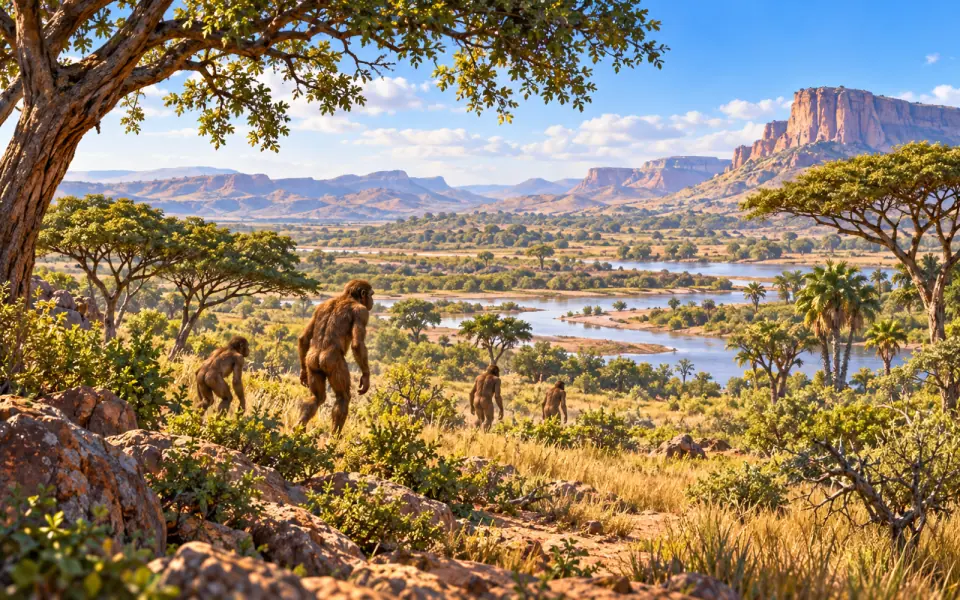 BeforeThe first homininsabout 7 million years ago
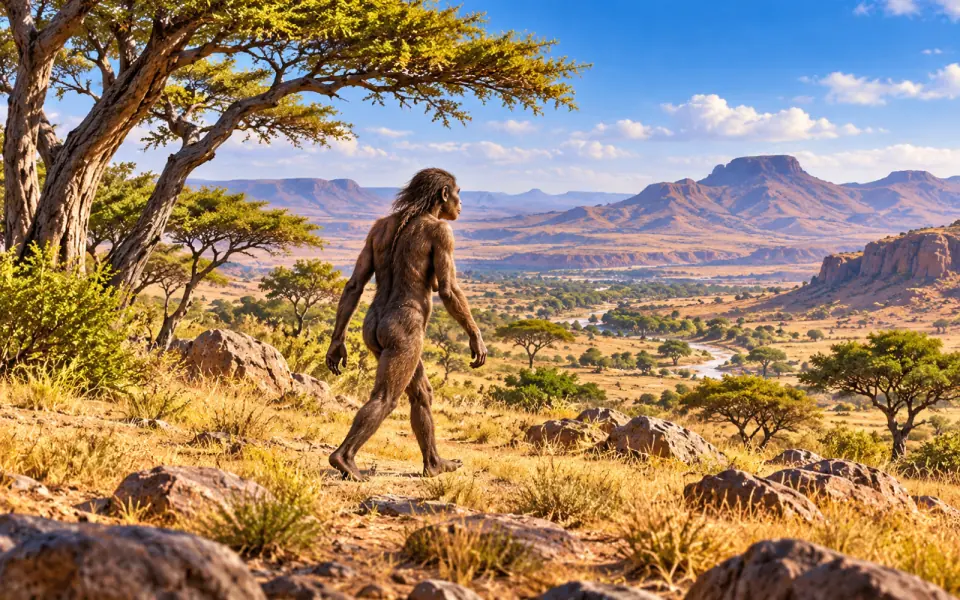 BeforeLucy the australopithecineabout 3.2 million years ago
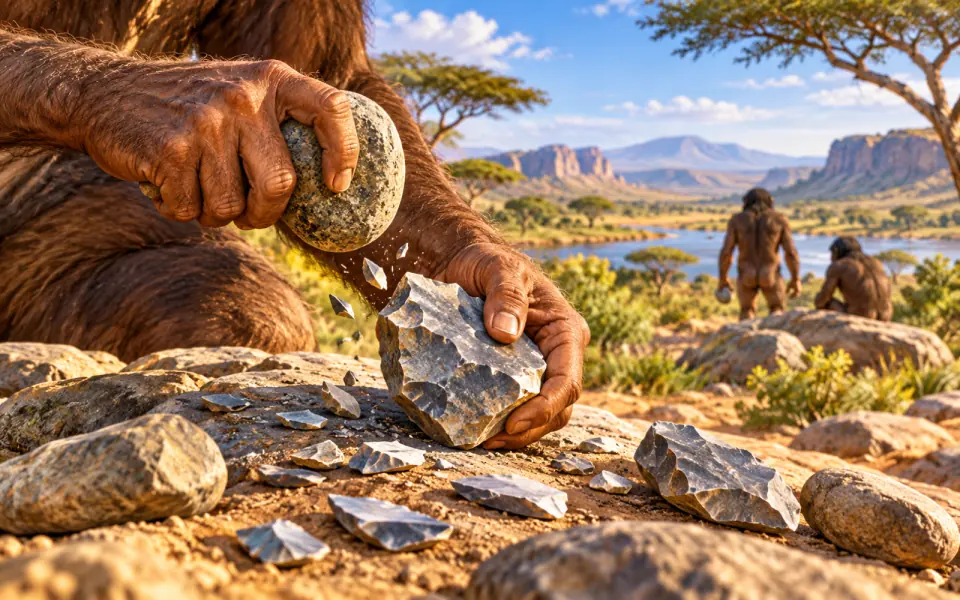 BeforeThe first stone toolsabout 2.6 million years ago
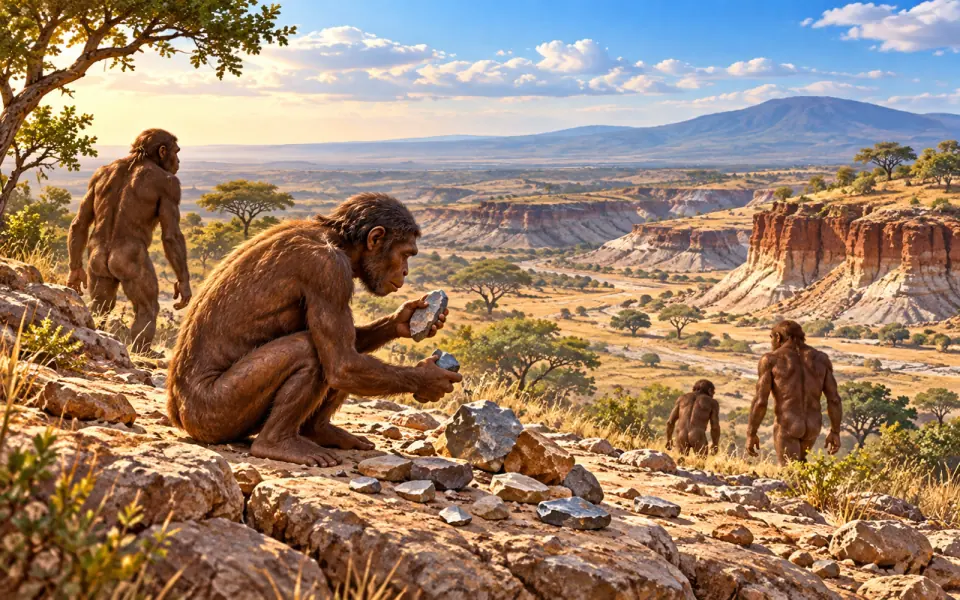 BeforeHomo habilisabout 2.4 million years ago
- You are hereHomo erectusabout 1.9 million years ago
 AfterTaming fireabout 790,000 years ago
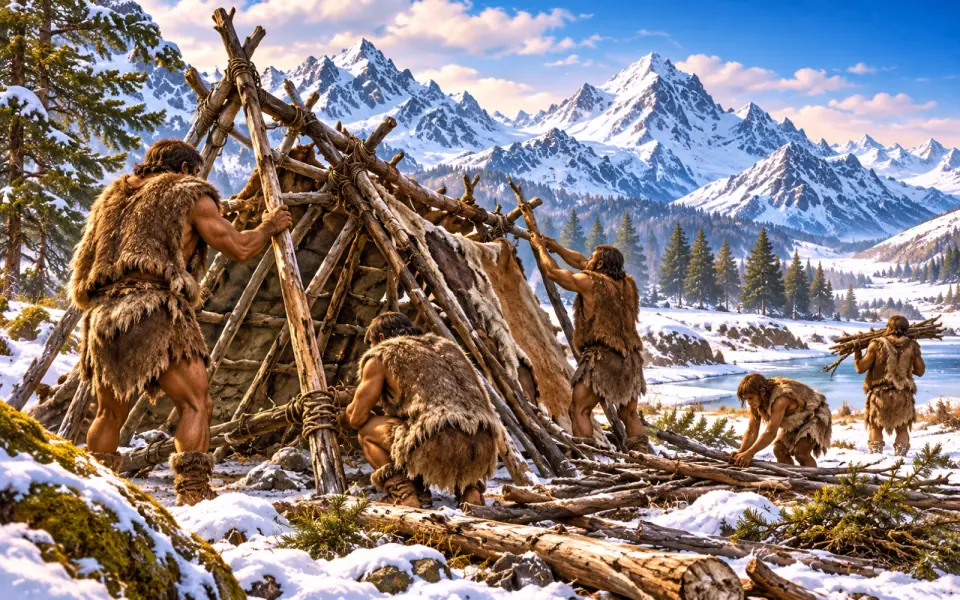 AfterHomo heidelbergensisabout 600,000 years ago
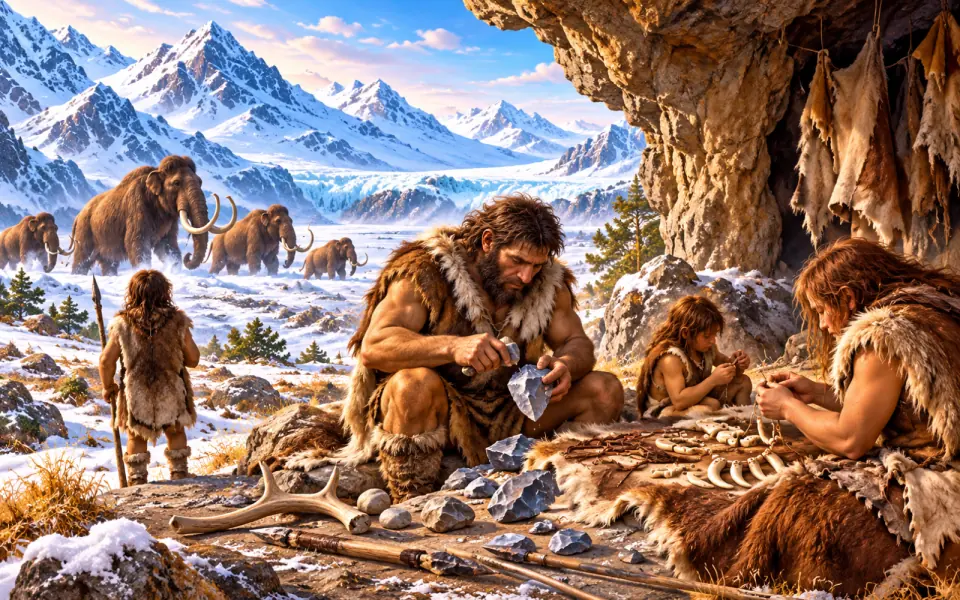 AfterNeanderthalsabout 400,000 years ago
 AfterThe arrival of Homo sapiensabout 300,000 years ago
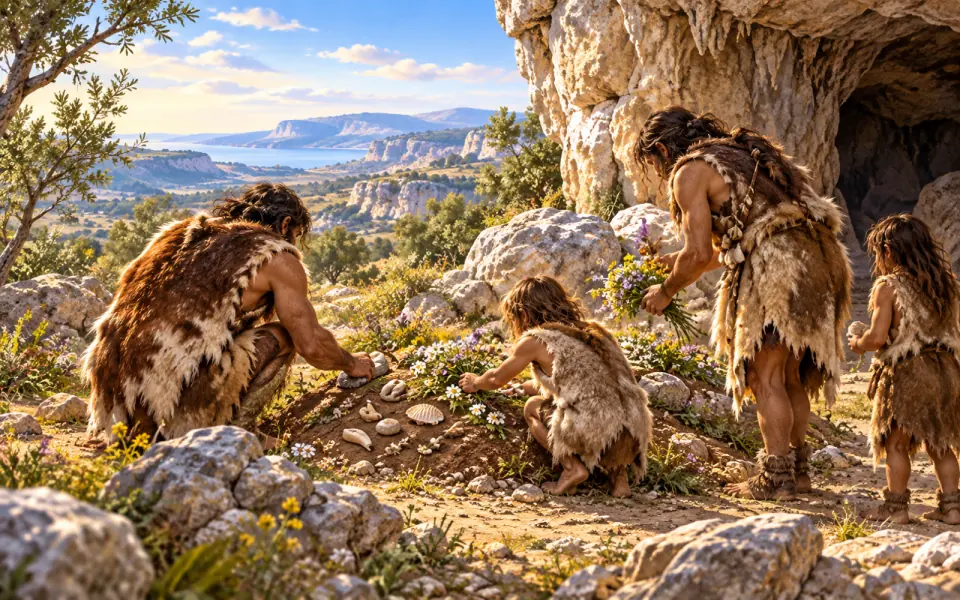 AfterThe first deliberate burialsabout 100,000 years ago
 AfterHomo sapiens leaves Africaabout 60,000 years ago
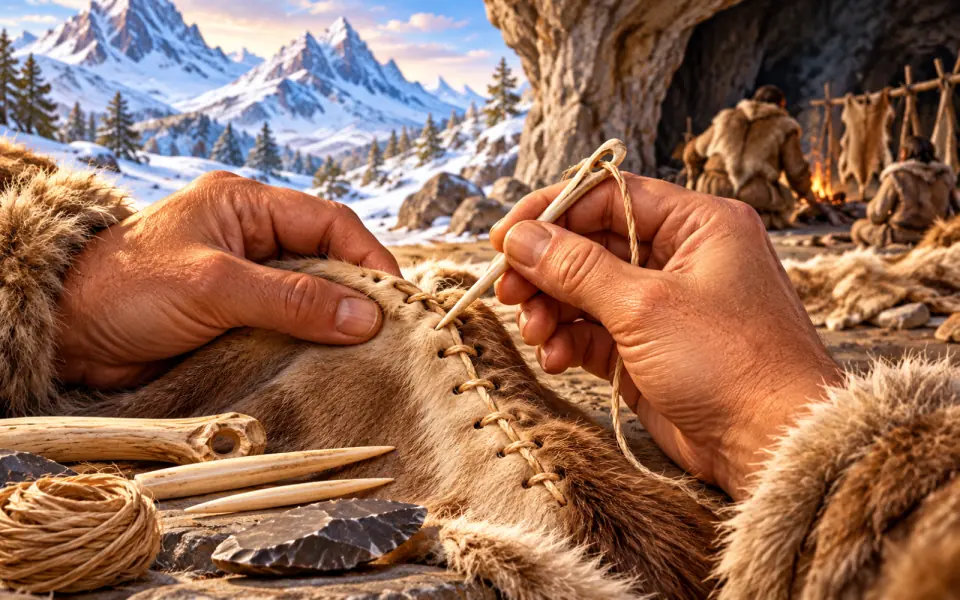 AfterThe needle with an eyeabout 48,000 years ago
 AfterThe first people in Australiaabout 48,000 years ago
 AfterThe cave art of Sulawesiabout 44,000 years ago
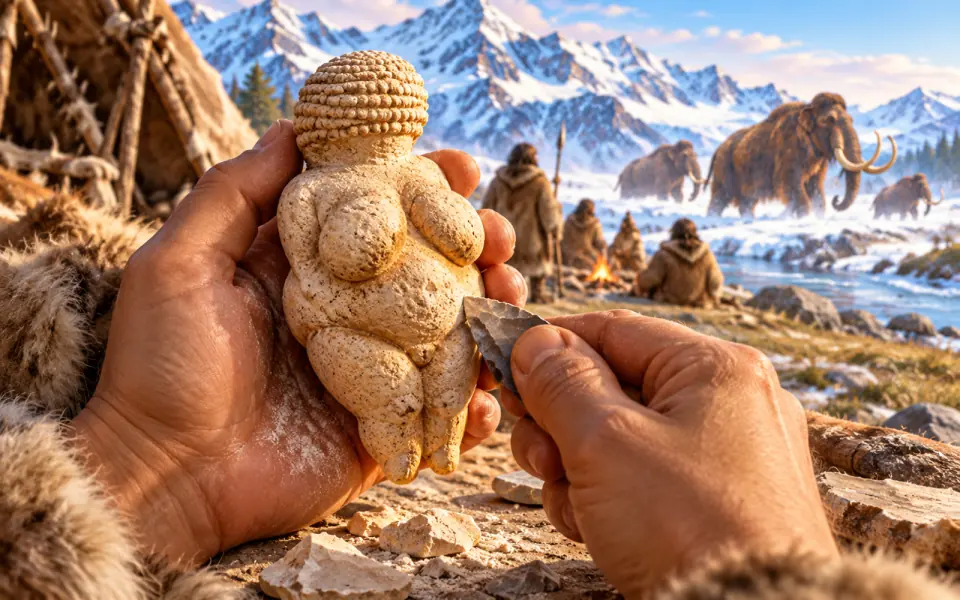 AfterThe Venus of Willendorfabout 28,000 years ago
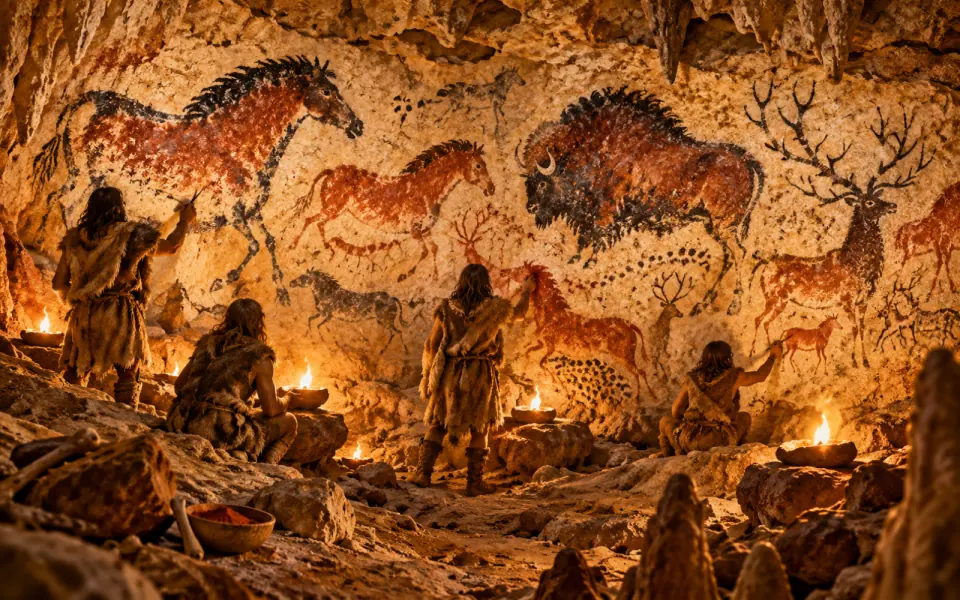 AfterThe Lascaux caveabout 19,000 years ago
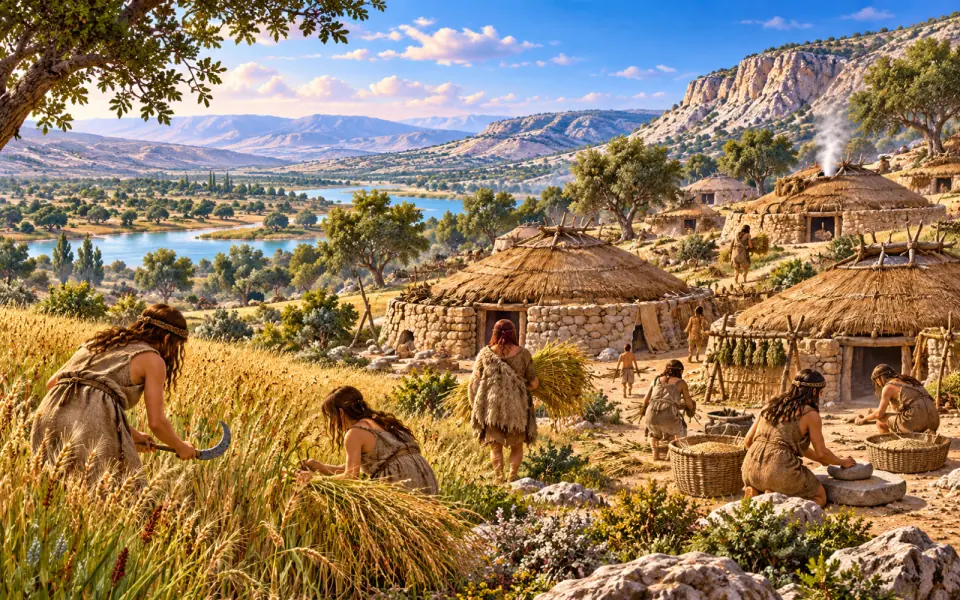 AfterThe first permanent villagesabout 14,000 years ago
 AfterThe Neolithic Revolutionabout 12,000 years ago
 AfterTaming the sheepabout 11,000 years ago
 AfterThe walls of Jerichoabout 10,300 years ago
 AfterPottery spreadsabout 9,000 years ago
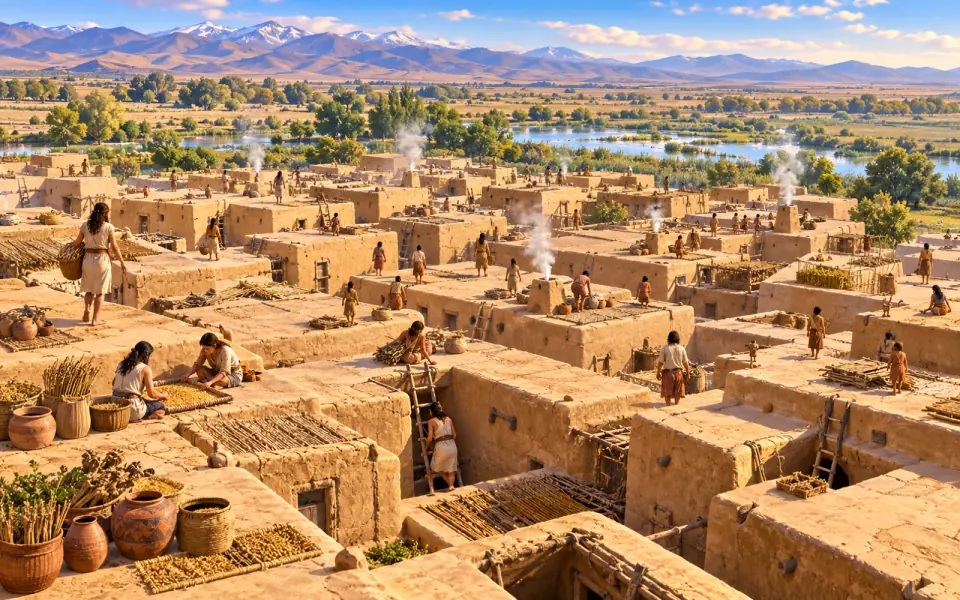 AfterÇatalhöyükabout 9,000 years ago
 AfterWorking with copperabout 7,000 years ago
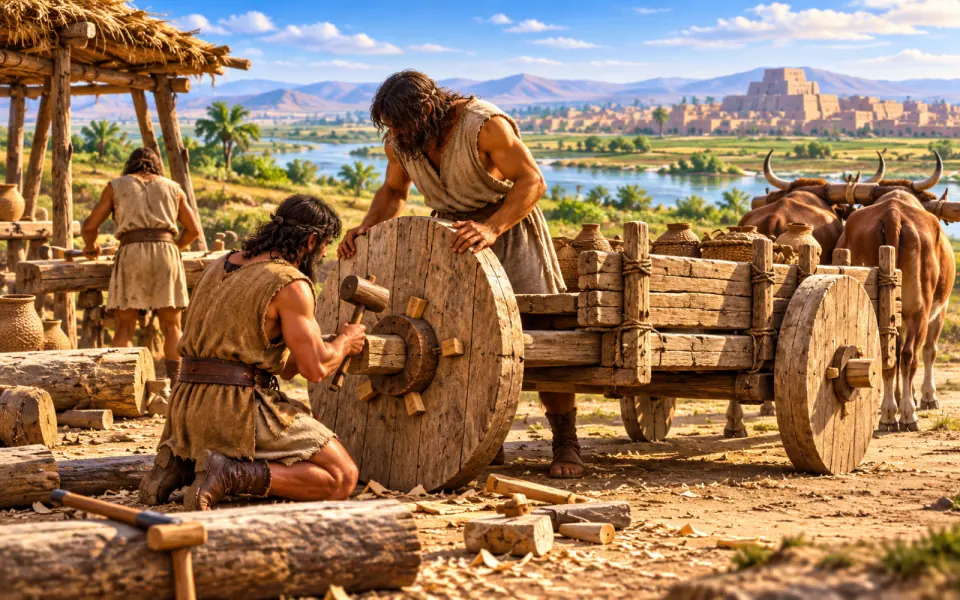 AfterThe invention of the wheelabout 5,500 years ago
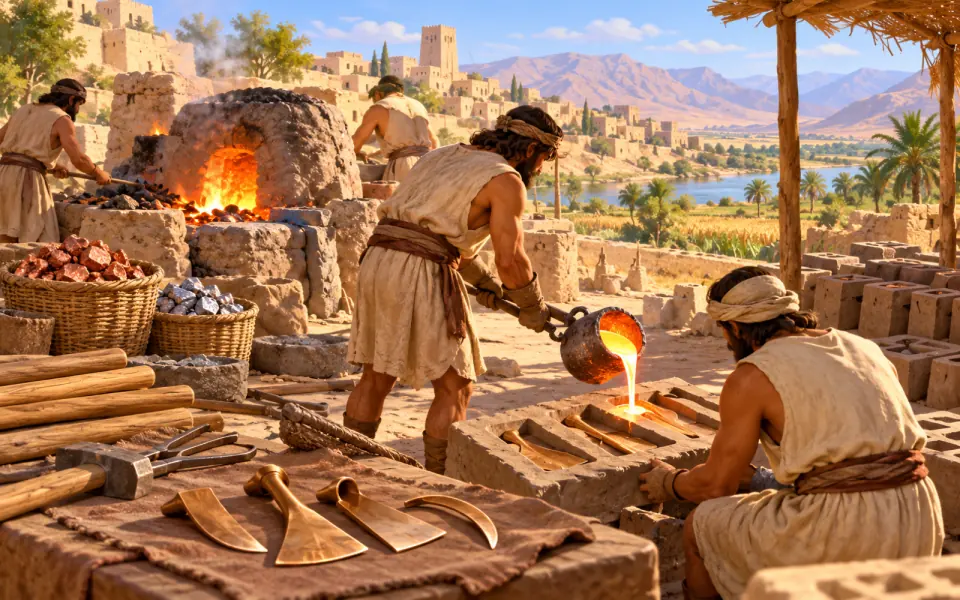 AfterThe Bronze Ageabout 5,300 years ago
Listen / Read next
- Music to read by: Cinematic JourneyEpic film-style music, no lyrics, by Ciro Simone IrmiciSpotifyYouTube Music
Other events of the era “Prehistory”
- The first hominins
- Lucy the australopithecine
- The first stone tools
- Homo habilis
- Taming fire
- Homo heidelbergensis
- Neanderthals
- The arrival of Homo sapiens
- The first deliberate burials
- Homo sapiens leaves Africa
- The needle with an eye
- The first people in Australia
- The cave art of Sulawesi
- The Venus of Willendorf
- The Lascaux cave
- The first permanent villages
- The Neolithic Revolution
- Taming the sheep
- The walls of Jericho
- Pottery spreads
- Çatalhöyük
- Working with copper
- The invention of the wheel
- The Bronze Age
