Lucy the australopithecine
about 3.2 million years ago Hadar, Ethiopia
In short
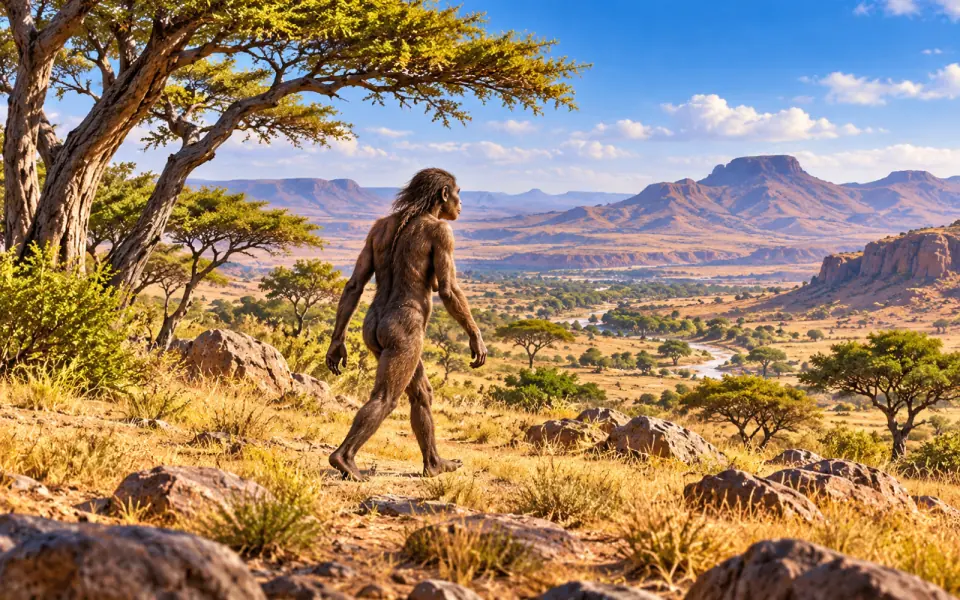
Lucy is the skeleton of a female australopithecine who lived about 3.2 million years ago in Ethiopia and was found in 1974. She was just over a metre tall and walked upright, but she could still climb trees well. About 40 per cent of her skeleton has survived.
Why it matters She proved that our ancestors walked on two legs long before they had big brains.
Source: Institute of Human Origins (Arizona State University), “Lucy's Story”
Study card about 5 minutes of reading
The story
A morning in the Afar desert
On the morning of 24 November 1974 the American Donald Johanson and his student Tom Gray left camp to check an area of Hadar, in the Afar desert in Ethiopia. It was already hot. On the side of a small gully Johanson noticed a fragment of bone sticking out of the earth: an arm bone. A little further on there was a piece of skull, then a rib, then part of a thigh bone and a jaw. They were bones from a single creature, not scattered by animals as so often happens. Over the next two days the whole team combed the slope and recovered hundreds of fragments: about 40 per cent of a skeleton, a very rare exception for fossils so old.
That evening the camp celebrated. A Beatles song, “Lucy in the Sky with Diamonds”, was playing on the radio, and someone suggested the name. The skeleton, catalogued as AL 288-1, became Lucy to everyone. In Ethiopia she also has a name in the Amharic language, Dinkinesh, which means “you are marvellous”.
What Lucy was like
Lucy was an adult of the species Australopithecus afarensis, “southern ape of the Afar”. She lived about 3.2 million years ago. She was a little over a metre tall and weighed perhaps thirty kilograms: a small creature with rather long arms, a brain of about 400 cubic centimetres (a third of ours) and a face with a jutting jaw. Her pelvis and legs clearly show that she walked upright. Her curved fingers and her long shoulders and arms are a reminder, though, that she could climb trees well, and perhaps slept and took refuge in them.
An even older clue to this way of walking had been the footprints of Laetoli, in Tanzania: a long trail of prints left about 3.7 million years ago in wet volcanic ash, made by individuals of the same species. They were discovered between 1976 and 1978 by Mary Leakey's team. Lucy now gave a body to those footsteps.
Why it made such a stir
Until then many scholars thought our ancestors had started to walk upright after they had developed a big brain. Lucy showed the opposite: her body was already almost human in the legs, while her head was still ape-like. So the order was: feet first, then brain. The find had worldwide echoes and put palaeoanthropology on the front pages.
The following year, in 1975, in the same place, the team found in a single spot the remains of at least thirteen individuals: the so-called “First Family”, perhaps a group that died together. Other discoveries in Ethiopia told the story of how these beings grew up: in 2000 at Dikika a girl of 3.3 million years ago was found, called Selam (“peace”), with her bones still almost intact. The name Lucy, however, remains the most famous.
Lucy after the discovery
The original skeleton is kept in the National Museum in Addis Ababa, Ethiopia, and is rarely shown; visitors to the museum usually see a copy. Between 2007 and 2013 the original remains travelled to the United States for a big exhibition, a much-debated decision because fossils are fragile. In 2016 a research group at the University of Texas, examining the fractures in the bones with tomography, suggested that Lucy died by falling from a tall tree. Other scholars think instead that the fractures happened after death, from the weight of the sediments. As always, science leaves the doubt open.
Lucy's place in the family tree is not certain either. For decades it was thought that A. afarensis was an ancestor of our genus Homo. Today many people more cautiously consider her a close relative of the species Homo came from, because the dates and the most recent fossils leave room for more possibilities. To understand such a distant age, new fossils matter a great deal: every digging season can change the story.
Why it happened
Lucy is a case of scientific good luck. More than three million years ago, in the place where she was found, there was a lake and a river plain, with sediments that quickly covered bodies. A body covered at once by mud or ash is preserved much better than one left in the open, where meat-eaters, wind and rain scatter the bones.
The discovery was also possible because, in the 1970s, international expeditions began to explore the African Rift systematically, the great crack in the Earth's crust where erosion brings very ancient rocks to the surface. Johanson worked at Hadar with the French geologist Maurice Taieb and the palaeontologist Yves Coppens.
Finally, Lucy's way of walking has its own causes: in an environment of woods and grasslands, walking upright was an economical way of getting around, and staying able to climb gave a refuge from predators.
What changed
Lucy changed the story of human origins: she showed that upright walking was much older than a large brain and that our story was not a straight race towards a big brain. Today every school textbook has a place for the australopithecines and for this tiny creature.
After her, palaeontologists have found hundreds of australopithecine fossils, and have learned to study them with new tools: CT scans, ever more precise radiometric dating, analysis of teeth and muscles. What we know today about how an australopithecine grew, what it ate and how it moved comes largely from those studies.
Lucy has also become a cultural symbol: she appears in museums all over the world, in comics and documentaries, and has given her name to a NASA space probe launched in 2021 to visit asteroids. The name reminds us that our story has roots in Africa, in a desert that is dry today but was once rich in water.
Key people and places
People
- Donald Johanson
- American palaeoanthropologist (born 1943). On 24 November 1974, with Tom Gray, he found the first bones of Lucy at Hadar in Ethiopia.
- Tom Gray
- An American student, then little more than twenty, who went with Johanson that morning and helped him recognise the bones.
- Yves Coppens
- French palaeontologist (1934–2022), one of the leaders of the international expedition to Ethiopia and one of the best-known scholars of human origins.
- Mary Leakey
- British archaeologist (1913–1996). Between 1976 and 1978 her team discovered the Laetoli footprints in Tanzania, left about 3.7 million years ago by australopithecines like Lucy.
Places
- Hadar, Afar region (Ethiopia)
- A desert area in north-eastern Ethiopia, famous for its very ancient fossils. Lucy and the “First Family” were found here.
- Laetoli (Tanzania)
- A place near Olduvai Gorge where a trail of footprints about 3.7 million years old shows australopithecines walking upright.
- National Museum, Addis Ababa (Ethiopia)
- The museum in the Ethiopian capital where Lucy's original remains are kept.
Good to know
- Forty per cent of a skeleton does not sound like much, but for a fossil 3.2 million years old it is a record: usually all that turns up is a tooth or a splinter.
- The name Lucy comes from a Beatles song that was playing in camp on the evening of the discovery; in Ethiopia she is also called Dinkinesh, “you are marvellous”.
- Lucy was about 1.07 metres tall: roughly like a six-year-old child today, but with the bones and muscles of an adult.
- In 2021 NASA launched a probe called Lucy, which has already visited two asteroids and will go on to study the ones near Jupiter. The first asteroid visited, in 2023, is called Dinkinesh, like Lucy's Ethiopian name.
- The Laetoli footprints were preserved by the ash of a volcano, the same ash that covered and protected them for over three million years.
Find out more
- Institute of Human Origins, “Lucy's Story” (in English) iho.asu.edu
- Smithsonian, Australopithecus afarensis page (in English) humanorigins.si.edu
- Wikipedia, “Australopithecus afarensis” en.wikipedia.org
- Wikipedia, “Human evolution” en.wikipedia.org
Related events
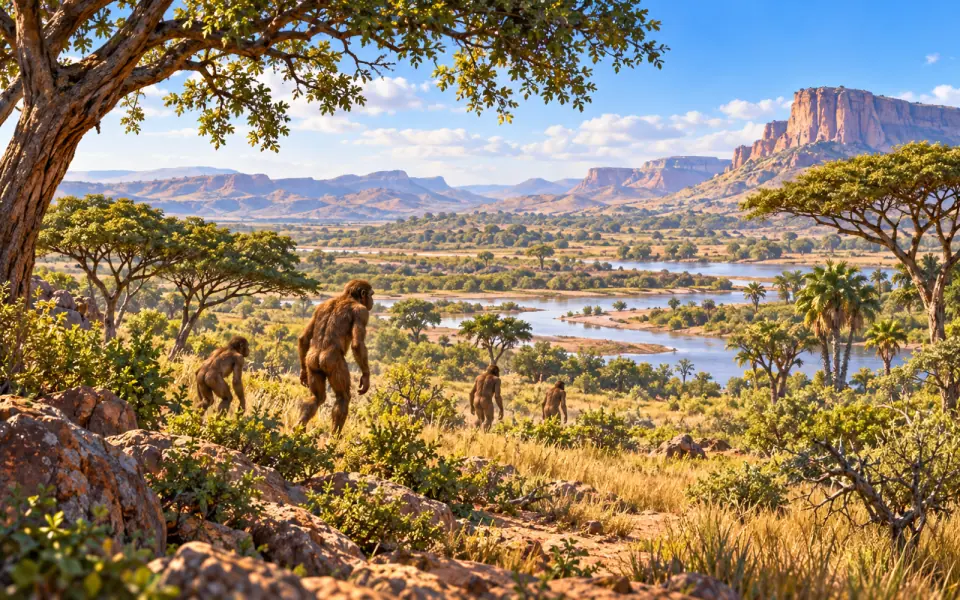
- The first homininsabout 7 million years ago · PrehistoryThe first hominins, such as Sahelanthropus, are Lucy's distant ancestors.
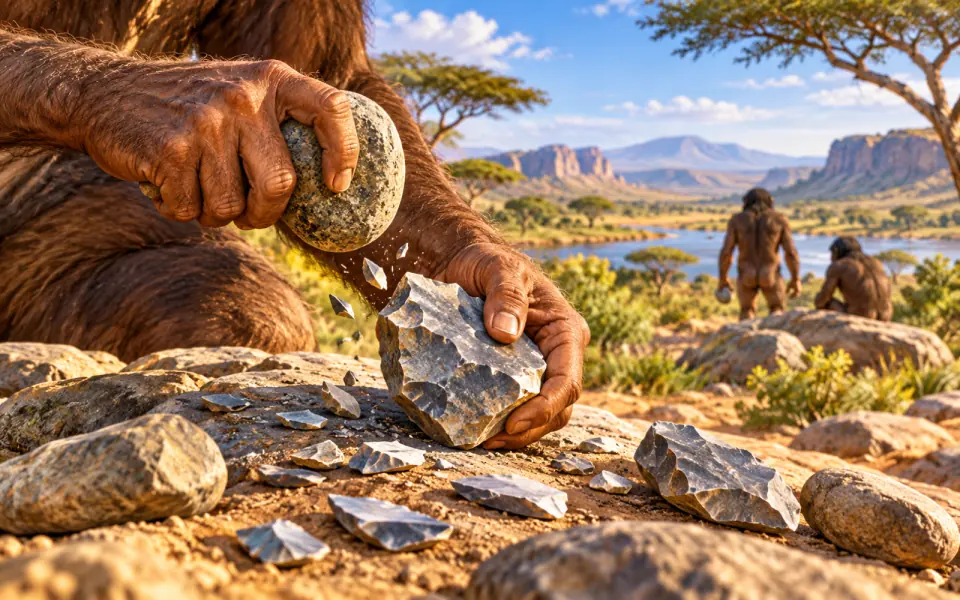
- The first stone toolsabout 2.6 million years ago · PrehistoryStone tools appeared a few hundred thousand years after Lucy.
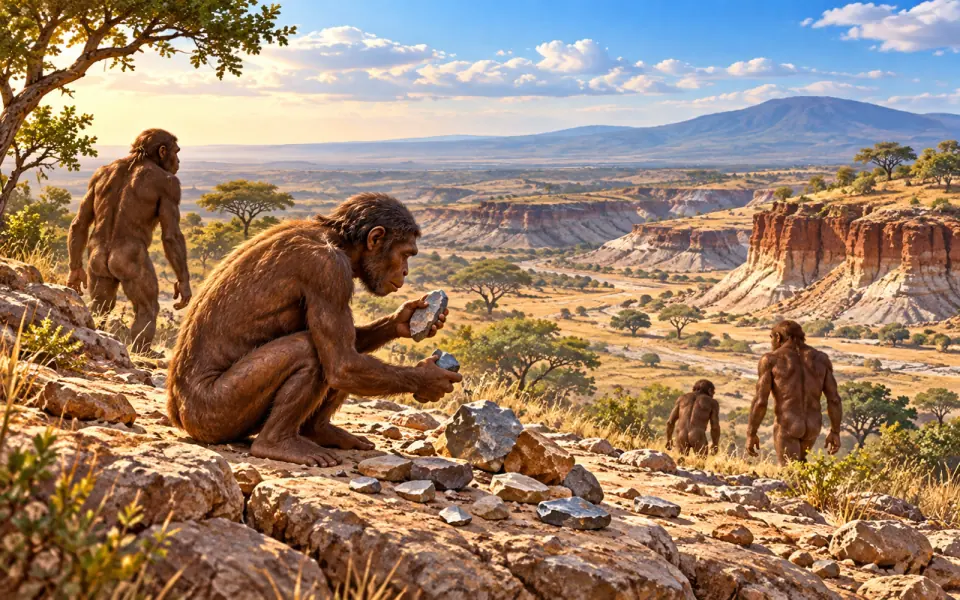
- Homo habilisabout 2.4 million years ago · PrehistoryHomo habilis, the first of our genus, descends from a species of australopithecine.
- Homo erectusabout 1.9 million years ago · PrehistoryHomo erectus had a tall, well-proportioned body, much more like ours than Lucy's.
- The arrival of Homo sapiensabout 300,000 years ago · PrehistoryHomo sapiens was also born in Africa, a very long time after Lucy.
Before and after, in the era “Prehistory”
Event 2 of 25
 BeforeThe first homininsabout 7 million years ago
- You are hereLucy the australopithecineabout 3.2 million years ago
 AfterThe first stone toolsabout 2.6 million years ago
 AfterHomo habilisabout 2.4 million years ago
 AfterHomo erectusabout 1.9 million years ago
 AfterTaming fireabout 790,000 years ago
 AfterHomo heidelbergensisabout 600,000 years ago
 AfterNeanderthalsabout 400,000 years ago
 AfterThe arrival of Homo sapiensabout 300,000 years ago
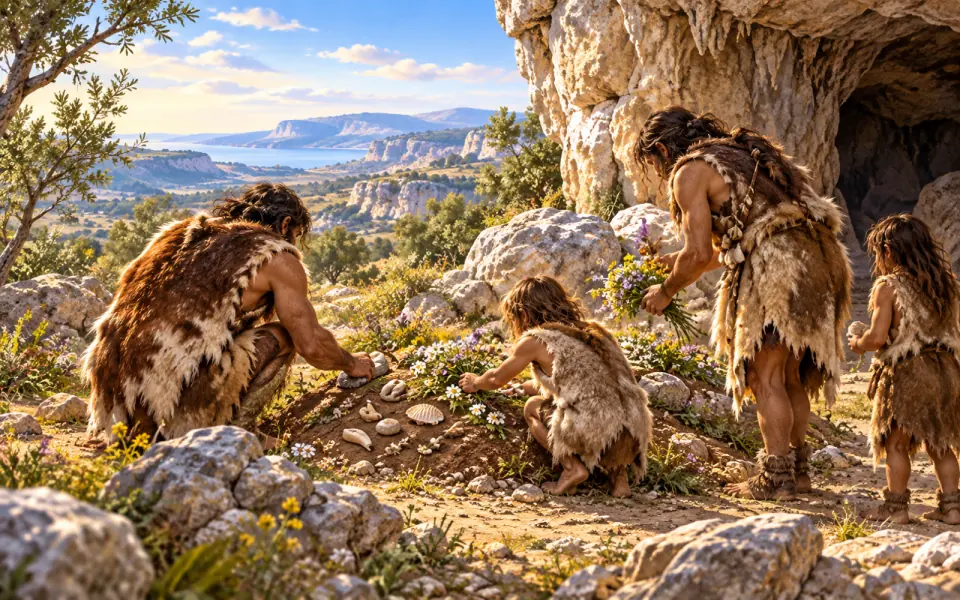 AfterThe first deliberate burialsabout 100,000 years ago
 AfterHomo sapiens leaves Africaabout 60,000 years ago
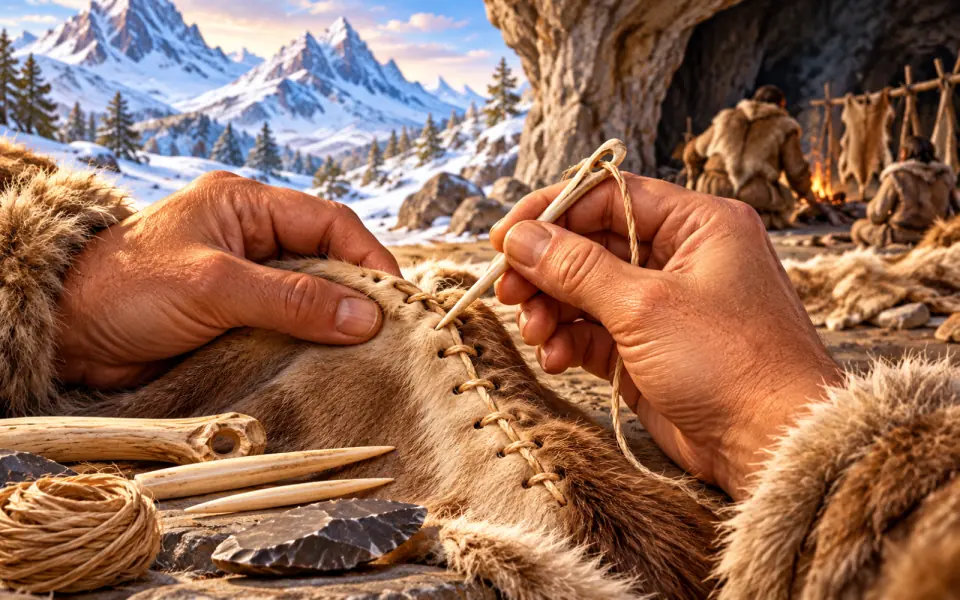 AfterThe needle with an eyeabout 48,000 years ago
 AfterThe first people in Australiaabout 48,000 years ago
 AfterThe cave art of Sulawesiabout 44,000 years ago
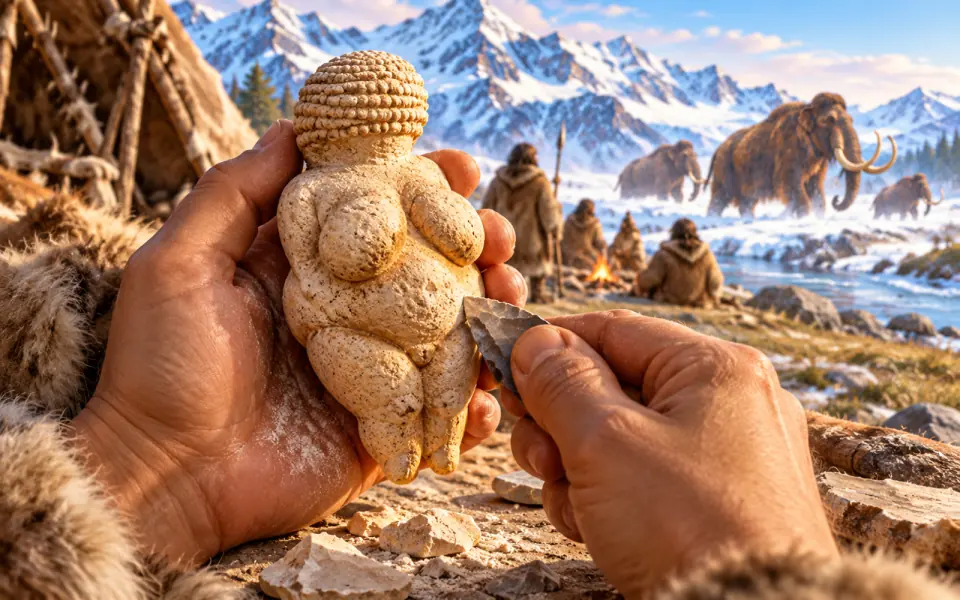 AfterThe Venus of Willendorfabout 28,000 years ago
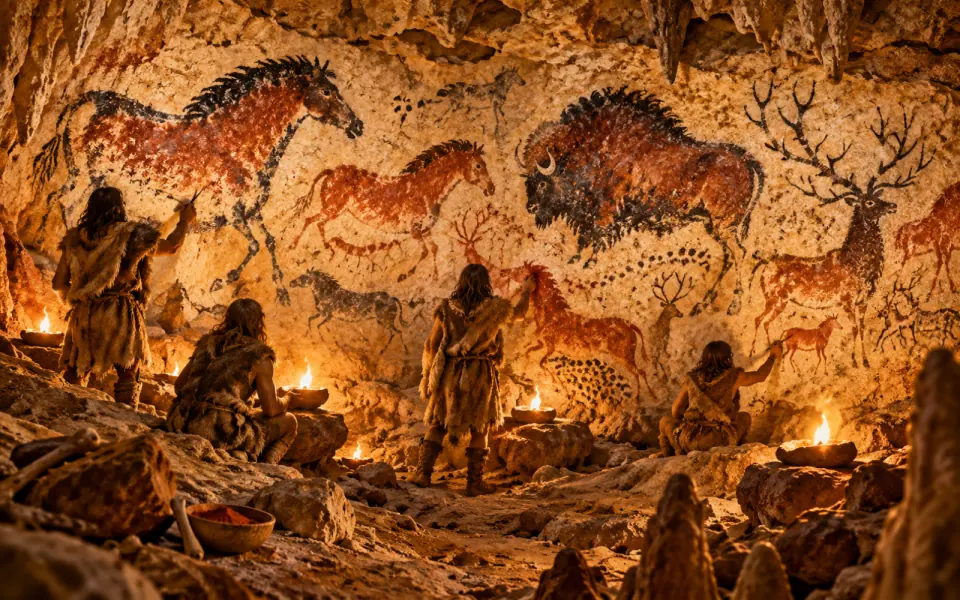 AfterThe Lascaux caveabout 19,000 years ago
 AfterThe first permanent villagesabout 14,000 years ago
 AfterThe Neolithic Revolutionabout 12,000 years ago
 AfterTaming the sheepabout 11,000 years ago
 AfterThe walls of Jerichoabout 10,300 years ago
 AfterPottery spreadsabout 9,000 years ago
 AfterÇatalhöyükabout 9,000 years ago
 AfterWorking with copperabout 7,000 years ago
 AfterThe invention of the wheelabout 5,500 years ago
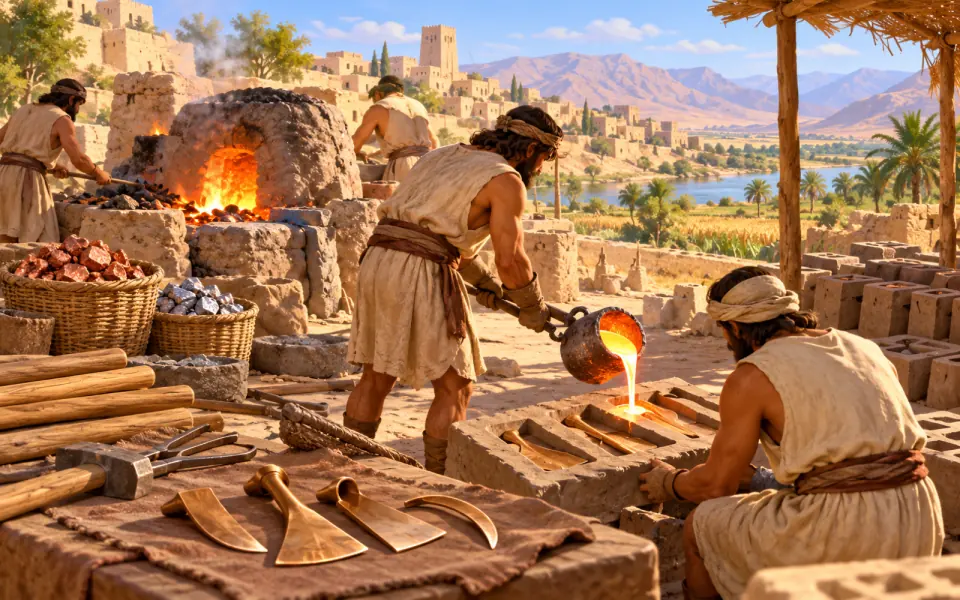 AfterThe Bronze Ageabout 5,300 years ago
Listen / Read next
- Music to read by: Cinematic JourneyEpic film-style music, no lyrics, by Ciro Simone IrmiciSpotifyYouTube Music
Other events of the era “Prehistory”
- The first hominins
- The first stone tools
- Homo habilis
- Homo erectus
- Taming fire
- Homo heidelbergensis
- Neanderthals
- The arrival of Homo sapiens
- The first deliberate burials
- Homo sapiens leaves Africa
- The needle with an eye
- The first people in Australia
- The cave art of Sulawesi
- The Venus of Willendorf
- The Lascaux cave
- The first permanent villages
- The Neolithic Revolution
- Taming the sheep
- The walls of Jericho
- Pottery spreads
- Çatalhöyük
- Working with copper
- The invention of the wheel
- The Bronze Age
