Çatalhöyük
about 9,000 years ago Çatalhöyük, Turkey
In short
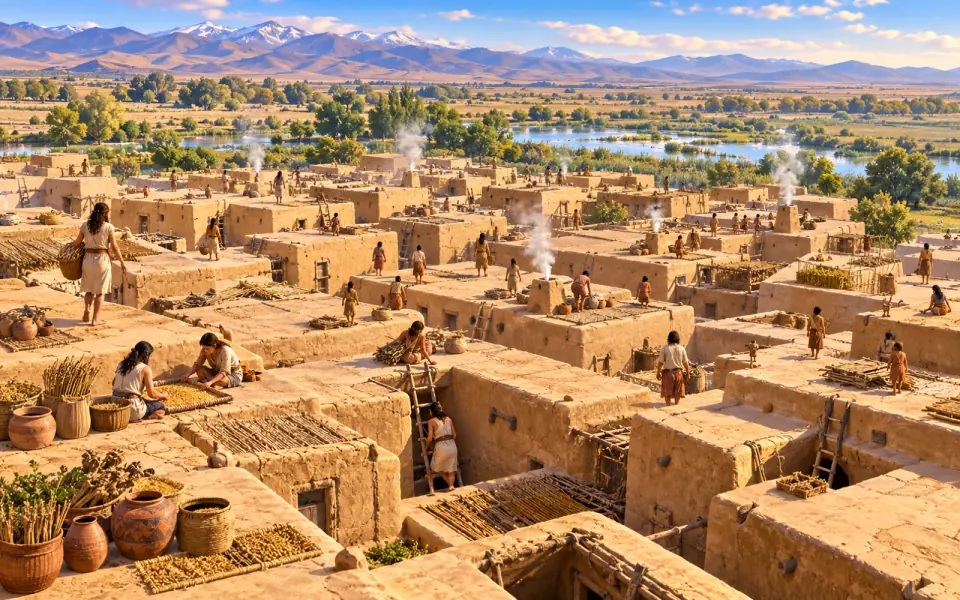
Çatalhöyük, in Turkey, was a large village of mud-brick houses packed tightly together, with no streets: people went in through the roof using a ladder. Perhaps a few thousand people lived there for more than a thousand years. The walls were decorated with paintings and bulls' heads.
Why it matters It is one of the best-known Neolithic villages and is now a UNESCO World Heritage Site.
Source: Treccani, entry “Çatal Hüyük”
Study card about 5 minutes of reading
The story
A city without streets
If you could look down on Çatalhöyük, in Turkey, about 9,000 years ago, you would not see streets or squares, but a spread of flat roofs, all at the same level, one next to another, like the keys of a keyboard. The houses were joined, with shared walls, with no space in between. Walking round the village meant walking on the roofs, from one house to another, and to enter a house you had to climb down through an opening in the ceiling by a wooden ladder. The smoke from the hearth went out through the same opening.
The name Çatalhöyük is Turkish and means “fork mound”: “çatal” is a fork and “höyük” an artificial hill, formed, as at Jericho, by layers of villages one on top of another. The place is in the Konya plain, in the centre of Anatolia. Today it is a field of dry grass with two mounds, one bigger and one smaller, but once marshes, reed beds and fields stretched around it.
From discovery to modern excavations
The mound was noticed in 1958 by the British archaeologist James Mellaart, who recognised it as an important place. From 1961 to 1965 he dug it and brought to light houses with wall paintings that nobody expected, and a clay statuette of a seated woman with two big cats at her sides. Mellaart thought she was a “Mother Goddess”, and Çatalhöyük became famous all over the world. After him, from 1993, a new research team led by the English archaeologist Ian Hodder, with scholars from many countries, resumed the excavations with modern techniques: chemical analyses, the study of seeds, of animal bones, of DNA. These studies have corrected many ideas of the past, and today it is thought that the “Mother Goddess” is too simple an interpretation.
How people lived
The village was inhabited for more than a thousand years, from about 7100 to 5700 BC. How many people lived there is not certain: older estimates spoke of thousands of people (from about 3,500 to 8,000), but a recent study, from 2024, puts the average at 600–800 inhabitants at the peak, because the houses were not all occupied at the same time. It was still a very large settlement for its time.
The houses were rectangular, made of unbaked mud brick, and usually had one main room. On the south side there were a hearth and an oven; along the walls, raised platforms where people sat, worked and slept. The walls were plastered white with a lime made from clay and redone many times. Under the platforms the dead were buried, sometimes many people in the same house, sometimes with beads, tools and textiles. Children grew up together with their ancestors.
The inhabitants ate wheat, barley, lentils and peas, kept sheep and goats and hunted aurochs, deer and wild boar. They made terracotta pots, wooden bowls and baskets, and made jewellery and mirrors from obsidian, a black volcanic glass that came from volcanoes in Cappadocia, many kilometres away: a sign of well-organised trade.
Paintings, bull heads and symbols
The walls of many houses were decorated with red and black paintings: men hunting a big wild bull, vultures, geometric designs, handprints. In others there were bulls' heads and cattle horns, called “bucrania” by archaeologists, set into plaster like trophies. Some rooms had reliefs of leopards. These images certainly had a religious or symbolic meaning, but what it was is still largely a mystery.
A painting found by Mellaart, with a series of squares and a big pattern of dots, has been interpreted as a map of the village with a volcano erupting in the background, perhaps Hasan Dağ. It would be the oldest known map. Many scholars, however, doubt this reading and think it is only a decorative motif.
Why it was abandoned
Around 5700 BC the village was gradually abandoned. Perhaps the climate had become drier, perhaps the river had changed course, or the fields had been overused. People moved to the nearby hill and then to other places. None of this is entirely certain.
Today Çatalhöyük is one of the most studied sites of the Neolithic and, since 2012, has been part of the UNESCO World Heritage List.
Why it happened
Çatalhöyük arose in a rich place: a fertile plain, with a river that brought water and fertile mud, and with nearby mountains that gave stone and obsidian. The inhabitants, who already knew farming and herding, could count on plentiful food and many resources.
Living close together had advantages: people could defend themselves, help one another, exchange food and objects. The type of house, with shared walls and entrance from the roof, gave security and warmth. But it needed many rules about what could be done and who owned what.
The most recent excavations suggest that the society was not very hierarchical: the houses are similar to one another and there is no obvious palace or temple. Power seems to have been divided among families.
What changed
Çatalhöyük shows that already 9,000 years ago people knew how to live in large communities of hundreds of inhabitants, long before the cities of Mesopotamia. It changes the idea of a history that moves forward in regular steps: here is already something close to a small town, without kings, without writing and without walls.
It has also shown the problems of crowded life. In the remains there are traces of disease, infection and poor nutrition, of violence in certain periods, and layers of rubbish piled up in the gaps between houses. Living together needed new solutions, and they did not always work.
For research, the site is a model: scholars work with international teams, publish the data and involve the local community. Many methods used in archaeology today, such as the study of micro-traces in floors, were tried out here.
Key people and places
People
- James Mellaart
- British archaeologist (1925–2012). He discovered Çatalhöyük in 1958 and dug it from 1961 to 1965.
- Ian Hodder
- British archaeologist (born 1948), now at Stanford University. He has directed the excavations at Çatalhöyük since 1993 and changed many ideas about how its inhabitants lived.
Places
- Çatalhöyük (Konya plain, Turkey)
- Two artificial mounds in the Konya plain, in central Anatolia, with the remains of a big village of 9,000 years ago.
- Hasan Dağ (Turkey)
- A volcano in central Anatolia, near Cappadocia, from which the obsidian used at Çatalhöyük came.
- Konya (Turkey)
- A city in central Anatolia, the nearest to the site, today also famous for the whirling dervishes.
Good to know
- The houses of Çatalhöyük were rebuilt about every seventy to a hundred years on the same spot, and over a thousand years this formed the mounds of layers.
- The statuette of the “seated woman” found by Mellaart in a grain store is about 12 centimetres tall and is kept in the Museum of Anatolian Civilisations in Ankara.
- At Çatalhöyük obsidian was also used to make a kind of mirror, polished until it reflected a face.
- The word “bucranium” comes from the Greek bous, “ox”, and kranion, “skull”: the bull's head will return in many civilisations, from Egypt to Crete.
- At Çatalhöyük the earth from the excavations is washed with water in big tanks to recover even the tiniest seeds and bones, which tell us what was eaten.
Find out more
- Wikipedia, “James Mellaart” en.wikipedia.org
- Wikipedia, “Çatalhöyük” en.wikipedia.org
- Wikipedia, “Ian Hodder” en.wikipedia.org
- Wikipedia, “Neolithic” en.wikipedia.org
Related events
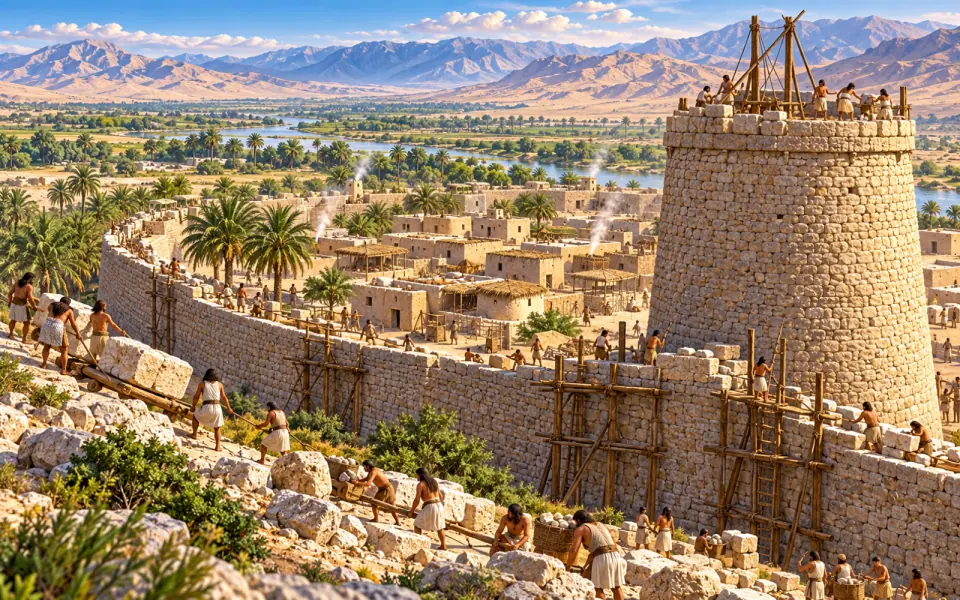
- The walls of Jerichoabout 10,300 years ago · PrehistoryJericho, in another region, was a fortified village a few millennia earlier.
- The Neolithic Revolutionabout 12,000 years ago · PrehistoryThe inhabitants lived by farming and herding.
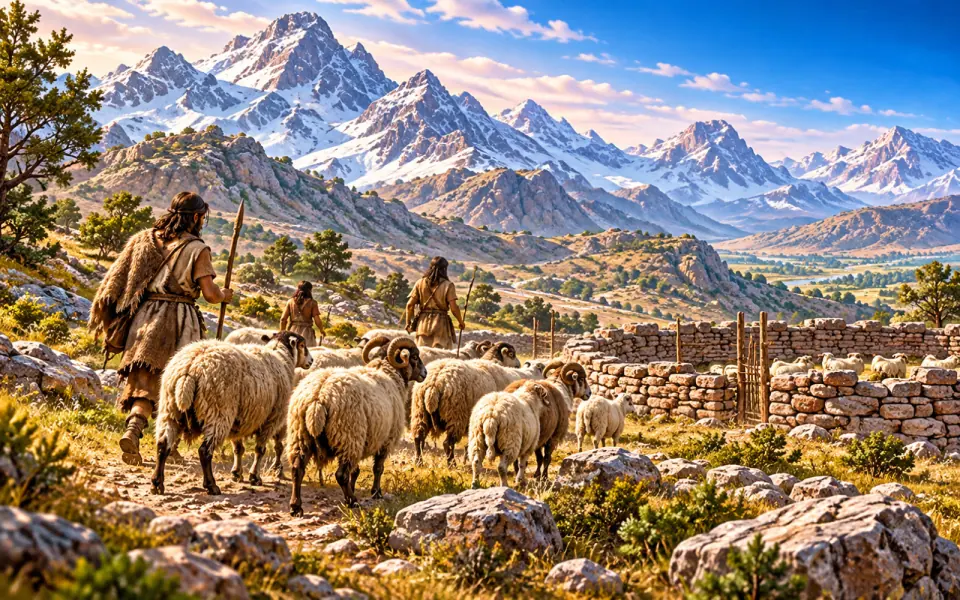
- Taming the sheepabout 11,000 years ago · PrehistorySheep and goats were the basis of herding at Çatalhöyük.
- The first Sumerian citiesabout 4000 BC · River civilisationsThe first Sumerian cities arose a few millennia later.
- Minoan civilisation on Creteabout 2000 BC · Sea civilisationsBulls' heads returned in Crete, in the palaces of the Minoan civilisation.
Before and after, in the era “Prehistory”
Event 22 of 25
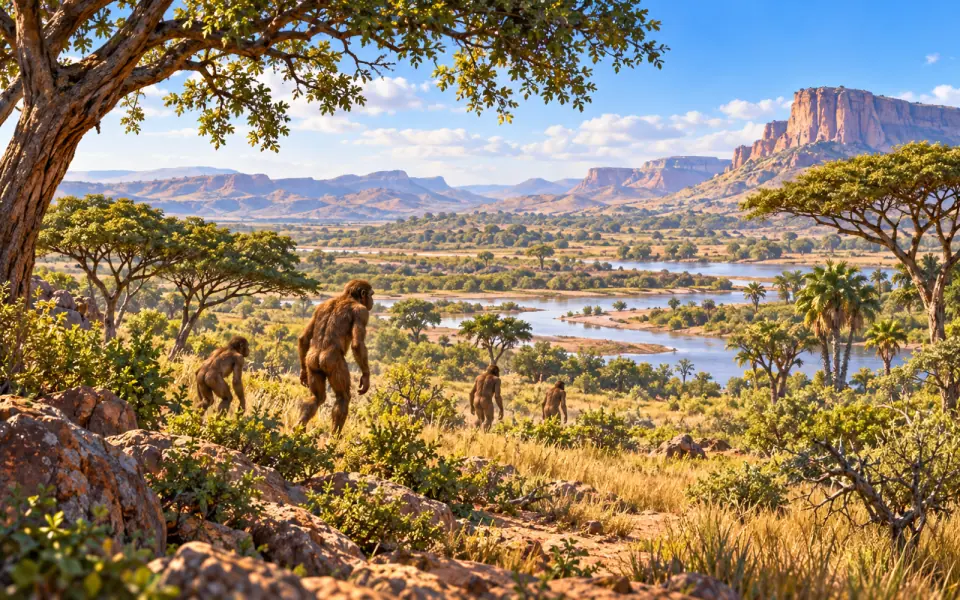 BeforeThe first homininsabout 7 million years ago
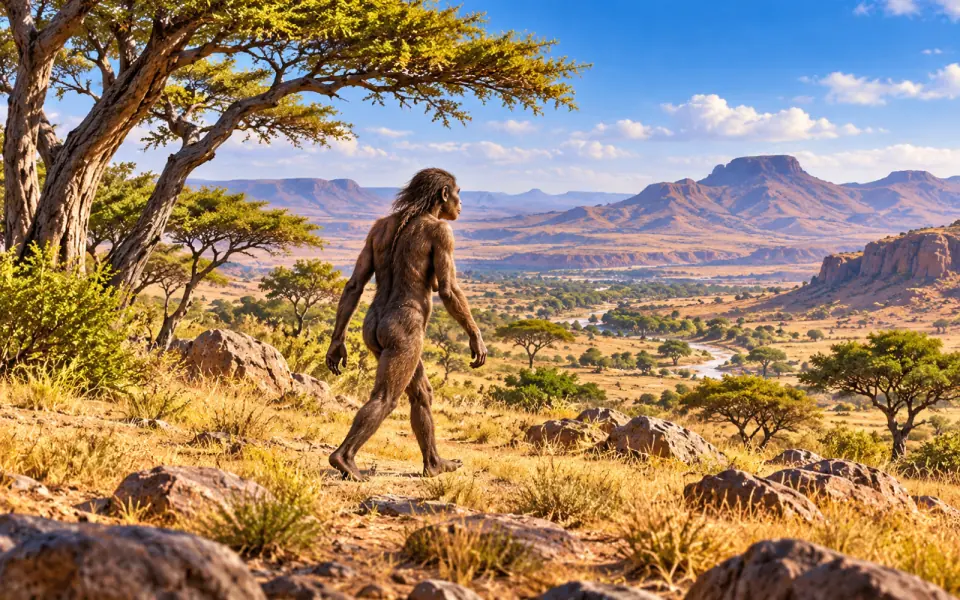 BeforeLucy the australopithecineabout 3.2 million years ago
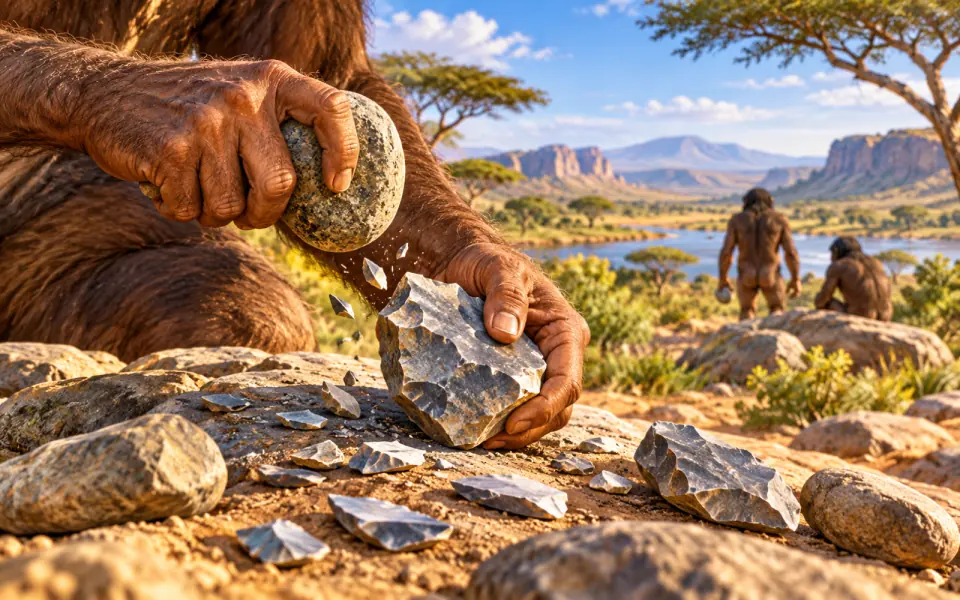 BeforeThe first stone toolsabout 2.6 million years ago
 BeforeHomo habilisabout 2.4 million years ago
 BeforeHomo erectusabout 1.9 million years ago
 BeforeTaming fireabout 790,000 years ago
 BeforeHomo heidelbergensisabout 600,000 years ago
 BeforeNeanderthalsabout 400,000 years ago
 BeforeThe arrival of Homo sapiensabout 300,000 years ago
 BeforeThe first deliberate burialsabout 100,000 years ago
 BeforeHomo sapiens leaves Africaabout 60,000 years ago
 BeforeThe needle with an eyeabout 48,000 years ago
 BeforeThe first people in Australiaabout 48,000 years ago
 BeforeThe cave art of Sulawesiabout 44,000 years ago
 BeforeThe Venus of Willendorfabout 28,000 years ago
 BeforeThe Lascaux caveabout 19,000 years ago
 BeforeThe first permanent villagesabout 14,000 years ago
 BeforeThe Neolithic Revolutionabout 12,000 years ago
 BeforeTaming the sheepabout 11,000 years ago
 BeforeThe walls of Jerichoabout 10,300 years ago
 BeforePottery spreadsabout 9,000 years ago
- You are hereÇatalhöyükabout 9,000 years ago
 AfterWorking with copperabout 7,000 years ago
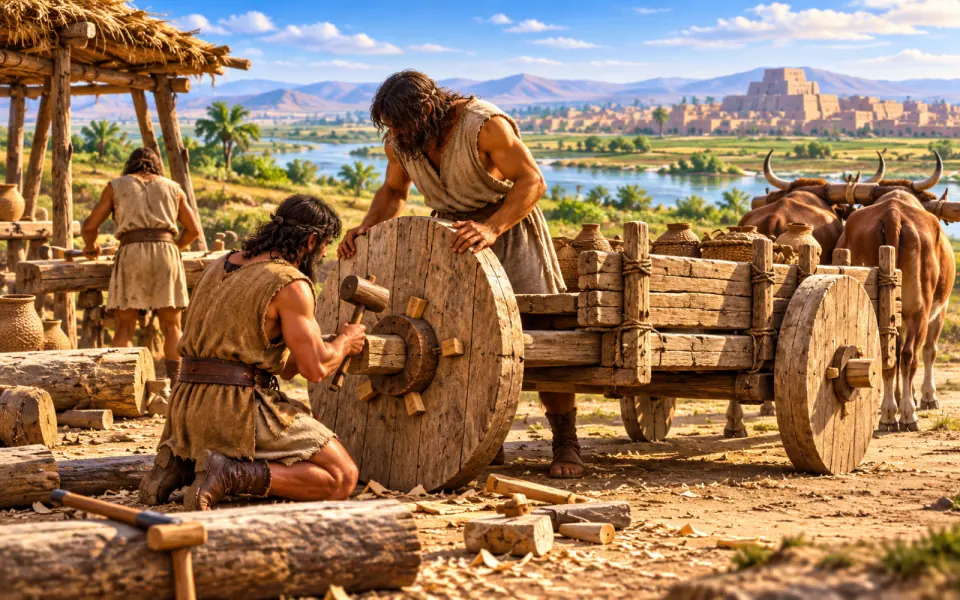 AfterThe invention of the wheelabout 5,500 years ago
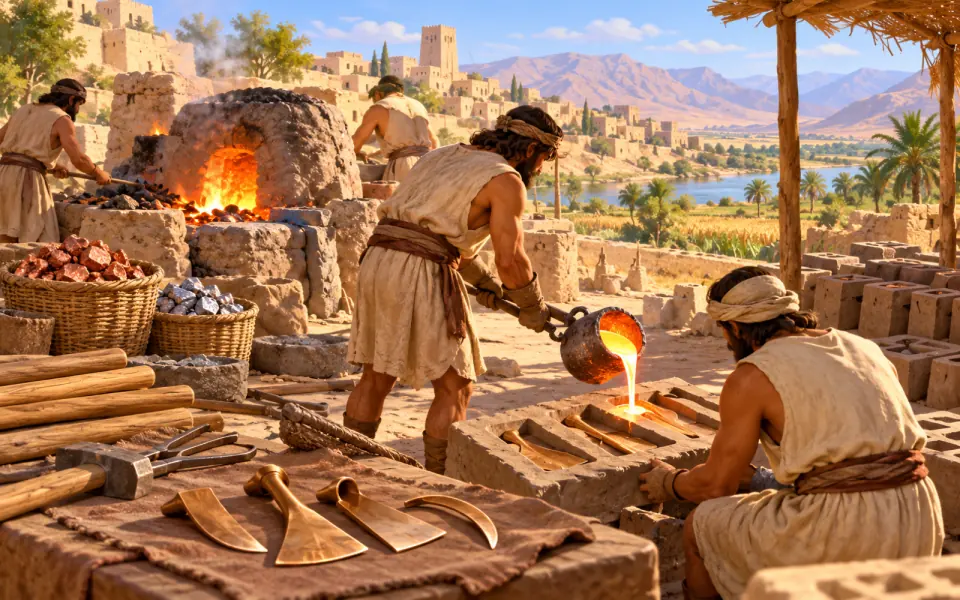 AfterThe Bronze Ageabout 5,300 years ago
Listen / Read next
- Music to read by: Cinematic JourneyEpic film-style music, no lyrics, by Ciro Simone IrmiciSpotifyYouTube Music
Other events of the era “Prehistory”
- The first hominins
- Lucy the australopithecine
- The first stone tools
- Homo habilis
- Homo erectus
- Taming fire
- Homo heidelbergensis
- Neanderthals
- The arrival of Homo sapiens
- The first deliberate burials
- Homo sapiens leaves Africa
- The needle with an eye
- The first people in Australia
- The cave art of Sulawesi
- The Venus of Willendorf
- The Lascaux cave
- The first permanent villages
- The Neolithic Revolution
- Taming the sheep
- The walls of Jericho
- Pottery spreads
- Working with copper
- The invention of the wheel
- The Bronze Age
