Plautus and comedy
about 200 BC Rome (Plautus was born in Sarsina, in Romagna)
In short
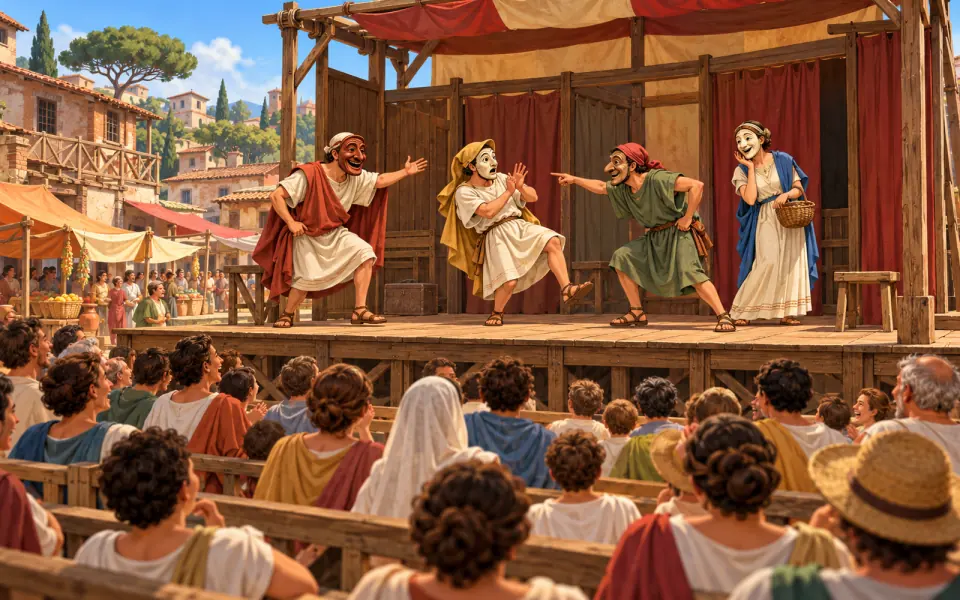
Titus Maccius Plautus, born in Sarsina in Romagna, was the most famous writer of comedies in ancient Rome. His stories were full of cunning servants, gullible masters, mistaken identities and mixed-up twins. Audiences laughed in wooden theatres put up for festivals, because Rome's first stone theatre came more than a century later. His comedies, such as the Aulularia, about a miser with a pot of gold, inspired writers like Shakespeare and Molière.
Why it matters Many plots in today's comedies and films come from the jokes and mix-ups Plautus invented.
Source: Treccani, entry “Plauto, Tito Maccio”
Study card about 6 minutes of reading
The story
An author who made the Romans laugh
Have you ever laughed at a case of mistaken identity, at a servant cleverer than his master, at an old miser hiding a treasure? These situations, which we find in comedies and films today, are more than two thousand years old. They were brought onto the stage in Rome by an author called Titus Maccius Plautus, the most famous writer of comedies in ancient Rome.
We know less about Plautus than we would like. He was born at Sarsina, a small town in the Apennines which in antiquity lay in Umbria and which today is part of Romagna. He died in Rome in 184 BC: this date is certain. We do not know the year of his birth precisely, and scholars work it out from a remark by Cicero, between 255 and 250 BC. He was not Roman by birth but he was a free man. An old legend had him forced to work at a mill wheel to earn a living, but scholars today consider it invented.
Even his name is a small mystery. “Maccius” seems linked to Maccus, the name of a comic mask in popular farces. “Plautus”, according to ancient authors, would be a nickname meaning “flat-footed”. Perhaps Plautus worked in the world of the theatre as an actor or as an author of farces, but about this too there is no certainty.
Greek comedies in Roman versions
Plautus did not invent his plots from scratch. He took Greek comedies, above all of the so-called “New Comedy”, which told stories of families and lovers, and rewrote them in Latin for the Roman public. He often combined several Greek comedies into one, a technique the Romans called contaminatio. Comedies in Greek dress, with Greek characters and settings, were called palliatae, from the pallium, the Greeks' cloak. For one of his comedies, the Bacchides, the model was a text by the great Greek playwright Menander.
His success was enormous. According to ancient scholars, about 130 comedies circulated under Plautus's name. The learned Varro chose 21 that he considered certainly his. Of these, 20 have come down to us complete, and one, the Vidularia, only in pieces.
The characters and the tricks of comedy
In Plautus's comedies the same types of character always come back, like the cards in a pack. There is the old miser or old man in love, the young man in love, the boastful soldier who brags about deeds he never did, the parasite who eats at other people's expense and the slave trader. And above all there is the clever slave, who with a series of tricks helps the young master get what he wants. In a world where slavery was normal, seeing on the stage the slave cleverer than his master made people laugh and was also a small revenge.
Some comedies have remained famous. The Aulularia, the “comedy of the pot”, tells of an old miser, Euclio, who hides a pot full of gold and lives in terror that someone will steal it. The Menaechmi is about two twins separated as children who find themselves in the same city, and everyone mistakes one for the other: it is the prototype of the comedy of errors. The Miles gloriosus has a boastful soldier as its main character. The Amphitryon is the only comedy by Plautus with a story inspired by mythology. The Pseudolus has a tricky slave as its hero. The Captivi, “The Prisoners”, is an unusual comedy, with no love plots.
Plautus was also a master of language. He mixed words from everyday speech, Greek words, invented words, puns and double meanings. His comedies were partly sung, with musical accompaniment. The comedy came from the situations: the mistaken identities, the disguises, the misunderstandings.
Where were they performed?
In Rome, in Plautus's time, there was no permanent theatre. The comedies were staged during public festivals in temporary wooden structures, put up for the occasion and then taken down. Roman law, in fact, forbade stone theatres: only temporary wooden constructions were allowed, near places of worship. The first stone theatre in Rome was built much later by Pompey, and finished in 55 BC: to get around the Senate's ban he had it built as a great flight of steps leading up to a temple, the Temple of Venus Victrix.
Plautus's legacy
After his death Plautus's comedies continued to be performed and studied. The Menaechmi was the source of William Shakespeare's The Comedy of Errors. In 1962 a Broadway musical, A Funny Thing Happened on the Way to the Forum, took its inspiration from the Miles gloriosus and the Pseudolus; the director Richard Lester later made it into a film. When we laugh at a misunderstanding in a comedy today, we are using without knowing it one of the tricks that Plautus had already perfected.
Why it happened
In Rome the theatre was born at public festivals, the ludi, offered by magistrates to honour the gods and entertain the people. In the 3rd century BC, after the conquest of southern Italy, the Romans had come into contact with Greek culture, and among the things the city copied with enthusiasm was the theatre.
Plautus arrived at the right moment. The public wanted to laugh and wanted new stories: he took the Greek comedies and adapted them to Roman taste, with lively language, popular jokes and songs. His comedies are not translations, but free rewritings, designed to amuse the spectators.
What changed
Plautus's comedies are among the very first complete texts in Latin that we possess. For this reason they are also valuable for understanding how ordinary Romans spoke, with popular expressions and puns. For linguists they are a treasure.
The characters Plautus made famous, the old miser, the boastful soldier, the clever slave, the confused twins, have come back in many later comedies. It is no accident that many comic stories today, in the theatre, in the cinema and on television, use misunderstandings, mistaken identities and clever servants, just as he did.
The form of the theatre followed its own path too: from temporary wooden stages the Romans passed, with Pompey, to the permanent stone theatre, and then to many Roman theatres across the empire. Many of these can still be visited, and some are still used for summer performances.
Key people and places
People
- Titus Maccius Plautus
- Comic author born at Sarsina and died in Rome in 184 BC. Twenty complete comedies of his survive.
- Menander
- Great Greek playwright of the “New Comedy”: Plautus took from him the model for some of his comedies.
- Varro
- Roman scholar of the 1st century BC who chose 21 comedies considered certainly Plautus's.
- William Shakespeare
- English author (1564–1616) who took inspiration from Plautus's Menaechmi for The Comedy of Errors.
Places
- Sarsina
- Small town in the Apennines, in present-day Romagna, where Plautus was born.
- Rome
- The city where Plautus worked and where his comedies were staged during public festivals.
- Theatre of Pompey
- The first stone theatre in Rome, finished in 55 BC: it could hold about 17,500 spectators.
Good to know
- Of about 130 comedies that circulated under Plautus's name, ancient scholars considered 21 to be certainly his.
- The Menaechmi, the comedy of the twins, inspired Shakespeare's The Comedy of Errors.
- The name “Plautus” may be a nickname that meant “flat-footed”.
- In Rome stone theatres were forbidden: Pompey got around the ban by building a theatre as the steps of a temple.
- In 1962 a Broadway musical took its inspiration from two comedies by Plautus.
Find out more
- World History Encyclopedia, “Plautus” worldhistory.org
- Wikipedia, “Plautus” en.wikipedia.org
- Wikipedia, “Theatre of Pompey” en.wikipedia.org
- Wikipedia, “Aulularia” en.wikipedia.org
Related events
- The theatre of Aeschylus472 BC · Ancient GreeceThe Greek theatre of Aeschylus is the model from which the Roman theatre too was born.
- The Greek alphabetabout 750 BC · Ancient GreeceThe Greek alphabet, from which Latin comes, made it possible to write these comedies.
- Shakespeare's theatreabout 1590 · Early modern ageShakespeare took inspiration from Plautus for one of his comedies.
- The murder of Julius Caesar44 BC · Ancient RomeCaesar was killed in the Curia of Pompey, next to the theatre that hosted the comedies.
- Virgil and the Aeneid19 BC · Ancient RomeVirgil and Plautus are two of the great authors of Latin.
Before and after, in the era “Ancient Rome”
Event 7 of 25
 BeforeTraditional founding of Romeabout 753 BC
 BeforeBirth of the Roman Republicabout 509 BC
 BeforeThe Laws of the Twelve Tablesabout 450 BC
 BeforeThe Appian Way312 BC
 BeforeThe First Punic War264–241 BC
 BeforeHannibal crosses the Alps218 BC
- You are herePlautus and comedyabout 200 BC
 AfterRoman concreteabout 150 BC
 AfterThe Aqua Marcia aqueduct144–140 BC
 AfterSpartacus leads the revolt73–71 BC
 AfterCaesar crosses the Rubicon49 BC
 AfterThe Julian calendar46 BC
 AfterThe murder of Julius Caesar44 BC
 AfterAugustus, the first emperor27 BC
 AfterThe Pax Romana27 BC – AD 180
 AfterVirgil and the Aeneid19 BC
 AfterPompeii buried by VesuviusAD 79
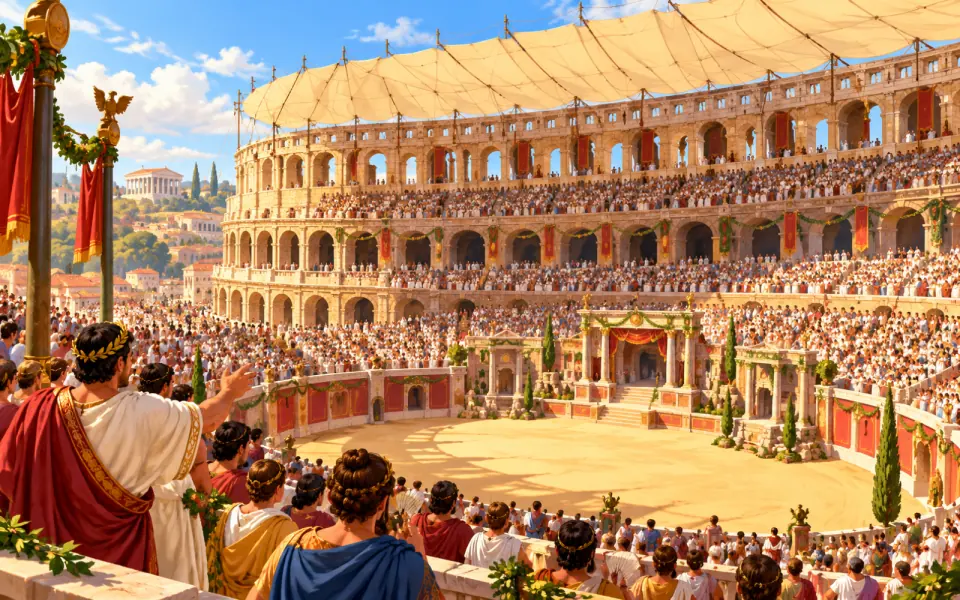 AfterThe Colosseum opensAD 80
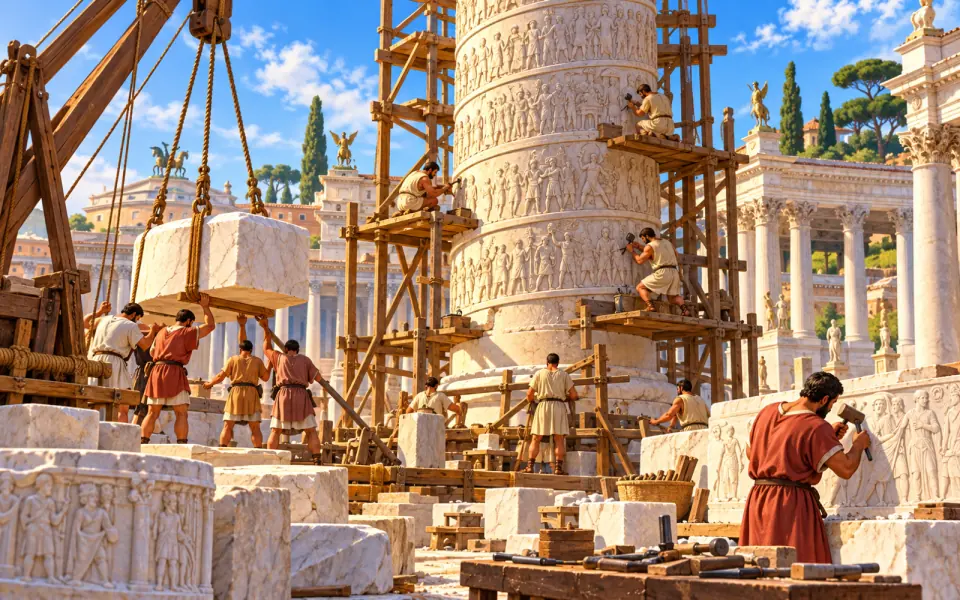 AfterTrajan's ColumnAD 113
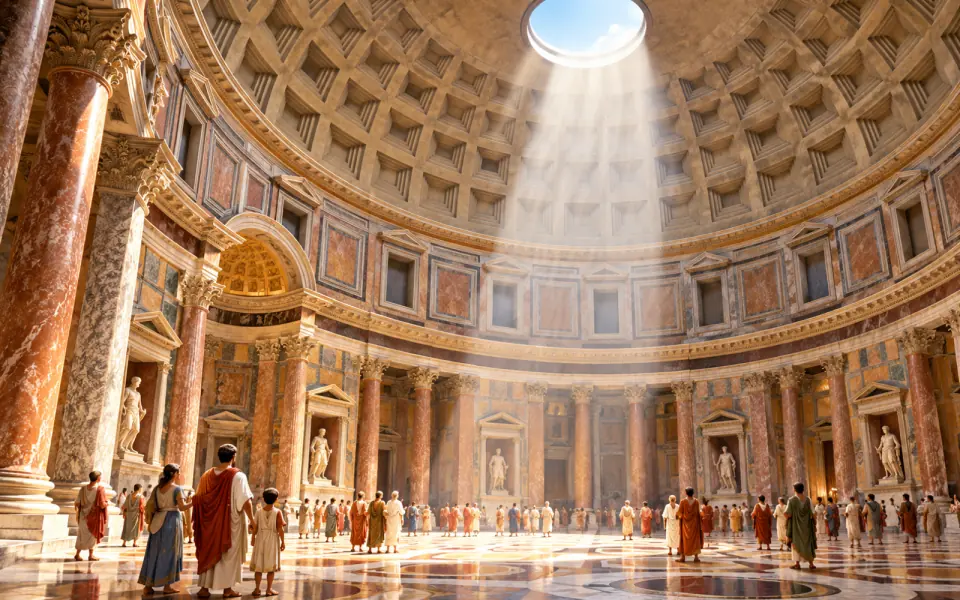 AfterThe Pantheonabout AD 125
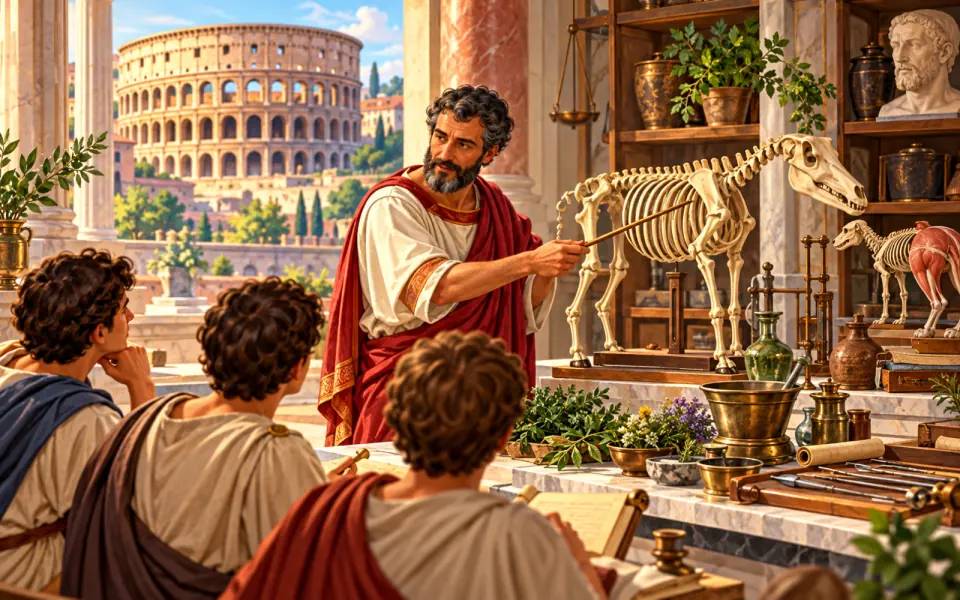 AfterGalen, a doctor in Romeabout AD 162
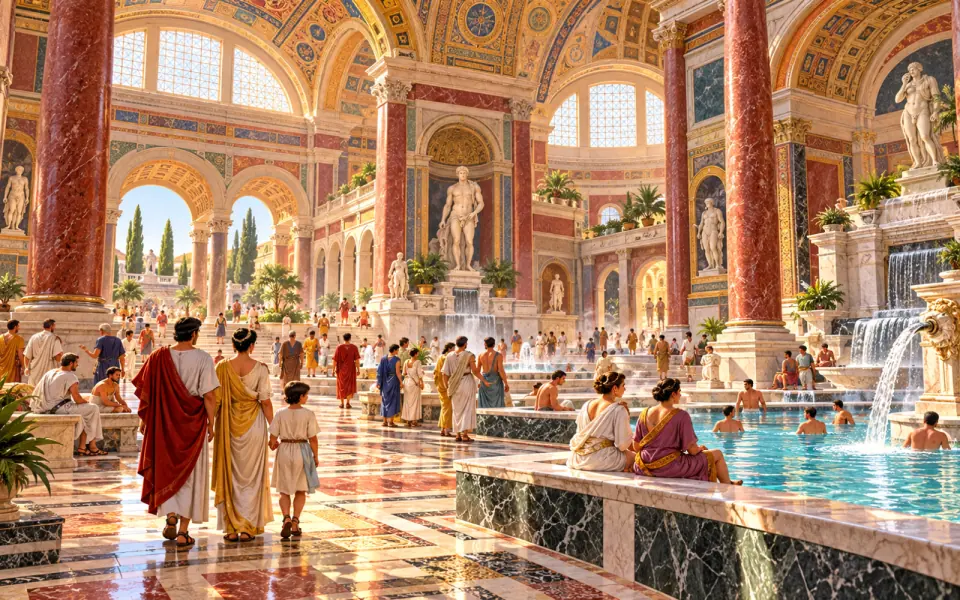 AfterThe Baths of CaracallaAD 216
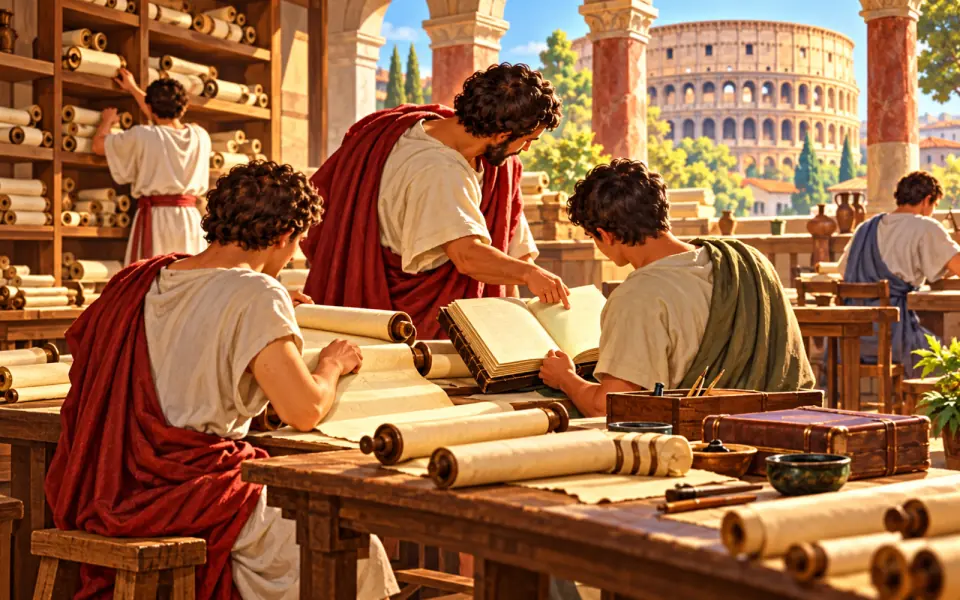 AfterThe book with pages (the codex)about AD 300
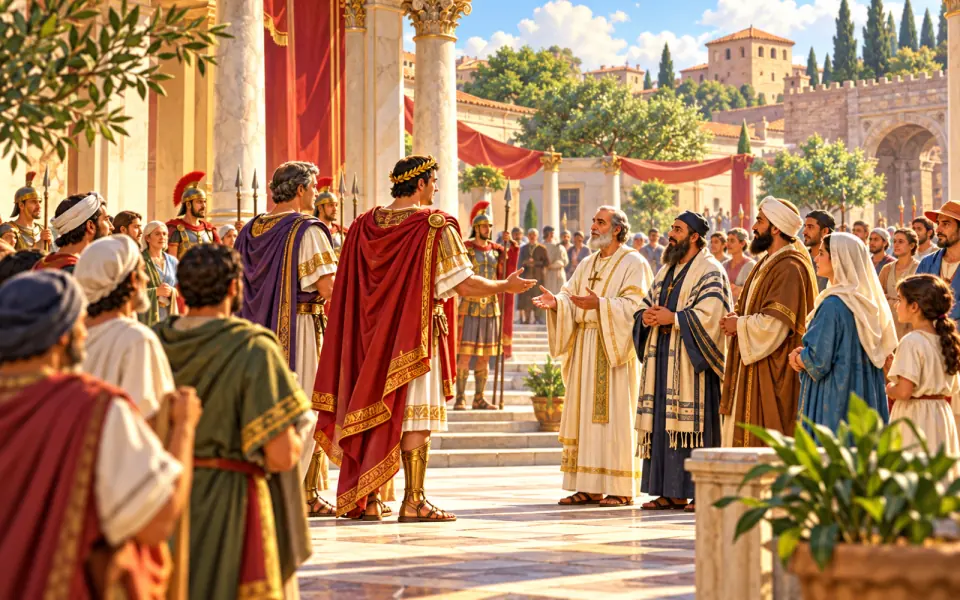 AfterThe Edict of MilanAD 313
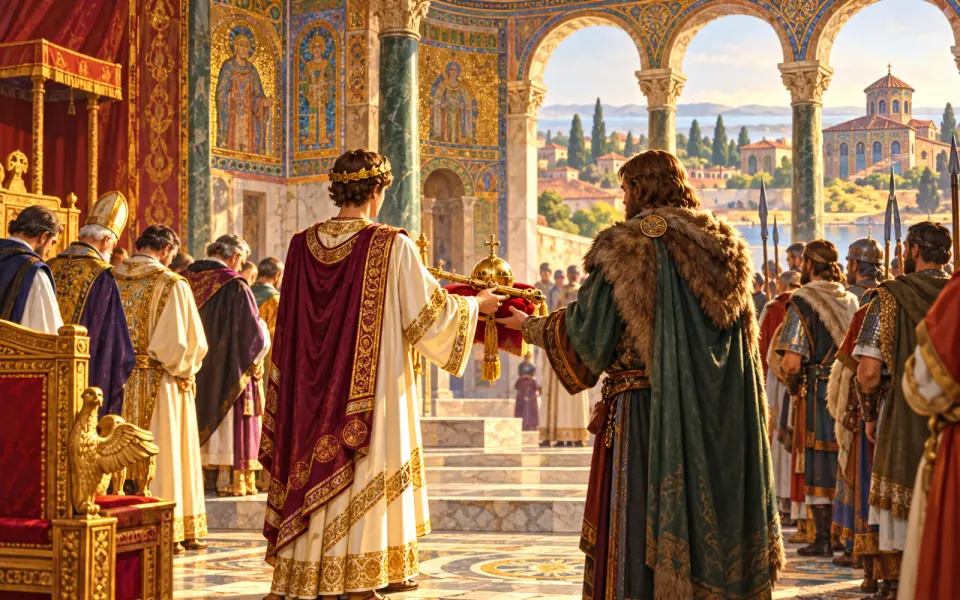 AfterFall of the Western Roman EmpireAD 476
Listen / Read next
- Music to read by: Cinematic JourneyEpic film-style music, no lyrics, by Ciro Simone IrmiciSpotifyYouTube Music
Meanwhile, elsewhere in the world
Other events of the era “Ancient Rome”
- Traditional founding of Rome
- Birth of the Roman Republic
- The Laws of the Twelve Tables
- The Appian Way
- The First Punic War
- Hannibal crosses the Alps
- Roman concrete
- The Aqua Marcia aqueduct
- Spartacus leads the revolt
- Caesar crosses the Rubicon
- The Julian calendar
- The murder of Julius Caesar
- Augustus, the first emperor
- The Pax Romana
- Virgil and the Aeneid
- Pompeii buried by Vesuvius
- The Colosseum opens
- Trajan's Column
- The Pantheon
- Galen, a doctor in Rome
- The Baths of Caracalla
- The book with pages (the codex)
- The Edict of Milan
- Fall of the Western Roman Empire
