Roman concrete
about 150 BC Pozzuoli and Rome
In short
The Romans discovered that mixing lime, water, stones and a volcanic ash called pozzolana gave them an extremely strong material. The name comes from Pozzuoli, near Naples, where this ash was plentiful. Roman concrete set even underwater, so it was used to build harbours, bridges and great domes. Some structures made this way have lasted for almost two thousand years.
Why it matters Without this material, many of the empire's biggest and boldest buildings would never have existed.
Source: Encyclopaedia Britannica, “Concrete”
Study card about 6 minutes of reading
The story
A liquid stone
Imagine being able to build a wall, a vault, an arch, by pouring a sludge into a mould and waiting for it to harden until it is as hard as stone. Today we call it concrete, or cement, and it is the most widely used building material. The Romans used a version all of their own, which they called opus caementicium, that is, “work of rubble”. It was one of the secrets of their success.
It was not a sudden invention. The technique seems to have developed gradually between the 3rd and 2nd centuries BC. At first it was a poor material, used for fillings and private buildings, with a mortar that was still imperfect. There are examples at Pompeii that are said to go back to the middle of the 3rd century. Then the builders discovered how to make it much stronger.
The Romans' recipe
The base was lime. You get it by heating limestone in a kiln at a temperature of about 900 degrees or less: the product is called quicklime. When it is mixed with water, it is “slaked” and becomes a paste, which serves as a binder, that is, as glue. Making lime takes much less energy than producing modern Portland cement.
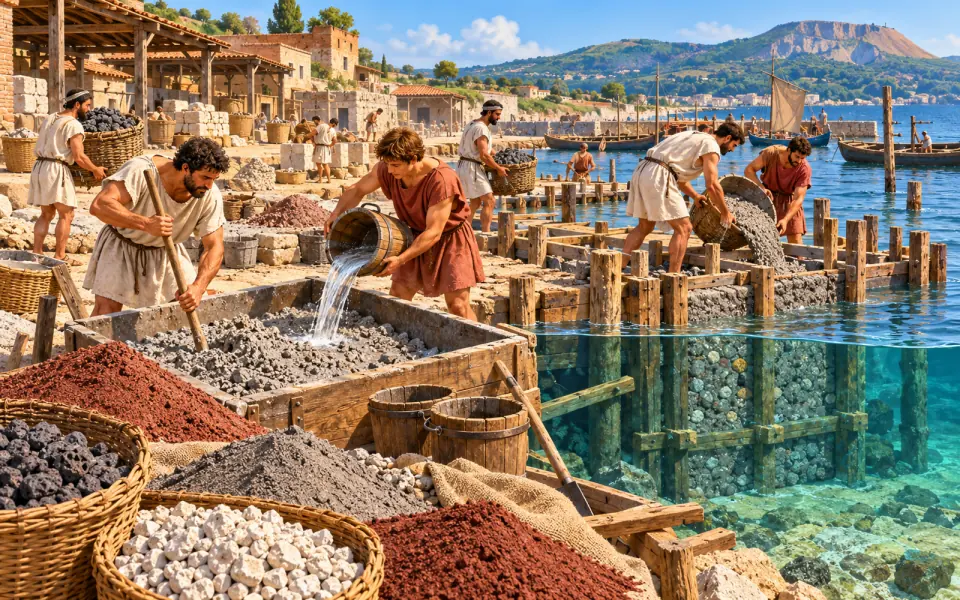
The real secret, however, was one ingredient: pozzolana, a volcanic ash. The name comes from Pozzuoli, the city near Naples, in the Phlegraean Fields, where it was dug in large quantities. The strongest pozzolanas came precisely from the volcanic areas of the Gulf of Naples. The Roman writer Vitruvius described quarry sand in several colours and recommended the “dust of Pozzuoli” for work in water. Mixed with lime and water, pozzolana reacts and gives a mortar much stronger and longer-lasting than lime alone.
Stones and fragments, the caementa, often of tuff, a soft volcanic rock, were added to the mortar. The mixture was poured into wooden formwork, that is, moulds. The outer faces of the walls, the facings, were finished in different ways, which archaeologists call by the name of “opus”: opus incertum with irregular stones, opus reticulatum with small stone pyramids laid out like a net, and opus testaceum with tiles and bricks. Even today, looking at a Roman wall, you can recognise these patterns.
Setting even under water
A special feature of the mixture with pozzolana is that it sets even under water. Instead of ruining the mixture, the water helps it to harden. This is why the Romans were able to build piers, harbours, bridge piers and foundations in the sea. If the material had not had this property, many harbour works would have been impossible.
Vaults, arches and domes
Concrete was not used only for walls. It could be poured over wooden structures, the centering, to form arches, vaults and domes. The first known vaults are those of the Porticus Aemilia, around 174 BC. With this material Roman architects could cover large interior spaces without filling the hall with columns. The Pantheon is the grandest example: its dome, with a diameter of more than 43 metres, was made with a concrete that was heavy at the base, with chips of travertine and tuff, and lighter and lighter towards the top, where pumice and volcanic lapilli were used. The thickness of the dome goes from over 6 metres at the base to a little over a metre near the opening at the top.
In later centuries, to lighten the vaults, empty amphorae were also built in, as in the mausoleum of Helena in Rome. It is one of the many tricks of the Roman builders, who were constantly experimenting.
Why does it last so long?
Roman concrete structures have stood for almost two thousand years, even in places exposed to the sea and to earthquakes. To understand why, in 2023 a group of researchers led by Admir Masic, of the Massachusetts Institute of Technology, published a study on walls of the ancient city of Privernum, near Rome. They noticed small white fragments, until then thought to be mixing defects. According to the researchers they come instead from the use of quicklime, mixed directly with the other materials and slaked with water. These fragments might help the material to repair itself: when a crack forms, water dissolves a little lime which then recrystallises and closes the gap. It is a very interesting hypothesis, still being researched.
One last curiosity: archaeologists can date some of these buildings by studying the mortar too, thanks to radiocarbon, the same method used to date ancient bones and wood.
Why it happened
Rome needed to build on a large scale: harbours, bridges, warehouses, public buildings for a growing city. Cut stone is expensive and slow to work, while concrete can be prepared from common materials and poured into moulds, even by less experienced workers.
The Romans, moreover, lived near a volcanic area, the Phlegraean Fields, where pozzolana was plentiful. It took the observation and practice of the builders to discover that, mixed with lime, it gave such a special material. They did not know the chemistry behind the phenomenon, but they understood its effects well.
What changed
Concrete changed architecture. With no need for gigantic blocks, the Romans could build faster and at lower cost, and invent new forms: great halls covered by vaults and domes, amphitheatres like the Colosseum, enormous baths, artificial harbours. Much of what we still admire today of ancient Rome is made this way, faced with stone or brick.
After the end of the Western Empire the technique was largely lost, and for centuries buildings were different. Modern concrete, made with Portland cement, is today the basis of houses, bridges and skyscrapers. Even now “pozzolanic” cement, that is, with pozzolana added, is used for large pours such as dams and slabs, because it gives off less heat and lasts better.
Today's concrete, however, uses a lot of energy and produces a lot of carbon dioxide. Scientists study the Roman kind to see whether longer-lasting and less polluting materials can be imitated, and also to learn how to look after ancient buildings better.
Key people and places
People
- Vitruvius
- Roman architect and writer of the 1st century BC. He described quarry sands of various colours and recommended the “dust of Pozzuoli” for work in water.
- Admir Masic
- Engineer at MIT, head of the group that in 2023 proposed the explanation of the self-repair of Roman concrete.
Places
- Pozzuoli and the Phlegraean Fields
- Volcanic area near Naples from which pozzolana takes its name.
- Pantheon, Rome
- Building with the largest unreinforced concrete dome ever built, more than 43 metres across.
- Privernum
- Ancient city in Latium where researchers analysed samples of Roman mortar in 2023.
Good to know
- The name “pozzolana” comes from Pozzuoli, near Naples.
- Vitruvius distinguished quarry sands by colour (black, grey, red) and recommended the “dust of Pozzuoli” for work in water.
- The concrete of the Pantheon is lighter towards the top, where pumice and volcanic lapilli were used.
- Roman lime was fired at about 900 degrees or less: much less than modern cement.
- In 2023 researchers suggested that the small white lumps in Roman mortar serve to repair cracks.
Find out more
- Wikipedia, “Roman concrete” en.wikipedia.org
- Wikipedia, “Pozzolan” en.wikipedia.org
- Wikipedia, “Concrete” en.wikipedia.org
- Wikipedia, “Pantheon, Rome” en.wikipedia.org
Related events
- The Pantheonabout AD 125 · Ancient RomeThe dome of the Pantheon is the most famous work in Roman concrete.
- The Colosseum opensAD 80 · Ancient RomeThe vaults of the Colosseum are in concrete, faced with stone and brick.
- The Aqua Marcia aqueduct144–140 BC · Ancient RomeAqueducts too used concrete, for example for the arches and the cisterns.
- The Baths of CaracallaAD 216 · Ancient RomeThe great halls of the Baths of Caracalla were covered with concrete vaults.
- Brunelleschi completes the dome1436 · Early modern ageCenturies later, Brunelleschi built in Florence a dome that recalls the Roman ones in its ambition.
Before and after, in the era “Ancient Rome”
Event 8 of 25
 BeforeTraditional founding of Romeabout 753 BC
 BeforeBirth of the Roman Republicabout 509 BC
 BeforeThe Laws of the Twelve Tablesabout 450 BC
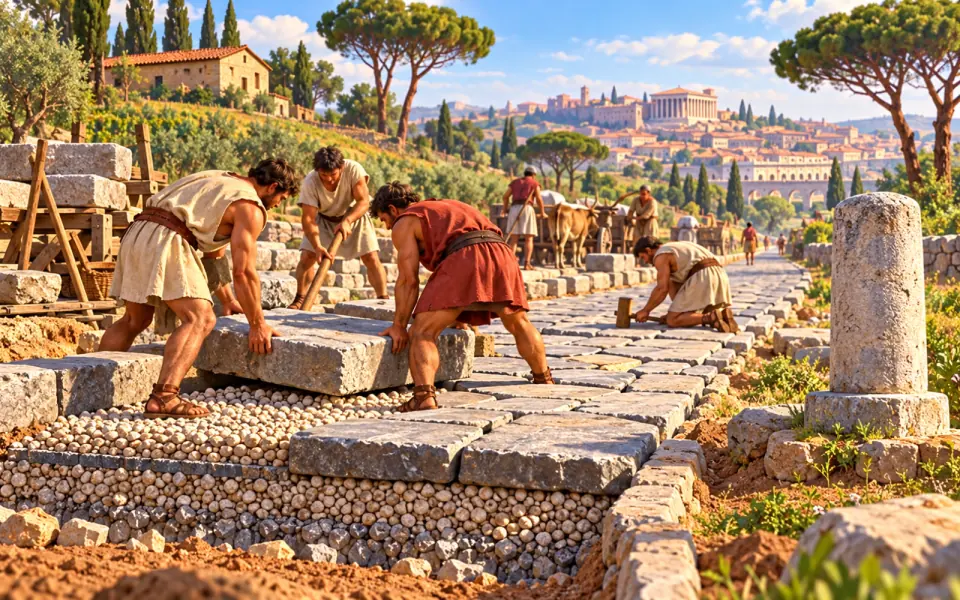 BeforeThe Appian Way312 BC
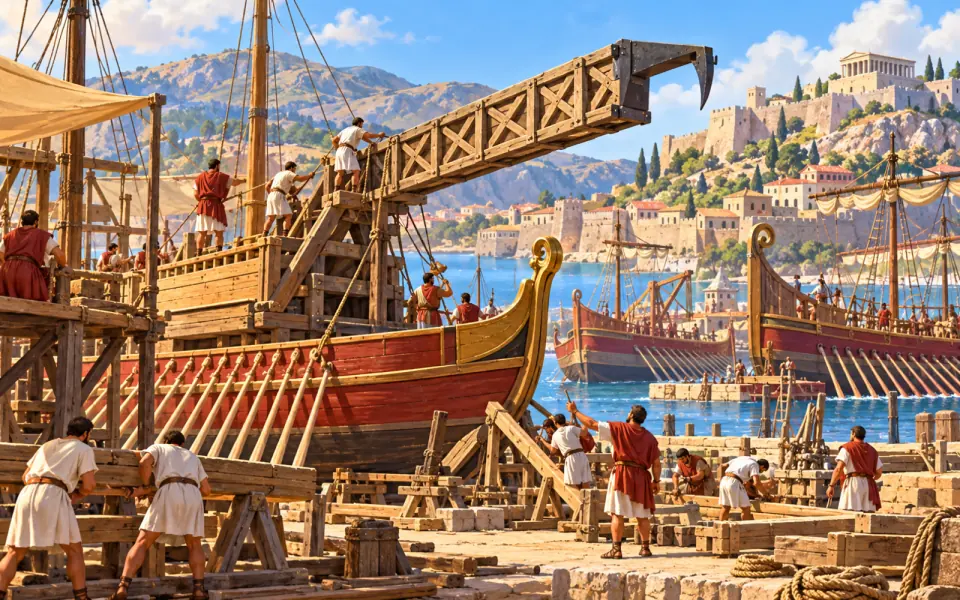 BeforeThe First Punic War264–241 BC
 BeforeHannibal crosses the Alps218 BC
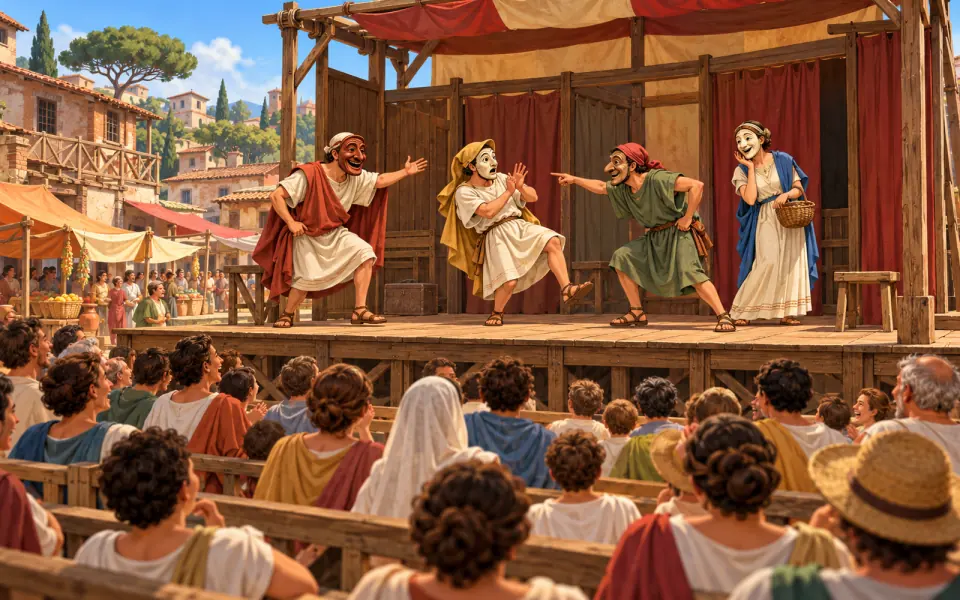 BeforePlautus and comedyabout 200 BC
- You are hereRoman concreteabout 150 BC
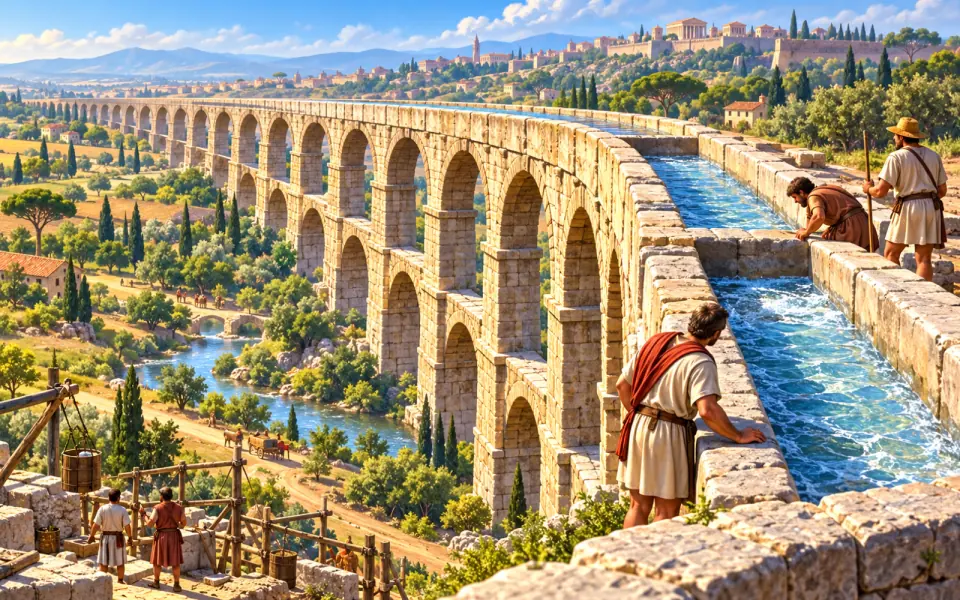 AfterThe Aqua Marcia aqueduct144–140 BC
 AfterSpartacus leads the revolt73–71 BC
 AfterCaesar crosses the Rubicon49 BC
 AfterThe Julian calendar46 BC
 AfterThe murder of Julius Caesar44 BC
 AfterAugustus, the first emperor27 BC
 AfterThe Pax Romana27 BC – AD 180
 AfterVirgil and the Aeneid19 BC
 AfterPompeii buried by VesuviusAD 79
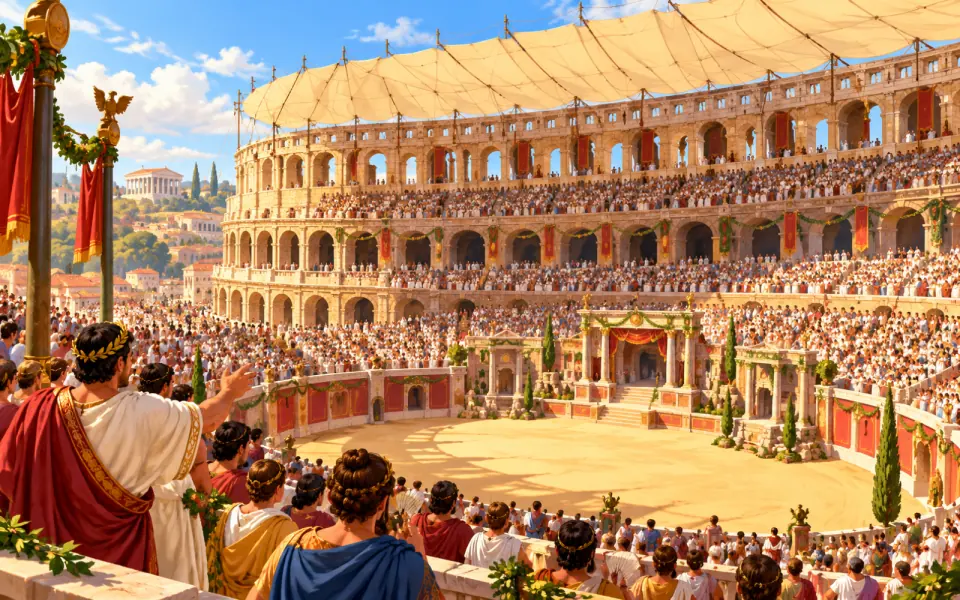 AfterThe Colosseum opensAD 80
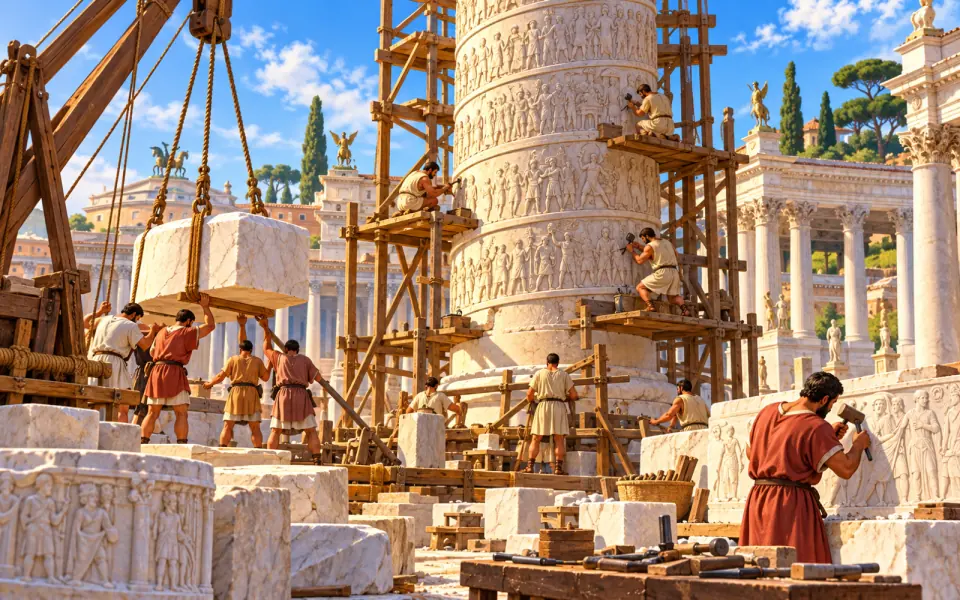 AfterTrajan's ColumnAD 113
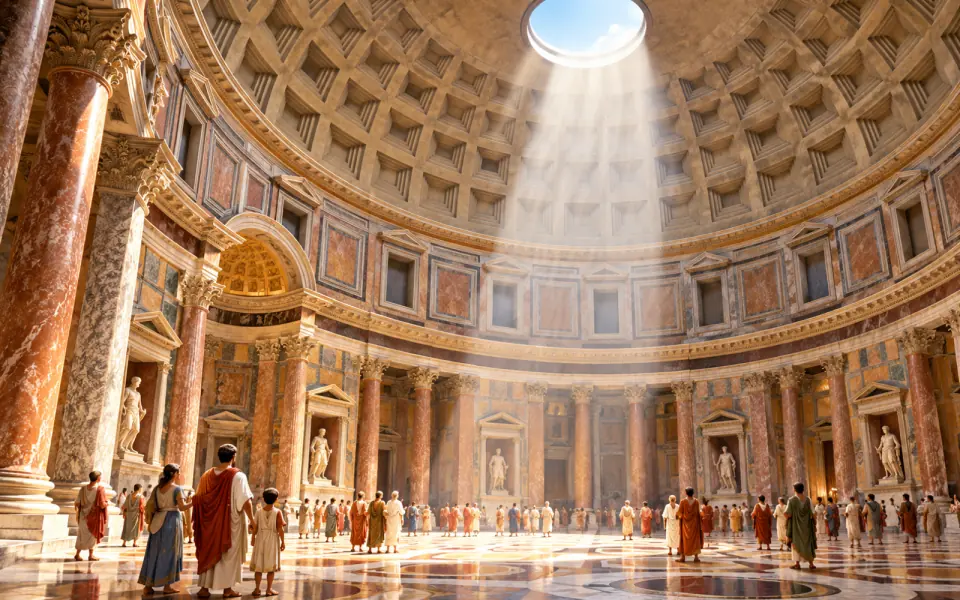 AfterThe Pantheonabout AD 125
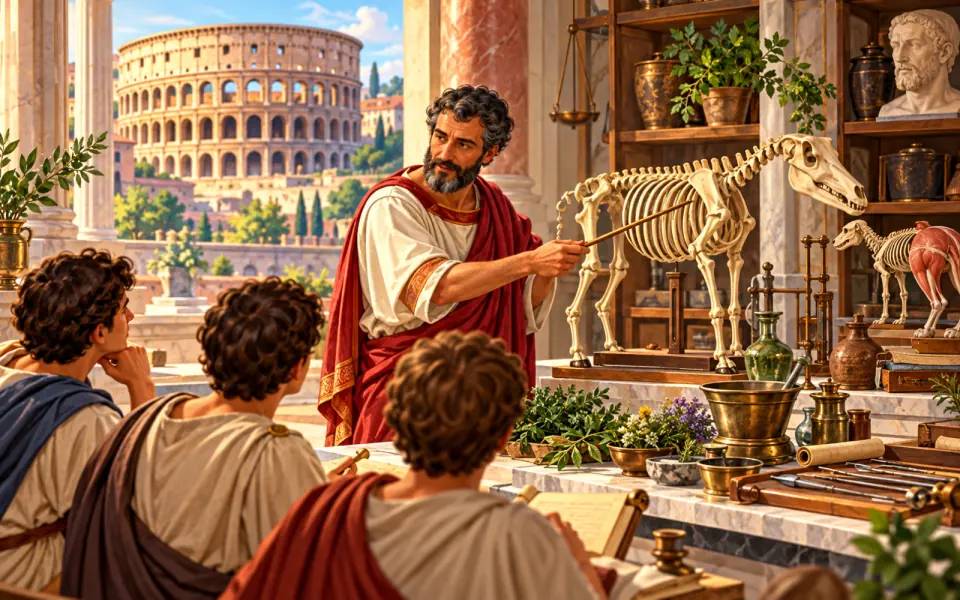 AfterGalen, a doctor in Romeabout AD 162
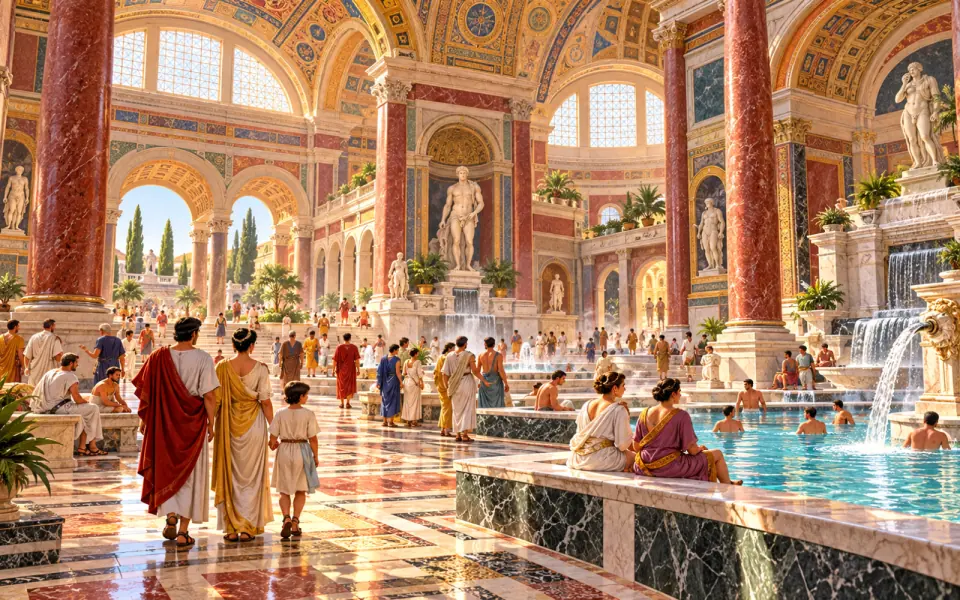 AfterThe Baths of CaracallaAD 216
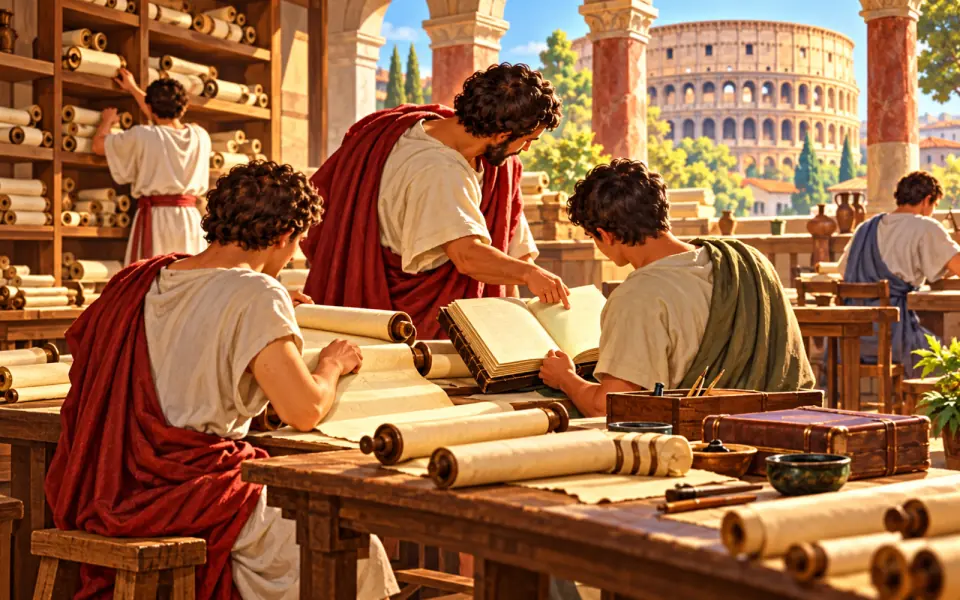 AfterThe book with pages (the codex)about AD 300
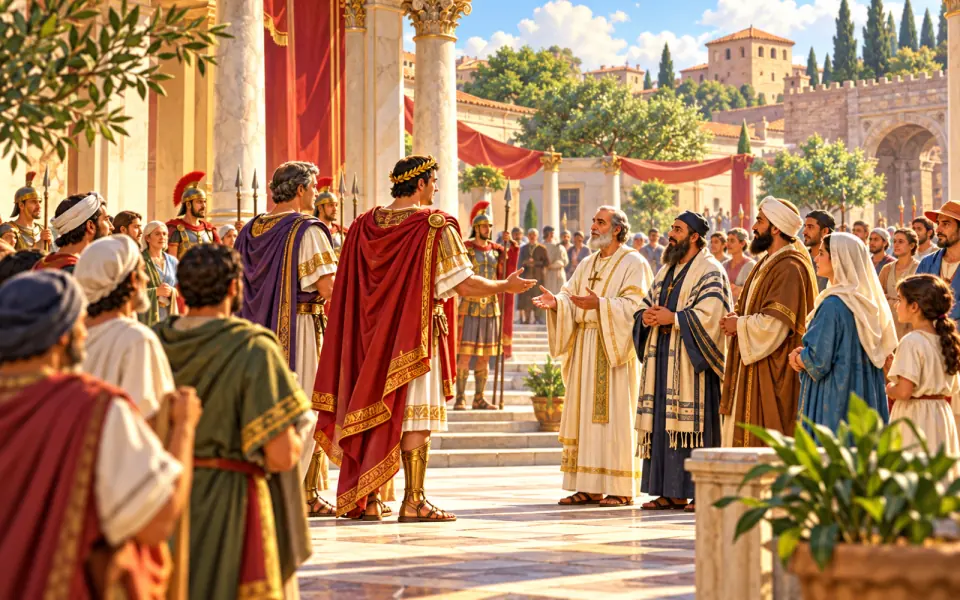 AfterThe Edict of MilanAD 313
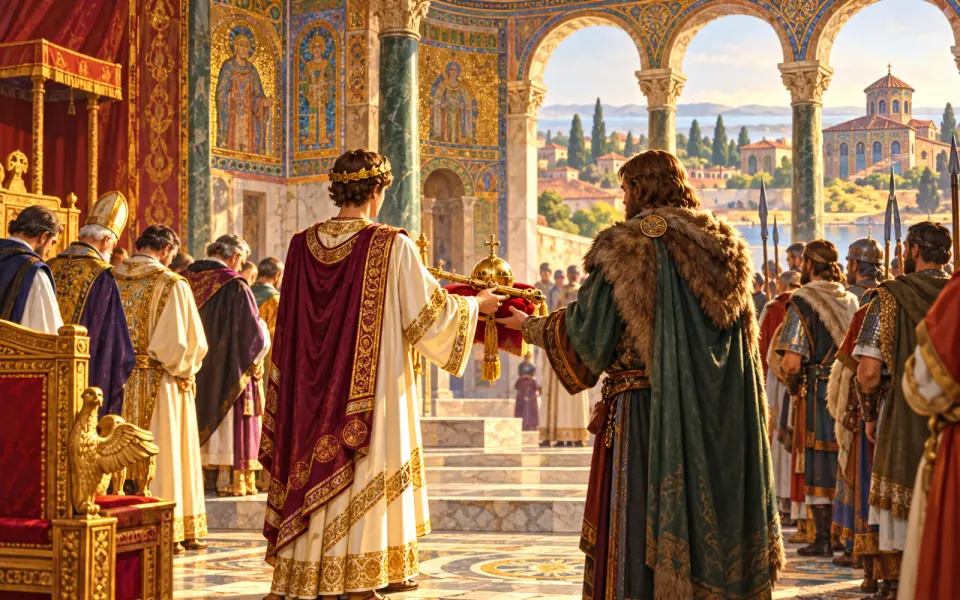 AfterFall of the Western Roman EmpireAD 476
Listen / Read next
- Music to read by: Cinematic JourneyEpic film-style music, no lyrics, by Ciro Simone IrmiciSpotifyYouTube Music
Meanwhile, elsewhere in the world
Other events of the era “Ancient Rome”
- Traditional founding of Rome
- Birth of the Roman Republic
- The Laws of the Twelve Tables
- The Appian Way
- The First Punic War
- Hannibal crosses the Alps
- Plautus and comedy
- The Aqua Marcia aqueduct
- Spartacus leads the revolt
- Caesar crosses the Rubicon
- The Julian calendar
- The murder of Julius Caesar
- Augustus, the first emperor
- The Pax Romana
- Virgil and the Aeneid
- Pompeii buried by Vesuvius
- The Colosseum opens
- Trajan's Column
- The Pantheon
- Galen, a doctor in Rome
- The Baths of Caracalla
- The book with pages (the codex)
- The Edict of Milan
- Fall of the Western Roman Empire
