The Baths of Caracalla
AD 216 Rome
In short
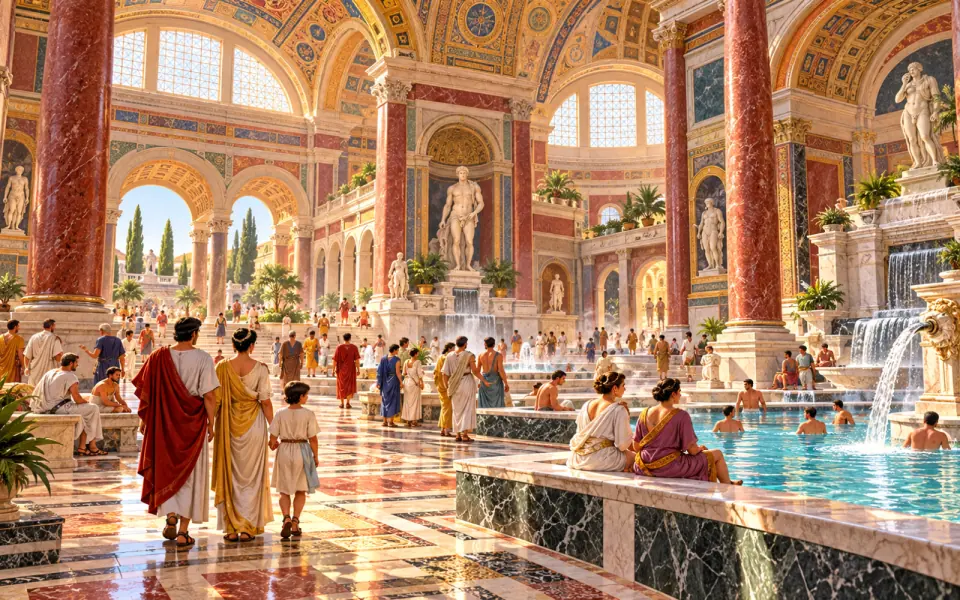
Opened by the emperor Caracalla, these baths could hold about 1600 people at a time. Bathers went from the caldarium, the hot room, to the warm tepidarium and finally to the cold frigidarium, then perhaps into the pool. As well as baths there were gyms, gardens and two libraries, one for Latin books and one for Greek ones. Under the floors, slaves kept the furnaces burning to heat the water and the air.
Why it matters The baths were where Romans washed, did sport and met their friends.
Source: Soprintendenza Speciale di Roma, “Terme di Caracalla”
Study card about 5 minutes of reading
The story
A city within the city
If you walk into the Baths of Caracalla in Rome today, you see towering brick walls, enormous arches and roofless halls. But try to imagine this place as it was in AD 216: marble floors and mosaics, statues everywhere, running water, voices, laughter, the scent of oils. The baths were much more than a bath: they were a place to be together, to play sport, to rest, to talk with friends.
They were inaugurated in 216 by the emperor Caracalla, who had come to the throne in 211. According to the brick stamps, that is, the marks pressed into the bricks that make it possible to date the building, the work took place between 212 and 216. When the emperor inaugurated them they were not yet finished: his successors Elagabalus and Severus Alexander worked on the great outer enclosure and the decoration. An old hypothesis, criticised today, held that the work had begun as early as 206, under his father Septimius Severus.
How big they were
The measurements make your head spin. The whole complex, with the enclosure, measures 337 by 328 metres, and reaches about 406 metres if you count the large exedrae, that is, the semicircular spaces. It covers about 13 hectares, like more than eighteen football pitches. The central block, that is, the main building, measures about 114 by 220 metres. How many people could get in is hard to say: scholars' estimates are very different, from a few thousand a day up to eight thousand.
The bathing route
The Romans followed a route. After exercises in the palaestra, of which there were two, symmetrical, with a central courtyard of 50 by 20 metres, you passed into the heated rooms. The tepidarium was the lukewarm room, with two pools at the sides. Then came the caldarium, the hot room, circular in shape, with a diameter of 34 metres and a dome resting on eight piers, with large windows to catch the sun. Perhaps there was also a laconicum, a sort of sauna. Finally the frigidarium: the cold-water hall, 58 by 24 metres, covered by three cross vaults supported by eight piers, with pools for cold water. And then the natatio, a large open-air swimming pool, decorated with four monolithic granite columns.
Besides the baths there were two halls with an apse, that is, with a semicircular wall, which were probably libraries, one for books in Latin and one for those in Greek. Only the one on the right survives. The baths also had gardens and spaces for walking.
Water and the underground
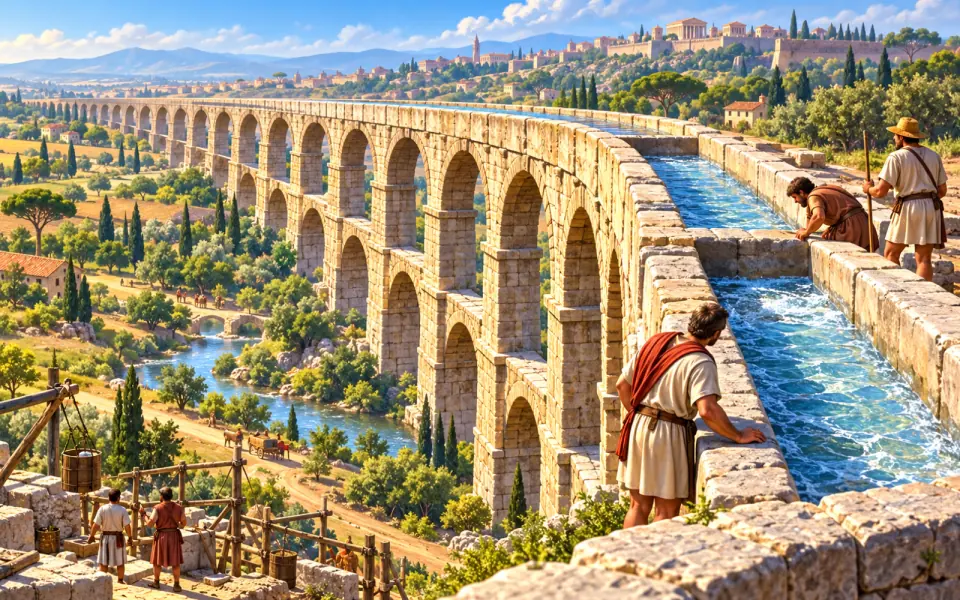
A place like this needed water in quantity. In 212 a branch of the Aqua Marcia was built, called the Aqua Antoniniana, which passed over the Appian Way resting on a monumental arch, the Arch of Drusus. The water was collected in a great cistern, supported by 64 chambers on two floors, in the south-west enclosure.
Under the halls there was a network of rooms and galleries for the service of the baths, which visitors did not see. They were excavated in 1901 and 1912. In the 20th century, in the excavations of the underground levels, the remains of a mithraeum were also discovered, a place dedicated to the cult of Mithras, an eastern god: it is the largest known in Rome.
Between art and ruin
The baths were full of works of art. The excavations of the 16th century, ordered by Pope Paul III, brought to light very famous statues, such as the Farnese Bull, the Farnese Hercules and the Flora, today in the National Archaeological Museum of Naples. In 1824 a mosaic with 28 figures of athletes was found, now in the Vatican Museums.
The baths stopped working around 537, during the war between the Goths and the Byzantines, when the Gothic king Vitiges cut the aqueducts that brought water to Rome. Without water, the baths could no longer be used. After they were abandoned, the complex was reused in various ways, even as a hospice for pilgrims, as a cemetery and as a vineyard, and the ruins were used as a quarry for marble and other materials: pieces of the baths ended up in Pisa cathedral and in Santa Maria in Trastevere.
Today
Since 1937 the central part has hosted concerts and shows, in particular the summer season of the Rome Opera, with an auditorium that has had 3,500 seats since 2003. In 1960, during the Rome Olympics, the gymnastics events were held there. In 2024 water began to flow again in a new pool of water at the entrance.
Why it happened
The Romans loved public baths. They were a place where everyone, rich and poor, could go, paying little or nothing. Building them was a way for emperors to win the people's favour and show their generosity. Caracalla wanted to leave a monument that surpassed those of his predecessors.
Rome, meanwhile, was an enormous city, with many inhabitants and many aqueducts. Plentiful water made it possible to feed pools, fountains and heating. The baths are the fruit of great organisational skill, with engineers, workers, furnaces and cisterns.
What changed
The Baths of Caracalla were a model of a great public building. Their spaces, with huge halls covered by vaults, show how far Roman engineering could go.
When, around 537, the aqueducts were cut, the baths lost their function. Without water the complex no longer served as a public bath. The complex became a quarry of materials and of statues, and this explains why many works of art are found today in distant museums.
Today the ruins are a monument to visit, a place where people listen to music in summer and learn how the Romans lived. Even our idea of a gym, spa and library all together has its roots in places like this.
Key people and places
People
- Caracalla
- Emperor from AD 211 to 217: he inaugurated the baths in 216.
- Elagabalus and Severus Alexander
- Later emperors who worked on the enclosure and the decoration.
- Vitiges
- King of the Goths who in 537 cut the aqueducts of Rome, ending the working of the baths.
- Pope Paul III
- In the 16th century he promoted the excavations that brought to light the Farnese Bull and the Farnese Hercules.
Places
- Baths of Caracalla
- Bath complex in Rome, of about 13 hectares.
- Arch of Drusus
- Arch on the Appian Way on which the branch of aqueduct serving the baths rested.
- National Archaeological Museum of Naples
- Keeps the Farnese Bull and the Farnese Hercules, statues found at the baths.
Good to know
- The baths had two libraries: one for books in Latin and one for those in Greek.
- Under the halls there were service galleries hidden from the bathers, and a mithraeum, the largest known in Rome.
- The caldarium, the hot room, was circular and 34 metres wide.
- The baths stopped working around 537, when the Goths cut the aqueducts.
- Since 1937 the ruins have hosted the summer season of the Rome Opera.
Find out more
- Wikipedia, “Baths of Caracalla” en.wikipedia.org
- World History Encyclopedia, “Roman Baths” worldhistory.org
- Wikipedia, “Caracalla” en.wikipedia.org
- Wikipedia, “Farnese Bull” en.wikipedia.org
Related events
- The Aqua Marcia aqueduct144–140 BC · Ancient RomeThe water for the baths came from a branch of the Aqua Marcia.
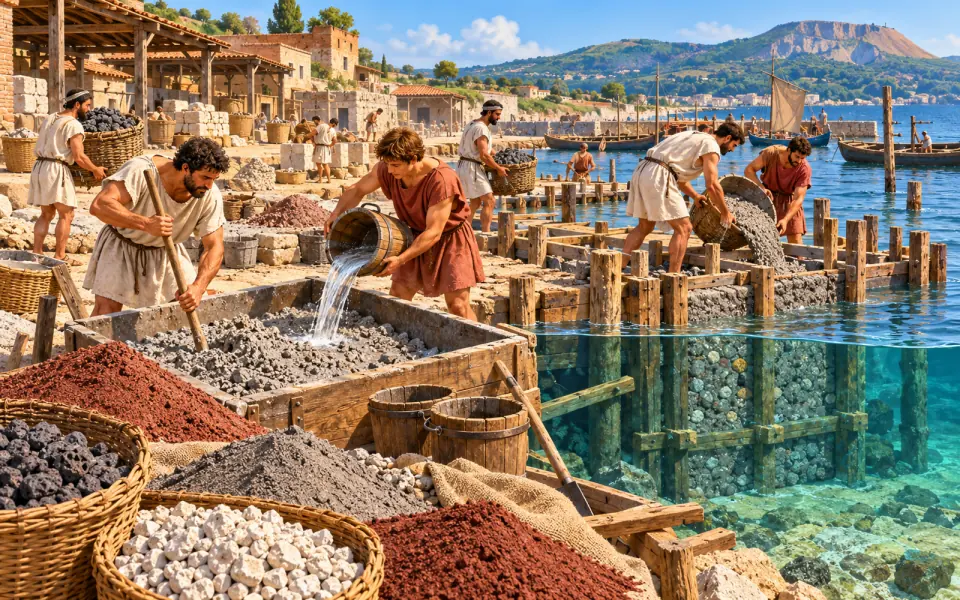
- Roman concreteabout 150 BC · Ancient RomeThe great vaults of the halls were in Roman concrete.
- The Colosseum opensAD 80 · Ancient RomeLike the Colosseum, the baths served to bring the people together.
- Fall of the Western Roman EmpireAD 476 · Ancient RomeThe Western Empire fell a few centuries later, and wars cut the aqueducts.
- The Pantheonabout AD 125 · Ancient RomeThe Pantheon too, from the same period, shows the great vaults of Roman architecture.
Before and after, in the era “Ancient Rome”
Event 22 of 25
 BeforeTraditional founding of Romeabout 753 BC
 BeforeBirth of the Roman Republicabout 509 BC
 BeforeThe Laws of the Twelve Tablesabout 450 BC
 BeforeThe Appian Way312 BC
 BeforeThe First Punic War264–241 BC
 BeforeHannibal crosses the Alps218 BC
 BeforePlautus and comedyabout 200 BC
 BeforeRoman concreteabout 150 BC
 BeforeThe Aqua Marcia aqueduct144–140 BC
 BeforeSpartacus leads the revolt73–71 BC
 BeforeCaesar crosses the Rubicon49 BC
 BeforeThe Julian calendar46 BC
 BeforeThe murder of Julius Caesar44 BC
 BeforeAugustus, the first emperor27 BC
 BeforeThe Pax Romana27 BC – AD 180
 BeforeVirgil and the Aeneid19 BC
 BeforePompeii buried by VesuviusAD 79
 BeforeThe Colosseum opensAD 80
 BeforeTrajan's ColumnAD 113
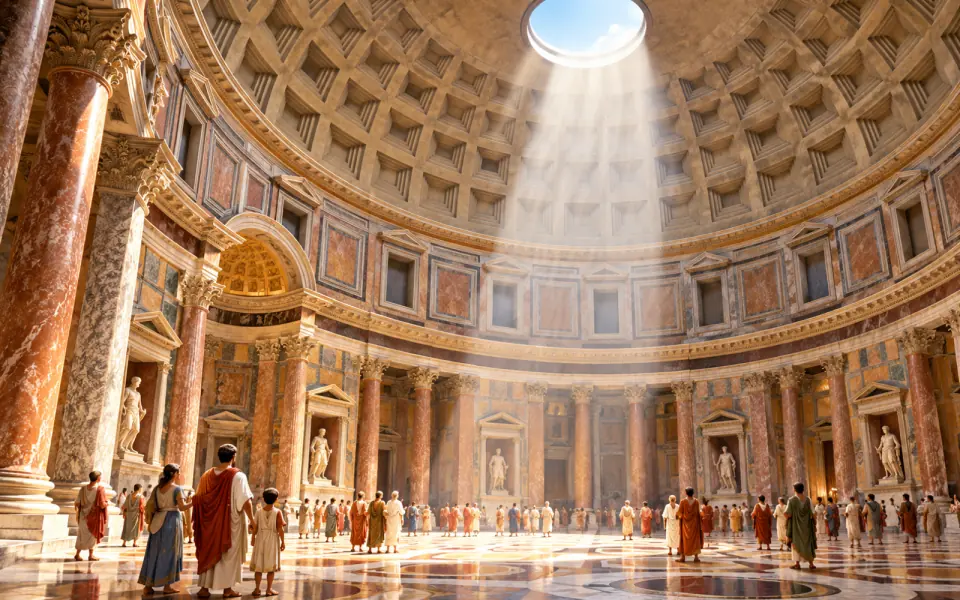 BeforeThe Pantheonabout AD 125
 BeforeGalen, a doctor in Romeabout AD 162
- You are hereThe Baths of CaracallaAD 216
 AfterThe book with pages (the codex)about AD 300
 AfterThe Edict of MilanAD 313
 AfterFall of the Western Roman EmpireAD 476
Listen / Read next
- Music to read by: Cinematic JourneyEpic film-style music, no lyrics, by Ciro Simone IrmiciSpotifyYouTube Music
Other events of the era “Ancient Rome”
- Traditional founding of Rome
- Birth of the Roman Republic
- The Laws of the Twelve Tables
- The Appian Way
- The First Punic War
- Hannibal crosses the Alps
- Plautus and comedy
- Roman concrete
- The Aqua Marcia aqueduct
- Spartacus leads the revolt
- Caesar crosses the Rubicon
- The Julian calendar
- The murder of Julius Caesar
- Augustus, the first emperor
- The Pax Romana
- Virgil and the Aeneid
- Pompeii buried by Vesuvius
- The Colosseum opens
- Trajan's Column
- The Pantheon
- Galen, a doctor in Rome
- The book with pages (the codex)
- The Edict of Milan
- Fall of the Western Roman Empire
