Pompeii buried by Vesuvius
AD 79 Pompeii and Herculaneum, Campania
In short
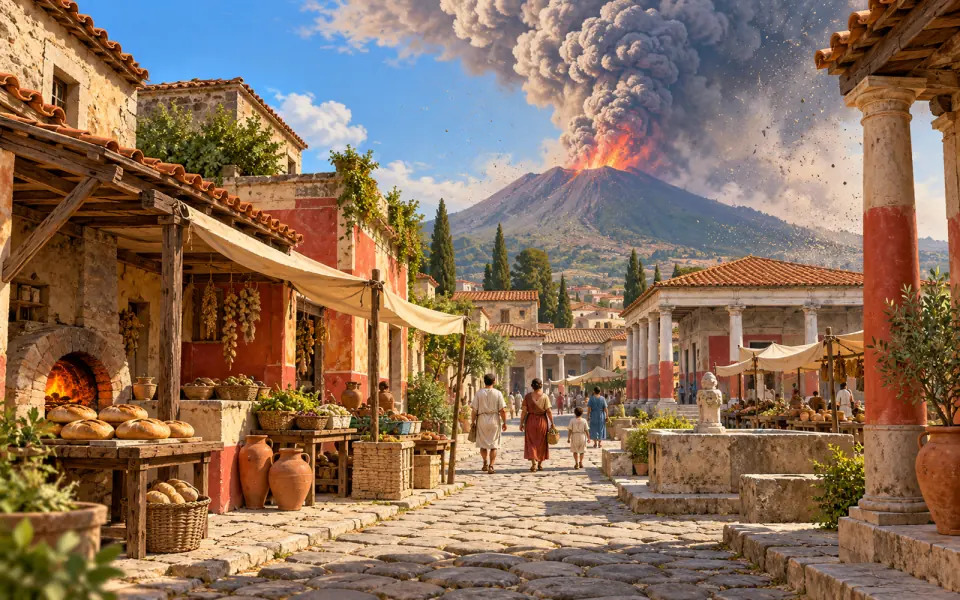
In AD 79 Vesuvius, which the Romans thought was a quiet mountain, suddenly erupted. Pompeii, Herculaneum and other nearby towns were buried under metres of ash and pumice. That is exactly why the towns have survived: today you can walk along their streets and see shops, bakeries, frescoes and even writing on the walls. Pliny the Younger, who watched the eruption from a distance, described it in two famous letters.
Why it matters Pompeii is like a photograph of an ordinary Roman town, frozen in an instant.
Source: UNESCO, “Archaeological Areas of Pompei, Herculaneum and Torre Annunziata”
Study card about 7 minutes of reading
The story
An ordinary town on an ordinary day
In AD 79 Pompeii was a Roman town in Campania, near the mouth of the river Sarno and a few kilometres from the sea. Perhaps 10,000 to 12,000 people lived there: shopkeepers, craftsmen, slaves, freedmen, a few rich families with large decorated villas. There was the forum with its temples, two theatres, the baths, a stone amphitheatre (the oldest one to survive), dozens of shops where people ate at the counter, bakeries, laundries and taverns. On the walls people wrote everything: election notices, prices, greetings, jokes, insults.
Above the town stood Vesuvius. For the Romans it was a green mountain, covered with vineyards: nobody knew it was a sleeping volcano. Seventeen years earlier, in AD 62 (or 63), a strong earthquake had damaged Pompeii, and in many houses workmen were still repairing walls and frescoes. Nobody connected that shock with the mountain.
The eruption: two terrible days
On the day of the eruption, at about one in the afternoon, an enormous cloud rose from Vesuvius. Pliny the Younger, who was at Misenum, on the other side of the Bay of Naples, compared it to a pine tree: a very tall trunk that spread out into branches at the top. Today we know it was a column of gas, ash and stones rising for tens of kilometres.
The wind pushed the cloud towards the south-east, right over Pompeii. For many hours a thick rain of pumice and lapilli, small light stones full of holes, fell on the town. The sky became as dark as night. Roofs collapsed under the weight, which grew from hour to hour. Many inhabitants fled at once, taking with them what they could: coins, jewellery, lamps. Others stayed, shut in their homes, waiting for it to end.
The next morning the deadliest phase arrived. The column of ash collapsed and pyroclastic currents rushed down from the volcano: avalanches of boiling gas, ash and rock fragments, racing at great speed down the sides of the mountain. Herculaneum, closer to Vesuvius, was hit first and buried under a blanket of material in places more than 20 metres deep. Then the currents reached Pompeii: those who had stayed died within moments from the heat and the gases. Stabiae, Oplontis and many country villas were buried too.
The witness: Pliny the Younger
We know so much about the eruption thanks to a boy of 17. Pliny the Younger was living at Misenum with his uncle, Pliny the Elder, a scientist and commander of the Roman fleet. When he saw the cloud, his uncle set out with the ships to get closer and bring help to the people of the coast. Arriving at Stabiae, at the house of a friend, he spent the night there; the next morning, on the beach, he died, perhaps suffocated by the gases or struck down by a sudden illness.
About twenty-five years later the historian Tacitus asked Pliny the Younger to tell him how his uncle had died. Pliny replied with two letters, which have survived: in the first he describes his uncle's voyage, in the second his own escape from Misenum with his mother, amid earthquake shocks, ash falling like snow and terrified people crying out in the dark. It is the first precise description of a volcanic eruption: this is why volcanologists still call eruptions of this kind “Plinian eruptions”.
On what day did it happen?
For centuries it was said that the eruption began on 24 August 79, because this date is read in many medieval copies of Pliny's letters, although not all agree. But archaeologists had doubts: at Pompeii they find autumn fruits such as pomegranates, braziers lit in the houses and wine already put to ferment in the big jars. In 2018, in a house that had just been excavated, an inscription in charcoal appeared with the date of 17 October: since charcoal rubs off quickly, it must have been written recently. For this reason some scholars think it probable that the eruption took place on 24 October 79. The year is certain; the day remains debated.
The rediscovered city
After the eruption the coast was unrecognisable and Pompeii vanished under 4 to 6 metres of volcanic material. The emperor Titus sent officials to help the survivors, but the city was never rebuilt and in time even the memory of it was lost. Real excavations began only in the 18th century, under King Charles of Bourbon: first at Herculaneum (1738) and then at Pompeii (1748). In 1763 an inscription confirmed that this was indeed Pompeii.
In the 19th century the archaeologist Giuseppe Fiorelli had a brilliant idea. The bodies of the victims, wrapped in ash, had decayed, leaving hollows, like moulds. Fiorelli filled them with liquid plaster: when the plaster hardened and the ash around it was removed, the shapes of the people appeared in the last moment of their lives. These casts are among the most moving images in archaeology.
Today at Pompeii you walk on streets with the ruts left by carts, you enter houses, you read the writing on the walls. Part of the city has still not been excavated, and every year archaeologists find something new: frescoes, objects, whole rooms.
Why it happened
Vesuvius is a volcano born where the African plate pushes against the Eurasian one: under Campania rock melts and forms magma, which collects deep down. That magma is rich in gas and very thick, like a shaken bottle of sparkling wine that has been badly closed. When the pressure exceeds the strength of the rock plug, the volcano explodes instead of letting lava out slowly.
Before AD 79 Vesuvius had been quiet for centuries, and the Romans did not have the knowledge to understand the signs. The earthquake of 62–63 and the shocks of the days before the eruption were probably linked to the magma rising, but at that time earthquakes were not connected with volcanoes. So nobody left the area in time.
What changed
At once thousands of people died: at Pompeii the remains of over a thousand victims have been found, at Herculaneum about 300 skeletons in the boat sheds on the beach, where people were waiting for a boat to escape. A rich and populous area was wiped out, and the survivors moved to neighbouring cities, such as Naples and Pozzuoli.
In the long term, the tragedy has become a gift for knowledge. The buried cities are a kind of photograph of everyday Roman life: houses, food, trades, writing on walls, games, even the carbonised bread in the ovens. Almost everything that is studied at school about the Roman house comes from here. The rediscovery in the 18th century inspired artists and architects all over Europe and gave rise to the neoclassical style.
Vesuvius, today, is one of the most closely watched volcanoes in the world. Its last eruption was in 1944 and in the “red zone”, the area most at risk, about 700,000 people live. The Vesuvius Observatory, the oldest volcanological observatory in the world (1841), monitors it day and night, and Civil Protection has a plan to evacuate the area if the volcano shows signs of waking. Pompeii, Herculaneum and Oplontis have been a UNESCO World Heritage Site since 1997 and are visited by millions of people every year.
Key people and places
People
- Pliny the Younger
- Roman writer and lawyer (AD 61/62 – about 113). At 17 he saw the eruption from Misenum and described it in two letters to Tacitus.
- Pliny the Elder
- His uncle, a scientist and admiral, author of the Natural History, a great encyclopedia. He died at Stabiae trying to bring help.
- Titus
- Emperor from June AD 79. He sent aid to Campania; the following year he inaugurated the Colosseum.
- Giuseppe Fiorelli
- Neapolitan archaeologist of the 19th century: he directed the excavations and invented the method of plaster casts.
Places
- Pompeii
- Roman city near the mouth of the Sarno, buried by pumice and ash; largely excavated.
- Herculaneum
- Seaside town, closer to the volcano, buried under more than 20 metres of material: wood and food have been preserved, carbonised.
- Stabiae and Oplontis
- Centres with great Roman villas, also buried; Pliny the Elder died at Stabiae.
- Misenum
- Port of the Roman fleet, on the Bay of Naples, from where the two Plinys saw the cloud.
Good to know
- The name “Plinian eruption”, used by volcanologists all over the world, comes from Pliny the Younger.
- Thousands of inscriptions have been read on the walls of Pompeii: election notices, shop accounts, love messages and teasing.
- At the entrance of one house there is a mosaic with a dog and the words “Cave canem”, that is, “Beware of the dog”.
- At Herculaneum, in the Villa of the Papyri, hundreds of carbonised scrolls have been found: since 2023 people have begun to read them without opening them, using X-rays and artificial intelligence.
- For centuries the date was 24 August, but an inscription found in 2018 suggests 24 October AD 79.
Find out more
- Archaeological Park of Pompeii, official website pompeiisites.org
- World History Encyclopedia, “Pompeii” worldhistory.org
- Wikipedia, “Pliny the Younger” en.wikipedia.org
- Wikipedia, “Eruption of Mount Vesuvius in 79” en.wikipedia.org
- Wikipedia, “Mount Vesuvius” en.wikipedia.org
Related events
- The Colosseum opensAD 80 · Ancient RomeThe year after the eruption the same emperor, Titus, inaugurated the Colosseum.
- The Pax Romana27 BC – AD 180 · Ancient RomePompeii lived its best moment in the years of the empire's peace.
- Roman concreteabout 150 BC · Ancient RomeMany buildings in Pompeii are built with Roman concrete.
- Augustus, the first emperor27 BC · Ancient RomeIn the time of Augustus Pompeii filled up with new public buildings.
- The European Enlightenmentabout 1720 · Age of revolutionsIn the 18th century the rediscovery of Pompeii fascinated the thinkers of the Enlightenment.
Before and after, in the era “Ancient Rome”
Event 17 of 25
 BeforeTraditional founding of Romeabout 753 BC
 BeforeBirth of the Roman Republicabout 509 BC
 BeforeThe Laws of the Twelve Tablesabout 450 BC
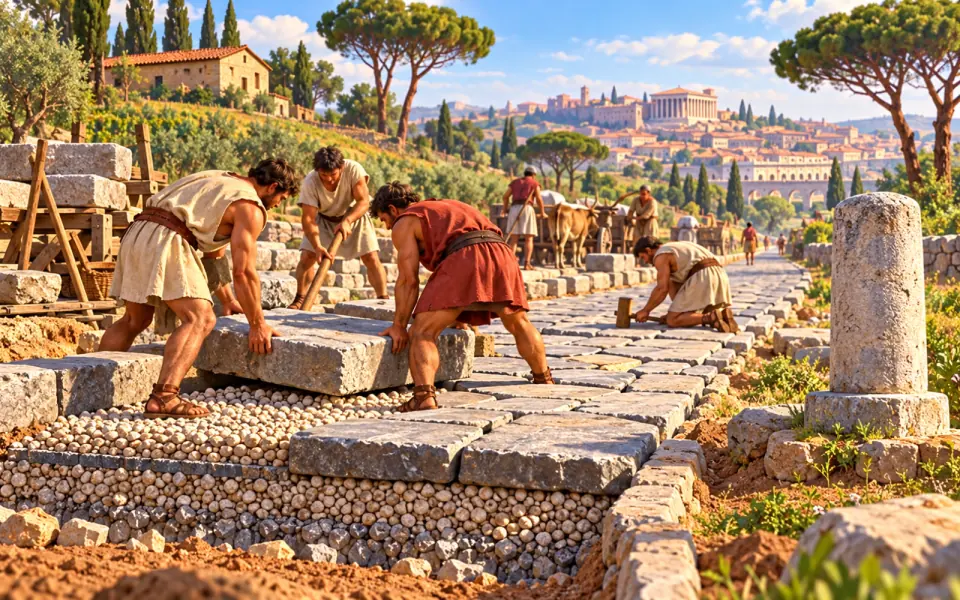 BeforeThe Appian Way312 BC
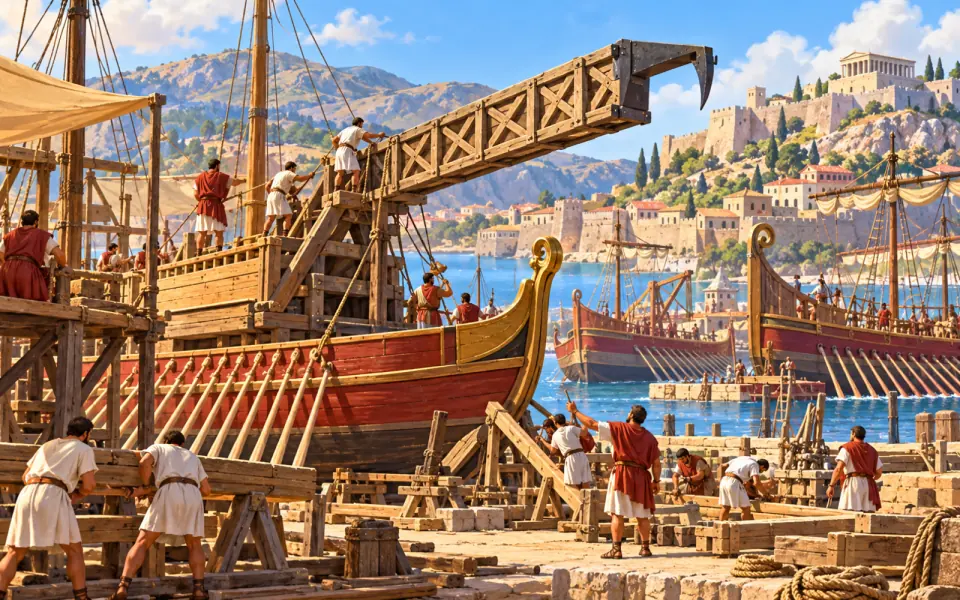 BeforeThe First Punic War264–241 BC
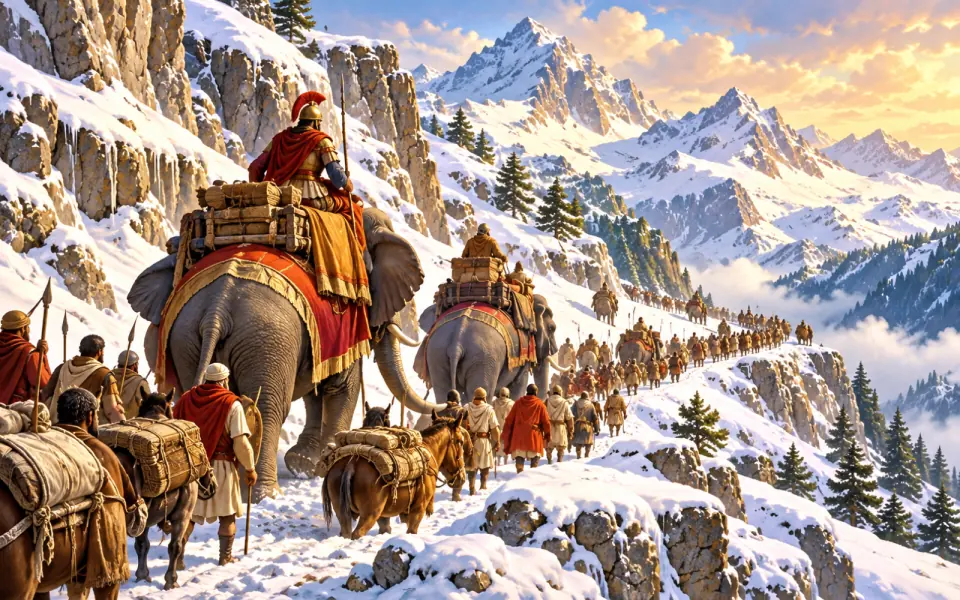 BeforeHannibal crosses the Alps218 BC
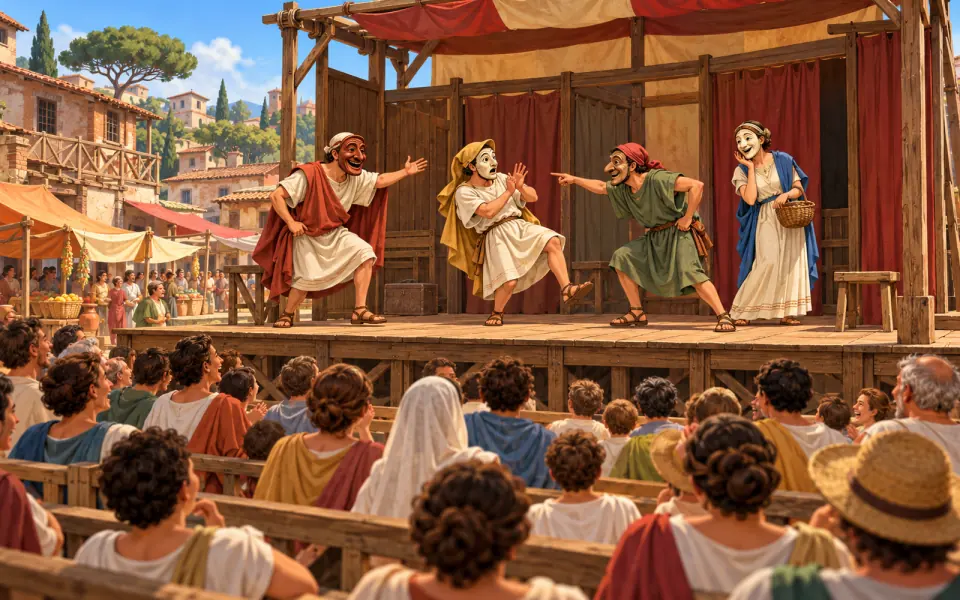 BeforePlautus and comedyabout 200 BC
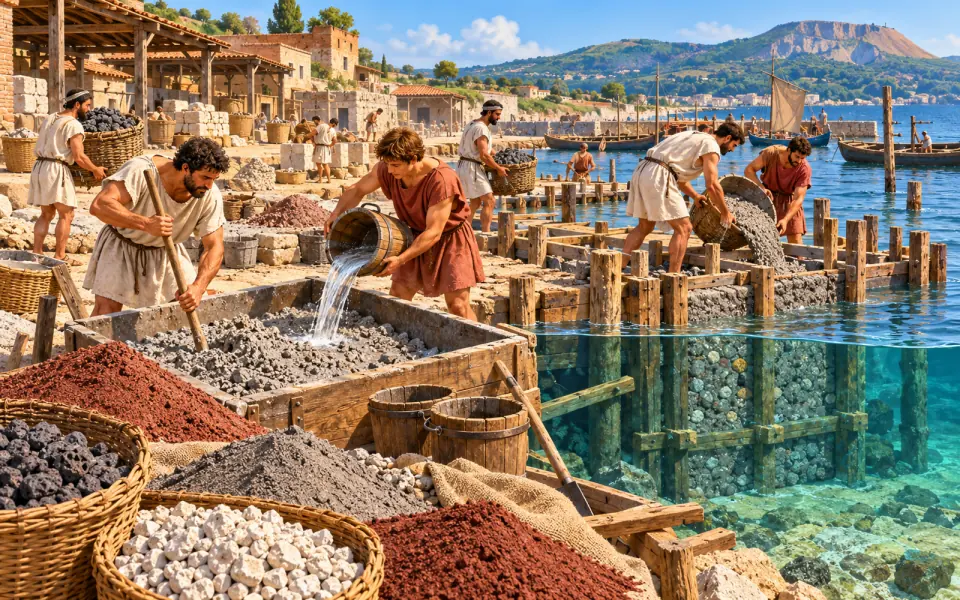 BeforeRoman concreteabout 150 BC
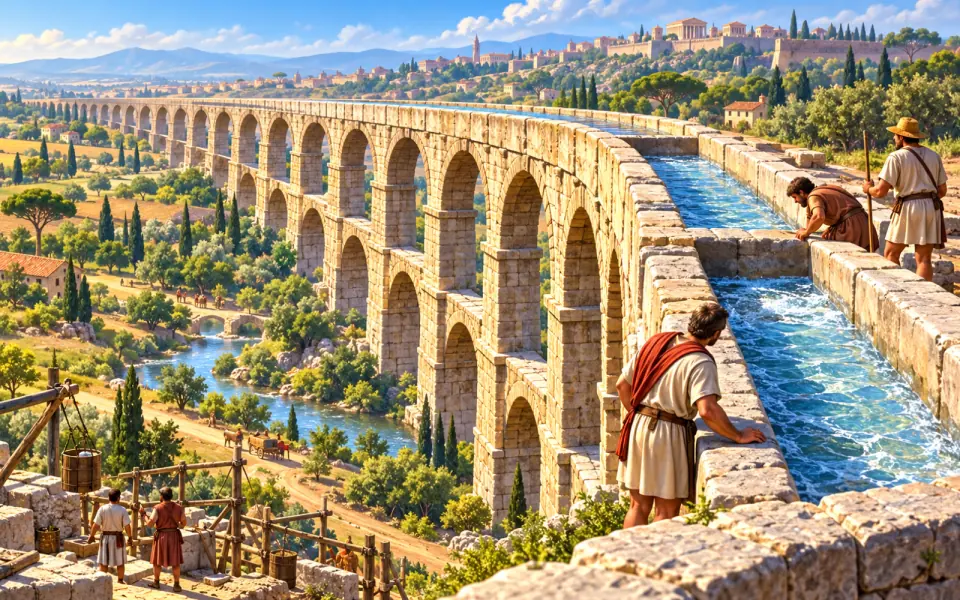 BeforeThe Aqua Marcia aqueduct144–140 BC
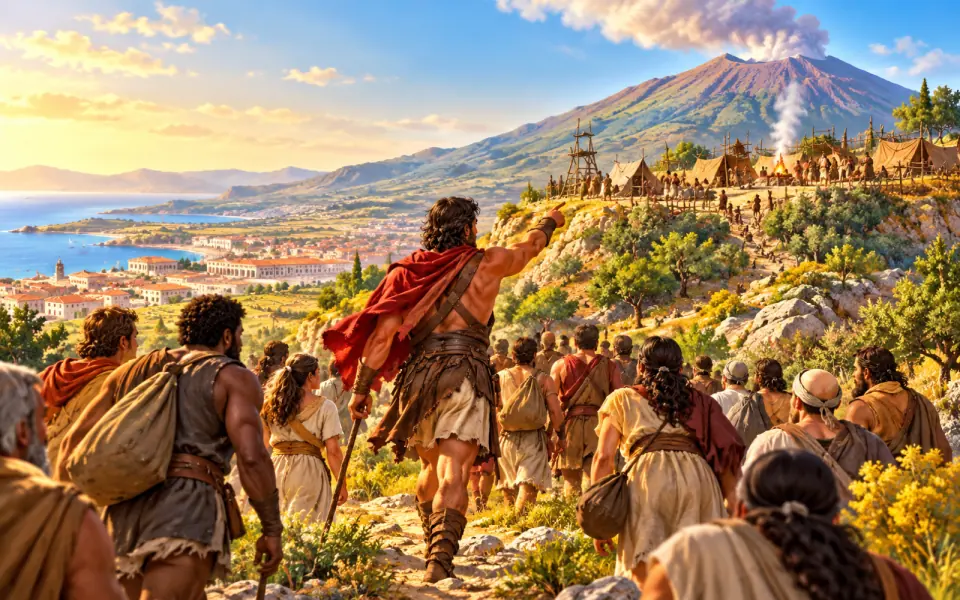 BeforeSpartacus leads the revolt73–71 BC
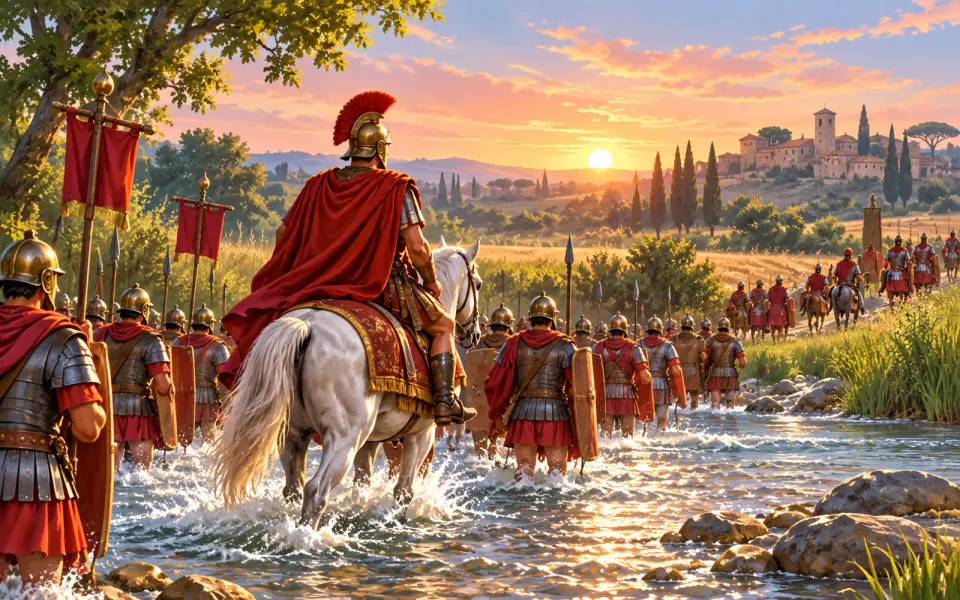 BeforeCaesar crosses the Rubicon49 BC
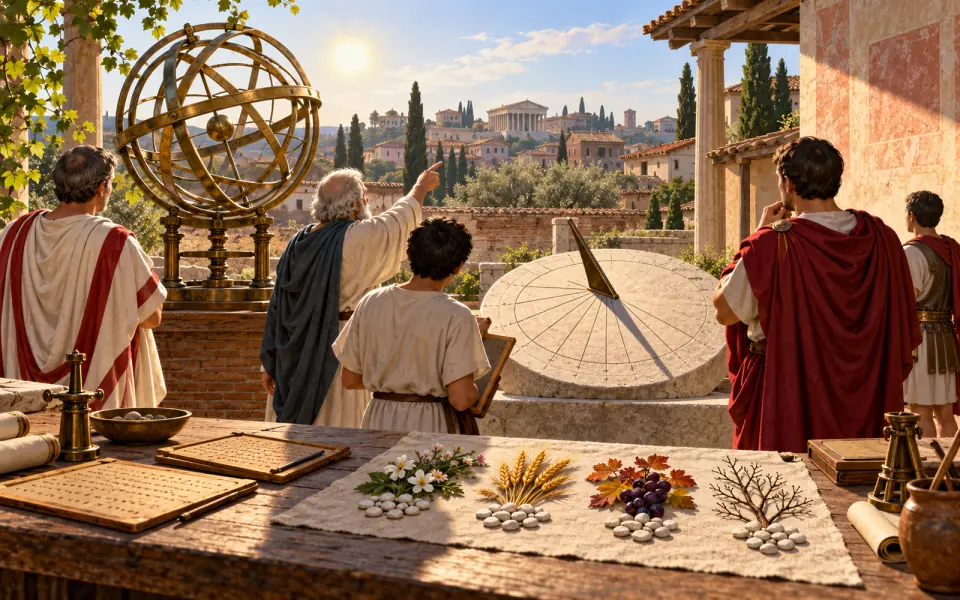 BeforeThe Julian calendar46 BC
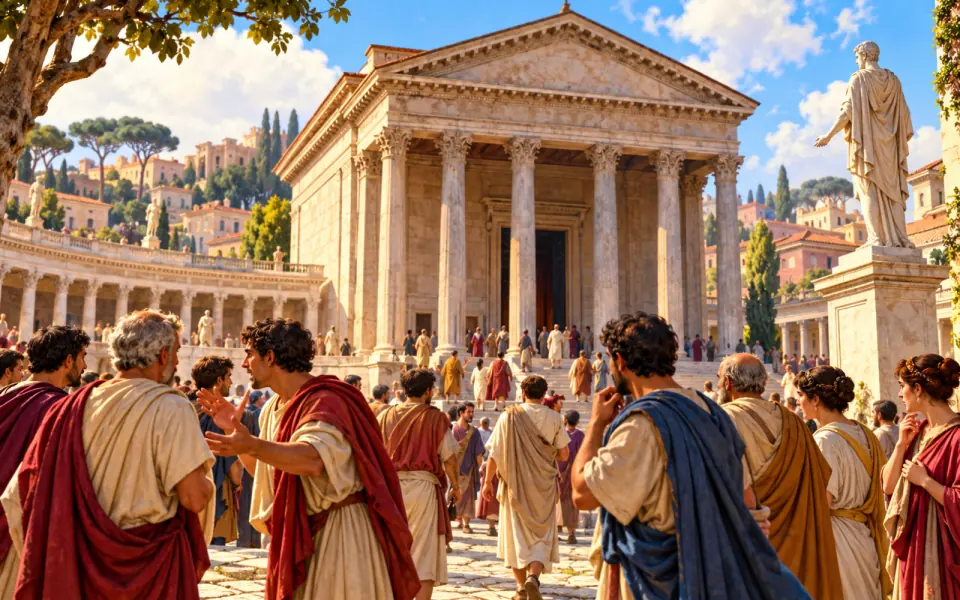 BeforeThe murder of Julius Caesar44 BC
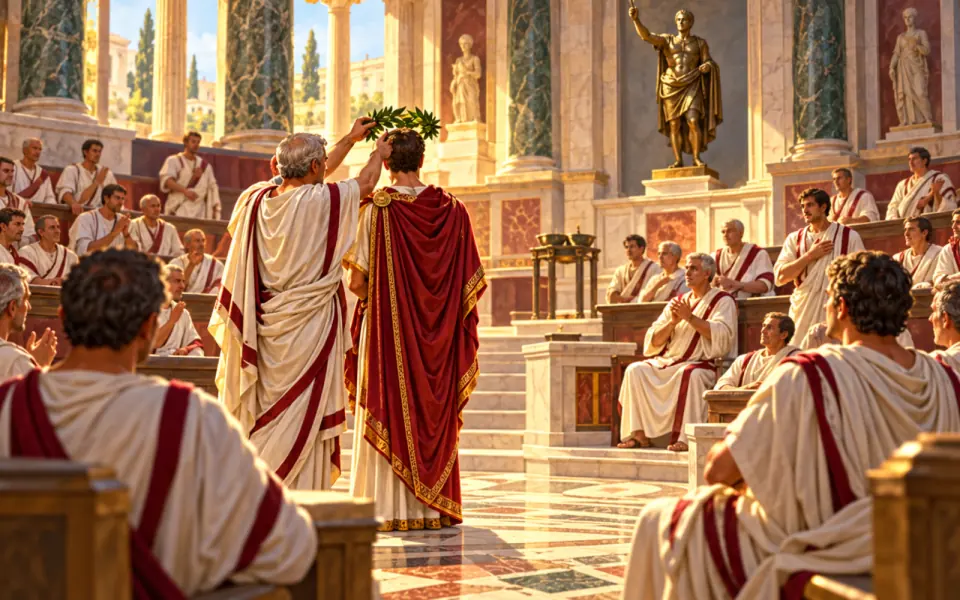 BeforeAugustus, the first emperor27 BC
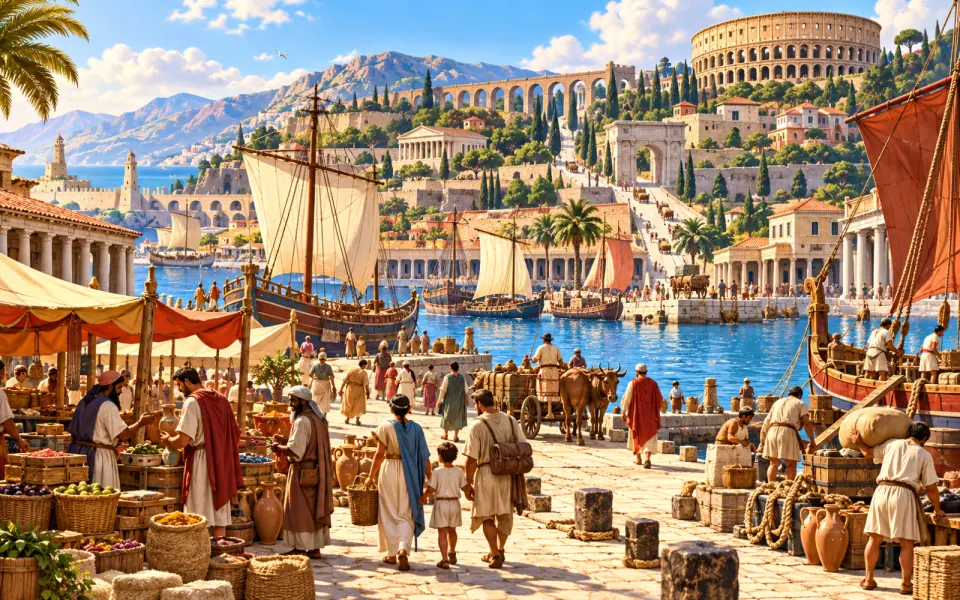 BeforeThe Pax Romana27 BC – AD 180
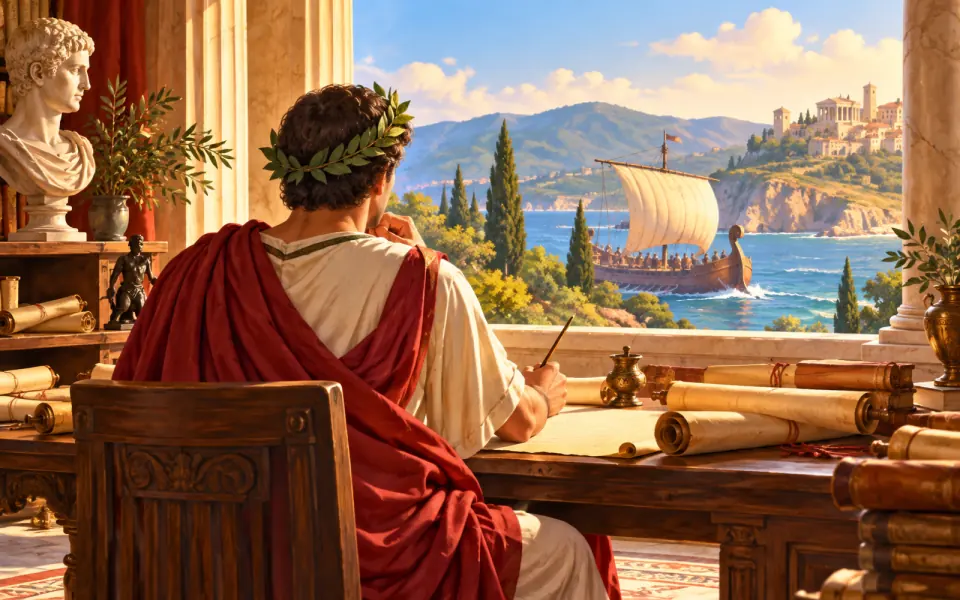 BeforeVirgil and the Aeneid19 BC
- You are herePompeii buried by VesuviusAD 79
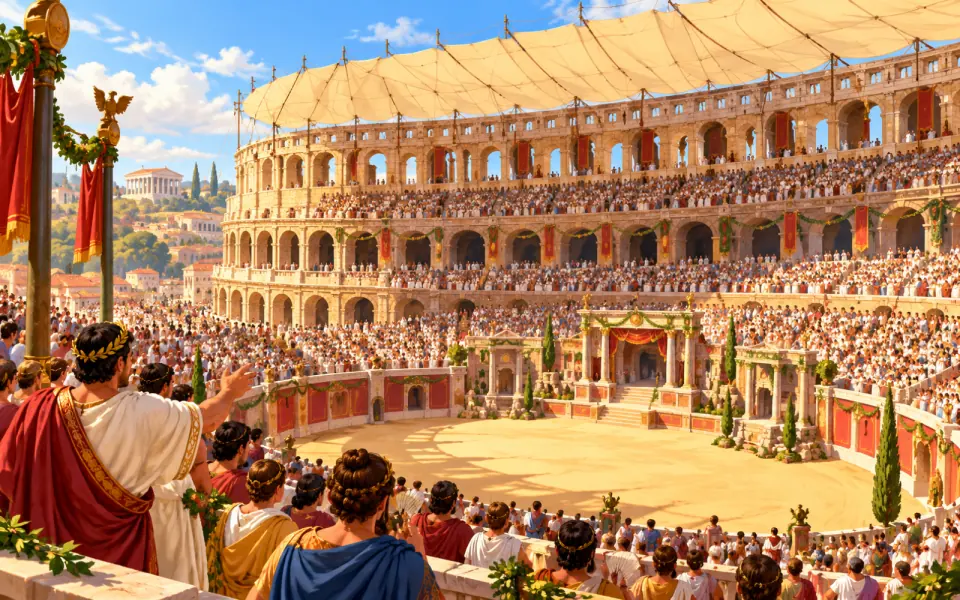 AfterThe Colosseum opensAD 80
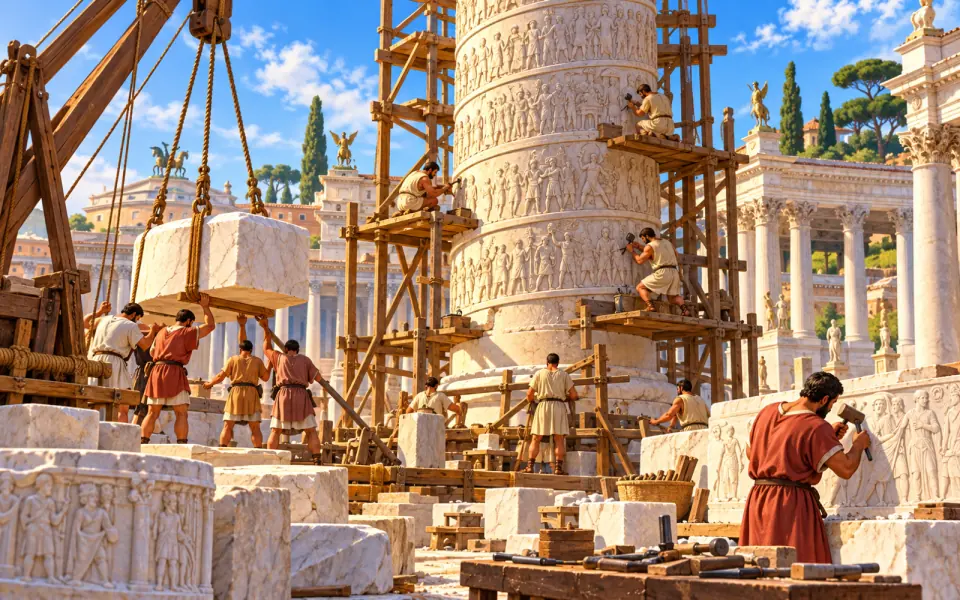 AfterTrajan's ColumnAD 113
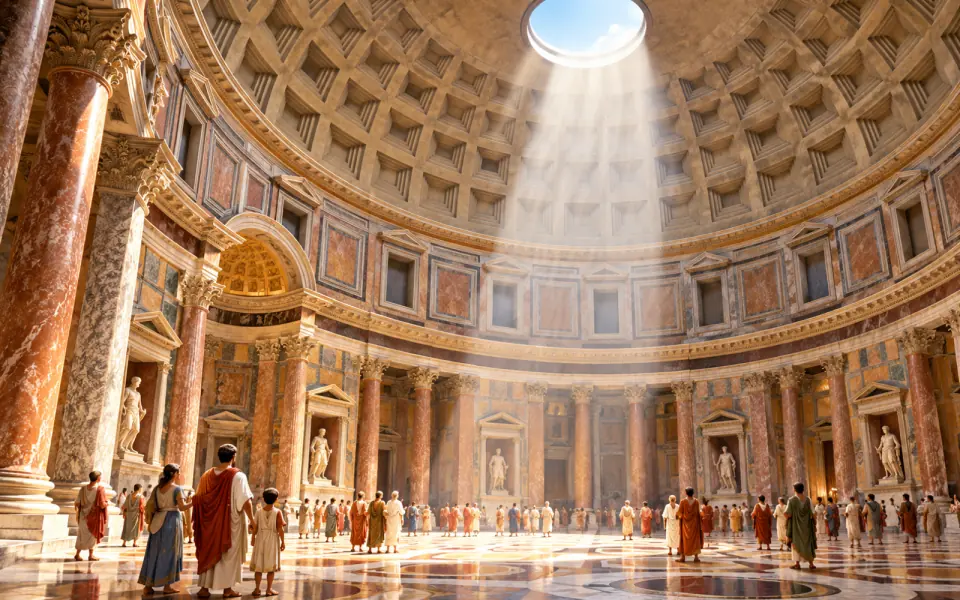 AfterThe Pantheonabout AD 125
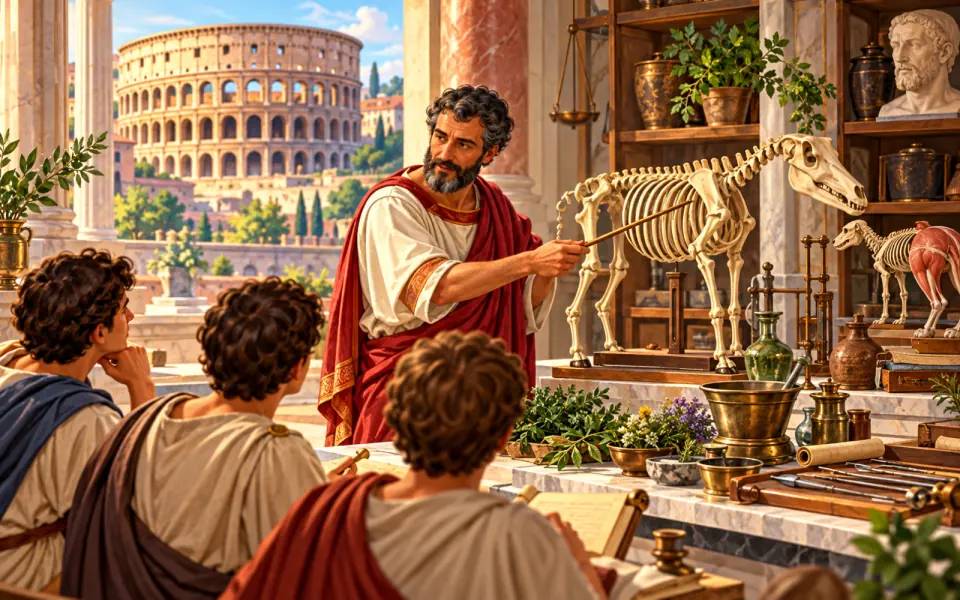 AfterGalen, a doctor in Romeabout AD 162
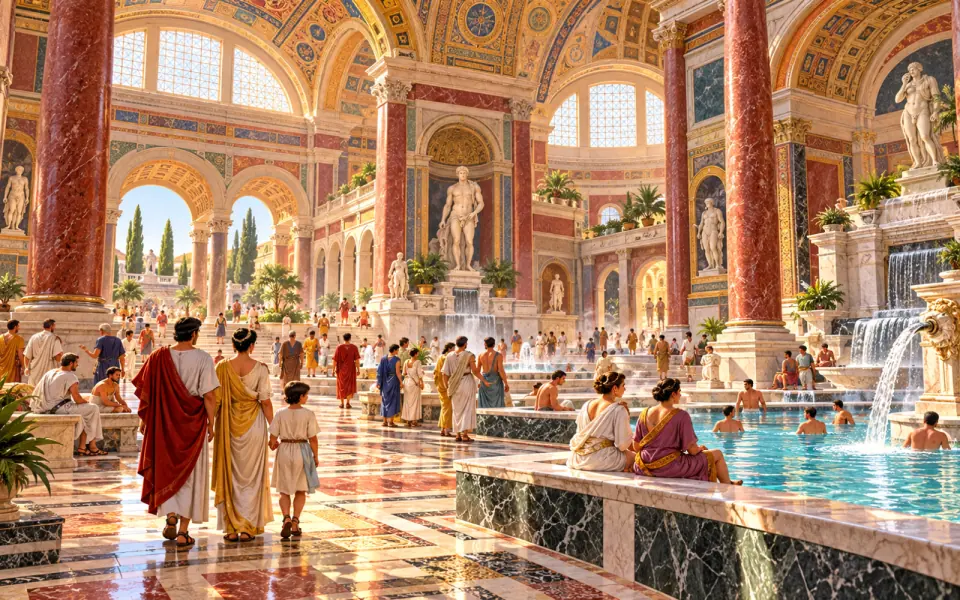 AfterThe Baths of CaracallaAD 216
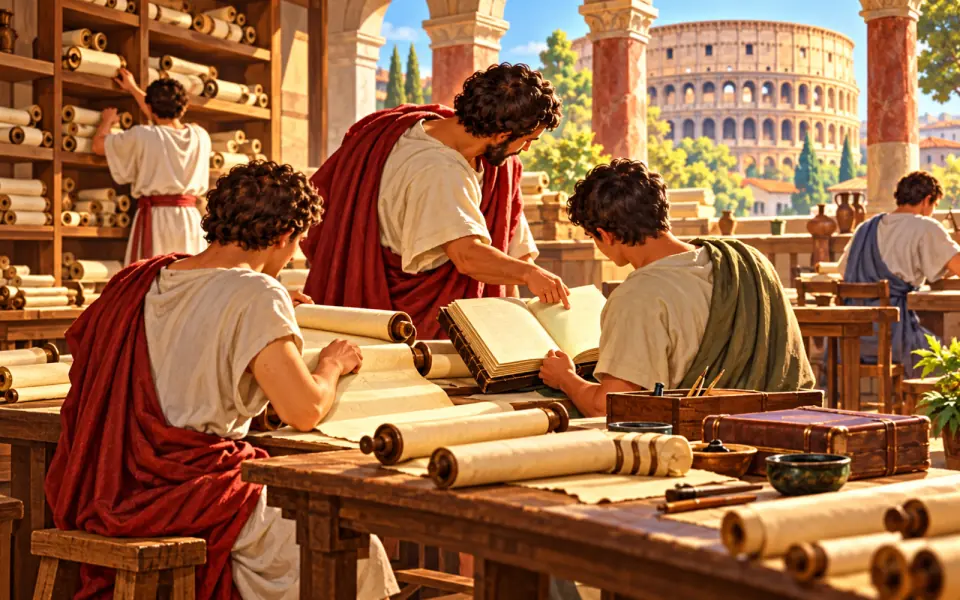 AfterThe book with pages (the codex)about AD 300
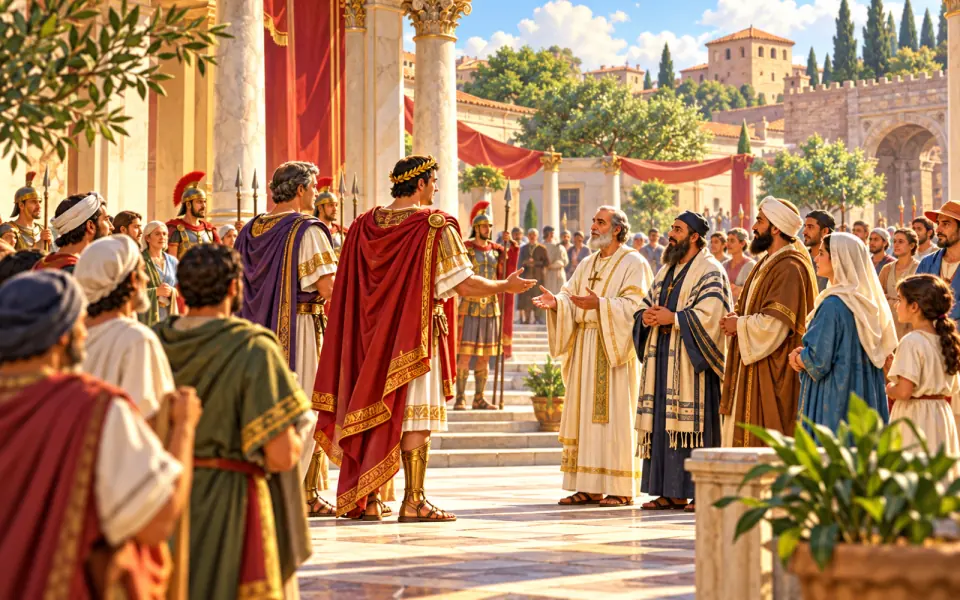 AfterThe Edict of MilanAD 313
 AfterFall of the Western Roman EmpireAD 476
Listen / Read next
- Music to read by: Cinematic JourneyEpic film-style music, no lyrics, by Ciro Simone IrmiciSpotifyYouTube Music
Meanwhile, elsewhere in the world
Other events of the era “Ancient Rome”
- Traditional founding of Rome
- Birth of the Roman Republic
- The Laws of the Twelve Tables
- The Appian Way
- The First Punic War
- Hannibal crosses the Alps
- Plautus and comedy
- Roman concrete
- The Aqua Marcia aqueduct
- Spartacus leads the revolt
- Caesar crosses the Rubicon
- The Julian calendar
- The murder of Julius Caesar
- Augustus, the first emperor
- The Pax Romana
- Virgil and the Aeneid
- The Colosseum opens
- Trajan's Column
- The Pantheon
- Galen, a doctor in Rome
- The Baths of Caracalla
- The book with pages (the codex)
- The Edict of Milan
- Fall of the Western Roman Empire
