The Edict of Milan
AD 313 Milan
In short
The emperors Constantine and Licinius met in Milan and agreed to allow freedom of religion to everyone living in the empire. Until a few years earlier Christians had been persecuted, meaning arrested and punished for their faith. With this agreement they could pray openly and get back the property that had been taken from them. Historians debate whether it was a real edict or a series of letters to governors, but the name has stuck.
Why it matters From then on Christianity grew quickly, until it became the official religion of the empire in AD 380.
Source: Treccani, entry “Milano, editto di”
Study card about 5 minutes of reading
The story
When Christians were persecuted
For the first three centuries after Christ, Christians were a minority within the Roman Empire. They did not worship the Romans' gods and did not take part in public rites, and for this reason, at certain times, they were suspected, arrested and punished for their faith. The persecutions were stronger at some moments and in some areas, less so in others. We remember these events with respect for those who suffered for their beliefs.
At the end of the 3rd century the emperor Diocletian reorganised the empire by entrusting it to four rulers, the tetrarchy (a Greek word meaning “rule of four”), established in 293. In those years there were new and harsh persecutions of Christians, linked above all to Galerius. But in 311 Galerius himself, ill, changed his mind: with the Edict of Serdica he granted a pardon to the Christians and allowed them to practise their religion.
Constantine and the Milvian Bridge
In 312 two men were contesting control of Rome and the West: Constantine and Maxentius. On 28 October 312 they clashed at the Milvian Bridge, a bridge over the Tiber, near the city. Constantine won. According to Christian tradition, before the battle Jesus Christ appeared to him in a dream and showed him a sign, with the words In hoc signo vinces, “by this sign you will conquer”. Historians debate what really happened: it is not a certain fact, but a tradition.
The meeting at Milan
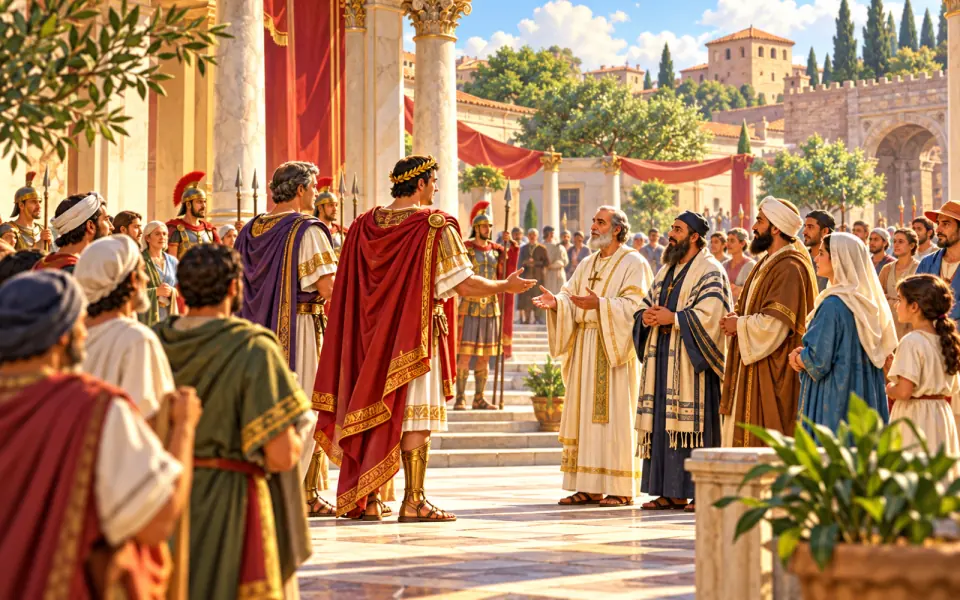
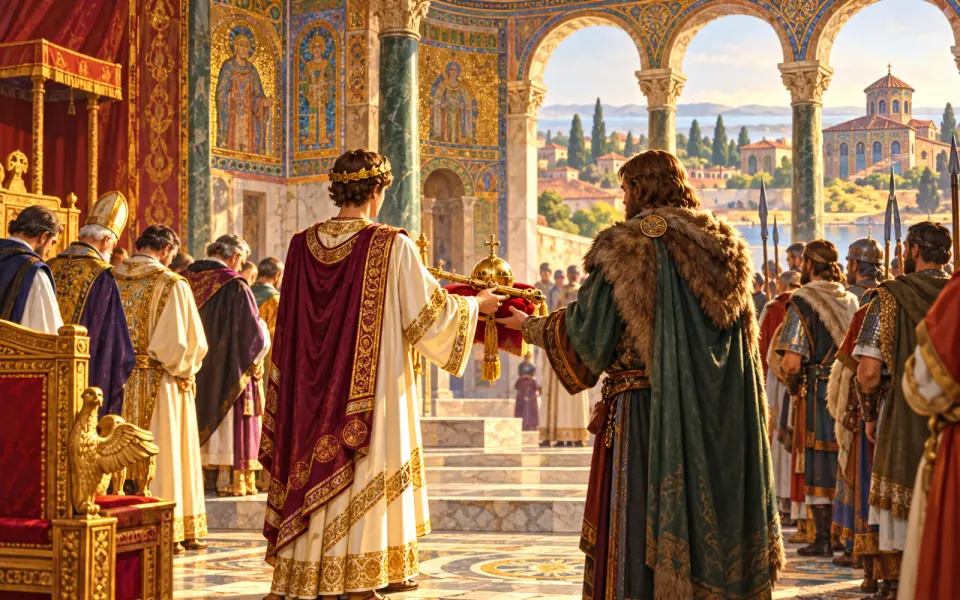
At the beginning of 313 Constantine, emperor of the West, met in Milan another emperor, Licinius, who ruled the eastern part of the empire. Milan was then the capital of the West. The occasion was a wedding: Licinius was marrying Constantia, Constantine's sister. The two took advantage of the meeting to discuss the empire's problems, and decided on a common line on religion.
What did they decide? That everyone should be free to follow the religion they preferred: not only Christians, but all the inhabitants of the empire. It was also ordered that places of worship and property that had been taken from the Christians be returned to them, even if in the meantime they had been legally bought by others. It was a way of making up for the wrongs of the persecutions.
An edict that perhaps was not an edict
Despite the name, historians are cautious. The text we know is not an edict signed in Milan. It is a letter, a rescript, that is, an official reply, which Licinius had posted at Nicomedia, in the East, with twelve points, in force from 13 June 313. The Latin preamble has been handed down to us by the Christian writer Lactantius, in the book De mortibus persecutorum (“On the Deaths of the Persecutors”).
Many scholars think it was a rescript that put into effect the edict of Galerius of 311. Some believe that the two emperors met in Milan only to talk, and that the provisions were written elsewhere, in Bithynia. For this reason today people often speak of the “Agreement of Milan”. Even so, the name “Edict of Milan” has remained, as has 313, the date everyone remembers.
From tolerance to support
After 313 the religious policy of the emperors changed: from simple tolerance they moved to support for Christianity. Constantine favoured the Christian communities, and two years later, in 315, the Senate dedicated to him a triumphal arch which can still be seen today in Rome, near the Colosseum.
The path continued in the following decades. On 27 February 380 the emperors Gratian, Theodosius I and Valentinian II, who was then eight or nine years old, issued at Thessalonica an edict, known by the first words of its text, Cunctos populos, which declared Christianity, in the form of the Nicene creed, the official religion of the empire. It hit above all other Christian currents, such as Arianism; bans on pagan cults came shortly after, in 391–392. In the following decades restrictions on the traditional cults increased and paganism was progressively outlawed.
So the passage from persecuted religion to state religion did not happen with a single act, but slowly, over almost seventy years, between 313 and 380.
Why it happened
The persecutions had not worked. They had not wiped out the Christians, and already in 311 Galerius had chosen pardon.
For Constantine and Licinius there was also a political reason. After years of civil wars they wanted to stabilise the empire and gain the support of the Christian communities. An agreement on freedom of worship was useful for keeping the peace and for strengthening their alliance, sealed also by a marriage.
What changed
After 313 Christians could pray openly, build churches and get back the property taken from them. Christianity grew rapidly and, with the Edict of Thessalonica of 380, became the official religion. This changed the face of Europe: churches, the calendar of festivals, culture and laws were marked by the new religion for many centuries.
But the path also had a difficult side. When a religion becomes the state religion, those who think differently risk being discriminated against. Historians note that in time religious dissent began to be treated as a crime. For this reason 313 is remembered as a step towards freedom of conscience, but the road was long and not straight.
The idea that everyone should be able to choose their religion freely is one of the principles of many states today and of international declarations on human rights. The Agreement of Milan was a distant ancestor of it.
Key people and places
People
- Constantine
- Emperor of the West from 312 after the victory at the Milvian Bridge. He favoured Christianity.
- Licinius
- Emperor of the East, Constantine's brother-in-law. He had the rescript on freedom of worship posted at Nicomedia.
- Galerius
- Emperor who in 311 issued the Edict of Serdica, granting a pardon to Christians.
- Lactantius
- Christian writer who has handed down to us the text of the preamble in De mortibus persecutorum.
Places
- Milan
- Capital of the Western Empire, where Constantine and Licinius met at the beginning of 313.
- Milvian Bridge
- Bridge over the Tiber, in Rome, where Constantine defeated Maxentius on 28 October 312.
- Nicomedia
- City in the East where Licinius had the twelve-point rescript displayed.
Good to know
- The name “Edict of Milan” is not very exact: the text we know is a rescript of Licinius displayed at Nicomedia.
- Valentinian II, one of the three emperors who signed the Edict of Thessalonica in 380, was only eight or nine years old.
- The motto In hoc signo vinces, “by this sign you will conquer”, linked to the battle of the Milvian Bridge, belongs to Christian tradition.
- In 315 the Senate dedicated to Constantine a triumphal arch that can still be seen in Rome.
- The term “tetrarchy” comes from Greek and means “rule of four”.
Find out more
- Wikipedia, “Diocletianic Persecution” en.wikipedia.org
- Wikipedia, “Edict of Milan” en.wikipedia.org
- Wikipedia, “Edict of Thessalonica” en.wikipedia.org
- Wikipedia, “Constantine the Great” en.wikipedia.org
Related events
- Fall of the Western Roman EmpireAD 476 · Ancient RomeA few decades later Christianity was the religion of the empire, which in 476 lost the West.
- The book with pages (the codex)about AD 300 · Ancient RomeChristians very early used the codex for their sacred texts.
- Emperor JustinianAD 527 · Early Middle AgesJustinian, in the 6th century, ruled an empire that was by now Christian.
- Benedictine monksabout AD 529 · Early Middle AgesBenedictine monasticism was born in the now Christian world that this change had created.
- The East–West Schism1054 · Late Middle AgesIn 1054 Christianity split into two Churches, Eastern and Western.
Before and after, in the era “Ancient Rome”
Event 24 of 25
 BeforeTraditional founding of Romeabout 753 BC
 BeforeBirth of the Roman Republicabout 509 BC
 BeforeThe Laws of the Twelve Tablesabout 450 BC
 BeforeThe Appian Way312 BC
 BeforeThe First Punic War264–241 BC
 BeforeHannibal crosses the Alps218 BC
 BeforePlautus and comedyabout 200 BC
 BeforeRoman concreteabout 150 BC
 BeforeThe Aqua Marcia aqueduct144–140 BC
 BeforeSpartacus leads the revolt73–71 BC
 BeforeCaesar crosses the Rubicon49 BC
 BeforeThe Julian calendar46 BC
 BeforeThe murder of Julius Caesar44 BC
 BeforeAugustus, the first emperor27 BC
 BeforeThe Pax Romana27 BC – AD 180
 BeforeVirgil and the Aeneid19 BC
 BeforePompeii buried by VesuviusAD 79
 BeforeThe Colosseum opensAD 80
 BeforeTrajan's ColumnAD 113
 BeforeThe Pantheonabout AD 125
 BeforeGalen, a doctor in Romeabout AD 162
 BeforeThe Baths of CaracallaAD 216
 BeforeThe book with pages (the codex)about AD 300
- You are hereThe Edict of MilanAD 313
 AfterFall of the Western Roman EmpireAD 476
Listen / Read next
- Music to read by: Cinematic JourneyEpic film-style music, no lyrics, by Ciro Simone IrmiciSpotifyYouTube Music
Other events of the era “Ancient Rome”
- Traditional founding of Rome
- Birth of the Roman Republic
- The Laws of the Twelve Tables
- The Appian Way
- The First Punic War
- Hannibal crosses the Alps
- Plautus and comedy
- Roman concrete
- The Aqua Marcia aqueduct
- Spartacus leads the revolt
- Caesar crosses the Rubicon
- The Julian calendar
- The murder of Julius Caesar
- Augustus, the first emperor
- The Pax Romana
- Virgil and the Aeneid
- Pompeii buried by Vesuvius
- The Colosseum opens
- Trajan's Column
- The Pantheon
- Galen, a doctor in Rome
- The Baths of Caracalla
- The book with pages (the codex)
- Fall of the Western Roman Empire
