The reforms of Solon
about 594 BC Athens (Greece)
In short
In Athens many poor farmers had ended up as slaves because they could not pay their debts. The wise Solon, chosen as archon, a chief official, cancelled those debts and banned enslaving people who could not pay back a loan. He then divided citizens into four classes according to wealth, no longer just according to birth. He also wrote poems to explain his laws.
Why it matters His reforms were Athens' first step towards democracy.
Source: Encyclopaedia Britannica, “Solon”
Study card about 6 minutes of reading
The story
Athens on the brink of revolt
At the start of the 6th century BC Athens was a city in crisis. The land belonged mainly to a few noble families, and the poorest farmers worked fields that were not theirs, having to hand over part of the harvest to the owners: according to tradition, a sixth. When there was a famine they had nothing to eat, and so they asked for loans. The problem was the security: those who had nothing to pledge promised themselves and their families. If they could not repay the debt, the creditor could turn them into his slaves. An Athenian citizen, born free, could thus find himself a servant in his creditor's house.
The city was at risk of civil war. The poor wanted the land to be shared out again, the rich did not want to give up anything. The Athenians then looked for a man everyone could trust: Solon.
Who Solon was
Solon was born around 638 BC and had made a name as a poet: his elegies, poems on moral and political themes, were recited in the square. One of them, about the reconquest of the island of Salamis, was recited in the agora. When he was chosen as archon, one of the city's supreme magistrates, he had a reputation as a balanced man, able to speak to rich and poor alike. Historians date his archonship to around 594 BC: some sources give 594/593, others 591 or 590. That is why the site says “about 594”.
The “shaking off of burdens”
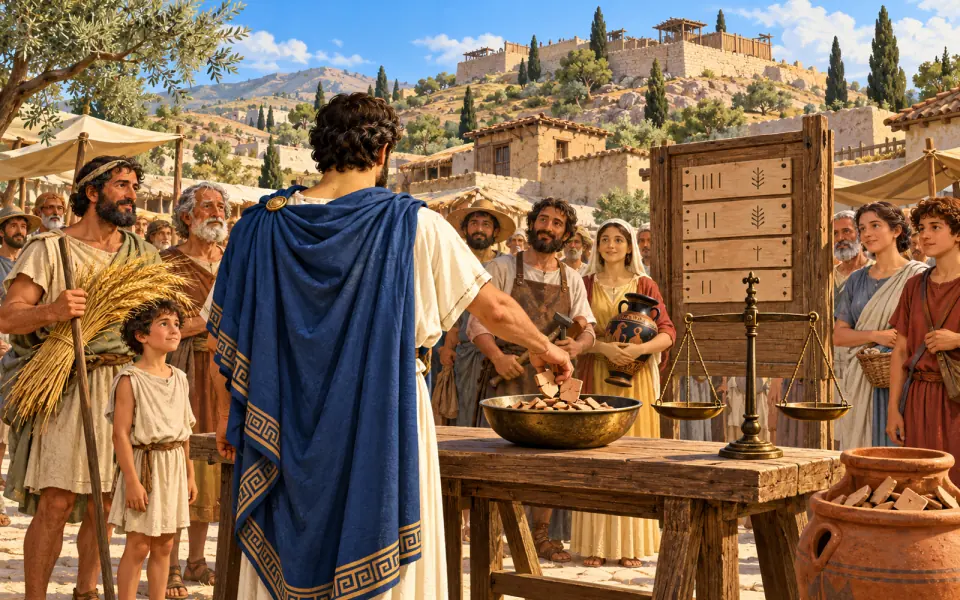
The most famous reform is called the “seisachtheia”, which means “shaking off of burdens”: debts, a weight on the shoulders of the poor, were in some way lightened. A law forced creditors to give up existing debts and forbade, for the future, lending money with a person's freedom as security. Scholars do not agree on how this was done: according to Plutarch the debts were cancelled, while other ancient authors claimed that Solon had changed the value of the coinage, so that debts weighed less. In any case, the Athenians who had fallen into slavery for debt were freed.
Four classes by income
Solon also changed the way power was shared. Before, birth was what mainly counted: those with noble ancestors gave the orders. With his reform the citizens were divided into four classes according to how much they harvested each year from their fields. The richest, the pentacosiomedimni, produced more than 500 “medimnoi” of grain. Next came the knights (from 300 to 500 medimnoi, or those who could keep a horse), then the zeugitai (from 200 to 300) and finally the thetes, the poorest, with less than 200. The highest offices were reserved for the richer classes, but the thetes, who before had counted for nothing, entered the assembly and the courts. It was a step forward: wealth now counted too, and anyone, in theory, could improve his position.
The Council of Four Hundred
According to ancient tradition, Solon created a new council, the Boule of the Four Hundred, with a hundred members from each of the four tribes. It prepared the matters to be discussed in the assembly of citizens. The court of the Areopagus, made up of former magistrates, was reorganised. As for the laws, he abolished almost all those of Draco, famous for their harshness: only those on homicide remained in force.
After the reforms
When his term was over, Solon did not want to use his fame to rule for longer. He asked to be allowed to retire to private life and to travel for ten years. He went to Egypt, to Canopus, and to Cyprus, where he advised King Philocyprus on the founding of a new city. A tradition, perhaps unfounded, says he also met the fabulously rich King Croesus. The tradition of the Seven Sages, the wise men of ancient Greece, includes him too.
His reforms did not solve every problem. In Athens the rich and the poor went on quarrelling. When he came back to the city, a noble named Pisistratus, skilful and popular, had himself given a bodyguard, occupied the Acropolis and became tyrant. Solon protested in the assembly, then laid down his weapons in front of his door, but Pisistratus did not persecute him and kept most of his laws.
Why it happened
Athens had become a city with deep imbalances. A few owners had the best land, while many farmers lived on the edge. In a bad year the small farmer fell into debt; if he did not pay, he lost first his field and then his freedom. This mechanism reduced every year the number of free citizens, and so of soldiers who could defend the polis.
The aristocrats, for their part, controlled the offices and the courts and decided in their own interest. The laws of Draco, in force for some time, were considered extremely harsh. The tension between those who had too much and those who had nothing had reached the point where many feared civil war. A negotiated solution, entrusted to a person respected by all, seemed the only way.
What changed
The end of slavery for debt was a turning point: from then on an Athenian citizen could no longer be reduced to slavery because he had not repaid a loan. This kept up the number of free men and strengthened the idea that freedom was the basis of citizenship.
With the four classes even the poorest entered the assembly and the courts. It was a first step towards the participation of many citizens in the decisions of the polis. Later Cleisthenes and Pericles went much further, but Athenian democracy can be said to start here.
For later generations Solon became a model of the wise lawgiver: someone who, instead of seizing power, builds rules that apply to everyone. His poems are also a precious source, because they let us hear the voice of a man concerned about justice.
Key people and places
People
- Solon
- Athenian lawgiver and poet (about 638–558 BC), archon around 594 BC, remembered among the Seven Sages.
- Draco
- Athenian lawgiver of the late 7th century BC, famous for very harsh laws; Solon cancelled almost all of them.
- Pisistratus
- Athenian noble who in the 6th century BC made himself tyrant; he respected Solon's constitution.
- Philocyprus
- King of Cyprus advised by Solon on the founding of the city of Soli.
Places
- Athens
- The polis of Attica where Solon carried out his reforms.
- Acropolis
- The fortified hill of Athens, occupied by Pisistratus when he took power.
- Salamis
- An island near Athens: a poem by Solon urged its reconquest.
- Canopus
- A city in the Nile delta, in Egypt, where Solon stayed during his journey.
Good to know
- The word “seisachtheia” is made of two Greek words and means “shaking off of burdens”: like shrugging a load off your shoulders.
- Solon wrote his laws in prose, but explained his choices in verse, in poems: a rare voice in the history of politics.
- Even the thetes, the poorest class, had a place in the assembly and the courts.
- When Pisistratus took power, Solon laid down his weapons in front of his front door as a protest.
Find out more
- Wikipedia, “Solon” en.wikipedia.org
- Wikipedia, “Athenian democracy” en.wikipedia.org
- Wikipedia, “Seven Sages of Greece” en.wikipedia.org
- Wikipedia, “Draco (lawgiver)” en.wikipedia.org
Related events
- Cleisthenes and democracyabout 508 BC · Ancient GreeceCleisthenes carried forward the road to democracy begun by Solon.
- The first Greek city-statesabout 800 BC · Ancient GreeceSolon's reforms concern the Athenian polis.
- Sappho, the poet of Lesbosabout 600 BC · Ancient GreeceSappho and Solon are poets who lived in the same period.
- The Age of Pericles461–429 BC · Ancient GreecePericles fulfilled the dream of citizens taking part in government.
- The Code of Hammurabiabout 1754 BC · River civilisationsThe Code of Hammurabi is another example of written laws meant to bring back justice.
Before and after, in the era “Ancient Greece”
Event 6 of 25
 BeforeThe first Greek city-statesabout 800 BC
 BeforeThe ancient Olympic Gamesabout 776 BC
 BeforeThe Greek alphabetabout 750 BC
 BeforeLife in Spartaabout 700 BC
 BeforeSappho, the poet of Lesbosabout 600 BC
- You are hereThe reforms of Solonabout 594 BC
 AfterThales studies natureabout 585 BC
 AfterPythagoras at Crotonabout 530 BC
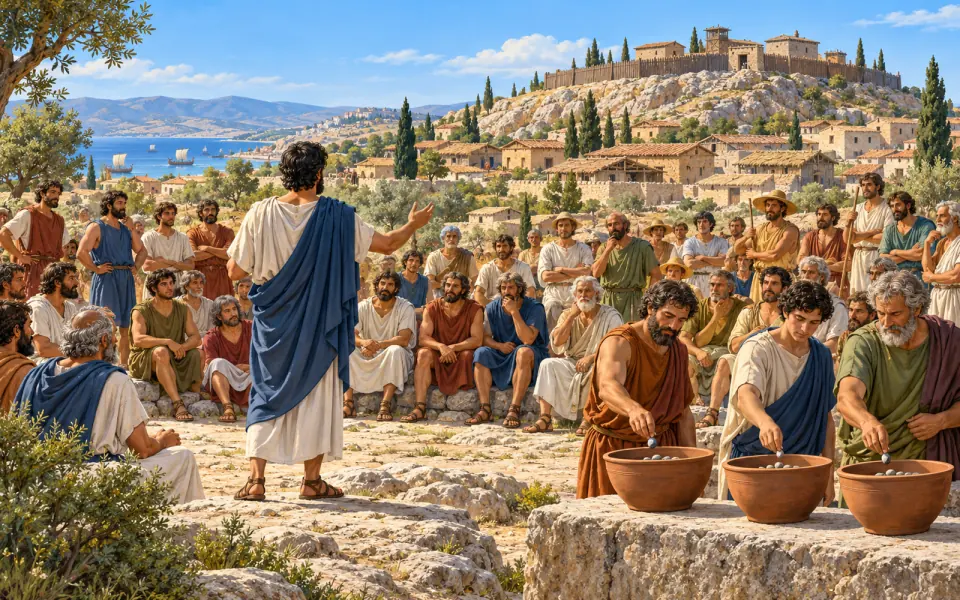 AfterCleisthenes and democracyabout 508 BC
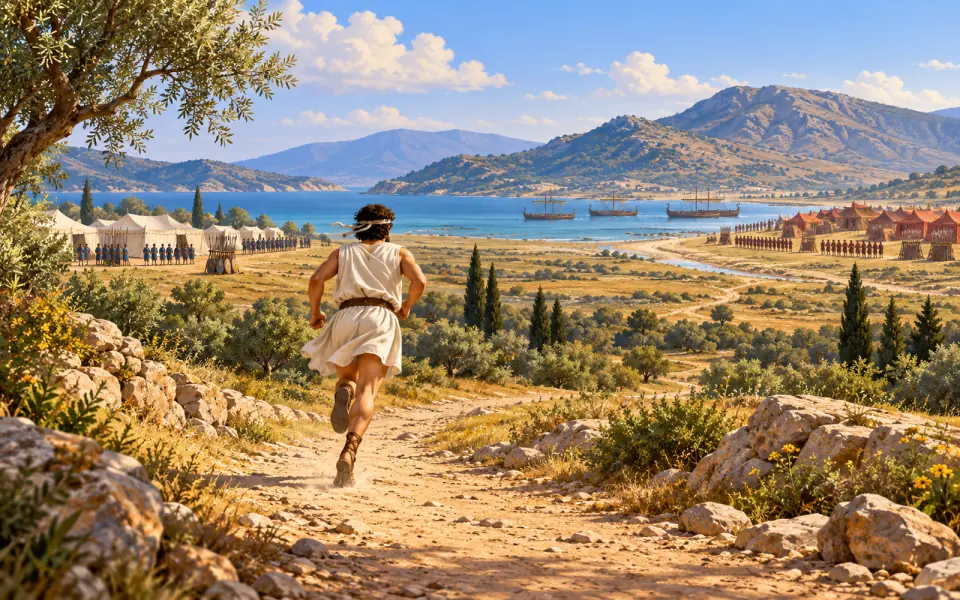 AfterThe Battle of Marathon490 BC
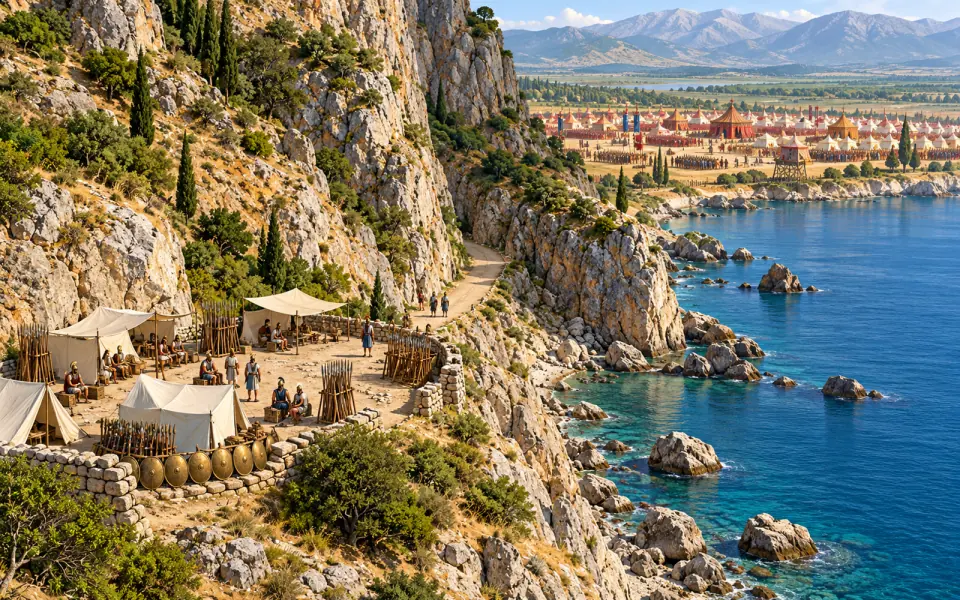 AfterThe Battle of Thermopylae480 BC
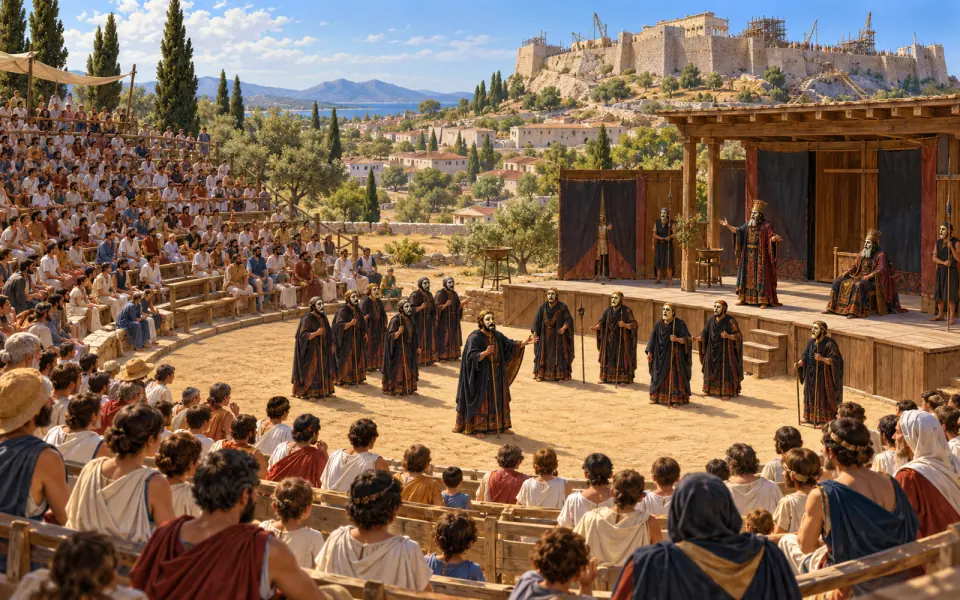 AfterThe theatre of Aeschylus472 BC
 AfterThe Age of Pericles461–429 BC
 AfterThe Parthenon447–432 BC
 AfterThe Peloponnesian War431–404 BC
 AfterHerodotus writes the Historiesabout 430 BC
 AfterHippocrates and medicineabout 400 BC
 AfterSocrates is condemned399 BC
 AfterPlato's Academyabout 387 BC
 AfterAristotle founds the Lyceumabout 335 BC
 AfterThe conquests of Alexander334–323 BC
 AfterEuclid writes the Elementsabout 300 BC
 AfterThe Library of Alexandriaabout 295 BC
 AfterArchimedes of Syracuseabout 250 BC
 AfterThe Antikythera mechanismabout 100 BC
Listen / Read next
- Music to read by: Cinematic JourneyEpic film-style music, no lyrics, by Ciro Simone IrmiciSpotifyYouTube Music
Meanwhile, elsewhere in the world
Other events of the era “Ancient Greece”
- The first Greek city-states
- The ancient Olympic Games
- The Greek alphabet
- Life in Sparta
- Sappho, the poet of Lesbos
- Thales studies nature
- Pythagoras at Croton
- Cleisthenes and democracy
- The Battle of Marathon
- The Battle of Thermopylae
- The theatre of Aeschylus
- The Age of Pericles
- The Parthenon
- The Peloponnesian War
- Herodotus writes the Histories
- Hippocrates and medicine
- Socrates is condemned
- Plato's Academy
- Aristotle founds the Lyceum
- The conquests of Alexander
- Euclid writes the Elements
- The Library of Alexandria
- Archimedes of Syracuse
- The Antikythera mechanism
