Plato's Academy
about 387 BC Athens (Greece)
In short
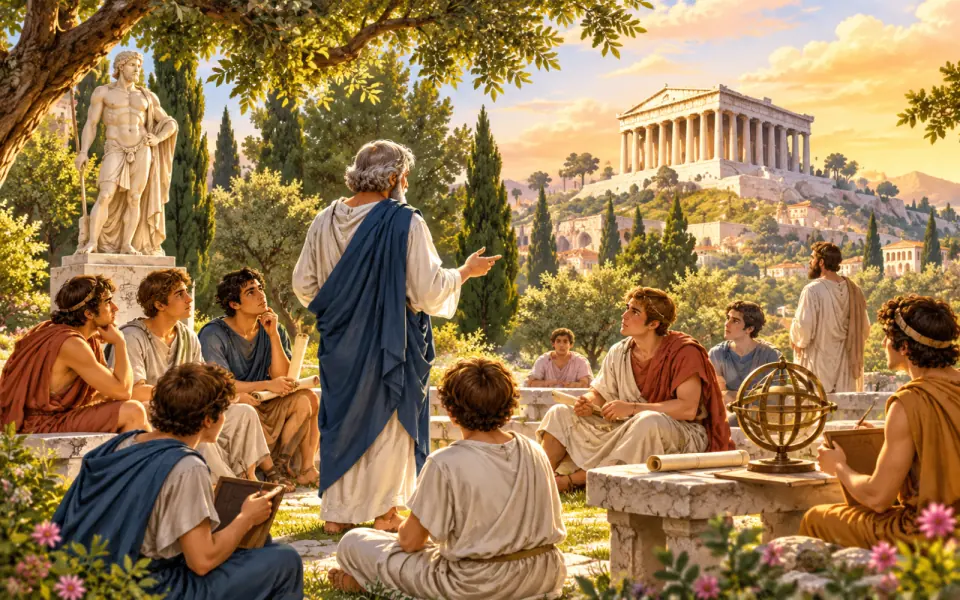
After the death of his teacher Socrates, Plato travelled for a long time, Sicily included, and then returned to Athens. In a park outside the city, dedicated to the hero Academus, he opened a school where philosophy, mathematics and astronomy were studied. He wrote dialogues in which Socrates debates with friends and opponents, such as the “Republic”, where he imagines the ideal city. The school, called the Academy, stayed open for centuries.
Why it matters Even today the words ‘academy’ and ‘academic’ remind us of that garden in Athens.
Source: Treccani, entry “Platone”
Study card about 6 minutes of reading
The story
After Socrates
Plato was born in Athens between 428 and 427 BC into an aristocratic family. His father, Ariston, had among his ancestors Codrus, the last legendary king of Athens; his mother, Perictione, was descended, according to an ancient writer, from the lawgiver Solon. His real name was Aristocles. “Plato”, which comes from a Greek word meaning “broad”, was a nickname: according to tradition a gymnastics teacher gave it to him for the breadth of his shoulders, although others thought of his forehead or his style of writing.
As a young man Plato was close to Socrates, and when Socrates was condemned to death, in 399 BC, he was deeply affected. He devoted himself to philosophy and for some years travelled. Around 390 BC, according to tradition, he met in southern Italy the Pythagorean philosopher Archytas of Tarentum.
A journey that ended badly
In 388 or 387 BC Plato went to Sicily, invited by the tyrant of Syracuse, Dionysius I. There he met Dion, the tyrant's brother-in-law, who became his pupil. But a quarrel arose between Plato and Dionysius. The story goes that Plato was put on a ship and sold as a slave at Aegina. He was ransomed by a friend, Anniceris of Cyrene. Modern scholars debate who was responsible and whether it really happened like this.
The park of Academus
Back in Athens, Plato bought a piece of land to the north-west of the city, outside the walls, near the village of Colonus. The place was a public park dedicated to the hero Academus, so that it was called “Hekademia”. Here, in 387 BC according to tradition, Plato founded his school, which took the name of the Academy. Legally it was a religious association dedicated to Apollo and the Muses.
It was not a school like ours. There were no classes and no marks. It was a community of teachers and pupils who lived and studied together, and the method was discussion, “dialectic”: a problem was put forward, different opinions were heard, and people tried to take them apart with arguments and build a better answer. They studied philosophy, mathematics, geometry, astronomy, optics. Among the scholars linked to the Academy were distinguished mathematicians, such as Theaetetus of Athens and Eudoxus of Cnidus.
The dialogues
Plato wrote a great deal, and almost all of it in the form of dialogue, that is, conversation between characters, of whom the most important is Socrates. The works that have come down to us number 36: 34 dialogues, the “Apology of Socrates” and a collection of thirteen letters. In the “Apology” we find Socrates' defence at his trial. In the “Republic” Plato describes what a just city should be like. In the “Symposium” each guest at a banquet says what love is. In the “Phaedo” it is argued that the soul is immortal. In the “Timaeus” he speaks of how the universe is made.
The central idea of his thought is the “theory of Forms”. For Plato the things we see with our eyes change and pass away, while the Forms, such as the Beautiful, the Just, the Good, are eternal and unchanging and live in a world he calls “hyperuranian”, that is, “beyond the heavens”. To know means to remember what the soul has already seen in that world, according to an idea he called “anamnesis”. These are difficult thoughts, but from them came many questions that we still ask today.
Two more journeys to Sicily
Plato returned to Sicily twice more. In 367–366 BC, invited by Dion, he tried to influence the new tyrant Dionysius II and to bring about reforms, but conflicts with the tyrant led to Dion's exile. In 361 BC he tried again, but once more without success: he broke off relations with Dionysius and left Sicily in 360 BC thanks to the mediation of Archytas. The dream of a government of philosophers did not come true.
The school after him
Plato died between 348 and 347 BC. Aristotle, who had come to Athens at 17, had studied in the Academy until then. The school was led after Plato by Speusippus and then Xenocrates. The Academy went through several phases, and with some masters, like Arcesilaus and Carneades, it took on a sceptical approach. The ancient site was destroyed by the soldiers of the Roman general Sulla during the siege of Athens (87–86 BC), in 86 BC. The school resumed later as the “school of the Platonists of Athens”. In AD 529 the emperor Justinian ordered its closure, and the last philosophers, among them Damascius, sought refuge at the court of the king of Persia. The Academy had lasted, in one form or another, about nine centuries.
Why it happened
According to many scholars, Plato founded the Academy for two reasons. The first was the death of Socrates: after that experience he wanted to train people able to think and to govern with justice. The second was that, after his travels, he had come to know the mathematics of the Pythagoreans and wanted to make it the basis of a broader education.
In addition, Athens offered the right conditions: a city full of teachers, sophists and curious young people, with many people willing to discuss politics, justice and knowledge. For young men of rich families, studying with a teacher was a way of preparing for public life.
What changed
The Academy was the first higher school in the Western world, and its model was imitated for centuries: Aristotle founded the Lyceum, then came the schools of Alexandria and the medieval universities. The idea of a lasting community of scholars, with a library and a method of discussion, lives on today in universities.
Plato's thought has influenced philosophy, religion, mathematics and politics. In the Renaissance, in Florence, Marsilio Ficino took up his thought in the Neoplatonic Academy born under the protection of Cosimo de' Medici, which faded towards the end of the 15th century, after 1494.
The words “academy”, “academic” and “academy of fine arts” still recall that garden in Athens. Even the way of organising schools and teaching through dialogue is inspired, if from afar, by his example.
Key people and places
People
- Plato
- Athenian philosopher (428/427–348/347 BC), a pupil of Socrates and founder of the Academy.
- Dion of Syracuse
- Brother-in-law of the tyrant Dionysius I, he became a pupil of Plato and invited him to Sicily.
- Archytas of Tarentum
- Pythagorean philosopher, friend of Plato; he helped him leave Sicily in 360 BC.
- Aristotle
- He studied in the Academy as a young man and stayed until Plato's death.
- Speusippus and Xenocrates
- The first two successors of Plato at the head of the school.
Places
- Academy
- Park to the north-west of Athens, dedicated to the hero Academus, where Plato opened his school.
- Syracuse
- Greek city of Sicily, where Plato went three times, invited by the tyrants.
- Aegina
- Island near Athens where, according to the story, Plato was sold as a slave.
- Florence
- In the Renaissance a Platonic Academy inspired by the one in Athens was born there.
Good to know
- Plato's real name was Aristocles: “Plato” was a nickname.
- According to tradition, Plato was sold as a slave at Aegina and ransomed by a friend.
- 36 works by Plato have come down to us, counting dialogues, the Apology and letters.
- Plato's Academy stayed open for about nine centuries, until Justinian closed it in AD 529.
- The word “academy” comes from the hero Academus, to whom the park where the school stood was dedicated.
Find out more
- Wikipedia, “Plato” en.wikipedia.org
- Wikipedia, “Platonic Academy” en.wikipedia.org
- Wikipedia, “Theory of forms” en.wikipedia.org
- Wikipedia, “Republic (Plato)” en.wikipedia.org
Related events
- Socrates is condemned399 BC · Ancient GreecePlato was a pupil of Socrates and told of his trial.
- Aristotle founds the Lyceumabout 335 BC · Ancient GreeceAristotle studied for twenty years in the Academy before founding the Lyceum.
- Pythagoras at Crotonabout 530 BC · Ancient GreecePlato met the Pythagoreans and valued mathematics.
- Lorenzo de' Medici in Florence1469 · Early modern ageThe Medici in Florence protected the scholars of the Platonic Academy.
- Emperor JustinianAD 527 · Early Middle AgesJustinian closed the Academy in 529.
Before and after, in the era “Ancient Greece”
Event 19 of 25
 BeforeThe first Greek city-statesabout 800 BC
 BeforeThe ancient Olympic Gamesabout 776 BC
 BeforeThe Greek alphabetabout 750 BC
 BeforeLife in Spartaabout 700 BC
 BeforeSappho, the poet of Lesbosabout 600 BC
 BeforeThe reforms of Solonabout 594 BC
 BeforeThales studies natureabout 585 BC
 BeforePythagoras at Crotonabout 530 BC
 BeforeCleisthenes and democracyabout 508 BC
 BeforeThe Battle of Marathon490 BC
 BeforeThe Battle of Thermopylae480 BC
 BeforeThe theatre of Aeschylus472 BC
 BeforeThe Age of Pericles461–429 BC
 BeforeThe Parthenon447–432 BC
 BeforeThe Peloponnesian War431–404 BC
 BeforeHerodotus writes the Historiesabout 430 BC
 BeforeHippocrates and medicineabout 400 BC
 BeforeSocrates is condemned399 BC
- You are herePlato's Academyabout 387 BC
 AfterAristotle founds the Lyceumabout 335 BC
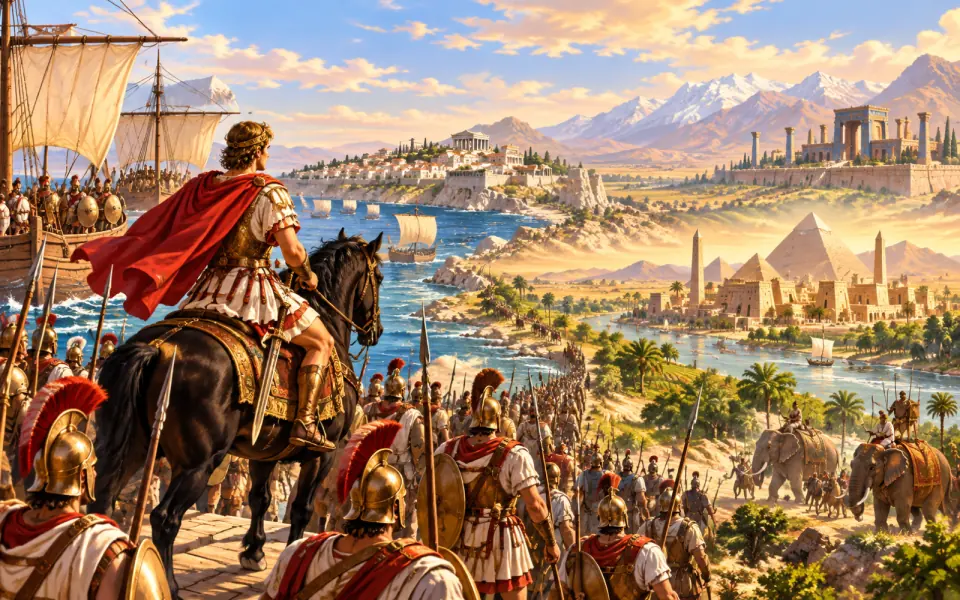 AfterThe conquests of Alexander334–323 BC
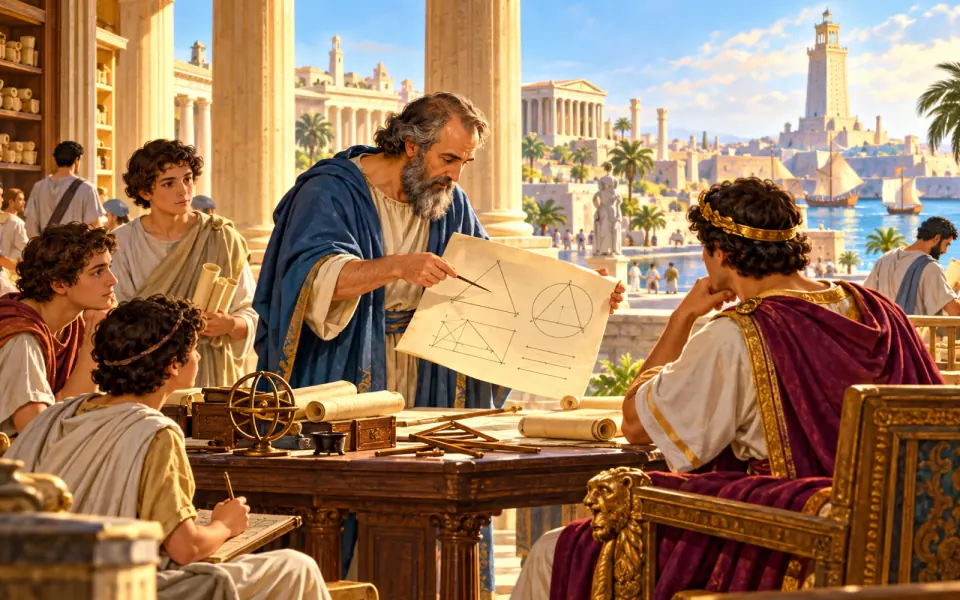 AfterEuclid writes the Elementsabout 300 BC
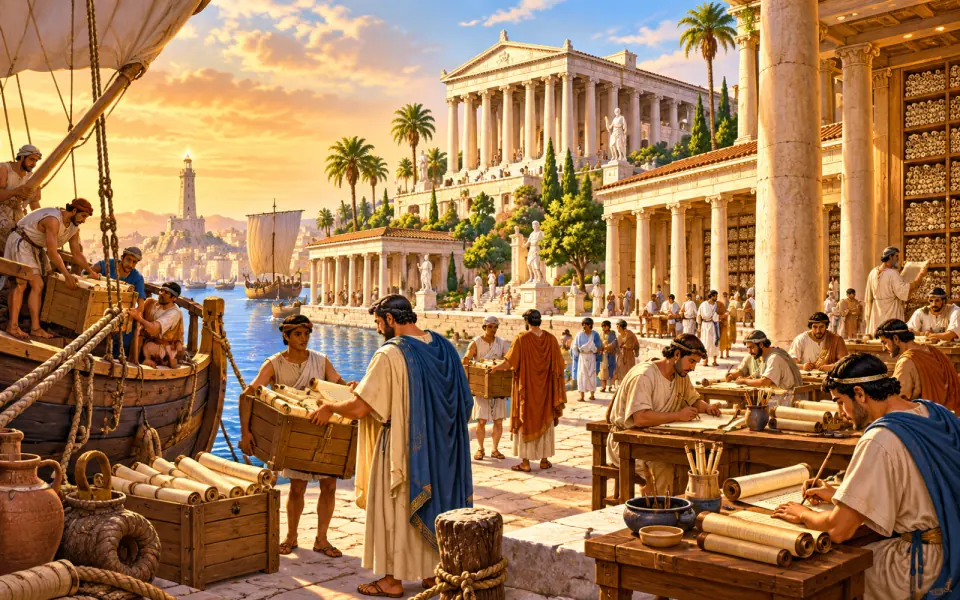 AfterThe Library of Alexandriaabout 295 BC
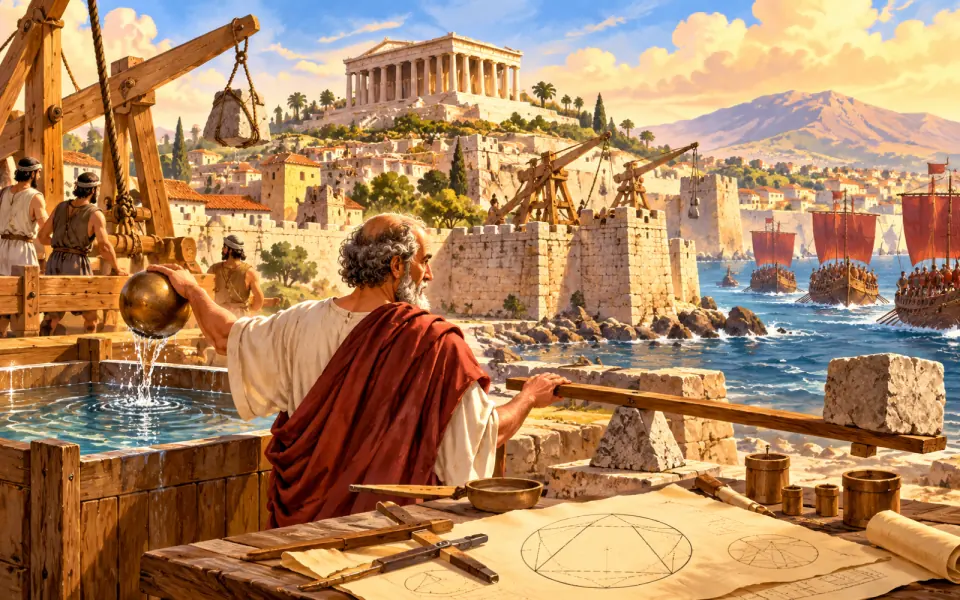 AfterArchimedes of Syracuseabout 250 BC
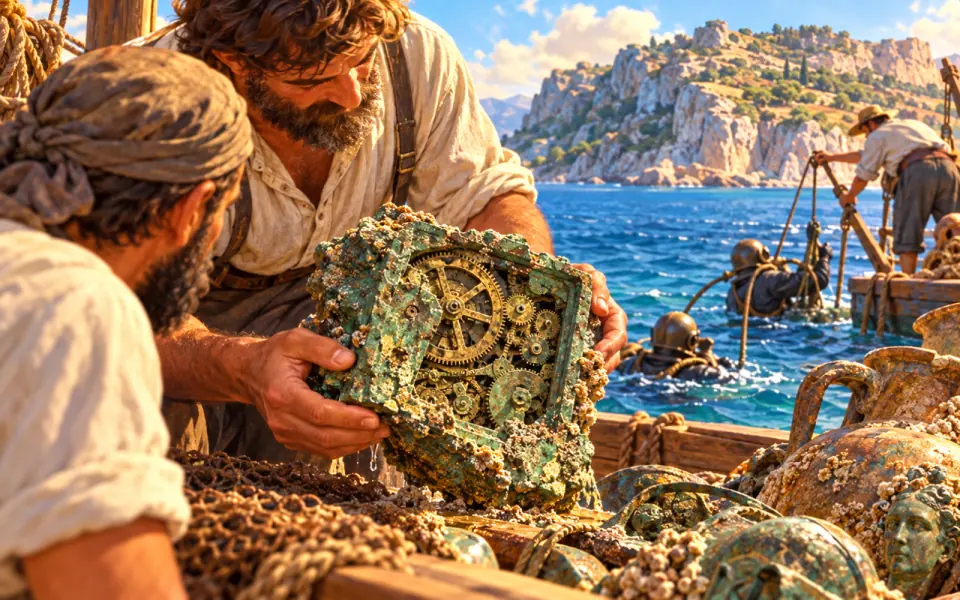 AfterThe Antikythera mechanismabout 100 BC
Listen / Read next
- Music to read by: Cinematic JourneyEpic film-style music, no lyrics, by Ciro Simone IrmiciSpotifyYouTube Music
Meanwhile, elsewhere in the world
Other events of the era “Ancient Greece”
- The first Greek city-states
- The ancient Olympic Games
- The Greek alphabet
- Life in Sparta
- Sappho, the poet of Lesbos
- The reforms of Solon
- Thales studies nature
- Pythagoras at Croton
- Cleisthenes and democracy
- The Battle of Marathon
- The Battle of Thermopylae
- The theatre of Aeschylus
- The Age of Pericles
- The Parthenon
- The Peloponnesian War
- Herodotus writes the Histories
- Hippocrates and medicine
- Socrates is condemned
- Aristotle founds the Lyceum
- The conquests of Alexander
- Euclid writes the Elements
- The Library of Alexandria
- Archimedes of Syracuse
- The Antikythera mechanism
