Herodotus writes the Histories
about 430 BC Halicarnassus (now Bodrum, Turkey) and Athens
In short
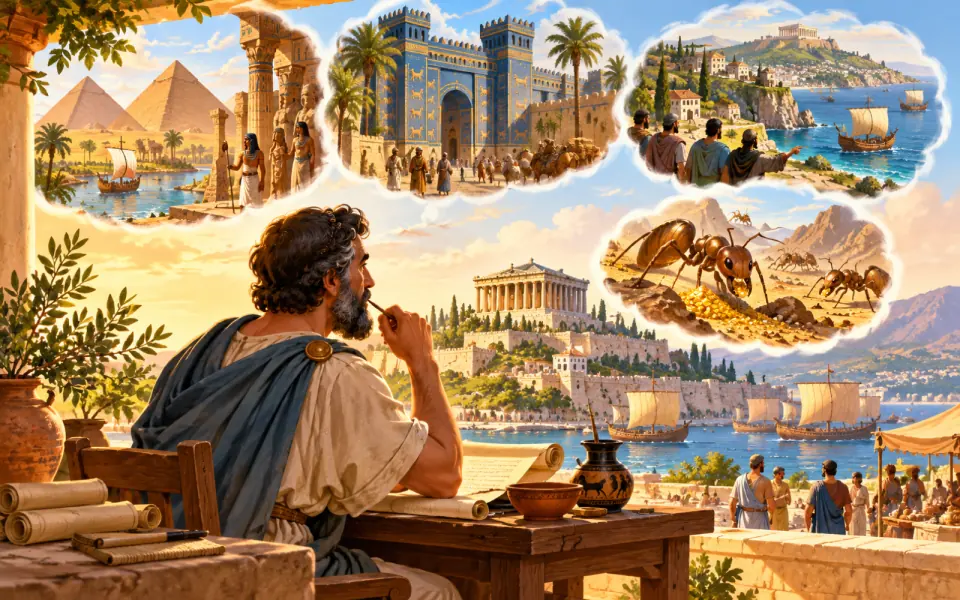
Herodotus was born in Halicarnassus, on the coast of today's Turkey, and said he had travelled to Egypt, Babylon and the shores of the Black Sea. In his “Histories” he set out to explain why the Greeks and Persians had gone to war. He collected stories, visited places and compared different versions, but sometimes he also passed on incredible legends, like the one about giant ants that dig for gold. Centuries later, the Roman Cicero called him ‘the father of history’.
Why it matters He was the first to turn telling the story of the past into an inquiry, which in Greek is exactly ‘historia’.
Source: Treccani, entry “Erodoto”
Study card about 5 minutes of reading
The story
A Greek from Asia
Herodotus was born around 484 BC at Halicarnassus, a Greek city in Caria, on the south-western coast of present-day Turkey, which at the time was part of the Persian empire. His family was noble: his mother, Dryo, had a Greek name, his father, Lyxes, one of Asian origin. So he grew up between two worlds, that of the Greeks and that of the Persians, and this gave him a curiosity that never left him.
Halicarnassus was ruled by a tyrant, Lygdamis II, who governed with the support of the Persian king. Herodotus opposed him, and a relative of his, Panyassis, was put to death. He managed to escape to Samos, where he perfected the Ionic dialect, in which he would later write his work. According to tradition, around 455 BC he was able to return home. Later, from 447 BC, he lived in Athens, where he met figures such as Pericles, Sophocles and the philosopher Protagoras. Around 444–443 BC he took part in the founding of Thurii, a Greek colony in southern Italy, and received citizenship there.
Travelling to understand
Herodotus travelled a great deal, as far as one can tell from his work. He visited a large part of the eastern Mediterranean, and we know his stay in Egypt was long. For other places we depend mostly on his account, and scholars argue about how much he really saw himself. In any case, he asked everyone he met: priests, guides, merchants, soldiers. What he heard he wrote down and, when the versions did not agree, he compared them.
The “Histories”
His great work is called the “Histories” and is divided into nine books. The division is not his: it was made centuries later by the grammarians of Alexandria. The main theme is the wars between Greeks and Persians. The story starts far back: with the kings Croesus and Cyrus, and arrives at Marathon, Thermopylae, Salamis and the battle against the general Mardonius. But Herodotus does not limit himself to battles. Every time a new people comes on stage, he opens a long digression, a “logos” in Greek, to explain how its inhabitants live, what their customs, their religion and their geography are. So the “Histories” are at once a book of war, of travel and of anthropology.
The book begins with a famous sentence. Herodotus writes that he is publishing “the display of his inquiry”, so that the deeds of men may not be forgotten with the passing of time and the great works, of Greeks and of barbarians, may not go without glory. The Greek word for “inquiry” is “historie”, the word that gave our “history” its name.
How he worked
Herodotus based his work on three elements: what he saw with his own eyes, what he heard from others and the personal judgement with which he chose among the information. When versions disagreed, he used logic and what seemed likely to him, and sometimes left the choice to the reader. He also declared that he wrote certain things only “from hearsay”, that is, because they had been told to him. This honesty was something new.
That is why he sometimes also reports things that seem incredible to us today. In Book III, for example, speaking of India, he tells that there were ants that dig up gold, a story that had been told to him. Today we regard it as a legend. Herodotus reports it as a rumour in circulation, without proving it.
The judgement of the ancients and the moderns
Herodotus was widely read, but also criticised. The Roman Cicero called him the “father of history”. The Greek writer Plutarch, on the other hand, wrote a treatise against him, accusing him of being too spiteful towards certain cities, even though he used his work as a source. For a long time Thucydides, who wrote about the Peloponnesian War, was considered more scientific. Herodotus seemed more a teller of stories, in the best sense of the words, than a historian in the modern sense.
Today we know that Herodotus remains a precious source. For many peoples, such as the Egyptians or the Persians, his pages are a very extensive Greek source. Even where he is wrong, he is useful for understanding what the Greeks believed.
Why it happened
Herodotus writes because the war with the Persians had changed the Greek world. It had been an enormous trial: never before had the poleis faced such a powerful and vast enemy. The events seemed worthy of being remembered for ever. Herodotus, who was not Athenian but had direct knowledge of many Persian regions, could tell both sides.
There was also a new cultural setting. In the Ionian cities, like Miletus, people had long been looking for natural explanations of phenomena. Before Herodotus there had already been authors who collected stories about peoples, but he managed to merge geography, customs, traditions and wars into a single narrative, under the question: why did Greeks and Persians go to war?
What changed
With Herodotus history became a literary genre. After him, authors such as Thucydides and Xenophon wrote books about the recent past, and in the Roman world the historian became a respected figure. The idea that to understand the past you must investigate, compare sources and say openly where information comes from carries Herodotus' legacy.
Even today the “Histories” are read with pleasure, and they give information we do not find elsewhere, for example on how the Greeks saw the Egyptians and the Persians. Historians use them by checking them against other sources.
The word “history” itself comes from him, and the question he raises, that is, how far one can trust those who tell a story, remains the problem of every study of the past. If a teacher today says to check several sources before believing a piece of news, they are unknowingly repeating a lesson that begins with Herodotus.
Key people and places
People
- Herodotus
- Greek historian born at Halicarnassus around 484 BC and died around 425: author of the “Histories”.
- Lygdamis II
- Tyrant of Halicarnassus, supported by the Persians, who drove Herodotus into exile.
- Pericles
- The leader of Athens, whom Herodotus met in his Athenian period.
- Cicero
- Roman orator who called Herodotus the “father of history”.
- Plutarch
- Greek writer who criticised Herodotus in a treatise.
Places
- Halicarnassus
- City of Caria, now Bodrum in Turkey, where Herodotus was born.
- Samos
- Aegean island where Herodotus found refuge during his exile.
- Thurii
- Greek colony in southern Italy whose founding Herodotus took part in around 444–443 BC.
- Athens
- City where Herodotus stayed from 447 BC and met Pericles and Sophocles.
Good to know
- The word “history” comes from the Greek “historie”, which in Herodotus' “Histories” means “inquiry”.
- The division of the “Histories” into nine books was made centuries later by the scholars of Alexandria.
- Herodotus openly declared when he was writing only “from hearsay”.
- Around 445 BC, according to one tradition, Herodotus read parts of his work in Athens and received ten talents.
- In Book III he speaks of ants that dig up gold: a story that scholars today read as a legend.
Find out more
- Wikipedia, “Herodotus” en.wikipedia.org
- Wikipedia, “Thucydides” en.wikipedia.org
- Wikipedia, “Halicarnassus” en.wikipedia.org
- Perseus Digital Library, Herodotus, Histories (Greek text and English translation) perseus.tufts.edu
Related events
- The Battle of Marathon490 BC · Ancient GreeceHerodotus is the main source on the Battle of Marathon.
- The Battle of Thermopylae480 BC · Ancient GreeceHerodotus tells of Thermopylae and the story of Leonidas.
- Thales studies natureabout 585 BC · Ancient GreeceHerodotus is the source of the eclipse predicted by Thales.
- The Peloponnesian War431–404 BC · Ancient GreeceThucydides, historian of the Peloponnesian War, continued his method.
- Homer's poems are written downabout 750 BC · Sea civilisationsThe Homeric poems told the past in verse; Herodotus tells it in prose, as inquiry.
Before and after, in the era “Ancient Greece”
Event 16 of 25
 BeforeThe first Greek city-statesabout 800 BC
 BeforeThe ancient Olympic Gamesabout 776 BC
 BeforeThe Greek alphabetabout 750 BC
 BeforeLife in Spartaabout 700 BC
 BeforeSappho, the poet of Lesbosabout 600 BC
 BeforeThe reforms of Solonabout 594 BC
 BeforeThales studies natureabout 585 BC
 BeforePythagoras at Crotonabout 530 BC
 BeforeCleisthenes and democracyabout 508 BC
 BeforeThe Battle of Marathon490 BC
 BeforeThe Battle of Thermopylae480 BC
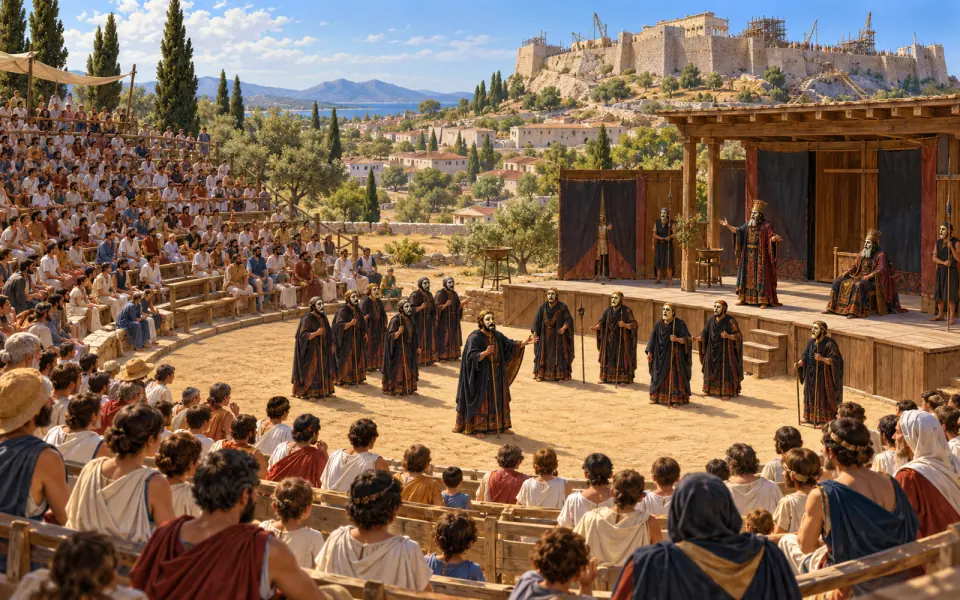 BeforeThe theatre of Aeschylus472 BC
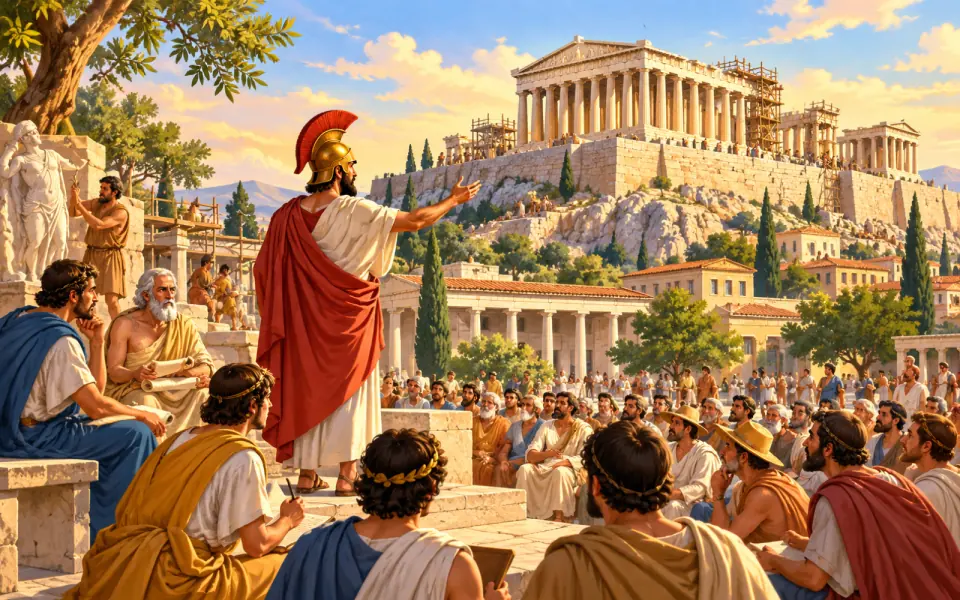 BeforeThe Age of Pericles461–429 BC
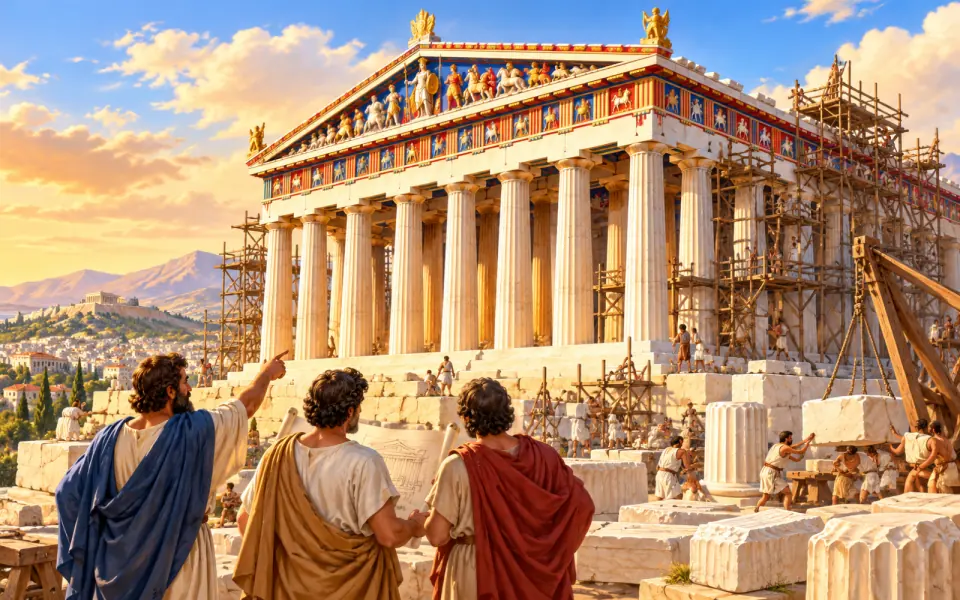 BeforeThe Parthenon447–432 BC
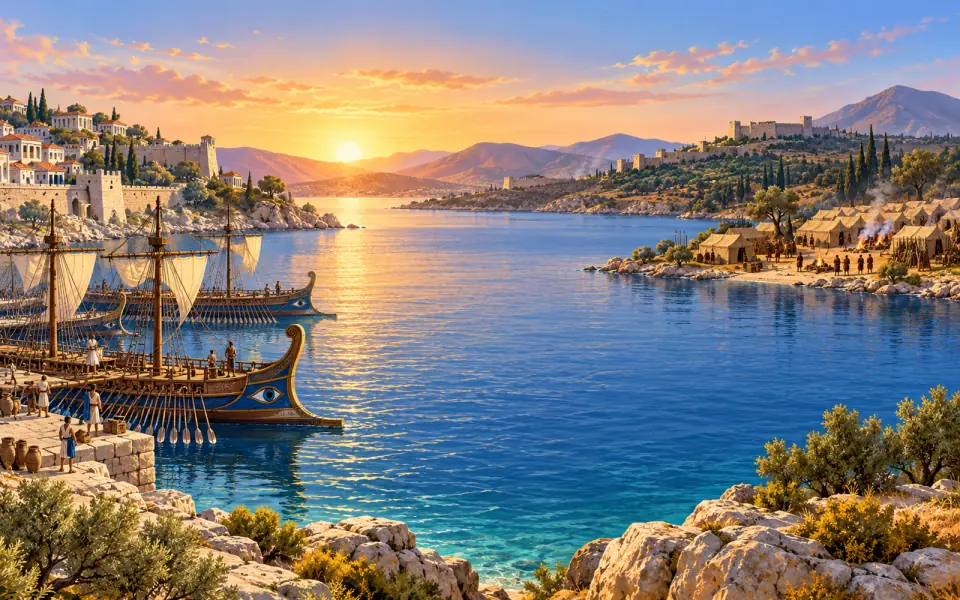 BeforeThe Peloponnesian War431–404 BC
- You are hereHerodotus writes the Historiesabout 430 BC
 AfterHippocrates and medicineabout 400 BC
 AfterSocrates is condemned399 BC
 AfterPlato's Academyabout 387 BC
 AfterAristotle founds the Lyceumabout 335 BC
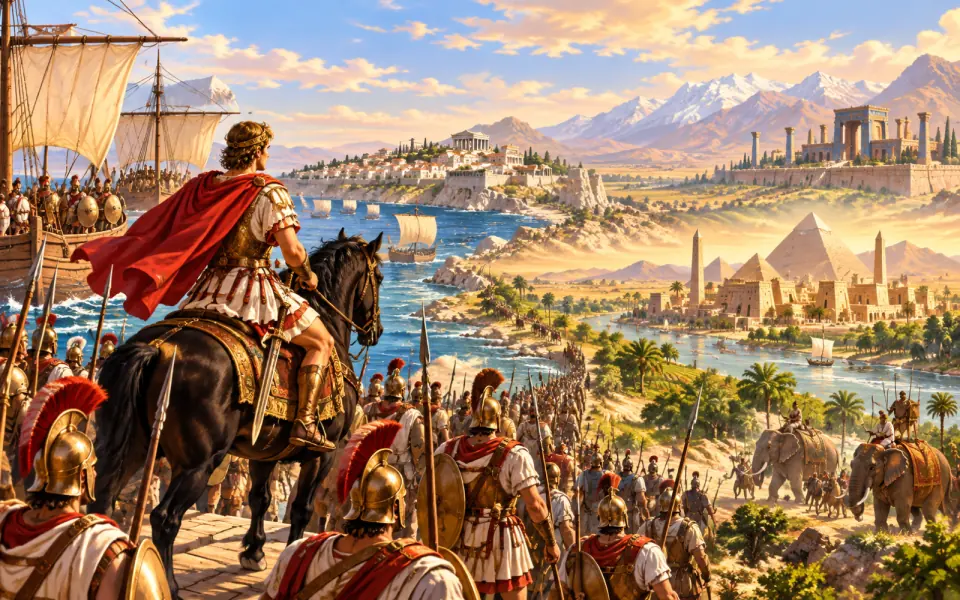 AfterThe conquests of Alexander334–323 BC
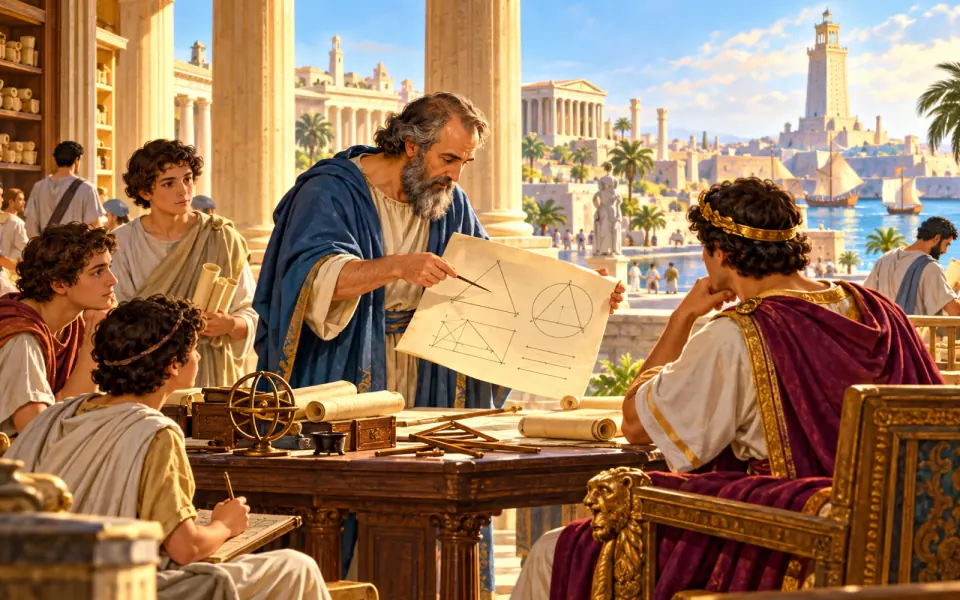 AfterEuclid writes the Elementsabout 300 BC
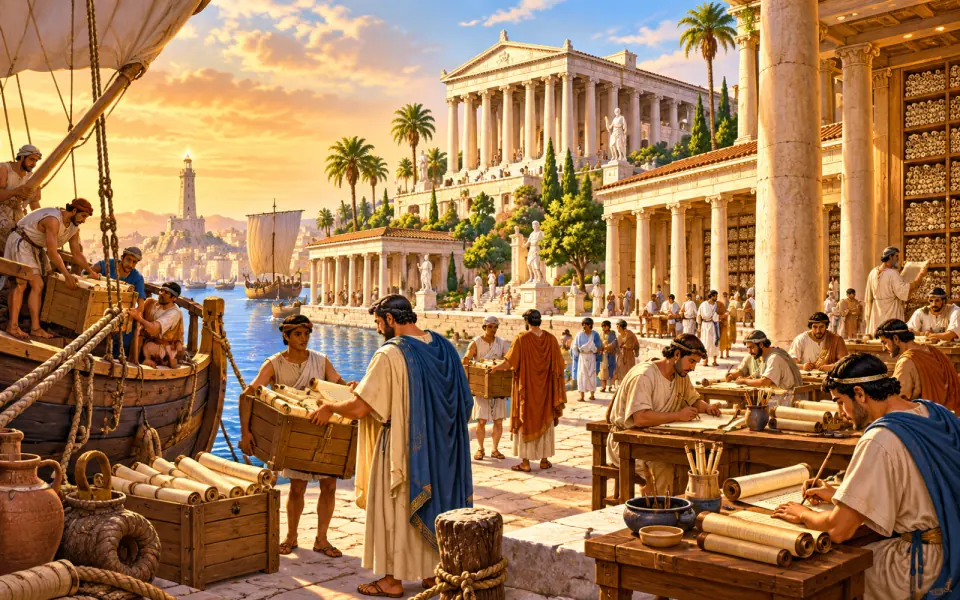 AfterThe Library of Alexandriaabout 295 BC
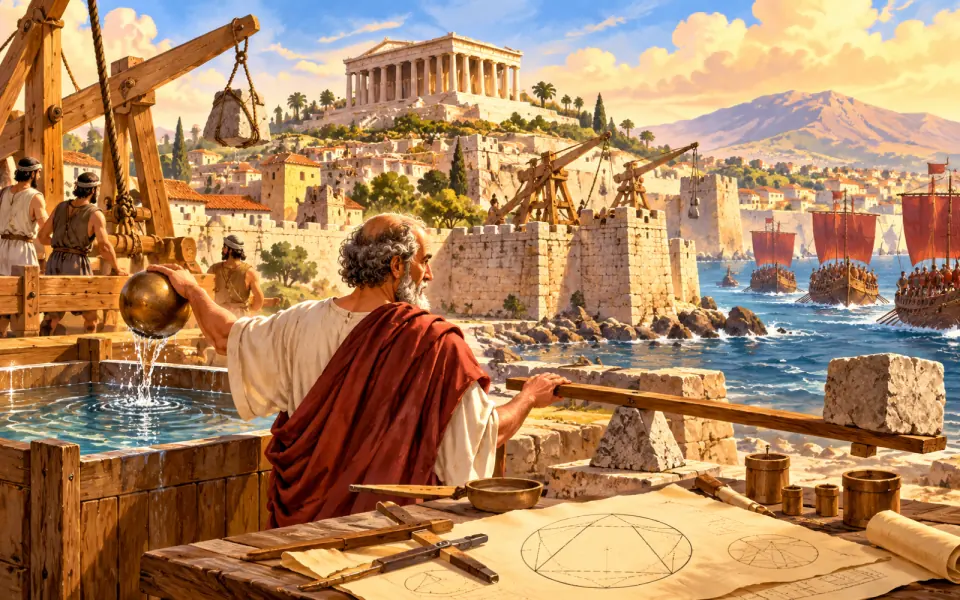 AfterArchimedes of Syracuseabout 250 BC
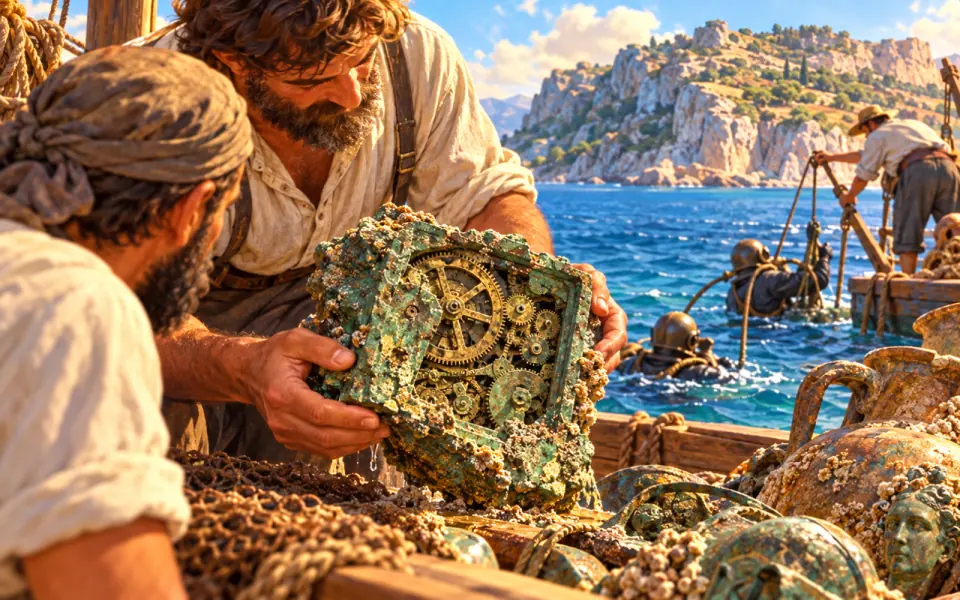 AfterThe Antikythera mechanismabout 100 BC
Listen / Read next
- Music to read by: Cinematic JourneyEpic film-style music, no lyrics, by Ciro Simone IrmiciSpotifyYouTube Music
Meanwhile, elsewhere in the world
Other events of the era “Ancient Greece”
- The first Greek city-states
- The ancient Olympic Games
- The Greek alphabet
- Life in Sparta
- Sappho, the poet of Lesbos
- The reforms of Solon
- Thales studies nature
- Pythagoras at Croton
- Cleisthenes and democracy
- The Battle of Marathon
- The Battle of Thermopylae
- The theatre of Aeschylus
- The Age of Pericles
- The Parthenon
- The Peloponnesian War
- Hippocrates and medicine
- Socrates is condemned
- Plato's Academy
- Aristotle founds the Lyceum
- The conquests of Alexander
- Euclid writes the Elements
- The Library of Alexandria
- Archimedes of Syracuse
- The Antikythera mechanism
