The first public steam railway
1825 Stockton and Darlington, England
In short
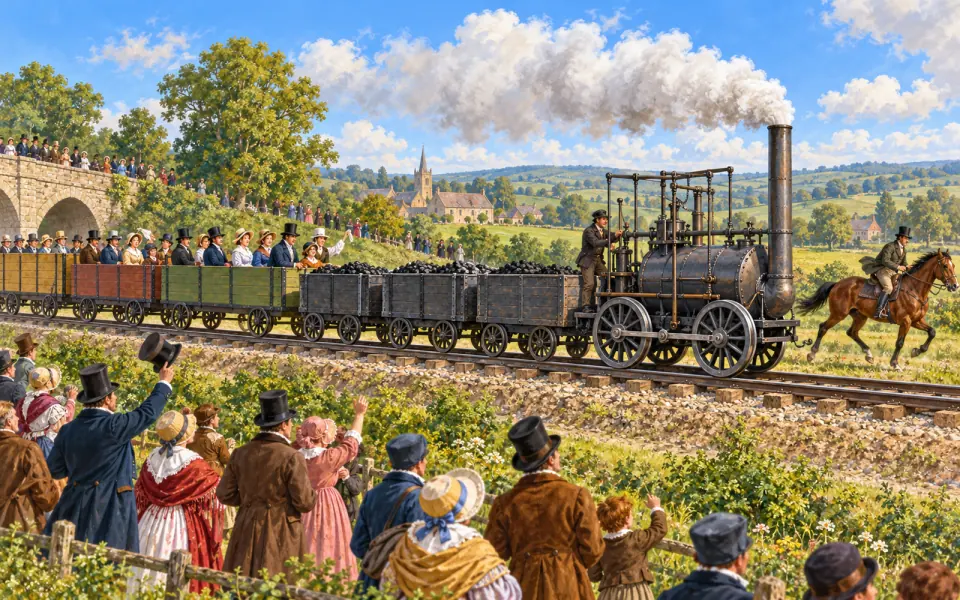
On 27 September 1825, in England, the railway between Stockton and Darlington opened, the first public line to carry trains pulled by a steam locomotive. The engine, called Locomotion, had been built by George Stephenson and pulled wagons of coal and passengers. It went at about the speed of a bicycle, but it never got tired like horses. Within a few decades railway lines stretched all over the world.
Why it matters The train shrank distances: people, goods and news began to travel much faster.
Source: Encyclopaedia Britannica, “Stockton and Darlington Railway”
Study card about 5 minutes of reading
The story
Wagons on iron rails
In English mines, since the 17th century, wagons on wooden tracks, pulled by horses, had been used to move coal: on rails a wagon ran far more easily than on a road, and a horse could pull a much heavier load. In time the wooden tracks were replaced by iron ones. After the invention of Watt's steam engine, it was natural to think of a steam engine that moved by itself along the rails, in place of horses.
A Cornish engineer, Richard Trevithick, built the first steam locomotive on rails in 1804: in Wales it pulled five wagons carrying ten tonnes of iron and seventy men. It worked, but it was so heavy that it broke the iron rails of the time, and it was abandoned. Other inventors made attempts, but the results were poor.
The miner who became an engineer
George Stephenson was born in 1781 at Wylam, near Newcastle, the son of a mine worker who could not read. As a child he took cows to graze and worked in a mine. At eighteen, when he still could not read or write, he went to night school to learn, and began to study how steam engines worked: he knew them well, because he worked as an attendant on one. He became the best mechanic in the area, and in 1814 he built his first locomotive, the “Blücher”, to haul coal in a mine.
Stockton and Darlington
In the north-east of England, between the coal mines and the port of Stockton, people wanted to build a railway line to carry coal. The promoter, a Quaker merchant from Darlington, Edward Pease, wanted to use horses, but he met Stephenson, who persuaded him to try locomotives. In 1823 a works was founded in Newcastle to build them, run by Stephenson and his son Robert.
On 27 September 1825 the Stockton & Darlington Railway was opened, the first public railway in the world run with steam locomotives, about forty kilometres long. Thousands of people gathered along the route. At the head of the train was the locomotive, driven by the Stephenson brothers (George directed the enterprise), called “Locomotion No. 1”: behind it came 12 wagons of coal and flour, and also some open wagons carrying about six hundred passengers. A man on horseback, with a flag, went ahead of the convoy for the first few kilometres, but then the locomotive overtook him: it reached about fifteen to twenty kilometres an hour. It was an enormous speed for those days.
For the local people it was a sight they had never seen: many had never come across a machine that moved by itself, with no animals to pull it, and they watched it with curiosity, enthusiasm and a little fear.
The Rocket
Five years later, in 1830, the line between Liverpool and Manchester, two great industrial cities, was opened, with steam locomotives and a fixed timetable: the first truly modern railway. Before the opening, in October 1829, a competition was held at Rainhill to choose the best locomotive. The “Rocket”, built by Stephenson and his son Robert, won, reaching about fifty kilometres an hour. But there was a serious accident on the very day of the opening: a Member of Parliament, William Huskisson, fell onto the tracks and was run over, and died: he was the first famous victim of a railway accident.
Italy on the tracks
In Italy the first railway was opened on 3 October 1839, between Naples and Portici, a little over seven kilometres long, built at the wish of the king of the Two Sicilies, Ferdinand II. In 1840 the Milan–Monza line opened, and then others, all over the peninsula. By unification, in 1861, there were about two thousand kilometres of track; in 1871 the Fréjus tunnel was opened, under the Alps, between Italy and France.
Why it happened
The steam locomotive came from joining two things that already existed, the steam engine and the railway, and from the needs of the Industrial Revolution: large quantities of coal, iron and goods had to be carried cheaply and quickly, and roads and canals were not enough.
Technical skill was needed too: Stephenson, with his experience as a mechanic and his stubbornness, knew how to build sturdy and reliable machines, and understood that the railway and the locomotive had to be designed together.
What changed
The railway changed the world. For the first time people and goods could travel faster than a horse, regularly and safely. Journeys that took days were made in a few hours. Trade grew, towns expanded, and new industries such as steel and coal arose. It even became necessary to standardise the time: since trains ran to precise timetables, every town had to adopt the same time, whereas before each had its own, worked out from the Sun.
With the railways, tourism and day trips became possible for many people too, and ideas and news travelled faster. Viaducts, tunnels and spectacular bridges were built. In the 20th century steam locomotives were replaced by diesel and electric ones, and high-speed trains appeared, such as the Japanese Shinkansen (1964) and the Italian Frecciarossa.
Today trains are considered one of the most sustainable means of transport, because they use less energy and produce fewer emissions for every person carried. The track gauge adopted and spread by Stephenson, with a distance between the rails of 1,435 millimetres, is still the most widely used standard in the world.
Key people and places
People
- George Stephenson
- English engineer (1781–1848): he built the “Locomotion” and was the leading pioneer of the railway.
- Robert Stephenson
- English engineer (1803–1859): George's son, he built the “Rocket” and many bridges.
- Richard Trevithick
- English engineer (1771–1833): he built the first steam locomotive on rails in 1804.
- Edward Pease
- English Quaker merchant (1767–1858): promoter of the Stockton & Darlington.
- Ferdinand II of the Two Sicilies
- King of Naples (1810–1859): he opened the first Italian railway in 1839.
Places
- Darlington and Stockton, England
- The two towns joined by the first public steam railway, in 1825.
- Naples–Portici
- The seven-kilometre line opened in 1839: the first Italian railway.
Good to know
- In 1825 the Stockton & Darlington train reached about fifteen to twenty kilometres an hour.
- Stephenson's “Rocket” reached about fifty kilometres an hour in 1829.
- The first Italian railway, Naples–Portici, was opened on 3 October 1839.
- George Stephenson learned to read and write at eighteen.
- The distance between the rails of 1,435 millimetres, adopted and spread by Stephenson, is still the most widely used in the world.
Find out more
- Wikipedia, “Steam locomotive” en.wikipedia.org
- Wikipedia, “Stockton and Darlington Railway” en.wikipedia.org
- Wikipedia, “Naples–Portici railway” en.wikipedia.org
- Wikipedia, “George Stephenson” en.wikipedia.org
Related events
- Watt's steam engine1769 · Age of revolutionsThe locomotive uses the steam engine perfected by Watt.
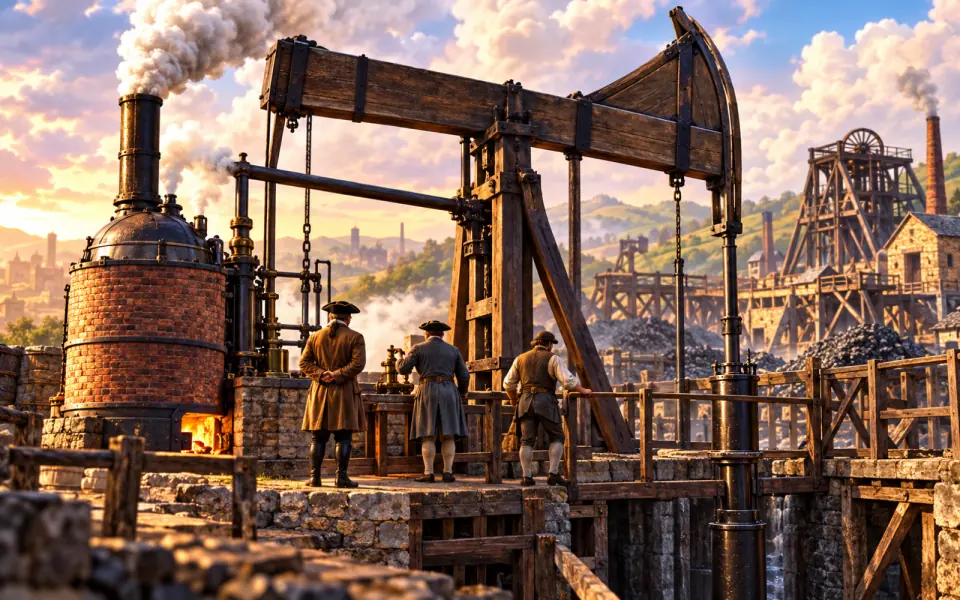
- Newcomen's steam engine1712 · Age of revolutionsBefore Watt, Newcomen's engines pumped water in mines.
- The electric telegraph1844 · Age of revolutionsThe electric telegraph soon ran along the railways.
- The first modern motor car1886 · Age of revolutionsA few decades later came the car.
Before and after, in the era “Age of revolutions”
Event 13 of 25
 BeforeNewcomen's steam engine1712
 BeforeThe European Enlightenmentabout 1720
 BeforeDiderot's Encyclopédie1751
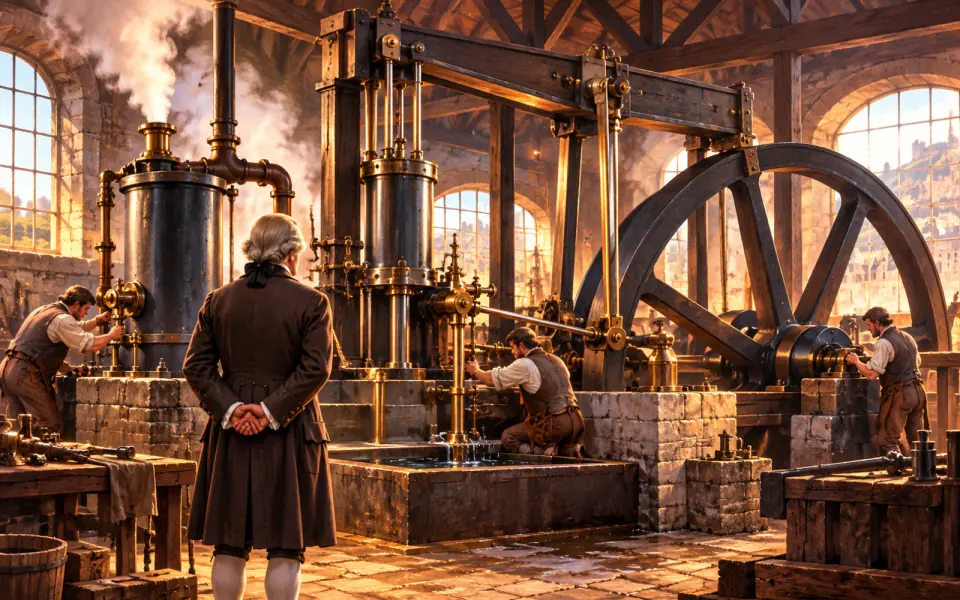 BeforeWatt's steam engine1769
 BeforeThe American Revolution1776–1783
 BeforeThe first hot-air balloon flight1783
 BeforeThe French Revolution1789–1799
 BeforeThe metric system1795
 BeforeJenner's vaccine1796
 BeforeVolta's battery1800
 BeforeNapoleon becomes emperor1804
 BeforeThe Congress of Vienna1815
- You are hereThe first public steam railway1825
 AfterNiépce's photographabout 1826
 AfterManzoni's The Betrothed1827
 AfterThe electric telegraph1844
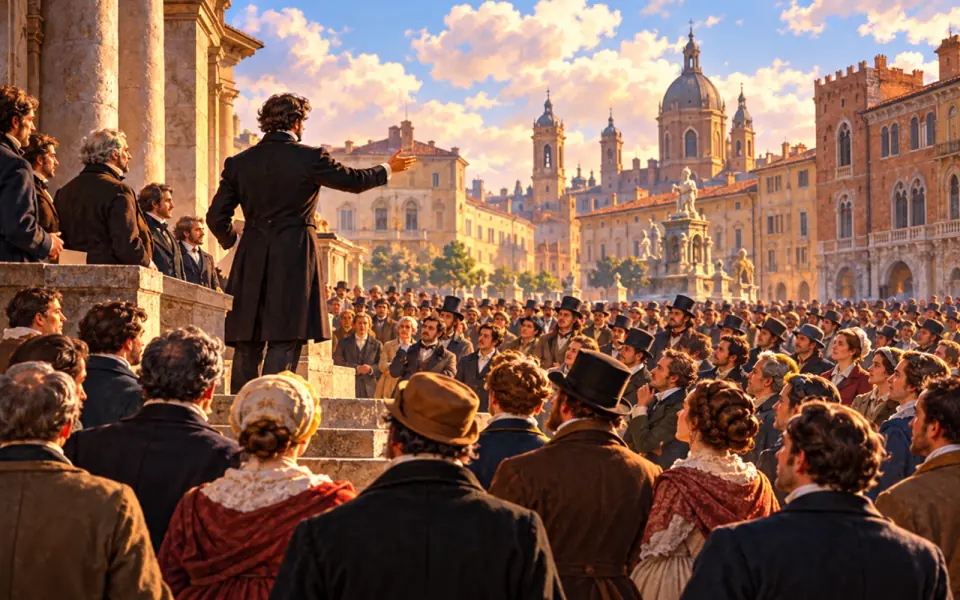 AfterThe revolutions of 18481848
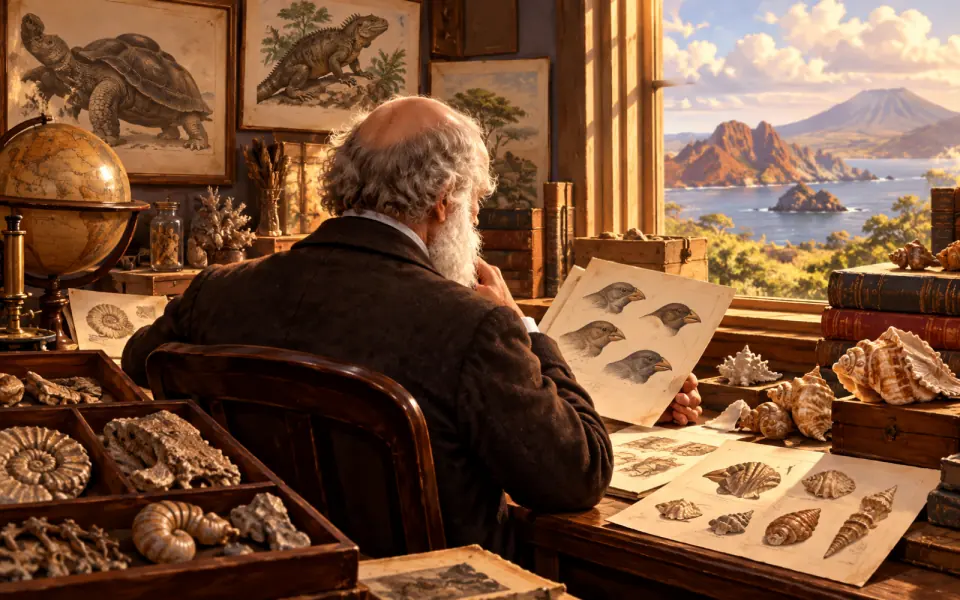 AfterDarwin publishes On the Origin of Species1859
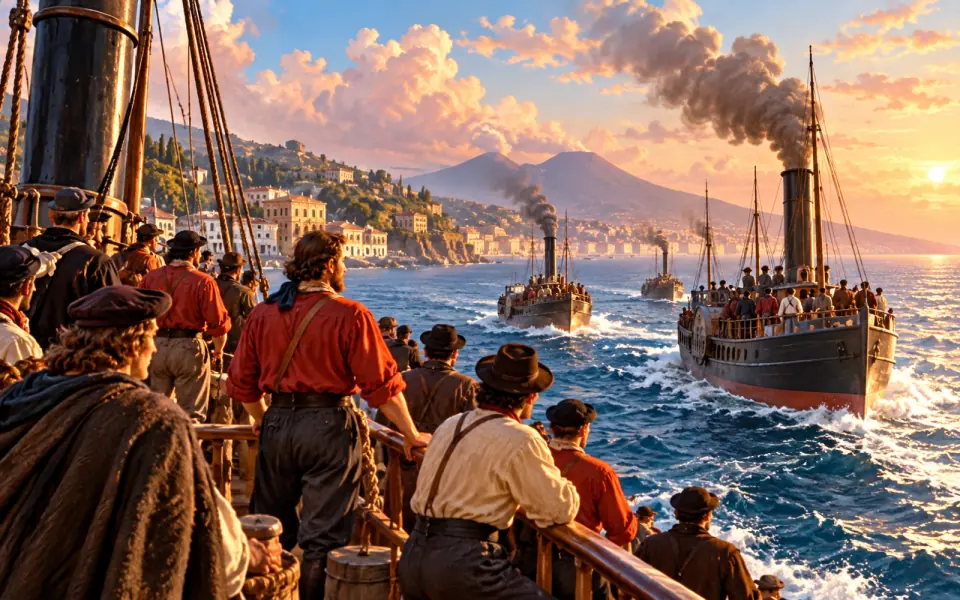 AfterThe Expedition of the Thousand1860
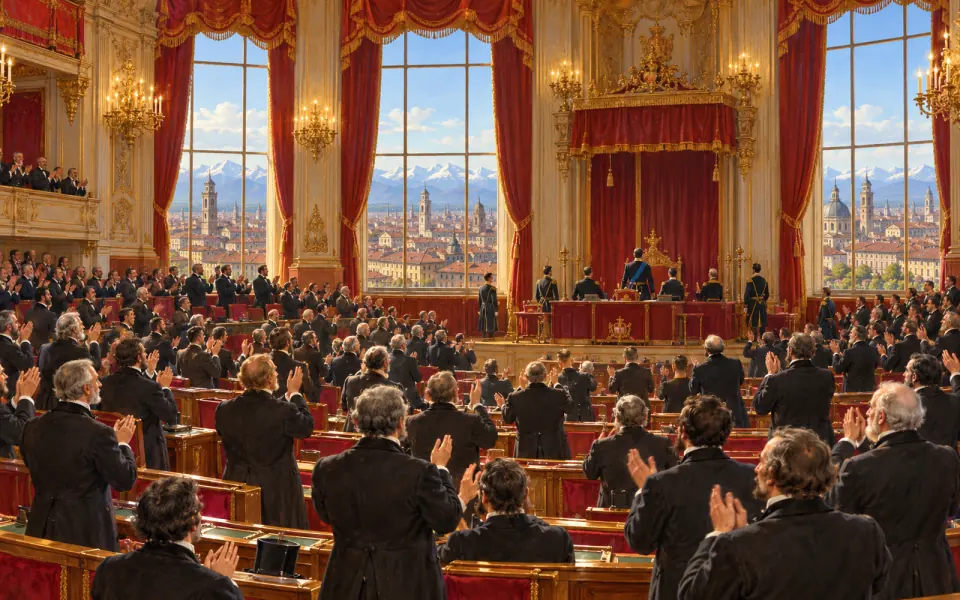 AfterThe unification of Italy1861
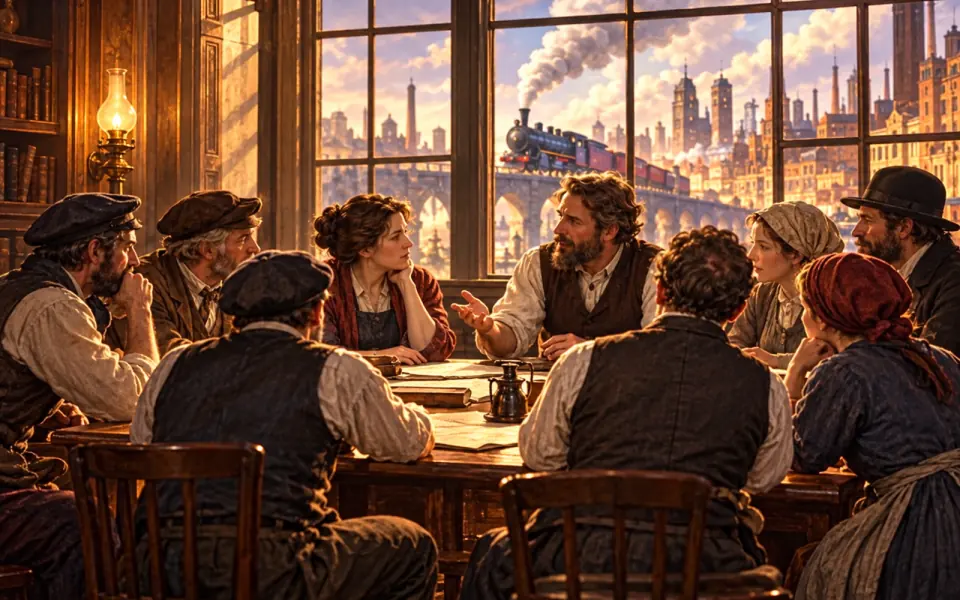 AfterThe labour movementabout 1864
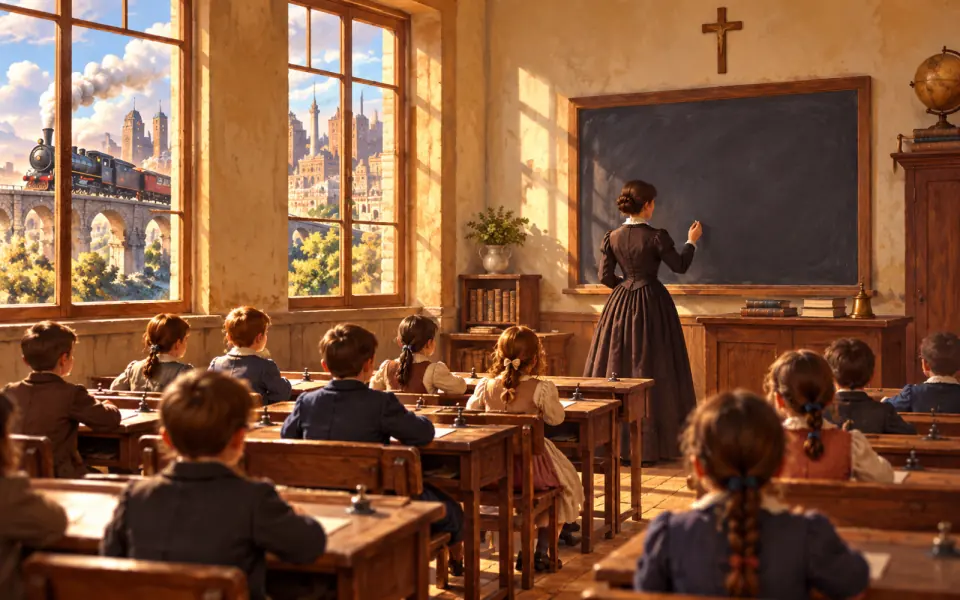 AfterCompulsory primary school (Coppino law)1877
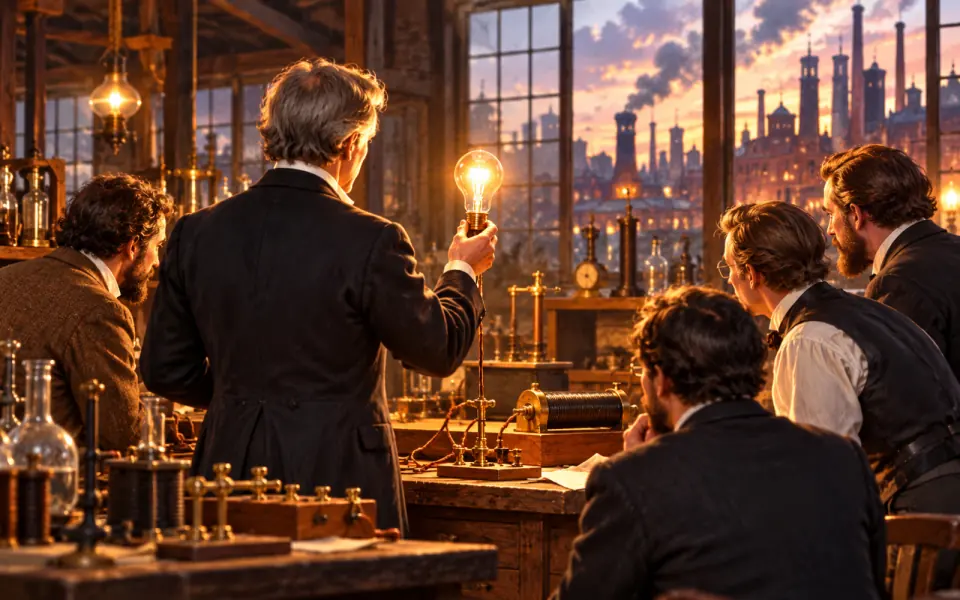 AfterA practical electric light bulb1879
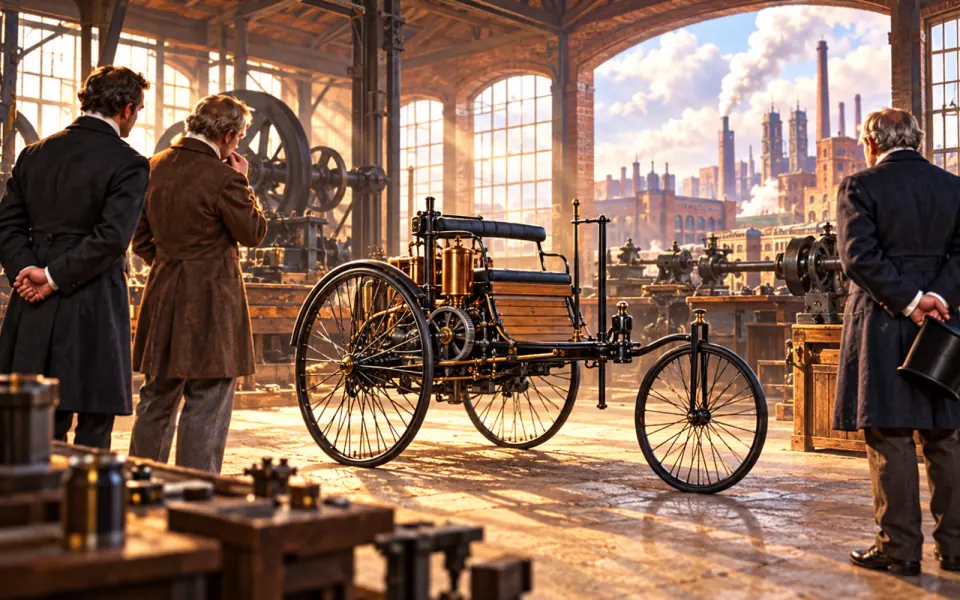 AfterThe first modern motor car1886
 AfterThe Lumière brothers' cinema1895
Listen / Read next
- Music to read by: Cinematic JourneyEpic film-style music, no lyrics, by Ciro Simone IrmiciSpotifyYouTube Music
Meanwhile, elsewhere in the world
Other events of the era “Age of revolutions”
- Newcomen's steam engine
- The European Enlightenment
- Diderot's Encyclopédie
- Watt's steam engine
- The American Revolution
- The first hot-air balloon flight
- The French Revolution
- The metric system
- Jenner's vaccine
- Volta's battery
- Napoleon becomes emperor
- The Congress of Vienna
- Niépce's photograph
- Manzoni's The Betrothed
- The electric telegraph
- The revolutions of 1848
- Darwin publishes On the Origin of Species
- The Expedition of the Thousand
- The unification of Italy
- The labour movement
- Compulsory primary school (Coppino law)
- A practical electric light bulb
- The first modern motor car
- The Lumière brothers' cinema
